REVIEW · NEW DELHI
10 Day Private Luxury Golden Triangle with Khajuraho and Varanasi
Book on Viator →Operated by Golden Triangle Tours India · Bookable on Viator
Few trips pack this many icons.
This 10-day private luxury loop through Delhi, Agra, Jaipur, Khajuraho, and Varanasi is built for people who want the big sights without feeling rushed. You’ll get pickup, private local guides at each stop, and a comfy air-conditioned car doing the long links between cities, so you can focus on the monuments and the street-level flavor. It’s especially strong for first-timers who like walking the major UNESCO sites with context instead of just taking photos.
I especially like two parts: the way the itinerary strings together the most famous Delhi and Agra landmarks, and the fact that you get local guides explaining what you’re actually looking at. The Taj Mahal day includes a sunrise-style start and a guided interior visit, plus a battery bus ride that saves time and walking at the approach. One possible drawback: monument entrance fees aren’t included, and several days have short stops, so you’ll want comfy shoes and a steady pace mindset.
In This Review
- Key things that make this tour worth your time
- Why this 10-day Golden Triangle + Khajuraho + Varanasi route works
- Delhi Day 1–2: Bangla Sahib, Qutub Minar, Old Delhi, and the real texture of the city
- Jaipur Day 3–4: Amber Palace views, Hawa Mahal drama, and the geometry of Jantar Mantar
- A smart Jaipur side idea: adding Jhalana leopard safari
- Agra and Fatehpur Sikri on Day 5: stepwell wonder and Akbar’s City of Victory
- Taj Mahal sunrise feel, Agra Fort, and Baby Taj on Day 6
- Khajuraho Day 7–8: temple carving time, not just a quick photo stop
- Varanasi Day 9: Kashi Vishwanath, Sarnath, the Ganges walk, and Ganga Aarti from a good view
- Varanasi Day 10: a final morning and drop-off where you want to be
- Price and logistics: what $623.07 buys you (and what it doesn’t)
- Rooms and pacing: twin-sharing, short stops, and comfortable expectations
- Choosing your tour team: asking about coordination and driver style
- Who should book this private luxury Golden Triangle with Khajuraho and Varanasi?
- Should you book this tour?
- FAQ
- What cities are included in this 10-day tour?
- Are monument entrance tickets included?
- Is breakfast included?
- What kind of vehicle will you use for transport?
- How is the Taj Mahal day handled for transport and time?
- What planned experiences are included in Varanasi?
- Can I cancel and get a full refund?
Key things that make this tour worth your time
- Private local guides in each city, so you’re not stuck decoding history alone
- Taj Mahal transport convenience with a included battery bus up to the monument area
- Delhi’s mix of eras: Sikh worship at Bangla Sahib, Mughal power at Jama Masjid and Humayun’s Tomb
- Jaipur’s design logic through Amber, the Palace of Winds, City Palace, and Jantar Mantar
- Khajuraho temples after travel: you’ll get the carved-stone focus without squeezing too many extra cities in
- Varanasi rituals timed for impact, including Kashi Vishwanath, Sarnath, a riverside walk, and Ganga Aarti from a good viewing setup
Why this 10-day Golden Triangle + Khajuraho + Varanasi route works

The Golden Triangle is famous for a reason. Delhi tells you how power, faith, and empire layers stacked up. Agra and Jaipur show the craft and politics behind Mughal and Rajput splendor. Then Khajuraho flips the script to a different kind of artistic expression. And Varanasi drops you into India’s spiritual rhythm in a way no brochure can fake.
This itinerary is “best hits” without the usual sprinting. You’re not just transferring from one queue to the next. You’re given guided time where it matters: Qutub Minar in Delhi, Amber and City Palace in Jaipur, the Taj Mahal interior in Agra, then the core Khajuraho temples. Even when a stop is shorter—like the quick sweep at Albert Hall Museum—it’s still guided, so you don’t waste that time wandering.
Private matters here. You’re moving in a private air-conditioned vehicle with your group only, not pooling with strangers. That makes a difference in North India, where traffic and timing can turn a tight schedule into a stressful one fast. If you want a trip that feels organized and calm, this is the kind of structure you’ll appreciate.
You can also read our reviews of more tours and experiences in New Delhi.



Delhi Day 1–2: Bangla Sahib, Qutub Minar, Old Delhi, and the real texture of the city
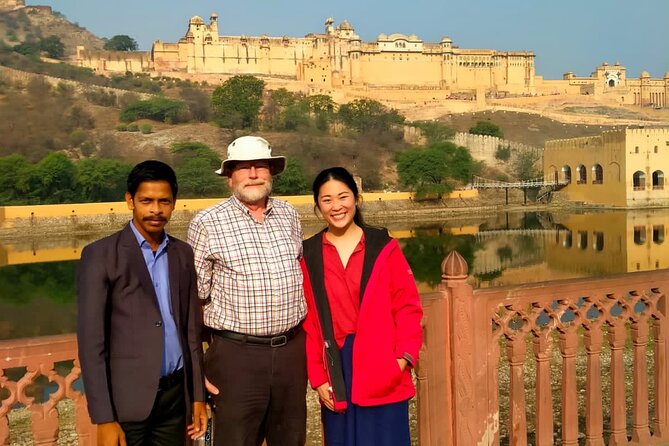
Delhi on this tour is not one mood—it’s several. You start with Gurudwara Bangla Sahib, where a free admission tank-and-gathering experience is part of the place’s identity. The plan keeps it human-scale at about 30 minutes, which is enough time to understand the setting without turning it into a rushed box-check.
Next up is Qutub Minar, a UNESCO World Heritage site and one of the city’s most visible “from anywhere” landmarks. It’s a tall 73-meter tower with origins tied to the Delhi Sultanate era. The important detail for your day: admission is not included, but you get about an hour here—enough for a guided look at the architecture rather than just standing at the base.
The Lotus Temple gives you a different kind of awe. It’s built in 1986 with that flower-like shape, and it’s open to everyone regardless of religion. The stop is short (about 30 minutes), so use it for photos from angles you like and to notice how quiet the space feels compared to surrounding streets.
Then you swing into “monument + city life” mode. India Gate (30 minutes) is also a picnic stop, so it’s a good time to sit, rest your legs, and reset. Parliament House is viewed as a major landmark tied to the Ashoka Chakra design language, and it fits the theme of how modern India signals its identity through architecture.
Old Delhi is where Delhi gets loud and real. Jama Masjid is one of the largest mosques in the city, built by Shah Jahan between 1650 and 1656. You’ll also hit Chandni Chowk for about an hour, where markets can feel intense in the best way—spices, dried fruit, jewelry, and narrow side lanes full of small shops. If you’re the kind of person who likes to touch the city with your senses, this hour is a payoff.
You’ll also pass through Mughal and heritage anchors like Humayun’s Tomb (about an hour) and the long stepwell experience at Agrasen Ki Baoli (about 15 minutes, free). Those short heritage windows can feel like “just enough” if you’re ready to keep moving; they’re not meant to replace a full Delhi deep-dive.
Jaipur Day 3–4: Amber Palace views, Hawa Mahal drama, and the geometry of Jantar Mantar
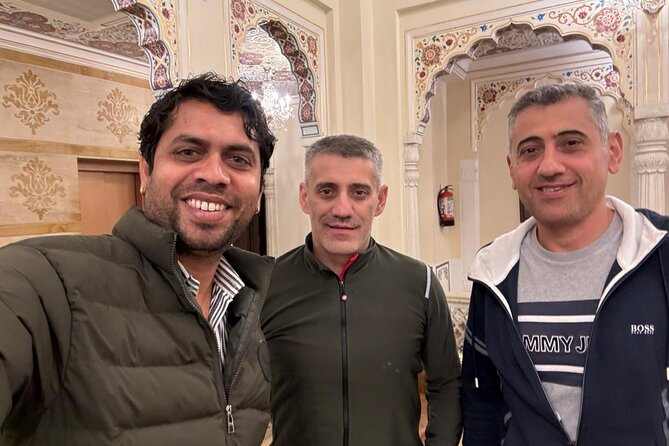
Jaipur starts gently and then ramps up. Day 3 includes Galtaji Temple, the Monkey Temple, where you get three sacred pools and a lively atmosphere. It’s about 30 minutes, free admission, and it’s a quick way to swap out the Delhi vibe.
Then you visit Birla Mandir, known for its white marble latticework and its dedication to Vishnu. The stop is around 30 minutes. Even if you’re not religious, it’s still worth your time because the craftsmanship reads clearly even from a distance.
Day 4 is the Jaipur “big day,” and you’ll cover the city’s key shapes and stories:
- Amber Palace (Amer) for about two hours. This is the kind of place where guide context matters—palaces and squares plus the backstory of who built and ruled there.
- Jal Mahal at Man Sagar Lake. You get about 30 minutes, not a long linger, so treat it like a scenic breather and photo moment.
- Jantar Mantar, a UNESCO site built in 1734, where astronomical instruments were built into stone. About an hour makes it feasible without turning it into a lecture marathon.
- City Palace for about an hour, including the Maharaja’s administrative and ceremonial role in the 1700s.
- Hawa Mahal, the Palace of Breeze. It’s five stories, pyramidal, and built with red and pink sandstone. Plan your time to see it from multiple angles, even if the stop itself is short.
- Albert Hall Museum for about 15 minutes, the oldest museum in Rajasthan state.
Some of the admissions here are listed as not included, so it helps to mentally budget for ticketed monuments. What you get back is guided coverage of the main “why it matters” points, not just a walk around walls.
A smart Jaipur side idea: adding Jhalana leopard safari
This tour is focused on monuments, but Jaipur is also a place where you might want one extra non-temple experience. In past trip extensions arranged through the same planning team, Jhalana leopard safari has been added. It’s not part of the standard monument schedule you’re given here, but it’s a common add-on for people who want something nature-based while the itinerary is already in Jaipur. If that sounds like you, ask about timing so it doesn’t wreck the next day’s palace and museum visits.
Agra and Fatehpur Sikri on Day 5: stepwell wonder and Akbar’s City of Victory
Day 5 starts with Chand Baori, a huge stepwell in Abhaneri that drops about 30 meters into the ground. You’re in the area for about an hour, and it’s one of those places where the scale hits you the moment you look down. It also breaks up the palace-heavy pattern of Rajasthan.
Next is Fatehpur Sikri, often called the City of Victory. Built in Akbar’s era and served as the Mughal capital for about a decade, it’s a full complex with enough variety that guided time helps you choose where to look and what to notice. The plan gives about an hour here.
Then you arrive in Agra and check in. The rest of the day is open at leisure, which is a quiet but useful break before the Taj Mahal day. Not having a packed schedule is the kind of luxury that makes the next morning feel easier.






Taj Mahal sunrise feel, Agra Fort, and Baby Taj on Day 6
This is the centerpiece day. The plan is set up so you can watch the sun rise over the Taj Mahal, then take a guided tour inside for around two hours. Sunrise isn’t just aesthetic here; it’s also practical. Cooler morning air can make the whole experience more comfortable, and the lighting makes the marble feel different as the day starts.
A major logistics win: the tour includes a battery bus ride to and from the Taj Mahal parking lot up to the monument area. That removes some of the scramble and walking you’d otherwise deal with when arriving in a busy time window.
After Taj, you move to Agra Fort, another UNESCO World Heritage site, for about an hour. This is where you see palaces, balconies, and gardens tied to the Mughal residence story. Then you finish with Itmad-ud-Daula—the so-called Baby Taj—for about 30 minutes. It’s a smaller step than the Taj Mahal, but it’s still a strong way to see how Mughal design and tomb architecture evolved.
Then you shift cities. You arrive in Khajuraho and check in, with the travel stretch noted as about 8 hours. That long link is why the next day in Khajuraho is formatted around focused temple time.
Khajuraho Day 7–8: temple carving time, not just a quick photo stop
Khajuraho is one of those places where you need time to look. The itinerary builds that in.
On Day 7 you visit Lakshmana Temple (about an hour), followed by Kandariya Mahadev Temple (about an hour). These are both tied to the Chandela dynasty and known for the stone sculpture work that makes Khajuraho famous. Then you spend additional time exploring more Khajuraho temples for about five hours.
Day 7 is the deep-look day. Use it to slow down at the carvings and notice how the work is arranged in layers. If you rush, you’ll miss the way the details repeat with meaning.
Day 8 is travel heavy: breakfast, then a drive to Varanasi that’s about 400 km and around 7 hours. When the day is mostly on the road, the best move is to treat the arrival as a reset—check in, stretch, eat what’s easy, and conserve energy for the next day’s spiritual program.
Varanasi Day 9: Kashi Vishwanath, Sarnath, the Ganges walk, and Ganga Aarti from a good view
Varanasi day starts at Kashi Vishwanath Temple, a landmark riverside Shiva temple known for an 18th-century gold-plated spire. The plan keeps you there for about two hours, which is enough time to follow the flow and still have guidance around what’s meaningful in the space.
Later around noon, you go to Sarnath, a significant Buddhist pilgrimage site where Buddha first preached the Dharma after enlightenment. The visit is about one hour. It’s a helpful balance: one day anchored in Hindu devotional energy, then a visit to the Buddhist roots of the region.
Then comes the river. You spend time at the Ganges River with about a one-hour walk along the ghats, a good chance to see daily life tied to the water and to watch the movement of boats and people.
The night highlight is Ganga Aarti. The plan notes you’ll witness the ceremony with the best view from your seat, lasting about one hour. This is exactly the kind of moment where “how you watch” matters. A guided setup helps you avoid wandering at the wrong time and lets you focus on the ritual itself.
Varanasi Day 10: a final morning and drop-off where you want to be
Day 10 is straightforward: breakfast, then checkout and drop-off in Varanasi at your desired location. That last piece is useful if you’re continuing your trip independently afterward, or if you want to be close to the area you prefer for onward travel.
Price and logistics: what $623.07 buys you (and what it doesn’t)
At $623.07 per person for 10 days, the value is less about any single monument and more about how much the tour removes from your workload.
Here’s what’s included:
- 09 nights accommodation (when you choose the option with hotels)
- Private air-conditioned vehicle with a driver
- Hotel/airport pickup and drop-off
- All sightseeing with private local guides
- Daily breakfast (9 breakfasts)
- Battery bus ride to and from the Taj Mahal area
- Bottles of mineral water during journeys
What’s not included:
- Monument entrance tickets
- Any meals (outside the breakfast)
- Driver and guide tips, plus laundry and personal expenses
That last point is the balancing act. If you compare this to doing the trip alone, you’re paying for guide time, private transport, and smoother pacing. If you compare it to the cheaper end of the market, you’re paying more for control and reduced stress, especially on the longer links between cities like the Khajuraho to Varanasi drive.
Also note: the tour uses different vehicle sizes depending on group size (4-seater sedan for 1–2 people, 6-seater wagon for 3–4, and a 10-seater minivan for 5–10). If you’re traveling as a couple or solo, this can feel more comfortable than bigger-group logistics.
Rooms and pacing: twin-sharing, short stops, and comfortable expectations
Rooming is generally twin-sharing. If you book as three people, rooms default to triple-sharing unless you choose a different setup, which may require an additional charge if you prefer two rooms. That’s important to know early so you can match the room plan to what you want.
Pacing wise, some days include quick windows: Agrasen ki Baoli at 15 minutes, and museum time at Albert Hall around 15 minutes. That can feel perfectly fine if your priority is hitting highlights with guided context. If your priority is lingering for hours on fewer sites, you might find the schedule intense.
Still, the itinerary is built around the reality that North India driving times can swallow the day. The inclusion of bottled water during travel and the private vehicle help keep those stretches from feeling like a chore.
Choosing your tour team: asking about coordination and driver style
One of the strongest signals from past feedback is the emphasis on organization and caring driver service. Names that have come up in past arrangements include drivers Surendra, Ajay, Man Singh, Deepak, Maan, and Himmett, plus planning support through someone named Gopal.
You can use that as practical advice: when you book, tell your planner what you care about most (smooth timing, calm driving, clear guidance at monuments). A good match is especially valuable on days with multiple UNESCO stops and short guided windows, because it affects how smoothly you move between them.
Who should book this private luxury Golden Triangle with Khajuraho and Varanasi?
Book it if:
- You’re on a first trip to North India and want a guided highlight circuit
- You want private transport so your days feel controlled
- You like UNESCO sites but don’t want to spend your time figuring out every ticket and route
- You want Delhi + Agra + Jaipur and the carved-stone focus of Khajuraho plus a spiritually charged Varanasi day
Consider a different style of trip if you:
- Prefer lots of free time in each city without many scheduled stops
- Want all monument entry fees fully included in the price
- Are very sensitive to long road days between major regions
Should you book this tour?
I’d book this if your goal is a well-guided, organized mix of the headline sights plus two distinct cultural chapters—Khajuraho temples and Varanasi rituals. The big strengths are the private setup, the guide-led sightseeing, and that Taj Mahal day includes both time inside and battery-bus convenience.
Just go in with two expectations: you’ll pay separately for some monument entrance tickets, and the schedule includes short stop windows that work best when you’re ready to keep moving.
If that sounds like your travel style, this is a strong way to see a lot of North India with less friction.
FAQ
What cities are included in this 10-day tour?
You visit Delhi, Agra, Jaipur, Khajuraho, and Varanasi.
Are monument entrance tickets included?
No. Monument entrance tickets are not included, though the itinerary includes some stops listed as free entry and other major sites that typically require tickets.
Is breakfast included?
Yes. Breakfast is included daily for 9 days (daily hotel breakfast).
What kind of vehicle will you use for transport?
Transport is in a private, air-conditioned vehicle. It’s a 4-seater sedan for groups of 1 or 2, a 6-seater wagon for groups of 3 or 4, and a 10-seater minivan for groups of 5 to 10.
How is the Taj Mahal day handled for transport and time?
The tour includes a battery bus ride to and from the Taj Mahal parking lot up to the monument area, and you’ll have a guided tour inside the Taj Mahal for approximately two hours.
What planned experiences are included in Varanasi?
You’ll visit Kashi Vishwanath Temple, then Sarnath later in the day, take a walk along the Ganges River, and witness the Ganga Aarti ceremony with the best view from your seat.
Can I cancel and get a full refund?
Yes. Free cancellation is available if you cancel up to 24 hours in advance of the experience’s start time for a full refund. If you cancel less than 24 hours before, the amount paid is not refunded.