REVIEW · NEW DELHI
Four-Day Private Luxury Golden Triangle Tour to Agra and Jaipur From New Delhi
Book on Viator →Operated by Crystal India Holidays · Bookable on Viator
Sunrise at the Taj shifts the whole trip. In four days, you’ll move by private air-conditioned car between Delhi, Agra, and Jaipur, chasing a sunrise Taj Mahal and the forts and palaces in between.
I like how this stays organized without feeling stiff: hotel and airport pickup, then private local guides at each stop. I also like the human factor—drivers such as Sojan, Surinder, and Subhash are repeatedly praised for being calm in traffic and helpful when things get real on the road.
One thing to plan for: monument entrance fees are not included (budget about $60 per person), and temple schedules can shift your day (Lotus Temple is closed on Mondays, and Taj Mahal is closed on Fridays).
In This Review
- Key highlights you can plan around
- Golden Triangle in 4 Days: What Feels Luxurious About It
- Day 1 in Delhi: Qutub Minar, Lotus Temple, and the Monumental Core
- Day 2 Sunrise Taj Mahal and Agra Fort: The Day’s Real Payoff
- Day 3 Jaipur Pink City Stops: Jal Mahal Photos and the Jantar Mantar Nerd-Fun
- Private Driver + Local Guides: Why This Doesn’t Feel Like a Factory Tour
- Hotels and Breakfast: Comfort in the Right Places
- Price and Entrance Fees: The Value Math You Should Do
- Should You Book This 4-Day Private Luxury Golden Triangle Tour?
Key highlights you can plan around
- Sunrise Taj Mahal timing with a battery bus ride to cut the walking hassle
- Private city guides across Delhi, Agra, and Jaipur, plus English-speaking support
- UNESCO hits packed in: Qutub Minar, Agra Fort, and Jantar Mantar
- Group-matched private transport (sedan, wagon, or van depending on group size)
- Strong safety and smooth rhythm on long drives, with drivers known for punctuality
- Flexibility when you need it, including help via WhatsApp during the trip
Golden Triangle in 4 Days: What Feels Luxurious About It
This is the Golden Triangle the practical way: not a bus tour, not a rushed checklist, and not a constant hunt for tickets and meeting points. You travel between Delhi, Agra, and Jaipur in a private, air-conditioned vehicle, then each major site gets its own local guide.
What makes it feel “luxury” isn’t silk and chandeliers. It’s the reduction of stress. You’re not figuring out who goes where, who buys what, or when to move on. That matters most when you’re bouncing three cities in four days and dealing with real traffic.
The biggest value is how the trip is structured for the sights that work best with the right timing. The sunrise Taj Mahal is the obvious one. But even in Delhi and Jaipur, you’ll see the landmarks while daylight and crowds are still in your favor.
You can also read our reviews of more tours and experiences in New Delhi.



Day 1 in Delhi: Qutub Minar, Lotus Temple, and the Monumental Core
Delhi starts with UNESCO at Qutub Minar. It’s a 73-metre, five-storey tower built in 1193 by Qutub-ud-din Aibak, founder of the Delhi Sultanate. The guide angle here is good because the tower isn’t just a tall thing to photograph. You get the story behind its design and why it matters in the early architecture of the city.
Next is Lotus Temple, known for its flower-like shape and for being open to everyone regardless of religion. It’s free, quick, and visually easy to enjoy—even if you’re arriving with jet lag. One caution: it’s closed on Mondays, so your day order may need adjusting if your trip lines up with that.
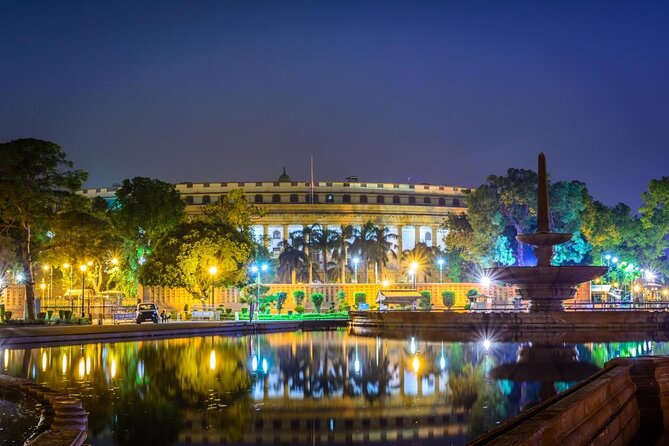
You then sweep through the iconic landmarks near the Rajpath area: India Gate, Parliament House, and Rashtrapati Bhavan. India Gate is a war memorial and a classic local picnic spot, so it’s a good place to pause and observe daily life around a famous structure. Parliament House is designed around the Ashoka Chakra motif, and Rashtrapati Bhavan is the President’s residence with big grounds and open space.
After a lunch break at a local restaurant, you drive to Agra on the Yamuna Expressway (about three hours). You reach your Agra hotel with enough time to reset before the main show the next morning.
Day 2 Sunrise Taj Mahal and Agra Fort: The Day’s Real Payoff
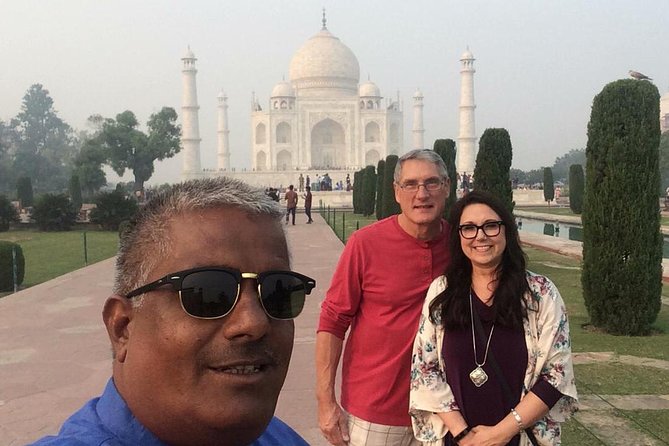
This is the day you’re paying for. You set out early for the sunrise Taj Mahal, then you get a guided visit inside for about two hours. The Taj Mahal is UNESCO-listed, built by Mughal Emperor Shah Jahan in the 1630s as a tomb, and the early light gives you the kind of mood you don’t get when the sun is high and the crowds are thick.
The tour also includes the practical bits that help. You get a battery bus ride to and from the Taj Mahal parking area up to the monument. That small inclusion makes the morning easier, especially if you’re still stiff from travel.
After the Taj, you shift from romance to power with Agra Fort. It’s another UNESCO site, and it’s described as the main residence of the Mughal emperors. You’ll move through palaces, balconies, and gardens with a guide who explains what you’re seeing instead of leaving you to guess.
Then comes Itimad-ud-Daulah, often nicknamed the Bachcha Taj and described as a jewel box. It’s a shorter stop—about half an hour—but it’s a great one for tightening the story thread of Agra’s Mughal-era architecture. You go from the big statement (Taj Mahal) to the more delicate one (Itimad) without feeling like the day is just repeating the same theme.
Day 3 Jaipur Pink City Stops: Jal Mahal Photos and the Jantar Mantar Nerd-Fun
Jaipur is where the trip earns its nickname, the Pink City. The day starts after breakfast with Panna Meena ka Kund, a step well that’s short on time but big on visual impact. It’s one of those places that makes you stop and look upward without feeling like you’re spending hours in a museum.
Jal Mahal is next, mainly for the photo moment. It’s a palace sitting in the middle of Man Sagar Lake. You won’t hang around forever, but it’s a classic Jaipur contrast: big city forts and palaces paired with a view that feels calm.
Then you move into City Palace, with about an hour to explore. City Palace was the administrative and ceremonial seat of the Maharaja of Jaipur, originally constructed in 1721. A guide helps you connect the architecture to the way power worked in Jaipur.
After that, you hit Jantar Mantar, a UNESCO World Heritage site with 19 astronomical instruments built in 1734 by Sawai Jai Singh II. If you enjoy science history, this is a highlight. It also breaks up the day so you’re not only looking at courtyards and facades.
Finally, Hawa Mahal—the Palace of Breeze. It’s five storeys, built in red and pink sandstone, and it’s one of the most recognizable silhouettes in Jaipur. The stop is brief, but it works well as a closer because it gives you a clean image to carry with you.
One extra note: Amber Fort is repeatedly listed as a signature Golden Triangle sight alongside the Jaipur palaces. If your day plan includes it, that’s usually where you get the big fort-complex view over the city.
Private Driver + Local Guides: Why This Doesn’t Feel Like a Factory Tour
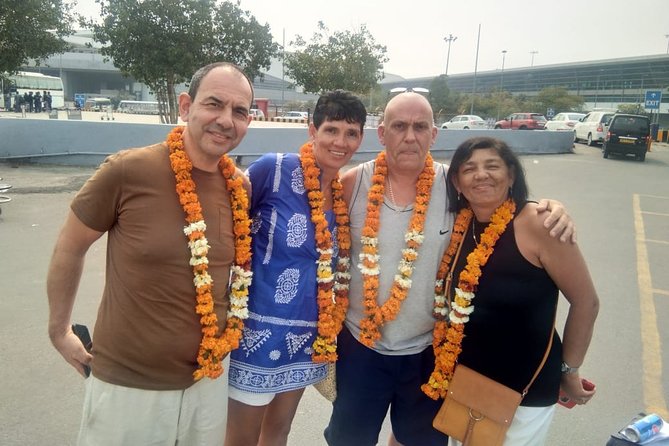
What makes this trip work is how the driving and the guiding divide the labor.
You get a private driver in a car sized to your group—sedan for one to two people, wagon for three to four, and a van for five to ten. That matters because the driving days aren’t short. You’re covering stretches of road between cities, and having one team handle the route means you’re not losing time to transfers.
At each sightseeing stop, you also get private local guides who provide historical commentary. English-speaking guidance is included, and you can request another language if you specify it during booking.
Two small operational details make a bigger difference:
- Your guide helps you with monument entry so you don’t have to wait in ticket lines.
- Bottled mineral water is provided during journeys.
In the real world, traffic and timing can throw curveballs. That’s where drivers like Rajesh, Gurjeet, and Vicky get credit in the feedback you can lean on: they’re described as punctual, calm, and willing to handle last-minute needs. There are also examples of staff supporting travelers with practical detours, including medical/pharmacy help, which is exactly the kind of thing you want covered when you’re far from home.






Hotels and Breakfast: Comfort in the Right Places
This is a three-night stay, and it’s set up to keep you rested enough for early starts. If you choose a hotel option, breakfast is included each morning.
The quality level depends on which category you book. The tour mentions 4-star and 5-star options, with examples from the setup and feedback including properties like Fern Residency (or similar) and higher-end brands such as Intercontinental or Hilton. Guests also mention stays at places like Holiday Inn and Jaypee Palace when they booked premium options.
Rooms are generally twin-sharing. If you’re traveling as a trio, the default is triple-sharing, and if you want two separate rooms for three people, there may be an added charge. If you care about bed layout, it’s worth aligning your room preference early.
Also notice the practical pacing. You don’t just sleep somewhere. You’re sleeping in the city you need for the next morning’s route—Agra for the Taj sunrise, then Jaipur for the full sightseeing day.
Price and Entrance Fees: The Value Math You Should Do
At $160.70 per person, the headline price is only part of the story. What you’re buying is a package that includes:
- Private air-conditioned transport
- Private local guides at the sights
- Daily breakfast (when the hotel option is selected)
- Pickup and drop-off in the Delhi area
- A battery bus ride connected to the Taj Mahal visit
- Bottled water during journeys
- Taxes and hotel taxes
What’s not included is monument entrance fees. The total stated allowance is about $60 per person for entrance fees. So if you’re budget-planning, your real starting point is closer to the tour price plus that entry estimate.
Is it good value? In many cases, yes—because entrance fees and guiding are the kind of costs that add up fast if you try to DIY. Also, the big time saver is the early Taj plan plus the private format, which reduces waiting and chasing.
The trade-off is that this is still a four-day sprint. You’ll spend time in the car. If you’re the type who wants slow travel and lots of downtime, you might find the road time a bit much.
Should You Book This 4-Day Private Luxury Golden Triangle Tour?
Book it if you want the Golden Triangle highlights with less friction: sunrise Taj Mahal timing, private guides at each major site, and comfortable hotel nights to reset. It’s especially well-suited if you’re traveling solo or as a couple and value safety, punctual pick-ups, and help with the practical stuff like tickets and meeting points.
Skip or reconsider if:
- Your budget can’t absorb entrance fees on top of the tour price.
- You’re sensitive to driving time between Delhi, Agra, and Jaipur.
- Your travel dates line up with Lotus Temple closing on Monday or potential scheduling shifts around Taj Mahal being closed on Fridays.
If your goal is to see the big names—Taj Mahal at sunrise, Agra Fort, and the major Jaipur landmarks—this is a solid way to do it without turning the trip into a logistics project.