REVIEW · FLORENCE
Premium Small-Group Uffizi Tour
Book on Viator →Operated by Italy Pass tours · Bookable on Viator
You can beat the Uffizi chaos. This premium small-group timed entry tour turns a giant museum into a clear hit list, with an art historian guide and audio headsets to keep you on track.
What I like most is the efficient route. You’ll get context for major works instead of just walking past them, and you’re also set up with audio so the details don’t get swallowed by the crowd noise.
One thing to plan for: the Uffizi is packed. Even with priority entry, security and meeting logistics can add stress if you arrive late or miss the exact start point, and audio quality can vary depending on the headset fit.
In This Review
- Key things that make this Uffizi tour worth your time
- Why 90 Minutes at the Uffizi Can Still Feel Like More
- Uffizi Ticket Rules: The Part That Can Mess Up Your Morning
- Where you meet matters more than you think
- What You’ll Actually See: A Smart Route Through Renaissance Hits
- The real value: you learn what you’re looking at
- Audio Headsets: Hearing the Guide in a Museum That Won’t Whisper
- Guide Quality Can Make or Break the Experience
- My practical advice
- Small Group of Up to 9: What That Means on the Ground
- Staying Inside After the Tour: Use It Like a Two-Part Plan
- Price and Value in Florence: Where Your Money Goes
- Should You Book This Premium Uffizi Small-Group Tour?
- FAQ
- How long is the Premium Small-Group Uffizi Tour?
- Is the tour offered in English?
- What is the maximum group size?
- Where do I meet the tour?
- Are audio headsets included?
- Can I stay inside the Uffizi after the tour ends?
- Is this tour refundable if I cancel?
- What happens if the tour is canceled due to poor weather?
Key things that make this Uffizi tour worth your time

- Priority, timed entry for a faster start through the museum’s front end
- Audio headsets included so you can actually follow the guide in crowded rooms
- A route built for 90 minutes, hitting the famous Renaissance must-sees without wandering
- Nominative tickets and ID checks, so names on your booking matter
- A small group (max 9), which helps navigation and view-finding
- You can stay after the tour, so the big art doesn’t end when the clock runs out
Why 90 Minutes at the Uffizi Can Still Feel Like More

The Uffizi can overwhelm fast. It’s huge, crowded, and easy to lose the thread if you’re wandering on your own.
This tour is interesting because it compresses the museum into an efficient route through the gallery. In practice, that means you spend less time asking where to go and more time learning what you’re seeing.
I also like that the guide gives context you’d miss if you just treat each painting like a postcard. You’re not only looking at Botticelli, Leonardo da Vinci, Michelangelo, and Caravaggio—you’re hearing what makes them matter in Florence’s Renaissance story.
You can also read our reviews of more tours and experiences in Florence.



Uffizi Ticket Rules: The Part That Can Mess Up Your Morning
Here’s the biggest logistics detail: tickets are issued in your name. When you book, you need the full names of every participant, and everyone must present a valid passport or ID that matches the booking.
If the names don’t match, entry can be denied at the ticket office. That’s not a “be nice and it’ll be fine” situation. It’s strict, and it’s there to prevent scams and unauthorized ticketing around the museum.
Even with priority entry, expect a brief stop for security. The museum’s rules mean you may still have a short wait, especially around peak times.
Where you meet matters more than you think
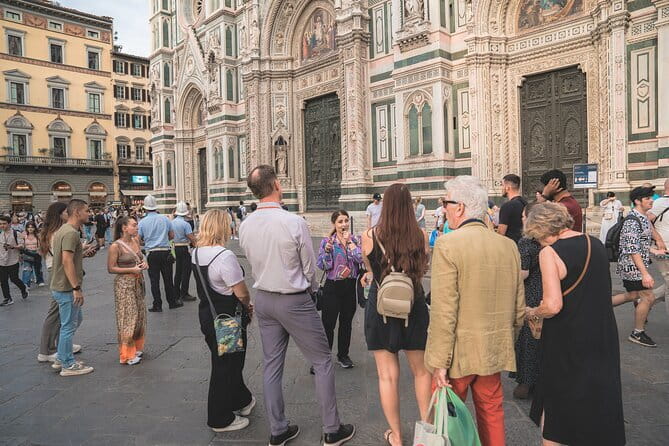
The meeting point is Piazzale degli Uffizi, 6, 50122 Firenze FI, Italy. It sounds simple. In reality, you’ll be navigating a dense knot of people waiting for different tours.
A helpful tip from real-world experience: your voucher instructions may mention meeting under the Giotto statue. If you go hunting without checking that message, you can waste 20 minutes in the heat while the group slips away.
What You’ll Actually See: A Smart Route Through Renaissance Hits

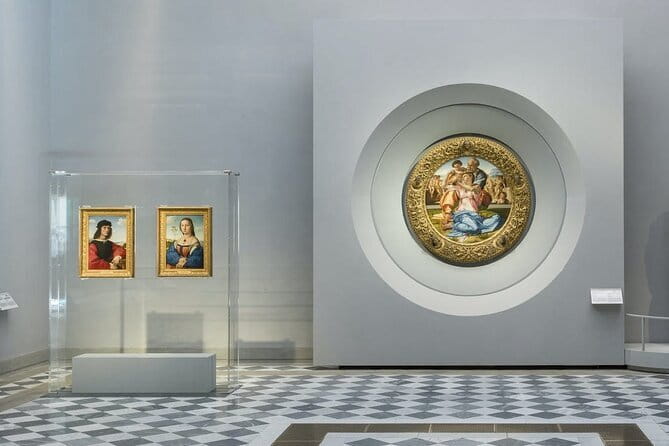
This tour’s core stop is the Uffizi Gallery itself, using timed entry to reach the collection efficiently. Your visit is built around Renaissance masterpieces plus portrait works connected to royal collections.
In a relatively short window (about 1 hour 30 minutes), the goal is to hit the famous ceiling-to-floor names: Botticelli, Leonardo da Vinci, Michelangelo, and Caravaggio. You’ll also get to see royal portraits from various places, which helps you understand how art collected power and prestige—not just beauty.
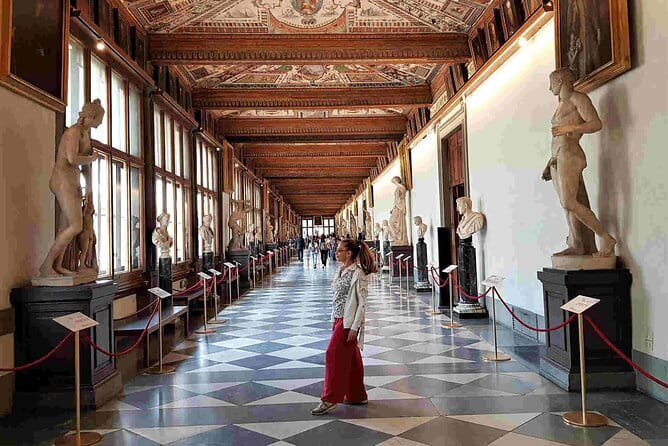
The route is also designed so you’re not bouncing randomly room to room. That matters because the Uffizi is less like one museum room and more like a chain of galleries with changing themes, styles, and historical emphasis.
The real value: you learn what you’re looking at
Without a guide, it’s easy to spot a famous artist and still miss the point. With a good art historian, you start noticing patterns: why a composition feels a certain way, what symbolism might be doing, and how Renaissance artists responded to each other across decades.
This is where the tour can feel like a shortcut, even if you still walk a lot. You’re not saving steps. You’re saving confusion.





Audio Headsets: Hearing the Guide in a Museum That Won’t Whisper

Audio headsets are included, which is a big deal at the Uffizi. In crowded rooms, you usually lose most of what you paid for—unless you can hear clearly.
Still, audio can be hit or miss. Some people found headsets hard to hear through, including cases where the audio sounded staticky or where it was difficult to catch every word. Others said the earpieces were cheap or didn’t block enough background noise.
If you’re the type who really wants every sentence, come prepared to be flexible. Adjust the headset fit, speak up if you can’t hear, and consider that the guide will sometimes move faster during peak crowds.
Guide Quality Can Make or Break the Experience
One pattern shows up over and over: the tour works best when the guide is easy to follow, energetic, and willing to guide the group with confidence.
In the positive experiences, guides like Alex, Olga, Fabrizio, Raphael, Jessica, and Bruce were praised for being friendly, passionate, and able to give strong context quickly. People also liked when the guide kept the group positioned for a better view, instead of letting everyone hang back and squint.
A few negative experiences highlight a different problem: some guides were hard to understand due to difficult English, or seemed less interactive. In those cases, the headset didn’t fully fix the issue, and the tour felt like a one-person monologue rather than a guided walk.
There’s also a practical reality: if the group has to pause or detour—such as for accessibility needs—meeting up and audio clarity can get harder. One explanation provided was that a guide may need to assist guests with disabilities to a separate elevator entrance for safety, which can reduce how well everyone hears the internal meeting point.
My practical advice
You can’t control crowd volume, but you can control your own part. Arrive early enough to find your group. Put your phone away and listen with intent. If you want to ask questions, keep them short and direct, because time is tight.
If your guide pace is rushing, remember you can continue exploring after the tour ends. That’s your safety net.
Small Group of Up to 9: What That Means on the Ground
A group size of max 9 is meant to feel like a small, human scale. Not a school bus.
In a good run, it means you don’t spend the entire tour looking for people. The guide can move you through corridors more thoughtfully, and you can find decent sight lines for big works.
The downside is also real: even “small” groups can struggle in a museum this crowded. Some people reported feeling rushed in the final stretch, while others said they had limited time for back-and-forth questions.
If you’re traveling with someone who moves slower, a smaller group can help because the guide can manage pacing better. One positive note praised the guide’s ability to keep a slower family member navigating without losing the group.
On the flip side, if the guide speeds up or steps away to handle something, a small group can still get separated. If you hate surprises, stay close and keep an eye on the guide’s direction changes.
Staying Inside After the Tour: Use It Like a Two-Part Plan

A nice perk: you can stay in the gallery after the tour. So think of this as your guided “map” first, then your personal “choose your own route” time.
In other words, you can treat the tour as the way to understand what matters most, then use the remaining time to circle back to what grabbed you. This is especially useful if you’re the type who wants to sit with a painting longer than 30 seconds.
It also helps with the one complaint that pops up: when the Uffizi is packed, the tour can feel like it moves quickly. Staying after gives you control over how long you look.
Price and Value in Florence: Where Your Money Goes
This tour costs $83.48 per person, for about 1 hour 30 minutes. The museum entry ticket price is €29. The remaining amount covers taxation fees and guide-related charges, plus audio/host-related costs as stated.
That breakdown matters because you’re not paying only for admission. You’re paying for:
- A timed entry system that helps you avoid wasting time in the wrong lines
- A licensed guide to interpret what you’re seeing
- Audio headsets so you can keep up in crowds
- A small-group structure that makes navigation feel less chaotic
So is it good value? For me, yes—if you’re coming for the big masterpieces and you want context without spending hours planning your own route. If you already know exactly which rooms you want and you don’t care about interpretation, a self-guided ticket could be cheaper. But the Uffizi isn’t just about seeing famous art. It’s about understanding how it hangs together.
Should You Book This Premium Uffizi Small-Group Tour?
Book it if:
- You want an efficient, structured way to see the Uffizi highlights.
- You like getting art historical context fast, without doing homework first.
- You’re more likely to enjoy the day if you can hear the guide clearly.
Skip or consider alternatives if:
- You’re very sensitive to audio issues or you’ve struggled with single-ear headset setups before.
- You prefer slower pacing and long question-and-answer time during the tour itself.
- You can’t reliably arrive early and find the exact meeting point. With a crowded museum, late arrivals create extra stress.
Small practical note: this experience is non-refundable and can’t be changed, so only lock it in if your schedule is solid. Weather can also affect whether the tour runs, with a reschedule or refund if it gets canceled due to poor weather.
If you’re smart about timing and prepared to move with the group, this is one of the easier ways to turn the Uffizi from overwhelming into readable.
FAQ
How long is the Premium Small-Group Uffizi Tour?
It lasts about 1 hour 30 minutes.
Is the tour offered in English?
Yes. The tour is offered in English.
What is the maximum group size?
The group is limited to a maximum of 9 travelers.
Where do I meet the tour?
The meeting point is Piazzale degli Uffizi, 6, 50122 Firenze FI, Italy.
Are audio headsets included?
Yes. Audio headsets are included so you can hear the guide clearly.
Can I stay inside the Uffizi after the tour ends?
Yes. Participants can stay inside the gallery after the tour.
Is this tour refundable if I cancel?
No. This experience is non-refundable and cannot be changed for any reason.
What happens if the tour is canceled due to poor weather?
If it’s canceled because of poor weather, you’ll be offered a different date or a full refund.