REVIEW · NEW DELHI
3-Day Luxury Golden Triangle Tour: New Delhi, Agra & Jaipur
Book on Viator →Operated by Aiza tours · Bookable on Viator
Three days in India can feel like a week.
This private Golden Triangle plan is built for people who want the big sights—Taj Mahal at sunrise and Delhi/Jaipur UNESCO sites—without spending your holiday in planning mode. You ride in a comfortable, air-conditioned private car, get local guidance across cities, and can customize the mix to fit your pace and priorities.
I especially like two parts: first, the tour uses live guides in each city, and you’ll get names like Adin in Delhi, Rajesh Singh in Jaipur, and Faizan Hussain in Agra showing up in past group experiences. Second, the logistics are handled for you—pickup, transfers, and smooth movement between highlights—so you can focus on the sights (and yes, that Old Delhi rickshaw ride matters more than it sounds).
One consideration: the schedule is tight and starts early, including a 6:00 AM Taj sunrise window, and admissions are not fully packaged—entrance fees are listed as about $65 per person. If you hate early mornings or want tons of downtime, you may find this route a bit fast.
In This Review
- Key highlights worth caring about
- A 3-day Golden Triangle route built for time-starved first-timers
- Delhi: Lutyens monuments, Old Delhi markets, and UNESCO-era architecture
- India Gate and the ceremonial drive through Lutyens’ Delhi
- Raj Ghat: Gandhi’s memorial in quiet gardens
- Chandni Chowk market and Khari Baoli spice market: see, smell, decide
- Jama Masjid: Mughal grandeur in the center of Old Delhi
- Humayun’s Tomb and Qutub Minar: UNESCO proof that Delhi isn’t just a modern city
- Lotus Temple: a calm break after the big monuments
- Agra: Taj Mahal sunrise, battery bus comfort, and Agra Fort
- The 6:00 AM Taj pickup and why sunrise matters
- Battery bus from parking to the Taj area: small convenience, big payoff
- Agra Fort after breakfast: a different side of “Agra”
- The drive to Jaipur with Fatehpur Sikri en route
- Jaipur: Amber Fort views, Jal Mahal from the water’s edge, and cool cenotaphs
- Amber Fort (Amer Fort): the hilltop big scene
- Jal Mahal: you may look, but you won’t enter
- Gaitore Ki Chhatriyan: marble chhatris with Rajput-Mughal mix
- Jaipur’s must-sees: City Palace, Jantar Mantar, Hawa Mahal area, and Patrika Gate
- City Palace: Rajput, Mughal, and European overlaps
- Jantar Mantar: the world’s largest stone astronomical observatory
- Hawa Mahal area: the jharokha façade even without long linger time
- Patrika Gate: a modern-feeling stop that still fits Jaipur
- Price and logistics: what $105 gets you, and what to budget for entrances
- Who should book this Golden Triangle tour?
- Should you book this 3-day Golden Triangle tour?
- FAQ
- What cities does the tour cover?
- Where does pickup and drop happen?
- Do I travel in a private vehicle?
- Will I have a guide during the visits?
- Is the Taj Mahal sunrise included?
- Is a rickshaw ride included in Delhi?
- Is the entrance fee included in the price?
- Does the tour include hotel accommodation?
- What is included for the Taj Mahal area?
- What if my dates include a Friday?
- Cancellation and weather
Key highlights worth caring about
- Private A/C car with a uniformed driver: less stress, more control over timing.
- Local guides in each city: the history comes with names, dates, and explanations that actually make sense.
- Old Delhi by rickshaw: a classic way to feel the lanes around Chandni Chowk.
- Taj Mahal sunrise + battery bus: less walking effort on a very early schedule.
- UNESCO stops in Delhi: Humayun’s Tomb and Qutub Minar are built into the flow.
- Jaipur in one day: Amber Fort, City Palace, Jantar Mantar, and viewpoints, without a wasted hour.
A 3-day Golden Triangle route built for time-starved first-timers
The best thing about this tour style is its clarity: Delhi, Agra, Jaipur, in one clean loop, with transportation and guided stops that don’t require you to figure out which monuments are worth your limited time. If it’s your first trip to North India, this kind of routing helps you avoid the common trap—seeing “a list of sights” instead of understanding what you’re looking at.
You get a private setup, but it’s not a lonely experience. The tour includes a live guide service in your preferred language at the places you visit, which is a big deal when you’re dealing with Mughal-era architecture, Mughal and Rajput overlaps, and monuments that have specific historical context behind them. It also means you can ask practical questions on the spot—what matters most here, what to skip, what’s worth lingering on for photos.
Customization is also part of the promise. That’s useful on a short stay because you might care more about markets than forts, or more about architecture than shopping. In practice, customization is what lets the trip feel less like a conveyor belt and more like a plan that fits you.
You can also read our reviews of more tours and experiences in New Delhi.



Delhi: Lutyens monuments, Old Delhi markets, and UNESCO-era architecture
Day 1 in Delhi is about contrast. You start with the grand government-and-imperial zone, then shift into Old Delhi’s market world, then end with major UNESCO-listed Mughal architecture and a modern icon.
India Gate and the ceremonial drive through Lutyens’ Delhi
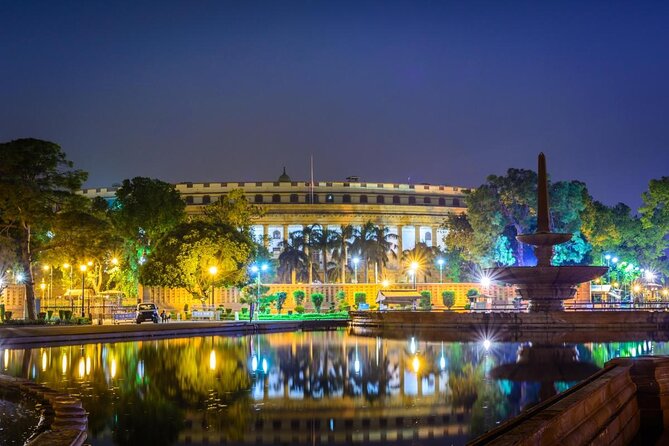
India Gate is a classic starting point because it sets the tone of Lutyens’ Delhi—wide avenues, monumental scale, and a very “capital city” vibe. From there, you pass by landmarks tied to India’s modern state story, including Rashtrapati Bhavan and the war memorial area. You’re not there for long, but it gives you bearings and a sense of how Delhi is organized.
Raj Ghat: Gandhi’s memorial in quiet gardens
Raj Ghat is a marked shift from the traffic and crowds of the city center. The memorial sits amid serene gardens, and the stop is free and timed for a short visit. Even if you’re not the type to enjoy memorials, this is a helpful pause—Delhi can start to feel like noise after the first market streets.
Chandni Chowk market and Khari Baoli spice market: see, smell, decide
Chandni Chowk is one of Delhi’s older and busier markets, originally laid out in the Mughal era under Shah Jahan’s family. The tour includes a focused walk there, which is exactly what you want in a short itinerary: enough time to notice how the market works, but not so much that you lose your entire day.
Near it is Khari Baoli, Asia’s largest wholesale spice market (operating since the 17th century). This is where the senses can get intense—spice stalls, strong smells, and dense foot traffic. The practical takeaway: wear comfortable walking shoes and expect you’ll be moving through crowds.






Jama Masjid: Mughal grandeur in the center of Old Delhi
Jama Masjid is one of the largest mosques in India and a strong example of Mughal architecture. The tour schedules a longer stop here, which matters because this isn’t just a quick photo stop. You’ll likely want a little time to take in the scale, then step back to see the complex layout from different angles.
Humayun’s Tomb and Qutub Minar: UNESCO proof that Delhi isn’t just a modern city
Two of the biggest “wow” moments in Delhi are built into the schedule:
- Humayun’s Tomb, a UNESCO World Heritage Site from the Mughal era.
- Qutub Minar, also UNESCO-listed, known as the world’s tallest brick minaret.
These stops are valuable because they connect the dots between style, engineering, and empire. Humayun’s Tomb gives you a sense of royal mausoleum planning. Qutub Minar shows the evolution of Indo-Islamic architecture.
A quick practical note: bring something for sun and heat. Delhi’s daytime can move fast, and you’ll be doing outdoor time even when the sites are historically indoors/outdoors mixes.
Lotus Temple: a calm break after the big monuments
The Lotus Temple is a Baha’i House of Worship with lotus-shaped architecture. It’s a softer landing after the monumental scale of the older sites. The time here is shorter, but it helps reset your brain before you jump into the next city leg.
Agra: Taj Mahal sunrise, battery bus comfort, and Agra Fort
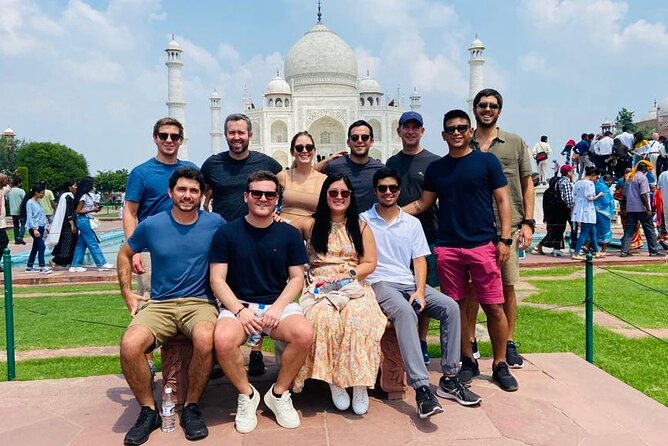
Agra is where the tour’s early-morning planning pays off. You leave Delhi with the day structured around one key goal: seeing the Taj Mahal in sunrise light.
The 6:00 AM Taj pickup and why sunrise matters
The tour includes a sunrise Taj visit with a 6:00 AM pickup. Sunrise at the Taj isn’t just about photos (though yes, photos are a big part of it). Early timing typically means you face fewer crowds than later in the morning, and the light helps you notice the marble’s subtle coloring—white turning creamy, then brighter, as the sun climbs.
You also get a professional guide plus the driver handling the route, which helps you avoid the time-sink of working out where to go and how to move once you arrive.
Battery bus from parking to the Taj area: small convenience, big payoff
One smart inclusion here is the battery bus ride to and from the Taj Mahal parking area up to the monument zone. If you’re not looking to add extra steps to an already early day, this is a relief. It keeps the experience enjoyable even if you arrive tired or travel with heavier bags.
Agra Fort after breakfast: a different side of “Agra”
After your Taj time, you return for breakfast and checkout from your hotel, then head to Agra Fort. Agra Fort is UNESCO-listed and changes the story from romantic marble to power and defense. It’s a good pairing because Taj Mahal alone can feel like a single-note experience, but fortifications show how empires protected and ruled.
If you’re a fan of architecture details, you’ll likely enjoy Agra Fort more than you expect. If your energy is limited, it’s still worth it because the fort gives context for why the Taj is where it is.
The drive to Jaipur with Fatehpur Sikri en route
The next step is a long-ish transfer from Agra to Jaipur, and the tour uses the time with a stop at Fatehpur Sikri. Fatehpur Sikri was a historic Mughal capital that once flourished—now it’s a place where you walk through an empire’s planning and ambition.
This stop is useful because it adds variety. Without it, the drive can feel like pure transit. With it, you arrive in Jaipur already “in the story,” not just on the road.
The tour then moves you into Jaipur, where the next day’s sights start to line up: forts, royal residences, and observational architecture.
Jaipur: Amber Fort views, Jal Mahal from the water’s edge, and cool cenotaphs
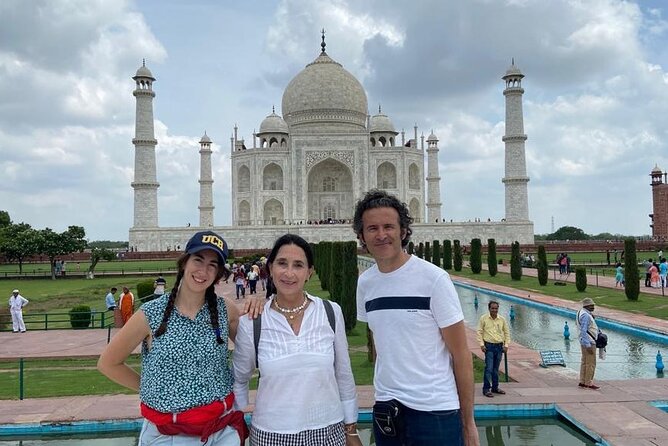
Jaipur is set up for maximum variety in one day. You start with the grand hilltop fort energy, then rotate through palace-and-memorial spaces, then finish with city-famous landmarks and photogenic gates.
Amber Fort (Amer Fort): the hilltop big scene
Amber Fort is one of Jaipur’s top landmarks, perched on a hilltop overlooking Maota Lake. The fort is known for intricate carvings and a royal-architecture look that feels both dramatic and detailed. The tour includes time here for photos and a proper walk-through.
Practical angle: even though the tour is guided, the fort area involves outdoor walking and stairs. Comfortable shoes are non-negotiable if you want to enjoy it.
Jal Mahal: you may look, but you won’t enter
The itinerary stops at Jal Mahal (Water Palace), but entry is prohibited. That means you’ll enjoy the scene—especially the way it sits on the lake—without turning it into a long internal visit. If you’re expecting “another museum,” you might feel a little teased. If you like viewpoint moments, it’s still a strong stop.
Gaitore Ki Chhatriyan: marble chhatris with Rajput-Mughal mix
Gaitore Ki Chhatriyan is another memorable Jaipur stop: cenotaphs with Rajput and Mughal architectural blending. The tour focuses on details like the white marble chhatri associated with Maharaja Sawai Jai Singh II, plus the intricate carvings and latticework found across the structures.
This is a great contrast to the big crowds at Amber Fort. It’s the kind of place where you slow down and look at motifs instead of just chasing big-photo angles.
Jaipur’s must-sees: City Palace, Jantar Mantar, Hawa Mahal area, and Patrika Gate
After the fort-and-memorial stops, the tour shifts into classic Jaipur identity: royal buildings and scientific architecture.
City Palace: Rajput, Mughal, and European overlaps
The City Palace blends Rajput, Mughal, and European architecture, and it’s tied directly to Jaipur’s royal heritage. The tour includes around two hours here, which is enough time to get the layout and not just skim highlights.
If you like places where styles collide, City Palace is one of the best stops in the whole route. It helps you understand why Jaipur feels distinct from other North Indian cities on architecture alone.
Jantar Mantar: the world’s largest stone astronomical observatory
Jantar Mantar is UNESCO-listed and built as an astronomical observatory by Maharaja Sawai Jai Singh I. It’s a hands-on-feeling kind of attraction because the “instruments” are massive stone structures meant to measure and predict.
This stop is valuable because it turns architecture into science. You’ll likely get more out of it with the guide explaining what you’re looking at—simple questions here make the place click.
Hawa Mahal area: the jharokha façade even without long linger time
Hawa Mahal is a five-story palace known for its many jharokhas (windows), built in 1799. The tour includes it as a landmark stop, which is ideal for people who want to see it without turning the day into a slow march through every corner.
If you’re into photos, try to look for viewpoints where you can capture the façade’s repetition and height.
Patrika Gate: a modern-feeling stop that still fits Jaipur
Patrika Gate is at the entrance of Jawahar Circle Garden and is known for hand-painted interiors and vibrant colors. The tour keeps it short, which makes sense since you’ve got plenty of older-world architecture already in the day.
It’s also a good place to take a breath and reset before you wrap up your Jaipur sightseeing.
Price and logistics: what $105 gets you, and what to budget for entrances
At $105 per person, this tour is priced like a “guided transportation + sights package,” not like a full luxury resort deal. The biggest value comes from what’s included:
- a private air-conditioned car with driver,
- airport/hotel pickup and drop,
- live guide service at sites,
- a rickshaw ride in Old Delhi,
- battery bus use around Taj Mahal area,
- mineral water, tolls, fuel, parking, and taxes,
- hotel accommodation for 2 nights with breakfast if you choose the hotel option (3-, 4-, or 5-star levels).
Then there are the extras to plan for: entrance fees (tickets) are listed as about $65 per person. Some major places also have free admission stops along the way (like India Gate and Raj Ghat), but the overall entrance budget matters if you’re trying to keep your trip cost predictable.
So is it a good deal? For many first-time visitors, yes—because it removes the heavy planning load. You’re not trying to stitch together separate tickets, route timing, and guide hiring across three cities. If you’re the type who wants a pre-built plan but still has room to customize, this format tends to work well.
If you’re traveling with high entry-fee tolerance and you’d rather do it all independently, you might find cheaper options. But you’ll likely trade that savings for more legwork and more “where do we go next?” time.
Who should book this Golden Triangle tour?

This tour fits best if:
- you’re on a short schedule and want Delhi + Agra + Jaipur efficiently,
- you like having a guide explain what you’re seeing (especially at UNESCO sites),
- you want comfort built in with an A/C private car and airport/hotel transfers,
- you enjoy iconic moments like Old Delhi by rickshaw and Taj sunrise.
It may be less ideal if:
- you hate early mornings (that Taj pickup is scheduled for 6:00 AM),
- you want lots of free time to wander without structure,
- you’re sensitive to walking around forts and large monument complexes.
Also note the trip can shift depending on timing. If Friday lands on the second day, the order switches to Delhi–Jaipur–Agra–Delhi. If you’re booking your own hotel, you’ll need to message to get the revised plan.
Should you book this 3-day Golden Triangle tour?
I’d book it if you want a smart, guided Golden Triangle route with the key experiences handled: A/C private transfers, Old Delhi rickshaw, Taj sunrise timing, and structured Jaipur stops. The guide staffing across cities is a big quality signal, and the route is designed to keep you from wasting time between the headline sights.
I’d think twice if you’re traveling slowly, dislike early starts, or want full control over every minute. In that case, you may prefer a more flexible plan with more downtime and fewer “must-see” checkboxes.
If your goal is a high-impact first Golden Triangle experience with less stress, this is the kind of tour that makes that goal realistic.
FAQ
What cities does the tour cover?
It covers New Delhi, Agra, and Jaipur as part of a 3-day Golden Triangle route.
Where does pickup and drop happen?
Pickup and drop are included from your hotel, airport, or any desired location in Delhi, Noida, or Gurugram.
Do I travel in a private vehicle?
Yes. You travel in a comfortable air-conditioned private car with a uniformed driver.
Will I have a guide during the visits?
Yes. The tour includes a live tour guide service in your preferred language at the places visited.
Is the Taj Mahal sunrise included?
Yes. The tour includes a sunrise Taj Mahal visit, with pickup scheduled for 6:00 AM.
Is a rickshaw ride included in Delhi?
Yes. A rickshaw ride in Old Delhi near Chandni Chowk is included.
Is the entrance fee included in the price?
Entrance fees are not included. The tour lists entrance fees (tickets) as $65.00 per person. Some stops are listed as free admissions.
Does the tour include hotel accommodation?
Hotel accommodation is optional. If you book the hotel option, it includes 2 nights with breakfast, and you can choose 3-, 4-, or 5-star hotels.
What is included for the Taj Mahal area?
The tour includes a battery bus ride to and from the Taj Mahal parking area up to the Taj Mahal monument.
What if my dates include a Friday?
If Friday is on the second day of the tour, the itinerary is switched to Delhi – Jaipur – Agra – Delhi. If you book your hotel on your own, you should message the operator for the revised itinerary.
Cancellation and weather
Cancellation is free up to 24 hours in advance for a full refund. The experience requires good weather, and if it’s canceled due to poor weather, you’ll be offered a different date or a full refund.