REVIEW · NEW DELHI
3-Days Private Golden Triangle Tour: Delhi, Agra & Jaipur by Car
Book on Viator →Operated by Keeper Landwey · Bookable on Viator
Three days, three cities, zero map stress. I like the private chauffeur-driven car that links Delhi, Agra, and Jaipur without logistics work, and I also like the sunrise Taj Mahal timing for an earlier start. The catch: monument entry fees are extra (listed at $70 per person), and the Taj is closed every Friday.
You’ll also travel with private, government-approved local guides plus practical transport add-ons like a tuk-tuk ride in Old Delhi and a battery van ride at the Taj Mahal parking area. Pickup is offered from many places (Delhi, Noida, Gurugram, Ghaziabad, Faridabad), with a starting window from 7 AM to 11 AM.
In This Review
- Key things I’d plan around
- A fast, car-based Golden Triangle loop: what you gain in 3 days
- Day 1 in Delhi: Qutub Minar, Lotus Temple, and Mughal-era landmarks
- Old Delhi by tuk-tuk: Chandni Chowk, Jama Masjid, and Khari Baoli spices
- Humayun’s Tomb and Agrasen ki Baoli: the quieter, more atmospheric stops
- The drive to Agra: using the car time instead of losing it
- Day 2 in Agra: Taj Mahal sunrise, Agra Fort, and the Baby Taj
- Day 2 food break in Agra: letting the guide solve lunch
- Day 2 to Day 3 transfer: heading to Jaipur with a fresh start
- Day 3 in Jaipur: Jaigarh Fort, Hawa Mahal, City Palace, and Jantar Mantar
- Price and logistics in plain terms: is $127 worth it?
- Guide quality and driving: what to expect from the people running your day
- When the schedule shifts: Taj closure and the Thursday start rule
- Getting the most from a 3-day whirlwind without burning out
- Should you book this Golden Triangle tour by car?
- FAQ
- Which cities and main sights are included?
- What does pickup in Delhi look like?
- Are entrance fees included in the price?
- Is sunrise Taj Mahal part of the plan?
- Are there internal rides included to reduce walking?
- Can I upgrade hotel quality for the overnight stops?
- What meals are included during the 3 days?
- What do I need to bring, and are tips or cancellations covered?
Key things I’d plan around
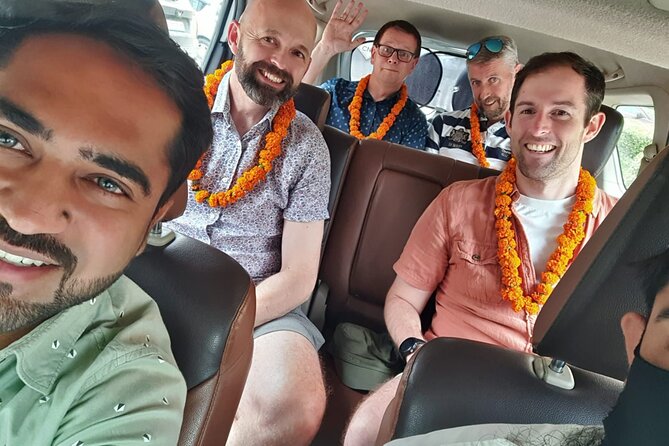
- Private car, private guiding so you can move fast and ask questions without joining another group
- Sunrise Taj Mahal with a battery van ride from the parking area to the gate
- Old Delhi shortcuts including a tuk-tuk ride that helps in the crowded lanes
- Tickets vs add-on fees: key sights are covered, but monument entrance fees are listed separately
- City-by-city flow: Delhi sights on Day 1, Agra focus on Day 2, Jaipur focus on Day 3
A fast, car-based Golden Triangle loop: what you gain in 3 days
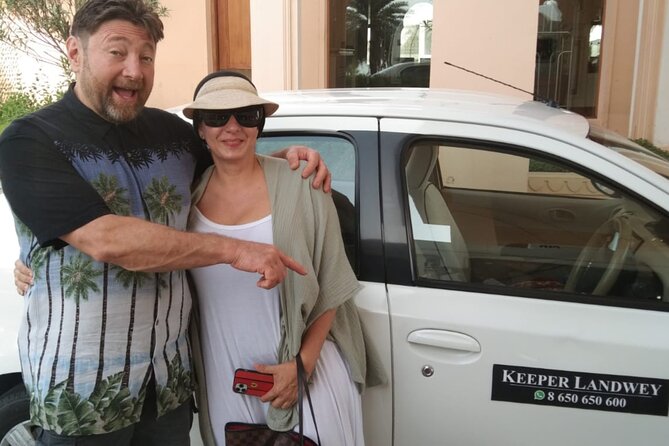
The big idea here is simple: you get a private air-conditioned car with a professional chauffeur, plus guides in each city, so the Golden Triangle works like a well-run relay. Instead of figuring out trains, transfers, and ticket lines across three cities, you’re handling one plan, one driver, and a tight route.
This also makes the trip easier on your body. Delhi’s Old City can mean lots of walking and lane navigation; Agra’s main sights are spread out; Jaipur covers multiple neighborhoods. The car keeps you from losing your whole day to getting from point A to point B.
One more practical bonus: bottled mineral water is provided during the journey, and parking, tolls, fuel, and taxes are handled for you. That is worth real money when you’re trying to keep a tight budget.
You can also read our reviews of more tours and experiences in New Delhi.



Day 1 in Delhi: Qutub Minar, Lotus Temple, and Mughal-era landmarks
Your Delhi day is built like a sampler platter, with UNESCO sites, iconic religious architecture, and the Mughal power centers you’d expect in a Golden Triangle start.
You’ll begin with pickup from your chosen location in the Delhi region between 7 AM and 11 AM. After that, the first major stop is Qutub Minar, a UNESCO World Heritage site built in 1193 by Qutub-ud-din Aibak. It’s a sky-high starting point that makes it easier to understand how old Delhi measured greatness—through stone, geometry, and height.
Next comes the Lotus Temple. Completed in 1986, it’s known for its flower-like design and serves as a Baháʼí House of Worship. Even if you’re not religious, this is one of those stops that makes you slow down because the architecture is so clear and intentional.
From there, you’ll pass by several major landmarks tied to Mughal rule and British-era planning, including the Red Fort area, the 1921 Tomb of the Unknown Soldier (with 13,300 names carved into the wall), and the planned government zone associated with Lutyens and Herbert Baker. You won’t necessarily go deep inside everything on the pass-by sections, but it’s useful for getting your bearings.
Old Delhi by tuk-tuk: Chandni Chowk, Jama Masjid, and Khari Baoli spices
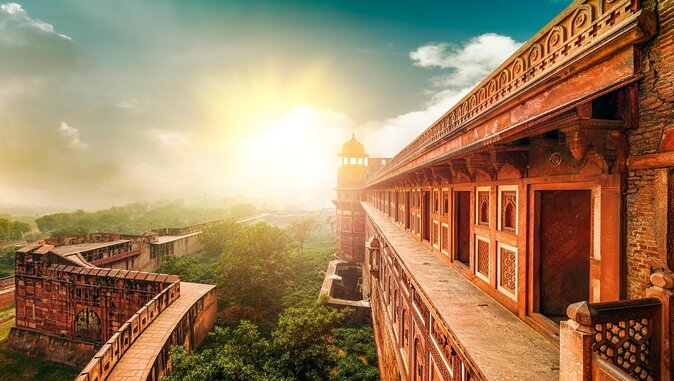
Your Delhi afternoon leans hard into Old Delhi life. You’ll spend time in Chandni Chowk, the narrow-lane market area where you’ll see stalls for spices, dry fruits, silver jewelry, and colorful saris. This is one of the best places to understand why people love Delhi even when it can feel intense: the city’s personality is right there at street level.
A highlight is Jama Masjid, built in 1656 by large-scale labor (the plan notes 5,000 workers). It sits near Chandni Chowk and the Red Fort area, and it’s known for its vast courtyard and striking red sandstone setting. The scale here can surprise you, especially if your mental image of Delhi is mostly about monuments from postcards.
Then you’ll go to Khari Baoli, described as Asia’s largest wholesale spice market. Expect herbs, spices, dried fruits, and strong smells. This stop is short (about 30 minutes), but it’s a strong contrast to the grand architecture earlier in the day.
A key logistics detail that helps: you get a tuk-tuk ride in Old Delhi. That matters because it reduces the time you spend fighting traffic and lane bottlenecks, while still letting you see the street energy.
If you’re the type who likes quiet museums, Old Delhi may feel like sensory overload. Plan for that by using water breaks and letting the guide handle order and pacing.
Humayun’s Tomb and Agrasen ki Baoli: the quieter, more atmospheric stops
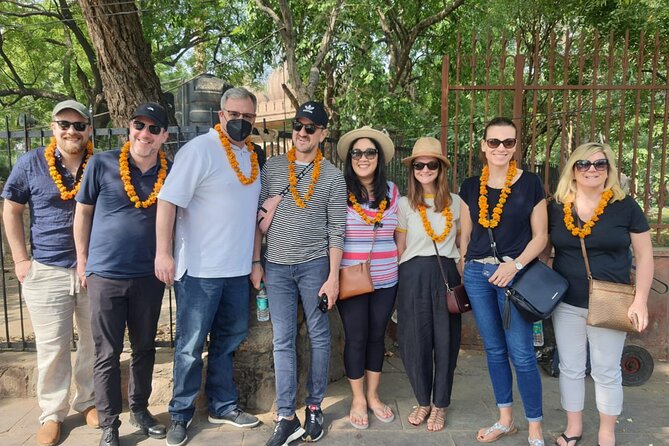
Between the big names, your route includes some stops with strong atmosphere.
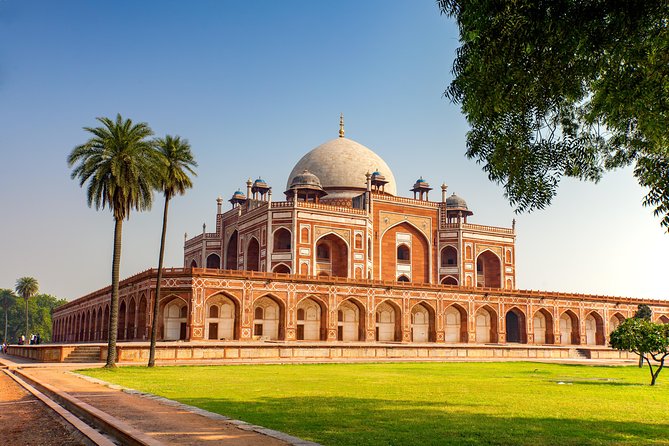
Humayun’s Tomb is UNESCO-listed and described as India’s first garden tomb, commissioned by his wife after his death. Even when you don’t read every inscription, the layout and setting help explain Mughal taste for symmetry and landscape as part of royal memory.
Then there’s Agrasen ki Baoli, an ancient stepwell with a reputation for eerie nighttime stories. You only get about 30 minutes, but this is the kind of place where you feel the temperature change and notice how old water-storage architecture has its own drama. If you enjoy odd architecture and local lore, this is a fun break from the more obvious poster sights.
These two stops are also strategically placed. They give you a middle-of-the-day emotional reset before the market section ramps up again.
The drive to Agra: using the car time instead of losing it
After Delhi sightseeing, your driver takes you to Agra, with about a 3-hour journey. You’re dropped at your hotel so you can rest and prep for a very early start the next day.
This is a smart move for the Golden Triangle. Agra works best when you’re not running on fumes, and the Taj Mahal sunrise day tends to set the tone for the entire trip.
I’d treat the evening in Agra as a low-effort window: shower, early sleep, and keep your plan simple for what you want from the Taj morning (photos, first light, or just calm viewing).






Day 2 in Agra: Taj Mahal sunrise, Agra Fort, and the Baby Taj
Agra’s Day 2 is the core showpiece. You start early for a sunrise visit to the Taj Mahal, the white marble mausoleum Shah Jahan built in 1630 for Mumtaz Mahal. This is where the tour earns its name.
The tour includes a battery van ride from the parking area to the gate, which saves you from standing around or walking long distances in the morning cold or heat. You’ll also want to dress for actual weather, since winter fog and crowd patterns can change quickly.
One important scheduling note: Taj Mahal is closed every Friday. That means if your dates fall on a Friday, the plan you receive may need adjustment.
After Taj Mahal, you’ll visit Agra Fort, UNESCO-listed and built in the 17th century, with a mix of Indian and Islamic architectural styles. Think of this as the military and royal backbone behind the mausoleum glamour.
Then you’ll see Itmad-ud-Daula, often called the Baby Taj. It’s highlighted as the first Mughal monument built entirely from white marble and noted for intricate pietra dura inlay work. It’s smaller than the Taj, but that’s the point: you can look closer at details that you might miss when the big monument steals the show.
If you want the best results with photos, ask your guide for photo spots early. Guides such as Azzu and Faisal are specifically mentioned as people who help with timing and crowd navigation, and they’ve also been praised for great angles.
Day 2 food break in Agra: letting the guide solve lunch
You’ll have a break for Agra local cuisine, with the guide recommending restaurants. The tour doesn’t include admission tickets here, so you’ll pay for what you choose.
What’s valuable is that you’re not guessing. In places like Agra, where options range from clean and simple to chaotic, a good guide reduces the risk of landing somewhere that wastes your time.
I’d use this lunch window to refuel and also ask one quick question: where to spend your last minutes in Agra before leaving for Jaipur.
Day 2 to Day 3 transfer: heading to Jaipur with a fresh start
After finishing Agra sightseeing, you’ll drive to Jaipur, about 4 hours, and be dropped at your pre-booked hotel for an overnight stay.
That hotel night is where the trip stays comfortable. Even if you’re on a budget, the car tour format makes the sleeping part matter, because your Jaipur day is packed with multiple iconic sites.
Day 3 in Jaipur: Jaigarh Fort, Hawa Mahal, City Palace, and Jantar Mantar
Jaipur is the final big sweep, with fort views, palace facades, and an architectural time-machine vibe.
First up is Jaigarh Fort, built in 1726 by Maharaja Sawai Jai Singh II and perched on the Aravalli hills. Forts here are more than walls; they’re viewpoints and strategy. If you like panorama-style sightseeing, you’ll get a lot from this early start.
Then comes Hawa Mahal, the famous five-story palace face with 953 small jharokha windows. It was built in 1799 from red and pink sandstone, designed so royal women could observe street life. When you stand in front of it, you’ll understand the function of ornament here: it’s not just decoration; it’s a system for seeing.
Next is the City Palace of Jaipur, located in the heart of Jaipur. It’s described as an architectural marvel with courtyards, gardens, and multiple buildings, once the seat of Jaipur’s Maharajas. This stop is where you feel the continuity of royal power shifting from court life into the modern city.
From there, you’ll see Jal Mahal, a palace in the middle of Man Sagar Lake. The description leans into the peaceful setting and photos, and that’s exactly how to treat it: take in the view, enjoy the photo moment, and keep moving.
Then the day ends at Jantar Mantar, a UNESCO World Heritage Site and one of the best-preserved ancient observatories. Built by Maharaja Sawai Jai Singh II, it’s a very different kind of Jaipur landmark. It helps if you don’t force yourself to understand every instrument detail. Just let the scale and purpose sink in.
Guides like Kissor and Arham are praised for taking people to the best areas and for making the stops feel like more than checkboxes. If your guide is that kind of host, you’ll likely enjoy Jaipur more because you’ll see how the city’s design patterns connect.
Price and logistics in plain terms: is $127 worth it?
At $127.00 per person, this tour is priced for convenience: private car, professional chauffeur, private government-approved guides, hotel/airport pickup and drop-off in Delhi, Agra, and Jaipur, plus two breakfasts (when the hotel option is booked).
The best way to judge value is to compare what you’re not doing:
- You’re not booking a driver yourself across three cities.
- You’re not managing guide timing for multiple monuments.
- You’re not paying separate transport costs for the route.
- You’re not worrying about parking and tolls.
What’s not covered is entrance fees to monuments, listed at $70.00 per person. The tour also notes gratuities/tips are not included. Those two items can change your total trip budget quickly, so I’d treat $127 as the base convenience fee, then add the monument costs.
If you upgrade to hotels, the tour includes that optional choice of 3-, 4-, or 5-star stays, and it includes two nights of accommodation when the hotel option is selected. That’s often the difference between a trip that feels stressful and one that feels controlled.
Also check the “small print” that affects costs during peak travel dates. On December 24 and December 31, blackout dates apply, and a mandatory gala dinner costing USD 99 per person is added if you book accommodations then.
Guide quality and driving: what to expect from the people running your day
In a Golden Triangle car tour, your comfort depends on two things: the guide’s ability to explain, and the driver’s ability to keep you on schedule.
The tour includes private guides, and the drive plan is built around long travel segments (Delhi to Agra about 3 hours, Agra to Jaipur about 4 hours, and Jaipur back to Delhi about 4 hours unless you drop at Jaipur Airport). Good driving matters on tight, crowded roads.
The reviews you can find for this kind of service repeatedly highlight a few guiding strengths:
- Guides like Saurabh in Agra are praised for smooth organization and strong storytelling.
- People mention Maahi and Azzu for clear history at the Taj Mahal and good help with timing around crowds and photo angles.
- In Delhi and Jaipur, names such as Zayn, Nasir, Kishor, Brajesh, and Kissor show up as guides who help people understand what they’re seeing while still keeping the day fun and controlled.
Photo help is another theme. You’ll likely get better results if you treat guides as photo partners rather than just lecturers. If someone is directing you to the best angles and photo stops, say yes and move when they say move.
When the schedule shifts: Taj closure and the Thursday start rule
Two timing rules matter:
- Taj Mahal is closed every Friday. If your Day 2 would fall on a Friday, expect a schedule adjustment.
- If you start the tour on Thursday, your second day will be in Jaipur.
Also, your pickup time window in Delhi is 7 AM to 11 AM. That’s helpful because you can plan your morning, but it also means you should be ready for an early start to protect the Taj sunrise plan.
Getting the most from a 3-day whirlwind without burning out
This tour works best if you accept the pace. You’ll see a lot, and not every stop will feel like you have hours to wander. That’s normal for a Golden Triangle loop.
To make it feel better:
- Do your shopping and extra browsing only where you have time carved out (Old Delhi market areas and the guided breaks).
- Keep your photo plan realistic: sunrise Taj has a fast rhythm, and the best results often come from moving early rather than waiting for the perfect moment.
- Use the meal breaks to reset, not to explore new neighborhoods on your own.
If you’re traveling with kids or older relatives, the private car helps, but you’ll still want comfortable shoes. Old Delhi lanes and fort steps can add up quickly.
Should you book this Golden Triangle tour by car?
Book it if you want a private, organized Golden Triangle with clear stop order, sunrise Taj Mahal timing, and guides who explain what you’re looking at. It’s a strong match for short-trip travelers who want the highlights without stitching logistics together themselves.
I would skip or rethink it if you’re mainly interested in ultra-deep, slow museum-style exploring. This is a “see the big things in smart time” trip. Also add entrance fees to your budget early, since monument entry is listed separately.
One final tip for decision-making: if sunrise Taj and Old Delhi markets are must-do items for you, this format makes sense. The car, the tuk-tuk help, and the battery van at the Taj gate reduce the friction that can otherwise steal your morning.
FAQ
Which cities and main sights are included?
You’ll cover Delhi highlights like Qutub Minar, Lotus Temple, Humayun’s Tomb, Chandni Chowk, Jama Masjid, and Khari Baoli, plus major landmarks passed by around Red Fort and government areas. In Agra you’ll visit Taj Mahal at sunrise, Agra Fort, and Itmad-ud-Daula. In Jaipur you’ll see Jaigarh Fort, Hawa Mahal, City Palace, Jal Mahal, and Jantar Mantar.
What does pickup in Delhi look like?
Pickup is offered from anywhere in Delhi, Noida, Gurugram, Ghaziabad, and Faridabad. You can choose a pickup time between 7 AM and 11 AM.
Are entrance fees included in the price?
Entrance fees to monuments are not included. The tour lists entrance fees as $70.00 per person, and you should plan for that added cost.
Is sunrise Taj Mahal part of the plan?
Yes, Day 2 starts with an early morning sunrise visit to the Taj Mahal. Note that Taj Mahal is closed every Friday, which may affect your schedule.
Are there internal rides included to reduce walking?
Yes. You get a tuk-tuk ride in Old Delhi and a battery van ride at Taj Mahal from the parking area to the gate.
Can I upgrade hotel quality for the overnight stops?
Yes. If you choose the hotel option, you get two nights of accommodation, and you can upgrade to 3-, 4-, or 5-star hotels. On December 24 and December 31, blackout dates apply and a mandatory gala dinner costs USD 99 per person if you book accommodations then.
What meals are included during the 3 days?
Breakfast is included for two mornings (2 breakfasts). Lunch and other meals are described as breaks with restaurant recommendations from your guide.
What do I need to bring, and are tips or cancellations covered?
Bring valid photo ID for monument entry (in your mobile). Gratuities/tips for guides and driver are not included. You can cancel for a full refund if you cancel at least 24 hours in advance of the experience start time.