REVIEW · NEW DELHI
From Delhi: Private 4-Day Golden Triangle Luxury Tour
Book on GetYourGuide →Operated by Crystal India Holidays · Bookable on GetYourGuide
Four days, three cities, zero stress. This private luxury route through Delhi, Agra, and Jaipur is built to move fast without feeling like a squeeze, including a sunrise Taj Mahal visit before the day crowds pile in. I like that you get guided time in each city with staff who can keep things organized (names you might encounter include Jai in Delhi, Ashish in Agra, and Manoj in Jaipur). The trade-off to plan for: you’ll spend a good chunk of time on the road between cities, so it’s not a slow-and-linger kind of trip.
You can choose 4-star or 5-star hotel options, and the tour also gives you real flexibility to adjust stops to your interests. Plus, it’s private in practice, with a car sized to your group (sedan for 1–2, wagon for 3–4, and a minivan for 5–10) and guides available in English, Spanish, French, Russian, and German.
In This Review
- Crystal India Holidays Golden Triangle Luxury Tour: Quick Highlights
- Golden Triangle in Four Days: how this trip keeps you from burning time
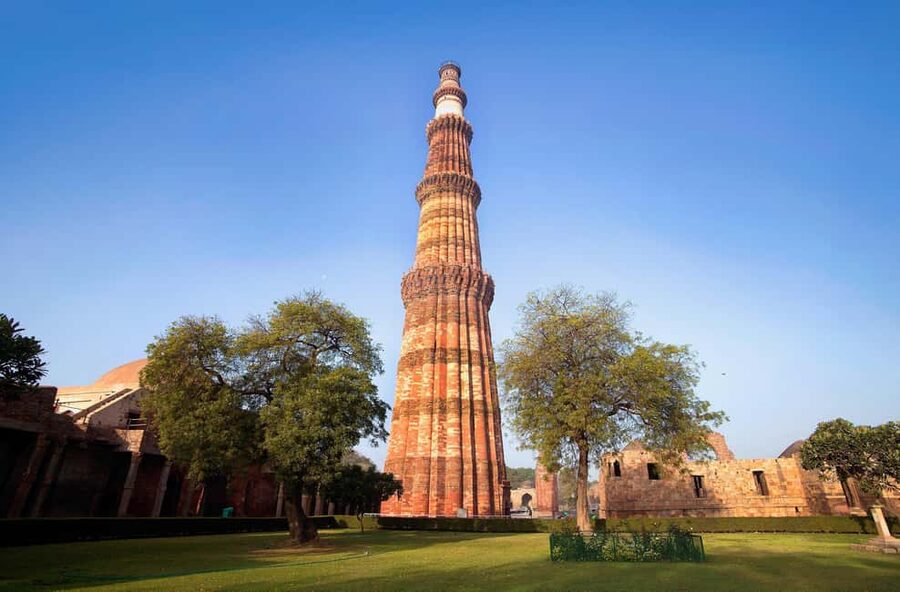
- Delhi City Center Worth Seeing: Qutub Minar, Lotus Temple, India Gate, and more
- Agra Before the Day Crowds: sunrise Taj Mahal plus two key adds
- Jaipur Day Built for Icons: Amber Fort, Hawa Mahal, Jal Mahal, and City Palace
- Luxury hotels that make the long drives more tolerable
- Car time, guides, and ticket help: what actually reduces stress
- Price and value at around $145 per person: luxury without the full luxury tax
- Best fit for your travel style: who should book this tour
- Should you book? My practical recommendation
- FAQ
- What cities are included in this 4-day Golden Triangle tour?
- Do I get pickup in Delhi (or nearby areas)?
- Is the Taj Mahal visit timed for early access?
- What happens if my start day causes a Taj Mahal closure?
- What languages are the guides available in?
- What hotel categories are offered?
- Do I need to bring cash for monument tickets?
Crystal India Holidays Golden Triangle Luxury Tour: Quick Highlights
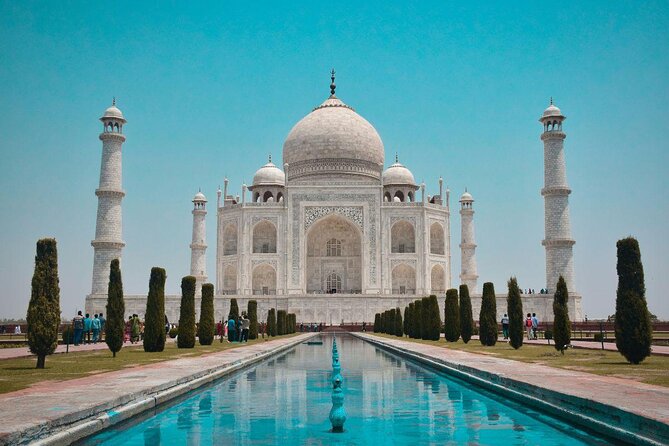
- Sunrise Taj Mahal timing so you see the monument in quieter light and fewer people
- City-by-city guided coverage in Delhi, Agra, and Jaipur, so you’re not guessing what matters
- Amber Fort day built around the best viewpoints plus stepwells and cenotaphs nearby
- Luxury hotel options in the middle of the action with 4-star or 5-star stays
- A private car that fits your group size and helps you avoid constant logistics stress
- Itinerary adjustments when the Taj Mahal is closed (Friday), based on your start day
Golden Triangle in Four Days: how this trip keeps you from burning time
The Golden Triangle is three heavy-hitters—Delhi, Agra, Jaipur—and the biggest challenge is not the sightseeing itself. It’s the chaos around it: traffic, ticket lines, timing, and figuring out what order actually makes sense. This tour is designed to remove most of that friction.
You start with a pickup in Delhi (or nearby areas like Noida and Gurgaon) and end with a drop-off back in Delhi for your flight, train, or hotel. The pace is efficient: half-day coverage in Delhi, a full sightseeing day in Agra anchored by the early Taj Mahal, then a packed day through Jaipur’s iconic sites.
That tight structure is exactly why it works. You get to check the top monuments without losing whole mornings to transportation and planning. Just be aware that it’s still a “see more, drive more” itinerary—especially on the long Agra-to-Jaipur leg.
You can also read our reviews of more tours and experiences in New Delhi.



Delhi City Center Worth Seeing: Qutub Minar, Lotus Temple, India Gate, and more
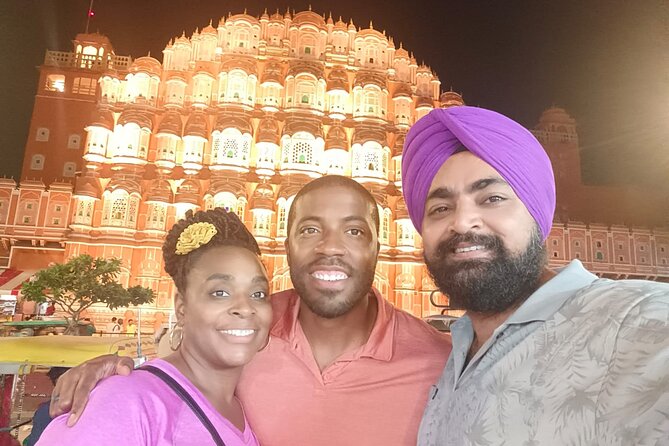
Delhi can feel like sensory overload. That’s why I like the way this day starts: you’re not dropped into the city with no structure. You get a guided half-day city center look at the major landmarks, plus a drive-by view of government areas.
Here are the standout stops you’ll target:
- Qutub Minar, one of the best-known monuments from the early Delhi Sultanate era
- Lotus Temple (Bahai Temple), known for its distinctive lotus-like form
- India Gate, a powerful war memorial landmark
- Agrasen Ki Baoli, a step well you’ll remember for the shape and cool, shaded feel
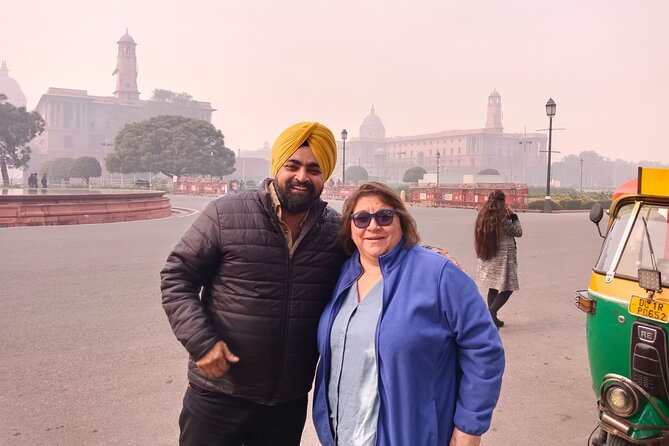
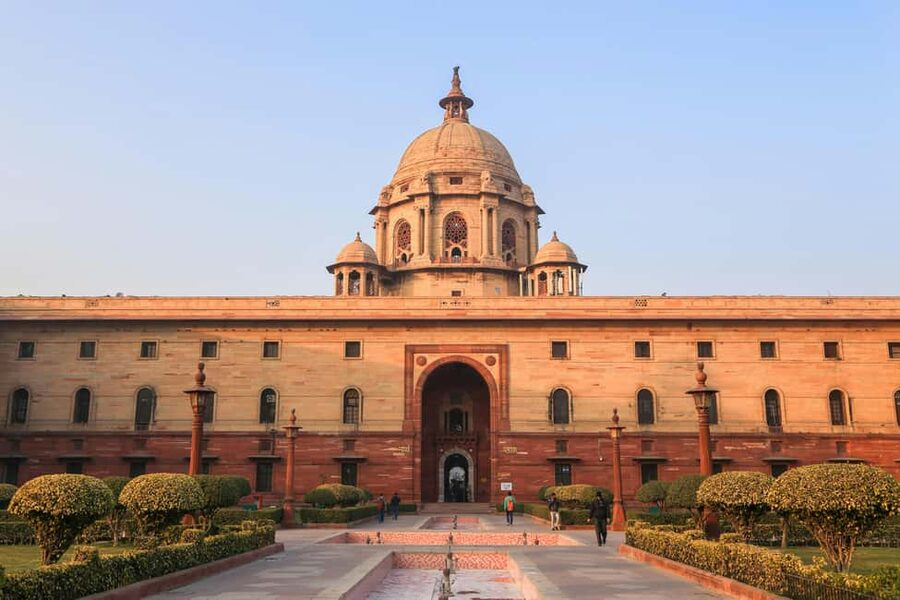
You also drive past Parliament House and the President’s Palace on the way out of the city. That matters because it gives you a quick sense of how different Delhi looks when you’re not just walking tourist lanes.
One practical consideration: Delhi traffic can easily eat your day if you’re self-driving or relying on random timing. With a private car and guide handling the flow, you can spend more energy looking and less energy navigating.
Agra Before the Day Crowds: sunrise Taj Mahal plus two key adds
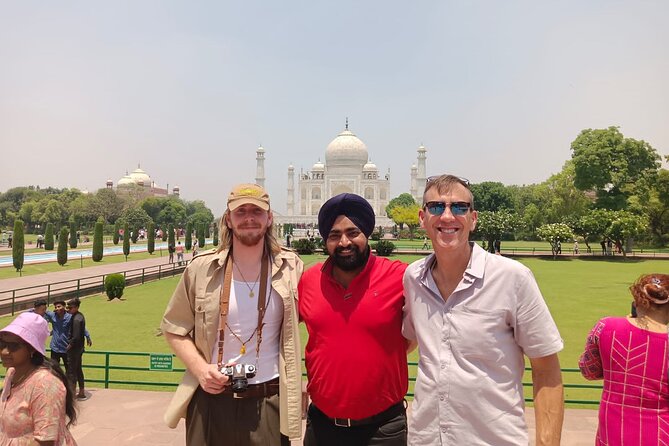
Agra is the center of gravity for this trip, mainly because of one timed visit: the sunrise Taj Mahal. The big benefit of going early is simple—you see the mausoleum with softer light and fewer people competing for the same angles.
What you’ll do at the Taj Mahal works well for first-timers:
- you’ll meet the day early,
- enjoy a guided visit for about 2 hours,
- and then move on while the rest of the city is still building momentum.
After that, you don’t just stop at the Taj and call it a day. You also get two excellent complements:
- Agra Fort, an important fortress complex with layers of history tied to the region’s rulers
- Tomb of Itimad-ud-Daulah, often called the Baby Taj, which is famous for its intricate details and elegant structure
If the Taj Mahal is the showstopper, these two help you understand the surroundings. They also give you variety: one monument designed for grand spectacle, and other sites that reward closer attention.
A timing note that’s worth planning around: the Taj Mahal is closed on Fridays. If your tour starts on Thursday, the route shifts to Delhi → Jaipur → Agra → Delhi, so you still get your Taj visit. If you’re booking around a specific week, this matters.
Jaipur Day Built for Icons: Amber Fort, Hawa Mahal, Jal Mahal, and City Palace

Jaipur is where the tour becomes a “photography day,” but it’s not just pretty buildings. It’s also a chance to see how water, fortifications, and royal planning shaped the city.
Your day starts with Amber Fort. This is the one stop where you’ll feel the scale immediately. Going here on a structured day tour helps because you’re not negotiating buses, tickets, and timing once you reach the area.
Before you even fully enter the fort complex, there are two nearby sights that make the day more interesting:
- Panna Meena ka Kund, an old stepwell with symmetrical staircases
- Jal Mahal, the palace-like structure sitting above the waterline
Then you continue to:
- Gatore ki Chhatriyan, known for intricately carved cenotaphs
- Hawa Mahal (Palace of the Winds), the iconic facade designed to let royal observers watch street life
- Jantar Mantar, the observatory with its geometric instruments
- Maharaja’s City Palace, for the royal-administration side of Jaipur
This route is smart because it mixes viewpoints and styles. You get the fort, the water-related architecture, the ceremonial monuments, then the city-planning and science side of royal Jaipur.
One thing to keep in mind: a day like this includes multiple entrances and photo stops, plus walking in heat. Comfortable shoes and sun protection help a lot.
Luxury hotels that make the long drives more tolerable
The hotel part is not a throwaway detail here. With long road legs between cities, the quality of your sleep and downtime affects the whole trip.
You have two hotel tiers:
- 4-star options include places like Royale Sarovar Portico Agra (or similar) and Fern Residency (or similar) in Jaipur
- 5-star options include Jaypee Palace or Courtyard by Marriott in Agra (or similar), and Holiday Inn city center or Hilton in Jaipur (or similar)
Rooms are typically twin-sharing. If you book for three people, the default is usually triple-sharing unless you pay an extra cash charge to have two rooms instead. That matters for comfort—especially if you’re traveling with friends and you want space, or you’re sharing with someone who sleeps lightly.
A practical check for your own expectations: some people note that certain hotels can be outside the center and may add travel time for casual evening wandering. If that matters to you, ask where the selected property sits relative to the areas you want to walk to.
Also, after a busy day, it can be worth taking advantage of what your hotel offers—some travelers specifically recommended hotel spa-style relaxation after the driving stretches.






Car time, guides, and ticket help: what actually reduces stress
This tour is private, which changes everything about how the days feel. Instead of coordinating yourself across three cities, you follow a plan while having control over small adjustments.
Transportation is handled by a car tailored to group size:
- 4-seater sedan for 1–2 people
- 6-seater wagon for 3–4 people
- 10-seater minivan for 5–10 people
The driver experience shows up again and again in real-world comments: people often highlight that a good driver makes Delhi streets feel manageable. Some also mention cold water in the car during warmer days, which sounds minor until you’re actually stuck in heat between stops.
Guides also matter because they’re not just reciting facts. They help you:
- understand what you’re seeing,
- move efficiently through sites,
- and handle ticket purchases (guides will help you buy monument tickets).
One more practical note: some monuments may not accept credit cards. Carry some cash so ticket lines don’t turn into an unexpected delay. If you run out, you can request help finding an ATM.
Finally, you’re not locked into a rigid script. The tour says you can tailor the itinerary based on your interests and schedule. That flexibility is the difference between a tour you feel stuck on and a tour you feel suits you.
Price and value at around $145 per person: luxury without the full luxury tax
At about $145 per person for four days, the value story here is that you’re paying for:
- private transport across three cities,
- guided time at the main monuments,
- and luxury-tier hotel stays for your nights.
Is it cheap? Not exactly. But it may feel reasonable compared with paying for drivers and guide time separately, especially if you want early timing like the sunrise Taj visit. Also, you reduce your own planning load. In places like Delhi and Agra, that planning load is time and stress.
Where value can get tricky is if you’re the kind of person who hates driving days. There are comments that the itinerary can feel pricey for what’s essentially a lot of road time. And yes—on a four-day plan, you’ll be in the car frequently.
Some people also mention that it can feel “too organized” around certain stops, including business-style stops that feel more sales-driven than sightseeing-focused. If you’re not interested in factory or retail stops, you’ll want to set expectations early and ask the guide to keep your time strictly on monuments and photo-worthy viewpoints.
Best fit for your travel style: who should book this tour
This tour is a great match if you want:
- major monuments in Delhi, Agra, and Jaipur without self-driving stress
- early Taj timing so the day starts strong instead of hot and crowded
- guides in your preferred language (English, Spanish, French, Russian, German)
- a luxury hotel tier so downtime actually feels restorative
It’s less ideal if you:
- prefer slow travel with long free evenings in one city
- hate back-to-back monuments and frequent car transfers
- want only major sights and no optional detours at all
If you’re traveling as a couple, this is particularly comfortable because the car-and-hotel structure fits well. Families can also do it smoothly since it’s private and vehicles are sized to group size, and it’s described as wheelchair accessible.
Should you book? My practical recommendation
I think you should book this tour if you’re trying to see the Golden Triangle efficiently and comfortably, and you value a guided plan that reduces logistics headaches. The combination of sunrise Taj Mahal, structured Delhi coverage (Qutub Minar, Lotus Temple, India Gate, Agrasen Ki Baoli), and a full Jaipur day anchored by Amber Fort makes the schedule feel purposeful.
Book with a couple expectations in mind:
- you will drive a lot,
- you should carry some cash for tickets,
- and if you care about shopping or detours, say so early so your guide can shape the day around your priorities.
If that sounds like your kind of trip, this is a strong way to get the Golden Triangle with a lot less hassle than planning it on your own. If you’re craving a slower rhythm, consider a longer itinerary with fewer long transfers instead.
FAQ
What cities are included in this 4-day Golden Triangle tour?
The tour covers Delhi, Agra, and Jaipur over four days, with sightseeing scheduled in each city.
Do I get pickup in Delhi (or nearby areas)?
Yes. Pickup is included from your hotel, airport, railway station, or other requested pickup location in Delhi, Noida, or Gurugram.
Is the Taj Mahal visit timed for early access?
Yes. The plan includes a sunrise Taj Mahal visit with a guided visit of about 2 hours before crowds.
What happens if my start day causes a Taj Mahal closure?
The Taj Mahal remains closed on every Friday. If you start on Thursday, the route adjusts to Delhi → Jaipur → Agra → Delhi.
What languages are the guides available in?
The live tour guide is available in English, Spanish, French, Russian, and German.
What hotel categories are offered?
You can choose 4-star or 5-star hotel options. Examples listed include Royale Sarovar Portico Agra and Fern Residency (4-star), plus Jaypee Palace or Courtyard by Marriott in Agra and Holiday Inn city center or Hilton in Jaipur (5-star), or similar.
Do I need to bring cash for monument tickets?
Some monuments may not accept credit cards, so it’s advised to carry some cash to purchase monument tickets (or ask the driver to find an ATM).