REVIEW · NEW DELHI
Private Luxury Delhi, Agra, Jaipur & Varanasi from Delhi – 5 Nights 6 Days Tour
Book on Viator →Operated by Perfect Agra Tours · Bookable on Viator
Sunrise at the Taj Mahal is the headline—but the whole route has punch. This private tour links Delhi’s Mughal landmarks, Agra’s UNESCO sights, Jaipur’s royal-era monuments, and finally Varanasi’s Ganges morning into one tight, mostly pre-planned loop. You get the classic Golden Triangle feel, plus the spiritual contrast of Varanasi.
I really like how much you do without feeling shuffled between random group stops. You’re driving in an air-conditioned private car with a local guide for sightseeing, and you’re also covered for hotel pick-up and drop-off plus domestic flights between cities. The other big win for me is the schedule focus: sunrise Taj Mahal on Day 2, then Agra Fort and Itmad-ud-Daula, then Jaipur, then Varanasi early-morning by boat.
One thing to consider: lunch and dinner aren’t included, and monument entrance fees are extra (about USD 80 per person for all monuments, according to the tour notes). If you’re picky about food stops or prefer full board, you’ll want to plan your meal budget.
In This Review
- Key highlights that make this tour worth your time
- Golden Triangle Plus Varanasi: why this route hits different
- First Day in Delhi: Qutub Minar, Humayun’s Tomb, and the calm break at Lotus Temple
- Sunrise Taj Mahal and Agra Fort: the two-moment engine of the trip
- Jaipur in a tight loop: Jal Mahal photos, City Palace, Jantar Mantar, Hawa Mahal
- Flying to Varanasi: the itinerary switch from monuments to ceremony
- Dasaswamedh Ghat at dawn and Kashi Vishwanath: a morning built on meaning
- Sarnath, then back to Delhi: finishing strong without the chaos
- Price and logistics: what $560 per person is really buying you
- Hotels, breakfasts, and the small comfort choices that add up
- Should you book this Delhi–Agra–Jaipur–Varanasi private tour?
- FAQ
- What does the tour cost, and what’s included?
- Are Taj Mahal and other monument entrance fees included?
- How does transportation work between Jaipur/Delhi and Varanasi?
- What baggage allowance do I get on the domestic flights?
- Does the itinerary include sunrise Taj Mahal and a Ganges morning?
- Is free cancellation available?
Key highlights that make this tour worth your time
- Sunrise Taj Mahal with the plan to catch the most memorable light (and yes, that early start matters)
- Private local guiding across Delhi, Agra, Jaipur, and the Varanasi area
- A full Agra day that pairs Taj Mahal with Agra Fort and Itmad-ud-Daula
- Jaipur in a smart sequence: Jal Mahal, City Palace, Jantar Mantar, and Hawa Mahal
- Varanasi at dawn: Ganges boat excursion and the early temple visit rhythm
- Domestic flights included between Jaipur/Delhi and Varanasi, then back to Delhi
Golden Triangle Plus Varanasi: why this route hits different
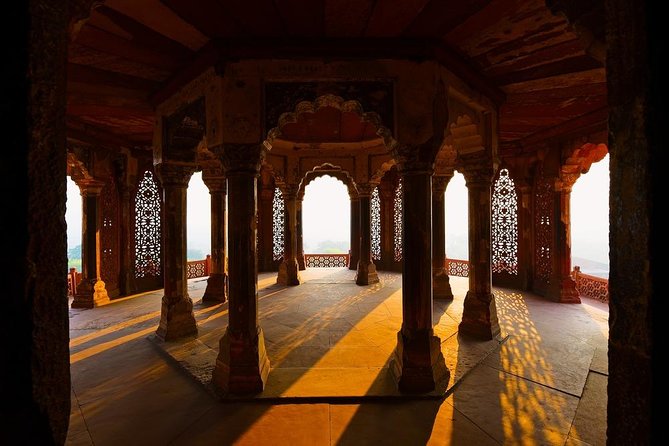
This itinerary is built around contrasts. Delhi and Agra give you stone-on-stone grandeur—museums, tomb architecture, and big UNESCO sites. Jaipur adds the courtly, geometric side of India with forts and palace-era design, while Varanasi brings sound, water, and ceremony.
The big idea here is pacing. You do the heavy sightseeing days (Delhi, then Taj Mahal day, then Jaipur) with private guiding, then you switch gears in Varanasi to slow down at the most intense times of day—before sunrise and early morning temple time.
If you care about ticking off famous sites, you’ll be happy. If you care more about how those sites are seen (especially Taj Mahal and the Ganges), this tour is stronger than a generic sightseeing grab-bag.
You can also read our reviews of more tours and experiences in New Delhi.



First Day in Delhi: Qutub Minar, Humayun’s Tomb, and the calm break at Lotus Temple
Day 1 is your Delhi foundation day. You start with Qutub Minar (a UNESCO World Heritage site), a tall 5-storey minaret tied to the Delhi Sultanate and built in the late 1100s. It’s the kind of monument where you’ll notice details up close—carving, proportions, and that long vertical sweep that makes the tower feel even taller than the height number.
Next comes Humayun’s Tomb, often treated as an important Mughal step in tomb design. The grounds and layout help you understand why Mughal architecture became so influential across northern India—symmetry, garden planning, and strong monument framing.
Then you get a tonal reset at the Lotus Temple. It’s shaped like a lotus with white marble petals, and it’s designed for quiet worship, not tourist noise. Even if you’re not religious, it’s a welcome breath in a day that otherwise feels like you’re moving through major landmarks back-to-back.
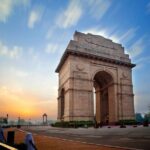
After that you pass by major civic monuments: India Gate, Sansad Bhavan (Parliament House), and Rashtrapati Bhavan. India Gate is a war memorial with a picnic vibe nearby, while the Parliament and President’s estate are more about scale and design language than deep time for most visitors.
You’ll end the day with a drive to Agra. The route note calls out about 3 hours to reach Agra via Yamuna Expressway, and your hotel check-in follows on arrival.
Practical tip: Delhi traffic is real. Even with private transport, you’ll feel the day compress or stretch slightly, so don’t plan extra in the evening once you arrive in Agra.
Sunrise Taj Mahal and Agra Fort: the two-moment engine of the trip
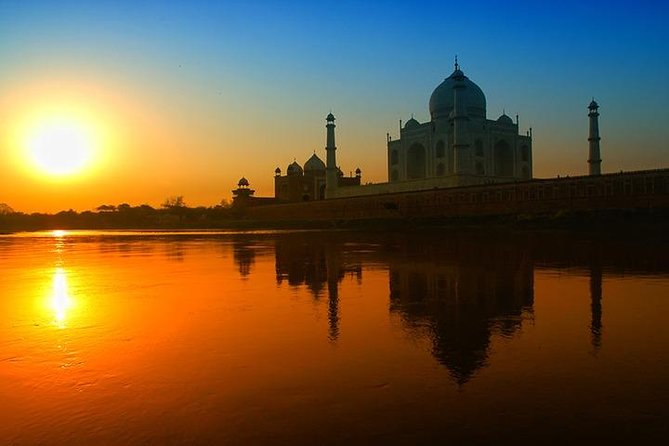
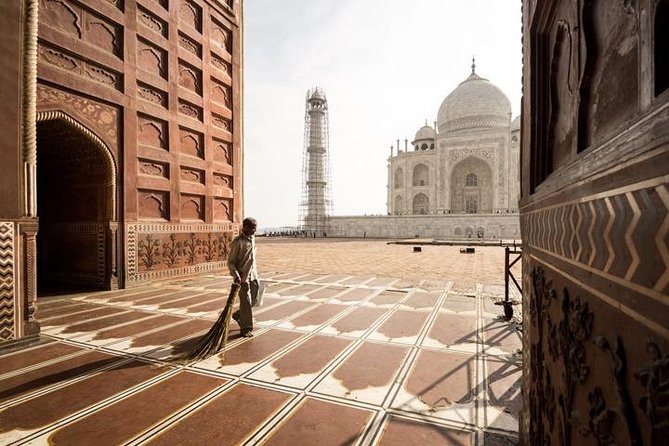
Day 2 is the reason a lot of people book this exact style of tour. You start with sunrise Taj Mahal, which is UNESCO-listed and built by Shah Jahan as a memorial for Mumtaz Mahal. The tour is built to get you there early enough for that soft morning light when the building’s details show up cleanly.
I like this approach because it changes Taj Mahal from a daytime photo to a real experience. Morning light gives you better contrast, fewer distractions, and that slow realization as you look across the water and see the monument reflect.
After Taj Mahal, you shift to two other Agra anchors:
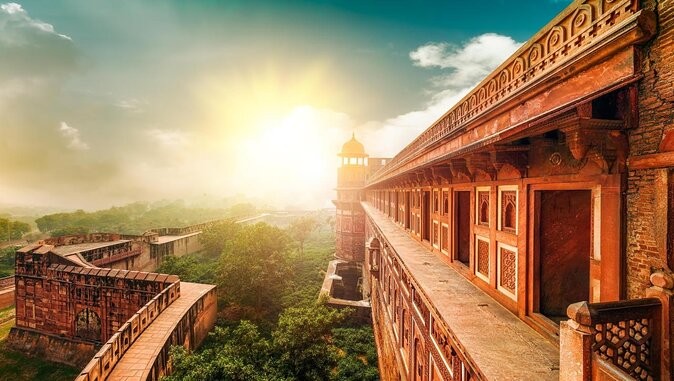
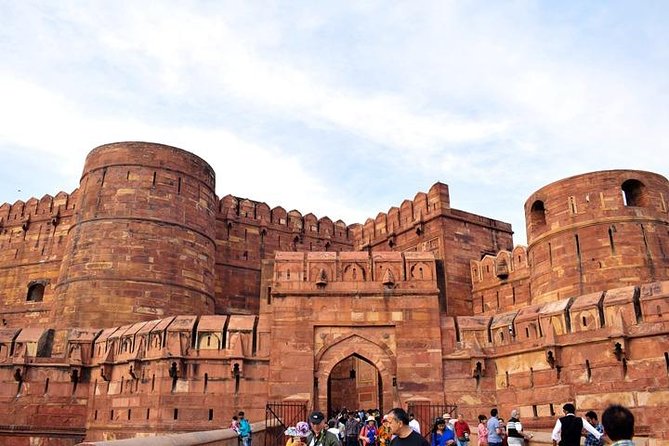
- Agra Fort (UNESCO): The fort is tied to Mughal power, with palaces and courtyards inside. You’re not just looking at walls—you’re walking through the logic of a royal seat.
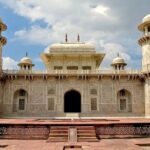
- Itmad-ud-Daula (often nicknamed Bachcha Taj): This tomb is described as a “jewel box” in the tour notes, and the mood is more intimate than Agra Fort. It’s the smaller-scale, finely detailed companion to the big monuments.
If you’re trying to understand Agra’s role in Mughal architecture, this pairing helps. Taj Mahal represents the top of the ladder; Agra Fort and Itmad-ud-Daula show the wider system around it.
One consideration: sunrise means early timing. If you hate waking up before your brain turns on, you’ll still need to be ready, since the tour is planned around that early visit.
Jaipur in a tight loop: Jal Mahal photos, City Palace, Jantar Mantar, Hawa Mahal
Day 2 ends with an overnight in Jaipur, and Day 3 is your Jaipur monument sweep. The sequence matters because it builds variety fast.
You start at Jal Mahal, a palace sitting on Man Sagar Lake. It’s primarily a photo-stop and viewpoint moment, but it helps break up the day before you go into heavier structures. This is a good place to catch a slow, scenic pause.
Then you move to City Palace of Jaipur, originally the administrative and ceremonial center of the Maharaja’s seat. City Palace isn’t just one building—it’s a complex, and it gives you context for how power and daily governance fit together in the Jaipur court system.
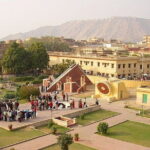
Next is Jantar Mantar, a UNESCO site with 19 astronomical instruments built in the early 1700s by Sawai Jai Singh II. You’ll notice how these are both technical and architectural. It’s not only about “seeing a monument,” it’s about seeing how a ruler’s priorities could be expressed in built form.
Finally, you reach Hawa Mahal (Palace of Winds). The pink and red sandstone design with a five-storey pyramidal profile makes it one of the most recognizable Jaipur silhouettes. It’s short on time compared to City Palace, but it’s a classic capstone for a first Jaipur visit.
Practical tip: Hawa Mahal is a good quick stop, but it’s also the kind of place where you’ll want to step back and look at the facades from different angles. Even in a short time slot, you can get more out of it if you don’t rush straight through.
Flying to Varanasi: the itinerary switch from monuments to ceremony
Day 4 is a transition day. After breakfast, you’re transferred to the airport for a domestic flight to Varanasi. The tour includes baggage allowance notes for that flight: 15 kg check-in and 7 kg carry-on.
When you land, you’re picked up and dropped at your Varanasi hotel. The rest of the day is leisure, with the note that depending on timing you may witness the grand Ganga evening. That part matters: Varanasi can’t be fully understood in one morning. A gentle first evening gives you bearings before dawn gets intense.
This is where I think the private format helps. You’re not forced to sprint from one group plan to another. You can adjust your energy, walk a bit if you feel like it, and set yourself up for the early Day 5 morning.
Tip: keep your expectations flexible. Timing in Varanasi depends on crowd flow and light, not just schedules on paper.






Dasaswamedh Ghat at dawn and Kashi Vishwanath: a morning built on meaning
Day 5 begins before most people feel fully awake. You’re taken about 30 minutes prior to dawn for a boat excursion on the Ganges. The focus is to see the bathing ghats and cremation site areas from the water, and to watch people participating in morning ritual.
This is the moment where Varanasi stops being a “sight” and becomes an atmosphere. You get the scale—how the river organizes daily life—without needing to negotiate the busiest steps on land.
After the boat, you walk (10–15 minutes) toward Shri Kashi Vishwanath Temple in the Golden Temple area. Then you visit the temple and head back for breakfast.
The itinerary then includes Sarnath after breakfast. Sarnath is about 10 km from Varanasi and is especially important for Buddhism, tied to Buddha’s favorite place in the tour description. The day is long enough to cover both faiths and historical layers without turning either into a rushed checklist.
Practical consideration: this is an emotionally intense area. If you’re sensitive to the realities of cremation sites, know that the boat route is specifically meant to let you view those areas.
Sarnath, then back to Delhi: finishing strong without the chaos
Day 6 is simpler. After breakfast, you’re transferred to the airport for a flight back to Delhi. The tour again lists domestic baggage limits—15 kg check-in and 7 kg carry-on.
Once you arrive in Delhi, you’ll be picked up and dropped at your desired location in Delhi, Gurugram, or Noida. That last-mile service is one of those unglamorous things that makes trips smoother, especially if your hotel is outside central Delhi.
This ending is also smart for most schedules. By the time you finish Varanasi and Sarnath, you’re ready to go home, but you still get a structured finale instead of a free-for-all.
Price and logistics: what $560 per person is really buying you
At $560 per person for 6 days and 5 nights, this tour is priced like a private, guided experience rather than a budget group run. In practical terms, your money goes into three main buckets:
- Private transportation in an air-conditioned car
- Local guides for the sightseeing days
- Domestic flight tickets between the Delhi/Jaipur region and Varanasi, then back to Delhi
Entrance fees are not included (about USD 80 per person for monuments, per the tour note), and lunch and dinner aren’t included either. That’s normal for India tours at this style level, but you should still set expectations for food spending.
One more value detail: the tour notes say your guide helps you buy entrance fees, so you don’t waste time queuing just to get tickets. That’s the kind of cost-saving you feel immediately.
On the guide side, the reviews you provided lean strongly into human quality. I saw repeated praise for Malik, including his ability to explain Taj Mahal and Agra Fort context, plus his photo-help style. Another name that stands out is Deepak (mentioned for being awesome in Agra visits), and the driver Gopal gets specific praise for being amazing. In a private tour, that human factor can matter more than the difference between one museum stop and another.
Hotels, breakfasts, and the small comfort choices that add up
The tour includes five nights of accommodation if you choose the hotel option, plus daily breakfast. Rooms are typically twin-sharing by default, with triple-sharing for bookings of three people unless you arrange otherwise at extra cost.
Those details matter because breakfast timing influences your ability to handle sunrise. You’ll need meals that let you get moving early, not breakfasts that assume a leisurely late start.
Also, the tour includes hotel or airport pick-up and drop-off, and pickup is offered from airport, railway station, hotel, or any pick-up location in Delhi, Noida, or Gurugram. That saves you from the mental load of figuring out local transfers on arrival day and departure day.
If you’re booking over Christmas or New Year, the notes mention a mandatory gala dinner on Dec 25 and Dec 31 for the hotel option. That’s one of those fine-print points you’ll want to factor into your holiday plans.
Should you book this Delhi–Agra–Jaipur–Varanasi private tour?
I’d book this if you want a private, structured itinerary that hits the big landmarks and also puts Varanasi in the right time slot. Sunrise Taj Mahal and the early Ganges boat ride are the two crown jewels here, and they’re scheduled instead of left to chance.
You might skip it if you dislike early mornings or if you want full meals included without thinking about lunch and dinner. Also, remember that monument entrance fees are extra, so your total trip cost will depend on how you plan meals and how many add-ons you choose.
If you like walking with guides who explain why things look the way they do—and you appreciate that the itinerary includes domestic flights so you spend less time on long road legs—this tour fits your style.
FAQ
What does the tour cost, and what’s included?
The price is $560 per person for a 5 nights / 6 days private tour. Included features cover private air-conditioned car transport, all sightseeing with a private local guide, hotel or airport pick-up and drop-off, five breakfasts, and commercial domestic flights between the Delhi/Jaipur region and Varanasi plus return to Delhi.
Are Taj Mahal and other monument entrance fees included?
No. Monument entrance fees are not included and are listed as approximately USD 80 per person including all monuments. Your guide helps you buy entrance fees so you should not be stuck waiting in queues.
How does transportation work between Jaipur/Delhi and Varanasi?
The tour includes commercial flight tickets for the route between Jaipur/Delhi to Varanasi. On Day 6, there is also a flight from Varanasi to Delhi, followed by pick-up and drop-off in Delhi, Gurugram, or Noida.
What baggage allowance do I get on the domestic flights?
For the included domestic flights, the baggage allowance listed is 15 kg check-in and 7 kg hand baggage.
Does the itinerary include sunrise Taj Mahal and a Ganges morning?
Yes. Day 2 includes a sunrise visit to Taj Mahal. Day 5 includes a pre-dawn boat excursion on the Ganges from Dasaswamedh Ghat area, plus a temple visit and a drive to Sarnath.
Is free cancellation available?
Yes. The tour offers free cancellation if you cancel up to 24 hours in advance of the experience start time for a full refund.