REVIEW · NEW DELHI
From Delhi : 3 Day Private Luxury Golden Triangle Tour By Car
Book on Viator →Operated by Amsah Tours · Bookable on Viator
A fast route, a lot of wow. This private Golden Triangle loop is built around Taj Mahal sunrise and a smooth car ride between cities, with guided stops in Delhi, Agra, and Jaipur. I especially like the mix of big-ticket monuments and real street-life in Old Delhi, plus the fact that you get local guides and entrance fees handled for you. The one thing to plan around is pace: with many stops packed into three days, you’ll want comfy shoes and a flexible attitude.
If you’re lucky, you’ll also get a guide that makes the day feel easy. Names that stood out in past experiences include Siddhi, Shamin, Nikhil, and Imran Khan, and guests called out calm drivers like Rahul and Jeetu, plus guides whose English made the stories click. One possible drawback: some of the free-time moments are short, so don’t expect long hangs in any single place.
This is a good fit for first-timers who want the headline sights without the stress of sorting tickets, timing, and getting around. You’ll see UNESCO-listed Qutub Minar, Agra Fort, and Jantar Mantar, plus Delhi’s iconic forts and mosques, and Jaipur’s palaces and astronomical instruments.
In This Review
- Key points to know before you go
- Why this Golden Triangle route makes sense in 3 days
- Day 1 in Delhi: Qutub Minar, Lotus Temple, and Old Delhi’s powerhouse combo
- Taj Mahal sunrise and Agra Fort: the heart of the Golden Triangle
- Jaipur’s best hits: Jal Mahal, City Palace, Jantar Mantar, Hawa Mahal
- Private car and included costs: what value really looks like here
- Comfort, crowds, and heat: how to make this tour feel good
- Who should book this tour—and who should skip it
- Should you book this private 3-day Golden Triangle Tour?
- FAQ
- How long is the Golden Triangle tour?
- Which cities are included?
- Is this tour private?
- Do I get a pickup, and what transportation is used?
- Are hotels included?
- Are monument entrance fees included?
- What meals are included?
- Are tips/gratuities included?
- Can I cancel for a full refund?
Key points to know before you go
- Taj Mahal at sunrise: you start early for the best light and fewer crowds, then get time inside with a guide
- UNESCO highlights in three cities: Qutub Minar, Agra Fort, and Jantar Mantar are built into the route
- Old Delhi by rickshaw: you’ll trade traffic stress for a short ride through the market area
- Air-conditioned car + Wi‑Fi: long transfers stay more comfortable, especially on hot days
- Entrance fees + monument access included: you spend time sightseeing instead of hunting tickets
- Guides with strong English: past groups praised guides like Shamin and Nikhil for clear explanations
Why this Golden Triangle route makes sense in 3 days
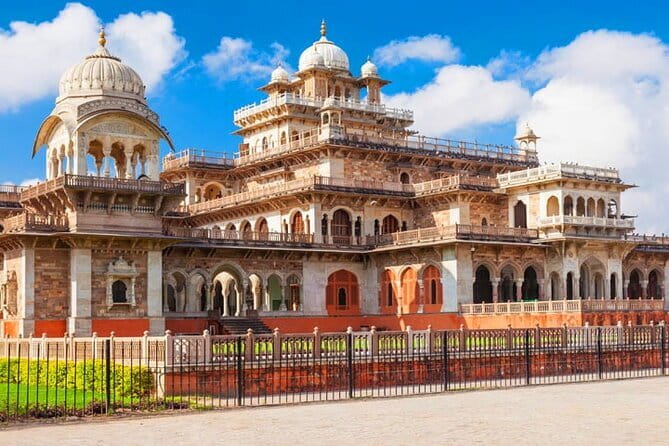
A 3-day Golden Triangle tour has one big challenge: the geography. Delhi, Agra, and Jaipur are close enough to connect by road, but not close enough to “wander” between them without losing half your vacation to travel time.
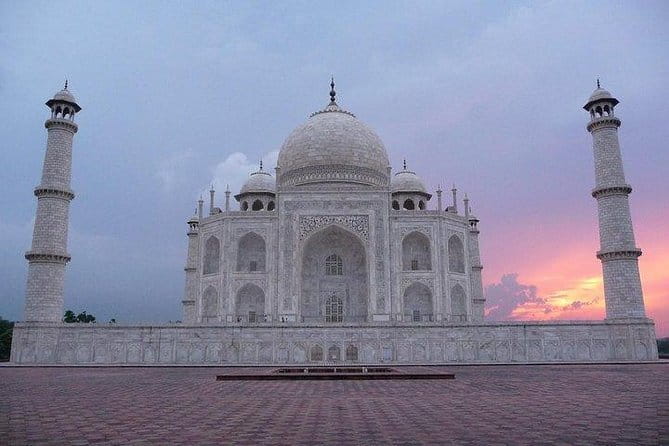
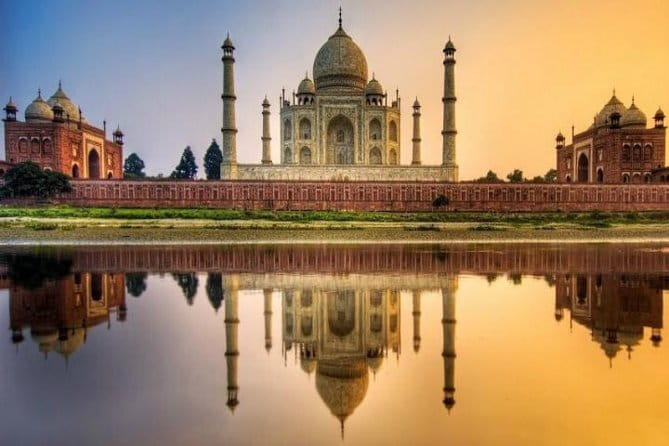
This itinerary solves that with a private vehicle and a plan that gets you to the right places at the right moments—especially the Taj Mahal sunrise start. That early timing matters because the Taj looks different at different hours. The sunrise experience is the reason many people book this style of tour in the first place, and you build the rest of the day around it.
The second smart move is pairing monuments with context. In Delhi, you don’t only hit the famous skyline landmarks—you also get into Old Delhi’s market streets for the sights, smells, and everyday energy. That contrast keeps the days from feeling like a checklist.
You also get private local guides at the stops. That’s not just a convenience. It helps you understand why the buildings look the way they do—like the Persian-influenced geometry you’ll see across Mughal-era sites, or why Jantar Mantar’s “stone instruments” are actually time-keeping and astronomy tools.
You can also read our reviews of more tours and experiences in New Delhi.



Day 1 in Delhi: Qutub Minar, Lotus Temple, and Old Delhi’s powerhouse combo
Delhi on day one can feel like three different cities. You’ll start with Delhi Sultanate-era architecture, then hit a calm modern landmark, then transition into Mughal landmarks and Old Delhi lanes.
Qutub Minar and the Delhi Sultanate story
Qutub Minar is a UNESCO World Heritage site tied to Qutub-ud-din Aibak, founder of the Delhi Sultanate. The highlight is the tower itself—its spiral staircase and the design thought to be based on the Minaret of Jam. Even if you’ve seen photos, seeing the height and the close-up details in person hits harder.
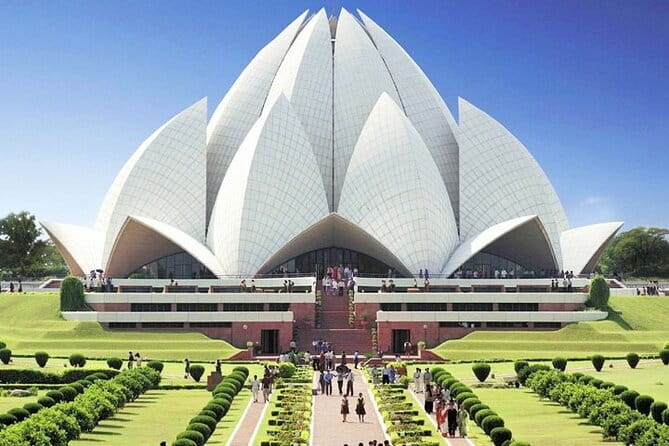
You’ll then move to Lotus Temple, a flower-like modern place built in 1986 that’s famous for its architectural awards. It’s a nice reset after older stonework—quiet, simple to understand, and great for a breather in the middle of a long day.
India Gate and the government precinct views
India Gate is a war memorial near Rajpath, dedicated to soldiers of British India who died in wars. It may sound heavy, but the atmosphere is more about scale and symmetry than sadness. Around this area you’ll also pass Parliament House (Sansad Bhavan) and Rashtrapati Bhavan, with notes like the circular Ashoka Chakra-inspired shape for Parliament and the expansive presidential gardens around Rashtrapati Bhavan.
These stops are relatively short, so treat them as orientation landmarks. Delhi is huge, and these views help you understand where the city’s political center sits.
Step wells, Mughal tombs, and a night market vibe
Next comes Agrasen ki Baoli, a protected step well monument connected to the Archaeological Survey of India and the Ancient Monuments and Archaeological Sites and Remains Act of 1958. It’s described as 60 meters long, and the big idea here is scale and atmosphere. You’re not only looking at a structure—you’re stepping into a space built for water management long before modern plumbing.
Then you’ll visit Humayun’s Tomb, commissioned in 1558 by Empress Bega Begum. This is one of the Mughal masterpieces that helps you see the Mughal building approach: strong symmetry, careful proportions, and gardens-as-framework thinking.
Chandni Chowk and Jama Masjid: where Delhi feels like Delhi
Old Delhi is the payoff. Chandni Chowk is your entry point into the market world—spices, dried fruit, silver jewelry, vivid saris, essential oils, and lots of tiny side shops. The goal isn’t to shop for hours. It’s to see how a working bazaar looks and functions.
Then you’ll step into Jama Masjid, built by Shah Jahan between 1650 and 1656. It’s one of the city’s most impressive mosque structures, and timing with a guide helps because you’ll know where to look and what you’re seeing.
A short rickshaw ride helps you reset
You also include a rickshaw ride in Old Delhi. The description connects it to when Emperor Shahjahan shifted the capital from Agra to Delhi in 1638, and how Jahanara built a square that helped the market grow. Even if you’re not focused on the date, you’ll feel the historical layering in the streets.
Red Fort wraps the day with Mughal power
Finally, you’ll visit Red Fort, the Mughal residence for nearly 200 years until 1856, with museums inside. It’s a satisfying end because it feels grand and final after the street-level energy of Old Delhi.
The transfer to Agra
Later you’ll drive via Yamuna Expressway. You’ll get time for lunch before the highway push, then check in to your Agra hotel and have the rest of the evening free.
Practical tip: since day two starts early, treat day one evening like prep time, not sightseeing time. Keep your essentials ready—water, a layer for early mornings, and something for sun protection.
Taj Mahal sunrise and Agra Fort: the heart of the Golden Triangle

Day two is where the tour earns its reputation.
Taj Mahal sunrise and a guided interior visit
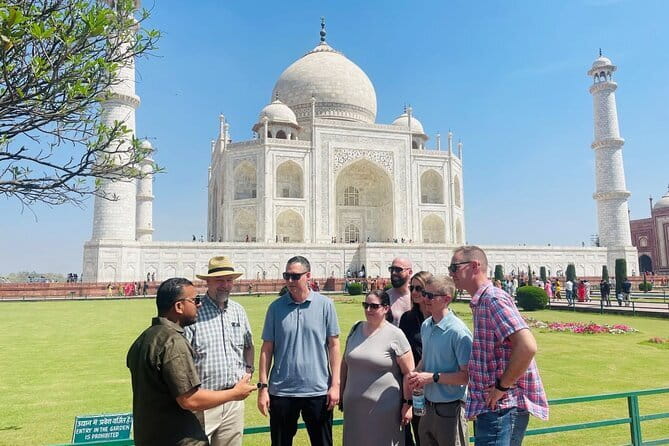
You wake early for sunrise viewing of the Taj Mahal. Then you get a guided tour inside for about two hours. This is the most time-intensive stop of the whole trip, and it’s the one people remember most. Sunrise matters because you get softer light on the white marble, and the building looks less like a postcard and more like a real object you can understand from multiple angles.
Two hours inside is plenty, but it can still feel like information overload if you try to absorb everything at once. Instead, pick a few moments to focus on: the symmetry of the layout, the way details change as you move, and the overall sense of planning behind the design.
Agra Fort: architecture with a different mood
Next is Agra Fort, another UNESCO World Heritage site. Here the story shifts from the Taj’s elegance to a more fortress-centered way of living. You’ll see different apartments and get guided context about how the fort functioned.
This stop balances the day. If the Taj feels like romance and precision, Agra Fort feels like strategy: walls, planning, and power.
Itmad-ud-Daula, the Baby Taj
You’ll then visit Itmad-ud-Daula, also called Baby Taj. It’s described as a Mughal mausoleum in Agra with gardens and outbuildings around the main structure. It’s smaller than the headline sites, which is a gift. You can slow down and really see the craftsmanship without feeling rushed.
Chand Baori (Abhaneri): the stepwell that changes your sense of scale
Before Jaipur, you stop at Chand Baori in Abhaneri, an ornate stepwell reached by 3,500 steps. The stepwell’s water reach is tied to the 8th and 9th centuries in the description. This is one of those places that makes you rethink what “architecture” means—because it’s not just a monument; it’s functional engineering that looks like geometry made physical.
The time here is about 1 hour, so you’ll want decent footwear. After that, you’ll drive on to Jaipur.
Arriving in Jaipur
When you reach Jaipur, you check in to your hotel and spend the night at leisure.
Jaipur’s best hits: Jal Mahal, City Palace, Jantar Mantar, Hawa Mahal
Jaipur can be a lot visually, so the value here is that the tour picks landmarks that represent different sides of the city.
Panna Meena ka Kund: quick, but odd in the best way
You start with Panna Meena ka Kund. It’s a shorter stop (about 15 minutes), so think of it like a postcard stop with real atmosphere. The main value is variety—Jaipur isn’t only palaces; it’s also water structures and local engineering traditions.
Jal Mahal: the palace on the lake
Then you go to Jal Mahal, a palace located in the middle of Man Sagar Lake. The description notes that Maharaja Jai Singh II renovated and enlarged it in the 18th century. Even with a short viewing window, this is one of the most photogenic stops in the route, and it offers a different color palette than the desert stone buildings.
City Palace: the administrative heart
City Palace of Jaipur comes next. You’ll learn that it was constructed in 1721 and originally served as the administrative and ceremonial seat of the Maharajas. This stop helps you connect Jaipur’s landmarks to how the city was run. It’s not only about pretty facades; it’s about power and governance.
Jantar Mantar: the UNESCO astronomy toolkit
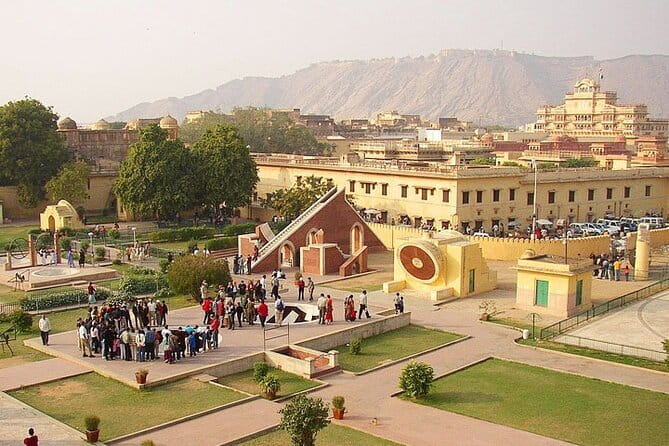
Next is Jantar Mantar, a UNESCO World Heritage site built in 1734. You’ll see a set of nineteen architectural astronomical instruments made by Sawai Jai Singh II, described as the founder of Jaipur. This is a different kind of sightseeing: you’re looking at stones that measure time and the sky.
If you’ve ever wondered how old societies tracked the heavens, this stop is where the answer starts to make sense. With a guide, you’ll connect the big “why” to what you’re seeing on the ground.
Hawa Mahal: wind-catchers in pink and red
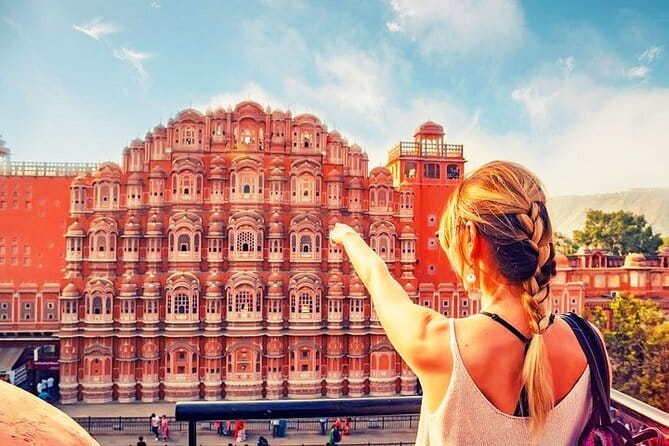
You finish with Hawa Mahal, the Palace of Wind. It’s built from red and pink sandstone and designed for distinctive views and airflow ideas. The stop is brief, about 15 minutes, but it’s a great closer because the building’s facade is instantly recognizable.
At the end of this third day, you’ve covered the headline Jaipur images while still learning how the places connect to water, power, and the sky.
Private car and included costs: what value really looks like here
Let’s talk money in a practical way. The listed price is $20 per person, which sounds like a deal because it’s hard to beat in terms of what’s being included. But the details matter.
What’s included (and why it matters)
You get an air-conditioned vehicle with Wi‑Fi on board, plus private local guides for sightseeing. Entrance fees to monuments are included, along with breakfast and buffet lunch at the hotel. You also get two nights of accommodation if you choose the option that includes hotels, plus all fees and taxes listed as included.
In real life, this reduces friction. You’re not spending your day bargaining for tickets or splitting your time between sightseeing and logistics. Your guide helps you keep the flow. Your driver keeps the car moving.
What’s not included
Tipping/gratuities are optional. That’s pretty typical for private tours in India. I’d budget a little for it if you feel your guide and driver earned it.
One reality check on the price
Because hotels are conditional (only included if you book with the hotel option), confirm what your exact package includes before you commit. If you’re already paying for hotels yourself, the value math changes. If hotels are included, this becomes a stronger “all-in” deal.






Comfort, crowds, and heat: how to make this tour feel good

This route has two kinds of tough moments: early mornings and city-day heat.
Early morning wins
The Taj Mahal sunrise start is built in, which is a smart approach if you don’t want the longest lines. Plan to be ready in time, since the tour schedule is designed around those viewing moments.
Wear for walking and steps
You’ll cover a mix of palace courtyards, fort surfaces, mosque areas, and at least one big stepwell stop with 3,500 steps. That means shoes that support your feet. If your body hates stairs, consider bringing a light support or choosing slower pacing on those sections.
Heat planning
Agra and Jaipur can get hot, and the tour packs a lot into daylight hours. Bring water, use sun protection, and don’t act tough about heat. If you need breaks, tell your guide. A good guide will adjust your pacing within the day.
Car comfort helps
The AC vehicle and Wi‑Fi aren’t luxury-only touches. They help you cool down between stops so you actually enjoy the next site instead of feeling wiped out.
Who should book this tour—and who should skip it
This private Golden Triangle tour is best for you if:
- You want Delhi, Agra, and Jaipur in a tight window without figuring out transport on your own
- You care about Taj Mahal sunrise and want a guided structure for the rest
- You prefer a private group experience over big coach groups
- You like the idea of combining monuments with market life in Delhi
You might consider skipping (or customizing) if:
- You hate a packed schedule and want slower, more leisurely days
- You want lots of free time inside each major site with no guide structure
- You’re very sensitive to early wake-ups, since the sunrise Taj start sets the rhythm
Also, if shopping is part of your plan, Old Delhi markets like Chandni Chowk are part of the day. Past experiences highlighted the benefit of having a guide who can help you bargain and feel comfortable while browsing.
Should you book this private 3-day Golden Triangle Tour?
If you’re aiming for the classic Golden Triangle highlights with less stress, I think it’s a smart booking—especially if you take the hotel-included option. The big reason is simple: you’re paying to reduce the hardest parts of the trip (timing, transfers, and monument logistics) while still getting meaningful guided visits to UNESCO-listed Qutub Minar, Agra Fort, and Jantar Mantar, plus Delhi’s Old City landmarks.
Book it if you want structure, early-morning payoff, and an easy car-based route between cities. Skip or negotiate your expectations if you dream of long downtime in one place. This tour is made for motion—just organized, comfortable motion.
FAQ
How long is the Golden Triangle tour?
It runs for about 3 days (approx.).
Which cities are included?
The tour covers New Delhi, Agra, and Jaipur.
Is this tour private?
Yes. It’s listed as a private tour/activity, so only your group participates.
Do I get a pickup, and what transportation is used?
Pickup is offered, and you travel in an air-conditioned private vehicle. Wi‑Fi is available on board.
Are hotels included?
Two nights of accommodation are included if you book the option that includes hotels.
Are monument entrance fees included?
Yes. Entrance fees to monuments are included.
What meals are included?
Breakfast at the hotel and a buffet lunch at the hotel are included.
Are tips/gratuities included?
No. Tipping/gratuities are not included and remain optional.
Can I cancel for a full refund?
Yes. Cancellation is free, and you can cancel up to 24 hours in advance for a full refund.