REVIEW · NEW DELHI
6-Days Golden Triangle Tour With Ranthambore & Jhalana Safari
Book on Viator →Operated by Golden Triangle Tours India · Bookable on Viator
Golden Triangle, with real safari time. What makes this one interesting is that you still get the classic monuments, but the trip has breathing room—and you add Ranthambore and Jhalana for wildlife time instead of cramming everything into 72 hours. I like how the tour handles the nuts-and-bolts with pickup, a trained representative, and a comfortable AC private vehicle, and I also like that the safari fees are included while other monument entry tickets cost extra. The only drawback to plan around is the extra entrance fees (budget around the tour’s monument-ticket add-on), plus a full day schedule on the big sightseeing days.
This is a private, group-based style tour, so it’s built around your pace rather than a strict bus-cattle routine. You’ll sleep in 4- or 5-star hotels for five nights with breakfast, and you’ll do two Ranthambore safaris plus one Jhalana safari. Just know there are no meals included beyond breakfast, so your day will feel smooth on paper and a little more hands-on when lunch and drinks come up.
In This Review
- Key things that make this tour worth a look
- Price and logistics: what $397.28 covers (and what it doesn’t)
- Delhi Day 1: Qutub Minar and Old Delhi without the sprinting
- Agra Day 2: sunrise Taj Mahal plus three Mughal-style stops
- Ranthambore Days 2-3: two safari rides (and why that’s a big deal)
- Jaipur Day 4: Patrika Gate, then Jhalana safari, then the Pink City check-in
- Jaipur Day 5: Amber, City Palace, Jantar Mantar, and Hawa Mahal
- Jaipur Day 6: Birla Mandir, Galtaji, and back to Delhi
- Hotels, vehicles, and group setup: comfort details that matter
- What to watch for: extra tickets and souvenir pressure
- Should you book this Golden Triangle with Ranthambore and Jhalana?
- FAQ
- What safaris are included in the tour?
- Are monument entrance tickets included?
- Does the price include hotels and breakfast?
- Will I be picked up from the airport, and what vehicle will I use?
- Are any meals included besides breakfast?
- What is the cancellation policy?
Key things that make this tour worth a look
- Two Ranthambore safari tries using Gypsy or Canter, so you get a second chance instead of one coin flip
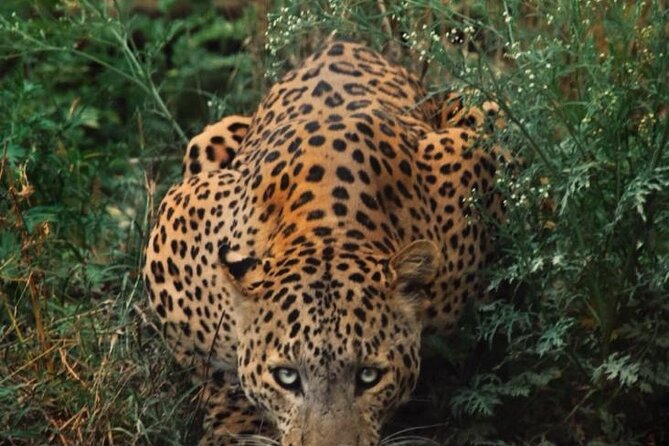
- One Jhalana safari in Jaipur that adds leopards where most Golden Triangle trips stop short
- Hotel comfort with breakfast for five nights, which matters when you’re waking early for sunrise sights
- AC private transport matched to group size (sedan, wagon, or minivan depending on your group)
- Coordinator support you can actually use—the planning help and responsiveness from Gopal is a repeat theme
- A note to self on shopping stops: one common caution is high-pressure souvenir selling
Price and logistics: what $397.28 covers (and what it doesn’t)

At $397.28 per person, the value here comes from how much is pre-packaged: five nights in comfortable hotels with breakfast, pickup/transfer by AC vehicle, parking and toll charges, and your safari ride fees. That is the stuff that usually costs time and mental energy to coordinate on your own—especially when you’re moving between Delhi, Agra, and Jaipur.
Here’s the practical breakdown:
- Included: 5 nights accommodation (when you book the hotel option), breakfast (5), AC transfers, mineral water each day, and the safari games (two in Ranthambore + one in Jhalana). You also get a representative during the tour.
- Not included: monument entrance fees. The tour lists $90.00 per person for monument entrance tickets covering cities’ highlights.
- Also not included: meals (beyond breakfast), travel insurance, and flights or train tickets.
If you’re the type who hates standing in ticket lines or bargaining over who paid what for guides and cars, the setup is appealing. If you’re the type who wants every choice to be yours—restaurants, exact ticket timing, optional stops—then you’ll probably still enjoy it, but you’ll want to mentally budget time and extra ticket costs.
And one more logistics detail that helps: you’re given a mobile ticket and the tour offers pickup starting from Indira Gandhi Intl Airport in New Delhi. For a Golden Triangle, that removes the first big headache: arriving in Delhi and figuring out how to get moving right away.
You can also read our reviews of more tours and experiences in New Delhi.



Delhi Day 1: Qutub Minar and Old Delhi without the sprinting
Delhi is a lot. This itinerary gives you the mix that makes sense: one modern landmark stop, a major South Asian spiritual site, war memory, Mughal monuments, and then Old Delhi shopping streets.
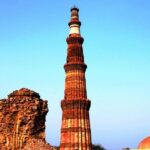
You start with Qutub Minar (UNESCO). It’s a 73-meter, five-storey tower built in 1193—so yes, it’s tall enough to keep your neck working even after the photos. Admission is not included, so plan for that under the monument add-on.
Next is the Lotus Temple, built in 1986 in a flower-like shape, open to everyone regardless of religion (and listed as free). Then you hit India Gate near Rajpath—short stop, but it’s a classic pause point. After that you’ll visit Parliament House (Sansad Bhavan). It’s described as circular in inspiration from the Ashoka Chakra, so if you like symbolism in architecture, this one is worth the quick look.
You then move into Mughal-era Delhi with Jama Masjid, built between 1650 and 1656 by Shah Jahan (listed as free). That contrast—public square, huge mosque, then narrow market alleys right after—is one of the most satisfying rhythms of the day.
The last major stop is Chandni Chowk, the Old Delhi market zone where you can spot spices, dried fruit, silver jewelry, saris, and busy side streets. The day includes a local restaurant lunch time, and then you drive to Agra.
What I like about this Delhi structure: it’s not just monuments as checklist items. It’s monuments that explain why Delhi feels layered—Sultanate, Mughal, and modern India all in one day.
A small consideration: some top Delhi sights are marked as admission not included, so your $90/person monument ticket plan matters.
Agra Day 2: sunrise Taj Mahal plus three Mughal-style stops
Day 2 is where Agra earns its reputation. You’ll do Taj Mahal at sunrise—timed for better light and the classic feel of being there before the day gets noisy. The plan includes a guided tour inside for about two hours. Like many big sights, entrance is listed as not included.
You’ll also visit Agra Fort, a UNESCO site tied to several Mughal emperors (Akbar, Shah Jahan, and others). Admission isn’t included, so again, think of it as part of that monument-ticket add-on.
The itinerary adds two more Mughal-related stops:
- Itmad-ud-Daula (often nicknamed Baby Taj) for about an hour
- Chand Baori in Abhaneri, a stepwell reached by 3,500 steps
Then you continue on to Ranthambore National Park and check in at your hotel.
Here’s the practical upside of this pacing: doing Taj Mahal first reduces decision fatigue. It also gives you a cleaner flow into the rest of the Agra/Mughal sights, then a drive onward without losing your whole evening.
And here’s the tradeoff: the day is packed in moving parts—Taj, Fort, a mausoleum-style visit, a stepwell—and then the transfer to Ranthambore. If you’re the kind of person who gets overwhelmed by schedules, you’ll want to keep your expectations simple: enjoy each place for what it is, and don’t try to “memorize” it.
Ranthambore Days 2-3: two safari rides (and why that’s a big deal)
This is the wildlife portion, and this tour gives you something most shortcuts don’t: two safari games in Ranthambore, not just one. That matters because tiger sightings are not guaranteed. A second ride increases your odds and also gives you time to adjust—where you sit, what you watch for, how the landscape opens up as light changes.
Your structure looks like this:
- After checking in near Ranthambore, you get an overnight stay.
- Day 3 includes a safari after breakfast and another safari after lunch, both listed at around three hours.
You’ll travel in either a Gypsy or Canter style vehicle, and the safari fees are included. Even if you don’t spot a tiger, a good safari still teaches you how the park “works”: tracks, movement patterns, bird activity, and where sightlines open.
What I like here is the double-chance format. If you’re paying for Ranthambore, you want more than a single try. This also helps you handle the reality that safari timing depends on park conditions and day-of operations.
One more note: Jhalana is later. So Ranthambore covers the bigger wildlife goal, and Jhalana adds a second flavor—leopard territory experiences.
Jaipur Day 4: Patrika Gate, then Jhalana safari, then the Pink City check-in
Jaipur is where the trip shifts from imperial monuments to color and street life—and then, right on schedule, it throws in wildlife again.
First is Patrika Gate at Jawahar Circle. It’s a modern monument with colorful murals depicting Rajasthan’s culture, festivals, and rulers, and it’s listed as free. It’s also a quick photo stop that breaks up the travel day.
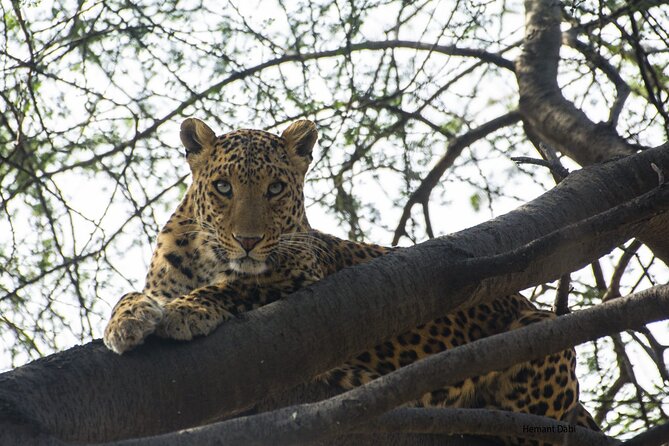
Then you head to Jhalana Safari Lodge area for the Jhalana safari in the Jaipur region. This ride is included (about three hours) and is a highlight because Jhalana is known for leopard spotting opportunities. Your itinerary describes it in terms of sightings, and that’s the main expectation to keep: you’re going for animal luck in habitat.
After the safari, you check in at your Jaipur hotel. The evening timing makes sense: you’ll likely be tired, and you’ll want a comfortable base more than another long sightseeing sprint.
If you like variety, this is a smart day. Most Golden Triangle routes stop at Jaipur sights and call it done. Here, you get the city and a wildlife swing.






Jaipur Day 5: Amber, City Palace, Jantar Mantar, and Hawa Mahal
Day 5 is the core Jaipur sightseeing block, and it’s built around the best-known sites without sending you on wild goose chases.
You start at Panna Meena ka Kund, a stepwell near Amber Fort. It’s a short guided stop and good for a break from standing in big crowds.
Then it’s Amber Palace for about two hours. Admission is not included, but it’s one of those places where time feels worth it. You’ll tour palaces, squares, and monuments with your guide.
Next is a photo stop at Jal Mahal, the palace sitting on Man Sagar Lake. The itinerary lists it as a short stop, and admission is listed as not included—so treat it as a view moment, not a deep visit.
Then you move to City Palace of Jaipur, about one hour, followed by Jantar Mantar, a UNESCO site made up of 19 astronomical instruments built in 1734. This is a good match for travelers who like science-meets-architecture, and the timing is long enough to take it in.
You’ll also stop at Hawa Mahal (Palace of Wind) for about 15 minutes. It’s an exterior-focused stop, so aim your photos at details: the red and pink sandstone look, the five-storey pyramid shape, and the facade rhythm.
Finally, there’s time for Albert Hall Museum (short visit). That wraps the day with a cultural finish.
Jaipur Day 6: Birla Mandir, Galtaji, and back to Delhi
The last day is calmer: temples and a final gentle look before the drive back to New Delhi.
Start with Birla Mandir, dedicated to Lord Vishnu, known for intricate white marble latticework. It’s listed as free and a quick stop.
Then you visit Galtaji Temple, often called the Monkey Temple, with complex structures and three sacred pools. It’s also listed as free. This stop is brief but memorable if you like active places where life moves around the site.
After that, you’ll drive back to Delhi and drop off at your requested location—airport, hotel, or another point in the city.
This ending works well because it gives you options depending on your onward travel. If your flight is later in the day, you won’t feel like you’re racing for the exit at the first moment.
Hotels, vehicles, and group setup: comfort details that matter
The trip is designed to be easy on your logistics. You’ll use air-conditioned private transport, and vehicle type depends on your group size:
- Sedan for groups of 1 or 2
- Wagon for groups of 3 or 4
- Minivan for groups of 5 to 10
That matters when you’re in India: comfort affects how you feel after long driving days. Short stops plus long transfers can wear you out fast, so the AC and private setup are real value.
On rooms: accommodations are generally twin-sharing. If you book for 3 people, it defaults to triple-sharing unless you pay for two rooms. Knowing this ahead of time helps avoid the awkward “wait, what exactly did I book?” moment.
On the people side, trip coordination is a clear strength. Gopal comes up in multiple trip accounts as responsive and quick with planning, including when a date issue needed fixing on short notice. On the driving front, names like Lalit, Sanjeev, Mahendra, Vinod, and Surendra are associated with being reliable, friendly, and punctual—and that’s not trivia. A smooth driver schedule in India can turn a stressful transfer into a tolerable one.
What to watch for: extra tickets and souvenir pressure
Two things to keep in your mental budget:
Entrance fees add up. Some sites in Delhi and Jaipur are marked as free, but others like Qutub Minar, Humayun’s Tomb, Taj Mahal, and Agra Fort are listed as not included. You also have the tour’s monument entrance ticket cost listed as $90.00 per person. If you’re trying to keep spending tight, check what you’ll actually want to enter.
Shopping pressure can pop up. One caution from trip experiences: there can be high-pressure souvenir selling. You don’t need to be rude—just be ready with a simple rule: if you want nothing, say you’ll skip. If you do want something, set a budget before you’re offered the first “perfect deal of the day.”
If you’d rather spend your time focusing on photos, temples, and safari sightings, keep your shopping energy low and your attention high.
Should you book this Golden Triangle with Ranthambore and Jhalana?
If you want the “classic” Delhi-Agra-Jaipur combo but also want wildlife time that isn’t just a token stop, I’d say this tour fits well. The biggest reasons to book are the two Ranthambore safari chances and the extra wildlife layer with Jhalana in Jaipur. Add in five nights of comfortable hotels with breakfast and AC transport, and you get less logistics stress than most DIY versions.
I’d hesitate only if you strongly dislike schedules or you want every lunch and ticket decision to be fully on your own. With this format, you get convenience—and you trade away some control.
One final pro tip: set aside a little mental buffer for extra entrance fees and for how tiring a full day of driving plus sightseeing can be. Then you’ll enjoy the best parts on purpose: sunrise Taj Mahal, two Ranthambore safaris, and a Jaipur safari that most Golden Triangle trips never include.
FAQ
What safaris are included in the tour?
The tour includes 02 games of safari in Gypsy or Canter In Ranthambore and 01 time Jhalana Safari in Jaipur. Safari fees are included, and other entry tickets are not.
Are monument entrance tickets included?
No. Entrance fees are listed as not included, with an added monument entrance ticket amount of $90.00 per person. Some sights on the itinerary are marked free, but many major monuments are not.
Does the price include hotels and breakfast?
Yes, it includes 5-nights accommodation (if you book the option including hotels) and breakfast (5). Other meals are not included.
Will I be picked up from the airport, and what vehicle will I use?
Pickup is offered from Indira Gandhi Intl Airport, New Delhi. Transportation is in an air-conditioned vehicle, using a 4-seater sedan for groups of 1 or 2, a 6-seater wagon for groups of 3 or 4, and a 10-seater minivan for groups of 5 to 10.
Are any meals included besides breakfast?
No meals are included besides breakfast. Lunch time is mentioned during the tour, but it is not listed as included.
What is the cancellation policy?
You can cancel for free up to 24 hours in advance for a full refund. If you cancel less than 24 hours before the start time, the amount paid will not be refunded. The tour may also be canceled due to poor weather or if a minimum number of travelers isn’t met, with alternative dates or a full refund offered.