REVIEW · NEW DELHI
3-Days Private Luxury Golden Triangle Tour (Delhi, Agra & Jaipur)
Book on Viator →Operated by Kriti Taj Day Tour Packages · Bookable on Viator
Golden Triangle in three days? That’s the real test. This private luxury loop stitches together Delhi, Agra, and Jaipur with an AC car plus professional guides who meet you in each city.
I especially like the mix of stops: Old Delhi’s Jama Masjid area, Mughal-era power in Agra, and Jaipur’s iconic landmarks in one smooth arc. I also like the way guides can help you make the most of short time windows, including photo tips and efficient monument navigating—Nick and Neeraj are repeatedly praised for that kind of planning.
One thing to consider: the schedule packs in major sights with set time blocks, and lunch and dinner aren’t included, so you’ll want to budget your own meal breaks.
In This Review
- Key highlights at a glance
- What You’re Really Buying for $370: a fast, premium route
- Private car comfort and city guides: why this works better than a bus tour
- Day 1 in Delhi: Old Delhi spice energy to Qutub Minar scale
- Gurudwara Bangla Sahib and the flow of Delhi’s faiths
- Day 2 in Agra: Taj Mahal time, Agra Fort, and a real full day
- Fatehpur Sikri and Panch Mahal: the payoff for staying beyond Agra’s main stage
- Day 3 in Jaipur: Pink City landmarks in a well-paced loop
- Jantar Mantar and Jal Mahal: the quieter wins
- The best part is the guides: Nick and Neeraj-style planning for better photos
- Hotels and breakfasts: a quieter luxury for a high-energy itinerary
- Timing, smog, and what to expect with monument viewing
- Price and value: when $370 feels fair (and when it might not)
- Who this Golden Triangle loop is best for
- Should you book this 3-Day Private Luxury Golden Triangle tour?
- FAQ
- Which cities does this Golden Triangle tour cover?
- Is pickup included, and where do you get dropped off?
- What’s included in the price besides the tour itself?
- Are meals like lunch and dinner included?
- Is the tour private?
- What are the main stops in Delhi?
- What are the main stops in Agra and the Agra-area site?
- What’s the cancellation policy?
Key highlights at a glance
- Private luxury transport, 4-star bases, and breakfasts included for a calmer trip.
- Main monuments have admission tickets included, so you’re not juggling extra fees all day.
- Delhi’s day is a smart blend of Old Delhi (Jama Masjid) and big-hitter sites (Qutub Minar, India Gate).
- Agra is built around the Taj Mahal, with time for Agra Fort and a long side trip to Fatehpur Sikri.
- Jaipur delivers the classics: City Palace, Jantar Mantar, Hawa Mahal, plus Jal Mahal and a fort stop.
- Guides like Nick and Neeraj focus on photo spots and flow, which matters when you’re moving fast.
What You’re Really Buying for $370: a fast, premium route
At $370 per person for about 3 days, you’re paying for three things that usually cost time (and stress) when you plan on your own: transportation, access, and interpretation. This tour includes an air-conditioned vehicle, two nights in 4-star hotels with breakfast, and city-by-city professional guides.
The big value isn’t just luxury. It’s that the route is designed as a tight loop through the Golden Triangle cities, so you don’t burn days figuring out how to connect Delhi to Agra to Jaipur. If you have limited time in India, this kind of structure is exactly what you want.
You can also read our reviews of more tours and experiences in New Delhi.



Private car comfort and city guides: why this works better than a bus tour
This is a private tour, meaning only your group participates. That matters in India, where the difference between waiting around and moving smartly can be huge. With a car ready and guides meeting you in each city, you spend more time at sights and less time coordinating logistics.
Even better: the itinerary isn’t only a list of monuments. It’s a sequence that groups places by geography and theme, so your day feels like a story instead of random driving. And with guides like Nick and Neeraj mentioned often for being organized and patient, you can expect practical help, not just facts.
Day 1 in Delhi: Old Delhi spice energy to Qutub Minar scale
Delhi on this tour starts where you should start: Old Delhi. You begin at Jama Masjid, one of India’s largest mosques, built under Shah Jahan (1644 to 1656). You also get two hours here and the package includes the spice market experience with a rickshaw ride. That’s the kind of activity that turns a famous stop into a memorable morning.
From there, you shift toward New Delhi’s ceremonial center. India Gate is a quick breather in the middle of a busy day: 30 minutes at a war memorial near what was once Rajpath. Even if you’re not a history deep-dive person, the scale of the place and the setting make it a good checkpoint before you move into government architecture.
Next is Rashtrapati Bhavan (the President’s House). The schedule lists it as a quick stop—about 5 minutes—with admission included as free. It’s short on purpose: think of it as a drive-by moment where you see the big idea of Delhi’s imperial-plan layout before you go back to visiting.
Gurudwara Bangla Sahib and the flow of Delhi’s faiths
After the memorial stops, your day turns toward Sikh heritage at Gurudwara Bangla Sahib. You get about 1 hour, and the package includes admission tickets. The highlight here is the sarovar (holy pond) inside the complex, which gives the gurdwara a calm center even as Delhi keeps moving around it.
This stop adds something important to the Golden Triangle experience: Delhi isn’t just one story. You’re seeing architecture and sacred spaces from different traditions in a single day. That’s a big reason this itinerary feels more complete than the typical checklist.
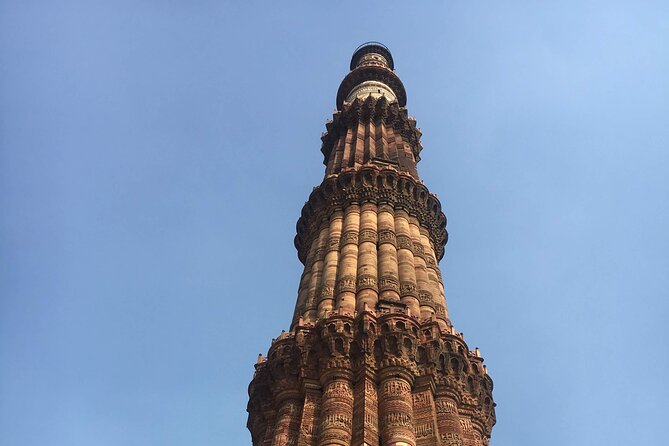
Then you finish with Qutub Minar, a UNESCO World Heritage Site and the defining minaret of the Qutb complex. You get 1.5 hours, plus admission included. This is where Delhi’s layers show up physically—newer power sits above older ruins, and the scale of the tower makes it hard to treat the stop as just another photo stop.
Day 2 in Agra: Taj Mahal time, Agra Fort, and a real full day
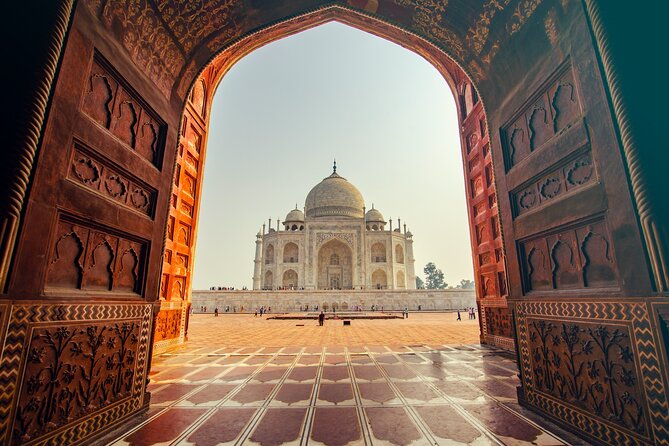
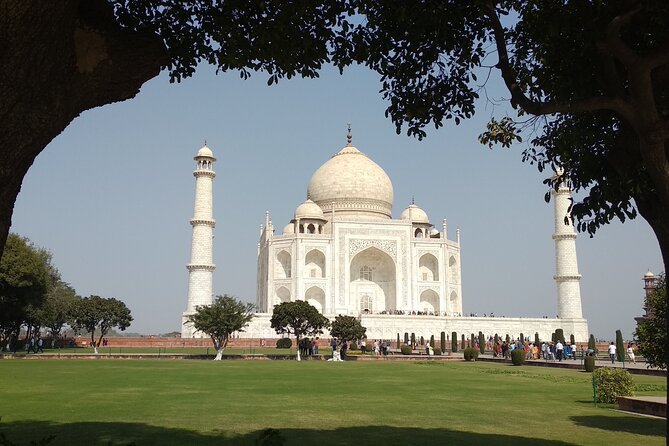
Agra is the day with the highest expectations, and your schedule reflects that. You start at the Taj Mahal, with about 2 hours and admission tickets included. Commissioned in 1631 by Shah Jahan for Mumtaz Mahal, the Taj is famous for a reason: the marble glow and symmetry are the visual headline.
Now, here’s the practical part. One review notes that the Taj views can be muted by smog, so don’t plan your emotions around perfect clarity. If you want the best odds for light and atmospherics, build your mindset around flexibility and let the guide help you with timing. In fact, there’s an example of a guide helping someone navigate the queuing system efficiently so they could go in early for sunrise. Even if your timing isn’t identical, that kind of flow-planning is exactly the value of having a guide.
After the Taj, you shift to power and defense at Agra Fort. You get about 1 hour and admission tickets included. It was the Mughal residence until the capital shifted to Delhi, and seeing it after the Taj helps you understand that these sites were built for rulers who managed both beauty and control.






Fatehpur Sikri and Panch Mahal: the payoff for staying beyond Agra’s main stage
Most Golden Triangle tours either rush or skip the extra Agra-area highlights. This one includes Panch Mahal and Fatehpur Sikri, listed for about 2 hours with admission included.
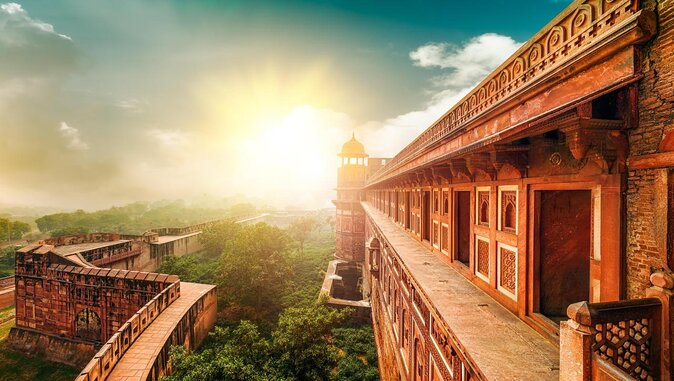
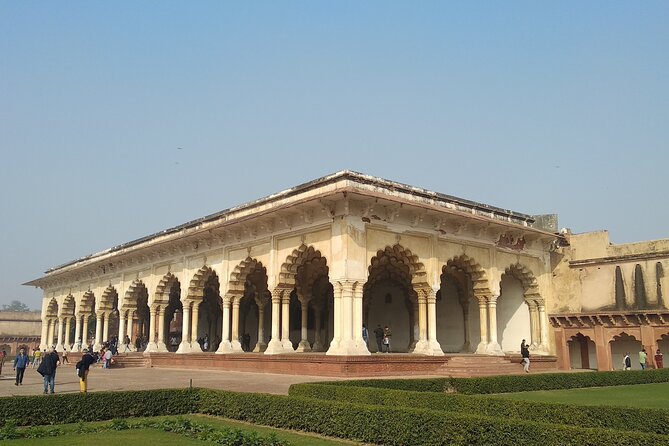
Fatehpur Sikri is a small city of red sandstone buildings around the center—an imperial project that feels different from Agra’s Mughal silhouette. Key features mentioned in the itinerary description include Buland Darwaza gate, the marble Tomb of Salim Chishti, the carved Diwan-E-Khas hall, and the mix-style Jodha Bai Palace next to the five-story Panch Mahal that overlooks the complex.
If you only visited the Taj and called it done, you’d miss how broad Mughal ambition was. This stop gives you variety, and it breaks up the emotional intensity of one monument into a more complex, architectural experience.
Day 3 in Jaipur: Pink City landmarks in a well-paced loop
Jaipur is where the tour leans into color and symbolism. You start with a full day Jaipur sightseeing tour described as covering the Pink City and including Fort, Jantar Mantar, City Palace, and Jal Mahal. That initial block is your overview day: you get context, then specific monuments take over afterward.
The schedule then lists City Palace of Jaipur separately for about 1.5 hours, with admission tickets included. As the royal residence and former administrative headquarters, it helps you see Jaipur as more than a postcard. Construction began after the city was founded under Maharaja Sawai Jai Singh II, after he moved the court from Amber to Jaipur.
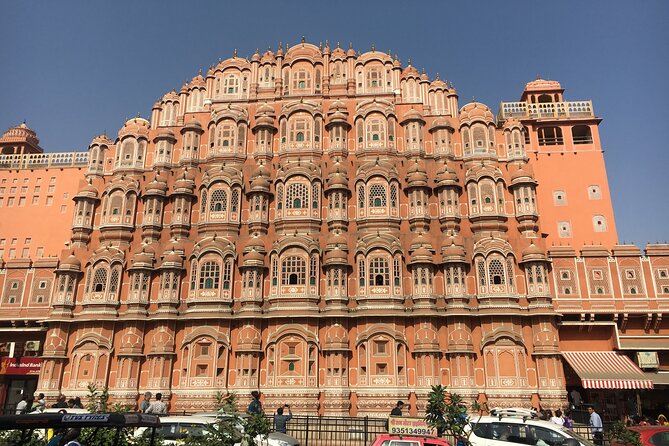
Next is Hawa Mahal (Palace of Wind) for about 30 minutes, also included with admission tickets. This is that red-and-pink sandstone facade on the edge of the City Palace complex, extending toward the zenana (women’s chambers). Even in a short stop, you get the iconic window-grid look that makes Jaipur recognizable from far away.
Jantar Mantar and Jal Mahal: the quieter wins
You also visit Jantar Mantar, a UNESCO World Heritage Site with 19 astronomical instruments, built under Sawai Jai Singh. Your time here is about 45 minutes, with admission tickets included. The itinerary description notes the world’s largest stone sundial—this is science made visible, and it pairs nicely with the architectural scale of Jaipur’s palaces.
Your Jaipur day also includes Jal Mahal, the water palace. Even though your schedule only lists it inside the full-day overview block, it’s a strong visual contrast with all the stone work around it. The effect is simple: you see how Jaipur planned beauty not only through buildings, but also through water placement and reflection.
The best part is the guides: Nick and Neeraj-style planning for better photos
The most repeated praise in the tour feedback focuses on the human side—your guide. Names like Nick and Neeraj show up with a consistent pattern: they’re organized, patient, and very focused on making sure you hit the right moments.
That can mean a lot of things on the ground. In practical terms, it often includes:
- Helping you find good photo spots at the right times
- Explaining the story behind the monuments so you look with purpose, not just sightseeing mode
- Keeping the day running smoothly so you don’t waste time in queues
One review also mentions guides lining up add-ons like a photographer, and that it wasn’t pushy. So if you care about getting solid shots without turning the day into a sales pitch, that’s a reassuring detail.
Hotels and breakfasts: a quieter luxury for a high-energy itinerary
You’ll stay for 2 nights in 4-star hotels and breakfast is included. Since lunches and dinners aren’t included, breakfast becomes your anchor. It’s the meal that keeps the pace realistic when your days are packed with major sites and ride time between cities.
This is one of those “small” inclusions that makes a big difference. When you’re doing Delhi-Agra-Jaipur in three days, having a guaranteed start to each morning lowers friction. You don’t have to hunt for food plans before you even reach the first monument.
Timing, smog, and what to expect with monument viewing
This tour moves, and the itinerary includes specific time blocks for many stops: Qutub Minar (1.5 hours), Jama Masjid (2 hours), Taj Mahal (2 hours), and then Jaipur’s split between palace, observatory, and facade viewing. That’s helpful because you can plan your energy, but it also means you won’t linger forever at any one place.
For the Taj Mahal specifically, keep expectations flexible. One review points out that the views can be muted due to smog. If your trip lands during hazier days, you may get the Taj’s shape more than its sparkle. A good guide helps you work around that—through timing, entry flow, and knowing where you can still get satisfying views even when conditions aren’t perfect.
Price and value: when $370 feels fair (and when it might not)
For $370 per person, you’re getting:
- Air-conditioned vehicle
- Private tour format (your group only)
- 2 nights in 4-star hotels
- Breakfast included
- Admission tickets included for the listed stops
- Pickup and drop-off options in New Delhi / Jaipur areas (as stated)
Is it a bargain? It depends on your baseline. If you’d otherwise pay separately for hotels, a driver, guides, and entry fees, the packaged structure can feel like a bargain in time saved. If you’re a solo traveler who prefers to freestyle every day, you might find you can do it cheaper. But for a tight 3-day timeline, this setup is usually where convenience becomes actual value.
Who this Golden Triangle loop is best for
This tour is a strong fit if you:
- Have limited time and want the classic Golden Triangle route without juggling logistics
- Prefer private transport over crowded group buses
- Want interpretation at the monuments, not just standing in front of them
- Like a mix of big names and supporting sites (Delhi’s mix, Agra’s Taj + Fort + Fatehpur Sikri, Jaipur’s palaces + science)
If you’re the kind of traveler who hates structure and wants to wander freely for hours, the set time windows may feel restrictive. Still, the guide-driven pacing is usually what makes the days work.
Should you book this 3-Day Private Luxury Golden Triangle tour?
I’d book it if you want a clean, premium way to see Delhi, Agra, and Jaipur in one go, with 4-star comfort, included breakfasts, and guides who are known for helping you flow through the monuments. The biggest win is that your time stays focused on the sights, not on planning and re-planning.
I’d pause if you know you’ll want long stays at fewer places, or if you’re trying to keep food costs fully minimized since lunch and dinner aren’t included. Also, if perfect Taj views are your top priority, remember that smog can affect clarity, so build in flexibility.
If you want the Golden Triangle route with less friction and more confidence, this is a solid choice.
FAQ
Which cities does this Golden Triangle tour cover?
It covers New Delhi, Agra, and Jaipur over about 3 days.
Is pickup included, and where do you get dropped off?
Pickup is offered, and at the end you’ll be dropped off at the same pick-up location or at the airport in New Delhi or Jaipur.
What’s included in the price besides the tour itself?
The package includes an air-conditioned vehicle, 2 nights’ accommodation in 4-star hotels with breakfast, and admission tickets for the listed stops. Mobile ticket is also mentioned.
Are meals like lunch and dinner included?
No. Lunch and dinner are not included, though breakfast is included at your hotels.
Is the tour private?
Yes. It’s described as a private tour/activity, so only your group participates.
What are the main stops in Delhi?
In Delhi you visit Jama Masjid, India Gate, Rashtrapati Bhavan, Gurudwara Bangla Sahib, and Qutub Minar.
What are the main stops in Agra and the Agra-area site?
In Agra you visit the Taj Mahal and Agra Fort, and you also include Fatehpur Sikri / Panch Mahal.
What’s the cancellation policy?
You can cancel for a full refund if you cancel at least 24 hours in advance of the experience’s start time. Free cancellation is offered, and changes within 24 hours aren’t accepted.