REVIEW · NEW DELHI
Private Luxury 4 Days Golden Triangle Tour of Delhi, Agra & Jaipur
Book on Viator →Operated by Treasure Trip India · Bookable on Viator
A full Golden Triangle, handled for you. This private luxury 4-day run strings together Delhi’s Mughal monuments, Agra’s Taj Mahal, and Jaipur’s royal sights with AC transport and admission tickets included.
I also love the human touch: you’re guided by native-speaker tour guides, and the logistics are handled for you city to city, with help that can be as smooth as drivers like Sanju and guides like Deepak coordinating the day. One drawback to flag early: the schedule is tight, and lunch and dinner are on your own, so you’ll want to budget and keep meals simple.
In This Review
- Key things you’ll feel right away
- How the private luxury setup changes the Golden Triangle
- From pickup to WiFi: what your ride between cities is really like
- Old Delhi in one block: Humayun’s Tomb, India Gate, Rashtrapati Bhavan, Jama Masjid
- Red Fort timing: a two-hour visit that needs planning
- Agra day: Taj Mahal first, then Agra Fort with a lunch break
- Baby Taj and the Sanskriti museum: why this stop matters
- Jaipur classics in sequence: City Palace, Jantar Mantar, Hawa Mahal
- What’s included (and what costs extra) so there are no surprises
- Value at $310 per person: private comfort plus real admissions
- Who should book this private luxury Golden Triangle tour
- Should you book it?
- FAQ
- How much does the tour cost per person?
- How long is the Golden Triangle tour?
- Is this a private tour?
- Is pickup included?
- What’s included in the package?
- Are admission tickets included for the attractions?
- Is lunch or dinner included?
- Can the itinerary be customized?
- What happens if the tour is canceled due to poor weather?
- What is the cancellation policy if I need to cancel or change dates?
Key things you’ll feel right away
- Private, door-to-door comfort with pickup offered and an air-conditioned vehicle for the long stretches
- Admission tickets included for the main stops listed in the plan
- City guides with clear English explanations (names you might meet include Deepak, Dheeraj, Nikhil, Sunil, Rishipal, and Surya)
- WiFi on board plus bottled water to make travel days easier on your phone and your body
- Accommodation and breakfast included, so the mornings start without scrambling
- Fully customized flexibility—you can include or exclude destinations if your plan needs tweaking
How the private luxury setup changes the Golden Triangle
Golden Triangle tours can go two ways: you either see a lot, or you actually enjoy the day. Here, the big upgrade is that you’re not fighting the logistics. You move between Delhi, Agra, and Jaipur with a private vehicle and a guide at each major stop, so you get context fast instead of spending your energy on navigation.
I like that the package is built around comfort and time control. You get bottled water, air-conditioning, and even WiFi on board. That sounds small until you’re sitting in traffic or waiting for the group to move into a ticket line. The other comfort move is that accommodation and breakfast are included—so you can focus on sights, not meal hunting before a monument.
This is also a tour where customization is part of the pitch. If your priorities are Taj Mahal photos first, then history, then shopping, you can often shape the order. If you’re not a fort person, you can ask to skip a destination. That matters because the classic Golden Triangle can feel like a checklist. This format gives you a little more steering.
You can also read our reviews of more tours and experiences in New Delhi.



From pickup to WiFi: what your ride between cities is really like
The schedule moves across three cities, so the vehicle is not just transportation—it’s part of your sightseeing. You’ll be in an air-conditioned car with private transportation, and the plan includes WiFi on board. For many people, that’s the difference between arriving cranky and arriving ready to go.
You’ll also have a driver who stays with your group and handles transfers between stops and hotels. In practice, that reduces the stress of figuring out where to meet, when to depart, and what time to be ready. In the feedback I’ve seen from people who did this route, smooth hotel check-ins were a repeated theme, with drivers like Sanju cited for keeping things simple after a long day.
One more detail worth noting: it comes with mobile ticketing. That usually means less paper and fewer last-minute headaches when you’re trying to enter timed or ticketed areas.
Old Delhi in one block: Humayun’s Tomb, India Gate, Rashtrapati Bhavan, Jama Masjid
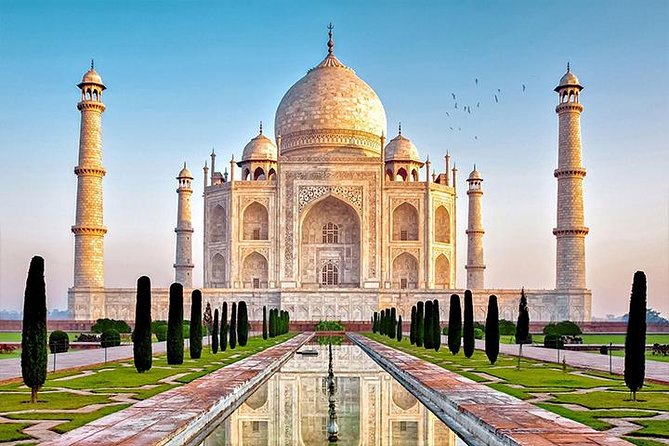
Day one starts in Old Delhi at Humayun’s Tomb, dedicated to the second Mughal Emperor, Humayun. This is a smart opener because the site sets the mood: Mughal architecture, symmetry, and gardens that help you understand why this era still shapes Indian visual culture. You get about two hours here, which is usually enough to see the main areas and not feel like you’re rushing through the same photo spots over and over.
From there you head to India Gate. It’s a monument built in honor of the Indian Army, and you’re meant to pay homage to martyrs and spend time in the gardens nearby. This is more than a stop for a wide-angle picture. It’s a break in the pace—green space in a city that’s constantly on the move—while still keeping you in the national-story framing of Delhi.
Next up is Rashtrapati Bhavan, the President of India’s residence. The time is short—around two minutes—so treat it like a quick “this is the seat of power” moment, not a long museum visit. If you want deep reading, you’d do that on your own later. For a tour day, the quick stop is a practical way to cover the landmark without burning half the day.
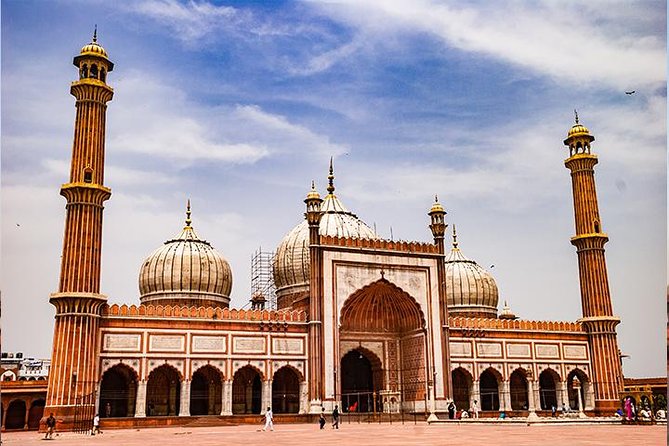
The day closes with Jama Masjid, built by Mughal emperor Shah Jahan. You’ll spend about two hours here. Jama Masjid is one of those places where sound, scale, and active worship shape your visit. The practical tip: wear comfortable shoes and expect a crowd. Even with a guide, you’ll want to move calmly and follow their timing so you don’t lose your place.
Red Fort timing: a two-hour visit that needs planning
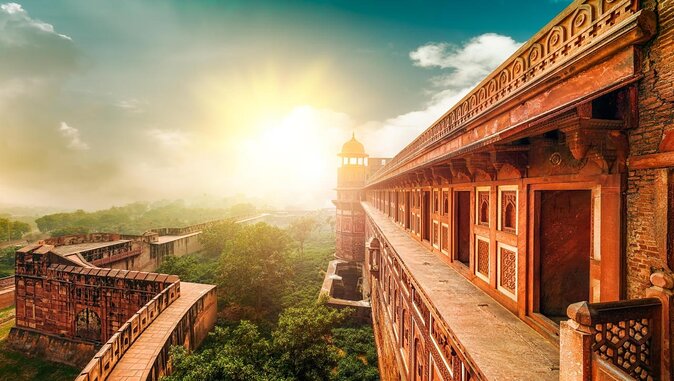
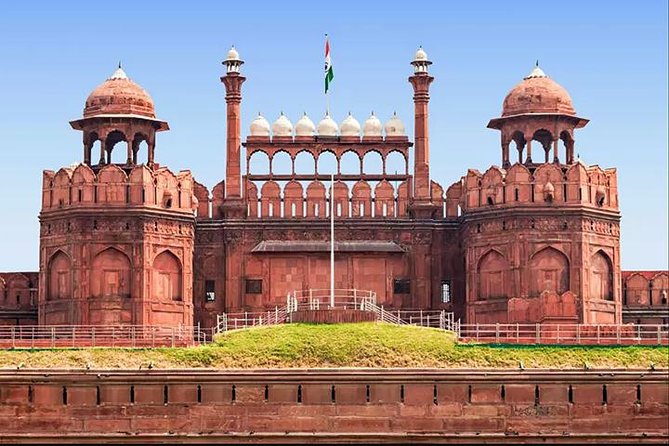
After Jama Masjid, the day continues with Red Fort (Shah Jahan again, this time as the builder of a major political and historical center). You get about two hours at the fort, and that time window drives what you can realistically do: you’ll see the major parts and take in key explanations, but you won’t have endless wandering time.
This is where the guide matters. A good guide turns “walls and gates” into meaning—how forts functioned as power hubs, and how the architecture communicates status. If you’re the type who likes to know what you’re looking at before you take pictures, this kind of guided timing is worth it.
The possible drawback is simple: if you fall in love with every photo angle, two hours can feel short. If you prefer slow travel, you might want a longer stay in Delhi later, or ask for a customization that adds time to one monument and removes another.
Agra day: Taj Mahal first, then Agra Fort with a lunch break
Agra is built around one undeniable magnet: the Taj Mahal. Your visit starts here, and you get about two hours. It’s described as being on the banks of the Yamuna River, built by Shah Jahan in memory of Mumtaz Mahal. Even if you’ve seen the Taj in books and screens, seeing it in real scale changes your sense of distance and detail.
Two hours is enough to do the essentials: exterior views, key perspectives, and time for the famous photos. The practical reality is that monument visits come with waiting and entry flow. So, treat your time as “enough for a full visit,” not “enough to linger forever.”
After Taj Mahal, there’s lunch at an air-conditioned hotel or restaurant. Just keep expectations right: lunch isn’t included, even though the tour provides the break. If you want to keep costs down, choose simple dishes and skip the extras. If you want comfort and shade, this is a good moment to eat somewhere cool.
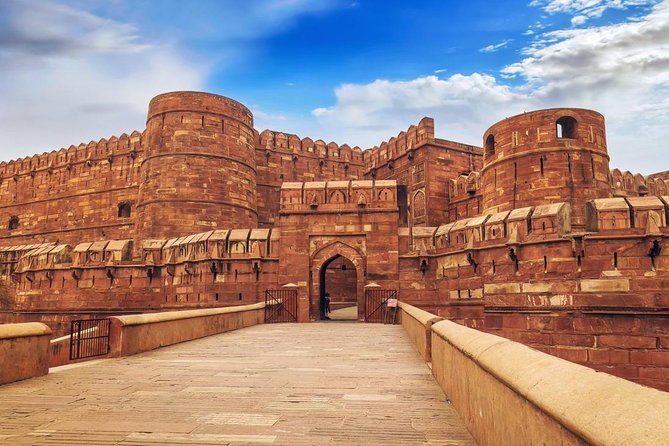
Then you drive to Agra Fort, built by Mughal emperor Akbar. You’ll have about two hours. Forts often feel different from mausoleums: more political, more fortress-minded, more about control and administration. Again, your guide helps by explaining what you’re seeing so it doesn’t turn into “another big old stone place.”






Baby Taj and the Sanskriti museum: why this stop matters
A highlight on the Agra side is Itimad-ud-Daulah, sometimes called the Baby Taj. It’s a quieter-feeling monument compared with the Taj Mahal, and that’s part of why it works well in a short trip. You still get Mughal elegance, but the emotional weight isn’t the same “main event” pressure.
The schedule gives you about two hours here too. You’ll also visit the Sanskriti museum, described as a place to explore jewelry and art inspired by the Mughal period. This museum stop has a practical bonus: it gives you a cultural bridge between architecture and objects—so you can connect decorative motifs you saw at monuments with items made for courts and ceremonial life.
One caution: if you’re not into shopping or galleries, museums can feel like time. If you are interested in objects, though, it’s a useful add-on. You’ll also have the option to buy art and jewelry there, but you can skip that completely and treat it like a learning stop.
Jaipur classics in sequence: City Palace, Jantar Mantar, Hawa Mahal
Then it’s Jaipur. The plan hits three major royal-era landmarks in a focused run, each with a different angle on Rajasthan.
First is City Palace, described as the Royal Museum and residence of the royal family of Jaipur. You spend about two hours. This is where the tour shifts from monuments to material culture: the museum showcases armory and costumes from the royal family. Even if you’re not a weapons person, costumes help you understand how status was worn and displayed.
Next comes Jantar Mantar, a solar observatory used to calculate the position of stars. You get about two hours, and there are dozens of astronomical tools. The sun dial is described as the largest in the world, which gives you a ready mental anchor for why it matters. If you like science built in the real world, this is the kind of stop that feels satisfying rather than purely aesthetic.
Finally, you visit Hawa Mahal, the Palace of Wind—crown-shaped with hundreds of windows meant to let in cool breezes. It was built by Rajput rulers for their queens as a summer retreat. Two hours here is plenty to see why the building is so famous and to walk the edges for photo angles.
After Hawa Mahal, the tour includes lunch at a local restaurant. Again, lunch is not included, so you’ll pay out of pocket. This is also a good time to slow down and eat something you can point to later as part of the Jaipur experience—Rajasthan cuisine is part of the plan here.
What’s included (and what costs extra) so there are no surprises
The included package items are a big part of the value equation, because they reduce the “nickel-and-dime” feeling of independent travel.
Included:
- Bottled water
- Air-conditioned vehicle and private transportation
- WiFi on board
- Tour guide (with native-speaker guidance)
- All fees and taxes
- Accommodation
- Breakfast
- Hand sanitizer and masks
From the plan, admission tickets are included for Humayun’s Tomb, India Gate area time, Rashtrapati Bhavan, Jama Masjid, Red Fort, Taj Mahal, Agra Fort, Itimad-ud-Daulah, City Palace, Jantar Mantar, and Hawa Mahal.
Not included:
- Lunch
- Dinner
If you’re budgeting, build in lunch in Delhi/Agra/Jaipur breaks and dinners at your hotel or nearby. Since accommodation is included, you’ll at least know where your night base is.
Value at $310 per person: private comfort plus real admissions
At $310 per person, this isn’t a “bare-bones bus tour.” You’re paying for a private vehicle, a guide, admission tickets for the big stops, and accommodation with breakfast. Those are the items that usually add up fast if you plan it yourself—especially the private car between cities and the time savings of having someone else manage the flow.
So the real question isn’t only if it’s “cheap” or “expensive.” It’s whether your travel style matches what the package is built to do:
- If you want private guidance at key monuments
- If you’d rather spend money to avoid confusion
- If you prefer a set sequence across Delhi, Agra, Jaipur
Then the price can feel fair quickly.
If, on the other hand, you love flexible wandering with no fixed timing, you might find the schedule a bit strict. The plan is built for efficiency, not for stopping every time you see a side street that looks interesting.
Who should book this private luxury Golden Triangle tour
This tour fits best if you want:
- A private Golden Triangle with a guide at major sites
- Comfort while traveling between Delhi, Agra, and Jaipur (air-conditioning and private transport)
- Clear timing so you see the big names without researching every ticket and route
It’s also a solid fit for first-timers who want a guided “best hits” approach with just enough customization to adjust priorities.
Where you may want to think twice:
- If you want long, slow museum days and lots of free time
- If you’re trying to keep the trip ultra-low cost (because lunch and dinner aren’t included)
Should you book it?
I’d book this if your top priority is a smooth, guided Delhi–Agra–Jaipur experience with major sites handled for you. The included admissions, accommodation, and breakfast do a lot of the heavy lifting, and the private AC transport makes a huge difference on a route where distances and traffic can wear you down.
If you’re the type who always ends up wanting “one more hour” at the Taj Mahal or Red Fort, you can still book—but ask for customization that trades time from another stop. And do plan for food costs since lunch and dinner are extra.
FAQ
How much does the tour cost per person?
The price is listed as $310.00 per person.
How long is the Golden Triangle tour?
The duration is approximately 3 days 12 hours.
Is this a private tour?
Yes. It’s a private tour/activity, and only your group will participate.
Is pickup included?
Pickup is offered.
What’s included in the package?
Included items are bottled water, an air-conditioned vehicle, WiFi on board, private transportation, a tour guide, all fees and taxes, accommodation, breakfast, hand sanitizer, and masks.
Are admission tickets included for the attractions?
Yes. Admission tickets are included for the stops listed in the itinerary (such as Humayun’s Tomb, Red Fort, Taj Mahal, City Palace, Jantar Mantar, and Hawa Mahal).
Is lunch or dinner included?
Lunch and dinner are not included.
Can the itinerary be customized?
Yes. The package is described as fully customized, with an option to include or exclude destinations from existing itineraries.
What happens if the tour is canceled due to poor weather?
If canceled due to poor weather, you’ll be offered a different date or a full refund.
What is the cancellation policy if I need to cancel or change dates?
This experience is non-refundable and cannot be changed for any reason. If you cancel or request an amendment, the amount paid will not be refunded.