REVIEW · NEW DELHI
Golden Triangle Tour 3 Night 4 Day by Car Tiger Safari from Delhi
Book on Viator →Operated by Saniya Tour & Travels · Bookable on Viator
Four days, three cities, one big grin. This Golden Triangle trip by car strings together Delhi, Agra, and Jaipur, plus a dawn Ranthambore safari that adds real wildlife tension to the temple-and-palace route. I like that the day plan leans into early starts, including a 5:30 AM Taj Mahal visit.
I also love the on-the-ground guidance: you get a professional tour guide for the sights, and the tour’s highlights are handled with a human touch, not just a bus drop-off. In one booking, the Taj Mahal guide named Imran Khan was singled out for both storytelling and helping with professional-looking photos.
One thing to watch: the itinerary mixes free-entry sights with others where tickets are not included, and you’ll be in a car for long stretches. If you hate early mornings, the sunrise safari and Taj timings may test your patience.
In This Review
- Key moments that make this trip worth it
- How the Golden Triangle by car actually feels
- Day 1: Delhi highlights, then the drive toward Agra
- Day 2: Taj Mahal at 5:30 AM, Agra Fort, Fatehpur Sikri, then Ranthambore
- Day 3: Ranthambore at sunrise, then a drive to Jaipur
- Day 4: Amber Fort and Jaipur’s major landmarks in one packed city day
- Price, lodging options, and what you’re actually paying for
- Who this tour fits best (and who should think twice)
- Should you book this Golden Triangle with Ranthambore safari?
- FAQ
- What cities does this tour include?
- Is hotel or airport pickup included?
- What time is the Taj Mahal visit?
- Is the Ranthambore safari private?
- Are monument tickets included?
- What’s included in the price besides sightseeing?
Key moments that make this trip worth it
- 5:30 AM Taj Mahal keeps the crowds down and turns the morning light into your best ally
- Ranthambore safari at sunrise runs from an open jeep or canter on a shared basis
- Tonga ride in Agra is included, adding a classic touch beyond the fort-and-mosaic stops
- A private tour for your group means the guide can pace things for you
- Car pickup from Delhi/Noida/Gurugram helps you start clean without hunting transport
- Unlimited bottled water in the vehicle is a small thing that actually matters in India
How the Golden Triangle by car actually feels
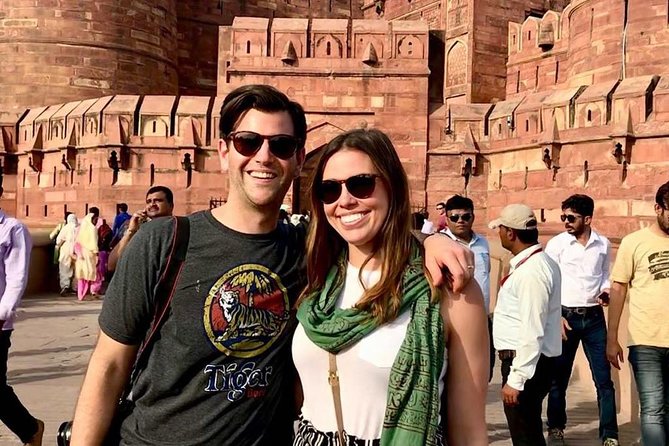
Doing the Golden Triangle by car is about control. You’re not timing trains, changing stations, or playing tag with ticket lines across multiple cities. Instead, you get pickup, your own vehicle, and a guide who can keep the flow moving.
The route is also intentionally “big early.” Taj Mahal is scheduled for 5:30 AM, and the Ranthambore wildlife outing happens at sunrise. That means the days start before you’d naturally wake up on a vacation, but it also means you’re more likely to see the sights in better light and with less chaos.
This is a private tour/activity for your group, not a shared sightseeing bus where you lose your guide. Still, note the safari itself is listed as shared (open jeep or canter). That shared format is normal for wildlife parks, but it’s good to know so expectations match reality.
You can also read our reviews of more tours and experiences in New Delhi.



Day 1: Delhi highlights, then the drive toward Agra
Day 1 begins with pickup from your hotel, airport, or a chosen spot in Delhi, Noida, or Gurugram. Then the tour runs a Delhi loop through some of the city’s most recognizable Mughal-era and colonial-plan landmarks.
You’ll start at Jama Masjid, a major Mughal mosque built by Shah Jahan (the tour description places it in the mid-1600s). This is one of those places where a guide helps you look beyond the obvious. You’ll want to be mindful of dress and behavior here, because it’s an active place of worship, not just a photo stop.
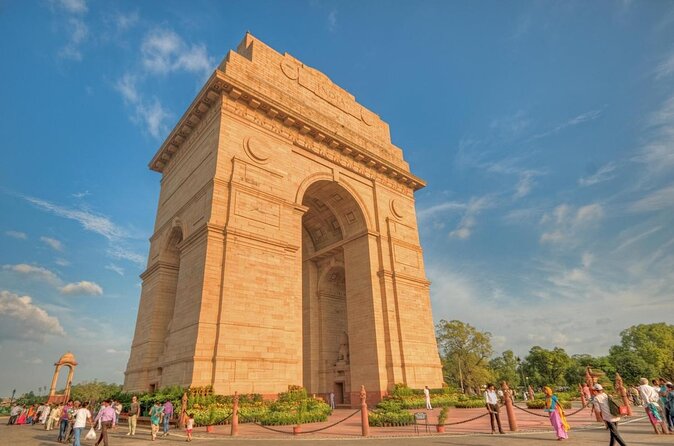
Next comes India Gate, the large war memorial in central New Delhi, built in 1921 and associated with British-era commemoration. It’s a quick stop, but it gives you a sense of how Delhi mixes old imperial design with modern city life.
Then you’ll visit Humayun’s Tomb. The tour lists it as part of the Mughal story—commissioned by Humayun’s first wife and chief consort, Empress Bega Begum. This is the kind of stop where you’ll benefit from having a guide who explains the layout and what makes it historically important.
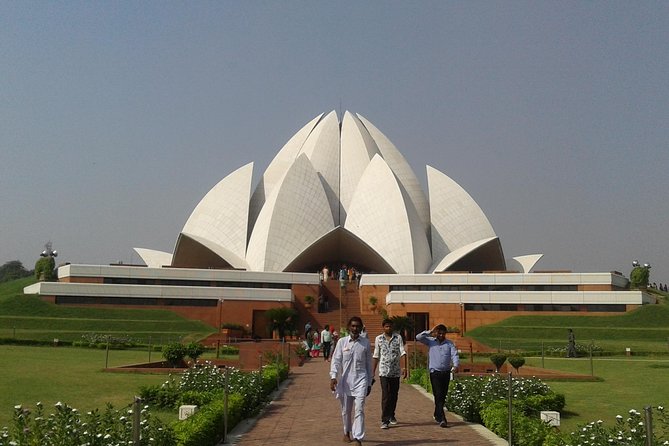
After that, you go to the Lotus Temple, the Bahá’í House of Worship known for its flowerlike form. The tour lists entry as free, which makes it a low-cost, high-impact pause in your day.
Finally, you reach Qutub Minar, described as the highest tower in India and tied to the foundation laid around AD 1199. This stop takes time—about a multi-hour block in the schedule. Since the tour lists entry as not included, budget for the ticket on the day you go, or be ready to pay on arrival.
Practical reality: your Delhi day has several stops, then you transition into the Agra leg. Plan for a long day and keep your energy for tomorrow’s sunrise Taj.
Day 2: Taj Mahal at 5:30 AM, Agra Fort, Fatehpur Sikri, then Ranthambore
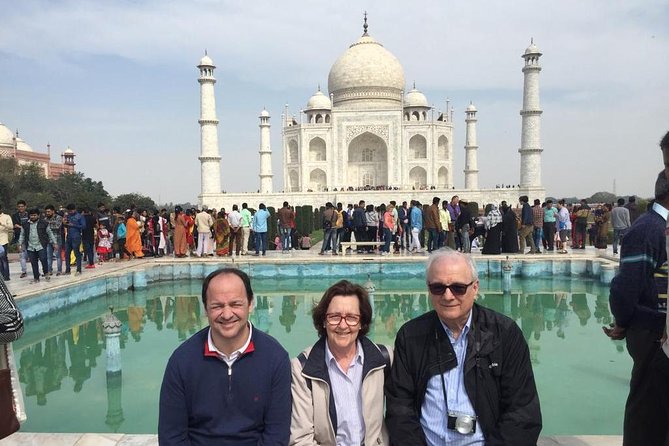
If you do only one early start on this trip, make it this one. The Taj Mahal pickup is listed for 5:30 AM, and you’ll drive straight to the monument so you’re already in place when the day begins.
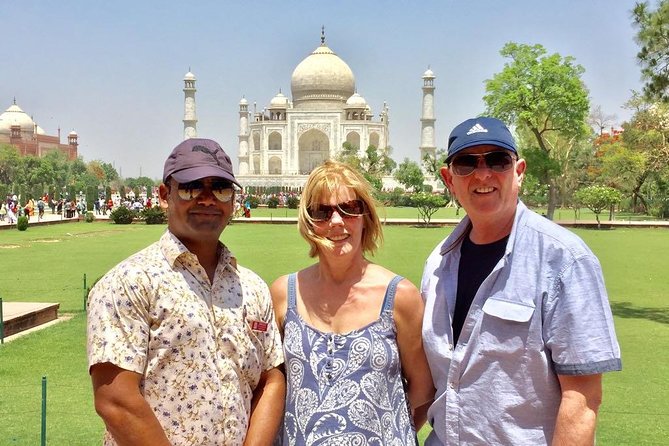
The tour frames Taj Mahal as a 17th-century project built by Shah Jahan for his wife. That’s the story you’ll hear from your guide, but what you’ll actually feel is the shift in air and crowd density in the early morning. You’ll get to see it before Delhi-style rush energy takes over the streets and before the sun turns everything harsh.
After Taj Mahal, you head to Agra Fort, another UNESCO-listed site in the description. You’ll spend roughly 50–70 minutes here, including time for several inner sections and palaces mentioned in the program like Jahangiri Mahal and the Diwan e Aam.
One of the smartest ways to enjoy Agra Fort is to let the guide connect it to Taj Mahal. You’re not just “seeing another monument.” You’re learning how imperial power, architecture, and daily life fit together in one place.
Then the schedule includes Fatehpur Sikri, described as a ghost city or abandoned city built by Emperor Akbar in the 16th century. The program lists it as a longer half-day-style block, and it’s a great contrast after the polished elegance of Taj and the fort’s heavy structure.
There’s also an Agra add-on included: a Tonga ride in Agra. The listing says the price includes it, so treat this as part of the included value on this day, not an optional extra.
By evening, you drive to Ranthambore for the night stay. This matters because you’re going to be up again early for the safari. If you’re the type who needs time to decompress at the end of a day, bring that energy now.
Day 3: Ranthambore at sunrise, then a drive to Jaipur
Ranthambore is where this trip becomes more than a sightseeing circuit. You’ll be picked up from your hotel at sunrise for an unforgettable wildlife experience in Ranthambore National Park.
The safari is listed as shared, in an open jeep or canter. That affects how you experience it: you’ll be watching in a group, following the guide/driver’s movement, and sharing sightings with whoever is in your vehicle.
This is also the day where patience pays off. Tigers aren’t guaranteed. But the point of booking safari time is the chance, and sunrise is when the park is most active. You’ll feel the tension in the quiet moments, then the quick rush when something moves.
After the safari, the schedule calls for a short rest and a breakfast break. Then comes Ranthambore Fort, described as a UNESCO World Heritage Site inside the park. The fort visit is short—around 30 minutes—so focus on what your guide points out rather than trying to read every plaque yourself.
By late morning or early afternoon, you transition to Jaipur, with a drive time of about 3 hours. This is the handoff from wildlife back to palaces and city geometry.
Day 4: Amber Fort and Jaipur’s major landmarks in one packed city day
Jaipur city day is where you’ll feel the “Golden Triangle energy.” It’s not laid out as a slow wander. It’s a structured loop through the core sights, starting with Panna Meena ka Kund, a stepwell near the monument area.
Then you move to Amber Fort, outside the city. The fort is described as a hilltop fortress with a mix of Rajput and Mughal architecture and palaces with intricate mirror work. You’ll have about two hours, which is enough time to get the scale and the details without feeling trapped all day.
Next is Jal Mahal, the Water Palace on the Man Sagar Lake. You get about 20 minutes, which is perfect if you want photos and a quick look, but it won’t be enough for a long sit-down. Think of it as a pause between heavier sites.
After that, the tour moves to City Palace of Jaipur, where you’ll spend roughly one hour. The program describes the palace complex as a royal residence showing a blend of Rajput, Mughal, and European architectural styles. A guide helps here because the palace is more of a set of stories and sections than one single view.
Then you visit Jantar Mantar, described as an 18th-century astronomical observatory built by Maharaja Sawai Jai Singh II. The schedule lists a very short stop, so you’ll want to pick a few key instruments your guide points out and focus there rather than trying to absorb everything.
The day wraps with Hawa Mahal, the Palace of Wind, known for its pink sandstone honeycomb facade. The stop is about 20 minutes, and it’s the kind of sight you either love for the facade pattern or breeze past. Here, your guide’s framing can turn it from a quick photo to something more meaningful.
Finally, you’re driven back to Delhi, with drop-off at your preferred spot, whether hotel or airport. The drive time is listed around 4 hours, so plan for a finish that feels like travel, not celebration.






Price, lodging options, and what you’re actually paying for
The price is listed at $200 per person for this 4-day / 3-night car tour with a tiger safari add-on. The value comes from the combination: private car transport, a tour guide, included breakfasts, hotels (the schedule lists specific options), and a Ranthambore safari experience plus a Tonga ride in Agra.
Accommodation details in the included list are specific but not uniform across luxury levels. The tour notes options like a Delhi 3-star property and Jaipur stays such as Gupta Vilas (a boutique homestay) and Marigold Inn (a homestay). So you should expect comfortable, well-managed stays, but not necessarily the same style of hotel in every city.
What’s also valuable: unlimited bottle water in the vehicle and a mobile ticket. Water may feel basic, but it keeps the day from turning into constant small purchases, especially on long driving days.
What’s not included: food and drinks. Breakfast is included, but lunches and dinners are on you. Also, many monument visits are marked as admission ticket not included, so you should carry some cash or card for tickets during the stops where the package doesn’t cover entry.
Is $200 a bargain or just fair? For this route, the price can feel fair because the itinerary includes early-morning access and wildlife timing that are hard to build on your own. Still, the real test is whether the included safari style and the lodging level match what you expect.
Who this tour fits best (and who should think twice)
I’d point this tour toward couples and small groups who want a structured Golden Triangle route without transport hassles. The private guide and car pickup make it especially good if you land at an odd time or want a simple start.
It also fits people who can handle early mornings. If you’re okay with 5:30 AM Taj and sunrise safari timing, you’ll get a better version of these sights than you would from a late start.
The main mismatch is for anyone who wants a relaxed pace. There are long driving sections, plus a packed city day in Jaipur with multiple major landmarks.
Also, if you hate paying entrance fees on top of a tour price, read the itinerary carefully because some sites are marked free while others are not included.
Should you book this Golden Triangle with Ranthambore safari?
I’d book it if you want a clean, guided route that hits the classic sights and still delivers a serious wildlife day. The early Taj Mahal, the structured Delhi/Agra/Jaipur flow, and the included safari time are the big reasons it works.
I’d skip it—or at least compare carefully—if you dislike early starts or you’d rather control every ticket and meal yourself. Since food isn’t included and several monument entries are marked not included, your budget will depend on what you choose to pay during the day.
If you want an efficient India starter trip with a real tiger-safari moment, this one is a strong contender.
FAQ
What cities does this tour include?
It covers Delhi, Agra, Jaipur, and it includes a wildlife stop in Ranthambore National Park.
Is hotel or airport pickup included?
Yes. You get pickup from your hotel, airport, or any desired location in Delhi, Noida, or Gurugram, and the tour also includes drop-off in New Delhi at your chosen location.
What time is the Taj Mahal visit?
The Taj Mahal visit is scheduled for 5:30 AM.
Is the Ranthambore safari private?
No. The safari is on a shared basis, conducted in an open jeep or canter.
Are monument tickets included?
Some entries are listed as free (for example India Gate, Lotus Temple, and Fatehpur Sikri in the schedule), while other stops are listed as admission ticket not included (like Jama Masjid, Humayun’s Tomb, Qutub Minar, Taj Mahal, and Agra Fort).
What’s included in the price besides sightseeing?
The package includes breakfast, a professional tour guide for sightseeing, transport by private vehicle, unlimited bottled water in the vehicle, listed hotel stays, and it also mentions a Tonga ride in Agra.