REVIEW · NEW DELHI
3-Day Luxury Private Golden Triangle Tour – Delhi, Agra & Jaipur
Book on Viator →Operated by Shahrukh Khan · Bookable on Viator
Three days, zero map stress. This private luxury Golden Triangle tour is interesting because it strings together major sights with private pickup and transfers plus a morning plan built around the sunrise Taj Mahal. You also get flexible pacing built for your interests, so the trip feels less like a checklist.
I especially like how Day 1 packs Delhi’s landmark mix—UNESCO stops, Mughal monuments, and famous city sights—without you juggling transport. I also like the comfort factor: an air-conditioned vehicle, bottled water, and breakfast included for the two hotel nights. One possible drawback is that many monuments list admission as not included, so you’ll want to budget for tickets on top of the tour price.
In This Review
- Key highlights at a glance
- A private Golden Triangle that feels less like work
- Price and value: what $202.24 per person really buys
- Day 1 in Delhi: Qutub Minar, Lotus Temple, Humayun’s Tomb, and the Mughal-to-modern mix
- Qutub Minar: the UNESCO anchor
- Lotus Temple: modern spirituality, simple way to reset
- Humayun’s Tomb: Mughal design you’ll actually notice
- India Gate and Rashtrapati Bhavan: the Delhi you can read at a glance
- Jama Masjid and Red Fort: the Mughal pulse of Old Delhi
- Chandni Chowk: one of the fastest ways to understand the city
- Ending Day 1 in Agra
- The biggest Day 1 risk: time pressure in a packed Delhi schedule
- Day 2 in Agra: sunrise Taj Mahal, Agra Fort, Itmad-ud-Daula, and a stop at Fatehpur Sikri
- Taj Mahal at sunrise: why this timing matters
- Agra Fort: the fort that adds military context
- Itmad-ud-Daula: the marble “preview” stop
- Fatehpur Sikri en route to Jaipur: a good use of travel time
- Arriving in Jaipur: hotel drop and a real evening buffer
- Day 3 in Jaipur: Amer Fort, Jal Mahal, Hawa Mahal, City Palace, and Jantar Mantar
- Amber Palace (Amer Fort): the big fort stop you’ll remember
- Jal Mahal: a calm pause on the Man Sagar Lake
- Hawa Mahal: 953 windows and a royal design trick
- City Palace: where Jaipur royalty actually lived and governed
- Jantar Mantar: Jaipur’s science side
- Ending back in Delhi (or dropping at Jaipur airport)
- The human factor: why the driver names keep showing up
- Hotel choice: how to match comfort with your sightseeing style
- Who should book this Golden Triangle tour
- Should you book this private Golden Triangle tour?
- FAQ
- How long is the Golden Triangle tour?
- Where does the tour start and end?
- Is this a private tour or a group tour?
- Is pickup from the airport included?
- Are hotel nights included?
- Is breakfast included?
- Are entrance tickets included for the monuments?
- Does the tour include transportation between cities?
- Is free cancellation available?
Key highlights at a glance
- Private door-to-door comfort with an AC vehicle and hotel or airport pickup
- Sunrise Taj Mahal timing on Day 2 to see the marble mausoleum in softer light
- A full Golden Triangle sweep: Delhi, Agra, then Jaipur, ending back in Delhi or Jaipur airport
- UNESCO-heavy Day 1 with Qutub Minar, Humayun’s Tomb, and Jama Masjid in the mix
- Rest built into the plan: 2 nights in 3, 4, or 5-star hotels (based on what you choose)
- Drivers and guides with local practical skills, including help finding clean breaks and quick off-traffic stops
A private Golden Triangle that feels less like work
A Golden Triangle trip can either feel like a dream or feel like constant coordination. This one leans hard toward the dream side. You start in Delhi and finish in Delhi, with private transfers handling the big movement between cities, and daily sightseeing organized so you’re not stuck negotiating routes or figuring out timing.
In plain terms: you get the architecture, the stories, and the famous viewpoints. You also get relief from the friction—no rushing to find the next cab, no trying to translate signs while holding onto your schedule. That matters most on Day 1, when Delhi alone can overwhelm even confident first-timers.
You can also read our reviews of more tours and experiences in New Delhi.



Price and value: what $202.24 per person really buys

The stated price is $202.24 per person for a 3-day private tour. That’s not just for driving around. The value shows up in the inclusions:
- Air-conditioned vehicle and private transfers between sites
- 2 nights accommodation in 3, 4, or 5-star hotels (based on what you choose)
- Breakfast for 2 mornings
- Bottled mineral water and soft drinks during journeys
- Hotel/airport pickup and drop-off
What’s not included is also important. Admission tickets for many monuments are listed as not included. So you should plan for extra spending on top of the tour price for major paid entries—especially Taj Mahal and the big forts and palaces.
If you want luxury comfort, the hotel nights and private vehicle are the heavy hitters. If you’re traveling on a strict budget, this tour still can make sense because entrance fees are the most variable part, while transportation and hotels are predictable. You’re mainly paying to remove stress and keep time under control.
Day 1 in Delhi: Qutub Minar, Lotus Temple, Humayun’s Tomb, and the Mughal-to-modern mix
Day 1 starts right after your arrival in Delhi. You’ll be met by a representative, then driven straight to the UNESCO-heavy sightseeing block. This works well because you’re not wasting your first hours figuring out how to get moving.
Qutub Minar: the UNESCO anchor
You start with Qutub Minar, a UNESCO World Heritage site. It was established by Qutub-ud-din Aibak, and it’s one of those places where you immediately see why it’s famous. The towering form helps you understand Delhi’s layered past fast—this isn’t just a pretty stop. It’s a way to get your bearings for the rest of the day.
Budget note: admission here is listed as not included, so it’s one of the first ticket decisions you’ll make.
Lotus Temple: modern spirituality, simple way to reset
Next comes the Lotus Temple, a Bahá’í House of Worship dedicated in December 1986. It’s known for its flowerlike shape and for being a major city attraction. I like this stop because it shifts the vibe. You get a change of pace from the heavier Mughal-era sites, and the space feels like a breather before the day accelerates again.
Admission is listed as not included.






Humayun’s Tomb: Mughal design you’ll actually notice
After Lotus Temple, you head to Humayun’s Tomb, the tomb of Mughal Emperor Humayun. Even if you know little history, the structure’s beauty reads instantly—this is “watch it, then look again” architecture. It’s also a helpful stepping stone toward Agra the next day, because you can start seeing the family of styles that culminate at the Taj.
Admission is listed as not included.
India Gate and Rashtrapati Bhavan: the Delhi you can read at a glance
India Gate is next, with the 1921 Tomb of the Unknown Soldier and names carved for 13,300 Indian Army servicemen who died during World War I. It’s a quick but emotionally grounded stop. Admission is listed as free.
Then you’ll pass by Rashtrapati Bhavan—an enormous 330-acre government complex designed in 1929 by Sir Edwin Lutyens and Herbert Baker, credited with shaping much of New Delhi’s plan. You won’t spend hours here, but it’s one more reason Delhi doesn’t feel like a single-era city. It keeps changing chapters.
Jama Masjid and Red Fort: the Mughal pulse of Old Delhi
Jama Masjid is next, a 17th-century mosque noted as one of the world’s largest and listed as UNESCO. It gives you a big, scaled view of Old Delhi’s religious life and architectural ambition. Admission is listed as not included.
Then comes Red Fort, built between 1639 and 1648, once the main residence of Mughal emperors. This stop is short on the schedule (about 30 minutes), so go in ready to focus on the walls, scale, and position in the city rather than expecting deep museum-style time. Admission is listed as not included.
Chandni Chowk: one of the fastest ways to understand the city
Finally, you hit Pasar Chandni Chowk, a major 17th-century market area. Admission is listed as free. Even with only a 30-minute window, it’s a useful reality check: Delhi isn’t only monuments. It’s also everyday street commerce—so you understand the city’s rhythm instead of treating it like an open-air museum.
Ending Day 1 in Agra
After Delhi sightseeing, the driver takes you to Agra. The itinerary calls for about 3 hours of travel. That’s a long stretch, but it’s built into the flow, which is the point. You wake up in Agra with less planning required.
The biggest Day 1 risk: time pressure in a packed Delhi schedule
Day 1 is efficient. That’s great if you want maximum sight coverage. It can feel a bit compressed if you prefer lingering for photos, conversations, or slow shopping.
The other friction point is tickets. Since most entries here are listed as not included, your total spending will likely rise quickly. If you hate decision-making, you might want to research approximate ticket costs for each major site before you go.
Day 2 in Agra: sunrise Taj Mahal, Agra Fort, Itmad-ud-Daula, and a stop at Fatehpur Sikri
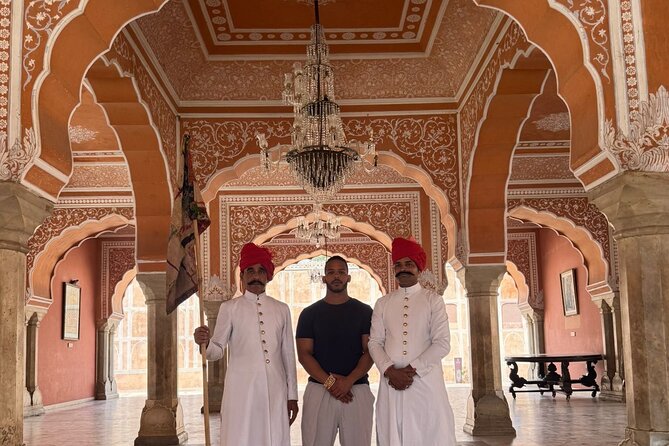
Day 2 is the star day: an early start for a sunrise view over the Taj Mahal. This is where the tour earns its reputation as a “comfortable and hassle-free” Golden Triangle plan. Sunrise timing is not just a marketing line; it changes how the place feels. Light shifts on marble, and you avoid some of the harsher midday glare.
Taj Mahal at sunrise: why this timing matters
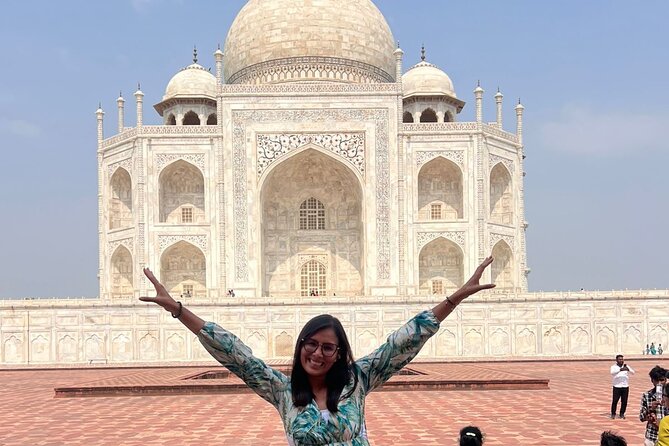
You’ll visit the Taj Mahal for about 3 hours. The plan notes it was built by Emperor Shah Jahan in 1630 for his favorite wife, and it includes the tragic story behind it. That combination—time of day plus narrative—tends to make the monument more than just a famous photo.
Admission is listed as not included, so again: budget for entry.
Agra Fort: the fort that adds military context
After the Taj, you go to Agra Fort, another UNESCO World Heritage site, built in the 17th century. This fort blends Indian and Islamic art and architecture. You get a different angle from the Taj: instead of being centered on a mausoleum, you’re seeing fortification and power.
Admission is listed as not included.
Itmad-ud-Daula: the marble “preview” stop
Next is Itmad-ud-Daula. The tour describes it as the first Mughal structure built completely from marble and also the first to make extensive use of pietra dura. It’s also a tomb built on the banks of the Yamuna. Even in shorter time, this stop helps you understand the materials and design progress that feed into bigger monuments later.
Admission is listed as not included.
Fatehpur Sikri en route to Jaipur: a good use of travel time
Then you head toward Jaipur. En route, you get a chance to visit Fatehpur Sikri, about 40 km west of Agra. The plan frames it as the short-lived Mughal capital between 1572 and afterward. Your time here is about 30 minutes, which means you’ll get a look at the scale, not a full “study it for hours” experience.
Admission is listed as not included.
Arriving in Jaipur: hotel drop and a real evening buffer
You’ll arrive in Jaipur after sightseeing and be dropped at your hotel. The itinerary lists about 3 hours for the transfer window after Fatehpur Sikri. The value of this is simple: you’re not forced into immediate late-night sightseeing. You can wash up, eat, and set up for a Day 3 that’s all palaces and forts.
Day 3 in Jaipur: Amer Fort, Jal Mahal, Hawa Mahal, City Palace, and Jantar Mantar
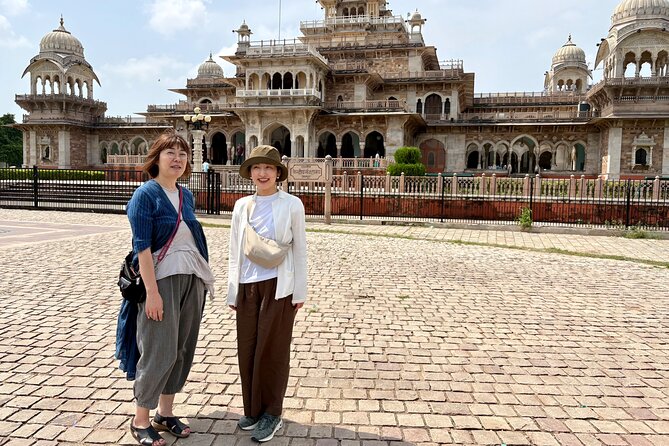
Jaipur’s Day 3 is about shifting from marble and forts to palace spectacle and royal city design. You start after breakfast, then pick up from your hotel and move through the main sights.
Amber Palace (Amer Fort): the big fort stop you’ll remember
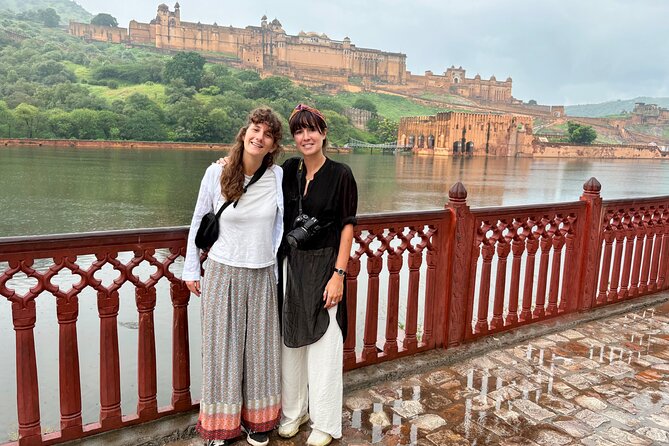
Your first main Jaipur stop is Amber Palace, also known as Amer Fort. The itinerary notes Hindu-style architecture, and that’s exactly the kind of detail that makes the stop feel different from Mughal sites you saw in Delhi and Agra. The fort setting also gives you dramatic views over the surrounding area.
Time on the site is about 2 hours, which is enough to see the key sections without feeling like you’re sprinting.
Admission is listed as not included.
Jal Mahal: a calm pause on the Man Sagar Lake
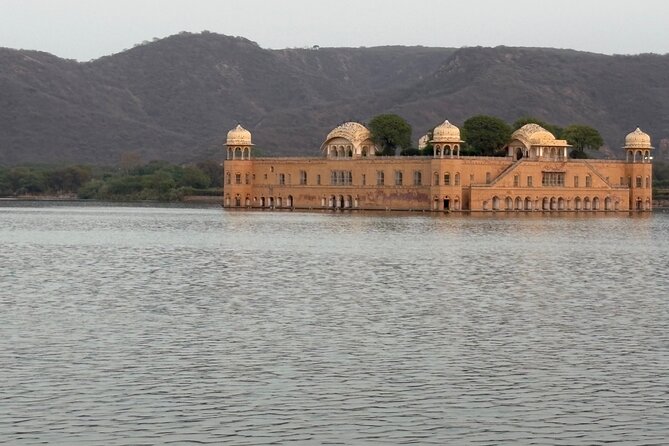
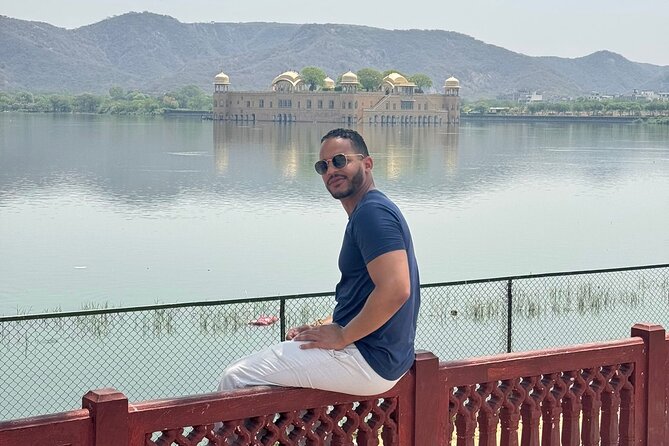
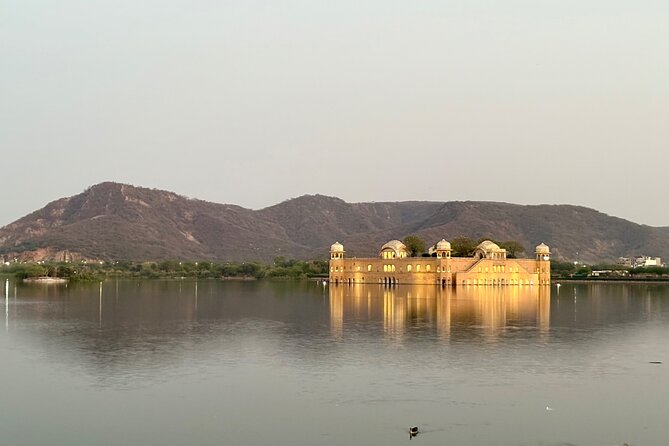
Next is Jal Mahal, located in the middle of the Man Sagar Lake. The plan describes it as a 17th-century architectural beauty built in Rajput-style architecture, and suggests it’s a good spot for peace lovers. Even if you treat it as a quick break, it helps. It turns the day from nonstop sightseeing into a moment of atmosphere.
Admission is listed as not included.
Hawa Mahal: 953 windows and a royal design trick
Then comes Hawa Mahal, the Palace of Wind. The tour notes it has 953 windows decorated with intricate designs and was constructed especially for royal ladies. That detail matters. The point isn’t just that it’s pretty—it’s that it’s functional, built to let people observe street life with privacy.
Time here is about 30 minutes. Admission is not included.
City Palace: where Jaipur royalty actually lived and governed
After the view-candy stops, you’ll visit the City Palace of Jaipur. The plan describes it as a royal residence and former administrative headquarters of Jaipur state rulers. Construction began soon after the city was established. This is a good “anchor stop” for understanding how Jaipur worked beyond the postcard images.
Time is listed around 1 hour. Admission is not included.
Jantar Mantar: Jaipur’s science side
Finally, you visit Jantar Mantar. The plan says it’s a collection of 19 astronomical instruments built by Rajput king Sawai Jai Singh, completed in 1734. If you’re the type who likes thinking about how people measured the sky before modern tools, this stop is a satisfying surprise. It also helps close the loop on India’s engineering and observational traditions after days of architecture.
Time is listed around 1 hour. Admission is not included.
Ending back in Delhi (or dropping at Jaipur airport)
After completing sightseeing, you start your journey back to Delhi. The itinerary lists about 4 hours, and also offers the option to drop you at Jaipur airport if you prefer.
That flexibility is genuinely useful if your flight plans are tight, since you won’t have to find your own way to the airport after the tour.
The human factor: why the driver names keep showing up
A tour like this lives or dies on the people behind the wheel and the way they handle real-world friction. In the feedback provided, drivers such as Mohit Choudhary, Ram Sharma ji, Shakir, and Dinesh are repeatedly praised for reliability and practical care—like keeping the car clean each day and providing snacks and drinks during the drive.
A couple of details also show why this matters: some drivers are praised for knowing good tea and lassi stands and spotting cleaner bathroom options, and even for steering you away from tourist scams. One guide named Aki is singled out for taking people to off-the-beaten-path spots and helping you feel comfortable as a solo female traveler.
You should still verify who your assigned driver/guide will be at booking, but this is a good sign. Private tours are personal, and the “fixer” role often comes from the driver more than the guide.
Hotel choice: how to match comfort with your sightseeing style
You’re getting 2 nights in a hotel in the 3, 4, or 5-star range, depending on what you choose. That’s not just a nice upgrade. It affects your energy levels on Day 2 and Day 3.
If you plan to wake up early for sunrise Taj Mahal, you’ll appreciate a hotel with a straightforward morning routine. Also, since you’ll be spending multiple hours in the car, a comfortable room and decent shower time can make the trip feel noticeably less tiring.
A practical tip: if you want fewer compromises, choose the higher tier that includes the kind of breakfast you’re happy with. Breakfast is included for two mornings, so you’ll likely eat close to your schedule rather than hunting for meals late.
Who should book this Golden Triangle tour
This tour fits best if you:
- Want a comfortable private plan with hotel stays and transportation already handled
- Are seeing the Golden Triangle for the first time and want a smart sweep across Delhi, Agra, and Jaipur
- Prefer guided organization for UNESCO sites and major monuments over independent logistics
- Travel as a couple, family, or solo traveler who wants a driver-focused layer of support
It may not fit as well if you:
- Want extremely long time at each monument (this itinerary is efficient, not slow)
- Hate early mornings (sunrise Taj Mahal is a real wake-up call)
- Don’t want to budget for monument admission fees on top of the tour price
Should you book this private Golden Triangle tour?
Yes, if you want the Golden Triangle with less stress and a clear plan that hits the big names: Qutub Minar, Humayun’s Tomb, Jama Masjid, the Taj Mahal at sunrise, Agra Fort, Amer Fort, Hawa Mahal, City Palace, and Jantar Mantar.
Book it with your eyes open if you don’t like ticket add-ons. Since admissions are listed as not included for many stops, you’ll want to plan spending ahead. Also, this tour runs on tight sight blocks, so it’s better for people who enjoy momentum over long, slow stays.
If that sounds like you, this is a strong way to get the best of Delhi, Agra, and Jaipur without turning your trip into a logistics project.
FAQ
How long is the Golden Triangle tour?
It runs for 3 days (approx.).
Where does the tour start and end?
It starts in Delhi and finishes in Delhi. You can also choose a drop-off at Jaipur airport if you wish.
Is this a private tour or a group tour?
It’s a private tour, and only your group participates.
Is pickup from the airport included?
Yes. Hotel or airport pickup and drop-off are included.
Are hotel nights included?
Yes. The tour includes 2 nights of accommodation in 3, 4, or 5-star hotels based on your choice.
Is breakfast included?
Yes. Breakfast is included for 2 mornings.
Are entrance tickets included for the monuments?
Most admission tickets are listed as not included. Some items like India Gate and Chandni Chowk are listed as free, but many major sites are not.
Does the tour include transportation between cities?
Yes. Transfers and sightseeing are handled by a private air-conditioned vehicle.
Is free cancellation available?
Yes. You can cancel up to 24 hours in advance for a full refund.