REVIEW · NEW DELHI
3 Day Luxury Golden Triangle Tour to Agra and Jaipur From Delhi
Book on Viator →Operated by India Tour Express · Bookable on Viator
Golden Triangle in three days feels like a magic trick. This tour packs Delhi, Agra, and Jaipur into a tight plan with hotel transfers, a private guide, and an A/C car that keeps the travel stress low. I especially like the door-to-door transport plus the way the schedule hits major landmarks without leaving you to figure out logistics. One thing to watch: the days run full, so if you want lots of downtime between sights, this may feel fast.
You’ll also get the key “wow” moments—think Taj Mahal at sunrise plus Mughal-era monuments in Delhi—without the usual scramble for tickets and timing. The all-inclusive basics help too: breakfast each day and dinners are included, and you even get bottled water. The main drawback is that a couple of stops are outside-view or optional swaps, so you’ll want to stay flexible with the exact order.
In This Review
- Quick hits: what makes this Golden Triangle tour work
- Price and value: what you’re really paying for
- Your 3-day route at a glance (and why it’s efficient)
- Day 1 in Delhi: Jama Masjid, Chandni Chowk rickshaw, and UNESCO hits
- Jama Masjid (ticketed, 30 minutes)
- Chandni Chowk rickshaw ride (about 1 hour)
- Red Fort (outside for pictures)
- Gurudwara Bangla Sahib (free, about 30 minutes)
- Humayun’s Tomb (ticketed, about 1 hour)
- Qutub Minar (ticketed, about 1 hour)
- Lotus Temple (free, about 30 minutes) or Qutub Minar swap
- Transfer to Agra (about 3 hours)
- Day 2 in Agra: Taj Mahal sunrise, Agra Fort, then Fatehpur Sikri
- Taj Mahal at sunrise (ticketed, about 3 hours)
- Agra Fort (ticketed, about 1 hour)
- Fatehpur Sikri en route to Jaipur (ticketed, about 1 hour)
- Drive to Jaipur (about 4–4.5 hours)
- Day 3 in Jaipur: Amber Fort, City Palace, Hawa Mahal, plus Jal Mahal views
- Amber Palace (ticketed, about 2 hours)
- City Palace of Jaipur (ticketed, about 1 hour)
- Hawa Mahal (ticketed, about 30 minutes)
- Jal Mahal (free, about 30 minutes)
- Back to Delhi area (drop-off timing: about 5 hours)
- Transportation details that affect your comfort
- What to expect day-to-day: timing, tickets, and the pace tradeoff
- Who this Golden Triangle tour fits best
- Should you book this 3-day Golden Triangle tour?
- FAQ
- What cities are included in this Golden Triangle tour?
- Is hotel pickup and drop-off included?
- Does the tour include accommodation?
- What meals are included?
- Are entrance tickets included?
- Is the tour private?
- What ID do I need for the monuments?
- What is the cancellation policy?
Quick hits: what makes this Golden Triangle tour work
- A/C private car with hotel pickup and drop-off in Delhi, plus intercity driving handled for you
- Live private guide support across all three cities, so you’re not reading monuments alone
- Sunrise Taj Mahal timing, which is usually the difference between good photos and unforgettable memories
- UNESCO-heavy Delhi day with Jama Masjid, Humayun’s Tomb, and Qutub Minar in one sweep
- Agra plus Fatehpur Sikri on the way to Jaipur, not just a drive-through
- Meals included (2 breakfasts and 2 dinners), plus water during the tour
Price and value: what you’re really paying for
At $90 per person, this price can look like a steal for a 3-day Golden Triangle plan—especially because it’s built around private driving, transfers, and a live guide, not just a bus route. But here’s the honest part: the “luxury” component depends on the hotel option you choose. The tour includes two-night accommodation in Agra and Jaipur if you select the hotel option.
So your best value comes from using what’s already included:
- Door-to-door transfers (hotel pickup/drop-off)
- Private A/C car sized to your group
- Parking, tolls, fuel, and taxes handled
- Breakfast and dinner included on the tour days
- Bottled water during the tour
Also note the travel math: even with short days, Golden Triangle routes usually eat time. This one aims to reduce the pain by bundling the sights with a guide and driver, so you’re not hunting for rickshaws, ticket lines, or “what’s next?” moments.
You can also read our reviews of more tours and experiences in New Delhi.



Your 3-day route at a glance (and why it’s efficient)
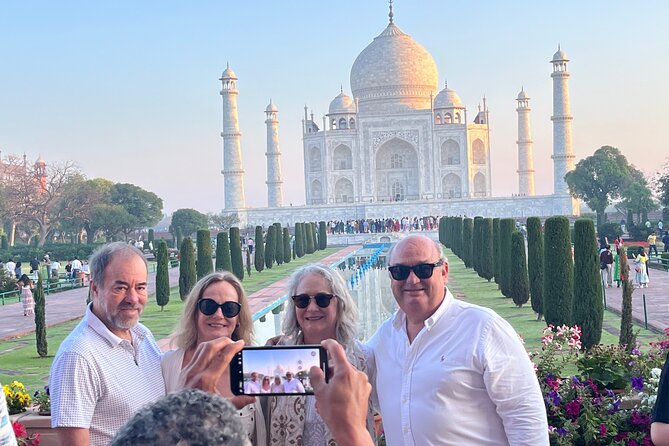
This itinerary is the classic Delhi → Agra → Jaipur triangle, but with a few smart edits that matter in real life:
- Delhi gets a full historical day, then you transfer to Agra.
- Agra starts with Taj Mahal in the morning, then shifts to fort sights.
- Jaipur includes the signature palace lineup in one day, with a quick optional scenic stop (Jal Mahal).
You’ll also see that some items are intentionally lighter:
- The Red Fort in Delhi is listed as an outside photo stop (not a deep interior visit).
- Lotus Temple vs. Qutub Minar can be swapped depending on the day’s flow, so don’t panic if the exact order shifts.
Day 1 in Delhi: Jama Masjid, Chandni Chowk rickshaw, and UNESCO hits

Day 1 is built to get your bearings fast, which I love for first-timers. You start with major Mughal landmarks in Old Delhi, then move toward UNESCO sites that show a different side of Delhi.
Jama Masjid (ticketed, 30 minutes)
Jama Masjid is a big, iconic mosque built by Shahjahan in the mid-1600s. The value here is not just architecture—it’s how the scale instantly tells you what Old Delhi was built to host: large crowds, religious gatherings, and citywide importance. Expect a straightforward visit time window, so listen to your guide for the details you’d otherwise miss.
Chandni Chowk rickshaw ride (about 1 hour)
This is the “feel the city” segment. You’ll ride through narrow streets and hit the spice-and-market energy of Chandni Chowk. The payoff is practical: your guide helps translate what you’re seeing, and the rickshaw keeps it from turning into a walking endurance test.






Red Fort (outside for pictures)
You get the Red Fort photo moment, but plan for less time inside since this is an exterior viewing stop. If you’re hoping for a full Red Fort day, you won’t get it here—this tour treats it as a highlight-on-the-way.
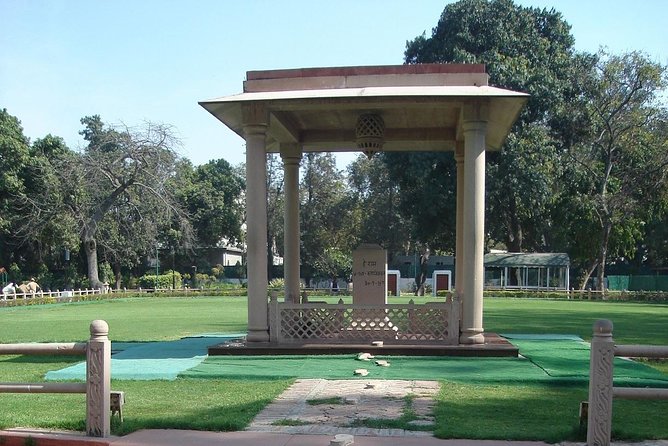
Gurudwara Bangla Sahib (free, about 30 minutes)
A calmer stop after the market rush. Gurudwara Bangla Sahib is one of Delhi’s well-known Sikh temples, and your time here is meant to be respectful, simple, and manageable. If you’re interested in India’s religious architecture beyond the Mughal story, this is a good balance.
Humayun’s Tomb (ticketed, about 1 hour)
This UNESCO site is often called one of the garden-tomb inspirations behind later Mughal grandeur. The practical win is that it’s a “pause” in the day: you can breathe, look closely at the gardens, and reset before the last monuments.
Qutub Minar (ticketed, about 1 hour)
Qutub Minar is a major landmark and a UNESCO World Heritage Site. It’s also one of those places where timing matters: if you’re rushed, the tower becomes just a view. With your guide, it’s easier to understand why it’s so important historically and architecturally.
Lotus Temple (free, about 30 minutes) or Qutub Minar swap
The itinerary notes you can either visit Lotus Temple or Qutub Minar depending on the day’s schedule. If Lotus Temple is a must for you, keep this flexibility in mind when you’re choosing your expectations. (In practice, you’ll still cover the key UNESCO and “wow” stops.)
Transfer to Agra (about 3 hours)
After Delhi, you’ll drive to Agra on the expressway, check into your hotel, and relax. This is a smart structure: Delhi crowds are mentally draining. Ending Day 1 with a hotel reset helps you handle the early start on Day 2.
Day 2 in Agra: Taj Mahal sunrise, Agra Fort, then Fatehpur Sikri
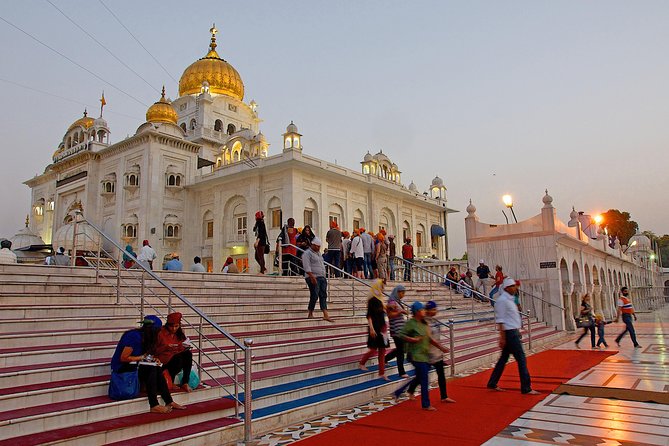
Day 2 is where the Golden Triangle earn its reputation. The morning is centered on Taj Mahal, then you add the fort experience and a Mughal-era detour before Jaipur.
Taj Mahal at sunrise (ticketed, about 3 hours)
Meeting your guide in the hotel lobby starts the day early, but that’s exactly why the sunrise timing is worth it. The main advantage: softer light and fewer crowds make it easier to look, not just snap.
Your visit includes time to enjoy the complex and the views around it. And yes, this is one of those places where photos don’t fully prepare you for scale and detail—so give yourself time to actually look.
Important heads-up: Taj Mahal is closed every Friday. If your dates land on a Friday, you’ll need to adjust your plan or confirm what the operator will do instead.
Agra Fort (ticketed, about 1 hour)
After breakfast and check-out, you head to Agra Fort, a UNESCO World Heritage Site tied to the Mughal empire era. The time here is shorter than the Taj, but the focus is clear: stone fortifications, imperial power, and an architectural counterpoint to the white-marble icon.
Fatehpur Sikri en route to Jaipur (ticketed, about 1 hour)
This is one of the tour’s smart “in-between” choices. Fatehpur Sikri is a fortified ancient city, once a short-lived Mughal capital. Even with limited time, you get a real sense of a place that was built for something huge—then moved away from.
Drive to Jaipur (about 4–4.5 hours)
You check into your Jaipur hotel after traveling. Plan to keep Day 2’s energy for sightseeing stops, then use the evening to recharge. Jaipur is where you’ll see the palaces up close.
Day 3 in Jaipur: Amber Fort, City Palace, Hawa Mahal, plus Jal Mahal views
Jaipur Day is a signature palace lineup, and it’s paced well for a 3-day total trip. You don’t get hours and hours at a single site, but you get the main shapes, stories, and photo angles.
Amber Palace (ticketed, about 2 hours)
Amber Fort is the centerpiece and the best place to slow down. It’s a standout example of Rajput architecture, and the time window is long enough to walk levels and take in the variety of views. If you remember one Jaipur site from this trip, make it Amber.
Practical reality: Jaipur forts can be hot and stair-heavy. If you’re sensitive to heat, wear breathable clothes and plan your water intake.
City Palace of Jaipur (ticketed, about 1 hour)
This is where the city’s royal identity becomes practical. City Palace traces the legacy of Maharaja Sawai Jai Singh II and connects palace life to the arts and culture that centered around Jaipur. It’s a strong “context” stop after Amber.
Hawa Mahal (ticketed, about 30 minutes)
Hawa Mahal means Palace of Wind, and it was built so royal ladies could watch the bazaar life without being seen. You’ll see the iconic façade and get the idea quickly, which is perfect for a short time segment.
Jal Mahal (free, about 30 minutes)
Jal Mahal, sometimes called the Underwater Palace or Water Palace, is a scenic bonus. Since it’s free and shorter, it works as a breather between bigger palace moments. Even if your time is brief, it’s one of those views that feels uniquely Jaipur.
Back to Delhi area (drop-off timing: about 5 hours)
On Day 3, you don’t just go back to Agra—you go back toward Delhi. Your driver drops you at the airport or your hotel anywhere in Delhi NCR or Gurugram, or another desired place. That drop-off flexibility matters if your flight is timed or you’re staying outside central Delhi.
Transportation details that affect your comfort
This is a “driver does the hard part” kind of tour. The private A/C car is sized for your group:
- 1–2 people: four-seater sedan
- 3–5 people: six-seater wagon
- 6–9 people: nine-seater van
- 10–12 people: twelve-seater van
That matters because cramped transport turns long days into complaints. Here, you should ride comfortably enough for the drives between cities.
A few other logistics notes you’ll want:
- Live tour guide service throughout the experience.
- Bottle of water provided during the tour.
- You’ll carry a valid photo ID for monument entry checks.
- If you’re pickup from the airport, you need flight details at booking.
And about guides: recent groups have reported smooth coordination with teams that included people like Uvais along with local guides such as Gyanendra, Aquib, Wasim, and Akram, plus drivers including Ajay ji, Vijay, Raj, and Bantu. If your group gets a team like that, it’s usually a big reason the trip feels organized and safe.
What to expect day-to-day: timing, tickets, and the pace tradeoff
This tour is designed for prime sights fast. That’s great if you have limited time, but it comes with a clear tradeoff: your schedule is full.
Here’s what that looks like:
- Delhi Day 1 mixes ticketed UNESCO sites and free temples, plus a rickshaw ride.
- Agra Day 2 is early start + Taj time + fort + Fatehpur Sikri before heading to Jaipur.
- Jaipur Day 3 is palace-heavy, then a longer drive back toward Delhi.
Also, watch the ticket mix:
- Some stops are admission ticket included (like Jama Masjid, Humayun’s Tomb, Qutub Minar, Taj Mahal, Agra Fort, Fatehpur Sikri, Amber Palace, City Palace, and Hawa Mahal).
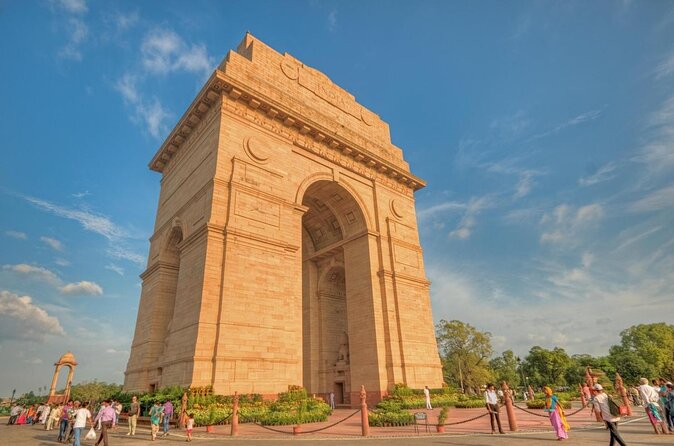
- Some are free (like Chandni Chowk shopping area with rickshaw, Gurudwara Bangla Sahib, India Gate pass, Lotus Temple, Jal Mahal).
- Red Fort is listed as an outside photo stop, not a full internal visit.
If you’re a “slow travel” person, you might find the schedule too packed. If you’re time-limited and want the biggest hits, this plan makes a lot of sense.
Who this Golden Triangle tour fits best
I’d point you toward this tour if:
- You want Delhi, Agra, and Jaipur without planning every transfer yourself.
- You like the idea of a private guide explaining what you’re seeing as you go.
- You’re traveling with a group size that benefits from a proper A/C vehicle (not a tiny ride).
- You want included basics like breakfast, some dinners, water, and monument-adjacent ticketing coverage.
This is less ideal if:
- You want a relaxed pace with long free afternoons.
- You’re sensitive to early mornings (sunrise Taj Mahal means you’ll wake up early).
- Your dates fall on a Friday and Taj Mahal closure would break your expectations.
Should you book this 3-day Golden Triangle tour?
If your priority is the Golden Triangle’s top landmarks in a short window, I’d say yes—with two smart caveats.
First, confirm whether your hotel option is included for your exact booking, since the “luxury” label hinges on choosing 3- or 5-star accommodation for the two nights in Agra and Jaipur. Second, check your travel day for the Taj Mahal Friday closure so you’re not surprised if your dates don’t work for the sunrise plan.
If those checks look good, this is the kind of tour that saves you mental energy: the driving is handled, the guide explains, and you get the big icons—without building a complicated plan yourself.
FAQ
What cities are included in this Golden Triangle tour?
The tour covers New Delhi, Agra, and Jaipur across three days.
Is hotel pickup and drop-off included?
Yes. The tour includes hotel pick up and drop off. You can also arrange pickup from the airport if you provide your flight details at booking.
Does the tour include accommodation?
It includes two-night hotel accommodation in Agra and Jaipur if you choose the hotel option.
What meals are included?
The tour includes breakfast for 2 days and dinner for 2 days. Other meals are not included.
Are entrance tickets included?
Some key monuments include admission tickets, while others are free or outside-photo stops. Examples of ticketed stops include Jama Masjid, Humayun’s Tomb, Qutub Minar, Taj Mahal, Agra Fort, Fatehpur Sikri, Amber Palace, City Palace, and Hawa Mahal.
Is the tour private?
Yes. This is a private tour/activity, and only your group participates.
What ID do I need for the monuments?
Carry a valid photo ID for monument checking.
What is the cancellation policy?
There is free cancellation. You can cancel up to 24 hours in advance for a full refund.