REVIEW · NEW DELHI
Private Luxury Golden Triangle Tour From New Delhi 03 Days
Book on Viator →Operated by Perfect Agra Tours · Bookable on Viator
Golden Triangle in 3 days sounds intense. It’s that same classic route, but the private setup makes it easier to keep your timing tight while still enjoying real stops. You get a full Delhi day, then Agra, then Jaipur—moving with a private driver and local guide instead of the usual chaos.
I especially like how the day-one mix lands the big themes fast: old power (Qutub Minar), modern calm (Lotus Temple), and the British-era memorial mood (India Gate). Another standout is the “stay-ready” comfort: AC transport, bottled water, and pickup plus drop-off so you aren’t spending precious hours figuring out logistics.
One thing to plan for: monument tickets and meals are not fully included. The tour lists a per-person entrance fee budget and also notes several sites as not included, so I’d set aside extra money (and eat times) before you go.
In This Review
- Key Highlights Worth Planning Around
- The Big Picture: What a Private Golden Triangle Really Buys You
- Day 1 in Delhi: Qutub Minar, Lotus Temple, and India Gate
- Parliament, Rashtrapati Bhavan, and Jama Masjid: The Mosque-and-State Combo
- The Drive to Agra: Why This Timing Works on a 3-Day Trip
- Taj Mahal at Sunrise: The Moment That Sets the Tone
- Agra Fort and Itmad-ud-Daula: UNESCO Variety Without the Same-Old Feeling
- Jaipur Arrival and City Rhythm: One Hotel Night That Changes the Pace
- Amber Fort Morning: The Ridge, the Fort, and the Lake View
- Jal Mahal Photo Stop: A Palace in the Water
- City Palace of Jaipur: Royal Administration Meets Ceremony
- Jantar Mantar and Hawa Mahal: Science and Pink Sandstone
- Transport, Hotels, and Pacing: The Comfort Side of the Golden Triangle
- Price and Value Math for a 3-Day Private Tour
- Who This Tour Suits Best (And Who Might Want Something Else)
- Driver and Guide Quality: The Punctuality Factor
- What You’ll Do Each Day, in Plain Terms
- Should You Book This Private Golden Triangle From New Delhi?
- FAQ
- How long is the Private Luxury Golden Triangle Tour?
- Where does the tour start and end?
- Is pickup included?
- What transport do I use during the trip?
- Are hotel stays included?
- Are monument entrance fees included?
- Are meals included?
- Is this tour private?
- Are there any special date rules?
- What’s the cancellation policy?
Key Highlights Worth Planning Around
- A full Delhi power-trio of architecture in one day, including Qutub Minar, Lotus Temple, and India Gate
- UNESCO morning timing for the Taj Mahal so your day in Agra starts early
- Private air-conditioned car with scheduled hotel/airport pickup to cut downtime
- Two nights of hotel stays with breakfast for a shorter trip that still feels complete
- Jaipur highlights built for photos and variety: Amber Fort, Jal Mahal, City Palace, and Hawa Mahal
- Driver + guide focus on punctual, smooth navigating (including English-speaking support)
The Big Picture: What a Private Golden Triangle Really Buys You
This is the Golden Triangle formula—Delhi, Agra, Jaipur—compressed into 3 days with two hotel nights. What you’re paying for is the private rhythm: you’re not waiting around for other groups, and you can keep the flow from site to site without losing the whole day to transport mix-ups.
In practical terms, that private setup matters most in Delhi traffic and around monument areas. A good driver helps you avoid the “stop-and-start” frustration, and a local guide helps you understand what you’re looking at—so your photos match the place’s real meaning, not just the scenery.
You can also read our reviews of more tours and experiences in New Delhi.

Day 1 in Delhi: Qutub Minar, Lotus Temple, and India Gate
Your first day leans heavily into landmarks that feel different from each other, which is exactly what you want when you only have a short trip. Qutub Minar is the opening hit: a UNESCO World Heritage site with a tall, five-storey silhouette and deep Sultanate-era roots, built in 1193 by Qutub-ud-din Aibak.
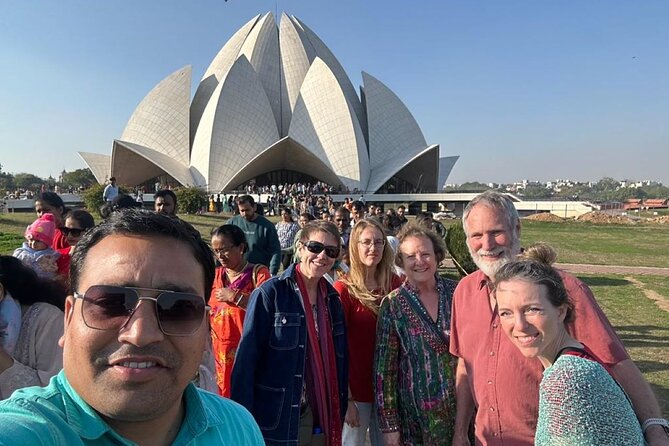
Right after, Lotus Temple flips the mood. It’s built for quiet worship and shaped like a lotus flower, with white marble petals that look crisp even in bright light. I like this stop because it gives your brain a reset between denser, older monuments.
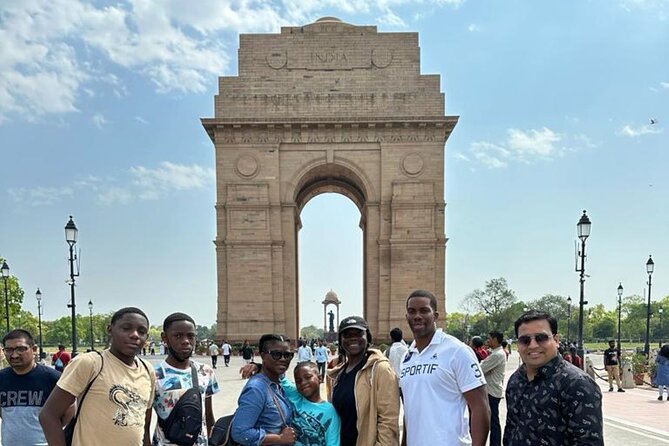
Then you shift to India Gate near Rajpath—a war memorial that still reads as a grand piece of British-era ceremonial architecture. It’s short on time, but it’s a strong atmosphere stop, especially if you’re coming in from a long flight and need to feel the city’s layers without a museum marathon.
Parliament, Rashtrapati Bhavan, and Jama Masjid: The Mosque-and-State Combo
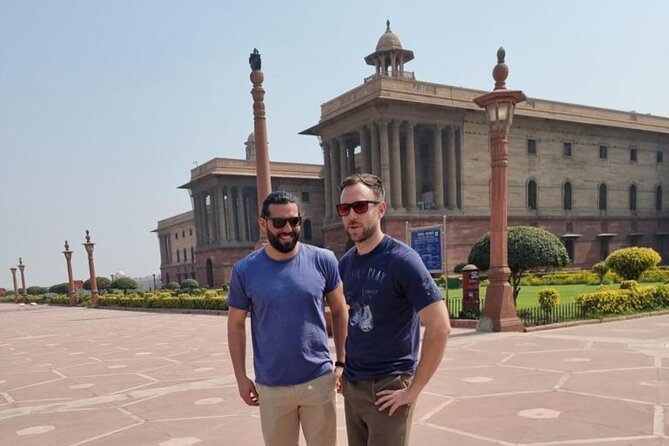
After India Gate, the route continues with a cluster of government landmarks: Parliament House (Sansad Bhavan), then Rashtrapati Bhavan, and later Jama Masjid. Even if you only get brief time at each, you still get the bigger idea: Delhi isn’t just monuments—it’s functioning national power, placed in visually striking buildings.
Parliament House is tied to a circular design idea linked to the Ashoka Chakra, which makes the architecture easier to remember once someone points out the symbolism. Rashtrapati Bhavan is the president’s official residence and includes expansive gardens and estate grounds, so it feels more like a formal complex than a single stop.
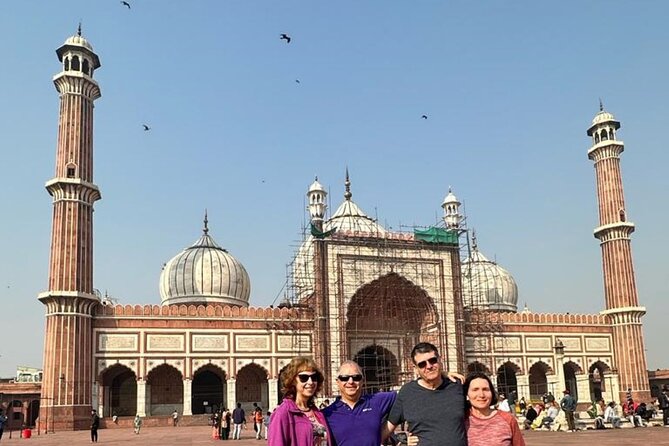
Jama Masjid is the spiritual counterweight. Built by Mughal Emperor Shah Jahan between 1650 and 1656, it’s one of Delhi’s largest mosques. If you want one Delhi stop that feels unmistakably Mughal in scale, this is it—and your time here is enough to notice details without feeling rushed.
The Drive to Agra: Why This Timing Works on a 3-Day Trip
At some point on day one, you’ll switch from Delhi sightseeing to the drive to Agra, using an expressway-style route. This is where a private car pays off: you keep control of when you depart and when you arrive at your hotel, instead of watching your schedule shrink due to delays.
Once in Agra, you check into your hotel for the night. Two nights total is a smart choice on the Golden Triangle, because it gives you one full early-morning Taj moment and still leaves time for other UNESCO stops the next day.
If you’re the kind of person who gets tired of constant check-ins, you’ll still appreciate this format: fewer hotel changes means more time actually looking at things.
Taj Mahal at Sunrise: The Moment That Sets the Tone
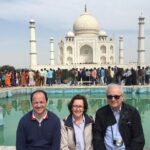
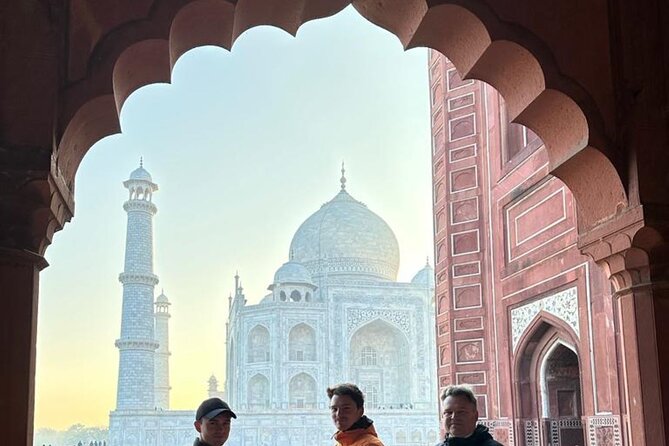
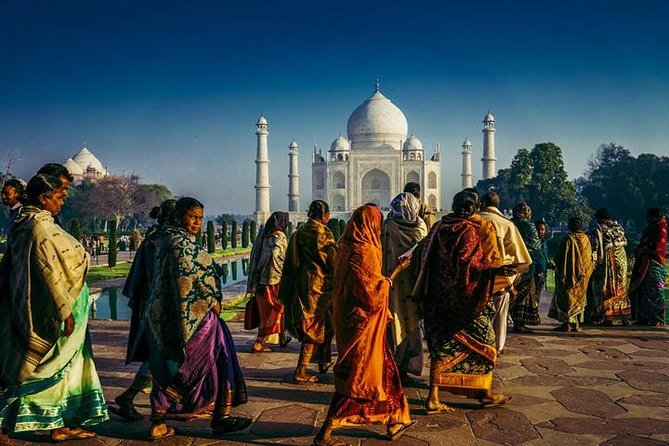
Day two starts with the Taj Mahal at sunrise. I won’t pretend it’s the only beautiful time to visit—because it’s beautiful any hour—but starting early is a big deal on a short schedule. The Taj is a building you experience best when the light helps the white marble read clearly and the surrounding atmosphere feels calmer.
This is also the “why” behind the sight. The Taj was built by Shah Jahan as a memorial for Mumtaz Mahal, his third wife. When someone links what you see (the mausoleum complex) with why it was built, the visit becomes more than a photo checklist.






Agra Fort and Itmad-ud-Daula: UNESCO Variety Without the Same-Old Feeling
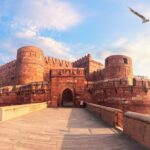
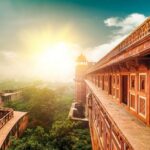
After the Taj, you’ll move to Agra Fort, another UNESCO World Heritage site. This fort isn’t just walls—it’s described in terms of palaces, balconies, and gardens, and it was a main Mughal residence for the Agra area’s rulers. The result is a different kind of experience than the Taj: less romantic, more political and architectural.
Then you’ll head to Itmad-ud-Daula, often nicknamed the Bachcha Taj. It’s a Mughal mausoleum sometimes described as a jewel-box style tomb. I like this stop because it’s close enough to the Taj’s world to make sense, but it doesn’t feel like a carbon copy of the big attraction.
If you’re worried about “too much Mughal,” this is the balance. You get grand symbolism, then palace-fort power, then a more intimate-feeling tomb complex.
Jaipur Arrival and City Rhythm: One Hotel Night That Changes the Pace
Once Agra is done, the trip continues to Jaipur, where you check in for the night. This matters because Jaipur sightseeing is spread across different styles and spaces—fort views, lake-area architecture, and royal-era city sections.
With one full morning and one day afternoon in Jaipur, the schedule keeps you moving, but it doesn’t turn the whole trip into a nonstop sprint. You still have the chance to slow down for photos and for guide explanations at each stop.
Amber Fort Morning: The Ridge, the Fort, and the Lake View
Your Jaipur day begins with Amber Fort. It sits on a ridge just outside the city, and it’s often talked about in relation to its reflection in the lake below. That one description is enough to understand why this stop is so popular: the fort doesn’t feel like a single object; it feels like a scene.
Amber Fort is a serious time block on a tight itinerary, about two hours, with your guide explaining what you’re seeing inside the complex. I’d treat this as your “main Jaipur” moment, because the other stops feel more like supporting chapters.
Also, plan mentally for the kind of photos you’ll get here: layered views, fort geometry, and that lakeside relationship. If you like architecture more than marketplaces, you’ll leave Amber satisfied.
Jal Mahal Photo Stop: A Palace in the Water
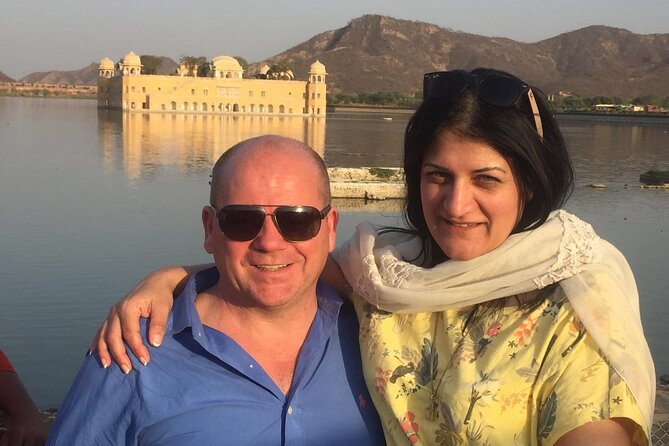
Next comes Jal Mahal, the palace floating on Man Sagar Lake. This is shorter—about thirty minutes—and it’s built for a photo opportunity. The value of the stop isn’t deep time or museum-like structure; it’s the visual idea: palace + lake + perspective.
If you’re traveling with people who want variety, Jal Mahal is a good compromise. It’s less about history depth and more about a quick hit of iconic imagery.
City Palace of Jaipur: Royal Administration Meets Ceremony
Then you visit the City Palace of Jaipur, designed originally as the administrative and ceremonial seat of Maharaja of Jaipur, with construction beginning in 1721. This one is allotted about an hour, but it still tends to feel substantial because the palace grounds help you picture how power functioned—administration, ceremony, and presence.
I like this stop when I’m doing a tight trip because it helps connect all the other sights: forts, palaces, and the way the city expresses royal authority in stone.
Jantar Mantar and Hawa Mahal: Science and Pink Sandstone
The afternoon continues with Jantar Mantar, a UNESCO World Heritage site built in 1734. It’s a set of nineteen astronomical instruments created by Sawai Jai Singh II. This is a different kind of “wow” than forts and tombs. Instead of scale, it’s the idea that architecture can measure the sky.
Finally comes Hawa Mahal, the Palace of Wind. It’s made with red and pink sandstone and is known for its distinctive façade. Even if you only get about fifteen minutes, it’s a classic “stop and look up” moment, and it’s one of those sights that makes you see Jaipur’s color palette instantly.
Transport, Hotels, and Pacing: The Comfort Side of the Golden Triangle
Let’s talk practical comfort because it shapes whether the trip feels like a vacation or a schedule. The tour includes a private, air-conditioned car for the drives, along with bottled mineral water during journeys. Those small things matter when you’re moving between cities quickly.
You also get two nights of accommodation (with breakfast when you choose the hotel option). Based on how people describe their experience with this operator, the included hotels tend to feel more upscale than what you might expect from a quick 3-day run.
Another comfort plus: pickup is offered from Delhi airport, railway station, or hotels, and it can also cover Noida and Gurugram. If your plans include a late arrival, having that pickup built in reduces stress.
Price and Value Math for a 3-Day Private Tour
The listed price is $40 per person, which is strikingly low for a private Golden Triangle in luxury terms. But here’s the real value math: you’ll still need to budget for monument entrance fees and for lunch and dinner, which are specifically listed as not included.
The tour also flags a per-person monument entrance fee of about 60 USD. On top of that, meal costs aren’t included, so your day budget should account for at least a couple of restaurant meals.
Where the money looks justified is in what you get without extra add-ons: a private AC car, hotel nights with breakfast (in the hotel-included option), and private local guides for the sightseeing. On short trips, private guides can save time and reduce confusion, which is the hidden cost many people underestimate.
My advice: treat the $40 as the base for the private driving + guiding + hotel package. Then add real-world extras: entrance fees plus meals.
Who This Tour Suits Best (And Who Might Want Something Else)
This private setup is ideal if you want the Golden Triangle but hate the “herding cats” feeling of group tours. It fits solo travelers too, since the tour is private activity—only your group participates.
It’s also a good choice for families or couples who want a smooth schedule with someone else handling routing. If you’re visiting for the first time and want the big icons—Qutub Minar, Lotus Temple, India Gate, Jama Masjid, Taj Mahal, Agra Fort, Amber Fort, City Palace, Jantar Mantar—this hits all of them.
If you’re the type who loves long museum time, slow café breaks, and unhurried wandering, a 3-day compressed route may feel busy. In that case, you might prefer a longer itinerary that gives each city extra space.
Driver and Guide Quality: The Punctuality Factor
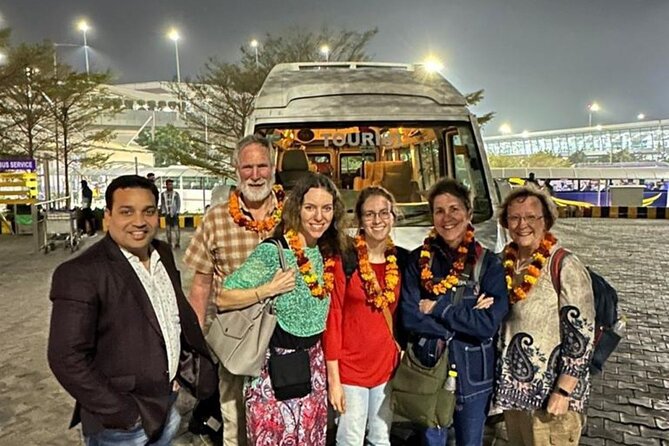
The private driver experience is one of the most repeated strengths in the feedback I’ve seen connected to this operator. A driver named Anil is specifically called out for being helpful, friendly, and good at navigating traffic while staying on time.
Planning-wise, there’s also a name you may see in communication: Ashish has been mentioned for answering questions before the trip starts. That kind of pre-trip responsiveness matters more than people think, because it reduces friction once you’re already in India.
I’d still do one simple thing before you go: confirm your exact pickup time and location in writing so day-one starts clean.
What You’ll Do Each Day, in Plain Terms
Day 1: Big Delhi classics with guided stops—then you move to Agra and check into your hotel.
Day 2: Taj Mahal at sunrise, plus Agra Fort and Itmad-ud-Daula, finishing with time to rest in Agra.
Day 3: Amber Fort, Jal Mahal photo time, City Palace, Jantar Mantar, and Hawa Mahal—then you return to New Delhi for airport or hotel drop-off, or possibly to Jaipur airport.
That pacing is the point: you get the headline sights with enough guided context to make them stick.
Should You Book This Private Golden Triangle From New Delhi?
Book it if you want big-name sights, private comfort, and a schedule that’s tight but not chaotic. The combination of private AC transport, hotel nights with breakfast, and a guide at every stage is what turns a whirlwind route into a doable vacation.
Skip or reconsider if you’re trying to travel ultra-budget, because entrance fees and meals will add up. Also reconsider if you want deep time at monuments or a relaxed pace—this trip is designed to cover major landmarks efficiently.
If you’re comparing options, look closely at what’s included for entrances. Some sites are clearly marked as included and others not. So your best move is to ask for a clear list of which monument tickets you’re covered for, then budget the rest.
FAQ
How long is the Private Luxury Golden Triangle Tour?
It runs for about 3 days.
Where does the tour start and end?
It starts in New Delhi and ends with drop-off at your Delhi airport, hotel, or possibly Jaipur airport, depending on timing.
Is pickup included?
Yes. Hotel or airport pickup and drop-off are included, with pickup offered from Delhi, Noida, and Gurugram (as well as airport/railway station/hotel locations).
What transport do I use during the trip?
You travel by a private, air-conditioned car.
Are hotel stays included?
Two nights of accommodation with breakfast are included if you choose the hotel option.
Are monument entrance fees included?
No. Monument entrance fees are listed as not included, with a per-person entrance fee amount provided. Some specific site admissions are marked as included or not, so confirm which tickets apply to your booking.
Are meals included?
Lunch and dinner are not included.
Is this tour private?
Yes. It’s a private tour/activity, and only your group participates.
Are there any special date rules?
A gala dinner is mandatory for Christmas Day (25 December) and New Year’s Eve (31 December) if you choose the hotel option.
What’s the cancellation policy?
You can cancel for a full refund if you cancel at least 24 hours before the experience starts. If you cancel within 24 hours of the start time, the amount paid isn’t refunded.