REVIEW · NEW DELHI
Private Luxury Full Day New and Old Delhi City Tour
Book on Viator →Operated by Tour Por la India · Bookable on Viator
One Delhi day, two eras, zero guesswork. I like the mix of Mughal-era UNESCO stops such as Qutub Minar and Humayun’s Tomb with major religious landmarks, and I also like that you get a personal guide who can explain what you’re seeing in plain language, like Sartaj, Shamin Qureshi, Rahil, or Gaurav. The day also feels practical because you’re moving in a private air-conditioned car instead of wrestling with traffic on your own.
The one drawback: the schedule is tight, and if you’re there on a Monday, Lotus Temple and Akshardham Temple are closed, so you’ll want to be flexible about the exact pacing of that day.
In This Review
- Key things to know before you go
- Private air-conditioned comfort in a city that loves traffic
- New Delhi landmarks: India Gate, Sansad Bhavan, and Rashtrapati Bhavan
- Bangla Sahib: a calm Sikh shrine in the middle of motion
- Old Delhi’s main event: Jama Masjid and the route to Chandni Chowk
- UNESCO Mughal sights: Qutub Minar and Humayun’s Tomb
- A quieter kind of wow: Akshardham and Lotus Temple
- Agrasen ki Baoli: the stop for legends, not just sights
- How the 7–8 hours actually feels in real time
- Price and value: why $20 can make sense for a private tour
- Who should book this Delhi city tour (and who might not)
- Quick FAQ about the day
- FAQ
- What’s the total duration of the tour?
- What time can I choose for pickup?
- Where does pickup happen?
- Is this a private tour?
- What vehicle will I ride in?
- Are admission tickets included?
- Do I need a photo ID?
- Which temples are closed on Mondays?
- Are meals included?
- Do I get any transfer at the end?
- Should you book it?
Key things to know before you go
- Private door-to-door pickup across Delhi and NCR with a flexible start time between 8:00 and 10:00 AM
- Air-conditioned car for just your group, sized for your party (sedan, family car, van)
- UNESCO highlights + big landmarks + religious sites, all in one day
- Some entries are included, and many stops are free—so you can keep your budget calmer
- Monday closures for Lotus Temple and Swaminarayan Akshardham
- Bring a valid photo ID for monument registration
Private air-conditioned comfort in a city that loves traffic
Delhi’s traffic can turn a sightseeing day into a test of patience. The best part of this tour is that you’re not figuring out routes, rides, or timing all by yourself. You get pickup from anywhere in Delhi, Noida, Gurugram, Ghaziabad, or Faridabad, and you can choose your start time between 8:00 AM and 10:00 AM.
You’ll ride in a private vehicle matched to your group size: a four-seater sedan for 1–2 people, a six-seater family car for 3–5, a nine-seater van for 6–9, and a twelve-seater van for 10–12. That matters because Delhi isn’t the place for cramped quarters when the day is long and you’re doing lots of short stops.
Your guide is government-approved, and you’ll have bottled mineral water. Meals aren’t included, though, so it helps to plan for at least one quick snack break of your own if you get hungry between stops.
You can also read our reviews of more tours and experiences in New Delhi.



New Delhi landmarks: India Gate, Sansad Bhavan, and Rashtrapati Bhavan
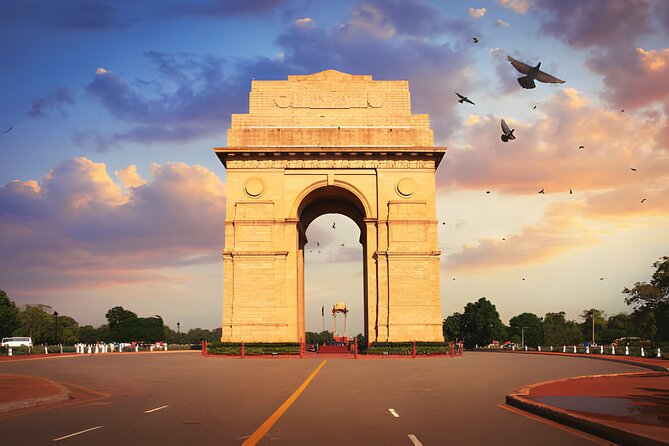
The day starts in New Delhi, then turns quickly to the big civic sights. India Gate is first on the list, and it’s more than a photo spot. It was designed by Edwin Lutyens and built to honor 90,000 Indian soldiers who died in the First World War. Even if you’ve seen a lot of memorials around the world, this one feels especially tied to the way modern Delhi carries its past.
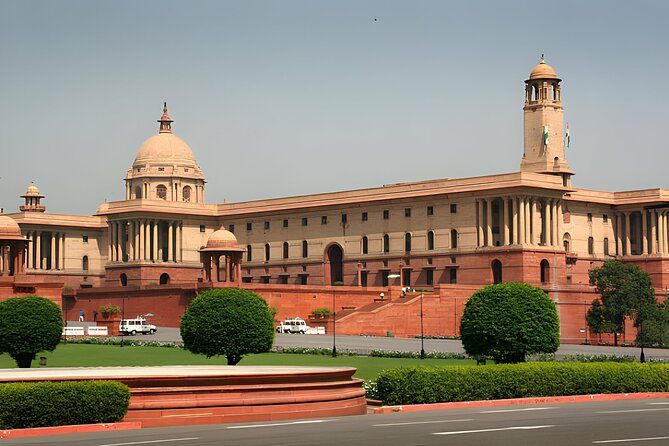
From there, the tour heads toward key government buildings like Sansad Bhavan (the Parliament House complex) and then Rashtrapati Bhavan, the President’s House. Rashtrapati Bhavan is described as a grand building with long corridors, hundreds of rooms, and the Durbar Hall under a dome-like shape. Even when you’re only looking from outside or spending a short time near the entrance areas, you’ll walk away with a better sense of how New Delhi was planned and why these buildings feel so dominant.
Practical note: these stops tend to be brief. Expect to see them, take a few photos, and move on. If you want lingering views, you may need to adjust your expectations for this kind of one-day circuit.
Bangla Sahib: a calm Sikh shrine in the middle of motion
Next comes Gurudwara Bangla Sahib, a Sikh gurdwara with a story many guides share right at the start. In 1664, the eighth Sikh guru is said to have visited and helped during a smallpox and cholera outbreak by distributing water from the tank. That history gives the place an emotional weight beyond its architecture.
You’ll typically spend about half an hour here. That’s enough time to slow down, watch people move through the space with purpose, and get a sense of how faith plays out in everyday life, not just as sightseeing.
If you’re visiting religious sites, keep the pace respectful. Wear clothing that feels appropriate for temple and shrine spaces, and be ready for basic rules about covering or behavior. Your guide will usually help you navigate what’s expected.
Old Delhi’s main event: Jama Masjid and the route to Chandni Chowk
Old Delhi changes the whole mood of the day. Jama Masjid is one of the biggest mosques in India, built by Mughal emperor Shah Jahan between 1650 and 1656. The tour includes about an hour at Jama Masjid, which is great because you can actually take in the scale—courtyards, arches, and a sense of movement that never stops.
After that, the tour heads to Chandni Chowk, one of the oldest and busiest market areas in Old Delhi, near Old Delhi Railway Station. You’ll have about 30 minutes here. That’s not long enough to shop like a local for hours, but it’s enough to feel what the area is like: tight lanes, constant activity, and lots of food and spice energy.
Chandni Chowk also connects visually to the Red Fort area at its eastern end. Even if you don’t go inside the Red Fort on this route, standing near the market stretch helps you understand why this part of Delhi became such a commercial and cultural center.
Consideration: markets move fast. Don’t plan on a slow, unhurried stroll. This is more about getting oriented and seeing key sights with less stress than going solo.
UNESCO Mughal sights: Qutub Minar and Humayun’s Tomb
The day’s historical heavyweights include UNESCO World Heritage sites. Qutub Minar and Humayun’s Tomb are both part of the big UNESCO draw.
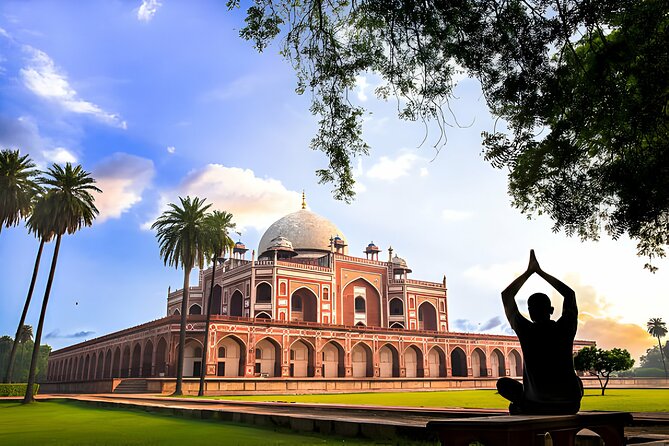
Humayun’s Tomb is scheduled for about an hour, and it’s included as an admission stop. The tomb complex was commissioned by Humayun’s first wife, Empress Bega Begum, in 1569–70. One of the reasons these sites work so well on a guided day is that your guide can point out details you would otherwise miss—like the design logic behind the symmetrical layout and the way Mughal architecture aims for order that still feels dramatic.
Qutub Minar tends to be a highlight in the day’s photo energy. In reviews, people specifically mention the difference when it’s seen late in the day—how the mood changes and photos come out differently. So if your route timing allows Qutub Minar closer to evening, it can feel like a separate experience from a midday visit.
If you care about photos, wear comfortable shoes. The ground around these major complexes can be uneven, and the day is built around short blocks of walking plus quick photo time.






A quieter kind of wow: Akshardham and Lotus Temple
After Old Delhi intensity, it’s a smart pivot to modern spiritual landmarks.
Swaminarayan Akshardham is a Hindu temple and spiritual and cultural campus near the Noida border. The tour includes about an hour here. It’s a different kind of experience from the Mughal monuments: the focus feels more on uplifting space, devotional rhythm, and large-scale campus layout.
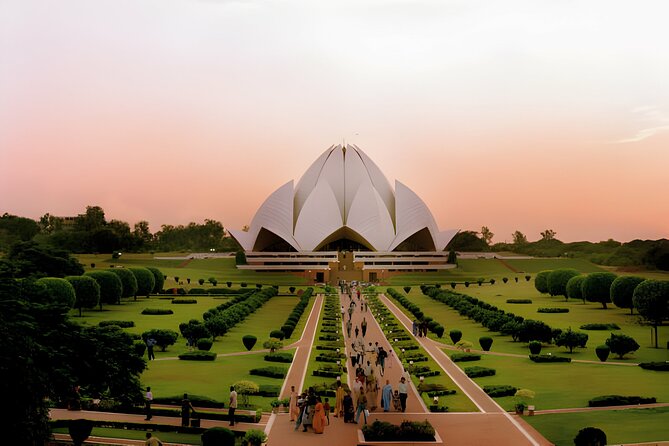
Then you’ll visit the Lotus Temple, a Bahá’í house of worship opened in December 1986. The Lotus Temple is famous for its flower-like shape, and the tour gives you about 30 minutes there.
Here’s the practical catch: both Akshardham and Lotus Temple remain closed every Monday. If your travel dates include a Monday, expect the tour to shift how you spend that time, or you may need to swap priorities for the day.
Agrasen ki Baoli: the stop for legends, not just sights
Agrasen Ki Baoli is an urban legends type of landmark. The tour includes about 30 minutes here, and the main draw is the story people attach to the stepwell—how it’s famous for haunting legends and paranormal tales.
Even if you’re not the supernatural type, it’s still a memorable stop because it’s a sudden change from the grand palaces and big government buildings. It gives you a glimpse of Delhi’s darker, weirder folklore, in a place that feels like it belongs to the city’s long myth-making tradition.
If you like atmosphere over architecture alone, this is the kind of stop you’ll remember later when the rest of the day blurs into a lot of monuments.
How the 7–8 hours actually feels in real time
This isn’t a “stay and linger” itinerary. It’s built for coverage with a private guide, which means you’re constantly moving between a few key time windows.
Typical stop lengths include:
- New Delhi pickup, then around 15 minutes for India Gate
- About 10 minutes for Rashtrapati Bhavan
- About 30 minutes for Gurudwara Bangla Sahib
- About 1 hour at Jama Masjid
- About 30 minutes for Chandni Chowk
- About 1 hour at Akshardham
- About 30 minutes at Lotus Temple
- About 30 minutes at Agrasen ki Baoli
- About 1 hour at Humayun’s Tomb
That adds up fast, and it’s why the private car is more than a comfort perk. It saves time you’d lose negotiating transport.
Also, remember you end with a free transfer back to your choice of location anywhere in Delhi, Noida, Gurugram, Ghaziabad, or Faridabad. That’s a nice buffer because it reduces end-of-day stress when you’re tired.
Price and value: why $20 can make sense for a private tour
At $20 per person, this tour is priced like a steal for a full-day route—especially because it’s private and includes transportation by air-conditioned car, bottled mineral water, and a government-approved guide.
Value here comes from a few specific choices:
- You’re not paying extra just to get moving: the car is included for the full day.
- Many stops are free or low-friction: the schedule lists free admissions for several major landmarks, while the tour notes admission fees are covered if the option is chosen.
- You’re getting coverage across multiple Delhi identities: Old Delhi chaos, New Delhi planning, UNESCO monuments, and modern temples.
Meals aren’t included, and tips aren’t included too. But compared to many private tours, you’re not constantly adding small costs for entry and transport.
If you’re splitting the cost with family or friends, this gets even better. The vehicle options also mean you’re not stuck in a one-size-fits-all situation.
Who should book this Delhi city tour (and who might not)
This is a great pick if you want:
- A one-day hit list of Old and New Delhi
- A guide who can explain the significance of major sites quickly
- Safer, simpler logistics—especially for first-time visitors or solo travelers
In reviews, people repeatedly highlight feeling safe and supported by guides such as Sartaj and Shamin Qureshi, plus strong English. That matters in Delhi, where it’s easy to lose your bearings without local context.
You might want to think twice if:
- You prefer a relaxed pace with fewer stops
- You’re traveling on a Monday and the closed sites (Lotus Temple and Akshardham) are high on your personal priority list
- You want long time inside museums or galleries beyond the short guided window
Quick FAQ about the day
FAQ
What’s the total duration of the tour?
The tour runs about 7 to 8 hours.
What time can I choose for pickup?
You can choose any pickup time between 8:00 AM and 10:00 AM.
Where does pickup happen?
Pickup is offered from anywhere in Delhi, Noida, Gurugram, Ghaziabad, and Faridabad.
Is this a private tour?
Yes. Only your group participates.
What vehicle will I ride in?
The car depends on group size: a four-seater sedan for 1–2 people, a six-seater family car for 3–5, a nine-seater van for 6–9, and a twelve-seater van for 10–12.
Are admission tickets included?
Entrance fees are included if you choose that option. The itinerary shows some stops as free and others as included (for example, Jama Masjid and Humayun’s Tomb).
Do I need a photo ID?
Yes. You should bring a valid photo ID to register at monuments.
Which temples are closed on Mondays?
Lotus Temple and Swaminarayan Akshardham stay closed every Monday.
Are meals included?
No. Meals are not included.
Do I get any transfer at the end?
Yes. The tour includes a free transfer to your chosen location anywhere in Delhi, Noida, Gurugram, Ghaziabad, or Faridabad.
Should you book it?
If you want a smooth, guided full-day that covers Old Delhi, New Delhi, UNESCO sites, and major religious landmarks—without spending your time bargaining for transport—this tour is a strong buy. The price feels especially fair for what you get: private air-conditioned driving, a government-approved guide, and a route that connects the city’s different identities.
Just line up your expectations for a packed day, and check whether your travel date is a Monday. If it is, you’ll want to be ready for Akshardham and Lotus Temple to be off the list.