REVIEW · NEW DELHI
5-Day Private Luxury Golden Triangle Tour From Delhi
Book on Viator →Operated by Best Golden Triangle Tour · Bookable on Viator
Golden Triangle, minus the travel headache. This 4-night, 5-day luxury route strings together Delhi’s Mughal landmarks, Agra’s headline sights, and Jaipur’s pink-sand icons, with private guided tours and luxury hotel stays built around smooth pickup and drop-off. I like that the plan doesn’t just toss you between photos; it groups the big sites in a way that helps you see how the story connects across cities.
One thing to plan for: several of the major monuments have entrance fees not included, so your final cost depends on what you choose to pay for each day. If you’re the type who hates surprise add-ons, bring a little extra cash or card-ready budget for tickets.
In This Review
- Key Highlights at a Glance
- A 5-Day Golden Triangle That Keeps You Moving Without Losing Your Mind
- Value Check: Luxury Stays, Guide Help, and What’s Still Extra
- Day 1 in Delhi: Mughal Mausoleums, Qutub Minar, and Old Delhi in One Day
- Humayun’s Tomb: Mughal Grandeur in a Garden Setting
- Qutub Minar: India’s Tall Stone Minaret
- Lotus Temple: Peaceful Space for All Faiths
- Jama Masjid: Red Sandstone and White Marble in Old Delhi
- India Gate + Raj Ghat: Modern Memory Stops
- Day 2 in Agra: Taj Mahal First, Then Fort, Baby Taj, and a River Garden View
- Taj Mahal: The White Marble Icon (Plan for Fees)
- Agra Fort: Red Sandstone Mughal Grandeur
- Itmad-ud-Daula: The Baby Taj Effect
- Mehtab Bagh: A Quiet Garden Across the Yamuna
- Day 3 Near Agra: Fatehpur Sikri’s Indo-Islamic Architectural Punch
- Day 4 in Jaipur: Palaces, Winds, Astrology, and Temples
- City Palace: Mughal Meets Rajasthani
- Hawa Mahal: The Palace of Winds (Pink Sandstone + 953 Windows)
- Jantar Mantar: UNESCO Astronomical Instruments
- Birla Mandir and Govind Dev Ji Temple: Marble Calm Inside the City
- Galtaji (Monkey Temple): Springs and Kunds in the Aravalli Hills
- Day 5: Smooth Arrival at Jaipur International Airport (Sanganeer)
- Guides Matter: What the Tour’s Private Format Changes
- Who This Tour Fits Best (And Who Should Think Twice)
- Should You Book This Golden Triangle Tour?
- FAQ
- What’s included in the Golden Triangle tour?
- Are monument entrance fees included?
- Is this a private tour?
- How long is the tour and how many nights are included?
- Where does the tour end?
- Does the tour mention tickets on a mobile format?
Key Highlights at a Glance
- English-speaking private guides help you understand what you’re seeing at each stop, not just where it is
- Hotel pickup and drop-off plus private transfers keeps your days from turning into logistics puzzles
- 4 nights of 5-star accommodation with single or double sharing and breakfast included
- A smart mix of Mughal icons and living-city stops like Jama Masjid and Gandhi’s Raj Ghat
- Taj Mahal + Agra Fort + Baby Taj + Mehtab Bagh are packed into Day 2, giving you a full Agra day
- Water bottle while traveling, plus tolls and parking are covered so you can focus on sightseeing
A 5-Day Golden Triangle That Keeps You Moving Without Losing Your Mind
The Golden Triangle (Delhi–Agra–Jaipur) is famous for a reason: you get some of India’s most photographed monuments plus real-world city energy. What makes this version feel more comfortable is the private structure. You’re not waiting around for a mass group to arrive “when it arrives.” Your guide can pace the day around your questions and the flow of what’s happening on-site.
The tour also makes practical choices for you. You’ll have English guidance, private transport between cities, and 5-star hotels for four nights. That’s a big deal on this route because road time adds up fast. When your transportation and guide are handled, you can spend your energy on the sights instead of the schedule.
You can also read our reviews of more tours and experiences in New Delhi.



Value Check: Luxury Stays, Guide Help, and What’s Still Extra
This package is priced at $31.50 per person, but the real value is in the inclusions. You’re getting hotel pickup and drop-off, an English-speaking private guide, water bottles while traveling, and the tolls and parking handled for you. You also get 4 nights of accommodation plus breakfast (4), which quietly saves money and planning time.
The part that isn’t included: monument entrance fees. The itinerary lists admission as not included for major sites like the Taj Mahal, Agra Fort, Humayun’s Tomb, Qutub Minar, and more. Some stops are free (like Lotus Temple, Jama Masjid, India Gate, and Raj Ghat), but not all of them are.
My advice: treat entrance fees as the variable cost. If you know you want to go inside the big-ticket monuments, you should budget ahead. If you’re happy sticking to what’s available outside or at free sites, you’ll spend less.
Day 1 in Delhi: Mughal Mausoleums, Qutub Minar, and Old Delhi in One Day
Delhi is a lot. This itinerary keeps it manageable by grouping landmarks by style and location.
Humayun’s Tomb: Mughal Grandeur in a Garden Setting
Start with Humayun’s Tomb, a UNESCO World Heritage Site and a Mughal architecture masterpiece. The big win here is the setting: you’re not just looking at a building; you’re stepping into a garden-and-tomb layout that helps you understand how Mughal design aimed for symmetry and calm.
A possible drawback? Even with a private guide, you can feel the pace. Humayun’s Tomb is one hour on the schedule, so you’ll want to watch for the guide’s cues on what to focus on first.
Qutub Minar: India’s Tall Stone Minaret
Next is Qutub Minar, the tallest stone minaret in India at 72.5 meters. It’s known for intricate carvings of Quranic verses and dates to the 12th century—so it’s an architecture stop with real depth, not just a skyline photo moment. One-hour is enough to appreciate the scale and key details, especially with a guide translating what you’re looking at.






Lotus Temple: Peaceful Space for All Faiths
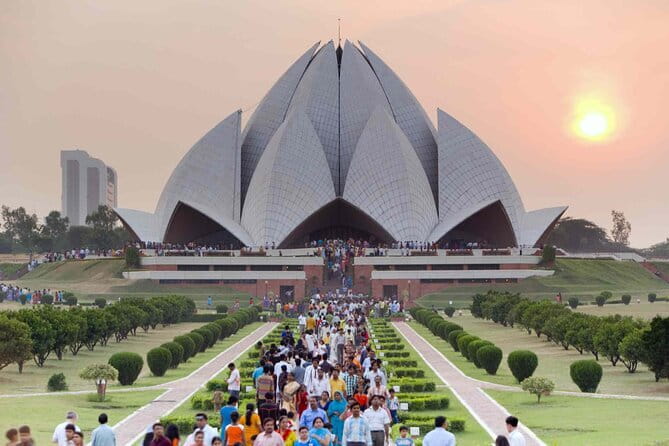
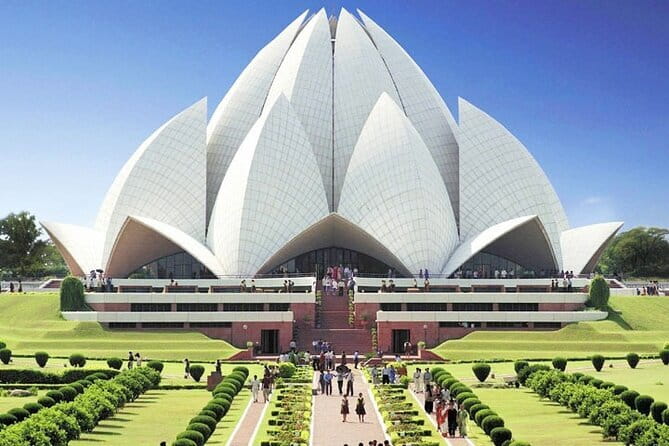
The Lotus Temple is short—about 30 minutes—but it offers a different kind of experience. It’s shaped like a blooming lotus, and it’s open to people of all faiths as a Baha’i House of Worship. If your day is heavy on stone history, this gives you a calmer reset.
Jama Masjid: Red Sandstone and White Marble in Old Delhi
Then the tour shifts into Old Delhi with Jama Masjid, one of the largest mosques in India, built in 1656 by Emperor Shah Jahan. You’ll see the red sandstone and white marble architecture that makes this place feel grand even before you understand the whole historical context.
India Gate + Raj Ghat: Modern Memory Stops
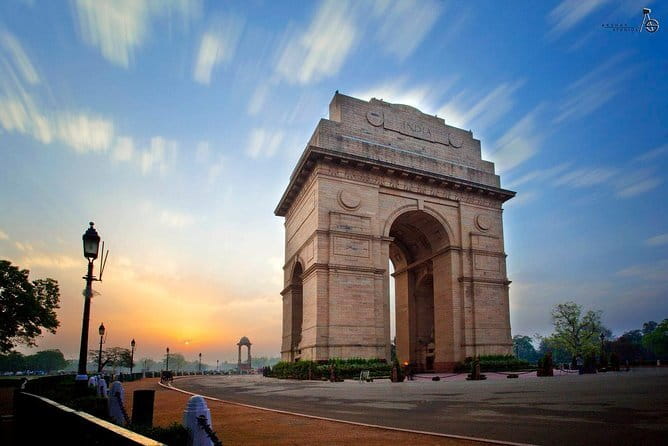
You’ll finish Day 1 with India Gate (a World War I memorial designed by Sir Edwin Lutyens) and Raj Ghat, the serene memorial marking the site of Mahatma Gandhi’s cremation. These stops are shorter, but they change the tone of the trip. They remind you that the monuments aren’t only about empires; they’re also about memory and identity.
Day 2 in Agra: Taj Mahal First, Then Fort, Baby Taj, and a River Garden View
Agra is where the Golden Triangle cashes its checks. The plan gives you a full day built around Mughal power and romantic beauty.
Taj Mahal: The White Marble Icon (Plan for Fees)
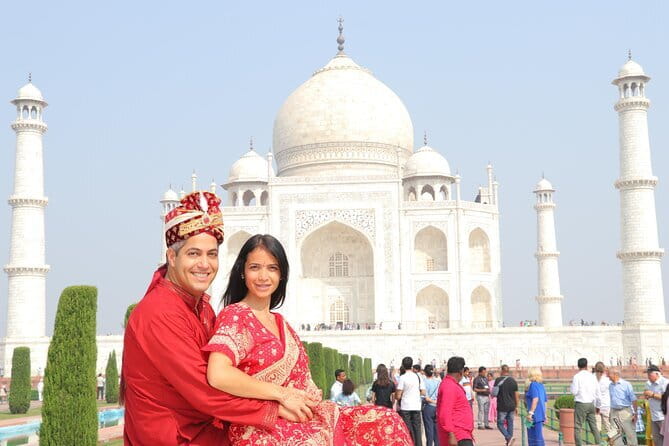
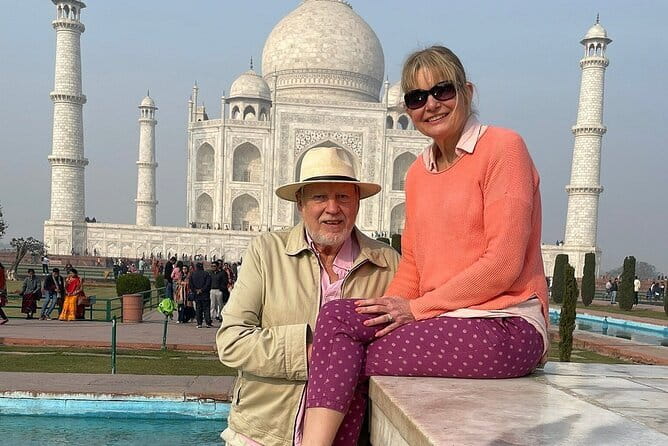
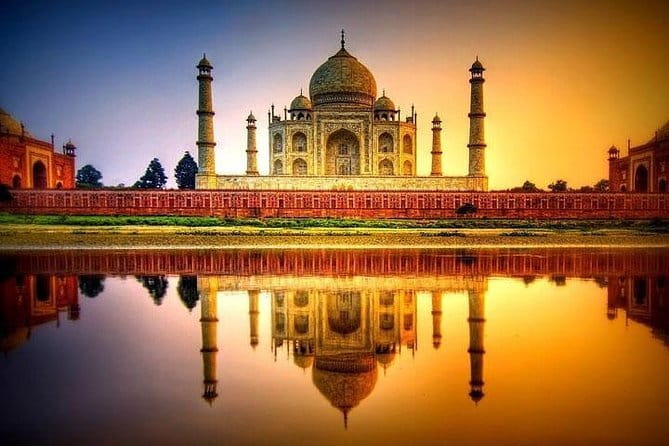
The day starts with the Taj Mahal, a UNESCO World Heritage Site and one of the Seven Wonders of the World. It’s famous for the white marble design and was built by Emperor Shah Jahan in memory of his wife. With only 45 minutes on the schedule, you’ll want to prioritize key perspectives first so you don’t spend the whole time just trying to find the best angle.
Entrance fees are not included, so this is one of your biggest likely add-ons.
Agra Fort: Red Sandstone Mughal Grandeur
Next comes Agra Fort, also UNESCO-listed. It’s a majestic red sandstone fort built by Emperor Akbar, with places inside tied to Mughal life, including the Jahangir Palace. The one-hour slot works well because a fort is big—your guide can help you focus on what matters most.
Itmad-ud-Daula: The Baby Taj Effect
Then you’ll hit Itmad-ud-Daulah, often called the Baby Taj. It’s a Mughal mausoleum known for intricate marble inlay work, commissioned by Empress Nur Jahan for her father Mirza Ghiyas Beg. This stop can be a relief after the Taj because the details feel more human-scale and intricate.
It’s also admission not included, so it’s another place to budget.
Mehtab Bagh: A Quiet Garden Across the Yamuna
Finally, Mehtab Bagh gives you a garden stop across the Yamuna River and a view angle toward the Taj Mahal. It’s scheduled for about 30 minutes and works as a finishing chapter. Even if the light isn’t perfect, the garden layout is a nice change from tomb walls and fort corridors.
Day 3 Near Agra: Fatehpur Sikri’s Indo-Islamic Architectural Punch
Day 3 is your “big idea” day with Fatehpur Sikri, a UNESCO World Heritage Site built near Agra by Emperor Akbar in the 16th century.
This is where you get an architectural blend—Indo-Islamic design—that helps you understand how styles moved across regions under Mughal rule. The tour gives you about one hour, and that’s exactly the right length for a historic complex like this if you have a guide pointing out what’s what.
Admission is listed as free on the plan, which is a nice way to keep your day’s costs down.
Day 4 in Jaipur: Palaces, Winds, Astrology, and Temples
Jaipur is different from Agra and Delhi. It feels more decorative, more visual, and more spread out across viewpoints.
City Palace: Mughal Meets Rajasthani
You start at the City Palace, a royal complex combining Mughal and Rajasthani architecture and still serving as the residence of the Jaipur royal family. Expect ornate courtyards and grand halls that make the city’s royal legacy feel close-up rather than distant.
Entrance fees are not included here, so factor it into your budgeting.
Hawa Mahal: The Palace of Winds (Pink Sandstone + 953 Windows)
Then it’s Hawa Mahal, the Palace of Wind, built in 1799. The key detail is the pink sandstone façade with 953 jharokhas (overhanging windows). In 30 minutes, you won’t see everything in detail, but it’s a great stop for orientation—Jaipur’s architectural language becomes obvious fast.
Also not included for tickets, so plan accordingly.
Jantar Mantar: UNESCO Astronomical Instruments
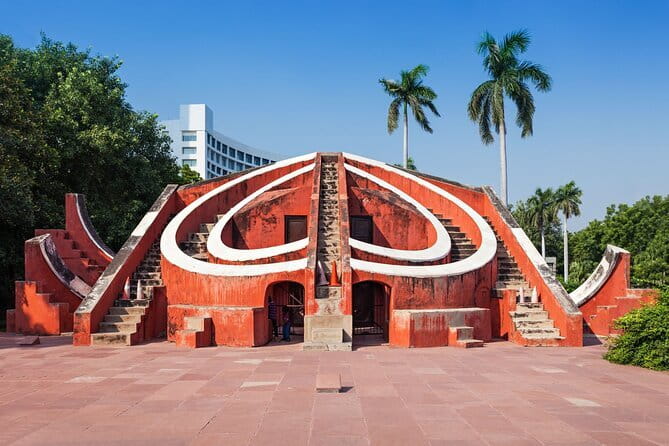
Next is Jantar Mantar, another UNESCO-listed stop and an 18th-century astronomical observatory built by Maharaja Sawai Jai Singh II. The site includes 19 large-scale instruments. Even if you’re not a science person, it’s worth it because it turns curiosity into something physical.
This stop is admission not included on the plan.
Birla Mandir and Govind Dev Ji Temple: Marble Calm Inside the City
After the monumental observatory, the itinerary shifts into faith and atmosphere.
- Birla Mandir (Lakshmi Narayan Mandir) is a serene marble temple dedicated to Lord Vishnu and Goddess Lakshmi at the foot of Moti Dungri hill.
- Govind Dev Ji Temple is dedicated to Lord Krishna, located within the City Palace complex, and the itinerary notes an idol brought from Vrindavan.
These are listed as admission not included, but the time you get at each is about 30 minutes—enough for a calm pause without losing your momentum.
Galtaji (Monkey Temple): Springs and Kunds in the Aravalli Hills
To end Day 4, you’ll visit Galtaji Temple, also called the Monkey Temple, in the Aravalli Hills near Jaipur. The highlight here is the natural springs and sacred kunds (water tanks). This is the kind of stop where the setting changes your pace. It’s not only about architecture; it’s about water, space, and the feel of the hillside.
Admission fees are listed as not included, and you’ll have about 30 minutes.
Day 5: Smooth Arrival at Jaipur International Airport (Sanganeer)
Day 5 is built around your departure with a drop to Jaipur International Airport (Sanganeer), about 13 kilometers from the city center. It’s described as having modern amenities and efficient operations, so the plan ends in a way that avoids last-minute scrambling.
One practical note: because you’re on a multi-city itinerary, protect your energy on the final morning. Even without a tight schedule listed for Day 5, airport timing can be unforgiving.
Guides Matter: What the Tour’s Private Format Changes
The biggest strength of a private luxury plan like this is not the hotel name. It’s the fact that someone can explain what you’re seeing and keep your attention on the right details.
In write-ups connected to this route, a guide named Mohd. Riyaz is specifically mentioned as guiding in Delhi and Agra. That kind of repeatable, experienced guidance is what makes stops like Humayun’s Tomb or Jantar Mantar feel understandable in the time you have.
Also, the tour setup is English-speaking and private, so you can ask questions without turning your day into a group translation game. If you like meaning behind the scenes—why something was built, what design elements point to—you’ll appreciate that.
Who This Tour Fits Best (And Who Should Think Twice)
This tour is a strong match if you want:
- A private guided Golden Triangle with 5-star comfort and fewer logistics headaches
- A full hit list across Delhi, Agra, and Jaipur without picking and choosing day by day
- English guidance so you’re not stuck reading signs while everyone else moves on
It may not be ideal if:
- You hate paying extra on top of a package price, because several major monuments require entrance fees
- You prefer a very slow pace with long time at fewer sites. This itinerary moves efficiently, which is great for coverage but not made for lingering all day
Should You Book This Golden Triangle Tour?
I’d book it if you want structure, English help, and comfort across all three cities. The value comes from the mix of private guides, hotel pickup/drop-off, 4 nights with breakfast, and a route that hits major icons plus a couple of quieter, reflective stops like Raj Ghat and Mehtab Bagh.
Before you confirm, do one simple check: decide which paid monuments you actually want to enter. If you’re going in for the Taj Mahal, Agra Fort, Qutub Minar, and the rest, you’ll likely feel great about the package. If you only want the free sights, you may find a cheaper trip option that fits your style better.
FAQ
What’s included in the Golden Triangle tour?
The package includes hotel pickup and drop-off, an English-speaking private guide, water bottles while traveling, all toll taxes and parking, 4 nights accommodation (single or double sharing), and breakfast for 4 days.
Are monument entrance fees included?
No. Monument entrance fees are listed as not included. Some stops are free on the itinerary (like Lotus Temple, Jama Masjid, India Gate, Raj Ghat, and Fatehpur Sikri), but several key sites list admission ticket not included.
Is this a private tour?
Yes. It’s described as a private tour/activity where only your group participates.
How long is the tour and how many nights are included?
It’s approximately 5 days and includes 4 nights of accommodation.
Where does the tour end?
It ends with drop-off at Jaipur International Airport (Sanganeer), about 13 kilometers from the city center.
Does the tour mention tickets on a mobile format?
Yes. Mobile tickets are listed as part of the tour features.