REVIEW · NEW DELHI
4-Days Private Luxury Golden Triangle Tour Agra Jaipur New Delhi
Book on Viator →Operated by Golden Triangle Tours India · Bookable on Viator
That first morning in Delhi sets the tone. In just four days, you’ll hit the headline sights of the Golden Triangle with private, air-conditioned transfers and a guide to give you context as you go. I like that you’re not left to wrestle with timing or traffic on your own. It’s also a strong value if you want hotel comfort plus daily breakfast, since the tour builds in those basics. One thing to watch: monument entrance fees are not included, so you’ll want to budget for tickets ahead.
This route is built for first-timers who want the big names without the headache. You’ll go from Delhi to Agra for a sunrise Taj Mahal visit, then on to Jaipur for forts, palaces, and UNESCO-listed sights. I also like that the plan includes practical support like bottled water, parking/fuel/taxes, and help buying entrance tickets so you don’t burn time standing in lines.
Here’s the trade-off. Because you’re covering three major cities in a short window, you’ll spend plenty of time in the car. If you like slow travel and long sits in cafés, you might find the pace a bit intense.
In This Review
- Key things that make this tour work well
- Private car comfort: why this Golden Triangle feels less chaotic
- What you’re really paying for: $173.07 plus tickets you’ll still need
- Day 1 in Delhi: Qutub Minar, Lotus Temple, Old Delhi lanes, and Humayun’s Tomb
- Qutub Minar (UNESCO)
- Lotus Temple (free)
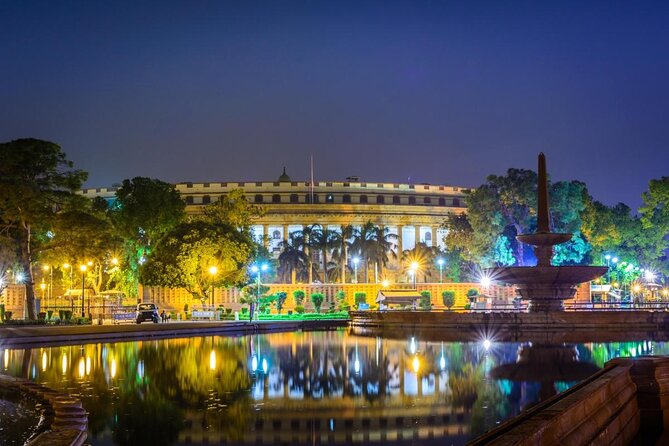
- India Gate and Parliament House quick stops (free)
- Jama Masjid (UNESCO area feel, ticketed)
- Agrasen Ki Baoli (free stepwell)
- Humayun’s Tomb (ticketed)
- Chandni Chowk and Old Delhi shopping lanes (free)
- Drive to Agra
- Sunrise Taj Mahal in Agra: the inside visit and how to time it
- The Taj Mahal, at sunrise
- Agra Fort (ticketed)
- Itmad-ud-Daula (Baby Taj) (ticketed)
- Chand Baori stepwell (ticketed)
- Arrival in Jaipur
- Jaipur day-by-day highlights: forts, palaces, UNESCO astronomy, and Hawa Mahal
- Panna Meena ka Kund (near Amber Fort)
- Amber Fort area: Jaipur’s most famous fort
- Jal Mahal photo stop
- City Palace (ticketed)
- Jantar Mantar (UNESCO, ticketed)
- Hawa Mahal (free short stop)
- Albert Hall Museum (ticketed)
- Patrika Gate (free)
- Royal Gaitor Tumbas (ticketed)
- Jaipur temples on Day 4: Birla Mandir and Galtaji Monkey Temple
- Birla Mandir (free)
- Galtaji Temple, also called Monkey Temple (free)
- Return to the meeting point
- Hotel option and what twin-sharing means for groups
- Customer service signal: what the feedback emphasizes
- Should you book the 4-Day Private Luxury Golden Triangle Tour?
- FAQ
- What is the duration of the tour?
- What cities are included in the Golden Triangle route?
- Is pickup offered?
- Is hotel accommodation included?
- Is breakfast included?
- Are monument entrance tickets included in the price?
- Does the tour include a battery bus for the Taj Mahal?
- What transport do you use during the tour?
- Is the tour private?
- What is the cancellation policy?
Key things that make this tour work well
- Door-to-door, air-conditioned transfers across Delhi, Agra, and Jaipur to reduce stress
- English-speaking private guides who explain what you’re seeing as you walk
- Sunrise Taj Mahal with inside access plus a battery bus between parking and the monument area
- Hotel option with 3 nights and daily breakfast if you upgrade at checkout
- Entrance tickets not included, so you’ll handle a chunk of costs separately
- Fast problem-solving support shows up in customer feedback, including help correcting booking mistakes
Private car comfort: why this Golden Triangle feels less chaotic
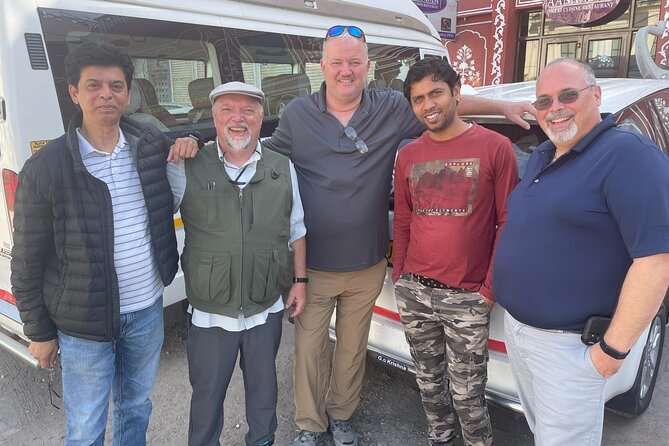
The Golden Triangle is famous for its must-see sights, and it’s also famous for traffic. This tour tries to smooth that part out for you. You get a private, air-conditioned vehicle with a driver, and you’re picked up from a specific location in the Delhi area (airport, railway station, hotel, or another pickup spot you choose).
That matters more than it sounds. Delhi traffic can turn a simple hop into a long day. By starting each day with a planned route and vehicle ready, you avoid the mental load of figuring out transit, fares, and timing. You also get bottled mineral water during journeys, which you’ll appreciate once you’re walking in strong sun or crowded lanes.
The itinerary is built around efficient movement. Day 1 runs through key Delhi landmarks and ends with a drive toward Agra via the Yamuna Expressway. Day 2 focuses on Agra highlights before moving on to Jaipur. Day 3 concentrates on Jaipur’s most famous sights. Day 4 keeps things lighter with two major temple stops.
If you’re the kind of person who wants to see a lot but doesn’t want to spend every hour managing logistics, this setup fits.
You can also read our reviews of more tours and experiences in New Delhi.



What you’re really paying for: $173.07 plus tickets you’ll still need
The price shown is $173.07 per person, and that’s only part of the cost picture. The tour includes a lot of behind-the-scenes items that add value when you’re doing three cities quickly:
- Private local guides for sightseeing
- Parking and fuel surcharge, plus taxes
- Pickup and drop in the Delhi area
- Battery bus ride to and from Taj Mahal parking up to the monument area
- Breakfast (3) when you choose the option with hotels
What is not included is also clearly stated. Entrance fees for monuments are not included. The listing lists an entrance-ticket total of $90 per person for all cities. That means your final cost isn’t just the headline price.
I like that the tour says your guide helps you buy entrance fees at monuments so you’re not stuck in long lines to purchase tickets. That’s one of those small, practical things that makes the day flow better, especially at high-demand places like the Taj Mahal.
So how do you judge value? If you would otherwise pay for a private driver, guides, and tickets separately, this bundled approach often makes sense. If you’re a budget solo traveler who’s comfortable navigating on your own, you might find it pricier than DIY. But for most first-timers, the included comfort and guidance are the point.
Day 1 in Delhi: Qutub Minar, Lotus Temple, Old Delhi lanes, and Humayun’s Tomb
Day 1 is a full “greatest hits” day in Delhi, with a mix of Islamic-era monuments, Mughal-era tomb architecture, and a slice of everyday Old Delhi life.
Qutub Minar (UNESCO)
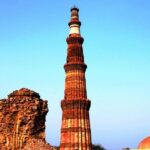
You’ll visit Qutub Minar, a 73-meter tall five-storey minaret built in 1193 by Qutub-ud-din Aibak (founder of the Delhi Sultanate). Even if you’ve never studied Indian architecture, this stop is easy to appreciate because the tower’s height and tapering design make it visually obvious why it became a UNESCO World Heritage site.
Consideration: Admission is not included here, so tickets/fees apply to this part of the day.
Lotus Temple (free)
Next is the Lotus Temple, known for its flower-like design. It was built in 1986 and is open to people regardless of religion. This is the kind of place where the architecture feels calm and modern compared to the older monuments on your list.
Admission is listed as free, which helps balance the paid ticket costs later in the day.






India Gate and Parliament House quick stops (free)
You’ll also see India Gate, a war memorial near Rajpath, and then the Parliament House area. These are short stops, but they help you understand what Delhi looks like at street level when power and history share the same geography.
Jama Masjid (UNESCO area feel, ticketed)
The day turns toward Jama Masjid, one of Delhi’s largest mosques, built by Mughal emperor Shah Jahan between 1650 and 1656. It’s a big-scale sight, and the atmosphere in the surrounding streets is part of why people love coming here.
Jama Masjid has admission not included, so again, ticket budgeting matters.
Agrasen Ki Baoli (free stepwell)
Then you get a quieter, unusual stop: Agrasen Ki Baoli, a protected stepwell site. Stepwells are such a specific part of India’s water history that even if you’re not a history person, you’ll likely enjoy the visual idea of people building functional beauty into water storage.
Admission is free, and the stop is short, so it doesn’t hijack the day.
Humayun’s Tomb (ticketed)
You’ll end this Delhi block at Humayun’s Tomb, commissioned by Humayun’s chief consort, Empress Bega Begum, in 1558. If the Taj Mahal is the headline for Agra, Humayun’s Tomb is one of the earlier Mughal steps toward that style.
Admission is not included, so this is another ticketed moment.
Chandni Chowk and Old Delhi shopping lanes (free)
Finally, you’ll spend time around Chandni Chowk, Delhi’s Old City market area. Think spices, dried fruit, jewelry, and tight side streets with lots of small shops. This is where the city feels lived-in, not just monumental.
Drive to Agra
After lunch time, you’ll head to Agra via the Yamuna Expressway. The drive is listed at about 3 hours, with your Agra hotel check-in after arrival. The rest of the evening is free at leisure.
Why this day works: It front-loads the key landmarks, then gives you a decompression window in Agra at night.
Main drawback to plan for: You’ll be moving through a lot of sites on Day 1, so wear comfortable shoes and pace your water breaks.
Sunrise Taj Mahal in Agra: the inside visit and how to time it
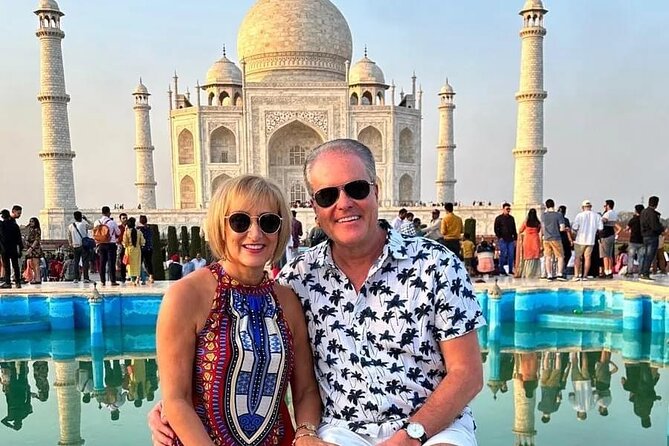
Day 2 is Agra’s big stage, and the biggest reason people choose this tour is the Taj schedule. You’ll do Taj Mahal with a sunrise start and then a guided tour inside for about two hours.
The Taj Mahal, at sunrise
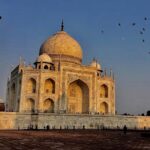
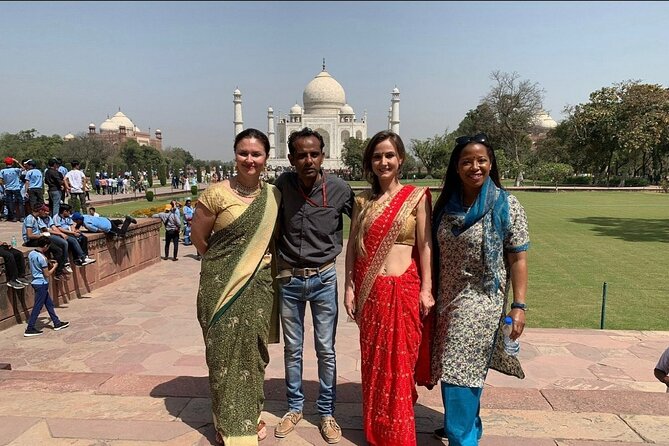
The Taj visit is built around seeing the monument under soft early light, when the crowds can feel different and the tones look less harsh than midday. You’ll also learn how it connects to Mughal emperor Shah Jahan, and that it was built as a tomb complex.
Tickets for the Taj Mahal are not included, so this is a good moment to confirm you’ve budgeted for entrance fees.
Agra Fort (ticketed)
After that, you’ll visit Agra Fort, another UNESCO World Heritage site. This one is a fort-palace complex with palaces, balconies, and gardens, tied to Mughal life and rule. If you’re only into one “icon” stop, the Taj is the icon. If you like seeing how power was organized day to day, Agra Fort gives you that extra layer.
Admission is not included.
Itmad-ud-Daula (Baby Taj) (ticketed)
Next is Itmad-ud-Daula, often called Baby Taj. It’s described as a Mughal mausoleum with gardens and multiple structures beyond the main building. Even with less time than the Taj, it’s the kind of stop that can feel more intimate, like a smaller cousin with the same design logic.
Chand Baori stepwell (ticketed)
Then you’ll head to Chand Baori, famous for its huge ornate stepwell. The description notes it’s reached by 3,500 steps, and it dates back to the 8th and 9th centuries. This is a great counterpoint to marble monuments. You’re looking at a different kind of grandeur: water engineering and symmetry.
Arrival in Jaipur
You’ll finish Day 2 by driving to Jaipur, checking into your hotel, and spending the night there.
How to enjoy this day most: Keep your photo expectations realistic. Taj looks incredible, but you’re also there early and it can still involve waiting and moving through crowds. Focus on seeing details during your guided inside time, not just the big exterior views.
Jaipur day-by-day highlights: forts, palaces, UNESCO astronomy, and Hawa Mahal
Jaipur is where the Golden Triangle turns from major monuments into an entire design style. Day 3 leans into architecture and royal-era layout, with lots of stops that fit together well.
Panna Meena ka Kund (near Amber Fort)
After breakfast, you start with Panna Meena ka Kund, a stepwell near Amber Fort. It’s a short stop listed at about 15 minutes, so it’s less about time and more about getting a quick feel for Jaipur’s water structure and stonework.
Free admission is noted here.
Amber Fort area: Jaipur’s most famous fort
You then move to Jaipur’s most famous fort, described as a seat that was the capital of Rajasthan until 1728. You’ll get roughly two hours with your guide, covering palaces, squares, and monuments.
Admission is listed as free in the schedule, but remember overall entrance fees may still apply depending on which sites count under the tour’s entrance fee total.
Jal Mahal photo stop
You’ll head down toward Jal Mahal, a palace in/over Man Sagar Lake. You get about 15 minutes for photos and viewpoints. This stop is mostly about the perspective. Don’t expect to linger inside; it’s a look-and-capture moment.
City Palace (ticketed)
Next is City Palace, where you’ll spend about one hour. The City Palace is described as the administrative and ceremonial seat of the Maharaja of Jaipur, constructed in 1721. It’s not just a building. It’s how the ruling household organized authority and ritual.
Admission is not included.
Jantar Mantar (UNESCO, ticketed)
Then you’ll visit Jantar Mantar, a UNESCO World Heritage site built in 1734. It’s a set of 19 architectural astronomical instruments created by Rajput ruler Sawai Jai Singh II. If you like science-as-art, this stop can hit hard.
Admission is not included.
Hawa Mahal (free short stop)
You’ll get a short 15-minute stop at Hawa Mahal, also called Palace of Breeze. It’s built from red and pink sandstone and designed as a five-storey pyramidal monument. People love it because from the street it looks decorative but it’s also a functional part of royal life.
Free admission is listed.
Albert Hall Museum (ticketed)
You’ll stop at Albert Hall Museum, described as the oldest museum in Rajasthan and the State museum of Rajasthan. This is a good pick if you want one cultural inside option, especially after many outdoor monuments.
Admission is not included here.
Patrika Gate (free)
Next is Patrika Gate at Jawahar Circle’s entrance, a photo-friendly set of gates that looks especially good at golden hour.
Royal Gaitor Tumbas (ticketed)
The day ends at Royal Gaitor Tumbas, dating to the 18th century and known for intricate carvings and temples.
Admission not included.
What to watch on Day 3: Jaipur has stops that are short and photo-focused. Build in time for bathroom breaks and water. If you rush, you’ll miss the details that make Jaipur feel different from Delhi and Agra.
Jaipur temples on Day 4: Birla Mandir and Galtaji Monkey Temple
Day 4 is lighter in sightseeing volume, with two temple stops listed for around half an hour each.
Birla Mandir (free)
You’ll visit Birla Mandir Temple in Jaipur, known for intricate white marble latticework and dedicated to Lord Vishnu. The appeal here is the look and feel of the marble work, plus the chance to see a modern temple space compared with the older Mughal architecture you saw earlier.
Admission is free.
Galtaji Temple, also called Monkey Temple (free)
Then you’ll go to Galtaji Temple, also known as Monkey Temple, famous for its pools and the nickname comes from the local presence of monkeys. The description specifically notes three sacred pools of water.
Admission is free.
Return to the meeting point
The tour ends back at the meeting point, which is listed as Indira Gandhi Intl Airport in Delhi. So if you’re booking this for a multi-city trip with flights, you’ll want to line up your final day so the Delhi return works with your schedule.
Why Day 4 matters: It gives you a softer landing after days packed with monuments.
Hotel option and what twin-sharing means for groups
This tour advertises an option that includes 3 nights accommodation and daily breakfast. If you choose that upgrade, you’ll likely stay in hotels in Agra and Jaipur, since the itinerary includes check-in and overnight stays there.
Rooms are generally twin-sharing. In a booking of 3 people, rooms default to triple-sharing, unless all three prefer 2 rooms, which may require an extra charge.
That matters for planning because it changes comfort and cost. If you’re traveling as two friends and want separate rooms, you should check options early.
Also note: the tour includes pickup from airport/railway station/hotel locations, and it mentions mobile ticket support, which can make last-minute coordination simpler.
Customer service signal: what the feedback emphasizes
The most praised aspect in the feedback is the way the company handles support issues fast. A clear example: when a traveler booked the wrong date by accident on the Viator site, the owner noticed the mistake quickly and contacted them right away after the booking error.
Another repeated theme is the quality of the driver and the local guides. One note highlights that the driver was excellent and each guide was described as world class, along with hotel accommodations that matched expectations.
I also like that the tour says you’ll have fully vaccinated private driver and private guides. That doesn’t change the sightseeing quality, but it speaks to how they run the operation.
Should you book the 4-Day Private Luxury Golden Triangle Tour?
Book it if you want:
- A private car with an English-speaking guide and planned routes across Delhi–Agra–Jaipur
- A sunrise Taj Mahal visit with inside time and the battery bus convenience
- A balanced mix of major monuments, UNESCO sights, and Jaipur’s royal architecture
- Fewer hassles managing transport and ticket lines yourself
Skip it or reconsider if:
- You hate driving days and prefer slow travel with lots of downtime
- You’re very cost-sensitive and plan to handle most admissions and logistics on your own
My rule of thumb: if you can afford the comfort and time saved, this tour is a smart way to experience the Golden Triangle without turning your trip into a daily scheduling project. Just budget for entrance fees and you’ll go in with your eyes open.
FAQ
What is the duration of the tour?
The tour duration is about 4 days.
What cities are included in the Golden Triangle route?
The tour covers New Delhi, Agra, and Jaipur.
Is pickup offered?
Yes. Pickup is offered from the airport, railway station, hotel, or any pickup location in Delhi, Noida, or Gurugram. Pickup starts from Indira Gandhi Intl Airport.
Is hotel accommodation included?
Accommodation is included only if you book the option that includes hotels. The tour mentions 3 nights accommodation with that upgrade.
Is breakfast included?
Yes. Breakfast is included for 3 days.
Are monument entrance tickets included in the price?
No. Entrance fees are not included. The tour lists monument entrance ticket cost as $90.00 per person.
Does the tour include a battery bus for the Taj Mahal?
Yes. There is a battery bus ride to and from the Taj Mahal parking lot up to the monument.
What transport do you use during the tour?
You travel in a private, air-conditioned car with a driver.
Is the tour private?
Yes. It is a private tour/activity, and only your group participates.
What is the cancellation policy?
Free cancellation is available. You can cancel up to 24 hours in advance for a full refund. If you cancel less than 24 hours before the start time, the amount paid is not refunded.