REVIEW · NEW DELHI
4-Day Luxury Golden Triangle Tour to Agra and Jaipur From Delhi
Book on Viator →Operated by Prime India Travel · Bookable on Viator
Four days, three cities, low stress. This private luxury Golden Triangle lines up sunrise Taj Mahal time with a private AC car and live guides in each city, so you spend less effort figuring things out and more time looking closely.
I also like how the day-by-day pacing hits big names without feeling rushed, from Delhi’s major Mughal-era sights to Jaipur forts and palaces. One thing to keep in mind: monument entry tickets and food aren’t included, so you’ll want to budget a bit extra on top of the $290 price.
In This Review
- Key highlights worth knowing before you go
- What you’re really paying for in this Golden Triangle
- Delhi day: Qutub Minar, Humayun’s Tomb, Jama Masjid, and Chandni Chowk
- Qutub Minar: the tall brick story you can’t ignore
- Humayun’s Tomb: the Mughal garden layout that leads toward the Taj
- Jama Masjid: scale, calligraphy, and a massive courtyard
- Chandni Chowk: shopping lanes and street food planning (without stress)
- Agra day: sunrise Taj Mahal plus Agra Fort viewpoints
- The Taj Mahal at sunrise: more than a famous photo
- Agra Fort: Mughal power inside red sandstone walls
- Fatehpur Sikri: a “capital that stopped working” and its big entrance
- Jaipur day: Amber Fort, City Palace, Jantar Mantar, and Hawa Mahal
- Amber Fort: ramparts, gates, and the Mirror Palace
- City Palace: courtyards and the royal residence areas
- Jantar Mantar: 13 instruments built to watch the sky
- Hawa Mahal: the Palace of Winds and its 953 windows
- Guides, drivers, and the little things that make it feel “luxury”
- Where this tour fits best (and where it might not)
- Price check: is $290 good value for this 4-day setup?
- Should you book this 4-Day Luxury Golden Triangle tour?
- FAQ
- Are pickup and drop-off included?
- Do I get a private air-conditioned vehicle?
- Will there be a guide in Delhi, Agra, and Jaipur?
- Is hotel accommodation included?
- Are monument entry tickets included in the price?
- Is food included?
- What is the duration and price?
- Is free cancellation available?
- Is this tour only for my group?
Key highlights worth knowing before you go
- Sunrise Taj Mahal timing for softer light and that classic first-view feeling
- Live guides in each city with English help and straightforward explanations
- Comfort-first transport with a private air-conditioned car plus tolls and parking covered
- Old Delhi + Chandni Chowk market time, not just a quick photo stop
- Multiple “royal” stops in Jaipur (Amber Fort, City Palace, Jantar Mantar, Hawa Mahal) in one day
What you’re really paying for in this Golden Triangle
At $290 per person for about 4 days, this tour isn’t trying to be the cheapest way to see Delhi, Agra, and Jaipur. You’re paying for the stuff that makes short trips actually work: a private AC car, a driver, and a live guide in each city. That adds up fast when you factor in time lost to navigation, waiting, and ticket lines.
It’s also “luxury” in the practical sense. You get a clean, comfortable ride, mineral water, and hotel support when you choose the 3-star option with breakfast. From guest feedback, the most praised part is consistent: smooth driving, punctual pickups, and guides who can explain what you’re looking at while helping with good photo spots.
The one catch is predictable: entrance tickets for monuments and meals are not included. If you love museums and forts, those tickets add up, so it’s smart to set aside extra cash before you arrive.
You can also read our reviews of more tours and experiences in New Delhi.



Delhi day: Qutub Minar, Humayun’s Tomb, Jama Masjid, and Chandni Chowk
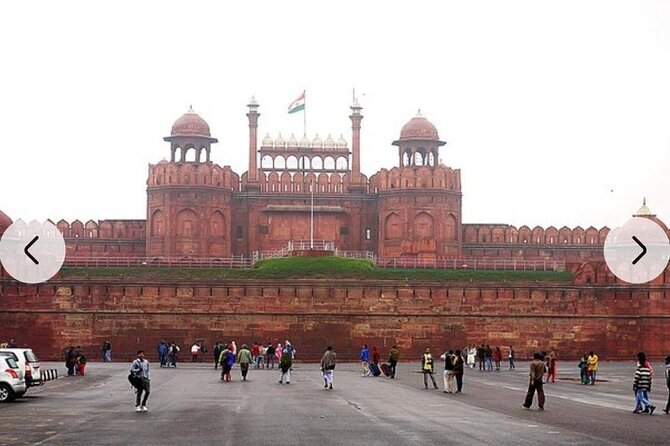
Your first day is a smart mix of early landmarks and real street-life. You’ll see major monuments without needing to coordinate multiple transfers, since the private car keeps you moving across Old and New Delhi.
Qutub Minar: the tall brick story you can’t ignore
Qutub Minar is a UNESCO World Heritage Site and one of India’s most recognizable minarets. It rises about 73 meters (240 feet), and construction started in 1193 AD by Qutb-ud-din Aibak, with completion tied to Iltutmish.
The tower uses red sandstone and marble, with detailed carving and Quranic inscriptions on the walls. You’ll also get the five-story layout, each separated by a projecting balcony—perfect for spotting details with your guide. Plan around 1 hour, and remember entry tickets aren’t included.
Humayun’s Tomb: the Mughal garden layout that leads toward the Taj
Humayun’s Tomb is another UNESCO stop and often described as an architectural precursor to the Taj Mahal. Built in the 16th century, it was commissioned by Empress Bega Begum, and designed by a Persian architect, Mirak Mirza Ghiyas.
This is a place where the setting matters. The tomb sits in a Charbagh garden (a four-part garden plan) with pathways and water channels dividing the space into four squares. You’re looking at red sandstone with white marble inlays and decorative detail, and you’ll spend about 1 hour.
Jama Masjid: scale, calligraphy, and a massive courtyard
Jama Masjid is one of the largest mosques in India, built by Shah Jahan between 1644 and 1656. It’s made of red sandstone and white marble, showing Mughal design on a grand scale.
If you want to understand why this place matters, focus on the courtyard: it can hold up to 25,000 worshippers. Inside, the main prayer area features intricate marble carvings and Quran inscriptions, and the mosque also houses relics, including an ancient Quran copy written on deer skin. Expect about 1 hour here, with admission not included.






Chandni Chowk: shopping lanes and street food planning (without stress)
After big monuments, you get the real-city experience at Chandni Chowk, one of Old Delhi’s oldest and busiest markets. It dates to the 17th century, built by Shah Jahan and designed by his daughter Jahanara Begum.
The name Chandni Chowk means Moonlight Square or Moonlight Market, tied to the market’s historical location opposite the Red Fort and how moonlight reflects off white marble. You’ll have about 1 hour, and this is the part where having a guide helps you choose where to go first—especially if you want textiles, spices, jewelry, or simply a safe route through the lanes. Since food isn’t included, this is also where you can decide how adventurous you want to be.
Quick practical note: for Jama Masjid and other religious sites, dress modestly. A light scarf or long layer is worth bringing so you don’t feel stuck adjusting your outfit.
Agra day: sunrise Taj Mahal plus Agra Fort viewpoints

Agra is where the tour earns its name. You’re not just “passing by the Taj.” You’re set up to see it at sunrise, and that changes how the marble looks and feels.
The Taj Mahal at sunrise: more than a famous photo
The Taj Mahal is a white marble mausoleum built by Shah Jahan in memory of Mumtaz Mahal. Construction began in 1632 and finished in 1653, with thousands of artisans contributing to the inlay work and carving.
Your guide will likely help you slow down and notice symmetry, the large main dome surrounded by four smaller domes, and the carved details that don’t show up in a quick snapshot. You’ll also get the fun lighting facts: the marble can appear pinkish in the morning, milky white in the evening, and golden under moonlight. Expect about 3 hours here, and entry tickets aren’t included.
Agra Fort: Mughal power inside red sandstone walls
Next comes Agra Fort, often called the Red Fort of Agra. Built by Emperor Akbar in the late 16th century, it served as the Mughal residence until the capital shifted to Delhi in 1638.
Inside the fort, you’ll move through red sandstone spaces that include palaces, mosques, and halls with a Hindu-Islamic architectural blend. Two highlights help you understand the story of the empire:
- Jahangir Palace, linked to Akbar’s construction for his son Jahangir and expanded later
- Khas Mahal, a white marble palace built by Shah Jahan for his daughters, with views toward the Yamuna River
Plan around 2 hours for Agra Fort, and note admission tickets aren’t included here either.
Tip I’d give you: wear comfortable shoes. Even with a guide, there’s walking and steps, and you’ll want your legs to feel good before the longer day in Jaipur.
Fatehpur Sikri: a “capital that stopped working” and its big entrance
On day three, you head to Fatehpur Sikri, a historic city near Agra. It was founded in the 16th century by Akbar and served as the Mughal Empire’s capital from 1571 to 1585. It was then abandoned shortly after, often explained by a lack of water supply—an idea you’ll hear repeated with this site.
What makes Fatehpur Sikri special for a short tour is how well it preserves the sense of a planned city. The architecture blends Hindu, Persian, and Islamic styles, so you can spot multiple influences without needing a long lecture.
The headline stop is Buland Darwaza, the Gate of Magnificence. It’s described as the tallest gateway in the world and acts as the city’s main entrance. You’ll spend around 3 hours here, and the data says admission is free.
If you like details, this is a great day to let your guide connect architecture to the politics of the time. You won’t have to guess what you’re looking at; the guide gives you the map in your head.
Jaipur day: Amber Fort, City Palace, Jantar Mantar, and Hawa Mahal
Jaipur is the royal finish. You get a full-day sweep through major structures that show Rajput and Mughal style blending in different ways.
Amber Fort: ramparts, gates, and the Mirror Palace
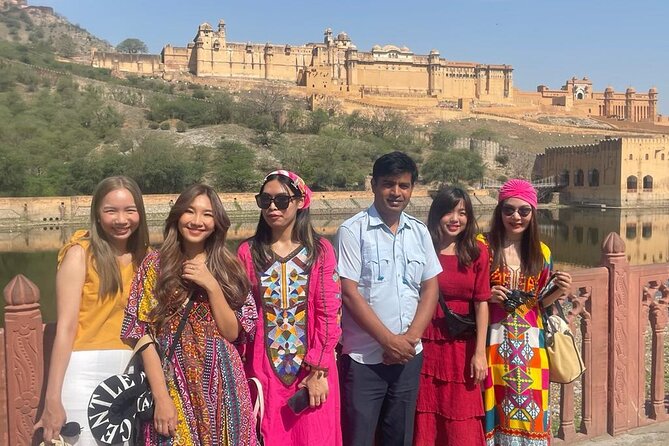
Amber Fort, also called Amer Fort, sits near Jaipur on a hilltop. It was built in the late 16th century by Raja Man Singh I, then expanded by Raja Jai Singh I. Expect red sandstone and marble with a mix of Hindu and Mughal architectural touches.
Amber Fort is built for walking and views. You’ll see large ramparts, a series of gates, and cobbled paths that help you feel how the fort functioned. One of the most famous interiors is the Sheesh Mahal or Mirror Palace, known for elaborate mirror work that reflects even small rays of light across the rooms.
You’ll have about 3 hours here, with entry tickets not included in the tour price.
City Palace: courtyards and the royal residence areas
Next is the City Palace of Jaipur, built in the 18th century by Maharaja Sawai Jai Singh II. This complex mixes Mughal and Rajput styles and spreads across courtyards, gardens, and multiple buildings.
A key part is Chandra Mahal, a seven-story palace that is still connected to the royal family’s residence. Each floor is described as having a unique name, with artwork, mirrors, and paintings that help you understand the palace as both political space and decorative statement.
Plan about 2 hours, and again, entry tickets aren’t included.
Jantar Mantar: 13 instruments built to watch the sky
Then you shift from palaces to science at Jantar Mantar, an astronomical observatory associated with Maharaja Jai Singh II in the 18th century. The name translates to instrument for calculation, and the site includes 13 architectural instruments designed for naked-eye observation.
The instruments were used to measure time, predict eclipses, track stars’ locations as they orbit, and determine celestial altitudes and related ephemerides. UNESCO status is tied to the site’s value as a historical scientific achievement. You’ll spend about 1 hour, with entry tickets not included.
Hawa Mahal: the Palace of Winds and its 953 windows
Finally, you end at Hawa Mahal (Palace of Winds), an iconic Jaipur landmark. Built in 1799 by Maharaja Sawai Pratap Singh, it’s known for its five-story facade with a honeycomb look. The facade contains 953 small windows, called Jharokhas, each with latticework.
The easiest way to enjoy Hawa Mahal is to view it both close-up and from the surrounding streets so you can appreciate the repeating pattern. You’ll have about 1 hour, and entry tickets aren’t included.
Guides, drivers, and the little things that make it feel “luxury”

This type of tour lives or dies on the human details: being on time, being clear, and keeping things smooth when crowds and traffic pile up.
From the feedback patterns included with this experience, you’ll likely be matched with an English-speaking driver and good city guides. Names that show up in prior customer notes include people like Khan, Rajeev, Imran, Rajeev Ji, and Rajaeev, plus Zainul Khan as an owner figure tied to planning support. The repeated theme is safe, smooth driving and helpful communication—plus extra friendliness that makes first-time India feel less overwhelming.
You’re also getting a guide in each city, which matters because Delhi’s Old Delhi maze isn’t the same as Jaipur’s fort logic. You’re not just looking at places; you’re learning why those places look the way they do.
And yes, there are practical touches like mineral water and hotel support (if you choose the 3-star option with breakfast). The tolls and parking are included, which helps the day run without constant budgeting for small surprises.
Where this tour fits best (and where it might not)
This tour is a strong match if you:
- want a fast, high-impact Golden Triangle visit without constant planning
- care about comfort, especially with a private AC car across long travel days
- like photography and want help finding good viewpoints and timing (especially sunrise Taj)
- prefer a guided explanation rather than just reading signs
It may not be the best match if you:
- are trying to keep costs extremely low, since monument tickets and meals are extra
- love roaming freely with zero schedule, since this is built around set stops and time at each site
- dislike early mornings, since sunrise Taj means you’ll be up and moving before day gets fully bright
Price check: is $290 good value for this 4-day setup?
For a private car across multiple cities, live guides in each city, and a 3-star hotel with breakfast when selected, $290 per person is not a bad deal for the amount of ground you cover. The big variable is how much you spend on monument tickets and meals, since those aren’t included.
If you’re the kind of traveler who would otherwise spend money on taxis, multiple day guides, and last-minute fixes, this package can feel like savings in disguise. You’re paying for coordination and reducing stress, not just transportation.
Should you book this 4-Day Luxury Golden Triangle tour?
Yes, if you want a comfortable first trip through Delhi, Agra, and Jaipur that hits the major sights with less friction. The sunrise Taj Mahal, the full spread of Jaipur landmarks, and the fact that you get live guidance in each city make this feel built for people who want results without the hassle.
I’d hesitate only if you’re strictly budget-only and plan to manage everything yourself, or if early starts will ruin your mood. If that’s you, you’d probably do better with a cheaper self-planned option.
If you want a smooth, guided Golden Triangle with real comfort, this one is a solid choice.
FAQ
Are pickup and drop-off included?
Yes. Pickup and drop-off are included as part of the tour.
Do I get a private air-conditioned vehicle?
Yes. You’ll have a private AC car for the entire tour activity.
Will there be a guide in Delhi, Agra, and Jaipur?
Yes. The tour includes a live tour guide in each city.
Is hotel accommodation included?
It depends on the option you select. A 3-star hotel accommodation with breakfast is included if you choose that option.
Are monument entry tickets included in the price?
No. Monuments entry tickets are not included.
Is food included?
No. Food isn’t included.
What is the duration and price?
The tour is approximately 4 days and costs $290.00 per person.
Is free cancellation available?
Yes. You can cancel up to 24 hours in advance for a full refund.
Is this tour only for my group?
Yes. This is a private tour/activity, so only your group participates.