REVIEW · NEW DELHI
3-Days Luxury Golden Triangle Tour to Agra and Jaipur from Delhi
Book on Viator →Operated by Private Car and Driver in India · Bookable on Viator
Golden Triangle in three days is a sprint. What makes this tour feel worth it is the tight routing and the support: private A/C car + driver and scheduled stops that hit Delhi, Agra, and Jaipur’s biggest landmarks without making you plan every turn yourself. I like that you get a proper mix of iconic sights (Taj Mahal) and the “you’re-here-now” context like Old Delhi’s market streets by tuk-tuk.
My favorite part is the flow you get once you’re moving: English-speaking local guides at the key sights and a driver who keeps continuity across cities (in at least one case, driver Sanjiv helped tie multiple guides together). The main drawback is simple: it’s a fast-paced, packed plan, so if you prefer wandering slowly or you hate early mornings, this may feel like information overload.
In This Review
- Key points at a glance
- Why this Golden Triangle plan works when time is tight
- Day 1 in Delhi: Old Delhi street views, Jama Masjid, and Gurudwara Bangla Sahib
- New Delhi planning, Akshardham, Humayun’s Tomb, and Qutub Minar
- The Agra transit day: arriving before Taj logistics take over
- Taj Mahal at sunrise plus Agra Fort and Itmad-ud-Daula
- Fatehpur Sikri en route to Jaipur
- Jaipur day: Amer Fort, Hawa Mahal, and City Palace
- Jantar Mantar and Jal Mahal: a different pace inside Jaipur
- What “private guides” and included transport really mean for your day
- Meals, hotels, and what you should budget for lunch
- Price and value: how $206 stacks up for Delhi, Agra, and Jaipur
- Who this luxury Golden Triangle sprint is best for
- Should you book this 3-day Golden Triangle tour?
- FAQ
- How long is the tour?
- Where is pickup available, and what time window?
- Does the tour include airport pickup and drop-off?
- Which cities and major sites are included?
- What meals are included?
- Are monument entrance fees included?
- Do I need a passport?
- Is the Taj Mahal open every day?
- What should I wear?
- Is cancellation free?
Key points at a glance
- Private A/C car and driver for door-to-door routing between Delhi, Agra, and Jaipur
- Old Delhi by tuk-tuk around Chandni Chowk-area lanes, plus major mosques and a Sikh temple
- Taj Mahal at sunrise with a planned battery bus ride to reduce parking-walk time
- UNESCO stops across both cities (Humayun’s Tomb, Qutub Minar, Taj Mahal, Agra Fort)
- Two nights with breakfast and dinners included (confirm your exact hotel level and night count when booking)
- Taj Mahal timing rule: closed every Friday, so your schedule may shift
Why this Golden Triangle plan works when time is tight
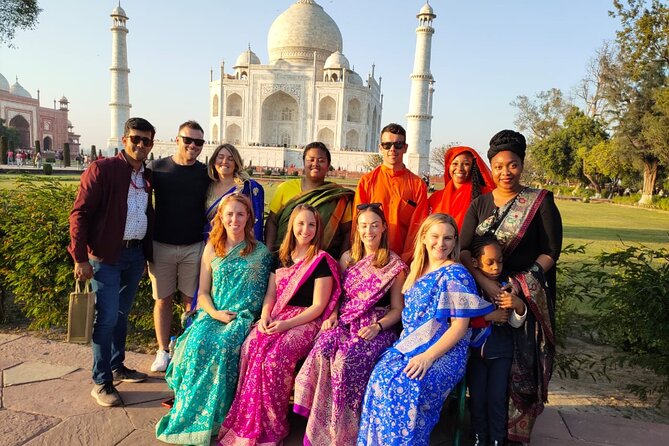
This is a “hit the big ones” route, and that’s not a bad thing. A full independent Golden Triangle can turn into a juggling act of tickets, routes, drivers, and hotel check-ins. Here, you trade some freedom for something more valuable when you’re short on time: a structured day with transport lined up.
I also like that the sightseeing isn’t only monuments-on-a-postcard. Day 1 in Delhi is built to give you layers: Old Delhi religious landmarks, then New Delhi’s planned architecture zone, then two very different large complexes (Akshardham and Humayun’s Tomb) before you end at Qutub Minar. Day 2 balances “absolute must-see” (Taj Mahal) with other Mughal-era stops that give you a clearer picture of how this region built its grandeur. Day 3 then focuses on Jaipur’s palaces and forts, plus a more curious stop (Jantar Mantar) and a peaceful one (Jal Mahal).
That said, you’re not choosing a second “favorite” time slot. The tour is designed to move. If you want long lunches, long museum reads, and lots of do-nothing time, you’ll need a different style of trip.
You can also read our reviews of more tours and experiences in New Delhi.



Day 1 in Delhi: Old Delhi street views, Jama Masjid, and Gurudwara Bangla Sahib
Day 1 starts with pickup in the Delhi NCR area (Delhi, Noida, Gurugram, Ghaziabad, Faridabad), with a window between 9 AM and 11 AM. That flexibility helps if you’re arriving by train or you need to coordinate with your own plans before the tour begins.
Old Delhi is where the senses hit first. You meet your guide at Sunheri Masjid and jump into a tuk-tuk to tour the Chandni Chowk area. This matters more than it sounds: walking is one thing, but a short ride gives you a fast mental map of the neighborhood—where the lanes feel tight, where crowds gather, and how the market streets connect.
From there you visit Jama Masjid, India’s large and impressive mosque complex. Built in 1656 with help from 5,000 workers, it’s known for its red sandstone courtyard and grand scale. Next is Gurudwara Bangla Sahib, tied to a tank that visitors associate with healing. Even if you don’t take the legend literally, it’s a meaningful cultural stop and a break from the market intensity.
You also get a quick hit of India’s modern memorial history at India Gate, including the names of 13,300 Indian servicemen engraved on its walls. This is a short stop, but it gives you a pause point—something grounding before you shift into the “designed city” part of Delhi.
New Delhi planning, Akshardham, Humayun’s Tomb, and Qutub Minar
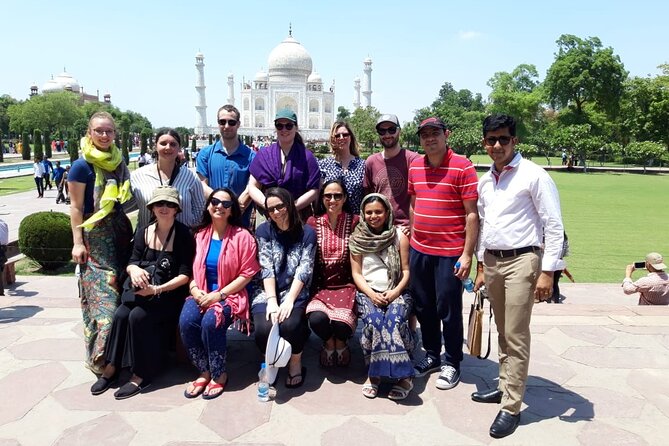
After Old Delhi, the tour steers you into the planned Delhi story. There’s a stop highlighting New Delhi’s major architecture connection—built in the late 1920s by Sir Edwin Lutyens and Herbert Baker, linked to the planned 330-acre design. It’s the contrast you want: less maze, more city grid.
Then you move to Swaminarayan Akshardham, a huge Hindu temple complex. It was constructed in 2005, but the design is meant to feel like older times, with architecture that gives that “this has been here for ages” illusion. If you like scale and carefully choreographed space, this stop delivers.
Humayun’s Tomb follows, and it’s not just famous—it’s visually important to understand Mughal garden-tomb design. The tour frames it as UNESCO-listed and as India’s first Garden Tomb, built by Humayun’s wife after his death. Even if you only spend the scheduled time, it helps you see the style that later culminates in Taj Mahal.
Finally, you finish with Qutub Minar at about 72.5 meters tall. It’s UNESCO-listed, and the tour includes time at the Qutub complex area. If you’ve ever wondered why Delhi feels like layers of empire stacked on each other, this is one of your answers in stone.
The Agra transit day: arriving before Taj logistics take over
After Delhi sightseeing, your driver takes you from Delhi to Agra and drops you at your hotel. This transfer timing matters because it sets up the next morning’s early start.
One practical detail I appreciate: the tour includes a battery bus ride to and from the Taj Mahal parking area up to the monument. Taj mornings can be hectic just because of lines and walking. Reducing that stress helps you stay focused on what you came for: the sight itself and the light change right after sunrise.
You’ll also want to remember the schedule safety net: Taj Mahal is closed every Friday. If your date lands on a Friday, the tour provider should adjust the plan—so check the confirmation details and have a backup expectation for that day.
Taj Mahal at sunrise plus Agra Fort and Itmad-ud-Daula
Day 2 is built around Taj Mahal at sunrise, with the tour time framed around the view and the return for breakfast afterward. Taj at sunrise is about more than the photo. Early light changes the way the marble looks and the way the crowds move. Even within the time limits, you get a calmer moment to orient yourself.
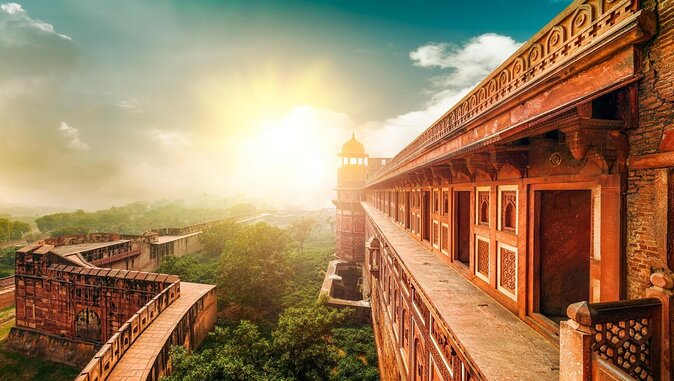
The tour then takes you to Agra Fort, another UNESCO site close by. The fort is described as 17th century and a strong example of Indian and Islamic architecture. This is the “power and defense” counterpart to Taj’s romantic story—so you’re not stuck only on beauty. It also helps you understand that the Taj complex didn’t appear in a vacuum. It came from a world that built and protected empire-scale projects.
Next is Itmad-ud-Daula, often called an early Mughal marble masterpiece. The tour specifically notes it’s the first Mughal structure constructed entirely from marble and one of the early major uses of pietra dura. You also get the setting detail of it being on the Yamuna’s banks, with the historic note about gardens lining the area. This stop is a good value-add because it shows you a smaller, more intricate world after the big moments.






Fatehpur Sikri en route to Jaipur
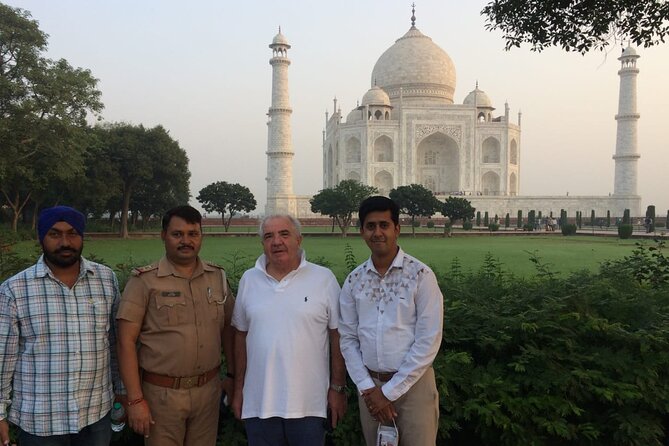
Instead of jumping straight from Agra to Jaipur and calling it done, the tour includes Fatehpur Sikri on the way. It’s located about 40 km west of Agra and is described as a fortified ancient city that served as a capital. The “pink city” mention typically refers to Jaipur, but Fatehpur Sikri’s ruins can be just as striking in color and geometry under certain light.
This is one of those stops that can feel like a time trade. You might finish and wish you had longer, but for a short tour it gives you a meaningful historical detour. It’s also an easy way to break up the travel day so the ride doesn’t swallow the entire afternoon.
After Fatehpur Sikri, your driver takes you to Jaipur and drops you at your hotel.
Jaipur day: Amer Fort, Hawa Mahal, and City Palace
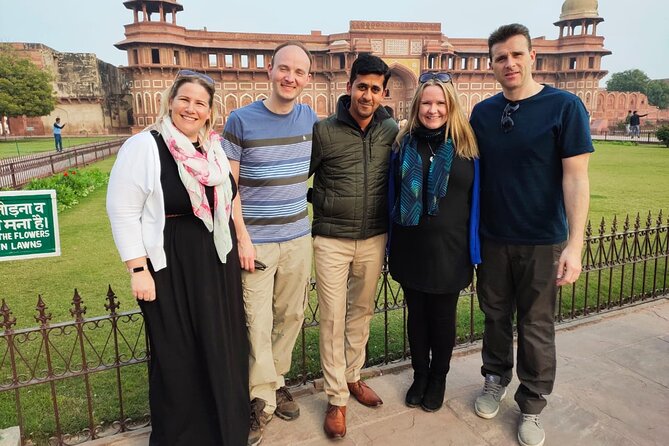
Jaipur is often easy to sell, but this tour does a smart thing: it starts with Amer (Amber) Fort after breakfast. The fort is described as around 600 years old, known for Hindu-style architecture using marble and red sandstone. If you love forts, this is where your time feels most “earned” because the architecture is the show, not just the view from above.
Next is Hawa Mahal, the Palace of Breeze. It was built in 1799 for royal ladies, and the tour points out the famous 953 windows carved in red and pink sandstone. Even if you’re only seeing it from the right angles within the time slot, it’s one of those structures you immediately recognize—and it helps you understand Jaipur’s relationship with shade, airflow, and everyday palace life.
Then you visit City Palace, Jaipur’s central palace complex and former seat of the Maharaja. The tour notes that some parts are reserved as museum areas. This stop is valuable if you want the city’s story tied to the people who lived there, not only stone monuments and towers.
Jantar Mantar and Jal Mahal: a different pace inside Jaipur
Later in the day you get Jantar Mantar, the astronomical observatory built in the 18th century. The tour describes it as a set of architectural instruments used to measure time and track celestial bodies. This is a nice counterbalance to the fort-and-palace rhythm because it asks you to look with a different kind of curiosity—less face-value sightseeing, more “how did they measure the sky?”
Then you have Jal Mahal, a 17th century Rajput-style building located in the middle of Man Sagar Lake. The tour frames this as a quieter, more peaceful stop. In a packed day, this is one of your best chances to reset your brain, even if the time at the lake is brief.
What “private guides” and included transport really mean for your day
The tour includes sightseeing with private local guides and private A/C car and driver for transfers. You also get complimentary water bottles and bottled mineral water and soft drinks during journeys. On a short multi-city trip, these small logistics add up. You stay hydrated, you avoid hunting for snacks at awkward times, and you don’t lose time figuring out local transport.
One detail to plan around: the tour uses English-speaking guides, and you can request another language in special requirements. Also, your guide coverage can shift by city. In one shared experience, the group used multiple guides across Delhi, Agra, between Agra and Jaipur, and then Jaipur, while the driver Sanjiv helped keep continuity. That’s not unusual for this style of itinerary, and it’s actually good: each guide tends to focus on the most relevant context for their city.
Also pay attention to ticket coverage. The package includes “all monument tickets” in the inclusions list, but the information also says monument entrance fees are not included. That conflict usually comes down to which ticket option you select. Before you go, make sure you know whether entry fees are included for your exact chosen option.
Meals, hotels, and what you should budget for lunch
The inclusions clearly state breakfast and dinners are included, and lunch is not. That means most days you’ll have food covered in the morning and evening, but you’ll need to budget for lunch on your own.
Accommodation is described as luxury 5-star availability, and the inclusions list mentions two nights of stay with breakfast and dinner. Because some text also mentions three nights, I’d treat that as an “confirm at booking” item. Ask what exact night count you’re getting for your dates and hotel tier.
Rooms are generally twin-sharing, with room type depending on availability and group setup. If you’re traveling as a group of three and you want two rooms, there can be an additional charge. None of this is glamorous, but it’s the stuff that affects comfort.
And one more practical note: dress should be modest. The guidance explicitly says to avoid clothing that is too revealing. That’s easy to respect and it helps you avoid awkward delays at sites with dress rules.
Price and value: how $206 stacks up for Delhi, Agra, and Jaipur
At an advertised $206 for about three days, you’re paying for bundled convenience: private A/C transport, hotel nights with meals, and guided visits at multiple UNESCO sites. The big value isn’t just the destinations—it’s the fact that someone handles the routing and timing between cities.
If you tried to do this solo, you’d likely spend money on a driver, hotel support, and ticket planning, and you’d still lose time. Here, you trade some flexibility for fewer decisions. That’s a smart trade for first-time visitors who want the “big monuments” experience without the administrative headache.
Where the value can change is the ticket confusion mentioned earlier (included monument tickets vs. monument entrance fees not included). Also, lunch isn’t covered, and that can add up depending on where you eat. So I’d look at the price as a solid foundation, then check what’s fully included under your chosen option before you commit.
Who this luxury Golden Triangle sprint is best for
This tour fits best if you:
- Have limited time and want a structured Golden Triangle
- Prefer private A/C comfort over buses and shared rides
- Like having guides interpret what you’re seeing at major stops
- Want Taj Mahal at sunrise and also want more than one Agra monument
It’s less ideal if you:
- Want to linger for hours at each site
- Hate early mornings
- Need lots of free, unscheduled time for shopping, restaurants, or extra photo breaks
One more practical mismatch: the plan moves quickly. You can still enjoy it, but you’ll want to manage expectations. This is a highlights-heavy tour, not a slow cultural immersion.
Should you book this 3-day Golden Triangle tour?
I’d book it if you’re the type of person who likes clarity. You want your transport handled, your key sights scheduled, and your mornings organized around Taj Mahal and major UNESCO stops. The sunrise focus, the battery bus help for Taj logistics, and the private car setup make this a smoother trip than trying to wing it across three cities.
I’d hesitate if you’re sensitive to packed days, or if you don’t like being on a schedule. In that case, you’ll likely enjoy a longer version where you can slow down between Delhi market lanes, Agra’s fort-and-marble contrast, and Jaipur’s palaces.
If you do book, double-check two things before you go: whether monument entrance fees are covered under your selected ticket option, and your exact hotel night count for your dates.
FAQ
How long is the tour?
The tour is listed as about 3 days.
Where is pickup available, and what time window?
Pickup is available in Delhi, Noida, Gurugram, Ghaziabad, and Faridabad, with pickup times between 9 AM and 11 AM.
Does the tour include airport pickup and drop-off?
Yes. Airport or hotel pick-up and drop-off are included, and if you want airport pickup you need to provide your flight details at booking.
Which cities and major sites are included?
The tour covers Delhi, Agra, and Jaipur, with stops including Jama Masjid, Gurudwara Bangla Sahib, Akshardham, Humayun’s Tomb, Qutub Minar, Taj Mahal, Agra Fort, Itmad-ud-Daula, Fatehpur Sikri, Amer, Hawa Mahal, City Palace, Jantar Mantar, and Jal Mahal.
What meals are included?
Breakfast is included, and dinners are included. Lunch is not included.
Are monument entrance fees included?
The information provides conflicting details: the inclusions mention all monument tickets (choose an option), while another section lists monuments entrance fees as not included. You should confirm which ticket option you selected for your booking.
Do I need a passport?
Yes, a current valid passport is required on the day of travel.
Is the Taj Mahal open every day?
No. Taj Mahal is closed every Friday.
What should I wear?
You should avoid clothing that is too revealing.
Is cancellation free?
Yes, you can cancel for free up to 24 hours in advance for a full refund. If you cancel less than 24 hours before, the amount paid is not refunded.