Three cities in three days, with your comfort handled. The private luxury setup means you’re not wrestling with trains or timing, just turning up at each stop while your guide maps the day. You’ll start with Delhi highlights, then head to Agra for the Taj Mahal, and finish in Jaipur for forts, palaces, and UNESCO sights.
I like two things most about this tour style. First, you get full-day structure with pickups around 9AM, plus a comfortable air-conditioned car and a guide who’s there for your questions. Second, meals and key sights are built in, so you’re not constantly hunting for lunch or paying ticket fees at every single turn.
One thing to keep in mind: monument entry isn’t fully covered. Some major stops are marked as not included, and the overall budget for entry fees is around $45 per person, plus tips for the driver and guide.
In This Review
- Key Things You’ll Notice on This Golden Triangle Tour
- How This 3-Day Golden Triangle Route Fits Together
- Day 1 in Delhi: Old Delhi Markets, Rickshaw Ride, and the Big Monuments
- Old Delhi highlights: Jama Masjid, Chandni Chowk, and a rickshaw ride
- New Delhi monuments: Qutub Minar, Lotus Temple, India Gate
- Extra Delhi stop that’s easy to miss: Agrasen Ki Baoli and Humayun’s Tomb
- How to handle the Delhi day without feeling rushed
- Q&A Yourself Before You Leave Delhi for Agra
- Agra: The Taj Mahal Day (Plus Forts You’ll Actually Remember)
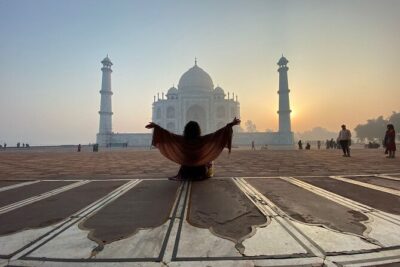
- Taj Mahal is the main event
- Agra Fort and Baby Taj for contrast
- A practical tip: pace your expectations
- Jaipur in One Day: Amber Fort, Jal Mahal Views, and UNESCO at Jantar Mantar
- Step well stop: Panna Meena ka Kund
- Amber Fort: the big fort experience
- Jal Mahal: a palace in the lake
- City Palace, Jantar Mantar, and Hawa Mahal
- What makes Jaipur work in this tour format
- Private Car, Local Guides, and Why This Tour Feels Less Stressful
- Price and Budget: What $130 Covers and What You’ll Still Pay
- Watch Outs That Can Affect Your Day (And How to Fix Them Fast)
- Should You Book This Private Golden Triangle Tour?
- FAQ
- What cities are covered on this Golden Triangle tour?
- Where do pickups happen and what time does the tour start?
- Is the tour private or shared?
- Are meals included?
- What’s included for accommodation?
- Are entrance tickets included?
- What does the $130 per person price cover?
- Are tips included for the guide and driver?
- What’s the cancellation policy?
Key Things You’ll Notice on This Golden Triangle Tour
- Private car, private guide: less waiting, more control over the pace.
- Old Delhi + New Delhi packed into Day 1: you get history, monuments, and markets in one sweep.
- Two nights in 5-star hotels (when you choose that option): a real reset between sightseeing days.
- Select admissions included: useful for several big attractions, but not everything.
- Strong guide energy: names like Mohammed Kadir, Danish, Kamran, Shamin, and Azahar show up in feedback for clear explanations.
- Plan for extra spending: entry fees and tips are on top of the $130 price.
How This 3-Day Golden Triangle Route Fits Together
This is the classic Golden Triangle loop: Delhi → Jaipur → Agra → Delhi. The big advantage of doing it this way is time. In only about three days, you hit the headline sights that normally take multiple trips to stitch together.
The pacing also works because your days are designed around location clusters. Day 1 focuses on Delhi’s major landmarks (Old Delhi and New Delhi). Day 2 shifts to Agra, then you sleep there. Day 3 gives you the Jaipur highlights before returning toward Delhi. If you’re short on time and don’t want to think about tickets, timing, and connections, this route does a lot of the mental work for you.
You can also read our reviews of more tours and experiences in New Delhi.



Day 1 in Delhi: Old Delhi Markets, Rickshaw Ride, and the Big Monuments
Your day starts with pickup from your hotel area in Delhi, Gurgaon, or Noida, or from the airport, around 9AM. From there, you move through Delhi in a logical order, so you don’t keep crisscrossing the city.
Old Delhi highlights: Jama Masjid, Chandni Chowk, and a rickshaw ride
Old Delhi is where the senses get turned on. You’ll visit Jama Masjid (a Mughal-era grand mosque built between 1650 and 1656) and spend time around Chandni Chowk, the market area known for spices, dried fruit, silver jewelry, and textiles.
A standout is the included short rickshaw ride in Old Delhi. The tour frames it around the idea that Shah Jahan shifted the capital from Agra to Delhi in the 1600s, and the market grew around that center. It’s short, but it helps you get your bearings fast and see the lane rhythm up close.
New Delhi monuments: Qutub Minar, Lotus Temple, India Gate
After Old Delhi, you shift to New Delhi’s landmark zone. Qutub Minar is a UNESCO World Heritage site and a 73-meter-tall minaret built in 1193 by Qutub-ud-din Aibak. Just note the admission status: Qutub Minar is marked as not included.
Next up is the Lotus Temple, built in 1986. It’s famous for its flower-like shape and for being open to people of all religions. In the tour plan, Lotus Temple is marked as admission included, which is a nice bonus for saving cash and time.
You’ll also stop at India Gate, the war memorial near Rajpath dedicated to soldiers of British India who died in wars. India Gate is marked as admission included here. And because this tour includes viewpoints and official buildings, you’ll also see exterior stops like Sansad Bhavan (Parliament House) and Rashtrapati Bhavan (the President’s residence area).
Extra Delhi stop that’s easy to miss: Agrasen Ki Baoli and Humayun’s Tomb
You’ll have a quick break at Agrasen ki Baoli, a protected stepwell monument. It’s short and very photogenic if the light is right, and it doesn’t eat up the whole day.
Humayun’s Tomb is another major Mughal stop, but it’s marked as not included for admission. It’s worth it if you enjoy architecture and want Mughal-era context before Agra.






How to handle the Delhi day without feeling rushed
Day 1 is long, and it’s packed. The practical move is to treat it like a highlights sampler, not a slow museum tour. If you love photos, this is where you’ll want to conserve energy, keep water handy, and wear shoes you can walk in for a few hours at a time.
Q&A Yourself Before You Leave Delhi for Agra
Once you finish the Delhi sightseeing block, you’ll have time for lunch and then drive to Agra via an expressway. Upon arrival, you check in and get the rest of the day free. This free time matters. Agra’s attractions are big, and you’ll want downtime before the early-feeling monument day.
Also: Taj Mahal and the forts are ticketed separately here (marked not included). That means you should be prepared to pay the on-site entry fees when you get there.
Agra: The Taj Mahal Day (Plus Forts You’ll Actually Remember)
In Agra, the tour keeps things structured. After check-in, you get an easy day and then sightseeing the next day. The second day in Agra includes three major stops that fit together well.
Taj Mahal is the main event
The Taj Mahal is the UNESCO-listed centerpiece. In this tour plan, Taj Mahal admission is marked as not included, so budget for tickets when you arrive. The key value of having a guide isn’t just access, it’s knowing where to stand and what to look for. Even without going into deep technical detail, a good guide helps you see why the design works and what to notice about the marble, symmetry, and surrounding layout.
Agra Fort and Baby Taj for contrast
After the Taj, you’ll move to Agra Fort, another UNESCO World Heritage site. Admission is marked not included. This fort gives you a different angle on the Mughal world—less postcard, more stone-and-power.
Then there’s Itmad-ud-Daula, also called Baby Taj. The name isn’t just marketing; the structure and gardens give you a smaller-scale Mughal masterpiece that helps balance the day. It’s also marked as not included for admission here.
A practical tip: pace your expectations
Taj Mahal day can become a blur if you try to “do it all” at speed. Ask your guide for small priorities: where to look first, which viewpoints are most worth time, and what’s the best way to keep your photos from turning into chaos.
Jaipur in One Day: Amber Fort, Jal Mahal Views, and UNESCO at Jantar Mantar
You’ll arrive in Jaipur, check in, and then the next morning you start the city loop. Jaipur in this tour is built around dramatic sights and the logic of the old royal city layout.
Step well stop: Panna Meena ka Kund
You’ll visit Panna Meena ka Kund, a step well near Amber Fort. This is marked as admission included and is a quick stop that adds variety beyond forts and palaces.
Amber Fort: the big fort experience
Next is Amber Fort, built by Raja Man Singh I. Admission is marked as not included here. Amber Fort matters because it’s not only a fortress; it also shows the artistic side of the Rajput era and the way the fort connects visually to the landscape.
Jal Mahal: a palace in the lake
You’ll also stop at Jal Mahal, a palace located in the middle of Man Sagar Lake. This one is marked admission included. The description notes it was renovated and enlarged by Maharaja Jai Singh II in the 18th century. Even if you don’t spend long inside, the location is the point.
City Palace, Jantar Mantar, and Hawa Mahal
The tour includes:
- City Palace (marked not included for admission), a palace complex constructed in 1721.
- Jantar Mantar, a UNESCO site built in 1734, with nineteen architectural astronomical instruments created under Sawai Jai Singh II.
- Hawa Mahal, the Palace of Breeze, made with red and pink sandstone.
The admission status for these is marked not included in the plan. Hawa Mahal is a short stop, while Jantar Mantar is where your guide’s explanations can make it feel like more than random stone.
What makes Jaipur work in this tour format
Jaipur’s highlights can sprawl, and with limited time you need smart selection. This loop does that by mixing a major fort, a scenic lake palace, and two UNESCO-level sites where the guide can translate what you’re seeing into context.
Private Car, Local Guides, and Why This Tour Feels Less Stressful
This is a private experience, so you’re not stuck with a large group moving at someone else’s pace. You’re traveling in an air-conditioned vehicle with fuel surcharge included, and you have a guide for sightseeing.
That driver-guide pairing is where the “luxury” part usually shows up in real life. In feedback, drivers like Sonu and Vimal are described as safe, careful, and attentive, and at least some guests note small comforts like water and snacks during the drive. Even when the vehicle is doing the heavy lifting, it helps when your driver knows the flow of roads and doesn’t waste time.
And the guides: names that appear across strong feedback include Mohammed Kadir (detailed explanations and good photo help), Danish (high energy and country facts), Kamran (knowledge and safety), Shamin, Azahar, Saeed, Rahul, and Prish. Different guides can vary, but the overall pattern is clear: when your guide speaks your language well and can explain what you’re looking at, these monuments stop feeling like checkboxes.
Price and Budget: What $130 Covers and What You’ll Still Pay
At $130 per person, the big value is that it bundles a lot of the trip logistics. Your price is built around private transportation, local guides, and included breakfasts and lunches (two breakfasts and two lunches). It also includes two nights of lodging when you choose the hotel option.
Fuel surcharge and the air-conditioned vehicle are also included. For many people, that’s the difference between a “doable” trip and one that turns into a headache.
Now the costs you should plan for:
- Monument entry fees: the tour info states an approximate $45 per person total.
- Tips/gratuities for guide and driver are not included.
One more practical note: the tour description mentions entry tickets included to avoid surprises, but the detailed stop list shows mixed inclusion. Translation: don’t build your budget assuming every site is free that day. If you want a calmer trip, treat around $45 as your baseline for entry fees.
Watch Outs That Can Affect Your Day (And How to Fix Them Fast)
To keep this tour from feeling less than it should, watch for three common friction points.
First, admission coverage can vary by stop. Some places are marked admission included, others not. Before you’re at the gate, ask your guide what’s included and what you’ll pay on-site.
Second, you might see extra stops that aren’t truly part of the highlight plan. If you want strict control, tell your guide up front that you want to stick to the main monuments and avoid surprise add-ons.
Third, guides can sometimes change day to day. That’s not automatically bad, but it can reduce continuity. If you want consistency, ask your operator the practical question: will you keep the same guide through the whole loop?
Should You Book This Private Golden Triangle Tour?
I’d book this if you want the Golden Triangle highlights with minimal logistics stress. It fits best when you’re pressed for time, you care about comfort, and you want local guidance at major sights instead of relying on guesswork.
I would hesitate if you hate paying extra on-site or you need absolutely no deviation from a strict list. With monument fees and tips expected, and with admission inclusion varying by stop, you’ll get the best value if you go in prepared.
If you’re looking for a straightforward way to see Delhi, Jaipur, and Agra in a short window while traveling in a private AC vehicle, this tour format is a strong choice. Just budget for entry fees, ask clear questions early, and give your guide your priorities for photos, time, and pacing.
FAQ
What cities are covered on this Golden Triangle tour?
You’ll cover New Delhi, Agra, and Jaipur in about 3 days.
Where do pickups happen and what time does the tour start?
Pickup is offered from your hotel in Delhi, Gurgaon, Noida, or from the Delhi airport, with pickup timing noted around 9AM.
Is the tour private or shared?
It’s a private tour, meaning only your group participates.
Are meals included?
Yes. The tour includes breakfast (2) and lunch (2).
What’s included for accommodation?
The tour includes two nights of accommodation if you book with an option that includes hotels. The accommodation is described as 5-star.
Are entrance tickets included?
Some admissions are listed as included at specific stops, but monument entry fees are not fully included. The tour data also gives an approximate total of $45 per person for entry fees.
What does the $130 per person price cover?
The included items listed are private transportation (air-conditioned vehicle), fuel surcharge, private local guides, and the included meals and accommodation (when the hotel option is chosen).
Are tips included for the guide and driver?
No. Tips/gratuities for the guide and driver are not included.
What’s the cancellation policy?
You can cancel for a full refund if you cancel at least 24 hours before the experience’s start time. If you cancel within 24 hours, the amount isn’t refunded.