REVIEW · HO CHI MINH CITY
Private VIP Cu Chi Tunnels Tour by Car, No Crowds
Book on Viator →Operated by Saigon Taste Tours · Bookable on Viator
Cu Chi tunnels feel personal here. This private VIP day trip from Saigon turns a famous war site into a guided, paced experience, with extra countryside time on the drive and room to ask questions. You get that key benefit of a private group: you are not stuck waiting for a slow busload rhythm.
I love the tour-guide focus. Guides such as Lily and Quyen, Harry, Sang, James, and Binh/Ben are praised for crisp English, fast context, and stories that connect colonialism, the war, and independence in a way that makes the tunnel system easier to understand. I also love the included snack stop: hot tea and tapioca served as a wartime-style treat.
One possible drawback: the core experience includes crawling through very narrow tunnels and moving around trapdoor-style areas. If tight spaces are a problem for you, or you need a very relaxed pace, this is worth thinking through before you book.
In This Review
- Key highlights in quick hits
- From Saigon to Cu Chi: Why the Private Car Changes Everything
- Documentary First: Getting Oriented Before You Enter the Tunnels
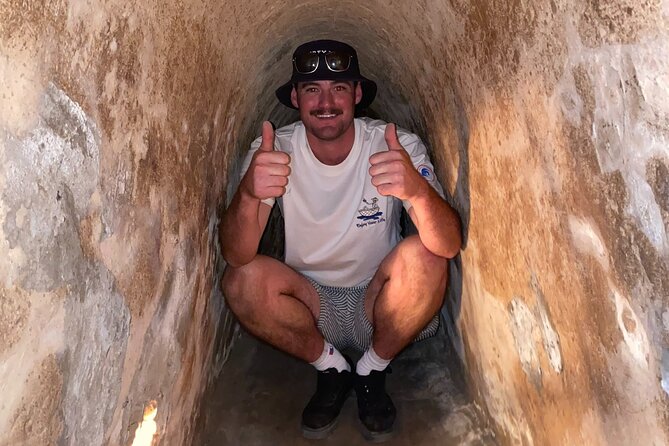
- Crawling the Cramped Passages: The Highlight (and the Reality Check)
- Traps, Trapdoors, and Handmade Guerrilla Tech
- Wartime Tea and Tapioca, Plus Optional AK47 or MK16 Shooting
- Price and Value: What $97 Buys You (Beyond the Ticket)
- Who Should Book This Private VIP Cu Chi Tour
- Should you book? My decision guide
- FAQ
- How long is the Cu Chi Tunnels tour?
- Is pickup from Ho Chi Minh City included?
- What’s included in the price?
- Do I get to watch a documentary?
- Will I be able to crawl through the tunnels?
- Is the shooting range included?
- Where does the tour start and end?
- Is this a private tour?
- What happens if the weather is poor?
Key highlights in quick hits
- Private by car, no crowd pressure from Saigon with a guide who can tailor the pace
- Documentary + diagram orientation so you know what you are looking at before you crawl
- Crawling through cramped passages plus reconstructed rooms (including spaces like kitchens and hospitals)
- Booby traps and trapdoors explained in a clear, supervised way
- Wartime handmade details, including how guerrillas made sandals from truck tires
- Optional shooting range with AK47 or MK16 rifles for an added surcharge
From Saigon to Cu Chi: Why the Private Car Changes Everything
The tour starts in central Saigon, with pickup offered and a return to the same starting point. Most likely you’ll leave from near Saigon Opera House (07 Công trường Lam Sơn, Bến Nghé, Quận 1), then ride out in an air-conditioned car or minivan. That matters because Cu Chi is popular, and waiting in chaos is the fastest way to drain a day.
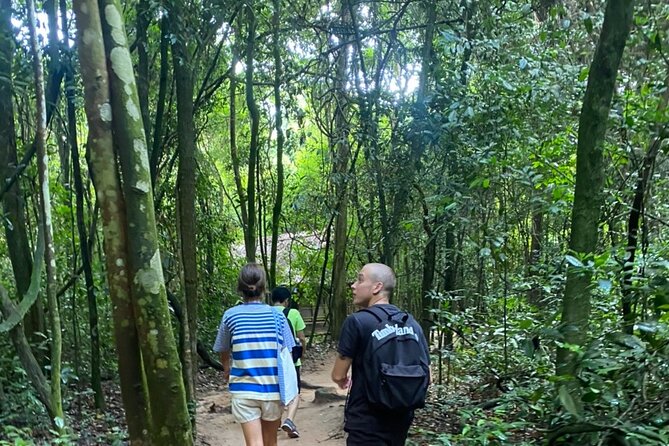
Instead of feeling like you’re being moved through a checklist, the drive is part of the experience. You head beyond the usual tourist spots into a quieter Cu Chi neighborhood where the scenery shifts into green rice fields and calmer roads. It is not just a transfer. It’s also a mental reset, which helps when the main event is heavy.
Your guide typically chats with you along the way, and that sets the tone. In the best case, you get a clear framework early: how this tunnel network worked, why it was built, and why it mattered during the Vietnam War. Even if you know the headline version, this kind of lead-in helps the underground details land.
Practical note: this is a 6-hour experience (approx.). If you like busy schedules, great. If you prefer very slow days, plan this as your main activity and keep the rest of your day light.
You can also read our reviews of more tours and experiences in Ho Chi Minh City.

Documentary First: Getting Oriented Before You Enter the Tunnels
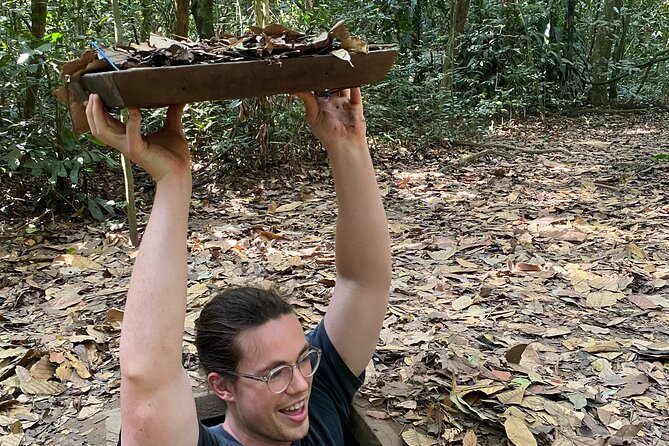
Before you go underground, you watch a short documentary film about the Vietnam War. This is not filler. It gives you the big picture so the tunnel system does not feel like a random maze.
Right after the film, your guide explains a diagram of the Cu Chi tunnels and how they were constructed. The key idea you’re meant to grasp is that these tunnels were not just hiding places. They included functional spaces, such as rooms, kitchens, hospitals, and weapons-factory areas, built to support day-to-day survival and long-term resistance.
The “why” is a big deal here. You’ll hear how the tunnel system gained fame after the war and how it managed to withstand the destructive power of repeated bombing. That context makes the physical layout feel purposeful, not staged.
One thing I appreciate about this setup is timing. A lot of sites expect you to guess what you’re looking at. Here, you get guided structure first, then you move into the narrow sections with more understanding of the choices people made underground.
Crawling the Cramped Passages: The Highlight (and the Reality Check)
When you arrive at the main tunnel areas, the story moves from explanation to experience. The heart of the visit is the chance to crawl and walk through very narrow passageways.
This part is where the tour feels most “real,” even though you’re in reconstructed or arranged areas. You see booby-trap and trapdoor concepts, and then you physically experience how tight these spaces can be. It’s hard to describe until you’re in it, but the sensation is the point: underground travel required patience, control, and a willingness to move in ways that feel nothing like modern hallways.
You will also see reconstructed chambers. These spaces help you visualize how underground areas could function like separate zones, rather than one continuous tunnel. If you’re the type who needs a mental map, this is a helpful bridge between the documentary, the diagram, and what you actually do on-site.
Here’s the consideration: crawling through cramped tunnels takes a different kind of comfort than walking through museum displays. If you dislike tight spaces, you may find this stressful. The tour does note that most travelers can participate, but “can” and “will enjoy” are not always the same thing. If you’re unsure, decide based on your comfort level with narrow passages.
Traps, Trapdoors, and Handmade Guerrilla Tech
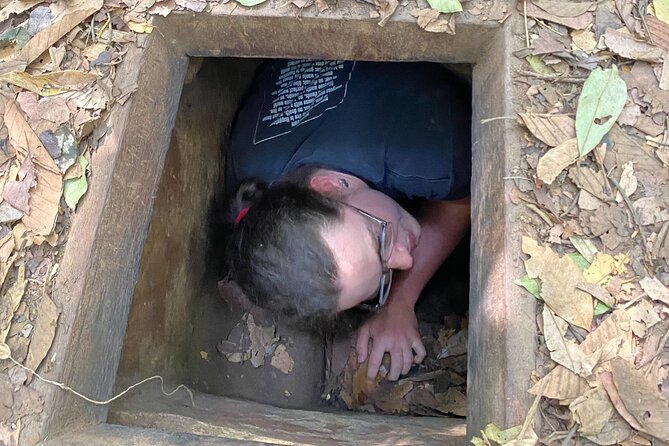
After you’ve had your crawling moment, the tour shifts into what your guide can explain best: the small, practical details that make the tunnel system feel like a working survival technology.
You’ll see and learn about booby traps and trapdoors, with explanations of how they worked and what they were designed to do. The tone is usually factual and guided, not sensational, because your guide’s job is to connect the physical features with the wartime purpose behind them.
This is also where the tour becomes more than “underground sightseeing.” You learn about handmade weapons and traps used during the war. One of the most memorable details you might hear is how guerrillas made sandals from truck tires. It sounds like a side fact, but it actually helps you understand the ingenuity required to keep people moving with limited resources.
Another angle that can come through strongly is political context. Some guides place the war inside a wider timeline, starting with types of colonialism, then moving through the Vietnam War, and ending with independence. That arc changes the feeling of the visit. Instead of isolated events, you get a bigger sense of why systems like these mattered.
If you come with basic knowledge, you’ll still learn something. If you come with curiosity, you can ask questions because this is a private setup. Your guide can slow down where you’re confused and speed up where you’re already tracking.
Wartime Tea and Tapioca, Plus Optional AK47 or MK16 Shooting
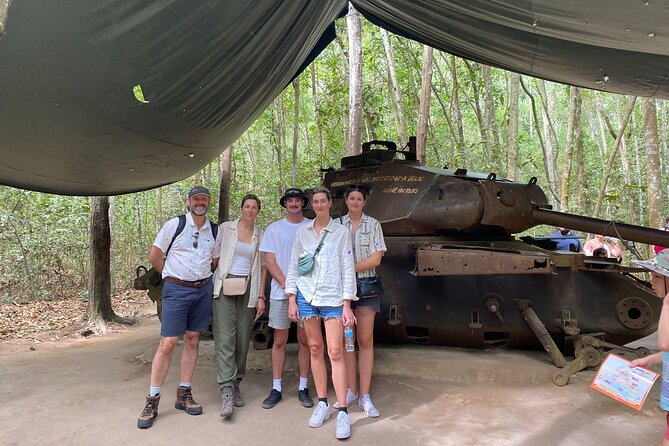
At the last stop, you get a break that stays connected to the theme. You’ll drink hot tea and eat tapioca, described as food used by guerrillas during the war. It’s a light snack, but the value is cultural context. It’s not a random refreshment; it’s a reminder that endurance came from small, repeated routines.
This is also a smart moment to reset before heading back to Saigon. The tunnels can be mentally intense, so the tea and food help you come back to normal without turning the tour into a theme park.
If you want one more adrenaline option, there’s an optional shooting range visit for an added surcharge. The tour specifies a supervised area and notes you can shoot with AK47 or MK16 rifles. If that matters to you, it can be a memorable add-on. If not, you still get the core tunnel experience and the wartime snack included.
One small practical consideration: optional activities can add time and cost. If you’re on a tight schedule, confirm your preferences in advance so you don’t feel rushed at the end.




Price and Value: What $97 Buys You (Beyond the Ticket)
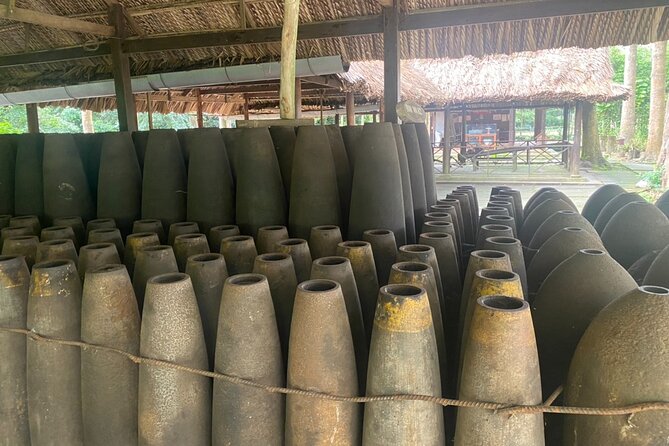
At $97 per person for about 6 hours, the best way to judge value is what’s included and how much it reduces friction.
Included basics are solid:
- Entrance fees
- Transportation in an air-conditioned car or minivan
- Bottled water
- A light snack (tapioca and tea)
- A friendly, professional guide
- Pickup and drop-off in central Saigon
That package matters because it covers the stuff that usually eats up time in independent planning: admission, getting there comfortably, and figuring out what to see and in what order.
The tour also leans into the “VIP” part with private group participation, meaning it’s just your group rather than a shared cattle-car flow. That is often the difference between feeling like you learned something and feeling like you survived a bus trip.
You’ll also get a mobile ticket, which is convenient on the day, and the company mentions group discounts (useful if you’re booking with friends or family).
Where the price can be less attractive is the optional shooting range surcharge. If you plan to add it, your total cost rises. If you do not want to shoot, the included elements already do a lot of heavy lifting.
For me, the biggest value driver is not the price alone. It’s the combination of documentary orientation + guided explanations + hands-on crawling plus the inclusion of food and water. It’s a complete arc, not just a transfer to a site.
Who Should Book This Private VIP Cu Chi Tour
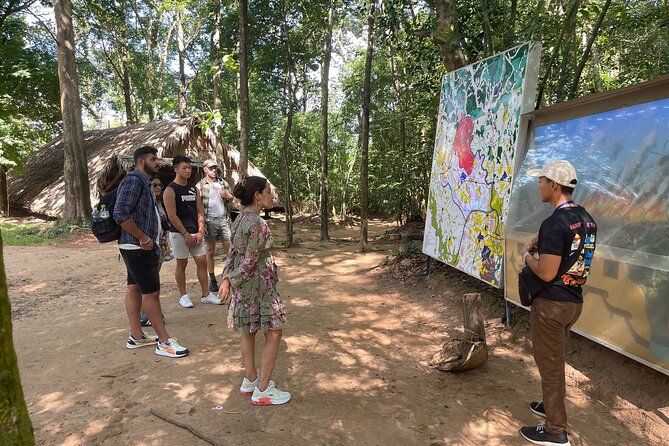
This tour fits best if you want:
- A guided, structured experience where the tunnel system gets explained before you enter
- A less crowded pace, since the tour is private
- A mix of war-site learning and countryside driving time out of town
- The hands-on highlight of crawling through narrow tunnels (and you’re comfortable with that challenge)
It’s especially appealing for people who learn better with context. The documentary, diagram explanations, and guided focus on traps and handmade tech help you connect what you see with what it meant.
It also makes sense for families, since the tour notes that most travelers can participate. Still, keep the cramped-tunnel aspect in mind. If you’re traveling with someone who struggles with claustrophobic spaces, plan carefully.
If you’re in Saigon for a short stay and you want one major day trip that includes transport, admissions, and a guide in one package, this checks a lot of practical boxes.
Should you book? My decision guide
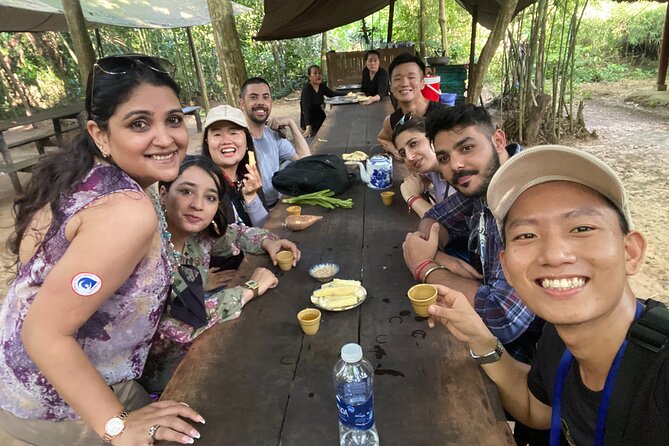
Book it if you want Cu Chi to feel guided and paced, with a private car ride out of the city, a clear intro film, and time to crawl through the tunnels with explanations you can actually follow. The inclusion of tea and tapioca also gives the visit an extra layer beyond photos.
Skip or reconsider if tight spaces are a dealbreaker for you, since the highlight is explicitly crawling through very narrow tunnels and learning about trapdoor areas. Also consider whether you care about the optional shooting range, since it adds cost.
One last tip for your decision: this experience requires good weather. If you see rainy conditions forecasted, flexibility helps.
FAQ
How long is the Cu Chi Tunnels tour?
It’s about 6 hours in total.
Is pickup from Ho Chi Minh City included?
Yes. Pickup and drop-off are offered, with the tour starting from central Saigon.
What’s included in the price?
Entrance fees, a light snack (tapioca and tea) at Cu Chi Tunnels, bottled water, air-conditioned transport, and a friendly professional guide are included.
Do I get to watch a documentary?
Yes. You’ll watch a short documentary film about the Vietnam War as part of the Cu Chi Tunnels visit.
Will I be able to crawl through the tunnels?
Yes. One of the main activities is experiencing the narrow tunnels by crawling and walking through cramped passageways.
Is the shooting range included?
No. Shooting with AK47 or MK16 rifles is optional and has an extra surcharge.
Where does the tour start and end?
It starts at the Saigon Opera House area (07 Công trường Lam Sơn, Bến Nghé, Quận 1, Hồ Chí Minh 710212, Vietnam) and ends back at the meeting point.
Is this a private tour?
Yes. It’s private, and only your group participates.
What happens if the weather is poor?
The experience requires good weather. If it’s canceled due to poor weather, you’ll be offered a different date or a full refund.