REVIEW · HO CHI MINH CITY
Cu Chi Tunnels – Half Day Luxury Tours
Book on Viator →Operated by Cu Chi Tunnels Tours · Bookable on Viator
Subterranean war stories, told with your feet on dirt. This half-day trip is interesting because it combines guided context before you go underground with hands-on moments like a nearby shooting range, all tied up with hotel pickup and a mobile ticket system. I also love that the ticket covers the big basics up front (entry and transport), and that you end with period-appropriate tea and cassava. One drawback to consider: you’re committing to a full 6 hours door-to-door, with a solid chunk spent in enclosed tunnel spaces that can feel intense.
Guides matter here, and the best versions of this tour come with a lively teacher. I like that people are often guided by names like Son or Jimmy #10, who focus on clear history and practical storytelling so the site makes sense fast. The tour runs in a group capped at 30, which helps you move without feeling lost in a crowd.
At $35 per person, this isn’t a luxury tour in the hotel-suite sense, but it is “luxury” in the practical way: you skip self-planning, you get included transfers, and you don’t have to manage extra fees on the day. If you want a calm, scenic half-day, this one may feel too serious.
In This Review
- Key highlights at a glance
- Cu Chi Tunnels in half a day: what you actually get
- From your hotel in Ho Chi Minh City to the tunnels: the 6-hour rhythm
- The pre-tunnel intro: how the video and orientation change everything
- Inside the tunnels: living spaces, wartime facilities, and trap design
- The nearby shooting range: why this included activity matters
- Tea and cassava after the tunnels: small comfort with a purpose
- Price and value: why $35 can make sense here
- What to expect from the group size and guides
- Who should book this Cu Chi Tunnels half-day tour?
- Should you book it? My practical call
- FAQ
- How long is the Cu Chi Tunnels half-day tour?
- Where does the tour start from in Ho Chi Minh City?
- Is pickup from my hotel included?
- What is included in the ticket price?
- Is there a shooting range activity?
- How long do you spend exploring the tunnels?
- What refreshments are provided?
- Is it refundable if I cancel?
Key highlights at a glance
- 43 miles out of Ho Chi Minh City without you organizing transport
- Pre-tunnel intro video that explains construction and survival basics
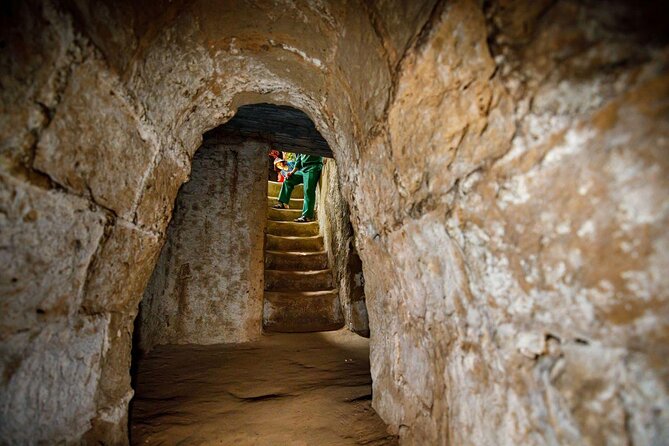
- Tunnel walkthrough through living areas, kitchens, bedrooms, and wartime facilities
- Nearby shooting range for a direct sense of the era’s combat training
- Tea and cassava refreshments to cap off the experience
Cu Chi Tunnels in half a day: what you actually get
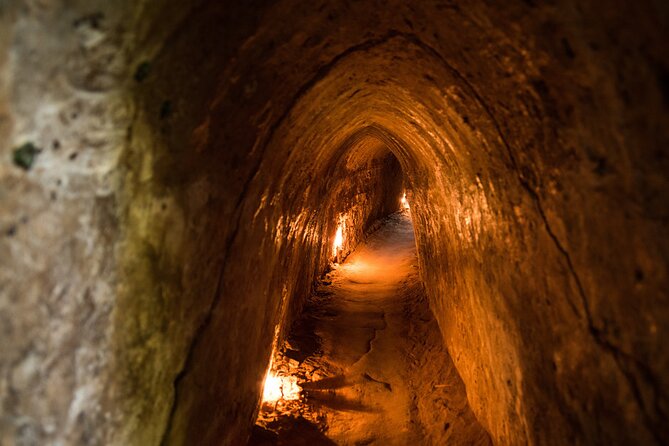
Cu Chi Tunnels are one of those places where the “Vietnam War history” tag doesn’t fully prepare you for how physical it feels. You’re not just looking at artifacts. You’re moving through a space that was designed for survival and secrecy—narrow tunnels, hidden access points, and areas set up for living and fighting under pressure.
This tour does a smart thing: it sets you up first. Before you head into the tunnel systems, you get a short introduction plus an introductory video that covers how the tunnels were constructed and how people managed in harsh conditions. That prep matters, because otherwise the maze can turn into pure confusion. With the context, you start noticing patterns: where people could cook, sleep, store supplies, and coordinate operations.
You’ll also get guided interpretation throughout the site, with a focus on what the Vietcong had to do to keep functioning underground. That includes the practical side of survival—like side-by-side living spaces and other wartime facilities—and it ends with a reminder of the real dangers involved, including trap doors and dangerous traps built into the maze for security.
The half-day format is another big deal. The activity is listed at about 6 hours total, with around 4 hours at the tunnels area. That’s long enough to do more than the bare minimum, but short enough that you can still have energy for the rest of Ho Chi Minh City later.
You can also read our reviews of more tours and experiences in Ho Chi Minh City.


From your hotel in Ho Chi Minh City to the tunnels: the 6-hour rhythm
This is a “leave it to us” style tour. Pickup is offered directly from your inner-city hotel area, and you’re driven roughly 43 miles out to Cu Chi by pre-booked tour bus. If you’ve ever tried to organize a day trip on your own, you know the stress: timing, transport options, and then the question of where to go once you arrive.
Here, the bus ride is part of the deal. Plan for a full morning/afternoon block because the tour runs about 6 hours. The site visit portion is around 4 hours, so the schedule has a clear structure: get oriented, explore, then return.
Group size is capped at a maximum of 30. That usually means faster movement between stages and less waiting time than you’d expect with huge buses. It’s also a comfort factor if you don’t love big crowds and want enough room to listen to the guide while still staying with the group.
Mobile tickets help too. You won’t need to track down printed papers. You download the mobile ticket and show it for pickup, which makes the start of the day smoother.
If you’re sensitive to long rides or you prefer to travel at a slow pace, the 6-hour commitment may feel like the main tradeoff. But for most visitors, it’s the simplest way to handle transportation and admission in one package.
The pre-tunnel intro: how the video and orientation change everything
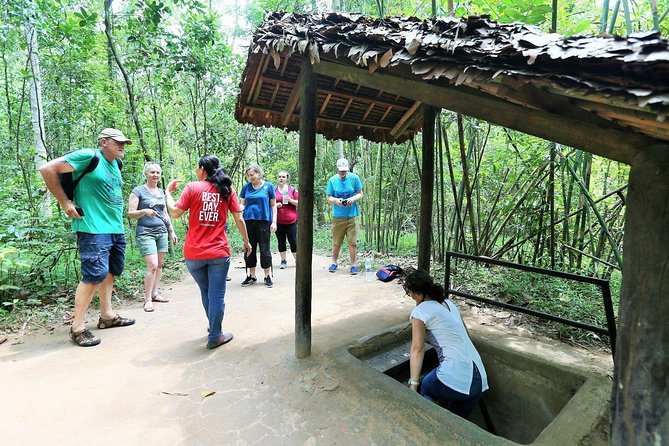
The most important part of this experience happens before you even step into the tunnels. You’ll get a short introduction and an introductory video that explains construction methods and survival basics.
That orientation is not just “history class.” It gives you a mental map. When you later see living areas, kitchens, bedrooms, storage, weapons-related areas, field hospitals, and command centers, your brain can connect what you’re seeing to the function behind it. Without that foundation, you might walk through and remember the shapes—but not understand the logic.
It also sets expectations about how harsh underground life was. The tour’s theme is survival under extreme conditions, and the intro is designed to prepare you for the reality of tight space, hiding, and constant security concerns. That preparation helps you explore with less frustration and more understanding.
This is also where you’ll get the guide’s framing for the rest of the day. A strong guide turns the site into a story you can follow: why certain spaces exist, why the tunnels had to be defensive, and how daily needs were handled underground.
Inside the tunnels: living spaces, wartime facilities, and trap design
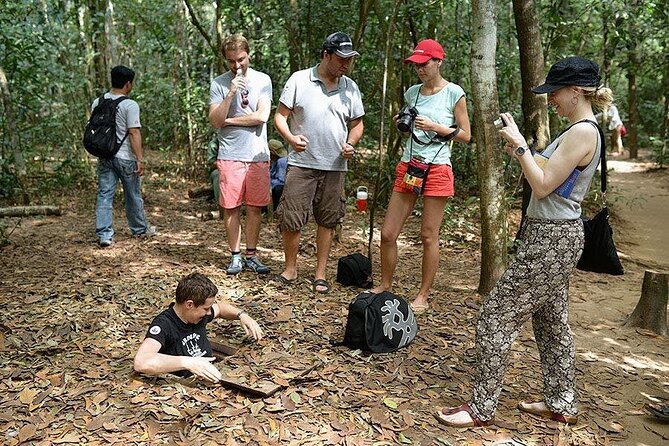
Once the intro is done, you start exploring the tunnel systems and surrounding area. The tour points you toward both the practical and the dangerous sides of the network.
On the “human needs” side, you’ll see special constructed living areas with kitchens and bedrooms positioned alongside other facilities that supported day-to-day operations. The tour also highlights storage spaces and the presence of weapons factories and field hospitals. You’ll hear how command centers helped coordinate activity while people stayed hidden.
What I find especially valuable for you as a visitor is the way the tour connects these elements into a single picture. This wasn’t only about movement. It was about sustaining people over time while keeping them hidden from constant threat.
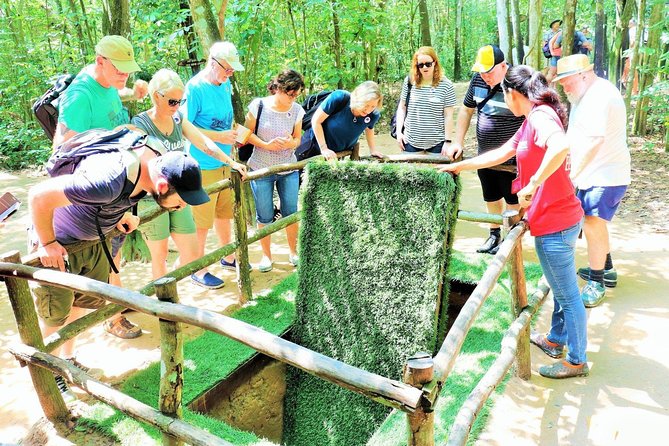
Then comes the security layer. The tunnels include hidden trap doors and dangerous traps. That’s a big part of why the maze isn’t just a physical puzzle. It’s designed to slow down, confuse, and protect the people inside.
You should also be ready for the emotional weight of it. Even when the guide keeps the story clear and respectful, walking around in a space built for concealment forces you to confront the reality of what war means for ordinary life. This tour is at its best when you let that sink in rather than rushing for photos.
Comfort note: you are moving through enclosed or narrow areas. If you dislike tight spaces or find enclosed environments stressful, this may be difficult even if you’re physically able to participate.
The nearby shooting range: why this included activity matters
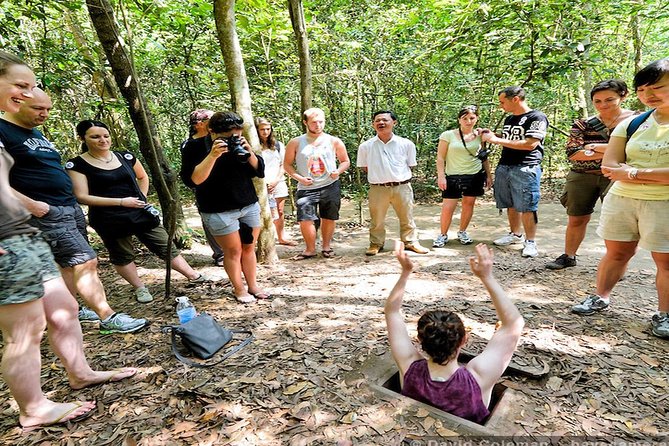
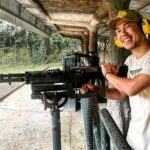
One of this tour’s listed highlights is the chance to try shooting at a nearby range. The idea is simple: you get a more direct sense of the combat training component rather than only studying it from a distance.
I like that it’s included as part of the overall context. The tunnel portion shows survival and secrecy; the shooting range adds another angle—how people prepared for action. Together, they make the story feel more complete, even though they’re very different environments.
That said, this is not the moment to treat the experience as entertainment. It’s framed as learning what battle felt like for the Vietcong. Keep that mindset as you do it, and you’ll get more value out of the experience.
Practical consideration: shooting activities can be impacted by local scheduling and safety rules on the day. You’re not given fine-grain details here about the equipment or format, so treat it as a guided try-it segment within the tour—not a self-paced shooting session.





Tea and cassava after the tunnels: small comfort with a purpose
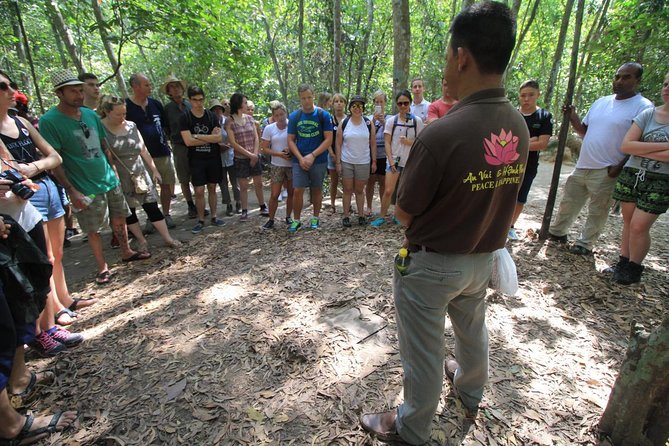
After the tunnel exploration, you’ll get refreshments: period-appropriate tea and cassava. It’s a small element, but it works because it closes the loop.
You spend hours seeing how people tried to meet basic needs underground. Then you get something simple and traditional, which reminds you that survival was not only about weapons and strategy. It was also about food, warmth, and normal routines—kept going with whatever was available.
Tea and cassava are also a good reset. Cu Chi is intense, and the tunnel portion can leave your head spinning. Having a calm stop before you travel back helps you process what you just saw instead of turning straight into exhaustion.
If you’re picky about taste or you dislike starchy snacks, you still usually find this is easy to manage as a short refresh rather than a full meal. You’ll likely appreciate the break more than the specific flavor.
Price and value: why $35 can make sense here
At $35 per person, the value comes from how much is included and how little you have to coordinate yourself.
The tour description emphasizes no hidden costs: entrance fees and transport costs are covered by the ticket price. That’s important. A lot of “cheap” day trips fall apart when you add up admissions, local fees, and transport separately. Here, the price bundles the essentials.
You also get guided interpretation, not just a ride. The guide helps you understand how different parts of the tunnel system relate to survival and operations, and you get that before you head underground, thanks to the intro video and orientation.
Then there’s the mobile ticket convenience. It’s not a huge thing, but it removes friction when you’re trying to start your day on time.
Finally, you’re getting a full half-day block that still feels substantial: about 4 hours at the tunnels and a total of roughly 6 hours including travel. If you compare that to tours that squeeze the tunnel visit into a quick stop, this feels more like a real experience than a hurried checklist.
What to expect from the group size and guides
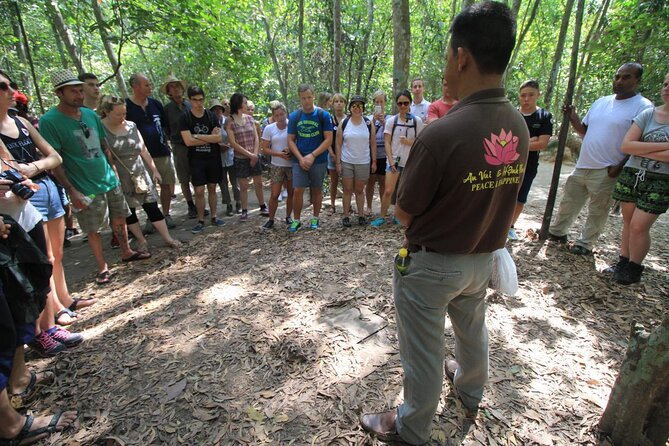
This tour runs with a maximum of 30 travelers, and that matters for the quality of your time inside the tunnels. Smaller groups generally mean you spend less time waiting, and your guide can keep a consistent pace without losing people.
You’ll also see evidence of strong guiding styles from real names that show up frequently, like Son and Jimmy #10. The common thread in their approach is that they explain the site in a way that feels like history you can picture: practical details paired with a clear sense of what people endured.
If you get a guide who talks clearly and keeps the story moving, your tunnel walk will feel purposeful. If you end up with someone who sticks to the broadest facts only, you may feel like you’re seeing rooms without always understanding what each one meant. That’s why the guide’s tone is such a big variable here.
When booking, consider the kind of day you want: this is not only a sightseeing stop. It’s a guided experience focused on wartime reality and survival design.
Who should book this Cu Chi Tunnels half-day tour?
This is a strong fit if you want a structured Vietnam War experience that doesn’t require planning. You like guides, you want context before you explore, and you’re okay spending time in spaces that can feel tight and serious.
It’s also a good match if you appreciate convenience: hotel pickup, transport included, admission handled, and mobile ticketing all reduce stress.
You might want to think twice if you strongly dislike enclosed spaces or if you’re looking for a purely relaxed day out. The site includes details about dangerous traps, and the overall theme is intense. Even when the tour is well run, the subject matter is heavy.
If you’re traveling with limited time in Ho Chi Minh City and want one top historical stop, this half-day format is a practical choice.
Should you book it? My practical call
Book this tour if you want an efficient, guided Cu Chi Tunnels experience with hotel pickup, included admissions and transport, and a setup that explains what you’re about to see before you walk into the tunnels. The best parts are the guided context, the structured tunnel exploration through living and wartime facilities, and the thoughtful refreshment stop afterward.
Skip or choose another option if you want a lighter, more relaxed outing or if you’re worried about enclosed spaces. This is a site built for survival and secrecy, and you should expect it to feel intense.
If you’re the type who likes your history grounded in place—where you can see how people lived, hid, and prepared—this is one of the most efficient ways to do it in half a day.
FAQ
How long is the Cu Chi Tunnels half-day tour?
The tour lasts about 6 hours total.
Where does the tour start from in Ho Chi Minh City?
The meeting point listed is 112 Đ. Trần Hưng Đạo, Phường Phạm Ngũ Lão, Quận 1, Hồ Chí Minh, Vietnam.
Is pickup from my hotel included?
Yes, pickup is offered from your inner-city hotel.
What is included in the ticket price?
Entrance fees and transport costs are covered by the ticket price, and refreshments are also provided.
Is there a shooting range activity?
Yes. The tour includes a chance to try shooting at a nearby range.
How long do you spend exploring the tunnels?
You spend about 4 hours on Cu Chi Tunnels exploration.
What refreshments are provided?
You’ll be served tea and cassava after your tour.
Is it refundable if I cancel?
No. The experience is non-refundable and cannot be changed for any reason.
If you want, tell me your travel dates and whether you’re okay with tight enclosed spaces, and I’ll help you decide if this specific format fits your pace.