REVIEW · HO CHI MINH CITY
Premium Cu Chi Tunnels Tour with Local Expert
Book on Viator →Operated by Les Rives Vietnam · Bookable on Viator
Speedboat first, tunnels next, Vietnam’s past in concrete. I like that this tour pairs a small group (max 14) with hotel pickup and a direct ride down the Saigon River—so you trade long traffic lines for real scenery. I also like the mix of comfort and access: unlimited refreshments on board, WiFi during the trip, and meals timed around the day’s heat and crowds.
One heads-up before you book: this is a war site told from the Vietnamese perspective, with trap and relic displays and underground sections that can feel intense. If you’re sensitive to graphic war themes or you expect a perfectly neutral, all-sides presentation, plan accordingly—and go in knowing the pace is fairly structured.
In This Review
- Key things that make this Cu Chi tour worth your time
- Why this Cu Chi trip starts on the Saigon River
- Price and logistics: what $89 buys you (and what to expect)
- Getting picked up in District 1 or 3 (and what if you’re farther out)
- On-board speedboat comfort: breakfast, snacks, WiFi, and river views
- Arriving at Cu Chi before the big buses
- The guided route: from exhibits to the real tunnel network
- Underground tunnels: kitchens, meeting rooms, hospitals, and tight reality
- Traps, relics, and what to consider if you’re visiting from the US or elsewhere
- Lunch by the river: what you’ll actually get
- Return trip: getting back to Ho Chi Minh City with energy left
- Who this tour suits best (and who should skip it)
- What to pack and how to choose early vs late
- Should you book this Cu Chi Tunnels speedboat tour?
- FAQ
- How long is the Cu Chi Tunnels tour?
- Does this tour include breakfast or lunch?
- Is hotel pickup included?
- What’s included in the Cu Chi visit?
- Is the shooting range included?
- Is WiFi and drinks provided?
Key things that make this Cu Chi tour worth your time
- Speedboat to Cu Chi: you avoid a long road transfer and get time for river views and photos.
- Max 14 people: the group stays small enough for questions to actually land.
- Arrive early: departures help you reach the complex before larger bus crowds show up.
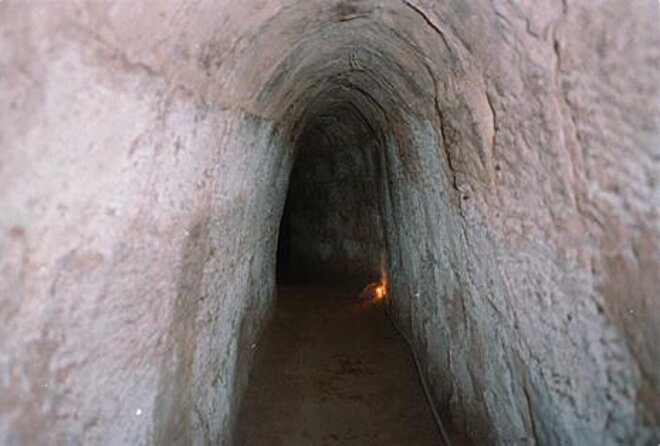
- Underground exploration for ~2 hours: you’ll see multiple bunker types and authentic tunnel sections.
- Meal plan included: breakfast or lunch depends on the departure time, plus local fruits and refreshments.
- Shooting range is optional: not included, and there’s a minimum age of 18 if you choose it.
Why this Cu Chi trip starts on the Saigon River
Most Cu Chi tours feel like you’re just driving out and back. Here, the day begins with a speedboat transfer on the Saigon River, and that changes the whole rhythm of the trip. Instead of sitting in traffic, you get open-air time, river breezes, and skyline views on the way out.
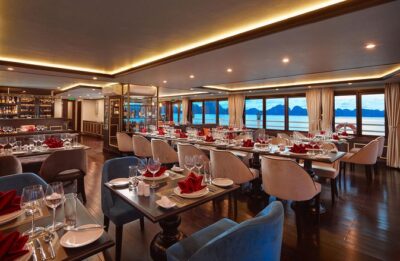
I also like that this route is built for comfort. The boat is described as a luxury option made with high-quality teak wood, plus there’s WiFi on board and unlimited refreshments served during the ride. You’re not just “traveling” to the site—you’re actually getting a meaningful chunk of the experience before you even arrive.
If you take the early departure, you also benefit from timing. You reach Cu Chi ahead of the larger bus tours, which means you spend less time waiting in a crowd before you start exploring.
You can also read our reviews of more tours and experiences in Ho Chi Minh City.


Price and logistics: what $89 buys you (and what to expect)
At $89 per person for a roughly 6-hour half-day, this sits in the “premium-but-not-unreasonable” zone. You’re paying for the speedboat transfer, the small-group size (max 14), and the fact that meals are built into the schedule.
What’s included that actually adds value:
- Hotel pickup and drop-off by comfortable coach (districts 1 and 3)
- A professional guide with an international license
- Unlimited refreshments plus local fruits
- Breakfast and lunch (with breakfast on morning tours and lunch-based meals on afternoon tours)
- WiFi on board and snacks
What’s not included:
- Optional add-ons like the shooting range (minimum age 18)
- Gratuities
- Any extra food or drinks unless they’re part of the plan for your departure time
One more practical note: the tour runs only if the weather cooperates. If conditions are poor, you’ll be offered another date or a full refund, so you’re not stuck waiting out a washed-out day.
Getting picked up in District 1 or 3 (and what if you’re farther out)
Pickup and drop-off are offered, but only in districts 1 and 3. That matters because Cu Chi tours can be cheaper if you self-transfer, but this one builds the convenience into the price.
The meeting point is at Ga Tàu Thuỷ Bạch Đằng – Tôn Đức Thắng – Phường Bến Nghé, District 1. It’s described as near public transportation, which is helpful if your hotel is close by but not in the pickup zones.
If you’re staying outside district 1 or 3, double-check how you’ll get to the starting point. The tour itself is well timed, so you don’t want to lose time fighting a transfer that should be simple.
On-board speedboat comfort: breakfast, snacks, WiFi, and river views
This is one of the best parts of the day, especially if you’re coming from busy central streets. The speedboat runs about one hour to reach the Cu Chi area, and the ride goes along tree-lined waterways—exactly the kind of break your body wants after a city morning.
On the boat, you’ll get unlimited refreshments and local fruits, and you’ll also have WiFi. That sounds like a small perk, but it can matter if you want to organize photos, download maps, or just keep your day smooth.
Timing is smart here:
- Morning tours include a light breakfast on board, plus lunch after the tunnels.
- Afternoon tours include lunch (and dinner is provided later, per the tour description).
Bring a light layer if you’re traveling in the cooler months. A light jacket is recommended between November and February, and the speedboat can get breezy even if the city feels warm.
Arriving at Cu Chi before the big buses
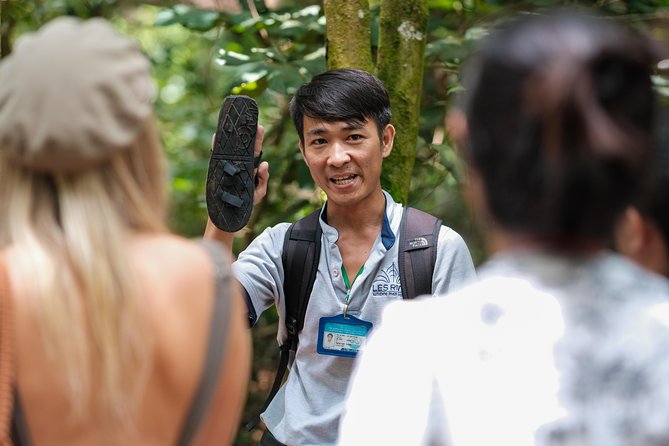
The schedule is designed to help you beat the busiest part of the day. On morning departures, you arrive at the Cu Chi complex before most larger bus groups. That means the first part of the visit feels more controlled and less chaotic.
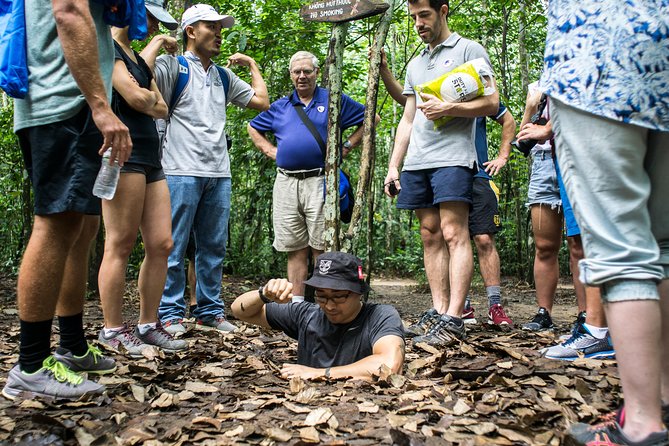
Right when you arrive, you watch a short introductory film. Then you move into the site with your guide, starting with exhibitions and historical context. Expect displays related to weaponry and booby traps, plus the overall “how the tunnels worked” narrative you’ll need before you go underground.
This is also where the tone can matter. The presentation is clearly framed from the Vietnamese perspective, and the site includes trap and relic imagery. If you want a softer, less intense visit, this might be a lot. If you want context and firsthand design of the tunnel system, you’re in the right place.


The guided route: from exhibits to the real tunnel network

You’re guided into a winding underground network for around two hours. That’s not a quick walk-through. It’s long enough to understand why this system mattered and how people adapted to tight, hidden spaces.
Before you head deep, there’s a lot to see above ground:
- weapon and booby trap exhibitions
- camouflaged tunnel entrances
- different bunker areas and site relics
- a firing range area (not the main included “shooting range” activity, but the site includes it as part of what you can choose later)
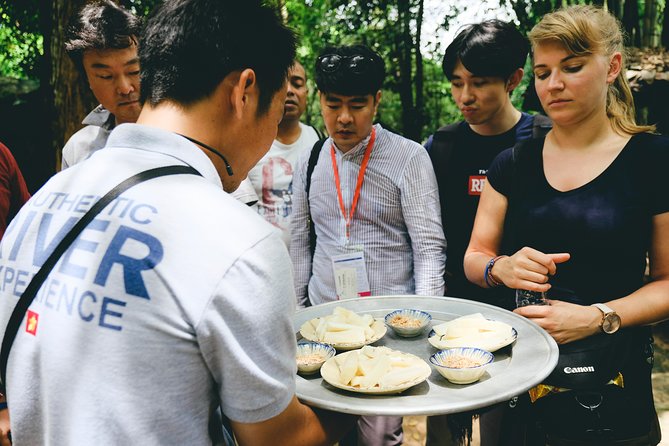
A fun, very practical detail: you can try cassava root, the staple that sustained Viet Cong fighters for years. It’s not a “tourist snack,” it’s a taste of what people relied on. Even if you don’t like cassava, it adds weight to the story you’re hearing.
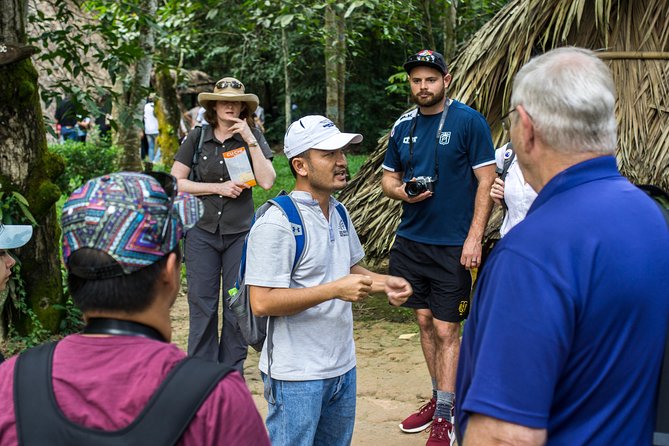
Your guide shapes how this feels. Some guides described in past experiences (like Harry, Anna, Hai, Kha, and Annie) are praised for explaining the war from the Vietnamese point of view and keeping the day moving with humor and clear pacing. You may not get the same personality every day, but this tour is clearly built around guide-led interpretation, not just dropping you at a gate.
Underground tunnels: kitchens, meeting rooms, hospitals, and tight reality
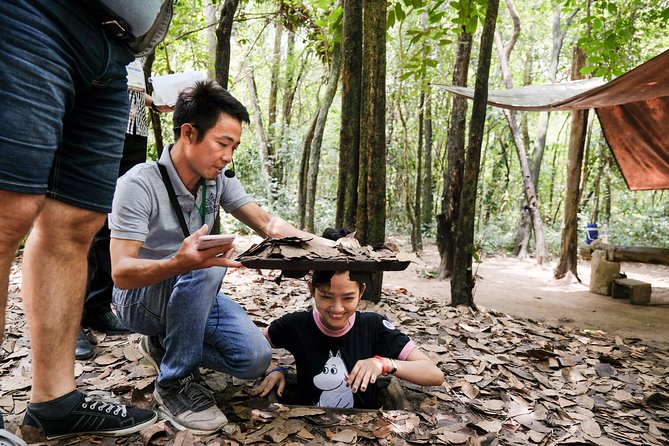
This is where the tour earns its name. You’ll explore underground sections that include kitchens, meeting rooms, ammunition depots, and hospitals—part of the larger 75-mile (121-km) tunnel complex built by the Viet Cong during the Vietnam War.
You’ll also see how the tunnel system handled survival needs: food storage, movement, and hidden infrastructure. The guided path matters because there are multiple kinds of underground spaces, and without a guide you can miss the “why.”
Even without going graphic, the site is designed to show how the tunnels weren’t just a passage system. They were a living network: small rooms for work and planning, and spaces for critical functions like medical care.
Photo ops exist, but the tunnels are tight. If you’re traveling with a camera, think about comfort first. Keep your hands free and be ready for low, dim areas. The more you focus on listening and moving safely, the more you’ll get out of the two-hour underground segment.
Traps, relics, and what to consider if you’re visiting from the US or elsewhere
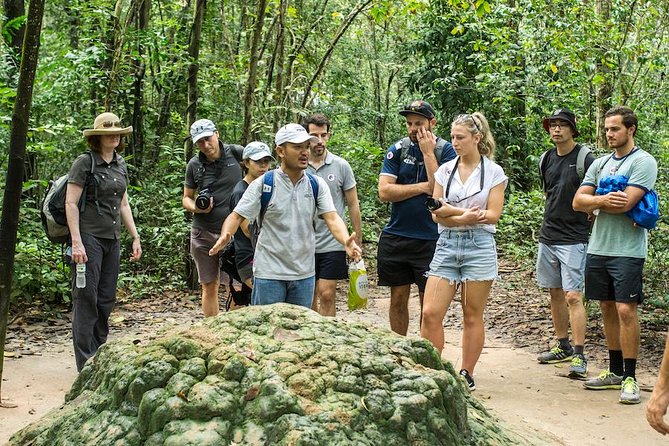
The Cu Chi Tunnels complex includes trap displays and war relics. It also includes visual storytelling such as a mural depicting war injuries, plus a staged element where visitors may be shown how certain traps work for demonstration and photography.
If you’re visiting from a country tied to the conflict, the presentation may feel emotionally charged. The good news is that the site sticks closely to its purpose: explaining how people lived and fought from the Vietnamese perspective, using the tunnel design and relics as evidence.
If you want a version of the war that balances multiple viewpoints more evenly, you might also consider pairing this with a visit to a city museum focused on the war. This isn’t a substitute debate—just a smart planning move if you need a broader emotional range in your learning.
Lunch by the river: what you’ll actually get
After the tunnels, you’ll eat at a riverside restaurant. The menu can include fried spring rolls, chicken and beef dishes, and soup, and the meal is described as traditional Vietnamese.
This part of the day is more than a break. It’s also a pacing tool. After tight underground exploring, you need time to sit, cool off, and reset your brain. A riverside lunch does that well.
Vegetarian options can be arranged in some cases (a vegetarian option was specifically mentioned in a positive experience). When you book, flag dietary needs right away so you’re not scrambling once you’re hungry.
If you take the later tour, dinner is provided. That’s useful if you don’t want to plan another meal the same evening.
Return trip: getting back to Ho Chi Minh City with energy left
After lunch, you leave the Cu Chi area and head back by speedboat to Ho Chi Minh City. You then transfer by coach back to your hotel.
One reason I like this format: you’re back in the city with time left for other plans. A structured half-day tour works well if you’re also trying to fit in other neighborhoods, museums, or a late-afternoon street food walk.
Also, you avoid the “full day bus fatigue” that can hit after multiple long road hours. The river ride back gives you that final decompression moment.
Who this tour suits best (and who should skip it)
This is a great pick if you want:
- a Cu Chi experience that prioritizes timing (early arrival to reduce crowds)
- a smaller group feel (max 14)
- a smoother transfer method (speedboat instead of a long road slog)
- meals and refreshments included, so you’re not chasing food mid-day
It may not be the best choice if:
- you want a fully neutral, all-sides approach to the war narrative
- you’re sensitive to trap and war relic imagery
- you’re expecting a very relaxed, unstructured day. The schedule is fairly set, and you’ll move from one component to the next in a defined sequence.
What to pack and how to choose early vs late
For comfort, plan around heat and humidity and the fact you’ll be in shaded and underground areas. Wear breathable clothes and closed-toe shoes with decent grip, since you’ll walk on uneven surfaces in some parts of the site.
If you’re traveling from November to February, pack a light jacket for the speedboat ride and cooler air. Even if the city feels warm, boats can cool you down fast.
For timing choice:
- Go early if you want the calmer experience and cooler morning temperatures.
- Go later if you prefer a less intense start and you like the idea of lunch plus dinner later in the day.
If you have dietary needs, tell the operator during booking. A surcharge may apply for special meal accommodations, but you’ll save yourself stress by planning early.
Should you book this Cu Chi Tunnels speedboat tour?
I’d book it if you value smart logistics and a guide-led war site visit without the stress of long bus rides. The speedboat adds real comfort and fun, and the small group size makes the learning feel less like being herded.
The biggest deciding factors for me are these:
- Do you want to arrive early and reduce crowd time at the complex? This tour is built for that.
- Are you okay with a Vietnamese-perspective presentation that includes trap and relic displays? If yes, you’ll get strong value from the underground exploration.
- Are you sensitive to the emotional tone of war storytelling? If yes, consider pairing this with a different museum stop for balance, or choose a lighter presentation if available.
If you want Cu Chi with fewer hassles, clear structure, and a memorable river ride, this is a very practical way to do it.
FAQ
How long is the Cu Chi Tunnels tour?
The tour duration is about 6 hours.
Does this tour include breakfast or lunch?
Morning departures include a light breakfast plus lunch. Afternoon departures include lunch, and dinner is provided.
Is hotel pickup included?
Hotel pickup and drop-off are included only for District 1 and District 3.
What’s included in the Cu Chi visit?
You’ll watch a short introductory film, then explore the war memorial park and tunnel network for around two hours with your guide. The visit includes underground areas such as kitchens, meeting rooms, ammunition depots, and hospitals, plus relics and exhibitions at the site.
Is the shooting range included?
The shooting range is optional and not included. There’s a minimum age of 18 if you want to do it.
Is WiFi and drinks provided?
Yes. WiFi is available on board, and the boat ride includes unlimited refreshments and local fruits.