REVIEW · KYOTO
Kyoto: Tea Ceremony with Maiko Premium
Book on GetYourGuide →Operated by B.B.Advisors Inc. AN KYOTO · Bookable on GetYourGuide
A matcha lesson with a Maiko? It’s a Kyoto moment you can’t fake. You’ll learn tea basics from a working performer, watch elegant dance, and get time to ask questions and take photos up close, all wrapped into a smooth 90-minute program centered on matcha and seasonal sweetness.
I love how direct and personal the experience feels once the Q&A starts—this isn’t just watching from afar. I also love the hands-on part: you’re not only tasting matcha, you’re making it, then getting a little cultural context for why the ritual matters. One possible consideration: the venue is not a classic tatami ochaya house, so the setting is less “film scene” and more “group program in a building,” plus there’s no elevator and you’ll use stairs.
In This Review
- Key Highlights You Should Know
- Matcha, Maiko, and 90 Minutes That Move
- Premium Details: What You Get When You Choose the Full Experience
- The Full Timeline: From Gojo Station to Senjyafuda
- Arrival and greeting
- Tea ceremony with matcha (plus sweets)
- Q&A session
- Photo beside the Maiko (up close)
- Two dances and the game with the performer
- Farewell and departure
- Tea Ceremony Reality Check: Not an Ochaya, Still Worth It
- The Performer Moment: Why the Q&A Feels Different
- Dancing, Games, and the “Watch Closely” Factor
- Photo Advice: Get the Shot, Avoid the Headache
- Price and Seating: How to Judge Value
- Who Should Book This (and Who Might Want Something Quieter)
- Before You Go: Timing, Stairs, and Staying On Program
- Should You Book Kyoto Tea Ceremony with Maiko Premium?
- FAQ
- How long is the Kyoto Maiko Premium tea ceremony?
- What’s included in the premium program?
- Can I meet a Geiko instead of a Maiko?
- Where do I meet the group?
- Is there an elevator at the venue?
- Are children allowed, and how are they charged?
Key Highlights You Should Know
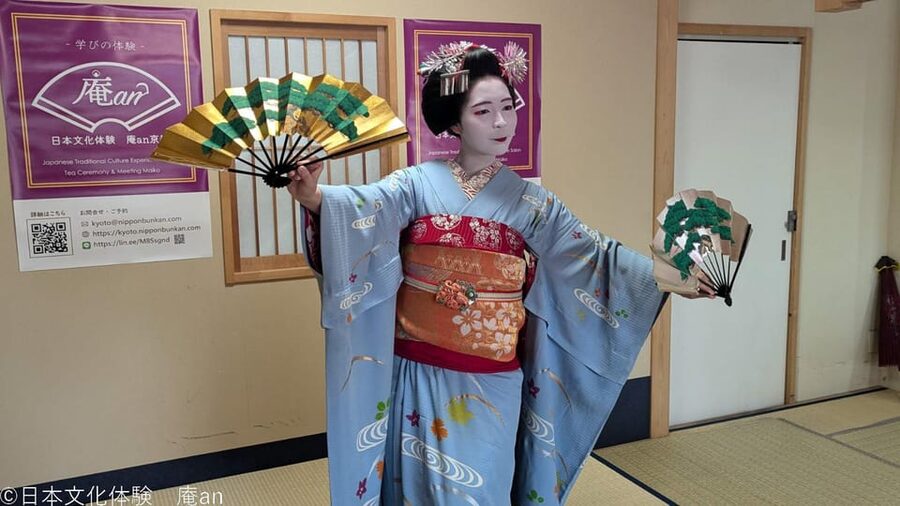
- You make matcha and hear the meaning behind it, guided by a Maiko/performer during the ceremony.
- Up-close photo time: you take a commemorative photo right beside her, not from the back row.
- Two traditional dances plus a lighthearted game, so the program isn’t only formal ritual.
- Q&A with the performer: ask about daily life, training, and routines in real time.
- Sometimes it’s a Geiko instead of a Maiko, depending on the schedule that day.
- A lucky charm (Senjyafuda) is included as a special parting gift.
Matcha, Maiko, and 90 Minutes That Move
If you’re spending time in Kyoto, it helps to pick one activity that actually explains the culture, not just displays it. This premium tea ceremony does that by combining three things in one: matcha practice, live performance, and face-to-face conversation.
At $50 per person for 90 minutes, the value comes from the fact that you’re not paying only for a drink-making demo. You’re paying for a full sequence—ceremony, performer-led storytelling, photo moment, dance, and a simple interactive game. It’s designed to be doable even on a busy Kyoto day, without needing a whole evening of planning.
The “premium” approach matters because you get the complete show rhythm: greetings, matcha, Q&A, photos, dances, and participation time, all within the same window.
You can also read our reviews of more tours and experiences in Kyoto.
Premium Details: What You Get When You Choose the Full Experience
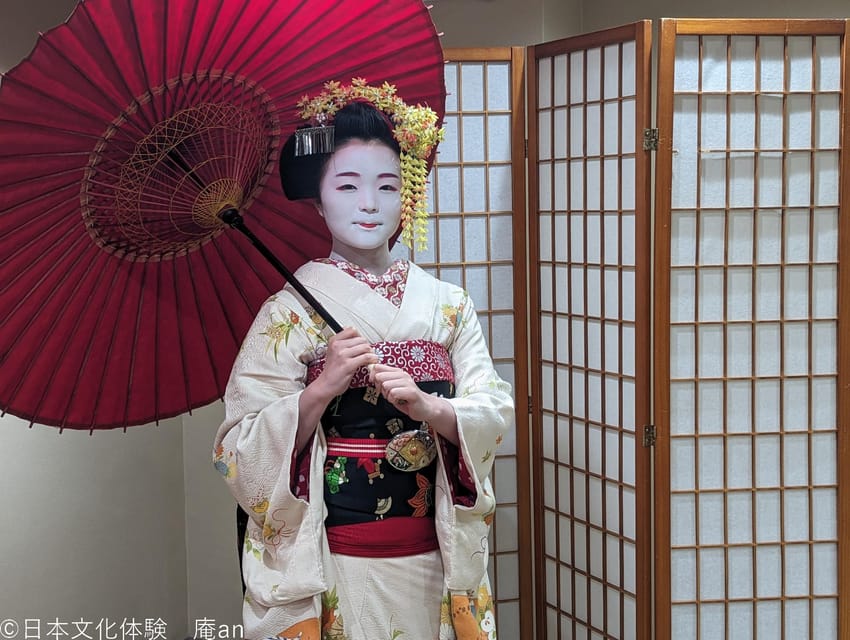
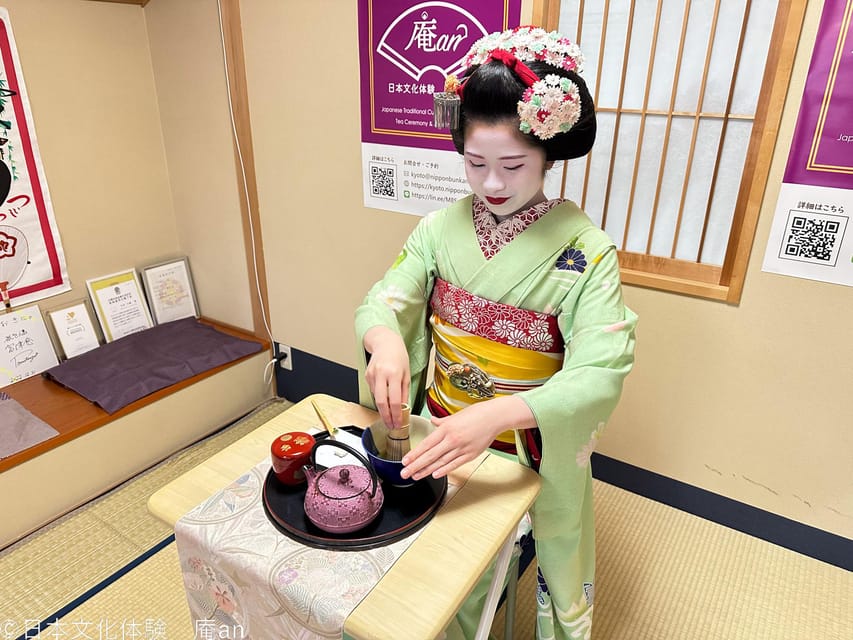
The core experience is built around a tea ceremony with a Maiko, where you’ll learn and make matcha yourself. The premium angle is that the program also leans into the performer side: you get to see two dances and join in with an interactive game.
A nice bonus: depending on circumstances, you may be invited by the venue lineup to meet a Geiko instead of a Maiko. The program is flexible that way, so part of the excitement is that you might see the refined look and performance style from the adult counterpart rather than the younger trainee.
Also, the experience is not just lecture. You get:
- a guided tea moment where the performer shows you how to prepare matcha
- a structured Q&A where you can ask questions directly
- a photo beside the performer
- a small game and cheering moments
- a chance to watch dance performances connected to seasons, love stories, and everyday life
If you like “learning by doing,” this fits. If you only want a quiet, minimalist tea ritual, you might find the format more social and show-like than strict.
The Full Timeline: From Gojo Station to Senjyafuda
The program runs 90 minutes, and it follows a clear sequence. Here’s what to expect, step by step, and why each part is worth your time.
Arrival and greeting
You meet about a minute’s walk from Exit 1 of Subway Karasuma Line Gojo Station. The pace starts quickly: you’ll be welcomed, then greeted by the Maiko/performer before the ceremony begins.
Why it matters: you’re not dropped into a room and left to figure things out. The flow is built so you can settle in and then shift straight into the ritual.
Tea ceremony with matcha (plus sweets)
Next comes the tea portion. The performer explains how to make matcha, then you make your own. You’ll also have two Japanese sweets included, described as dried-type sweets.
Why it matters: matcha is one of those foods everyone has tried, but few people learn how it’s made correctly in the moment. Doing it yourself helps the tasting make more sense.

Q&A session
After matcha, you get a Q&A. This is a highlight for many people because it turns the performance into real conversation. You’re able to ask questions about the performer’s world—training, routines, and what daily life looks like.
If you’ve ever wondered what the training actually involves beyond the stereotypes, this is the part that answers it in plain, human terms. And since the performer can hear the questions directly, the answers tend to feel focused rather than scripted.
Photo beside the Maiko (up close)
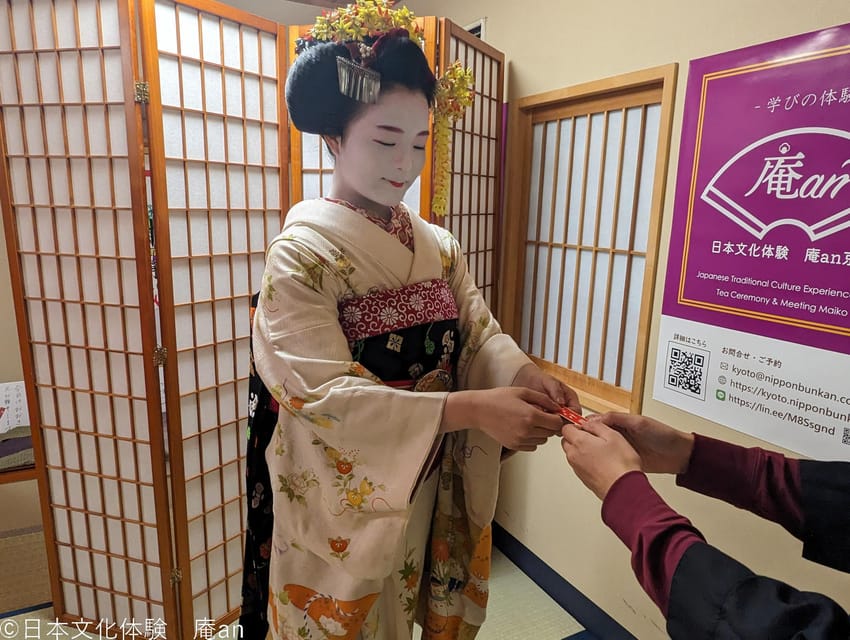
Then comes the commemorative photo opportunity right beside the performer. You’re close enough for a real memory, not a distant “pose from far away” situation.
You’ll also receive a lucky charm called a Senjyafuda as a special gift. It’s a small item, but it adds a real sense of closure—like you’re leaving with something that belongs to the moment.
Two dances and the game with the performer
Finally, you’ll watch two traditional dance performances, each expressing themes such as seasons, love stories, or everyday life. Many people describe the dance as the goosebump part, because the movement is precise and expressive in a way that reads instantly even if you don’t speak Japanese.
After that, the tone shifts into something playful: an interactive game with the Maiko/performer. You may join as a volunteer, but even if you just watch, there’s a “we’re in it together” vibe—clapping and cheering as the game moves.
This structure works well for families too, because kids can participate without needing to understand every word.
Farewell and departure
The program ends around the 75-minute mark, and then there’s a short chatting time before you leave.
Tea Ceremony Reality Check: Not an Ochaya, Still Worth It
One of the most important details to know is that the venue is not an ochaya-style traditional house. It’s in a building, and the setup is more like a room with tables and seating than the quiet tatami-world you might picture.
Some people love this because it keeps things relaxed and easy. Others wish the backdrop matched the fantasy more closely. Either way, the core cultural beats still happen live: you’re meeting the performer, learning matcha, and watching dance.
Practical points that affect your comfort:
- No elevator: you’ll take stairs to reach the venue spaces.
- The room setup is functional rather than traditional. You’ll likely sit at tables, while the performer is positioned at a separate spot.
If you’re coming from Kyoto’s old districts, it’s good to mentally switch expectations: treat this as a guided cultural program that happens to be set indoors, not as a replication of a historic tea house interior.
The Performer Moment: Why the Q&A Feels Different
A lot of Kyoto experiences give you a performance and call it “cultural.” This one leans hard into the fact that the Maiko/performer is speaking to you directly.
That’s where the day becomes more than a show:
- you hear explanations in real time
- you ask follow-up questions
- you learn how training and daily life connect to what you see in dance and ceremony
English support is provided as much as possible if you need it. In past experiences with this kind of program, the host has been described as speaking both Japanese and English to support mixed groups, and some Maiko introductions you’ll hear can include personal names like Kanosuzu-san. If you don’t catch everything, the vibe still comes through because the structure is clear and the performer’s responses are tied to your questions.
And yes, it’s still a group setting. You’re not alone with the performer. But the Q&A is built so you have a real shot at interaction, not just a hand-raising formality.
Dancing, Games, and the “Watch Closely” Factor
When the dances start, the room goes quiet in a good way. The reason is simple: movement is readable. Even if you only catch bits of explanation, you can see how the choreography connects to seasonal themes, stories, and everyday life.
What I liked about the way this program is built is the variety:
- ceremony teaches you the ritual side
- Q&A teaches you the human side
- dances teach you the art side
- the game teaches you the hospitality side
The game part is especially fun if you like breaking the ice. You might be invited to play; if not, clapping along is still part of the experience. It helps keep the energy light after the more formal tea moments.
Photo Advice: Get the Shot, Avoid the Headache
The photo opportunity is one of the biggest “worth it” reasons to book. You’re taking the commemorative picture close to the performer, which makes it feel special.
That said, there’s one common practical issue: in some photos, a background with company advertising and QR codes can show up. You can’t control everything, but you can control your timing and angles.
Here are smart ways to improve your results:
- arrive a little early (around 15 minutes helps). People note that it’s fun to watch the Maiko arrive by taxi from outside before you head in.
- stand where the performer’s background looks clean and plain.
- if you’re serious about photos, bring a fully charged phone/camera and steady your grip before the photo sequence starts.
- consider taking a few quick test shots during the room’s transitions, then adjust your angle for the formal photo time.
Small tip: stay a few minutes after the show. Watching the performer leave and wave goodbye can be one of those Kyoto details that feels like a movie set, because it adds an emotional bookend to the memory.
Price and Seating: How to Judge Value
Let’s talk money in a real way. The base price is $50 per person for the 90-minute premium program.
The reason it can feel like good value is the bundle:
- matcha making (not just tasting)
- two sweets included
- Q&A with the performer
- close photo beside Maiko/Geiko
- two dances
- game/interaction time
- a Senjyafuda lucky charm
There are also optional seating tiers if you want to upgrade. If you care about camera angles and sightlines, first-row seating costs extra (with additional JPY tiers for second and third rows). If you don’t care much about being right in front, you can usually skip the extra spend and still get the main experience.
My rule of thumb: pay for premium if you want the full “performance plus conversation plus participation” package. If you only want one or two elements (like matcha only), then this might be more than you need.
Who Should Book This (and Who Might Want Something Quieter)
This experience is best for people who want a structured cultural introduction without a full evening commitment. You’ll likely enjoy it if you:
- want to meet a Maiko or Geiko directly
- care about learning matcha basics hands-on
- enjoy Q&A and storytelling rather than only passive watching
- want photos that feel close and personal
- travel with kids (the program runs in a group format and many families find it fun)
You might hesitate if you strongly prefer a traditional, tatami-only tea house atmosphere. Since the venue is a building and seating is more modern, it’s not designed to replicate historical interiors.
Before You Go: Timing, Stairs, and Staying On Program
A few practical notes will save you stress:
- The program operates 10:00 to 17:00. If you book late, processing may be handled the next day.
- There’s no elevator, so plan for stairs.
- The event may not be held to accommodate delays. Try to arrive a bit early.
- If you don’t participate in the experience, you won’t be allowed to enter—so treat the booking as a commitment to the program.
Also, the venue offers free snacks and drinks in addition to what’s included with the tea ceremony.
If you’re the type who likes to “check every box” and then relax, you’ll probably appreciate the clear flow and set schedule.
Should You Book Kyoto Tea Ceremony with Maiko Premium?
Yes, you should book this if you want one Kyoto activity that mixes ritual, performance, and conversation in a single tight timeline. The best parts are the close photo, the performer-led matcha-making, and the Q&A that gives context to what you’re seeing onstage. Add in the dances and the game, and you get a complete package rather than a quick demo.
I’d skip it (or at least adjust expectations) if you’re chasing a super traditional tatami ochaya setting. The experience is cultural and well-structured, but it’s delivered in a modern building format, with seating and a practical setup.
If you want Kyoto in one evening that actually teaches you something, this is a smart choice.
FAQ
How long is the Kyoto Maiko Premium tea ceremony?
The experience lasts about 90 minutes.
What’s included in the premium program?
You get the tea ceremony with Maiko, matcha making, two Japanese sweets (dried-type), free snacks and drinks, a Q&A session, a photo opportunity, a lucky charm called Senjyafuda, a dance performance, and an interactive game.
Can I meet a Geiko instead of a Maiko?
Yes. Depending on the situation, the program may invite Geiko instead of Maiko.
Where do I meet the group?
You’ll meet about a one-minute walk from Exit 1 of Subway Karasuma Line Gojo Station.
Is there an elevator at the venue?
No. You’ll need to use stairs.
Are children allowed, and how are they charged?
Children under 2 years old can sit free of charge if they sit on a parent’s lap. If a child needs a seat or meal, the same fee as one person will be charged.