Two temples, one smooth morning. This private East Bank outing pairs a local Egyptologist guide with air-conditioned hotel pickup, so you can focus on the monuments instead of logistics. I especially like how the schedule gives real time at Karnak Temple Complex before you move on to Luxor Temple, and the flexibility of a private setup makes it easier to linger for photos and questions. One thing to plan for: Karnak’s admission isn’t included, so you’ll likely pay for that on the day of your tour.
If you like your sightseeing with breathing room, this fits. You’ll do two major stops, about two hours each, and you can keep your pace calm rather than being dragged through in a rush. It also helps that this is often booked well ahead (the average booking window is about 85 days), so booking early can save you from last-minute scrambling.
In This Review
- Key highlights to look for
- Why the East Bank feels easier with a private guide
- Hotel pickup and the A/C ride: less hassle, more looking
- Karnak Temple: sphinx avenue, 134 columns, and the wish you can ask about
- Luxor Temple: Rameses II giants and the Greco-Roman walls
- Pacing, photos, and questions during a 4-hour private tour
- Price and logistics: is $17 good value?
- Who this tour suits best (and who might want a different option)
- Practical tips to get more out of Karnak and Luxor Temple
- Should you book this Karnak and Luxor East Bank private tour?
- FAQ
- How long is the Karnak and Luxor East Bank private tour?
- Do I get picked up from my hotel?
- Is transportation provided, and is it air-conditioned?
- Is this a private tour?
- Do I need to buy admission tickets?
- Who guides the tour?
- What’s included in the price?
- What’s not included?
- Is a mobile ticket provided?
- Can I cancel if my plans change?
Key highlights to look for
- A private Egyptologist guide who can explain what you’re seeing in plain language
- Karnak first, including the avenue of sphinxes and the hall with 134 columns
- Luxor Temple second, with Rameses II statues plus Greco-Roman fresco details
- Hotel pickup and drop-off in an A/C vehicle, which is a big comfort upgrade in Luxor
- Mobile ticket and group discounts, if you’re traveling with others
Why the East Bank feels easier with a private guide
The East Bank can be overwhelming fast. Karnak alone is huge, and it’s easy to get lost in the scale instead of getting the meaning. With a private tour, you’re not solving the puzzle on your own. Your guide sets the order, points out the landmarks, and helps you connect the dots while you’re standing right there.
I like the way this setup gives you control. Want more photos at the columns? Fine. Want to ask why a specific king is shown a certain way? Your guide can handle that. That flexibility is hard to get on bus tours where you’re counting down to the next stop.
And there’s also a comfort factor. You’re not just walking and sweating your way through major sites. You’re moving between them with air-conditioned transport and a plan that keeps the day from stretching too long.
You can also read our reviews of more tours and experiences in Luxor.



Hotel pickup and the A/C ride: less hassle, more looking
This is the kind of tour that respects your time. Hotel pickup and drop-off are included, and the vehicle is air-conditioned. That matters in Luxor, where the heat can turn what should be an enjoyable walk into something you rush through just to survive the temperature.
The tour runs about 4 hours total, with around two hours at Karnak and two hours at Luxor. That timing is long enough to get a good view and ask questions, but short enough that you’re not exhausted by the end.
You’ll also get a mobile ticket, which is convenient if you don’t want to juggle paper vouchers while you’re out in the sun. If you’re traveling with others, there’s also mention of group discounts, which can be a nice extra value add.
Karnak Temple: sphinx avenue, 134 columns, and the wish you can ask about
Karnak Temple Complex is one of those places where your brain has trouble with the scale. You start with the iconic avenue of sphinxes, which is a great way to get oriented before you step deeper into the complex. It’s a built-in visual roadmap: everything pulls you forward, and you feel the procession even before you fully understand it.
Next comes a standout interior area: the massive hall of columns with 134 columns. It’s not just impressive because it’s large. It’s impressive because it’s structured. As you stand under those columns, you can start to see why this space was designed to feel ceremonial and powerful, not casual.
Then look for the obelisks tied to major rulers:
- the obelisks of Queen Hatshepsut
- the obelisks of Thutmose I (spelled as Tutomosis I in your tour notes)
Obelisks are tall, but they’re also symbolic. Seeing them up close helps you understand why these monuments weren’t just decoration. They were statements—vertical markers meant to project authority and memory.
One more detail you’ll want to take seriously: don’t skip the saracb/sarcophagus area and ask your guide about the wish tradition connected to it. That kind of small moment often becomes the one you remember, because it’s not just about dates and names. It’s about ritual and personal storytelling that a good guide can bring to life while you’re standing right there.
Plan for this stop to take your full two hours. Karnak rewards a slower pace. If you try to rush it, you’ll miss the smaller shapes and carvings that make the big halls make sense.
One practical catch: Karnak admission isn’t included, so you should expect to pay for your ticket on the day of your tour (your guide can help you with what to do).
Luxor Temple: Rameses II giants and the Greco-Roman walls
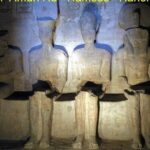
After Karnak, Luxor Temple can feel like a change in tempo. It’s still monumental, but the mood shifts. You’ll move on to the temple complex where you’ll see gargantuan statues of Rameses II, both standing and sitting. Rameses II is described here as Egypt’s most popular pharaoh, ruling for about 67 years, and you’ll feel that longevity in the way the site emphasizes him.
This is a great moment for your guide’s explanations, because Rameses II isn’t just a name. The statues communicate a political message: continuity, stability, and power meant to last far beyond one lifetime.
Then focus on two features that give Luxor Temple a layered feel:
- Greco-Roman frescoes
- depictions of Alexander the Great on the walls
These aren’t random decorations. They show how Egyptian sacred spaces kept getting reinterpreted over time, long after the original builders. That blend is one of the reasons Luxor Temple hits differently than Karnak. Karnak feels like a world inside a world. Luxor Temple feels like a time machine where different eras speak to each other on the same stone.
Admission note: Luxor Temple is listed as free for this stop, so you typically won’t need to buy a ticket for this part of the visit as part of the tour setup.
You’ll also have about two hours here. Use it well. If you’re the type who likes to take notes or get a few key photos from smart angles, Luxor Temple gives you enough time to do both without feeling chased.
Pacing, photos, and questions during a 4-hour private tour
When you’re choosing a private tour, the big promise is flexibility. Here, that flexibility is practical: you’re not bouncing between ten stops. You have two anchors—Karnak and Luxor Temple—and your guide can adapt inside those.
My advice: decide what you’re really aiming to remember. Is it the geometry of the 134-column hall? The obelisks of Hatshepsut and Thutmose I? The Rameses II statues? Or the Greco-Roman frescoes and Alexander the Great depictions? If you pick two or three, you’ll naturally ask smarter questions and take better photos because you’re looking for specific things.
Also, plan your questions for the moments that are easiest to reference on-site. A good guide can point out carving details, explain why certain rulers are highlighted, and connect the visual story to what those monuments were doing in their era. You’ll get more value if you ask when you’re right next to the feature, not after you’ve walked away.
Finally, timing helps. This tour is best when you’re comfortable starting early. Getting in before the worst crowd crush makes a noticeable difference at both complexes, especially at the choke points around major halls and statue areas.






Price and logistics: is $17 good value?
On paper, $17 per person is a strong price for what you’re getting: a private tour, hotel pickup and drop-off, transport in an A/C vehicle, and all fees and taxes listed as included. For a big, high-demand destination like Luxor’s East Bank, that’s where value really shows.
The one cost wrinkle is the admission situation:
- Karnak admission is not included, so expect an extra payment on the day of your tour.
- Luxor Temple admission is listed as free for this stop.
That means your true all-in cost depends on how Karnak tickets are handled that day. But even with that consideration, you’re still buying something important: a guide and comfortable logistics for two major temple experiences.
Booking value also comes down to how you travel. If you hate squeezing into group schedules, the private format is the whole point. If you’re okay with sharing a ride and timeline, you might compare other options. But if you want personal attention and flexibility at the monuments, this price-to-experience ratio is hard to beat.
One more real-world factor: this experience is commonly booked far in advance (about 85 days on average). If your dates are fixed, booking early is smart, not just polite.
Who this tour suits best (and who might want a different option)
This tour is ideal if you want a focused East Bank day without turning it into a full-day marathon. Two hours per temple gives you enough time to see the big hits while still keeping your energy for photos, questions, and a calmer pace.
It’s also a great fit if you care about interpretation. A guide can help you make sense of what you’re looking at—like why Karnak’s columns and obelisks matter, or what Greco-Roman fresco elements are doing in Luxor Temple’s setting.
You’ll likely enjoy it most if:
- you prefer private sightseeing over large groups
- you want hotel pickup and an A/C vehicle
- you’re okay paying for Karnak admission separately (since it’s not included)
If you’re the type who already knows the temples extremely well and you’re comfortable doing self-guided visits, a guide may feel less necessary. But for most people, a good guide turns stone into story.
Practical tips to get more out of Karnak and Luxor Temple
- Start with your photo plan in your head, then let your guide add details as you see the features.
- Give yourself time at the hall of columns. Stand in a few spots and look up, then move—this space reads differently from different angles.
- At Luxor Temple, pay attention to the shift from Rameses II statuary to Greco-Roman fresco and Alexander depictions. That contrast is the payoff.
- Bring sun protection and water. The tour is short, but you’ll still be outside for major portions.
- Plan for tipping separately. Tipping isn’t included in the tour price, so budget a bit for your guide’s time and effort.
Should you book this Karnak and Luxor East Bank private tour?
If you want the East Bank highlights without the hassle of organizing transport and navigating on your own, I’d book this. The combination of private Egyptologist guidance, A/C hotel pickup, and a sane 4-hour structure is a strong match for first-time Luxor visitors and returning travelers who want a more thoughtful pass.
The decision hinges on one simple point: you should be comfortable handling Karnak admission on the day. If that works for you, this tour is a solid value for what you get—especially because it’s private, flexible, and built around the two temples that matter most on Luxor’s East Bank.
FAQ
How long is the Karnak and Luxor East Bank private tour?
It’s about 4 hours total, with around 2 hours at Karnak and about 2 hours at Luxor.
Do I get picked up from my hotel?
Yes. Hotel pickup and drop-off are included.
Is transportation provided, and is it air-conditioned?
Yes. You’ll ride in an air-conditioned vehicle during the tour.
Is this a private tour?
Yes. It’s private, meaning only your group participates.
Do I need to buy admission tickets?
Karnak admission is not included, so you’ll pay for that on the day. Luxor Temple admission is listed as free for this stop.
Who guides the tour?
An Egyptologist guide is part of the experience.
What’s included in the price?
All fees and taxes, the air-conditioned vehicle, hotel pick up and drop-off, and the private tour are included.
What’s not included?
Tipping is not included.
Is a mobile ticket provided?
Yes. A mobile ticket is included.
Can I cancel if my plans change?
Yes. Free cancellation is available up to 24 hours in advance for a full refund.