REVIEW · LUXOR
Luxury 5 Days Nile River Cruise from Luxor to Aswan with Private Tour Guide
Book on Viator →Operated by Luxor and Aswan Travel · Bookable on Viator
Five days, one river, four big days of temples.
What I like about this trip is how it blends comfort with smart sightseeing, so you can spend your energy on the places that matter. You get a private Egyptologist guide, plus meals included throughout the cruise, which is a big deal on a route where food can otherwise derail your budget and your schedule.
One thing to consider: this booking is non-refundable and can’t be changed once paid. If your plans are even a little shaky, that matters.
In This Review
- Key Points Worth Knowing Before You Go
- Luxor to Aswan, but the trip feels planned (not rushed)
- Luxor East Bank: Karnak and the Temple of Luxor
- Luxor West Bank: Valley of the Kings, Hatshepsut, and Memnon’s statues
- Edfu’s Horus Temple and Kom Ombo’s dual-god temple
- Aswan on land and by boat: High Dam, Philae, and the Unfinished Obelisk
- What a private Egyptologist guide does for your eyes
- Value for $1,900: what you get, what to budget, and what it really means
- Timing, walking, and packing for a smooth five-day pace
- Day five: the clean exit to Cairo
- Should you book this Luxor to Aswan luxury cruise?
- FAQ
- What does the cruise include for meals?
- How long is the experience?
- Are transfers included?
- Do you get an Egyptologist guide?
- Are admission tickets included?
- Is it only for my group?
Key Points Worth Knowing Before You Go
- Private Egyptologist guidance: You’re not just looking at ruins; you’re getting explanations tuned to what you’re seeing.
- East and West Bank in Luxor: You cover Karnak and the Temple of Luxor, then hit Valley of the Kings and Hatshepsut’s temple on the next day.
- Edfu and Kom Ombo on river time: Temple visits are paired with sailing, so the day doesn’t feel like constant sitting in a van.
- Aswan highlights in one sweep: High Dam, Philae/Agilika Island, and the Unfinished Obelisk all fit into one sightseeing block.
- Meals are handled for you: Breakfast, lunch, and dinner are provided during the cruise days.
Luxor to Aswan, but the trip feels planned (not rushed)
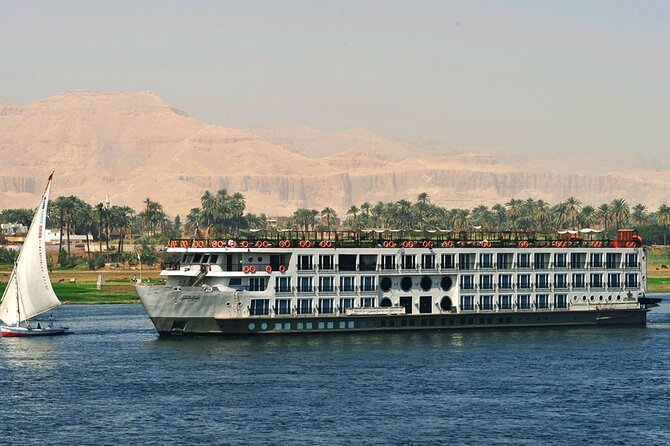
This is a classic Nile route: Luxor out first, Aswan last, with four nights aboard a luxury cruise. The structure is important. You get full days of temple time, then you return to the ship without needing to reinvent logistics each day.
You also get meet-and-assist support around the airport/transfer parts of the journey. That helps a lot in Egypt, where the first hour after landing can be the most tiring. You’ll also have a private tour feel throughout, since it’s described as only your group participating.
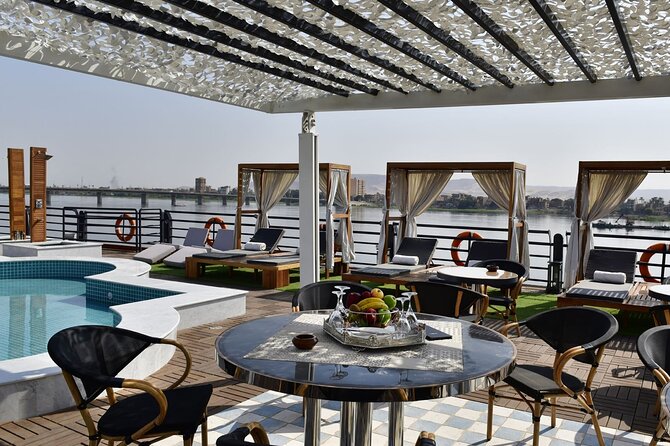
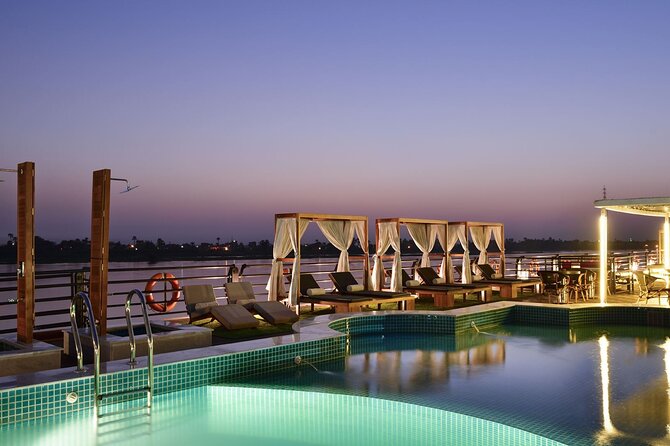
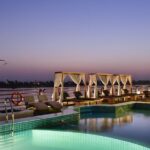
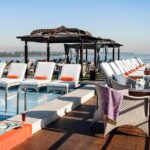
On the comfort side, the biggest practical win is the rhythm: mornings and afternoons are for major sites, while the evenings are for onboard downtime. There’s even time to enjoy the sun deck and watch the Nile roll past between stops, which is one of those “I didn’t know I needed this” parts of a cruise.
You can also read our reviews of more tours and experiences in Luxor.



Luxor East Bank: Karnak and the Temple of Luxor
Your first major sightseeing block is on Luxor’s East Bank, the side most people imagine when they picture ancient Thebes. Two stops do most of the work here.
First is the Karnak Temple Complex, described as the largest structures ever built in human history. That scale matters. Karnak is not a single building you visit and leave. It’s a huge complex where you’ll want to understand why each part is there: the main god Amun Ra, the layout, and how the different sections connect.
Then you move to the Temple of Luxor, tied to the 12th dynasty and completed by Ramses II. This temple has a “human scale” feeling compared to Karnak, and it helps you reset your brain after walking through Karnak’s vast corridors.
Practical tip: if you’re the type who likes photos, plan on stepping back after you get your first close-up. Karnak especially can look chaotic if you only shoot tight details. With a good guide, you’ll start seeing the “why” behind where you’re standing.
Luxor West Bank: Valley of the Kings, Hatshepsut, and Memnon’s statues
Day two shifts to the Luxor West Bank, and this is where your trip turns more emotional. The scenery is similar, but the meaning changes. The West Bank is the royal cemetery area for Theban rulers, so you’re walking in a place that was built for eternity.
The big anchor stop is the Valley of the Kings. It’s framed as the royal cemetery of Theban kings and rulers, and that context makes the whole area feel heavier than just an archaeological site. Even when you’re only seeing select areas, knowing this was a burial landscape changes how you look at it.
Next up is Temple of Queen Hatshepsut at Deir El Bahari, carved into the mountain. This temple is one of the reasons people keep coming back to Egypt. The terraced architecture gives you a built-in guide for your own viewing: you naturally move along the layers and start taking in the design as a whole.
You finish with the Colossi of Memnon, associated with Amenhotep III. These are famous statues, but what matters here is how they tie your story together. Hatshepsut and Amenhotep III are linked by royal ambition and artistic style, and a guide can help you spot those connections instead of treating each site like a separate stop.
Edfu’s Horus Temple and Kom Ombo’s dual-god temple
After Luxor, the cruise takes you toward two of the route’s best-known temple stops: Edfu and Kom Ombo.
In Edfu, you visit the Temple of Horus, noted as one of the best preserved temples in Egypt. That preservation makes your job easier as a visitor. Carvings and layouts are clearer, which means the guide can point out the details that a less-preserved site would hide.
Then you sail on to Kom Ombo, with lunch served onboard during the cruise segment. This is a good example of why the “cruise” part matters. Your travel time isn’t dead time; it becomes a buffer that keeps the days from feeling like a sprint.
Kom Ombo’s temple is built around two gods: Sobek and Haroeris. The pairing is the point. Instead of just seeing decoration, you’re learning how different divine roles and worship traditions got organized in the same sacred space. That makes the temple feel less random and more intentional.
Between these visits, you’ll also have onboard downtime. If you’re tired from the walking, this is when you should rest. If you’re energized, this is when you should step onto the sun deck and let the river scenes do their thing.
Aswan on land and by boat: High Dam, Philae, and the Unfinished Obelisk
Aswan is where the Nile feels wider and the modern story starts creeping into the ancient one. Your day includes a land tour plus a boat ride to an island temple.
You begin with the High Dam, erected in 1960 under President Gamal Abdel Nasser to protect Egypt from Nile flooding. This stop is a nice reality-check. It shows that even though you’re traveling through ancient monuments, Egypt’s relationship with the Nile is still active and political.
Then you take a motor boat to Agilika Island for Temple of Philae, dedicated to goddess Isis and linked to the Graeco-Roman period. Philae has a feeling of drama because of its island setting. It’s the kind of place where you understand why water matters in Egyptian life and religion.
Finally, you see the Unfinished Obelisk, made from red granite and dedicated to Amun Ra. This is a great choice for visitors who like how work actually happens. An unfinished monument answers questions finished monuments can’t, like what went wrong and what the stone cutters were thinking mid-project.




What a private Egyptologist guide does for your eyes
This is one of the biggest strengths of the experience: you’re not just getting transport and timed entry. You’re getting interpretation.
In the guide roster associated with this type of trip, I’ve seen names like Professor Mohammed Abdu, Dr. Ashraf Al Raafey, Mahmoud, Ahmed Sliem, and Hasan. You might not get the exact same guide, but it’s a good signal about what you’re paying for: someone trained to explain symbolism, not just someone who reads captions.
Here’s how to make the guide’s explanations work for you:
- Ask one question before each main stop, like why this temple was built or what the main god role is.
- When you reach a major wall scene or statue, ask what to look for first. Guides can point you to the details that will actually stay with you.
Also, the private format makes pacing better. If you want a slower approach at Hatshepsut’s terraces or you want to linger at Karnak, you have that option far more than on large group tours.
Value for $1,900: what you get, what to budget, and what it really means
At $1,900 per person, this isn’t a budget cruise. But it can be good value depending on what you’d otherwise pay to assemble the trip yourself.
Here’s the value math in plain terms:
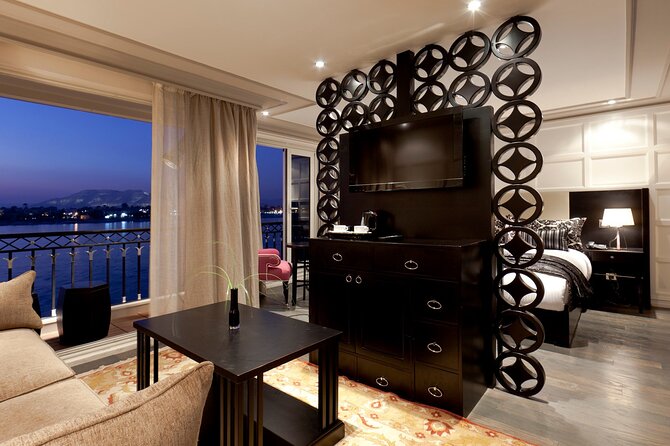
- You get four nights aboard a luxury cruise.
- You get all meals provided during the cruise days (breakfast, lunch, dinner).
- You get a private Egyptologist guide for sightseeing.
- You get round-trip transfers between your cruise and your hotel or train station (and assistance at arrival/departure).
Where the “price” can surprise people is tipping and personal spending. Tipping for guide/driver/crew isn’t included, and personal expenses like laundry aren’t included either. If you don’t budget for that, you can end up feeling like the trip was more expensive than you expected.
If you’re comparing options, I’d focus less on the nightly cruise rate and more on the total package: meals + private guide + transfers are the parts that are usually hardest to DIY without losing time.
Timing, walking, and packing for a smooth five-day pace
This trip includes a lot of walking at major sites, plus the usual Egypt sun and heat factor. The provided info says you should have moderate physical fitness. Translation: you don’t need to be an athlete, but you do need comfort with uneven ground and long temple strolls.
The schedule is built around about four hours per sightseeing block on most days. That sounds reasonable on paper, but Egypt sites pull you forward and back with crowds, stone steps, and shade gaps. Build your day around water and breaks.
What to pack (practical, not fancy):
- Comfortable, grippy shoes for stone and steps
- Sun protection (hat/sunglasses) for open courtyards
- A light layer for entering temples where shade can be welcome
Also, you’ll need a current valid passport on the day of travel, and you’ll receive a mobile ticket. That’s useful if you’re organizing everything on your phone instead of printing papers.
Day five: the clean exit to Cairo
On the final day, you check out after breakfast and then head to Aswan airport for a flight to Cairo. That’s a simple, direct ending, and it helps you avoid that last-day stress people hate: extra hotel nights, extra transfers, and extra uncertainty.
If you’re pairing this with additional Cairo time afterward, I suggest planning your Cairo arrival day with a little breathing room. You’ll be temple-worn in the best way, but also tired.
Should you book this Luxor to Aswan luxury cruise?
I’d book if you want three things to line up at once: private expert explanations, included meals, and a route that efficiently hits Luxor’s East and West Banks plus key Aswan sites.
Skip it or think twice if:
- Your dates might change. The non-refundable setup means you should only book when you’re confident.
- You’re looking for a “wander on your own” vibe. This is structured and guided, with planned temple blocks and transfers.
If your goal is to see the Nile with comfort while still understanding what you’re looking at, this is a strong fit. You get the kind of access that makes Egypt feel less like monuments you pass by and more like a story you actually follow from Luxor to Aswan.
FAQ
What does the cruise include for meals?
Breakfast, lunch, and dinner are provided during the cruise (4 breakfasts, 4 lunches, and 4 dinners).
How long is the experience?
The duration is listed as about 5 days, including four nights on the Nile cruise.
Are transfers included?
Yes. You’ll get meet and assist service, and round-trip transfers between the cruise and your hotel or train station are included.
Do you get an Egyptologist guide?
Yes. A private Egyptologist English-speaking tour guide accompanies you on sightseeing.
Are admission tickets included?
The sightseeing entries are listed with free admission ticket, and the included sightseeing blocks note admission ticket free.
Is it only for my group?
Yes. This is described as a private tour/activity, with only your group participating.