REVIEW · NEW DELHI
3-Day Golden Triangle Luxury Tour from Delhi to Agra and Jaipur
Book on Viator →Operated by THE GOLDEN MEMORIES · Bookable on Viator
Three days, three icons, zero stress. This luxury Golden Triangle tour strings together Delhi, Agra, and Jaipur with a private AC car and a guide who keeps the day on track. I like the private driver comfort on long drives, and I especially value the sunrise Taj Mahal timing when weather allows.
I also love the way the schedule mixes the big-name sights with stops that add texture, like Chand Baori’s stepwell and the old Delhi rickshaw ride through market lanes. You get a lot of India in a short window, without feeling like you’re just sprinting from gate to gate.
The main thing to consider is timing: some sites close on specific weekdays, and the Taj sunrise visit is weather-dependent. If you’re the type who hates schedule surprises, build in a little flexibility for site closures.
In This Review
- Key highlights at a glance
- The Golden Triangle route in 3 days: what you’re really signing up for
- Day 1 in Delhi: UNESCO tower views, calm at Lotus Temple, and Old Delhi by rickshaw
- Humayun’s Tomb: the style you’ll notice again later
- Qutub Minar: soaring scale, real “how did they build this?” energy
- Lotus Temple: the calm pocket (but check the weekday)
- India Gate, Rashtrapati Bhavan, and Parliament House: quick hits, big symbolism
- Agrasen Ki Baoli and Chandni Chowk: old Delhi texture without the stress
- Old Delhi rickshaw ride: the fun factor built in
- Red Fort stop: the grand finish to a big day
- Drive to Agra with time for lunch
- Sunrise at the Taj and Agra Fort: the day that lives up to the hype
- Taj Mahal at sunrise: timing matters, and weather matters
- Agra Fort: where you see the Mughal world as a system
- Itmad-ud-Daula (Baby Taj): the finer scale between the big ones
- Chand Baori, Abhaneri: a stepwell that changes how you see water
- Arrive Jaipur and get your evening free
- Jaipur Day 3: pink landmarks, Amber Palace time, and Jantar Mantar’s geometry
- Hawa Mahal photo stop: the iconic “Palace of Winds” facade
- Panna Meena ka Kund: stepwell design with symmetry
- Amber Palace: your main fort stop in Jaipur
- Jal Mahal: the Water Palace from the outside
- City Palace: royal seat turned museum
- Jantar Mantar: the observatory that looks like art
- Drive back to Delhi late evening
- Transport and pacing: why this tour feels “easy” even with packed days
- Tickets, entrances, and the hotel option: what you’re paying for
- What this tour is best for (and when you might want something else)
- Should you book The Golden Memories 3-Day Luxury Golden Triangle tour?
- FAQ
- What is the duration of the tour?
- Does the tour include pickup and drop-off?
- Is the Taj Mahal visit included, and is it at sunrise?
- Are entrance fees included?
- What parts of the tour include transport inside the city areas?
- Where does the trip end on day 3?
- What is the cancellation policy?
Key highlights at a glance
- Private tour with your group only: you travel as a dedicated party, not mixed into random crowds.
- Air-conditioned car all day: the long Delhi–Agra–Jaipur legs are handled with a professional driver.
- Sunrise Taj Mahal visit (weather permitting): early hours make a real difference in how the monument feels.
- Battery bus return for Taj: you don’t have to fight parking-area distances at the most exhausting moment.
- Old Delhi rickshaw ride: a fun, low-effort way to experience Chandni Chowk-area bustle.
- Optional hotel upgrade with breakfast: you get two nights set up if you choose the accommodation option.
The Golden Triangle route in 3 days: what you’re really signing up for
The Golden Triangle is the classic triangle for a reason: Delhi shows the layers, Agra gives you the Mughal centerpiece, and Jaipur delivers royal-scale architecture. What makes this particular tour appealing is the pacing. You’re not just checking off landmarks—you’re spending real time where it counts, then using the car to reset for the next day.
You’re also traveling with the advantage of being “handled.” You’ll have pickup and drop-off, bottled water, and a guide for the excursions. For first-time India visits (or anyone who wants to avoid the logistics grind), that matters more than people think.
The “luxury” angle here is less about fancy surprises and more about comfort and smooth transitions: an air-conditioned vehicle, private guide attention, and the right order of sights across three cities.
You can also read our reviews of more tours and experiences in New Delhi.



Day 1 in Delhi: UNESCO tower views, calm at Lotus Temple, and Old Delhi by rickshaw
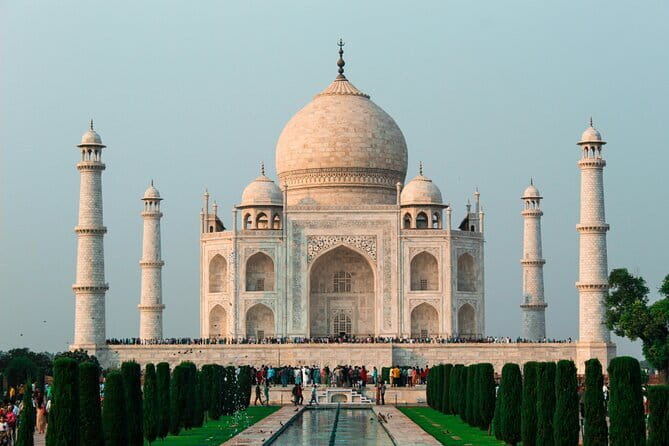
Your Delhi day is built to give you both contrast and momentum. You start with major monuments that are spaced out enough to feel worth the travel time, then you roll into Old Delhi for the sensory overload—without turning it into a full-day maze.
Humayun’s Tomb: the style you’ll notice again later
You begin at Humayun’s Tomb, a UNESCO site and the final resting place of Emperor Humayun. This is one of those places where the design hits you quickly: symmetrical gardens, strong Mughal geometry, and a calm atmosphere that makes it easier to understand the later Mughal monuments you’ll see in Agra.
Admission isn’t included in the default plan, so decide early if you want to include entrance fees in your package option. Either way, plan for a solid stretch of walking time inside the complex.
Qutub Minar: soaring scale, real “how did they build this?” energy
Next is Qutub Minar, another UNESCO landmark. The tower is the feature of the whole area—an Afghan-style victory minaret erected in the late 1100s—so even if you’re tired, you’ll still feel that “wow” moment from a distance.
This is also a good stop for photos at different angles. The complex is large, and you’ll get multiple perspectives if you take your time instead of just snapping and moving on.
Lotus Temple: the calm pocket (but check the weekday)
Then you hit the Lotus Temple, designed for tranquil worship and known for its lotus-like architectural form. One catch: it’s closed on Monday, so if you’re starting your trip on a Monday, this stop may not happen.
If you do get there, this is a nice mental break before you go into the market areas. It’s a change of pace you’ll appreciate later.






India Gate, Rashtrapati Bhavan, and Parliament House: quick hits, big symbolism
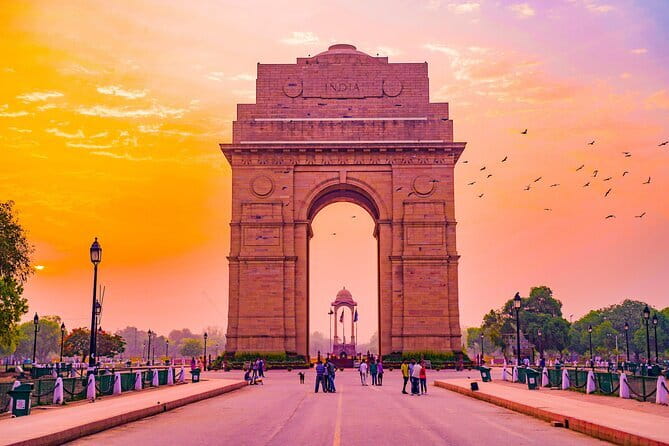
You’ll also make brief stops at India Gate, plus exterior views of Rashtrapati Bhavan and Parliament House. These are short time windows (the kind where you’d otherwise rush alone), but with a guide you get the context fast: the war memorial purpose for India Gate and how the area reflects India’s shift from colonial rule to independent governance.
In plain terms: you see it, you understand what it represents, and then you move on without wasting your day.
Agrasen Ki Baoli and Chandni Chowk: old Delhi texture without the stress
You’ll stop at Agrasen Ki Baoli, a protected stepwell monument with a long, narrow layout. It’s not the most famous site in Delhi, but it’s the kind of place that gives you a “wait, this exists?” moment—especially if you like architecture that isn’t always on the standard itinerary.
Then comes Chandni Chowk, with its spice-and-jewelry shopping streets. If shopping is your thing, you’ll have time to browse. If you just want the vibe, you can keep it simple: walk, look, take photos, and return to your guide when you’re ready to leave the busiest lanes.
Old Delhi rickshaw ride: the fun factor built in
A highlight for many people is the Old Delhi rickshaw ride, included in the tour. It gives you movement through the market area without you needing to negotiate tiny streets on your own.
The ride is also a quick history lesson in motion. The area’s market growth traces back to Shah Jahan shifting the capital from Agra to Delhi, and the lane layout still reflects that old planning idea.
Red Fort stop: the grand finish to a big day
You’ll also stop by the Red Fort, the Mughal-era residence for nearly two centuries. Your time here is shorter than a full dedicated visit, so treat it as a dramatic finale rather than a deep dive. If you’re a detail hunter, you’ll still get a strong sense of scale and significance.
Drive to Agra with time for lunch
After Delhi sightseeing, you’ll have time for lunch at a local restaurant, then you drive through the Yamuna Expressway to Agra. The transfer is about three hours, and having the car handle it is a big part of why this tour feels easy.
Once you arrive in Agra, you check into your hotel and get the rest of the day at leisure. That’s not just comfort—it’s also smart. You’ll want downtime before sunrise the next morning.
Sunrise at the Taj and Agra Fort: the day that lives up to the hype
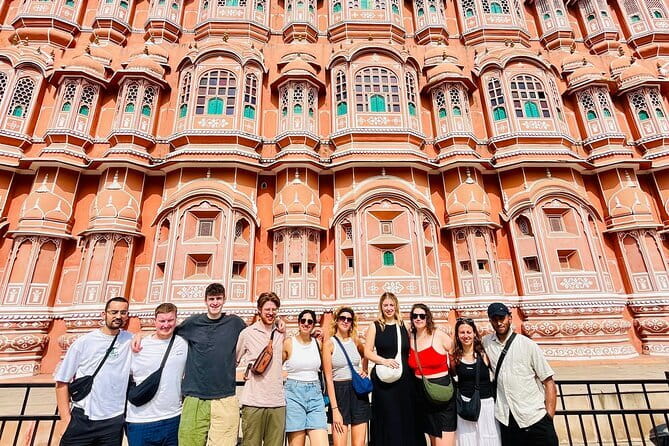
Day 2 is all about Agra’s Mughal power. The itinerary centers on the Taj Mahal at sunrise, then builds out the rest of the city with forts and mausoleums. The overall feel is: you start with something legendary, then you learn how the Mughal story connects across different sites.
Taj Mahal at sunrise: timing matters, and weather matters
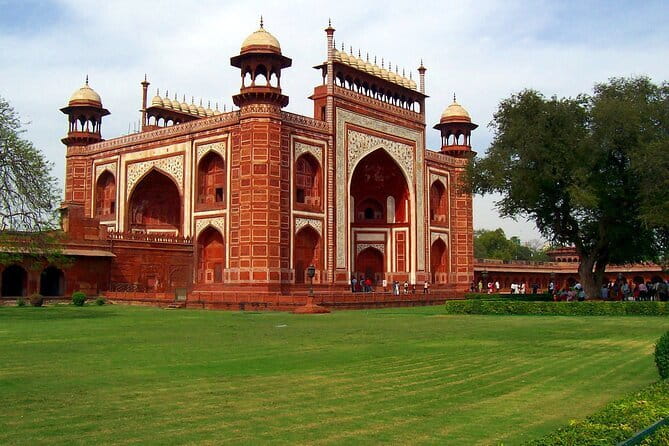
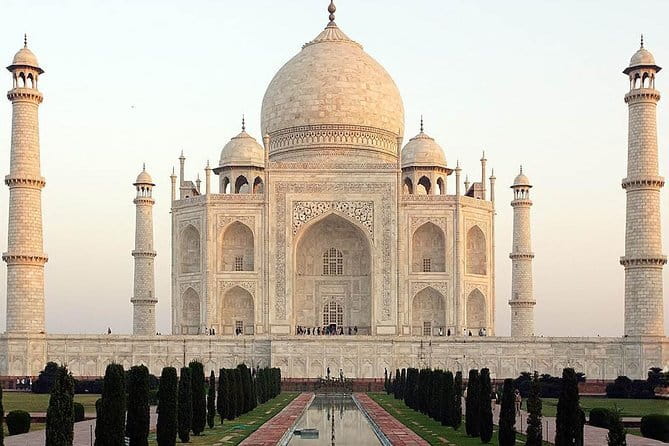
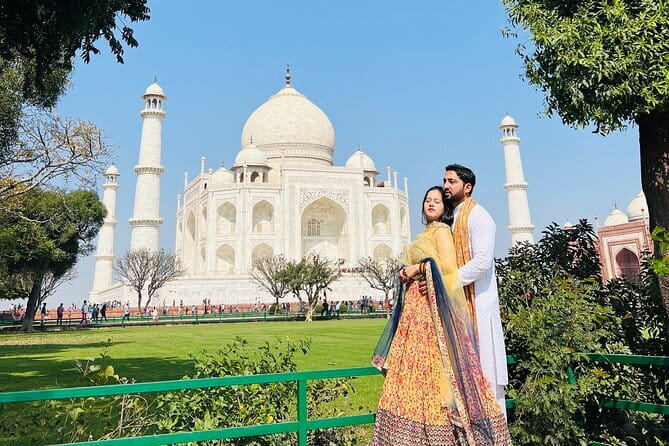
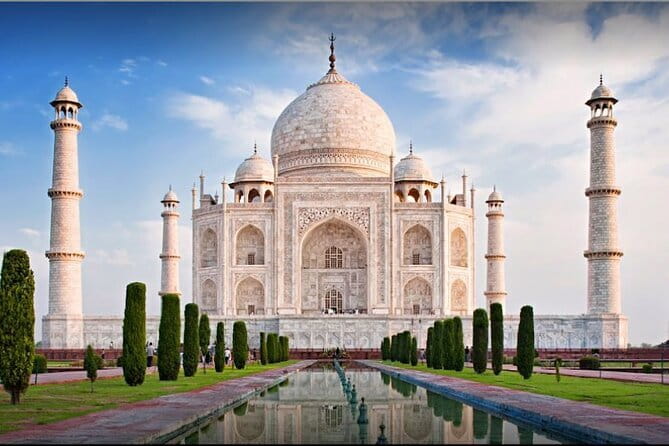
You’ll visit the Taj Mahal at sunrise. The tour notes that this visit depends on weather conditions, so if fog, heavy clouds, or rain show up, your timing experience may change. Still, sunrise is the best window for lighter crowds and softer lighting.
Also note: entrance tickets are not included by default. There’s an optional entrance-fee inclusion option, so pick what fits your budget and convenience needs.
One extra comfort detail: you get a battery bus/golf cart return ride from the parking area to the Taj entry area. That helps a lot when you’re up early and you’d rather not spend energy on walking that you don’t need.
Agra Fort: where you see the Mughal world as a system
Next is Agra Fort, another UNESCO World Heritage site. This fort sits along the Yamuna River and was the Mughal residence until 1638, so it’s not just a defensive structure—it’s a statement of authority.
The stop runs about 1.5 hours, with enough time to see the main parts without feeling like you’re stuck for hours. Entrance tickets are not included in the base plan, so again, decide if you want the optional entrance add-on.
Itmad-ud-Daula (Baby Taj): the finer scale between the big ones
Then you visit Itmad-ud-Daula, sometimes called Baby Taj. It’s a Mughal mausoleum known for its gardens and refined design details, and it provides a nice “bridge” between the Taj Mahal and the heavier fort atmosphere.
This stop is about an hour, and it works well because it breaks up the day’s intensity. You’ll get a different architectural mood here—more delicate and intricate.
Chand Baori, Abhaneri: a stepwell that changes how you see water
The next stop is Chand Baori in Abhaneri, a stepwell reached by 3,500 steps. You might think of India as all palaces and forts, but this is where you learn how communities engineered water for daily life—and how beautiful “utility architecture” can be.
Entrance tickets aren’t included, so confirm your plan based on the option you choose. Either way, comfortable shoes matter here because steps can add up even when you only walk a portion.
Arrive Jaipur and get your evening free
After sightseeing, you drive to Jaipur and check in to your hotel. You’ll have the evening at leisure, which is helpful. Jaipur is photo-heavy and walking-heavy, and you’ll be glad you can reset before forts and palaces the next day.
Jaipur Day 3: pink landmarks, Amber Palace time, and Jantar Mantar’s geometry
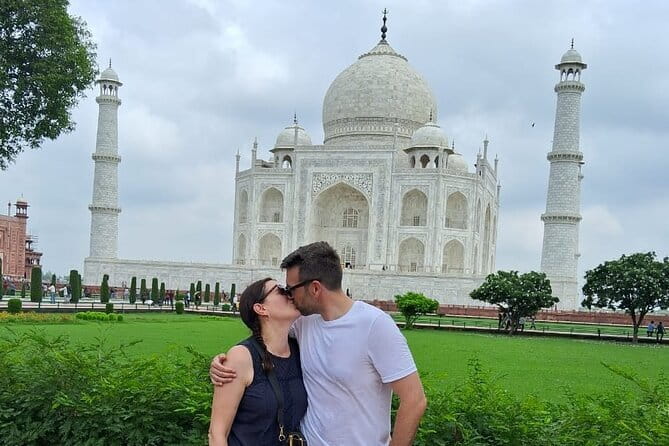
Day 3 is where Jaipur turns into a visual checklist of royal shapes: pink facades, fort walls, palace courtyards, and an observatory built from geometry. The pacing is good here because it mixes a few quick photo stops with deeper time at Amber and the City Palace.
Hawa Mahal photo stop: the iconic “Palace of Winds” facade
You start with a photo stop at Hawa Mahal, Jaipur’s famous five-storey pink honeycomb-like facade. It’s all about the exterior look, and your brief time makes sense because the building’s most memorable feature is its shape against the street.
If you’re planning to photograph, go slow. Light changes fast in Jaipur, and you’ll want a couple of angles without rushing your whole group.
Panna Meena ka Kund: stepwell design with symmetry
Next is Panna Meena ka Kund, another stepwell known for intricate design and symmetrical staircases. This stop is short, but it pairs nicely with Chand Baori from earlier in the trip. You’ll start seeing the repeated theme: how water architecture shaped daily life and status.
Again, entrance tickets are not included in the base plan.
Amber Palace: your main fort stop in Jaipur
Amber Palace is the big ticket item on Day 3. It’s a UNESCO-listed fort-palace with marble decor and mirrored-wall style interiors. The tour schedules about two hours, which is a solid amount for seeing major sections without feeling frantic.
Admission isn’t included by default, so decide in advance if you want the all-in comfort option.
Jal Mahal: the Water Palace from the outside
You’ll get a photo stop at Jal Mahal (Water Palace), positioned near the Man Sagar water expanse. It’s dreamlike because it looks like it floats, and the brief stop gives you time to get the classic viewpoint without swallowing your whole afternoon.
City Palace: royal seat turned museum
Then you visit the City Palace of Jaipur, originally the administrative and ceremonial seat of the Maharaja. The tour gives about an hour here, which is enough to get the structure, feel the scale, and see key rooms.
Admission isn’t included by default, so plan your budget accordingly.
Jantar Mantar: the observatory that looks like art
You finish with Jantar Mantar, a UNESCO observatory with curving geometric structures used to track stars and planets. This is one of those places that feels different from forts and palaces because it’s technical, but the forms are still visually striking.
About an hour is scheduled. If you like science-meets-history, you’ll enjoy it more than you expect.
Drive back to Delhi late evening
After Jaipur, you head back to Delhi (or Gurugram/Noida) and the drive is around five hours. The tour indicates you’ll return by about 9pm on Day 3, unless you coordinate changes in advance.
That late return is normal for the Golden Triangle loop, but it’s smart to plan an easy night afterward.
Transport and pacing: why this tour feels “easy” even with packed days
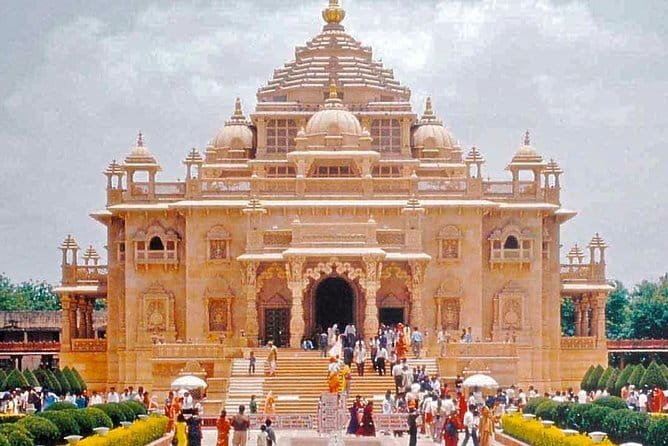
A lot of Golden Triangle tours feel like sightseeing workouts. This one is still a lot of walking, but the stress level drops because the travel logistics are handled.
You have a private driver and an air-conditioned vehicle throughout, and the day-to-day sequencing keeps you from bouncing around randomly. You also get bottled water, which sounds small until it’s 35°C and you’re halfway through a market stop.
The car size changes based on group size: a four-seater sedan for 1–2 people, a six-seater MPV for 3–4, and a ten-seater van for 5–10. That matters because cramped vehicles make long drives feel longer, and your comfort directly affects your energy for the sightseeing blocks.
One more timing note: the tour flags closures that affect the itinerary. Lotus Temple is closed on Monday, and Taj Mahal is closed on Friday. If your start day is Thursday, the order is adjusted so you still get the Taj visit (since Friday closure rules it out).
Tickets, entrances, and the hotel option: what you’re paying for
The headline price is listed at $190.50 per person, and that’s for the structure of the tour—transport, private guiding, and the included experiences. Entrance tickets are not included in most stops by default, but there’s an option where you can include entrance fees.
To me, the value trade-off is simple:
- If you hate dealing with ticket lines and payments while moving through multiple cities, choose the option that includes entrance fees.
- If you prefer control over ticket timing and want to keep the package price lean, you can go with the base plan and buy entrances as you go (where applicable).
On the accommodation side, you get two nights with breakfast if you choose the hotels option. Rooms are generally twin-sharing, and breakfast is included for two mornings. If you travel as a group of three, the default is triple-sharing unless you request two rooms with an extra charge.
One practical detail: you should expect a passport requirement on the day of travel, since you’re moving through multiple security-controlled sites.
What this tour is best for (and when you might want something else)
This tour fits best if you’re:
- Doing India for the first time and want the Golden Triangle without transportation headaches
- Short on time but still want time at major monuments instead of only external views
- Traveling as a family or couple who values private guide attention over group herding
- People who like the comfort of an air-conditioned car between intense sightseeing blocks
It might be less ideal if you:
- Want ultra-deep time inside museums or forts all day long
- Dislike early mornings, since Taj sunrise is a cornerstone stop
- Plan your trip around a fixed weekday schedule with zero flexibility, due to the known closures (Lotus Monday, Taj Friday)
Should you book The Golden Memories 3-Day Luxury Golden Triangle tour?
I’d book it if you want the Golden Triangle to feel well-run. The private driver setup, AC comfort, and professional guides reduce the “what do we do next?” stress that usually drains energy on these routes. The included rickshaw ride and the battery bus return for Taj are small perks that make the experience smoother at key moments.
I’d think twice if your travel dates line up with Monday or Friday in a way that you can’t adjust. The itinerary is designed around those closures, but you still need to accept that the schedule can shift for the sites you care about most.
If you’re aiming for strong first-time impressions—Delhi’s Mughal- and colonial-era landmarks, Agra’s centerpiece monuments, and Jaipur’s royal architecture—this tour is a good value structure. You’ll come away with the main visuals you came for, plus a few extra stops that help the story make more sense.
FAQ
What is the duration of the tour?
The tour runs for 3 days (approx.), covering Delhi, Agra, and Jaipur.
Does the tour include pickup and drop-off?
Yes. Hotel/airport pickup and drop-off are included.
Is the Taj Mahal visit included, and is it at sunrise?
The itinerary includes a Taj Mahal sunrise visit. It is subject to weather conditions, and entrance tickets are not included by default.
Are entrance fees included?
Entrance fees are optional. Many stops list admission ticket not included, so you’ll likely need to pay separately unless you choose the option that includes entrance fees.
What parts of the tour include transport inside the city areas?
You’ll have a private driver and air-conditioned vehicle throughout. For the Taj Mahal, there is a battery bus or golf cart return ride from the parking area included.
Where does the trip end on day 3?
You’ll drive back to Delhi/Gurugram/Noida, and the tour indicates you return by around 9pm. Airport/hotel drop-off can be arranged depending on your location.
What is the cancellation policy?
You can cancel for a full refund if you cancel up to 24 hours in advance of the experience start time. If you cancel less than 24 hours before, the amount you paid won’t be refunded.