REVIEW · ATHENS
Private Luxury Tour: Unveiling the Sacred Mysteries of Eleusis
Book on Viator →Operated by Pericles Century · Bookable on Viator
Eleusis feels like a living myth map. This private, luxury-style trip links Athens to the world of Demeter and Persephone through the stones of the Sacred Way and the heart of the Eleusinian Mysteries.
I like how easy the day is to manage: you get an English-speaking driver-guide, plus pickup, an air-conditioned ride, and onboard Wi-Fi so you’re not stuck figuring things out. One thing to plan for: €10 entrance fees per person apply to the Eleusis archaeological site and museum areas, and the price doesn’t include a separate licensed guide to walk you inside.
In This Review
- Key highlights worth looking for
- A private Eleusis day trip from Athens: how 4–5 hours really work
- Following the Sacred Way: Iera Odos and the pilgrim crossing at Kifisos
- Daphni Monastery mosaics: UNESCO art on the route to ritual
- Skaramagkas and the Aphrodite sanctuary: myth links with limited access
- Hadrian’s Roman bridge: engineering that carried sacred footfalls
- Eleusis archaeological site: Telesterion, Great Propylaea, and myth stops
- The bigger ruins: Demeter and Persephone’s ritual setting
- The Telesterion hall: the heart of the Mysteries
- The Great Propylaea entrance: a monumental threshold
- Kallichoron Well and the women’s dances
- The Ploutonion cave: myth’s Underworld entrance
- Museum time: objects that make ritual feel real
- Price and value: is $192.23 a good deal?
- What to bring for comfort and better photos
- Who should book this Eleusis mysteries tour?
- Should you book it?
- FAQ
- How long is the Eleusis private luxury tour?
- Is pickup included, and where does the tour end?
- Is this a private tour or a shared group?
- What language is the driver-guide?
- Is there Wi-Fi during the tour?
- Are entrance fees included?
- Do I need a licensed guide to enter the archaeological sites?
- What vehicle will I ride in?
- What’s the cancellation policy if weather is bad?
Key highlights worth looking for
- A smooth private route with hotel/port pickup and a car picked to your group size (sedan for 1–4, mini van for 5–7).
- The Sacred Way in pieces, including a rare look at surviving parts of Iera Odos and the older pilgrim crossing points.
- Daphni Monastery on the same myth corridor, UNESCO mosaics and a strong Byzantine contrast to ancient ritual.
- Big Eleusis stops without a sprint, with time built in for the Telesterion area and myth-linked sites like the Ploutonion cave.
- Comfort details that matter: air-conditioning, bottled water, and Wi-Fi while you ride between stops.
- Context that helps you see more, especially at the Telesterion, where the driver-guide’s explanations set the tone.
A private Eleusis day trip from Athens: how 4–5 hours really work
This is a private tour, so it’s just your group—no mixing with strangers or playing musical chairs with a big coach. The total duration is about 4 to 5 hours, and that time includes the travel between Athens and the Eleusis area.
You’ll start with pickup from a designated spot. If you’re staying in a hotel or apartment, the driver waits outside your entrance. If you’re coming from a port, you’ll be met at the arrival area with a sign showing your name. The tour also ends back at the original meeting point, which keeps your logistics simple.
The vehicle is chosen for comfort based on headcount: 1–4 people ride in a luxurious sedan, and 5–7 people use a comfortable mini van. That matters because Eleusis is a lot of walking on uneven ground and in sun, so having a cool place to reset between stops makes the whole day feel more doable.
You can also read our reviews of more tours and experiences in Athens.

Following the Sacred Way: Iera Odos and the pilgrim crossing at Kifisos
The day starts with the Sacred Way (Iera Odos), the famous ancient route linking Athens to Eleusis. Even if you’ve seen photos of Eleusis before, the Sacred Way is what makes the story feel like a journey instead of a list of ruins.
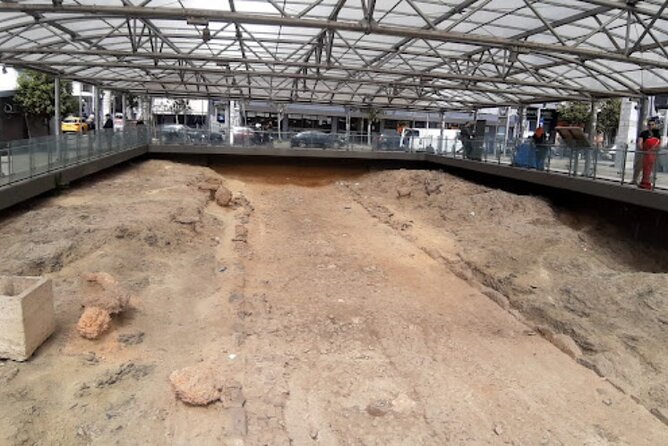
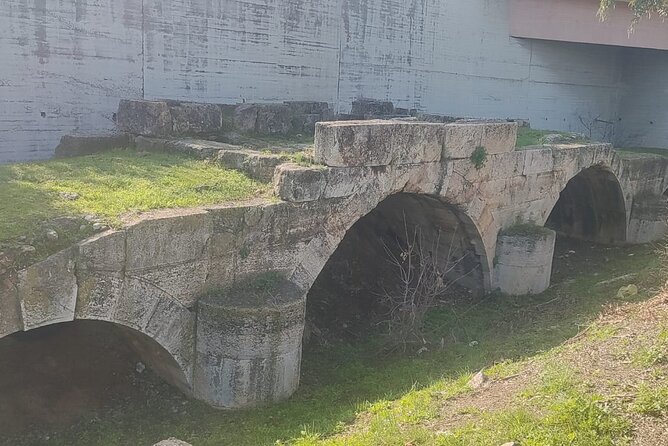
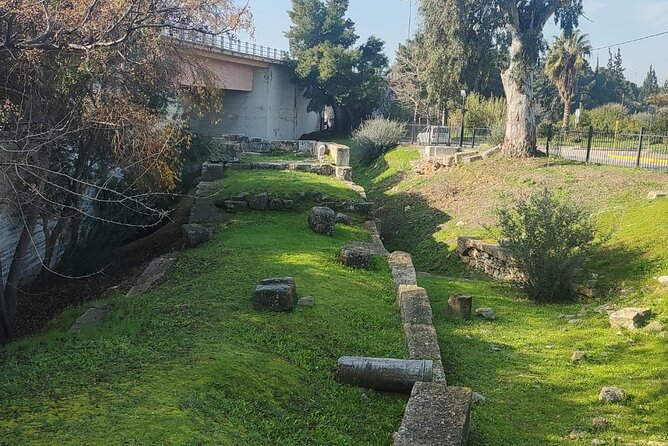
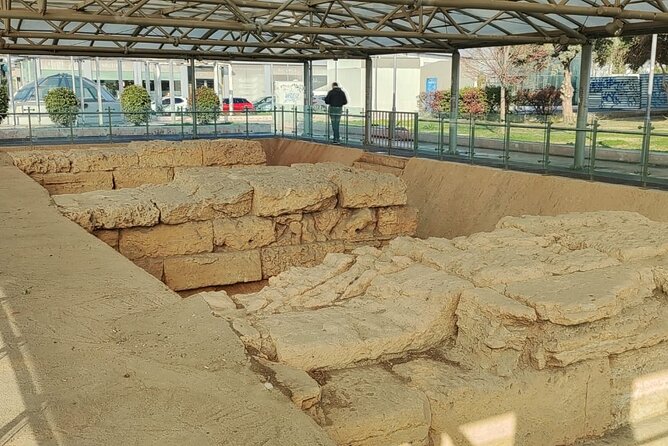
At the first stop, you’ll see remains connected to the crossing over the Kifisos River. Archaeological remnants were uncovered during construction of the Eleonas Metro Station, and what survives are three piers from a structure that likely had at least five arches. This bridge wasn’t just “infrastructure.” It was part of the lived movement of thousands of pilgrims—people walking with sacred objects and carrying ritual energy toward the sanctuary.
The next short stop continues the idea of walking the same lines. You’ll visit a stretch associated with pilgrims moving through the Aigaleo area, with wide open views that help you picture why this route worked. If Eleusis feels like a world of gods, this part turns it into geography: a path that connected real neighborhoods, river crossings, and travelers moving with purpose.
Practical note: these are short stops. Expect quick orientation, photos, and a brief walk—then back to the air-conditioned vehicle to keep momentum.
Daphni Monastery mosaics: UNESCO art on the route to ritual
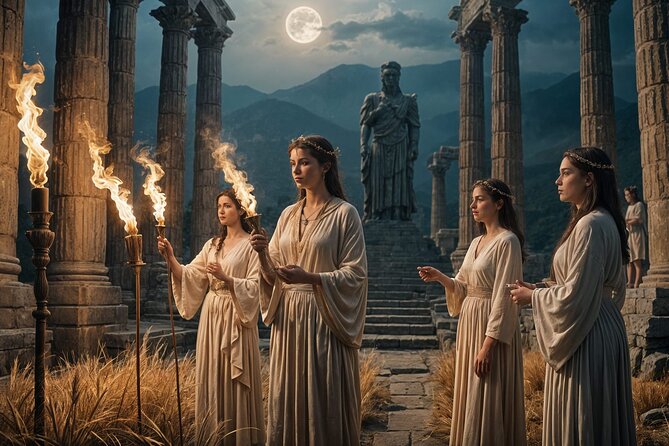
Next comes a change of pace that I think makes the whole trip better. The Monastery of Daphni is a UNESCO World Heritage site, built in the 11th century, and it sits right along this broader corridor of the Sacred Way.
Why it belongs on your Eleusis day: Byzantine art gives you a second layer of meaning. You’re not only looking at ancient ritual space—you’re also seeing how later Greek Orthodox tradition inhabited and reinterpreted old sacred ground.
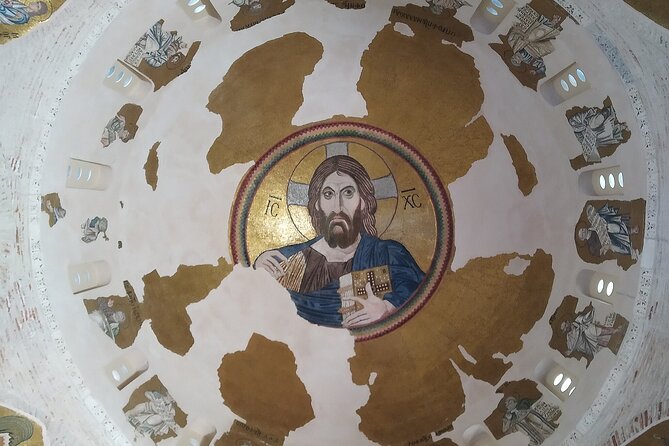
The star attraction is the mosaics, including a major depiction of Christ Pantocrator in the dome. The setting adds to it: you’re near cypress trees, with a calmer feel than you get in the busier city streets. It’s a short time commitment, but it gives your brain a break.
The main “trade-off” here is timing. You only have about 30 minutes, so it’s best to look for the mosaic zones quickly and then enjoy the atmosphere rather than trying to read every stone.
Skaramagkas and the Aphrodite sanctuary: myth links with limited access
You’ll also stop at the Sanctuary of Aphrodite in Skaramagkas, near the Sacred Way corridor. This is one of those places where the remains may be modest, but the story connection is what you’re really chasing.
In ancient times, it was a worship site dedicated to the goddess of love and beauty, and it served pilgrims traveling toward Eleusis during the Eleusinian Mysteries era. Today, you mainly see remnants and can appreciate how ancient religious sites were placed in landscapes that supported ritual journeys.
Access is weather and day-dependent in a simple way:
- On weekends, the sanctuary is open to the public.
- On weekdays, you can admire it briefly from the outside, and interior access isn’t permitted.
So if you’re the type who likes getting inside every site, you should time your trip for a weekend. If you’re more interested in the myth geography and photos, this stop still works well.
Hadrian’s Roman bridge: engineering that carried sacred footfalls
Back to pure ancient travel mechanics: you’ll visit the Eleusis area and see a Roman bridge that helped connect parts of the sacred route. This one is notably well-preserved.
It measures about 50 meters long and 5.30 meters wide, built from durable Piraeus limestone. The bridge has a central section with four arches—two wider in the middle and two narrower toward the ends—with inclined approaches on both sides.
The dating is a big deal for context: it’s from Emperor Hadrian’s reign (around 125 AD). If you’ve ever wondered how “myth” and “real roads” met in the ancient world, this stop is your answer. A bridge like this wasn’t just practical—it shaped the movement of people, including those on the way to ritual spaces tied to Demeter.
This stop is short (about 10 minutes), so I treat it like a photo-and-quick-look moment: aim for good angles, then move on before it gets too hot or too rushed.




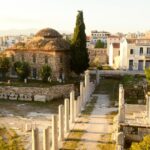
Eleusis archaeological site: Telesterion, Great Propylaea, and myth stops
Now you reach the emotional center of the day: Eleusis and the sanctuary areas tied to the Eleusinian Mysteries. The time here is split into several focused stops rather than one long march—smart for a 4–5 hour day.
The bigger ruins: Demeter and Persephone’s ritual setting
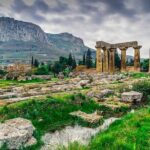
At the archaeological site, you’ll move through areas connected with rituals honoring Demeter and her daughter Persephone. Expect a walk among the remains of temples, gateways, and altars, with a quiet feel outside the highest-traffic zones.
You also get one of the key “why this matters” moments: the sites are arranged so you can start picturing the flow of an initiation journey—where people came in from the outside and gradually moved toward the mystery spaces.
This part is where the tour does something practical. Instead of handing you a list of facts, the driver-guide’s storytelling helps you stand in the right places and understand what you’re seeing—especially for the next stops.
The Telesterion hall: the heart of the Mysteries
The Telesterion is the grand hall at the center of the Eleusinian Mysteries. It hosted the initiation ceremonies, and it’s one of the main reasons people care about Eleusis in the first place.
In past tours, guides such as Demetrios have been praised for preparing people for this final feeling—sharing enough context about the initiation theme so that when you reach the Telesterion area, you don’t just see walls. You get a sense of the purpose of the place.
You won’t spend forever here—about 10 minutes—but for many visitors, that’s exactly right. It’s long enough to orient yourself and short enough to keep the day comfortable.
The Great Propylaea entrance: a monumental threshold
Next is the Great Propylaea, the monumental entrance to the sanctuary of Demeter and Persephone. It dates to the 2nd century CE under Marcus Aurelius.
It mirrors the famous entrance style associated with the Acropolis—Doric columns, massive stone, and a designed sense of moving from the everyday into something ceremonial. Even as ruins, it has that “stop and look up” effect. Think of it as the moment where your body understands the transition before your brain finishes the explanation.
Kallichoron Well and the women’s dances
You’ll also visit the Kallichoron Well, tied to Demeter searching for Persephone after her abduction by Hades. The myth includes local women dancing there to comfort Demeter—the well’s name connects to the idea of “beautiful dances.”
This stop is short (about 10 minutes), but it adds a human-scale layer. After all the big architecture, you get a story that sounds more like grief, comfort, and community.
The Ploutonion cave: myth’s Underworld entrance
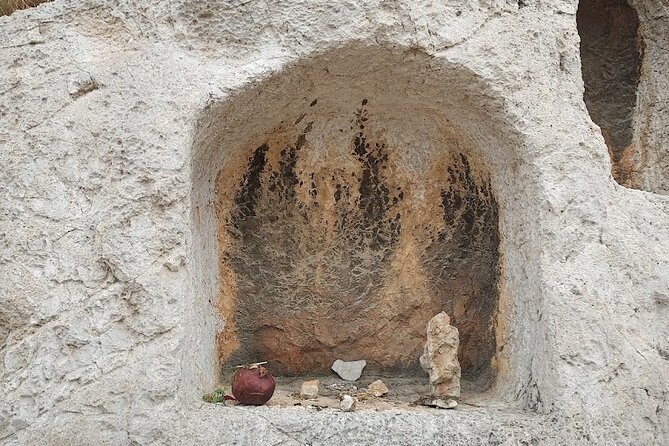
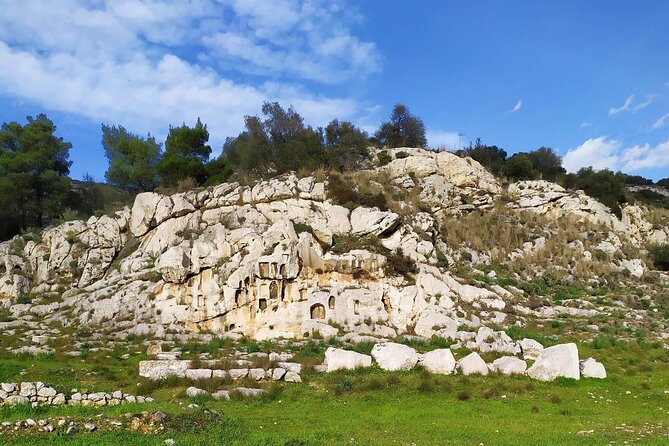
Finally, the Ploutonion—a cave sanctuary linked to Hades (Plouton). Ancient tradition treated it as a sort of entrance to the Underworld, tying directly into Persephone’s descent and the cyclical theme of life, death, and renewal.
If you like mythology that actually maps onto specific places, this is your payoff. It’s a quick stop, but the symbolism is big.
Museum time: objects that make ritual feel real
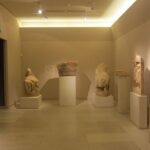
The Archaeological Museum of Eleusis is included for about 30 minutes. It holds artifacts tied to the sanctuary, including statues and offerings, plus reliefs connected to the Eleusinian Mysteries.
This is where the story shifts from “walls and columns” to “hands and materials.” You get a sense of what people placed, displayed, and treasured. It also helps if you want to leave the day with something concrete to remember after the ruins fade into “cool rocks.”
One important cost detail: the entrance fees for archaeological sites and museums are not included. The fee mentioned is €10 per person. Plan to budget that on top of the tour price.
Price and value: is $192.23 a good deal?
The price for this private experience is $192.23 per person, with a duration of 4 to 5 hours. For a private luxury-style day, that’s not just paying for “a car.” You’re paying for three things you can feel immediately:
- Time saved and stress reduced
Pickup and drop-off at your meeting point means you avoid figuring out transport to multiple scattered stops.
- Comfort between sites
Air-conditioning, bottled water, and onboard Wi-Fi turn the day from “hot archaeology quest” into something you can handle without feeling fried.
- Guided context without big-group noise
The driver-guide is English-speaking with extensive historical knowledge, and the private format gives you a calmer way to ask questions or get your bearings fast. In particular, the way guides like Pericles have been described—knowledgeable and kind, with thoughtful stops along the route—matters because it helps the Sacred Way and Telesterion connect as one story.
What may affect value for you: the €10 entrance fees for the archaeological areas and museum. If you’re comparing costs, that fee is normal for these sites, but it should be in your mental math.
What to bring for comfort and better photos
Eleusis is doable, but Greece can be warm and sunny. Bring comfortable footwear for uneven ground and short walks. Add a hat and sunscreen, since you’ll be outside in several locations.
Also, think photo-first. Stops are often 10 minutes plus a few 30-minute blocks. You’ll get good moments, but you won’t have hours at each stop. I’d treat this like a “sequence day”: aim for one or two strong photos per stop, then let the story sink in during the driver-guide explanations.
On the practical side, the tour includes mobile ticket access and Wi-Fi on board, so you can check maps, look up terms, or just keep your phone ready without draining your battery.
Who should book this Eleusis mysteries tour?
Book this if you want:
- A private, English-guided route through the Eleusinian Mysteries sites.
- The Sacred Way experience, not just one big ruin stop.
- A day that moves at a human pace, with comfort between locations.
- A better-than-average chance that your time at the Telesterion will feel meaningful, not random.
You might skip it if you want a long, inside-the-museum, fully licensed guided tour for every room. The package does not include a licensed guide to accompany you inside archaeological sites, so you’ll likely rely on the driver-guide’s storytelling during stops and explore parts of interiors on your own.
Should you book it?
Yes—if your goal is to understand how Athens connects to Eleusis through the Sacred Way, and you like mythology tied to real places. The private format plus comfort details (air-conditioning, bottled water, Wi-Fi, and pickup) make it an easy day to manage, especially when you’re hopping between several short but meaningful stops.
If you’re on the fence, do this math: you’re paying for convenience, comfort, and targeted context. Add the €10 site/museum entrance fee, and it still lines up well for a short day with major Eleusis highlights like the Telesterion, the Great Propylaea, the Kallichoron Well, and the Ploutonion.
FAQ
How long is the Eleusis private luxury tour?
It runs about 4 to 5 hours total, and that duration includes travel time between locations.
Is pickup included, and where does the tour end?
Pickup is offered at designated locations (including hotel/apartment and port options). The tour ends back at the original meeting point.
Is this a private tour or a shared group?
This is a private activity. Only your group participates.
What language is the driver-guide?
The tour includes an English-speaking tour driver-guide.
Is there Wi-Fi during the tour?
Yes. Wi-Fi on board is included.
Are entrance fees included?
No. Entrance fees for archaeological sites and museums are not included (listed as €10.00 per person).
Do I need a licensed guide to enter the archaeological sites?
A licensed guide to accompany you into archaeological sites is not included in the package.
What vehicle will I ride in?
Groups of 1–4 ride in luxurious sedans, and groups of 5–7 ride in comfortable mini vans.
What’s the cancellation policy if weather is bad?
You can cancel for a full refund up to 24 hours in advance. The experience also requires good weather; if it’s canceled due to poor weather, you’ll be offered a different date or a full refund.