REVIEW · ATHENS
Acropolis: Premium Acropolis and Parthenon Guided Tour
Book on GetYourGuide →Operated by Athens Walks Tour Company · Bookable on GetYourGuide
One hill, a dozen legends, and a real plan. I like how this tour turns the Acropolis into a story you can follow start to finish. You’ll see the Parthenon up close, then look out over Athens with context, not just scenery.
Two things I really appreciate: wireless hearing devices so you don’t miss details, and licensed expert guides who connect myths, architecture, and everyday Athens in a way that sticks. You’ll also get skip-the-line entry options for the Acropolis and, if you choose it, the Acropolis Museum.
One drawback to keep in mind: this is not suitable for wheelchair users, and the day’s shape assumes comfortable walking and lots of stairs.
In This Review
- Key takeaways before you go
- How this Premium Acropolis Tour Feels: A guided route with momentum
- Meeting at Porinou 5: Finding Athens Walks without stress
- Theatre of Dionysus: Where the story starts (and why it’s not random)
- Propylaea and the approach to the sacred gate: Grandeur you can feel
- Erechtheion and the Caryatids: Myths you can actually visualize
- Temple of Athena Nike and the smaller stops that add up
- Parthenon time: What you should focus on beyond the iconic view
- Panoramic Athens from the Acropolis hill: Photos with meaning
- Optional Acropolis Museum add-on: When the story continues indoors
- Price and value: Is $40 worth it?
- Guides make or break it: The difference you’ll notice
- Who should book this Acropolis and Parthenon tour?
- Smart tips that make the day easier
- Should you book the Premium Acropolis and Parthenon Guided Tour?
Key takeaways before you go
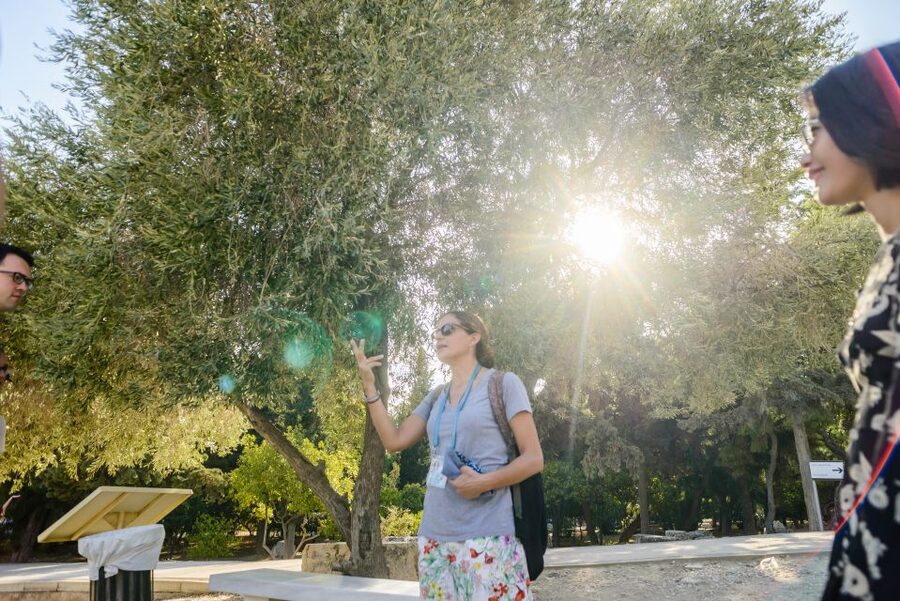
- Wireless hearing devices help you catch every explanation, even when you’re standing back for photos
- Expert licensed guidance keeps the Acropolis from feeling like random stones
- Skip-the-line options can save time at both the Acropolis and (optionally) the Acropolis Museum
- Myths tied to specific buildings make the Parthenon and Erechtheion easier to understand
- A strong photo payoff from multiple iconic viewpoints across the hill
- Family-friendly energy with the right guide thanks to story-focused explanations
How this Premium Acropolis Tour Feels: A guided route with momentum
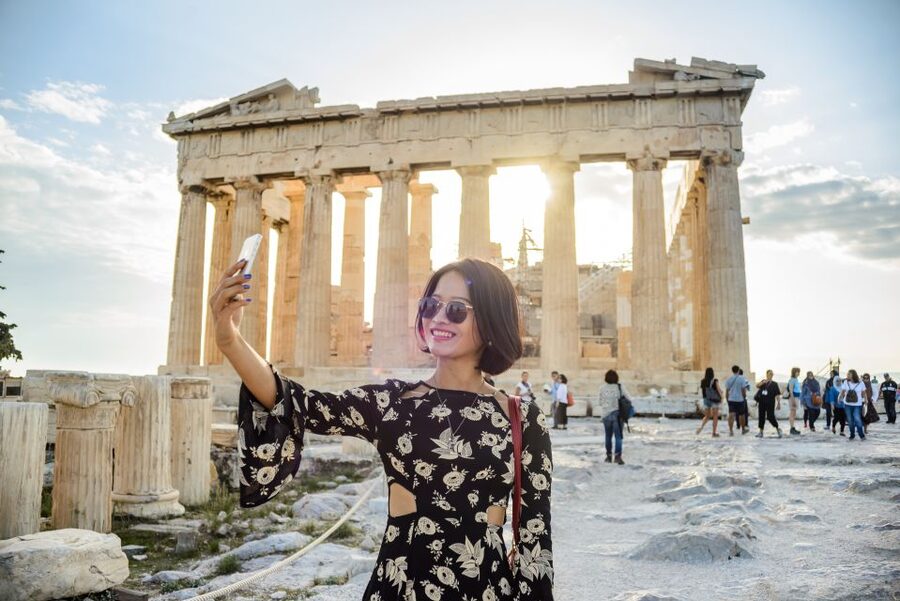
The Acropolis can overwhelm you fast. You show up, take a few photos, and suddenly you’re not sure what you’re looking at—just that it’s important. This tour fixes that problem by moving with purpose, section by section, so you’re always grounded in what you’re seeing and why it matters.
I also like the pace. You get enough time at major stops to notice real architectural details, not just pass by them. And because the guide is close enough to hear through the wireless devices, you can actually follow the story while you’re looking up and around.
Finally, you’re not just stuck on ruins. The tour ends with a view that makes modern Athens feel like part of the same picture you’ve been studying. It’s the kind of experience where the past isn’t sealed off behind glass—it’s sitting right on top of the city.
You can also read our reviews of more tours and experiences in Athens.


Meeting at Porinou 5: Finding Athens Walks without stress
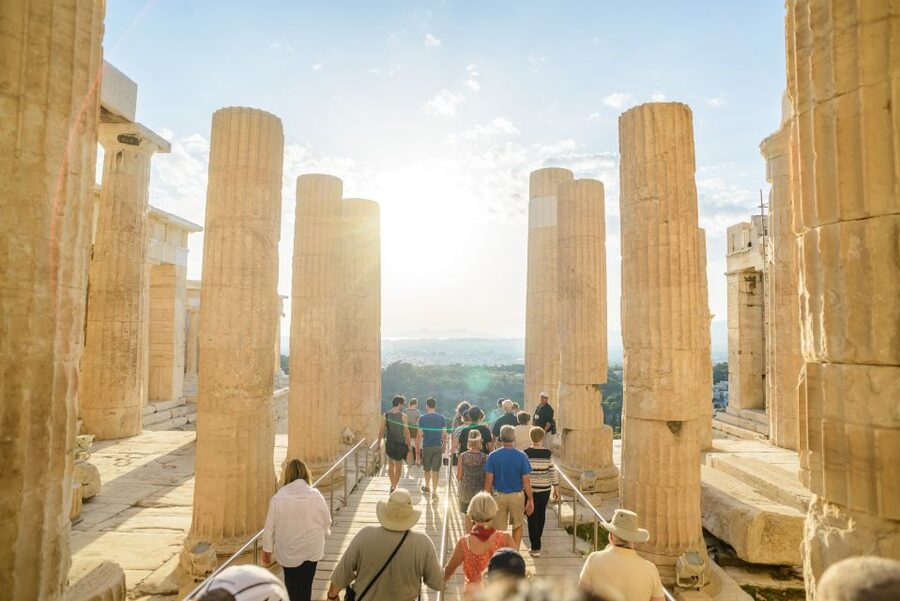
Your meeting point is at the Athens Walks office on Porinou 5 (11742). It’s close to the action: you’ll be near Acropolis metro, and you can reach the office on foot in just a few minutes even if you’re arriving by public transit.
This matters more than it sounds. The Acropolis area is busy and signage can be confusing if you’re rushing. Starting from a clear address helps you get your bearings fast, which means you spend your first hour on the hill—not standing around checking your map.
Practical tip: wear your best walking shoes and plan to move. Comfortable footwear is not optional here; the route includes multiple uphill and stair sections, plus time spent at viewpoints where you’ll naturally shift positions for photos.
Theatre of Dionysus: Where the story starts (and why it’s not random)

The tour begins near the Ancient Theatre of Dionysus, often called the birthplace of drama. Standing among those ancient stone seats, you’re not just looking at old architecture—you’re stepping into a place where performance shaped public life in Athens.
Your guide can connect the dots between theatre and the broader Greek world. Even if drama isn’t your hobby, you’ll likely appreciate the way the guide explains how public storytelling, politics, and religion mixed together. And because this is the opening stop, it gives you a mental framework before you start climbing.
A small consideration: this area can be exposed, depending on the weather. If the sun is out, it’s smart to have your sunscreen and sun hat ready right away. Late in the day is usually tougher; early energy is better.
Propylaea and the approach to the sacred gate: Grandeur you can feel
Next comes the famous ceremonial entry: Propylaea, the imposing gateway to the Acropolis. The guide’s job here is to help you see symmetry and design choices the way ancient visitors would have.
When you pass through, it feels like you’ve crossed a boundary. The Acropolis isn’t just a collection of temples; it’s a carefully staged space. And once you understand that, later stops—like the temples and terraces—click into place.
This is also a good moment to slow down for a couple of photos. From the gateway and nearby angles, you can frame the hill’s depth and the way buildings line up along the slopes. If you’re traveling with someone who wants a quick shot, this is where you can both compromise: you’ll get images, but you’ll also hear the meaning behind what you’re photographing.
Erechtheion and the Caryatids: Myths you can actually visualize
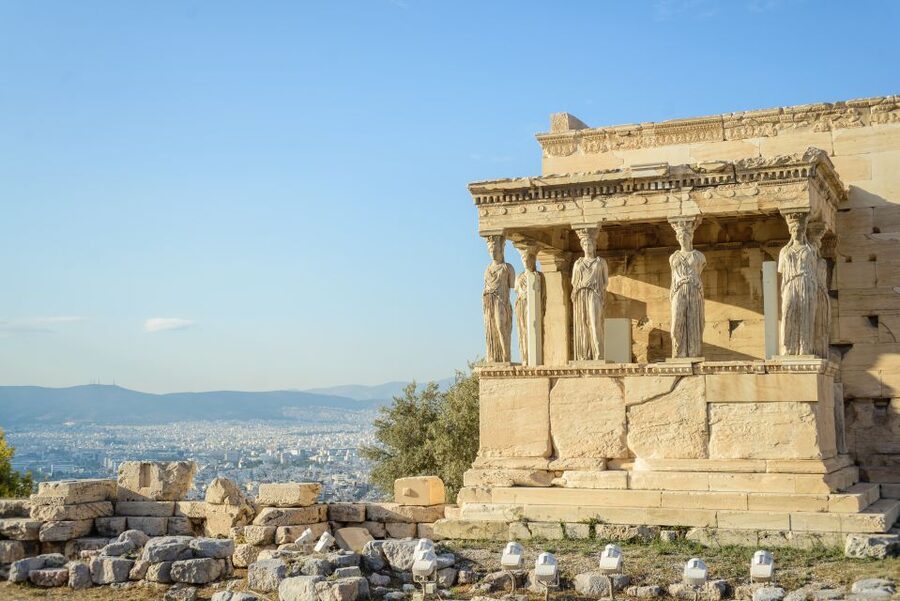
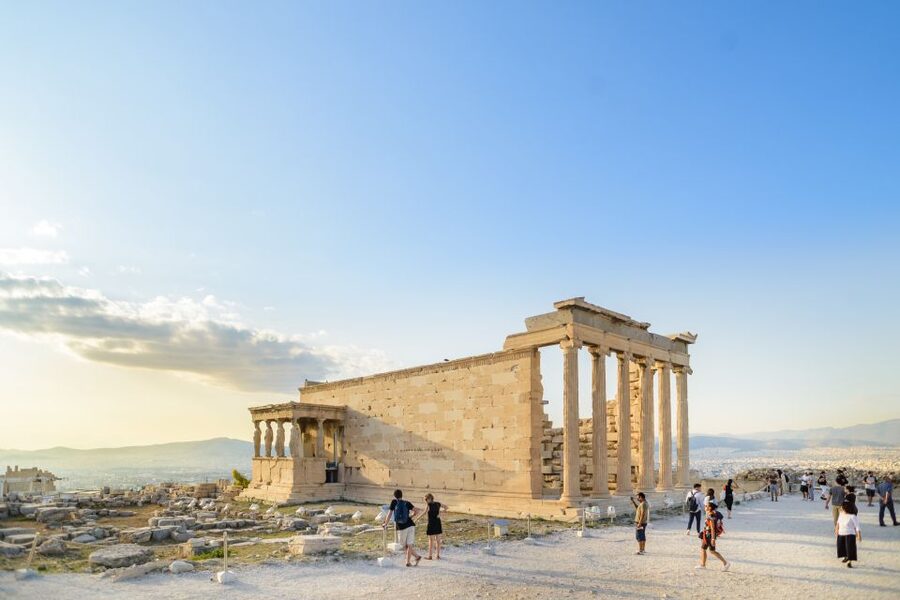
One of my favorite parts of this tour is the stop at the Erechtheion. The main reason is the Caryatids—the carved female figures used as supporting columns. They aren’t just decorative; they’re part of the architectural system.
What makes this stop memorable is how the guide ties design to story. You’ll hear about myths connected to this sanctuary, including the contest between Athena and Poseidon for Athens’ patronage. That myth helps you understand why people cared so much about these spaces. You’re not just learning names—you’re learning the emotional weight behind them.
Here’s what to watch for: different poses in the Caryatids. The guide may point out that each figure has its own character, and once you look, it’s hard to unsee. If you like details, you’ll enjoy the time here because the explanation gives you permission to look longer.






Temple of Athena Nike and the smaller stops that add up
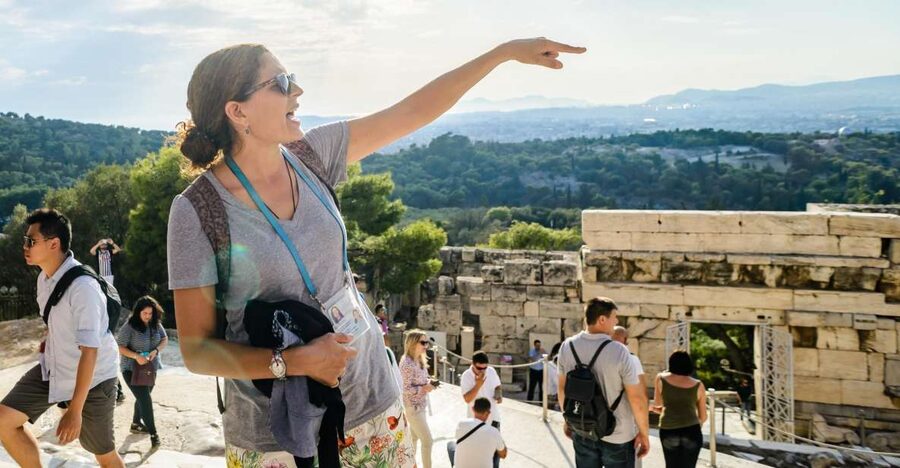
The route also includes a stop at the Temple of Athena Nike. Even if you think of the Parthenon first, this temple helps you notice how Athena worship was expressed across the Acropolis complex, not just in one grand building.
Then there are additional nearby stops that many self-guided visits skip or rush. You’ll pass by key points such as the Odeon of Herodes Atticus, a landmark tied to public performance and civic life, and the Asklepieion of Athens, associated with healing and sanctuary culture.
These stops may be shorter, but they matter. They build a sense of the Acropolis as a working sacred city, not a single monument. By the time you reach the Parthenon, you’ll understand the hill as a whole system—religion, community, and power all sharing the same ground.
If you’re the kind of person who enjoys context, this structure is a big advantage. If you hate explanations, you might find yourself wanting more time for pure photo time, but the tour is designed to keep you moving with just enough story at each stop.
Parthenon time: What you should focus on beyond the iconic view

Yes, you’re going to see the Parthenon—the centerpiece, the one everyone recognizes. But the value here is what you’ll learn while you’re looking at it.
You’ll get a clear explanation of the Parthenon’s purpose as a sanctuary dedicated to Athena, and how it functioned as a powerful symbol of Athens’ influence in the ancient world. The guide also connects the building’s design to the skill of the architects, helping you understand that the site is not only meaningful—it’s meticulously made.
What to do with your eyes:
- Look at the proportions and the way the structure sits on the hill
- Notice how the building dominates the space around it
- Pay attention to the details the guide points out while you’re standing in a few key angles
The tour includes a dedicated stretch here, so you’re not stuck in a five-minute rush. And if the day is photo-heavy for you, this is where you’ll want to be ready with a stable stance. The spot can encourage you to linger once you’re informed, because suddenly the Parthenon is not just a silhouette.
Panoramic Athens from the Acropolis hill: Photos with meaning
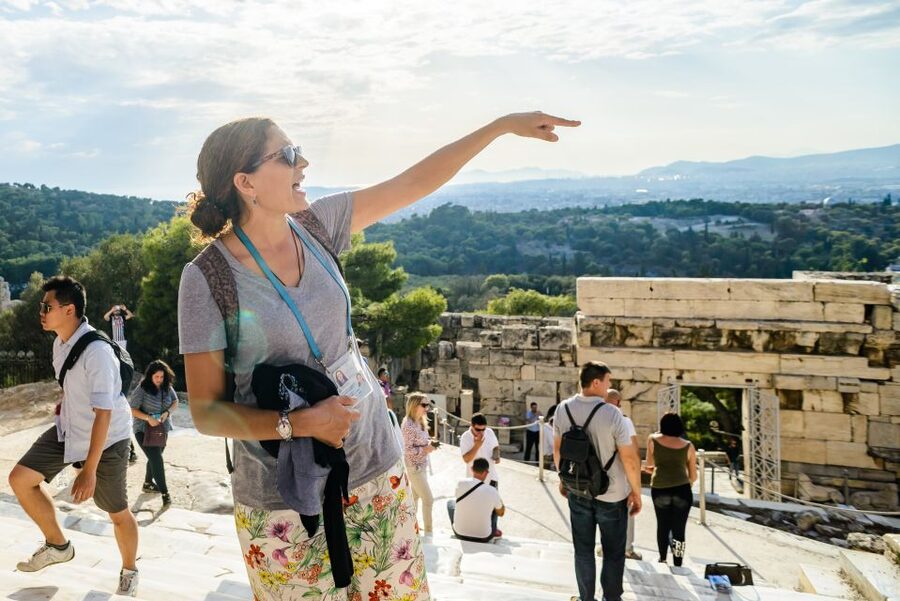
At the end, you get time to absorb the views over Athens. This is where the story you heard starts making sense visually.
You’ll see modern streets and neighborhoods laid out below you, and the contrast is the point. After learning about sacred space on top of the hill, it feels natural to look down and realize how Athens kept building over the centuries.
From a practical angle, the view stage is a good place to take a breath. If you’re walking with kids or a slower group member, this is a natural pause that doesn’t feel like a random break—it’s tied to the experience.
Weather affects this part, obviously. In clear conditions, it’s easier to see the city’s layout and line-of-sight angles around the hill. If it’s windy, expect the sun to feel stronger up top, so keep that sun hat mindset.
Optional Acropolis Museum add-on: When the story continues indoors
This tour can include the Acropolis Museum option with guided content (in the English version, if selected). If you choose that, you also get skip-the-line entry for the museum ticket.
This matters because museum time is where object details turn into understanding. On the hill, you’re surrounded by architecture and views. Inside, you can connect those structures to what archaeologists and curators preserve.
One more smart reason: if you’re paying for a guided experience, it’s worth making sure the ending doesn’t feel unfinished. The museum option is the natural continuation of the message the guide is building while you’re on the Acropolis hill.
Also, the tour finishes at the museum area, so even without the full museum option, you’ll be close. If your ticket choice includes museum time, you’ll start off with less wasted waiting and more time for the guided explanation.
Price and value: Is $40 worth it?
The price is listed at $40 per person for a 2 to 4 hour experience. That range signals the tour can flex depending on timing and selected options, like whether you include museum time and whether entry tickets are part of your package.
Here’s how I think about value on this kind of tour:
- You’re paying for a licensed guide who ties together monuments you’d otherwise treat as separate
- You’re paying for skip-the-line access options that reduce dead time at the busiest places
- You’re paying for wireless hearing devices, which directly improves how much you understand
If you go solo, you might save money. But you’ll likely spend more time piecing things together from signs that don’t always explain myths and architectural purpose in plain language. And on a hill like this, where you can’t sit and read for long, the guide’s role becomes more valuable.
At $40, this feels like a solid deal if you want more than a quick photo stop—especially if you care about understanding the Parthenon and the stories behind the buildings.
Guides make or break it: The difference you’ll notice
The best part of this experience is how strongly the guides connect facts to atmosphere. In the feedback you’ll read, names come up: Demos, Vassily, and Iris.
- Demos is described as fun and informative, and the tour experience is said to go on even in rain. That’s a real advantage because weather can otherwise derail plans.
- Vassily is praised as kind and interesting, with explanations about the Acropolis, the museum, and Athens overall.
- Iris gets standout praise for energy and communication, with mythological stories that help everything feel alive.
The lesson for you: pick this tour if you like talking, asking questions, and having someone narrate what you’re seeing in real time. If you prefer silent roaming, this might feel too structured.
But if you’re aiming for an Athens day that feels intelligent and memorable, the guide layer is exactly what makes it worth your time.
Who should book this Acropolis and Parthenon tour?
You’ll enjoy this most if you want:
- A guided route that covers the key monuments without confusion
- Clear explanations tied to the Parthenon, Erechtheion, and major viewpoints
- A photo-ready experience with context, not just snapshots
- The convenience of skip-the-line entry and hearing devices
It’s also a good fit for families, based on guide-focused feedback that mentions kids staying engaged with myth explanations. If your group includes teens or curious adults, the story-driven approach tends to work well.
It’s not suitable for wheelchair users, and it doesn’t allow pets or smoking. Also avoid bringing luggage or large bags; keep it light.
Smart tips that make the day easier
A few practical things can save you frustration:
- Wear comfortable shoes you trust on stone and stairs
- Bring your passport or ID for reduced ticket eligibility if you’re eligible
- Bring a sun hat and sunscreen since the hill can feel bright and hot
- Don’t carry anything too bulky—large bags aren’t allowed
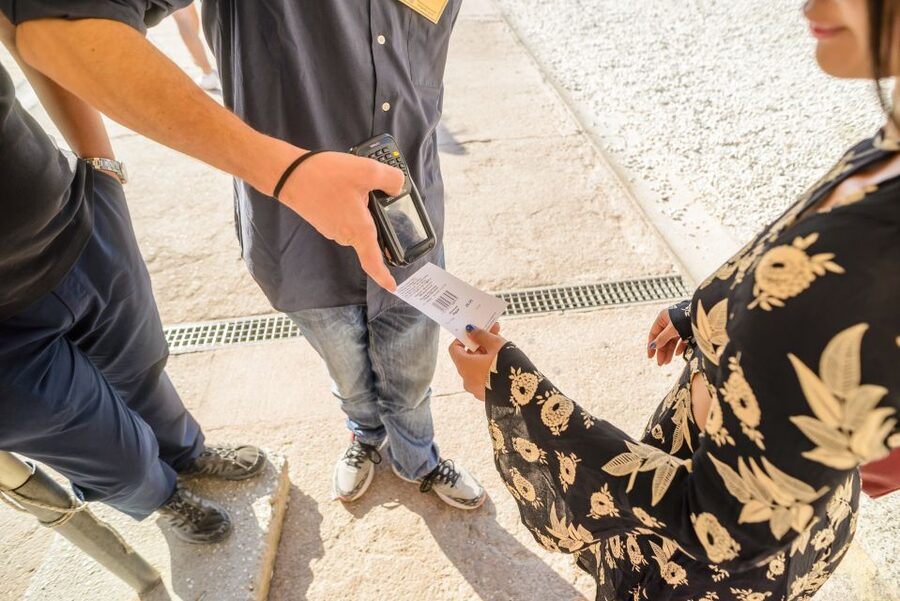
On tickets: there are two paths—buy entry tickets online ahead of time or buy them separately. The tour suggests buying options that include tickets because it’s common not to find available entrance tickets. If you’re relying on reduced or free entry categories, have your documents ready and double-check which option makes sense for you.
Should you book the Premium Acropolis and Parthenon Guided Tour?
Book it if you want the Acropolis to feel understandable. For $40, you’re getting guide-led storytelling, wireless hearing devices, and skip-the-line options that protect your time on the hill. It’s a better use of your limited Athens hours than trying to run the site alone while also guessing what every temple detail means.
Don’t book it if you’re wheelchair-bound or if your idea of a great trip is long, unstructured wandering with minimal explanations. This experience is built for guided movement.
If you fit the sweet spot—curious, comfortable walking, and ready to learn why Athens built what it built—this is a strong choice.