REVIEW · ATHENS
Private Luxury Tour: Mystic Pilgrimage – Kerameikos to Eleusis
Book on Viator →Operated by Pericles Century · Bookable on Viator
The Sacred Way starts at a graveyard. This Private Luxury Tour links Kerameikos to Eleusis along the ancient pilgrimage route, with an air-conditioned ride and a driver-guide who turns archaeology into stories about Demeter and Persephone. I especially like the comfort details—A/C, bottled water, and onboard WiFi—because you’re out on the road for hours. I also like the human side: when you get a guide like Pericles (and sometimes Dimitris), the day feels like more than a checklist. One heads-up: archaeology-site entry fees are extra, and you won’t have a licensed guide inside every ticketed area.
You’ll start with a convenient pickup from your hotel or the port, then go round-trip without the stress of buses, timing, or finding parking. The stops are spaced for short walks and photo pauses, so you see a lot in one day—even if it’s not a slow, hour-by-hour museum crawl.
If you’re the type who wants to linger for long readings in every building, plan to add extra time on your own later. This tour is built for motion, big themes, and smart storytelling—less for deep, solitary wandering.
In This Review
- Key things to know before you go
- A private luxury ride from Kerameikos to Eleusis
- Why the Sacred Way feels different when you’re not rushed
- Kerameikos: cemetery, city walls, and the start of the pilgrimage
- Dipylon and the Pompeion: the big gate energy and procession prep
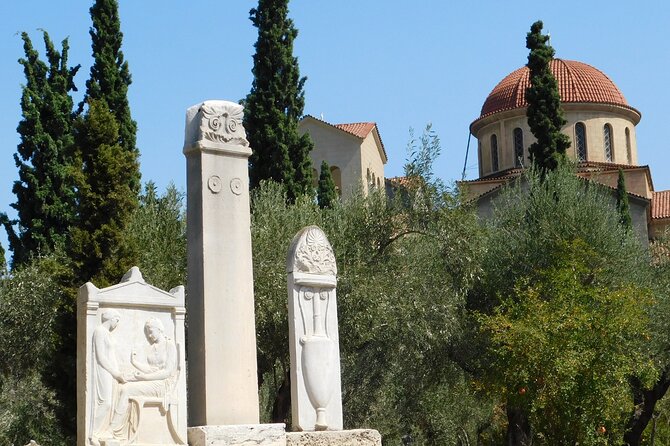
- The Kerameikos Museum stop for pottery, stelae, and burial goods
- Iera Odos in Athens: walking a sacred fragment near the Kifisos crossing
- Daphni Monastery: Byzantine mosaics on a pilgrimage route
- Aphrodite in Skaramagkas: why weekends change your access
- Eleusis arrives: Hadrian’s bridge and the Sacred Way’s final miles
- The sanctuary core: Great Propylaea, Kallichoron Well, Ploutonion, and Telesterion
- Museum time inside Eleusis and how to use your limited minutes
- Lunch in Eleusis: what’s included (and what isn’t)
- Price and logistics: does $129 feel fair?
- Practical tips for a hot, walk-and-stop day
- Who this Sacred Way private tour suits best
- Should you book the Kerameikos to Eleusis luxury tour?
- FAQ
- What’s included in the tour price?
- Are archaeological site entry fees included?
- Is lunch included?
- How long is the tour?
- Do I get pickup from my hotel or the port?
- Is this a private tour or shared group?
- What should I wear or bring for the day?
- What language are the guides?
- What happens if the weather is bad?
Key things to know before you go
- A/C comfort, bottled water, and onboard WiFi make the ride pleasant even when Athens heat kicks in
- Pickup from hotel or port saves real time (and avoids morning logistics headaches)
- Short, meaningful stops keep the day moving from Kerameikos through Eleusis
- Driver-guide storytelling, not an all-access licensed guide inside sites
- Mobile ticket plus group sizing (sedan for 1–4, mini van for 5–7) keeps it private and flexible
A private luxury ride from Kerameikos to Eleusis
This is a private, escorted-by-a-driver experience where the “luxury” is practical: you’re in an air-conditioned vehicle, you get bottled water, and you’re not wrestling with public transport while carrying maps and tickets. You’ll also have WiFi on board, which sounds minor until you’re trying to plan a lunch stop or confirm museum hours.
The route is Athens-to-Eleusis by way of the ancient Sacred Way, then back again. The big idea is that the driver-guide does the connecting for you—explaining what you’re looking at and why it mattered to the Eleusinian Mysteries—rather than leaving you to stitch the story together alone.
Expect a day that feels like: drive, stop, walk a bit, listen, take photos, repeat. It’s a strong format for people who want context without spending the whole day figuring things out.
You can also read our reviews of more tours and experiences in Athens.

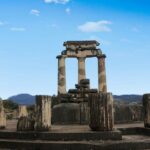
Why the Sacred Way feels different when you’re not rushed
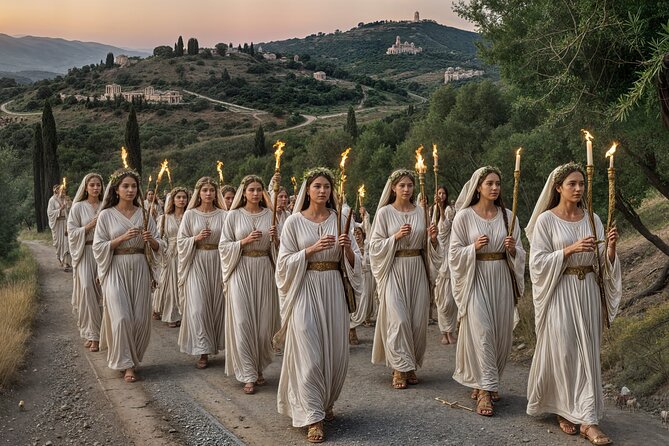
The Sacred Way isn’t just a road. It’s a route people traveled as part of a religious pilgrimage—carrying sacred items and moving toward the Sanctuary of Demeter in Eleusis. Walking even partial remnants of that route gives you a physical sense of how “religion as movement” worked in the ancient world.
In a rushed, crowded setup, you’d spend your attention on logistics. Here, the structure is built around timing you can relax into: pickup is handled, the vehicle stays with your group, and the day includes frequent stops that are just long enough to register the details.
That said, the stop lengths are intentionally compact. Some are 10 minutes; others stretch to 30. You’ll enjoy it most if you treat each site like a chapter break—then plan a follow-up self-guided visit if anything really hooks you.
Kerameikos: cemetery, city walls, and the start of the pilgrimage
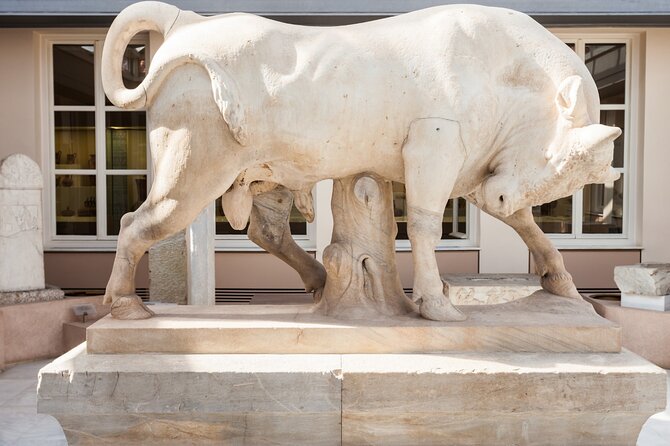
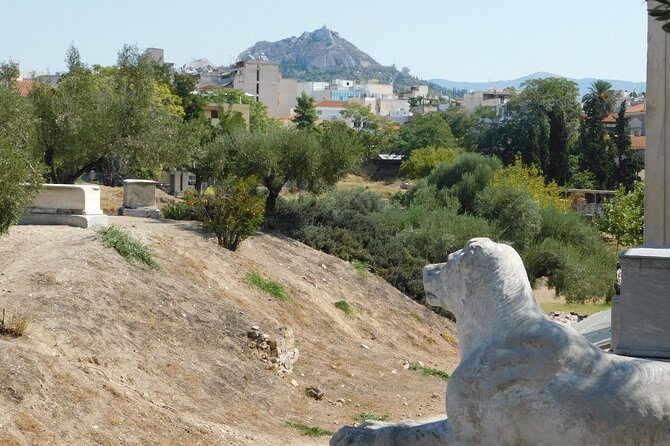
Your day begins at Kerameikos Archaeological Site, one of Athens’ most atmospheric places. This is where the ancient city cemetery and burial monuments sit near remains of city walls—and where you can sense how the living city sat beside its rituals for the dead.
You’ll walk along the path associated with the Panathenaic procession, then orient yourself to Kerameikos as the potters’ quarter in ancient Athens and the starting point of the Sacred Way. The museum on site is a nice complement if you want a grounded look at pottery and funerary artifacts rather than only large monuments.
Practical tip: Kerameikos is one of those places where comfortable shoes matter more than you’d think. Even short walks add up on a tour day.
Dipylon and the Pompeion: the big gate energy and procession prep
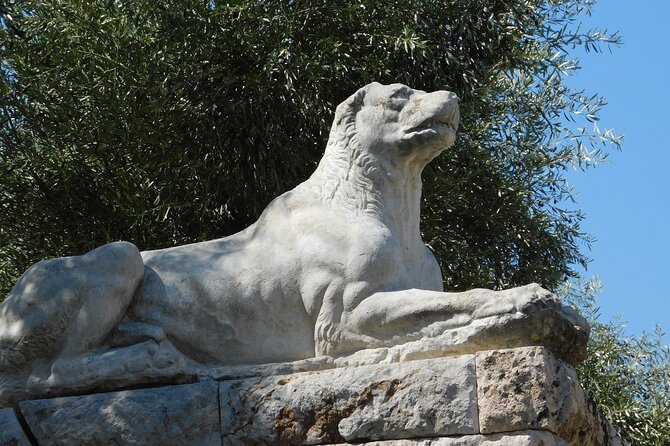
Within Kerameikos, the tour includes the Dipylon Gate, described as the largest and most important gateway of ancient Athens. Standing at—or near—the remnants, it’s easier to imagine arrivals, merchants, and festival crowds funneling through the city walls into a ceremonial route toward the Acropolis.
Right after that, you’ll also see the Pompeion. This building served as a key gathering space for preparations tied to the Panathenaic Procession. It’s a good pairing with Dipylon because it shifts you from “city entrance” to “festival staging.” In other words: you get both the doorway and the pre-show.
If you’re a visual thinker, this combo helps a lot: gate first, then the logistics of celebration.
The Kerameikos Museum stop for pottery, stelae, and burial goods
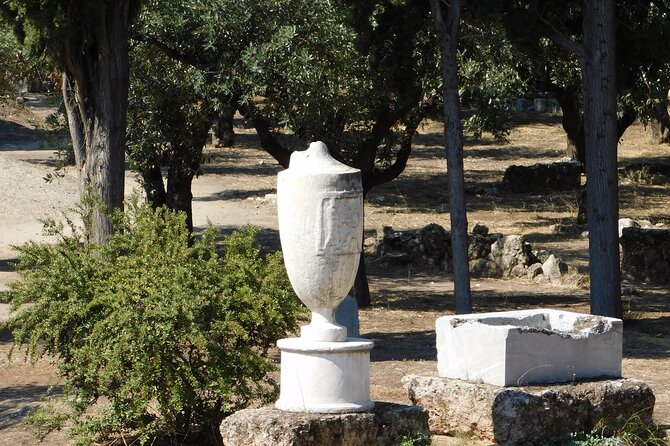
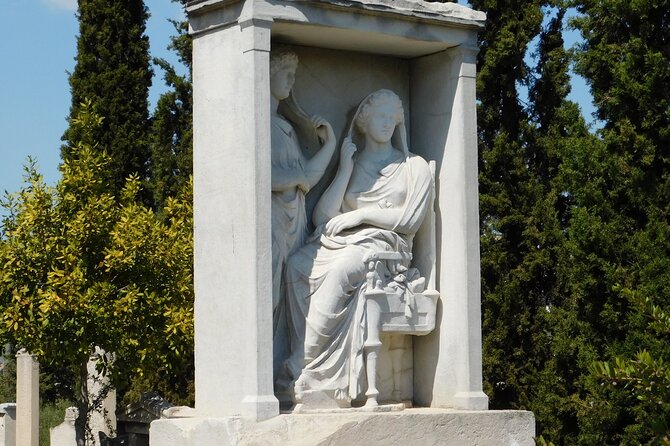
The Kerameikos Museum is a short but worthwhile reset during a tour full of outdoor ruins. Here you’ll see artifacts unearthed in Kerameikos—pottery, funerary stelae, and grave goods—the kinds of objects that turn big ancient stories into human scale.
Even if your Greek is limited (and even if you’re not a museum person), the material evidence can make the mythology feel less abstract. You’re connecting the route not only to festivals, but to daily beliefs and funerary practices.
The museum time is limited (about 30 minutes), so use that window to focus on what you’re most curious about: inscriptions, sculpted stelae, or the pottery styles.




Iera Odos in Athens: walking a sacred fragment near the Kifisos crossing

One of the cooler “in-between” moments is the Iera Odos section tied to the Sacred Way as it ran toward Eleusis. The tour points out a fragment discovered during construction of the Eleonas Metro Station, including surviving piers that hint at an older arched stone bridge over the Kifisos River.
This stop is the kind that’s easy to miss on your own, because it’s embedded in the modern city. Having a driver-guide explain why those piers matter—especially in terms of pilgrimage movement—turns a small archaeological remnant into a meaningful clue.
Then you’ll step onto another Sacred Way segment in the Aigaleo area. This is where you get the “walking the route” feeling more directly, along with myth and ritual context about the Eleusinian processions.
Daphni Monastery: Byzantine mosaics on a pilgrimage route
The Monastery of Daphni is a UNESCO World Heritage Site and it adds a different layer to your day. You’re still along the historical route outside Athens, but now you’re looking at the 11th-century Byzantine world—especially its celebrated mosaics, including the depiction of Christ Pantocrator in the dome.
If you only focus on ancient Greece, you can accidentally treat Eleusis as if it ended with antiquity. Daphni helps you remember that sacred routes often stay sacred even when religions change.
This is also a good “breather” stop. It’s less about sprinting between monuments and more about pausing in a quieter setting with ancient cypress trees nearby.
Aphrodite in Skaramagkas: why weekends change your access
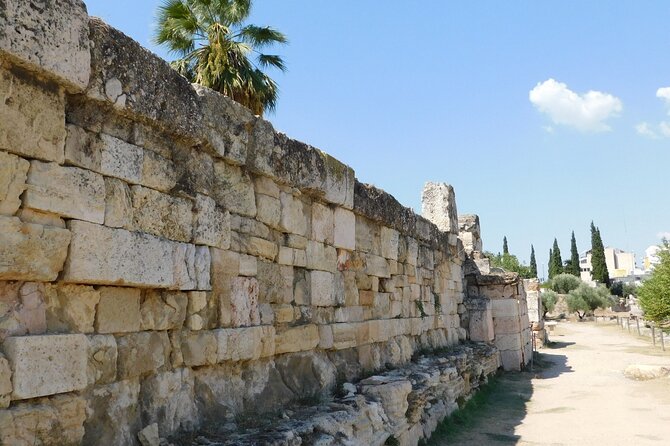
Skaramagkas is a more subtle stop, tied to a sanctuary dedicated to Aphrodite. What matters for your planning is access: the site is open to the public on weekends. On weekdays, you may only admire remnants from the outside, since interior access isn’t permitted.
That means you should think of this as either a quick photo-and-context break (weekdays) or a slightly fuller visit (weekends). Either way, it fits the tour theme: the Sacred Way region wasn’t only Demeter’s stage—it was part of a broader world of worship.
Eleusis arrives: Hadrian’s bridge and the Sacred Way’s final miles
Once you reach Eleusis, the Roman engineering stop is a fun reset: the well-preserved ancient Roman bridge made from Piraeus limestone. It’s about 50 meters long with a central section featuring arches and approaches on both sides, and it dates to Emperor Hadrian’s reign (125 AD).
This stop connects nicely to the bigger story: the bridge helped link the pilgrimage route and connected movement toward the sanctuary area and the Eleusinian landscape beyond.
Even if you’re not an architecture nerd, Roman bridge craftsmanship is easy to appreciate because it feels built to last—like the ancient world was already thinking several centuries ahead.
The sanctuary core: Great Propylaea, Kallichoron Well, Ploutonion, and Telesterion
This is the heart of the experience, and the stops here are where the mythology becomes more than talk.
You’ll see the Great Propylaea of Eleusis, the monumental entrance to the sanctuary of Demeter and Persephone. Built in the 2nd century CE under Marcus Aurelius, it’s described as mirroring the Propylaea of the Acropolis—meant to mark the threshold from everyday life into a sacred space.
Then you’ll move to the Kallichoron Well, tied to Demeter pausing in myth while searching for Persephone. The name—meaning well of the beautiful dances—points to the idea that local women danced to comfort the goddess.
Next is the Ploutonion cave, connected to Hades (Plouton), often described as the entrance to the Underworld in the mythology. The tour’s framing makes sense here: this site supports the theme of descent, grief, and eventual return.
Finally, you’ll reach the Telesterion, the grand hall at the center of the Eleusinian Mysteries. This is where initiations took place in the ancient world, and you’ll get a sense of why this specific structure mattered so much to the rituals.
If you want one strategy for making this meaningful: pay attention to entrances, thresholds, and “movement.” Sacred processions weren’t random walking—they were part of the ritual script.
Museum time inside Eleusis and how to use your limited minutes
The tour includes Archaeological Museum of Eleusis with artifacts connected to the sanctuary. Expect highlights like statues of Demeter and Persephone, sacred offerings, and reliefs connected to scenes from the Mysteries.
This museum stop is your chance to balance what you saw outdoors (architecture, walls, cave setting) with what the sanctuary collected and displayed as part of worship. Even within a limited time window (about 30 minutes), you can still gain a lot by focusing on a few items rather than trying to see everything.
If you’re the type who wants to read every label, you might feel a time crunch. In that case, use photos to remember what caught your eye, then return later on your own if time allows.
Lunch in Eleusis: what’s included (and what isn’t)
Lunch is built into the day as a traditional taverna stop in Eleusis, but your meal cost is not included. The good news is that you’re in the right place to eat like the locals do, not like a tourist food court.
The tour description suggests classic choices such as grilled meats, fresh salads, tzatziki, and eggplant-based dips. Expect a warm, rustic atmosphere—this is the part of the day where you’ll likely feel travel fatigue ease up.
Budget tip: set aside lunch money ahead of time so you’re not making decisions under stress.
Price and logistics: does $129 feel fair?
At $129 for about 5 to 6 hours, the main value is transportation plus interpretation—your private vehicle, pickup and drop-off, bottled water, and onboard WiFi, along with an English-speaking driver-guide who connects the dots between stops.
Entry fees are extra, and lunch is extra. Those costs can add up depending on which sites you choose to enter, but the structure is still good value if you’re mainly paying for:
- time-saving private transport out to Eleusis
- a driver who explains what you’re seeing
- a tour plan that hits both Kerameikos and the Eleusis sanctuary complex in one day
One practical caution: because ticketed areas may require separate entry and there’s no licensed guide included for inside interpretation, you’ll want to read what you can on-site signage. If you’re a museum-power-user who expects a licensed guide for every ticketed room, you may feel less satisfied.
On the flip side, if you like stories and you want to avoid the headaches of self-planning, this format usually hits the sweet spot.
Practical tips for a hot, walk-and-stop day
Greece weather can be intense, so plan like it’s going to be warm. Wear comfortable footwear, bring a hat and sunscreen, and don’t underestimate how quickly outdoor walking adds up even with short stop times.
Also, keep your day flexible. The tour notes that it needs good weather. If conditions are poor, the operator may offer a different date or a refund.
Finally, think about your energy level: you’re looking at a lot of sites with short windows. If you’re traveling with someone who prefers slow pacing, consider adding a self-guided follow-up afternoon once you see what interests you most.
Who this Sacred Way private tour suits best
This works especially well for you if:
- you want a private experience without the stress of driving yourself
- you enjoy mythology and history when someone explains how the pieces fit
- you value comfort—A/C, bottled water, and WiFi—on a longer day outside the city
It’s less ideal if:
- you need long museum time and deep reading at every stop
- you expect a licensed guide inside every ticketed archaeological space
- your group wants a highly slow, low-stop itinerary
Should you book the Kerameikos to Eleusis luxury tour?
I’d book it if you want to experience the Sacred Way story in a way that feels calm and guided, with comfort handled and the big connections made for you. The best part is that Kerameikos plus the sanctuary core at Eleusis can be hard to stitch together on your own in a single day—this removes that headache.
Before you commit, do two quick self-checks:
- Are you okay with extra entry fees and a lunch on your own cost?
- Are you happy with short stops and driver-led explanations, rather than a licensed guide inside every site?
If yes, this tour is a strong choice for a first or second trip to Athens where you still want something truly different from the usual city monuments.
FAQ
What’s included in the tour price?
You get a private, air-conditioned vehicle with WiFi on board, bottled water, and hotel or cruise ship/port pickup and drop-off. The driver-guide provides expert English historical commentary. You also travel in a vehicle sized to your group (sedan for 1–4, mini van for 5–7), and you’ll use a mobile ticket.
Are archaeological site entry fees included?
No. Entrance fees for archaeological sites and museums are not included in the price.
Is lunch included?
Lunch in Eleusis is not included. A traditional taverna stop is scheduled, but you pay for your own meal.
How long is the tour?
It runs about 5 to 6 hours, including travel time between locations.
Do I get pickup from my hotel or the port?
Yes. Pickup is offered from the Athens port or your hotel, and you’ll also be dropped off afterward.
Is this a private tour or shared group?
It’s private. Only your group participates.
What should I wear or bring for the day?
Wear comfortable footwear for walking and exploring. Bring a hat and sunscreen, since Greece can be warm and sunny.
What language are the guides?
The driver-guides provide explanations in English.
What happens if the weather is bad?
The tour requires good weather. If it’s canceled due to poor weather, you’ll be offered a different date or a full refund.