REVIEW · ATHENS
Private Luxury Biblical Tour: Apostle Paul’s Footsteps – Corinth
Book on Viator →Operated by Pericles Century · Bookable on Viator
Paul’s routes start with a canal detour. I like how this private day links engineering, ancient ports, and courtroom moments into one logical circuit through Corinth’s biblical world. You get a relaxing pickup from Athens (port or hotel) and a ride timed for your group, so you don’t feel whipped through or stuck in crowds.
Two things I especially appreciate: the English-speaking driver-guide who explains what you’re seeing, and the practical comfort package (air-conditioned vehicle, bottled water, and onboard Wi‑Fi) that keeps the day calm even when the sites get busy. If you’re lucky with your guide, you may also get little extras like a photo pause at key viewpoints, and yes, some guides have arranged a great lunch stop along the way.
One consideration: archaeological entrance fees aren’t included (plan on about €20 per person), and the tour does not include a licensed archaeology guide inside the sites—your driver-guide does the teaching, but they aren’t replacing the on-site ticketed specialists.
In This Review
- Key highlights
- From Athens pickup to Corinth Canal: the calm way to start
- Isthmus of Corinth and the Diolkos: engineering that explains the city
- Kenchreai harbor: Paul’s arrival setting in Roman times
- Ancient Corinth’s Bema and Paul’s courtroom moment
- Temple of Apollo: the pagan backdrop to Paul’s message
- Archaeological Museum and Akrokorinthos: shifting from stones to the big picture
- Apostolos Pavlos Church: ending at a living reminder
- What the day feels like: walking pace, timing, and group comfort
- Price and value: why $179.06 can make sense for Corinth
- Should you book this Corinth Apostle Paul’s Footsteps tour?
- FAQ
- How long is the Corinth Apostle Paul’s Footsteps tour?
- Is this a private tour or a shared group?
- What’s included in the tour price?
- Are entrance fees included for the archaeological sites and museum?
- Do you provide pickup from Athens hotels and ports?
- What if the weather is bad?
Key highlights
- Corinth Canal intro without the rush: a quick, scenic “what changed the routes” stop right at the start
- Diolkos trail story: ancient ship-transport tech that explains why Corinth mattered commercially
- Kenchreai, where Paul likely landed: the Roman-era port setting behind early Christian movement
- The Bema and Paul’s Gallio moment: public platform, tribunal context, and the Acts 18:12–17 storyline
- Akrokorinthos views with layered fortifications: classical through Byzantine, Frankish, and Ottoman remains
- A closing visit to Apostolos Pavlos Church: a modern basilica tied to the older Pauline tradition
From Athens pickup to Corinth Canal: the calm way to start
This tour is designed for one group at a time. That matters in a place like Corinth, where buses can show up all at once and then everyone tries to photograph the same stone at the same angle. With this setup, you ride together in an air-conditioned vehicle and keep a pace that fits your questions.
Pickup is part of the appeal. You can be collected from your hotel or apartment or from the port arrival area, with the driver waiting outside for hotels and meeting you with your name sign at the port. One of the smartest bits is flexibility: at least some guides have handled travelers needing pickup from a port like Piraeus and a drop-off in a different area of Athens. If you’re stitching this into a larger itinerary, that kind of logistics is worth paying for.
Timing is also built in. The tour lasts about 5 to 6 hours, and that includes driving between stops. That keeps expectations realistic: you’re not just “visiting sites,” you’re doing the full Athens-to-Corinth commute with time to actually look.
You can also read our reviews of more tours and experiences in Athens.

Isthmus of Corinth and the Diolkos: engineering that explains the city
You start at the Isthmus of Corinth, the narrow land bridge that has funneled people and goods between mainland Greece and the Peloponnese for centuries. Even if you’re coming for the Bible, this is a key “why” stop. Corinth isn’t just a religious footnote—it’s a trade crossroads. Seeing the geography first makes the rest of the day click.
Next comes the Corinth Canal, a shortcut carved through rock in the 19th century. It’s a quick stop, but it gives you that visual feeling of how routes change. Ships don’t just “arrive”—they follow new channels when technology makes it possible.
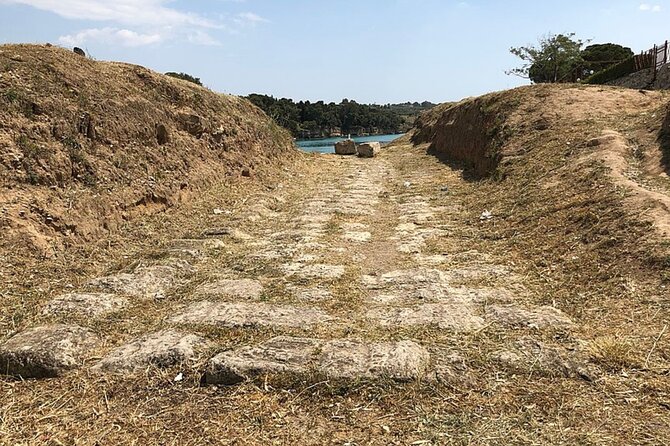
Then you shift to the older solution: the Diolkos. This was an ancient stone-paved way where ships could be transported overland across the Isthmus. Standing near it, you can connect the dots between ancient ingenuity and Corinth’s commercial pull. It’s also a good mental break from pure ruins. This is about systems—how cities move goods and stay powerful.
Practical note: these early stops have free admission and are relatively short. That’s ideal if you want your day to begin gently, before the walking and museum time.
Kenchreai harbor: Paul’s arrival setting in Roman times
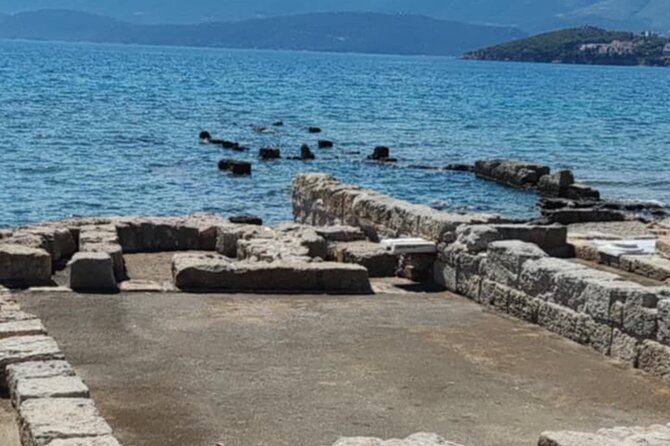
The next step is the Ancient Port of Kenchreai on the eastern side. Kenchreai was a commercial hub in the Roman era, and it’s closely tied to Paul’s journey—tradition places Paul’s arrival here around 53 A.D.
What you’ll notice is that this stop reads like a shoreline argument: port geography plus commerce plus people moving in and out of the region. Even if you don’t have every Roman detail memorized, the atmosphere helps. You’re stepping into the kind of place where messages, goods, and news traveled—exactly the environment where early Christianity spread.
This stop is also a timing win: it’s long enough to take in the setting, but not so long that it steals time from Ancient Corinth proper. Admission is free, so you can focus on understanding instead of adding ticket stress.
Ancient Corinth’s Bema and Paul’s courtroom moment
This is where the day turns from “scenery” to “scripture.” In Ancient Corinth, you’ll see the Glauke Fountain first. The name comes from Greek myth—Glauke, daughter of King Creon, is said to have taken refuge here after being poisoned by Medea. This sounds like a detour, but it works. Myth is part of the public language of the city, and Paul’s work was happening in a world where those stories and traditions shaped everyday thought.
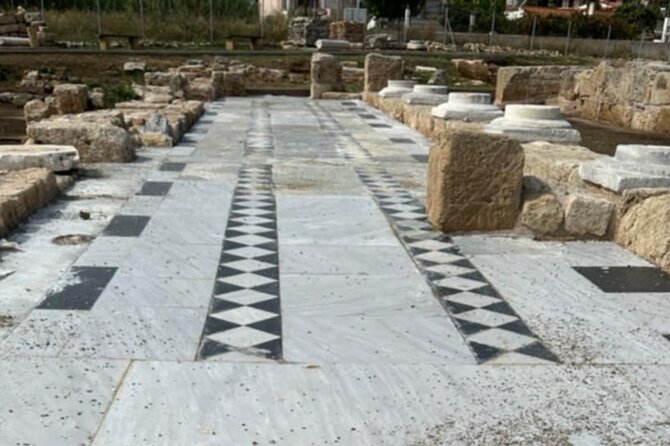
From there, you reach the heart of the biblical scene: the Bema in the Roman Forum area. This was an elevated platform used for public addresses and legal decisions, and in the Roman period it functioned like a tribunal where officials could hand down rulings.
This is the link to Acts 18:12–17, where Paul is brought before Gallio, the Roman proconsul, around 51 A.D. The account says Gallio dismissed the accusations, and Paul could keep going with his mission. When you’re standing at the platform location, it’s easier to picture what the public setting meant. This wasn’t a private conversation in a back room—it was public authority meeting public speech.
There’s also a spiritual layer to this stop. The site later became a Christian church, and modern mosaics help you connect the story points—Paul’s trial and the journey themes—to the physical space you’re standing in.
One thing to plan for: parts of this area have admission not included. Budget for the archaeological entrance fees so you don’t get surprised at the gate.
Temple of Apollo: the pagan backdrop to Paul’s message
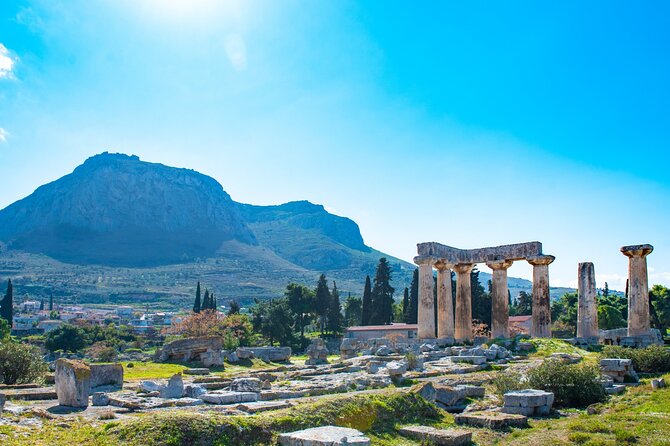
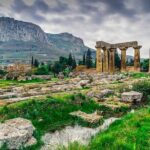
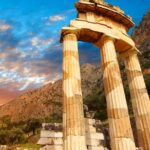
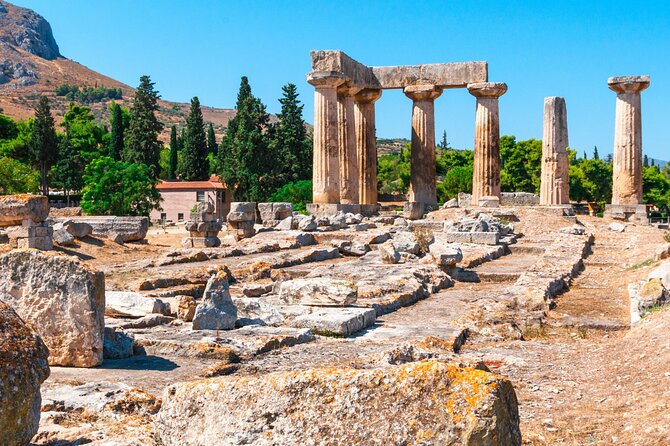
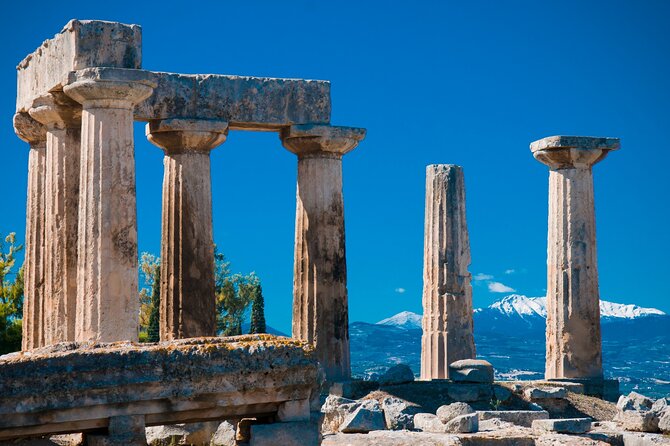
After the courtroom platform, the tour shifts to a more “cultural context” stop: the Temple of Apollo. It’s one of the oldest Doric temples in the Peloponnese, and the columns make the point quickly. Corinth had wealth, religious tradition, and a big public architectural statement.
For your understanding of Paul’s world, this stop helps you picture the pressure of place. Paul’s message wasn’t delivered in a vacuum. It landed in a city where major civic spaces celebrated gods and rituals—and where people took public religion seriously.
The practical feel here is simple: you’ll have time to look at the temple’s scale and to orient yourself in the ruins. Admission is not included for the temple stop, so again, plan your €20-style entrance budget and keep that cash ready.



Archaeological Museum and Akrokorinthos: shifting from stones to the big picture
Most people underestimate how much a museum improves a ruins visit. After the outdoor stops, the Archaeological Museum of Corinth gives your brain a place to organize what you’ve seen. You’ll have around 45 minutes here, which is enough time to get past the “quick glance” stage and actually connect objects to people and places.
The museum’s collection spans from older material into Roman-era treasures. You’ll also see artifacts connected to the Sanctuary of Asklepios, which is helpful because it shows how health and religion blended in ancient thought. This isn’t just “stuff behind glass.” It’s a way to see daily and civic priorities reflected in objects, statues, and pottery.
After the museum, you head up to Akrokorinthos, the ancient fortified acropolis. This is a very different kind of stop. You’re moving from buildings to fortifications and from story to distance—because the payoff here is the view and the sense of strategic power.
Akrokorinthos has ruins from classical Greece plus later defensive layers from Byzantine, Frankish, and Ottoman periods. That stacked timeline matters. Corinth wasn’t abandoned after Paul; it kept being valuable, disputed, occupied, and rebuilt.
Admission for Akrokorinthos is listed as free, so you’re paying more in sweat than in tickets. Wear comfortable shoes—you’re going to want grip.
Apostolos Pavlos Church: ending at a living reminder
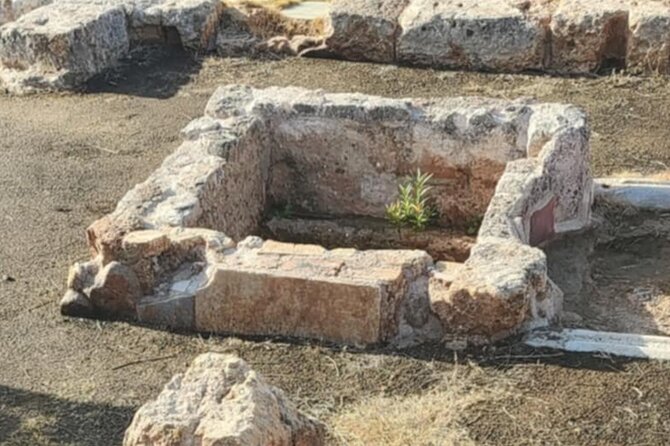
The final stop is the Apostolos Pavlos Church, a three-aisled basilica built in 1936 on the site of an earlier church tied to Paul’s tradition in Corinth. This is a good closing note because it brings you from archaeological interpretation back into a place of commemoration.
It also helps you end with a calmer mood. After temples, ruins, and a climb, the church gives you a moment to sit with what you’ve connected throughout the day—trade routes, public authority, religious landmarks, and the Gallio episode’s meaning in Acts.
Admission here is free, and that’s another small win for your total day cost.
What the day feels like: walking pace, timing, and group comfort
This tour is private, but it’s not a “stroller parade.” Expect some walking on uneven surfaces, plus time at multiple archaeological areas. The day is structured so you aren’t stuck in one place too long, but you should plan for real “site time,” not just photo stops.
It’s also smart to think about heat. Athens and the Corinth area can be warm, and the tour guide planning encourages you to bring a hat and sunscreen. You’ll also want comfortable footwear, especially for Akrokorinthos.
Group size affects the vehicle: 1–4 people ride in a luxury sedan, while 5–7 people use a mini van. Either way, the air-conditioning and Wi‑Fi support your comfort during driving stretches. If you’re traveling with a friend or family members who get tired quickly, this setup gives you the ability to take breaks without changing tours.
One more practical point: your tour ends back at your original meeting point. So if you’re coordinating with another activity in Athens afterward, you’ll want to leave room for the drive and for your last stop to run as scheduled.
Price and value: why $179.06 can make sense for Corinth
At $179.06 per person, you’re paying for a private, all-in-one route with real transportation included—not just a “guide talk” with no movement. The value comes from four places:
- Pickup and drop-off from Athens hotel or port area, so you don’t have to manage local transit
- Private transportation in a comfortable vehicle sized to your group
- Onboard Wi‑Fi, bottled water, and A/C, which make a long day easier
- English-speaking driver-guide who does the interpreting between sites
What you don’t get is part of the pricing logic. Entrance fees for archaeological sites and the museum are not included (plan on about €20 per person). Also, there’s no separate licensed archaeology guide included to escort you inside every site. That’s common for tours that keep the price competitive while still offering expert storytelling.
So if your priority is: see the major Pauline and Corinthian locations with minimal stress, understand the context as you go, and travel in comfort—this price can be a strong deal. If your priority is: deep, site-specific instruction inside every museum corner with a licensed on-site specialist, you may find you want additional independent time or an add-on.
Should you book this Corinth Apostle Paul’s Footsteps tour?
Book it if you want a structured, private Corinth day that connects the Bible story to the physical city—canal routes, ports, the Bema courtroom setting, Apollo’s temple backdrop, and the acropolis views. It’s also a great fit if you’re working with limited time in Athens and don’t want to juggle transport on your own.
Skip it (or pair it with something else) if you’re the type who needs a licensed archaeology guide at every ticketed site, or if you dislike paying separate entrance fees. Also, if your group can’t handle uneven walking, keep an eye on how much time you want at Akrokorinthos.
If you do book, I’d recommend packing for heat, wearing grippy shoes, and coming with a few questions about Acts 18 so the Gallio moment lands in your head as more than a name.
FAQ
How long is the Corinth Apostle Paul’s Footsteps tour?
It runs about 5 to 6 hours, including the time spent traveling between locations.
Is this a private tour or a shared group?
It’s private. Only your group participates, with vehicle size depending on group size (1–4 in a sedan; 5–7 in a mini van).
What’s included in the tour price?
Included are air-conditioned private transportation, onboard Wi‑Fi, bottled water, private transportation, an expert English-speaking driver-guide, and hotel/cruise ship pickup and drop-off service.
Are entrance fees included for the archaeological sites and museum?
No. Entrance fees for archaeological sites and the museum are not included. The listed estimate is €20.00 per person.
Do you provide pickup from Athens hotels and ports?
Yes. Pickup is available at designated locations. For hotels/apartments, the driver waits outside your location. For port arrivals, the driver greets you with a sign showing your name.
What if the weather is bad?
This experience requires good weather. If it’s canceled due to poor weather, you’ll be offered a different date or a full refund.