REVIEW · KYOTO
Luxury Kyoto 1-Day Private Car Tour with Nara & Osaka Options
Book on Viator →Operated by PERFECT KYOTO & NARA Private Car Tour · Bookable on Viator
Kyoto, minus the stress, in one day. This luxury private car tour strings together Kyoto’s biggest sights in a way that feels calm, helped by flexible pacing that can slow down or speed up to match your group. I like that you get a comfortable, air-conditioned ride plus a pro guide who’s also a photographer, so you’re not stuck taking selfies while people rush past. One thing to keep in mind: if your group is on the larger side, car space can feel tight.
I also really appreciate the human factor here. Guides named Ryu and Talha come through with punctual, polite service and strong English, and the photos turn out especially well even when the weather doesn’t cooperate. Bottled water in the car is included, which sounds small until you’re walking and climbing torii steps later in the day.
In This Review
- The Quick Hits: Why This Tour Works
- A Private Kyoto Day That Feels Flexible, Not Rushed
- Getting Around in Comfort: Pickup, Air-Conditioning, and Bottled Water
- Stop 1: Kinkaku-ji and the Golden Temple Moment
- Arashiyama Bamboo Forest Street: A Quick Walk Through Green Drama
- Arashiyama District and Togetsukyo Bridge: Riverside Atmosphere Without Extra Tickets
- Tenryu-ji Temple: A Short, Serene Garden Stop
- Gion in a Short Window: The Classic Streets of Geiko and Maiko Culture
- Fushimi Inari Taisha: The Torii Climb Finale
- Professional Travel Photos Without the Awkwardness
- Price Check: Is $185 Worth It for One Full Day?
- Who This Tour Fits Best (and One Real-World Caveat)
- Practical Tips to Make the Day Feel Easy
- Should You Book This Kyoto and Nara Private Car Tour?
- FAQ
- How long is the Luxury Kyoto 1-Day Private Car Tour?
- Is hotel pickup and drop-off included?
- Are admission fees included for the temples and shrines?
- Does the tour include lunch?
- Are professional photos included?
- What if the weather is poor?
- Is this a private tour just for my group?
The Quick Hits: Why This Tour Works
- Private car, not cramped transit: hotel pickup and drop-off, plus parking and road fees handled
- Flexible pacing to dodge peak pressure: you can adjust the timing as the day unfolds
- Kinkaku-ji + Arashiyama in one smooth arc: major highlights without hopping multiple times across the city
- Arashiyama bamboo and Tenryu-ji together: nature + Zen gardens in a sensible order
- Photo support that feels practical: your guide helps you get memorable shots during the day
- Finale at Fushimi Inari Taisha: torii gates at the end, when you can pace the climb
A Private Kyoto Day That Feels Flexible, Not Rushed
This is built as a private, full-day experience, which changes everything about how Kyoto feels. Instead of fighting buses, timed-entry lines, and crowds that move like a school of fish, you travel with a driver/guide team that can adjust on the fly. You’ll see Kyoto’s headline spots, but you won’t feel like you’re being dragged from one photo stop to the next.
I like that the tour is described as flexible for the day’s flow—meaning the plan can bend based on what your group needs. That might be slower walking, a quick pause for a snack, or simply lingering longer where the light looks good. This flexibility is especially valuable in Kyoto because crowds can shift fast, and small timing changes can make a big difference in how enjoyable each stop feels.
You can also read our reviews of more tours and experiences in Kyoto.
Getting Around in Comfort: Pickup, Air-Conditioning, and Bottled Water
You start with hotel pickup and end with drop-off, and that matters more than people think. Kyoto is a city of short distances that can still eat time because you’re always crossing between neighborhoods. Having a private car from door to door means you spend your energy on the sights instead of figuring out transit connections.
The car is air-conditioned, and the tour includes parking, gas, and expressway fees. You also get complimentary bottled water during the ride. That’s not just comfort—it’s practical. When you’re walking at Kinkaku-ji, then later stepping through Arashiyama streets and climbing at Fushimi Inari, you’ll be glad water is handled so you don’t have to stop and hunt for it mid-day.
Stop 1: Kinkaku-ji and the Golden Temple Moment
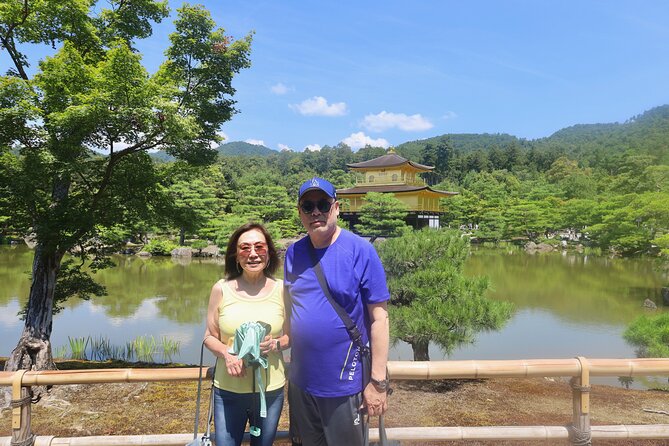
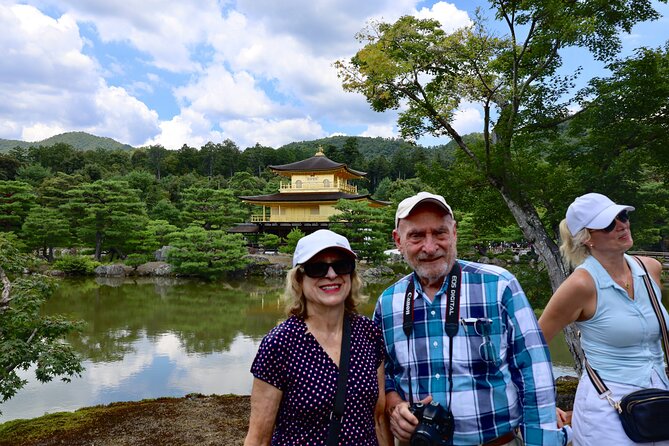
Kinkaku-ji is the kind of sight that looks unreal in photos. In real life, the famous golden pavilion and its reflection on the pond do something special: the whole scene feels composed, almost like a painting that happens to be alive.
Your time here is about an hour, and admission isn’t included, so you’ll want to budget for entry. The temple sits in landscaped Zen gardens, so even if you don’t do every single path, you’ll still get that classic view over the water. The biggest practical consideration is crowd energy. This isn’t a “whisper quiet” stop during peak hours, so treat your time like a priority photo window and then enjoy the calmer corners once the initial surge moves on.
Arashiyama Bamboo Forest Street: A Quick Walk Through Green Drama
Then you switch to Arashiyama Bamboo Forest Street, and it’s a totally different atmosphere. Towering bamboo stalks create a tunnel effect that changes the soundscape too—steps get muffled, and the whole walkway feels cooler and more still.
Your visit here is about an hour, and entry is free for this specific stop. That makes it an easy win: you can spend energy on the scenery rather than ticket logistics. A good way to handle this area is to go slow. If you walk too fast, it’s just tall poles. If you slow down, notice the light between stalks and how the path subtly bends, and it becomes memorable in a way that’s hard to replicate elsewhere.
Arashiyama District and Togetsukyo Bridge: Riverside Atmosphere Without Extra Tickets
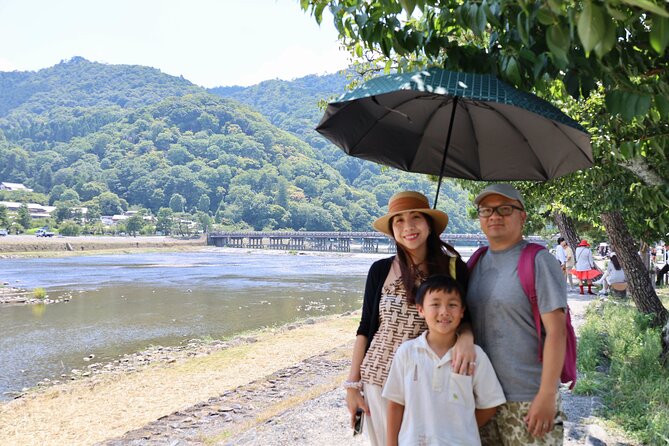
After bamboo, you get time in Arashiyama itself. This is where the trip shifts from “iconic checklist” to “Kyoto day.” Expect local shops, temples, and the riverside setting that pairs so well with the bamboo experience.
You also get a look at Togetsukyo Bridge. It’s one of those Kyoto anchors: not only is it photogenic, but it helps you orient yourself in the neighborhood. There’s no mention of paid admission here, which keeps things flexible—perfect if you want to stop for a snack or linger where the view opens up.
One tip for this part: keep your shoes comfortable. You’re moving through a district, not a single building. Small streets, uneven sidewalks, and occasional stairs are all part of the package.
Tenryu-ji Temple: A Short, Serene Garden Stop
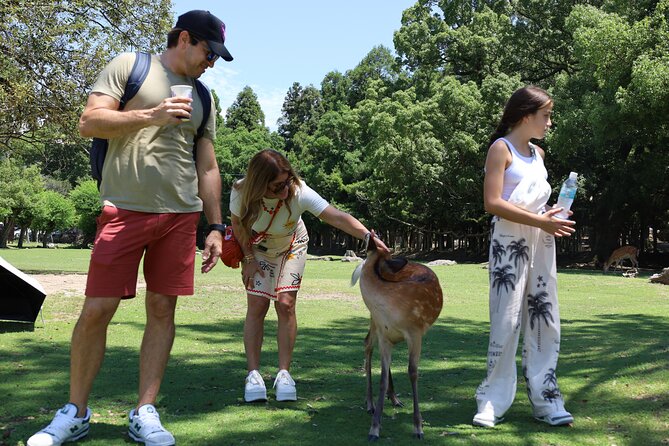
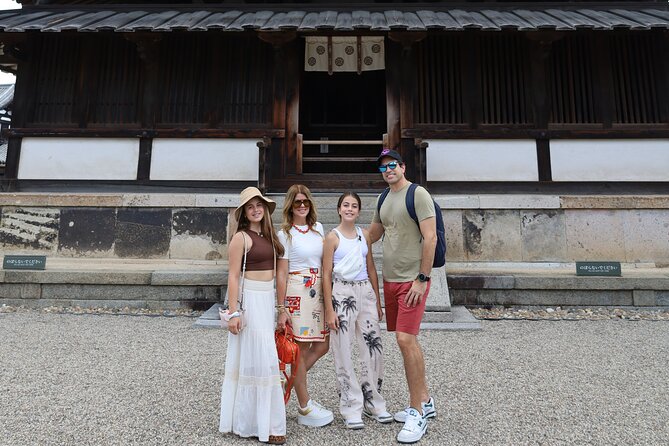
Tenryu-ji is next, with about 30 minutes on the schedule. Admission isn’t included, so again, plan for entry fees as they apply. What I like about pairing Tenryu-ji right after Arashiyama is rhythm. You’ve just been in bamboo’s vertical drama; now you shift to wabi-sabi style Zen gardens—simple, restrained, and quietly absorbing.
The garden approach here is about atmosphere more than speed. With only 30 minutes, your best move is to pick a couple of viewpoints you want most, rather than trying to see everything. In places like this, your experience improves when you slow down and let one scene work on you.
Gion in a Short Window: The Classic Streets of Geiko and Maiko Culture
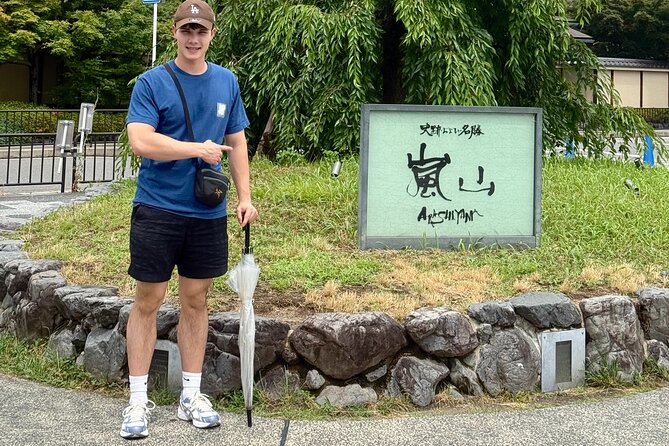
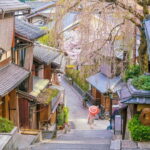
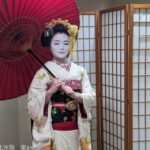
Then there’s Gion, one of Kyoto’s most famous historic districts. You’ll walk along traditional wooden teahouses and cobblestone streets, learning the stories around geiko and maiko culture. Your stop is about 30 minutes, and there’s no specific admission ticket mentioned for this segment.
Because the time is short, treat it like a “get the feel” stop. You’re not trying to master Gion in half an hour. You’re getting the street texture, the old-building vibe, and the basic cultural context from your guide so the area makes more sense as you keep exploring later on your own.
If you’re sensitive to crowding, plan to be patient here. Gion can get busy, and the best moments often happen when you step a little off the busiest lines and look back at the street from a slightly calmer angle.
Fushimi Inari Taisha: The Torii Climb Finale
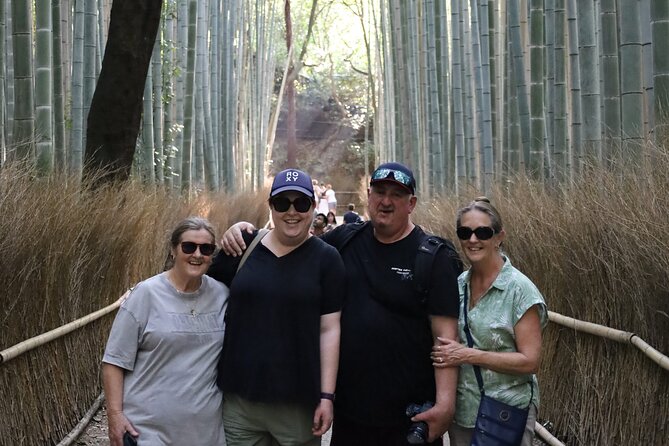
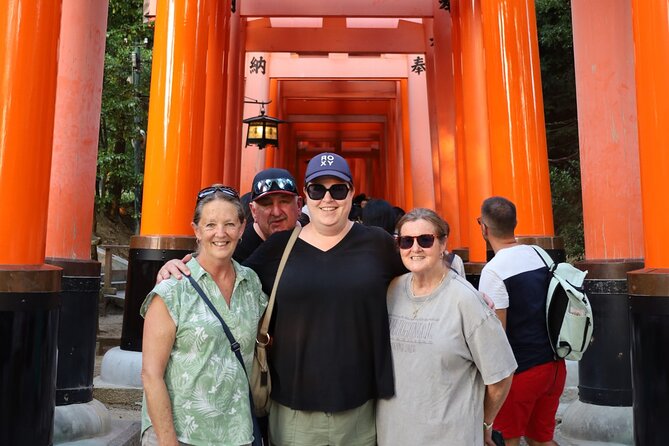
The day ends at Fushimi Inari Taisha, Kyoto’s most famous shrine for the red torii gates. Your time here is about an hour, and this stop is listed as free in terms of admission ticket requirements.
This is the kind of finale that feels unforgettable because the experience isn’t one static postcard shot—it’s a climb. Thousands of vermilion torii gates rise up the hillside, and your path gently shifts between open views and more enclosed tunnel-like stretches.
Practical advice: wear shoes you can walk in for a while. Even if you don’t climb far, you’ll still do some walking on uneven ground. Also, because this is the end of the day, pace yourself. If you rush, it turns into a leg workout. If you take it slow, it becomes a moving landscape of repeating shapes and changing angles.
Professional Travel Photos Without the Awkwardness
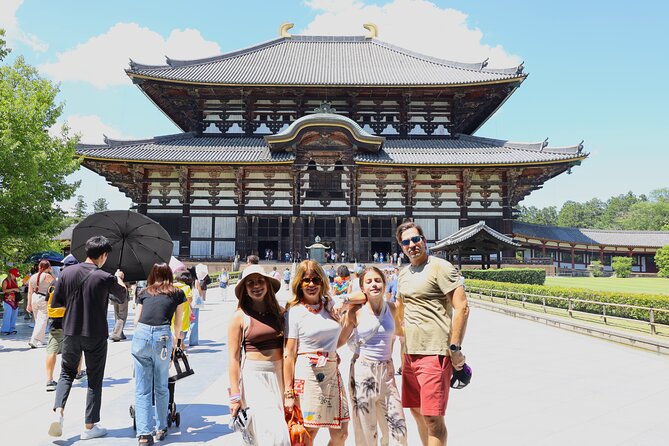
A major selling point is the professional travel photos taken during your tour. Your guide isn’t just translating or giving history—they’re also acting as a photographer, helping you get memorable moments without constantly interrupting the flow.
The photo value is real because the day has natural “setups.” Golden reflections at Kinkaku-ji, the bamboo tunnel, the garden mood at Tenryu-ji, and red torii at Fushimi Inari all lend themselves to great pictures. And the reviews highlight that even in rain, the photos can come out well—so don’t let cloudy weather scare you away from booking.
If you’re the type who likes to keep souvenirs that actually capture the day, this feature can make the tour feel like more than just transportation. It adds a form of guided documentation.
Price Check: Is $185 Worth It for One Full Day?
At $185 per person for an 8 to 9 hour private experience, the value depends on what you’re trying to avoid. If you’re trying to minimize transit stress, save time, and get a guide who keeps the day moving logically, this price can feel fair.
Here’s what your money covers:
- Hotel pickup and drop-off
- Air-conditioned vehicle
- Parking, gas, and expressway fees
- An English-speaking professional guide
- Professional travel photos
- Complimentary bottled water
What costs extra:
- Lunch and personal expenses
- Temple/shrine admission fees where they apply
So the decision is simple: if you’d otherwise spend that day piecing together trains, taxis, and guidebook navigation, plus paying for entry tickets on your own, the private car becomes a time-saver you can feel immediately. The tradeoff is that you’ll still need to budget for meals and admissions. You’re paying for the day’s structure and comfort, not for every entrance fee.
Who This Tour Fits Best (and One Real-World Caveat)
This works especially well for:
- Families who want one organized plan instead of chaos
- Couples who want a smoother pace and photo help
- Culture lovers who like context as they visit major Kyoto sites
- Anyone who wants fewer decisions during the day (where to go next, how to get there, what to pay attention to)
One caveat is about car comfort. A review mentioned that with six people, seating in the back could feel squishy. So if you’re planning a group trip, it’s worth thinking about how important space is to you. Private tours are private, but the vehicle size still has limits.
Practical Tips to Make the Day Feel Easy
To get the most out of this kind of day, I’d plan around three things: walking, tickets, and timing.
Walking: You’ll cover several neighborhoods and do some stairs and hillside walking at the end. Comfortable shoes matter more than you think, especially if it’s warm or wet.
Tickets and cash flow: Since admissions aren’t included, keep a little buffer for temple/shrine entry fees. You’ll likely have multiple places where fees apply, and it helps to be ready.
Timing and weather: The tour notes it requires good weather. If rain or poor conditions roll in, you can end up with an alternate date or full refund depending on how the provider handles it. The upside is that there’s a built-in flexibility expectation—your guide can still make the day work when possible.
Also, since lunch isn’t included, decide early whether you want a sit-down meal or something quick. Your guide can help adjust pacing during the day, but you’ll still want a realistic plan for food.
Should You Book This Kyoto and Nara Private Car Tour?
If your goal is to see Kyoto’s biggest hits with less hassle, I’d say this is a strong choice. The private car and hotel pickup save energy. The flexible pacing makes the day feel human, not robotic. And the professional photos are the kind of extra that turns a sightseeing day into something you can remember clearly.
I’d be more cautious if:
- You’re cost-sensitive and hate paying for non-included admissions and lunch
- Your group is large enough that car seating comfort worries you
- You want deep time at only one or two sites rather than a full sweep of highlights
For most people—especially first-timers in Kyoto—this format is a smart way to get the iconic experiences (Kinkaku-ji, Arashiyama, Gion, Fushimi Inari) in one well-managed day, with the comfort and photo support that makes it feel like a treat.
FAQ
How long is the Luxury Kyoto 1-Day Private Car Tour?
It runs about 8 to 9 hours.
Is hotel pickup and drop-off included?
Yes. Hotel pickup and drop-off are included.
Are admission fees included for the temples and shrines?
No. Admission fees are not included (for example, Kinkaku-ji and Fushimi Inari).
Does the tour include lunch?
No. Lunch and personal expenses are not included.
Are professional photos included?
Yes. Professional travel photos are taken during your tour.
What if the weather is poor?
The experience requires good weather. If it’s canceled due to poor weather, you’ll be offered a different date or a full refund.
Is this a private tour just for my group?
Yes. It’s private, and only your group participates.