REVIEW · ATHENS
Athens: Acropolis and Acropolis Museum Premium Guided Tour
Book on GetYourGuide →Operated by ATHENS WALKING TOURS · Bookable on GetYourGuide
Drama, stone, and glass floors. I like the fact that this tour turns the Acropolis into a guided walk with real context, and I also like that the Acropolis Museum portion helps you understand what you just saw on the hill. The pace is built for efficiency, with photo breaks and a logical route that helps you feel oriented fast.
The main thing to plan for is that even with skip-the-ticket-line access, security checks and strict timed entry can still slow you down. Do not arrive late, because the Acropolis timing rules are unforgiving.
In This Review
- Quick hits
- Why this Acropolis and Museum combo works
- Price and what you get for about $55
- Meeting near Hadrian’s Arch: start where you actually want
- Skip-the-line helps, but security and timed entry still rule
- Theatre of Dionysus: where the story begins (and why it matters)
- The south-slope approach: smart routing for less pressure
- Propylaea (the gateway)
- Erechtheion
- Temple of Athena Nike
- Parthenon
- Summit time: views plus excavation context
- Acropolis Museum: the glass-floor moment that clicks everything
- Pacing, group size, and who this suits
- Before you go: what to bring (and what to leave behind)
- Guides make or break it
- Should you book this Acropolis and Acropolis Museum Premium tour?
- FAQ
- How long is the Athens Acropolis and Acropolis Museum tour?
- What parts of the Acropolis do I get to see with a guide?
- How long is the Acropolis Museum guided portion?
- Are entrance tickets included in the price?
- Even with skip-the-ticket-line access, will I still wait?
- Where is the meeting point for the tour?
- What time should I arrive at the meeting point?
- Does the tour run in bad weather?
- Is this tour suitable for wheelchair users?
- Can I bring a stroller or large bags?
Quick hits
- South-slope routing to dodge the worst crowd pressure
- Theatre of Dionysus stop, plus Dionysus Sanctuary context
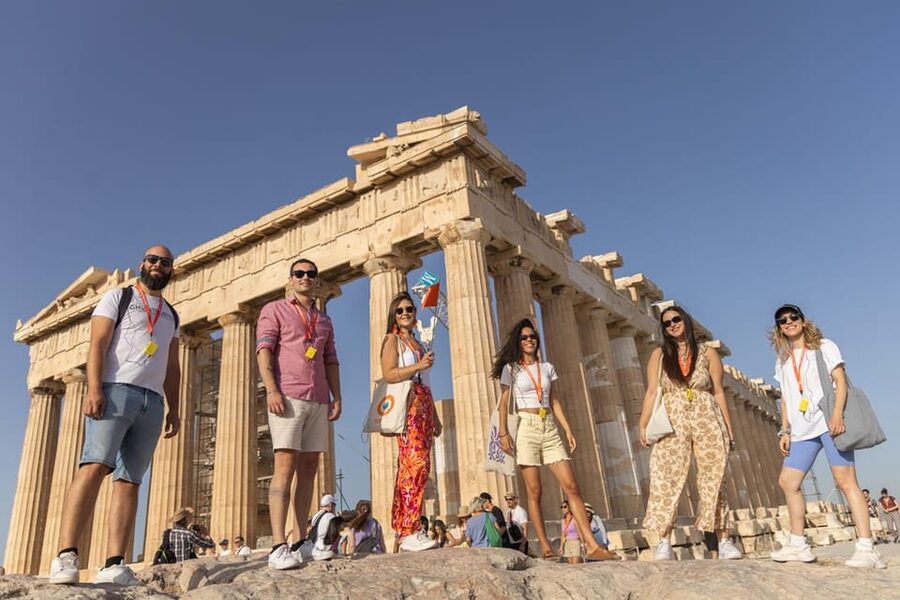
- A guided march across Propylaea, Erechtheion, Athena Nike, and the Parthenon
- Summit panoramas with explanations tied to excavations
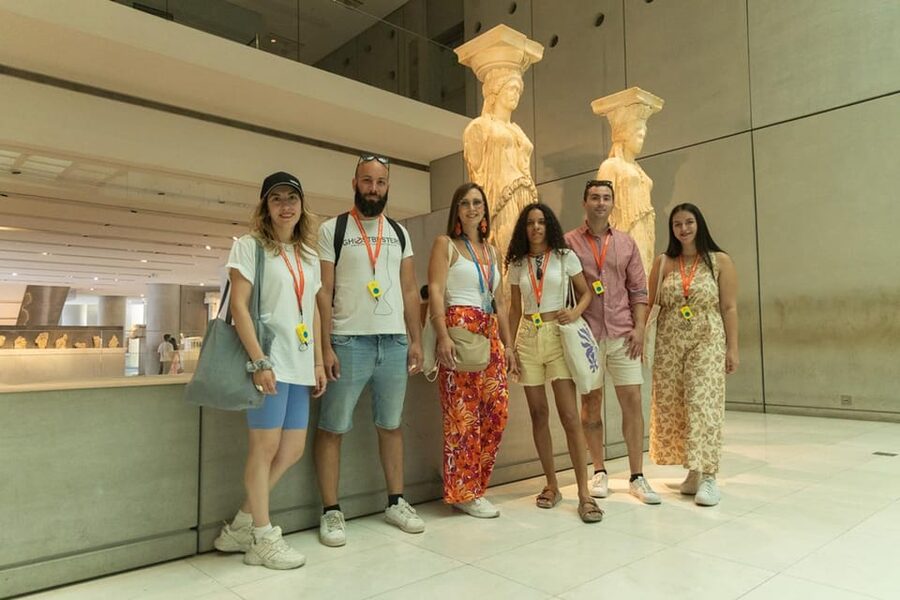
- Acropolis Museum Gallery of the Slopes with glass floors showing excavations
- Skip-the-ticket-line service, but expect some airport-style security time
Why this Acropolis and Museum combo works
The Acropolis is famous, sure. But walking it without help often leaves you with a puzzle: you see big shapes, you snap photos, and you still wonder what mattered most and why it was built that way.
This tour helps because it gives you a path to follow. You get both the “on the ground” experience at the ruins and the “what was found here” follow-up at the museum, which is ranked among the top five museums in the world (as stated by the operator). When you finish the hill portion and step into the museum, the stories click into place.
I also like that the tour is structured around meaningful stops, not random sightseeing. Even the smaller site beats—like the Theatre of Dionysus—change the way you picture ancient life in Athens.
You can also read our reviews of more tours and experiences in Athens.

Price and what you get for about $55
At $55 per person for about 3.5 hours, the value comes from three things you would otherwise have to assemble yourself:
First, you’re buying a licensed guide and a timed, guided route across the Acropolis. That matters here because the site is huge, the footing can be uneven, and the history stacks up fast.
Second, you’re buying two focused guided blocks: about 2 hours on the Acropolis and about 1.5 hours at the museum. If you have only a half-day in Athens, this is a practical way to cover the essentials without spending your energy figuring out what to prioritize.
Third, skip-the-ticket-line access can save time. The operator notes that security waits can still happen even with the service, but it reduces the most chaotic parts of entry. One of the best “value” signals from the tour’s feedback is how many guides keep things moving efficiently without turning it into a sprint.
Meeting near Hadrian’s Arch: start where you actually want

Your meeting point is Dionysiou Areopagitou 3, waiting in front of the Lukumades and Pilino stores, at the beginning of the pedestrian walkway leading from Hadrian’s Arch (off Syngrou). It’s only about a 3-minute walk from the Acropolis Metro station, and you’ll be looking for an orange sign that says Athens Walking Tours.
Arrive 20 minutes early. This is one of those tours where being on time is not optional, because the Acropolis uses timed entry and latecomers can’t be fitted in.
A small, smart detail: you’ll receive an Athens map and Athens Guide magazine with your tour. It’s the kind of extra that helps you continue exploring on your own afterward, especially around the areas the guide mentions from the summit.
Skip-the-line helps, but security and timed entry still rule
Skip-the-ticket-line sounds perfect until you hit reality. The tour includes skip-the-ticket-line access, but the operator is upfront that you may still wait for security checks. Typical waiting time is listed as 0 to 10 minutes or 30 minutes, with rare cases longer.
On top of that, Acropolis entry uses strict timing. The tour warns that latecomers can’t be accommodated or refunded. So if your day in Athens has tight connections or you’re using the morning metro in a chaotic window, plan buffer time.
One practical lesson that showed up in past experiences: if you’re traveling with children, bring proper identification. A guide reported an issue where minor children needed passports for entry; having pictures on a phone helped in that case. That’s not something I’d gamble on. Bring what you’re required to have.
Theatre of Dionysus: where the story begins (and why it matters)
You start with a walk into the foothills of the UNESCO World Heritage Site area. Then the first big “meaning stop” is the Theatre of Dionysus, described as a 5th-century amphitheater cited as the birthplace of the performing arts.
This is a strong early stop because it changes your mental picture of what the Acropolis was. It wasn’t just a temple hill. It was also tied to public life—festival culture, competition, and storytelling performed in front of the community.
You also pass the Dionysus Sanctuary, dedicated to Dionysus, the Greek god of wine and fertility. You’re not just learning names; you’re learning the kind of worldview that made these spaces matter to everyday Athenians.
Footnote from experience people shared: guides often keep the morning comfortable by steering you toward shady spots when possible on the way up. If your trip is in hot season, that’s not a luxury; it’s survival.





The south-slope approach: smart routing for less pressure
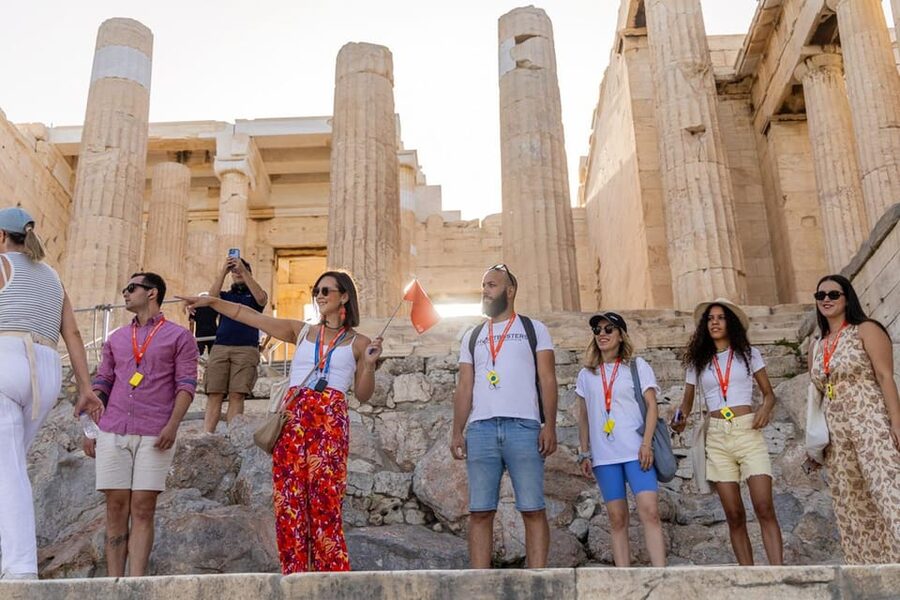
A key expectation is the south slope strategy to avoid the main crowds. That’s not just about walking faster. It helps you actually hear the guide and see details instead of getting shoved into a mass of people at the same angle for every photo.
From here, you’ll get guided looks at the big names you came for, plus enough connecting explanation to make them feel less like a list.
Propylaea (the gateway)
You’ll stop for the Propylaea gateway, described as part of the ceremonial arrival path. The guide’s job here is to help you understand that gateways weren’t just entrances—they were part of the ritual transition from regular city life onto sacred ground.
Erechtheion
Next is the Erechtheion, a structure tied to myth and worship. The guide’s narration is what helps you notice the small cues that tell you which deities were honored and why certain spaces were kept especially significant.
Temple of Athena Nike
You’ll also see the Temple of Athena Nike. Even if you have limited time, this is worth paying attention to because it connects the Acropolis to Athens’ identity—Athena isn’t a generic goddess here. She’s tied to what the city believed about itself.
Parthenon
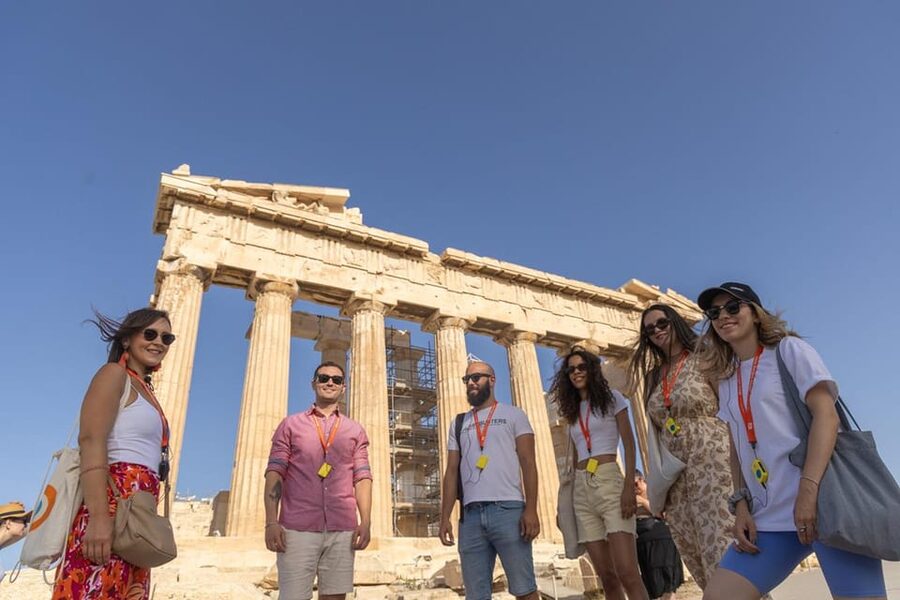
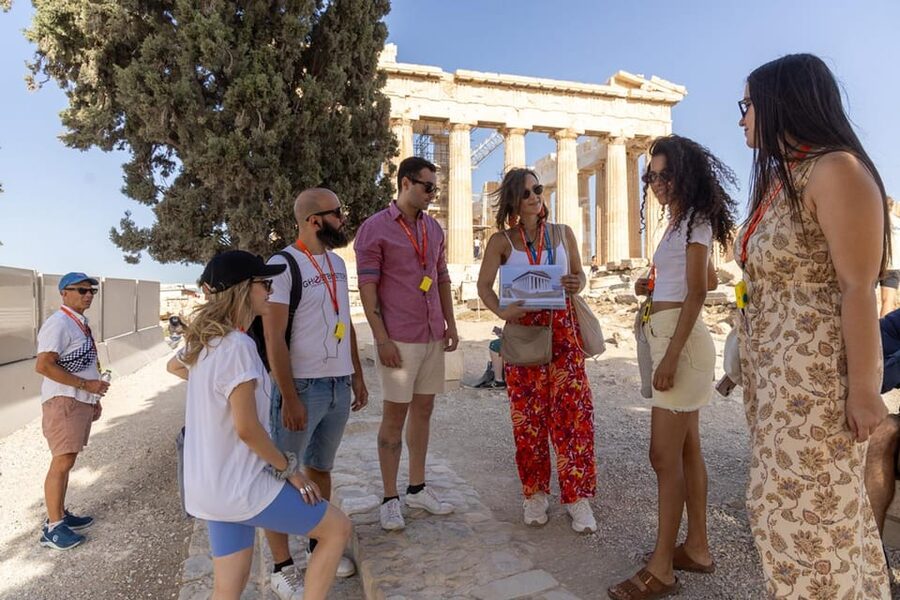
Then comes the Parthenon. You’ll get guided context and time for photos, plus a walk that keeps you from lingering too long in one bottleneck spot. The value is not just seeing the building; it’s understanding what you’re looking at and how it fits into the broader political and religious story Athens built around the Acropolis.
Summit time: views plus excavation context
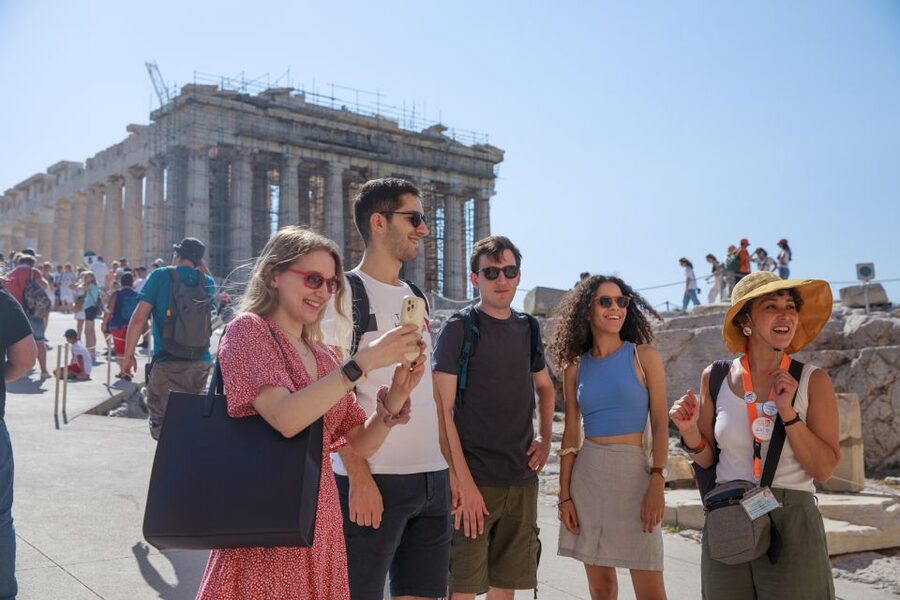
At the top, you’ll get sweeping panoramas of Athens. That’s the payoff photo moment, yes. But the better part is how the guide connects those views to what the site represents.
You’ll also learn about excavations and gain insight into the citadel’s ruins—how archaeology turns broken stones into a readable timeline. From there, your guide will reference major nearby monuments you might not fully grasp from street level, including Mars Hill, the Odeon of Herodes Atticus, and the ancient Agora once described as the heart of Athens.
There’s also a 15-minute photo stop/break time scheduled during the Acropolis portion. Use it well. Don’t just chase the perfect sky. Take 5 minutes to sit, drink water if you brought it, and look at how the city spreads out relative to the hill. That spatial feeling makes the museum stop much easier to understand.
Acropolis Museum: the glass-floor moment that clicks everything
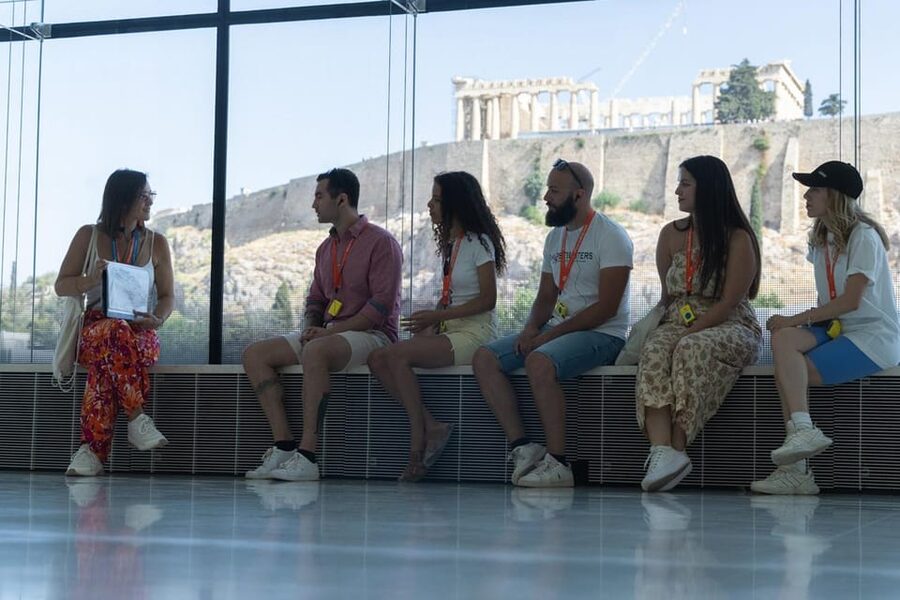
The museum visit is about 1.5 hours guided, and the tour ends inside the museum so you can keep exploring on your own if you want.
This is where the Acropolis tour earns its second half value. The museum isn’t just decoration. It’s explanation in physical form—objects, statues, and the architectural and cultural pieces that help you understand what the ruins were meant to be.
A standout stop is the Gallery of the Slopes of the Acropolis, where glass floors reveal excavation sites. That visual link is powerful: you can literally see how artifacts and remains relate to the hill above.
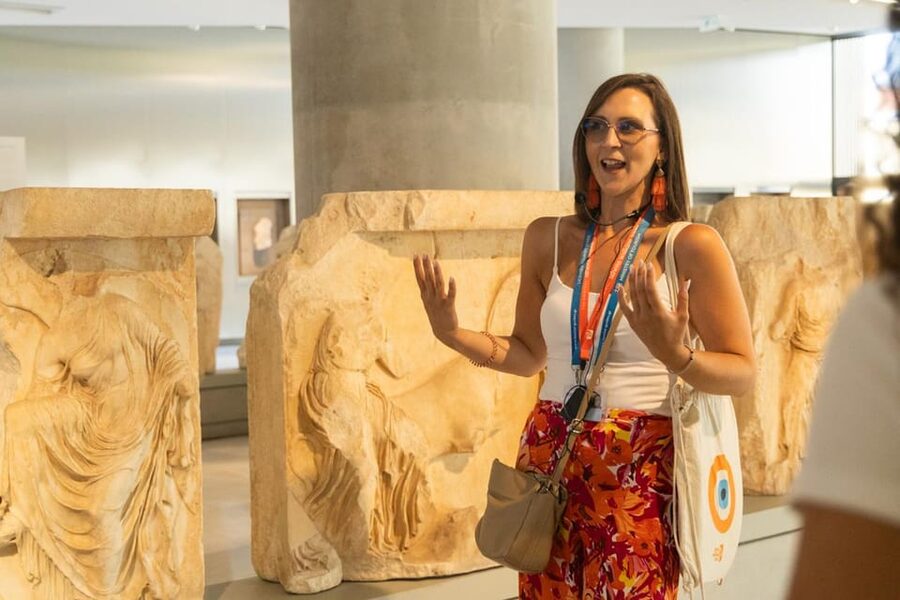
During the guided portion, you’ll see highlights from the museum’s collection, including statues and relics. The guide’s storytelling style is a big factor here. From past experiences shared, I’d expect guides to connect myths, politics, art, and everyday religious practice into a single narrative you can follow without feeling like you’re in a lecture.
One more practical point: the museum portion tends to move you at a manageable pace. A few people noted the museum entrance can take longer than expected due to its own process, and that’s not about the guide—it’s the site flow. Build that possibility into your day.
Pacing, group size, and who this suits

This is a walking tour, and it’s not built for slow strolling. The tour is designed to hit major highlights efficiently while keeping the group together.
You’ll want to be comfortable on uneven surfaces. Past experiences also mentioned that footing can be tricky at certain points and there are stairs and inclines. The tour is also specifically listed as not suitable for wheelchair users or people with mobility impairments.
On group size: several experiences described groups as not too large, including one comment noting less than 20. That’s a good sign for staying engaged and keeping the pace workable.
Who it fits best:
- You want a clear route across the most important Acropolis sights without playing archaeological detective.
- You like stories and context as much as photos.
- You’re a “I have limited time” visitor who still wants more than a quick look.
Who should think twice:
- If you only want a self-guided photo tour, you might feel the time is long for you.
- If crowds and walking time stress you out, consider pairing this with a quieter afternoon afterward so you don’t burn out.
Before you go: what to bring (and what to leave behind)
Bring comfortable shoes and comfortable clothes. The tour is also rain-or-shine.
Leave behind:
- Pets
- Baby strollers
- Luggage or large bags
In the museum, you may also have to handle bag check procedures on arrival, so plan to travel light. If you like hats and water, that’s consistent with practical Acropolis advice people give each other for hot days—especially since you’re outside on stone with sun overhead.
Guides make or break it
One of the biggest reasons this tour scores high is the way guides bring Athens to life. Names that came up strongly in past feedback include Yolanda, Apollon, Maria, Philippina, Antonio, Angelica, Eli, and Olysia.
Even when the site is packed, strong guiding makes a difference. The best guides focus on a balance: enough walking to keep momentum, enough explanation to make the ruins meaningful, and enough pacing so you can take photos without feeling rushed.
Should you book this Acropolis and Acropolis Museum Premium tour?
Book it if you want the Acropolis to feel understood, not just photographed. The combination of a guided run across the Parthenon area and a museum stop—especially the glass-floor excavation gallery—turns a famous hill into a coherent story.
Skip it if you plan to spend your time mostly taking pictures and you don’t care about context. In that case, self-guided access might be cheaper and simpler.
If you do book, go in with two strategies: arrive early to protect your timed entry, and wear shoes that you trust on stone and stairs. Get those two right, and you’ll have enough time for the views, the key monuments, and the museum connection that makes the whole day click.
FAQ
How long is the Athens Acropolis and Acropolis Museum tour?
The total duration is 3.5 hours.
What parts of the Acropolis do I get to see with a guide?
You’ll have guided access to major sites including the Theatre of Dionysus, Propylaea, Erechtheion, the Temple of Athena Nike, and the Parthenon, along with a summit viewpoint and explanations tied to nearby monuments.
How long is the Acropolis Museum guided portion?
The museum visit includes about 1.5 hours of guided time.
Are entrance tickets included in the price?
That depends on the option you select. If you choose the with-tickets option, entrance tickets are included. If you choose the without-tickets option, you’ll receive an email with a link to purchase your entrance tickets.
Even with skip-the-ticket-line access, will I still wait?
Yes. Skip-the-line does not eliminate security checks. Waiting time is listed as typically 0 to 10 minutes or 30 minutes, with rare cases longer.
Where is the meeting point for the tour?
Meet at Dionysiou Areopagitou 3, in front of the Lukumades and Pilino stores, at the start of the pedestrian walkway leading from Hadrian’s Arch.
What time should I arrive at the meeting point?
You should arrive 20 minutes before the tour departure time.
Does the tour run in bad weather?
Yes. Tours run rain or shine.
Is this tour suitable for wheelchair users?
No. It is not suitable for wheelchair users or people with mobility impairments.
Can I bring a stroller or large bags?
No. Pets, baby strollers, and luggage or large bags are not allowed.