REVIEW · TOKYO
Private Mount Fuji Tour in Luxury Vehicle with English Guide
Book on Viator →Operated by Mukarram Muhammad · Bookable on Viator
Mount Fuji looks different when you control the timing. This private Mount Fuji and Hakone-style day trip gets you into the views in a private luxury vehicle with an English-speaking guide and lots of planned photo moments, including Oshino Hakkai. You also get in-vehicle Wi‑Fi, so the drive doesn’t feel like a digital vacation.
You’ll love the comfort, but the one real catch is time. On weekdays, traffic can slow you down, so your stated 8–10 hours may stretch when you’re coming from Tokyo.
In This Review
- Key Things to Know Before You Go
- Why This Private Mount Fuji Tour Feels Easier Than DIY
- Getting Started in Shibuya and Settling Into the Luxury Ride
- Stop 1: Mount Fuji Subaru Line 5th Station for the Closest Big-View Moment
- Stop 2: Lake Kawaguchiko for the Classic Fuji-Lake View
- Stop 3: Arakurayama Sengen Park and the Chureito Pagoda Photo Ladder
- Stop 4: Oshino Hakkai—Eight Ponds, Quiet Rhythm, and Photo Time
- Stop 5: Oishi Park for Lake Views That Feel Like a Breather
- Stop 6: Kitaguchi Hongu Fuji Sengen Jinja for the Mount Fuji Spiritual Angle
- Stop 7: Lawson Fujikawaguchiko Town Hall—The Instagram-Classic Fuji Contrast Shot
- Stop 8: Owakudani Valley for Volcanic Views in the Hakone Area
- How the English Guide Changes Your Day (Not Just Translation)
- Price and Value Check for a Private Group Up to 6
- Timing: What a Full Day Actually Feels Like
- Who This Private Tour Suits Best
- Should You Book This Private Mount Fuji and Owakudani Tour?
- FAQ
- How long does the Mount Fuji private tour take?
- Where is the meeting point in Tokyo?
- Is pickup included?
- What’s included, and what costs extra?
- Does the vehicle have Wi‑Fi?
- What happens if the weather is bad?
Key Things to Know Before You Go
- Private car comfort over bus crowds: easier pacing, fewer “wait for the group” moments.
- Wi‑Fi hotspot on the road: handy for maps, messaging, and sending photos fast.
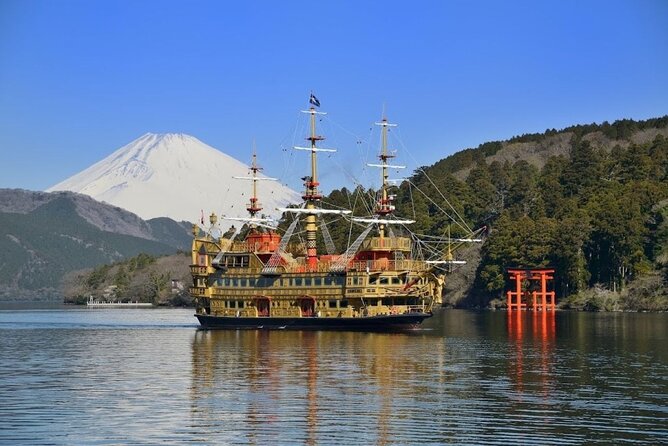
- Photo stops that are actually spread out: Subar u Line 5th Station, Lake Kawaguchiko, Chureito Pagoda area, Oshino Hakkai, and Owakudani.
- English guide + active time management: you’ll get context while the driver handles the road.
- Some key entries cost extra: Mount Fuji 5th Station admission (and Owakudani area costs) aren’t included.
- It runs only with good weather: if conditions are poor, you should expect a change of plans.
Why This Private Mount Fuji Tour Feels Easier Than DIY
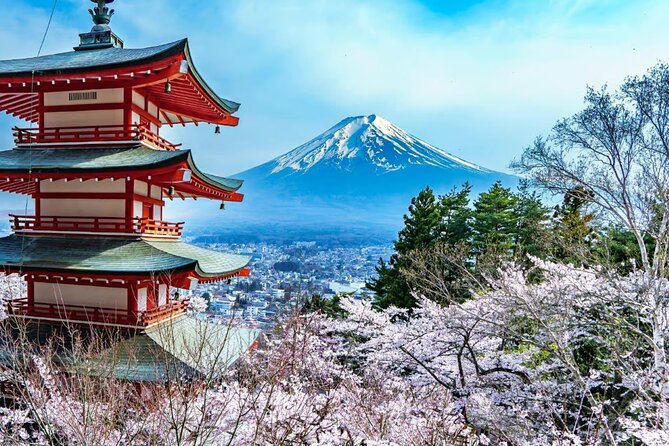
If you’re based in Tokyo, a Mount Fuji day can be a headache. Trains and buses work, sure, but you’re at the mercy of schedules and other people’s pace. This format is different: one group, one car, and an English-speaking guide who helps you turn big viewpoints into repeatable photo opportunities.
I like that the route is built around key “wow” spots without making you spend hours figuring out logistics. The best part is how your stops feel less rushed. You can stand in one place and watch how the light changes on Mount Fuji, instead of sprinting between attractions like a human accordion.
Also, the drive-to-view ratio is strong. The day is long enough to matter, but the stops are spaced so you don’t feel like you’re just burning time in transit.
You can also read our reviews of more tours and experiences in Tokyo.


Getting Started in Shibuya and Settling Into the Luxury Ride
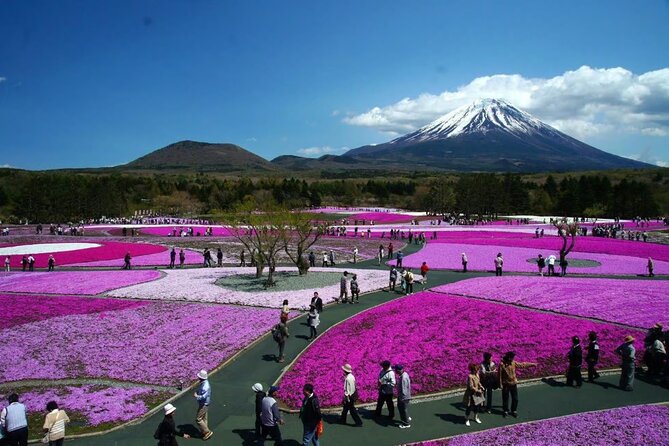
You meet in Shibuya, near Shibuya Crossing (21 Udagawacho, Shibuya). The company notes pickup is offered, so you don’t necessarily have to navigate the route to the meeting point by yourself.
Once you’re in the car, it’s set up for comfort: air-conditioning, bottled water, and a Wi‑Fi hotspot router. That Wi‑Fi sounds like a small perk until you’re in the middle of a long day and you suddenly need to check directions, confirm a plan, or just keep family updated.
Group size matters here. Your tour is private up to 6 people. That’s why this feels good for couples, small families, or a small group of friends who want the same stops but don’t want to share the van with strangers.
Stop 1: Mount Fuji Subaru Line 5th Station for the Closest Big-View Moment
The day starts with Mount Fuji Subaru Line 5th Station, which is the highest point by car (about 2,200 meters). Even if you’re not planning a summit hike, this is one of the strongest places to get a clear view of the mountain’s scale.
Why it works: you’re closer to the top, so the “Mount Fuji is huge” feeling becomes real fast. The views also include the surrounding city areas from viewpoints around the station area, which is a nice bonus if the weather gives you visibility.
What to consider: admission for the 5th station isn’t included (2100 yen per group). Budget for that, and keep the extra entry time in mind so you’re not scrambling later.
Stop 2: Lake Kawaguchiko for the Classic Fuji-Lake View
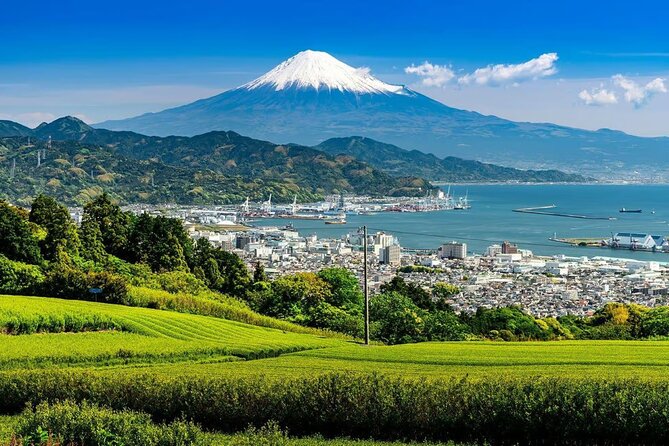
Next up is Lake Kawaguchiko, one of Japan’s Fuji Five Lakes and the region’s main gateway. This lake is famous because it gives you a “Mount Fuji reflected in water” kind of view—when the conditions cooperate.
It’s also a practical stop. You get room to breathe after the 5th station climb in altitude and change of pace. The lake area is one of the easiest places to enjoy the view without needing a ticketed attraction.
Quick reality check: lake views depend on weather and cloud cover. If you want Mount Fuji crisp and front-facing, arriving during brighter windows matters. This is where having a guide who manages the day by the weather can be helpful.
Stop 3: Arakurayama Sengen Park and the Chureito Pagoda Photo Ladder
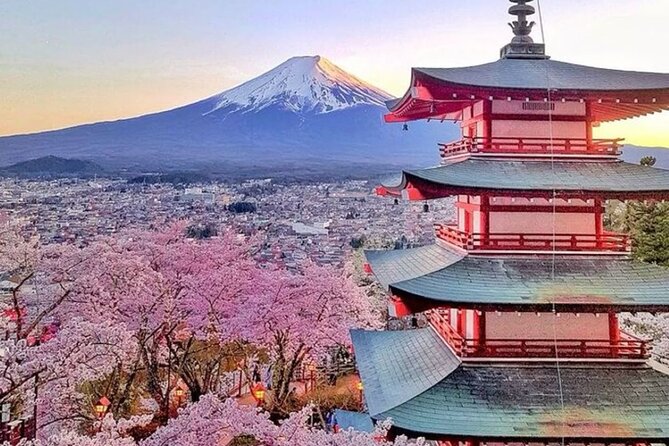
Then you reach Arakurayama Sengen Park in Fujiyoshida City, known for the Chureito Pagoda area. The pagoda is the sort of postcard structure that makes you understand why photographers keep coming back.
There’s a catch: the pagoda view often comes with effort. One of the most memorable notes from past experiences is the walk up the steps—around 400 steps—so wear comfortable shoes and don’t treat this like a stroll.
The big advantage of this stop in a private format is that you can take the walk when you feel ready, then return at a calmer moment instead of being shoved along in a tight bus schedule.




Stop 4: Oshino Hakkai—Eight Ponds, Quiet Rhythm, and Photo Time
Oshino Hakkai is a set of eight ponds in the Oshino village area, between Lake Kawaguchiko and Lake Yamanakako. It’s a beautiful, calmer-feeling stop compared with the more high-traffic viewpoint areas.
What I like about Oshino Hakkai is the variety of angles. Even if you’ve seen photos already, the pond edges and reflections can look different as the light changes.
One note to keep expectations balanced: some people find the surrounding village area feels touristy. If you want less souvenir-stroll time and more pure scenery time, keep your plan simple—go to the ponds and spend your energy on photos and the water views, then move on.
Stop 5: Oishi Park for Lake Views That Feel Like a Breather
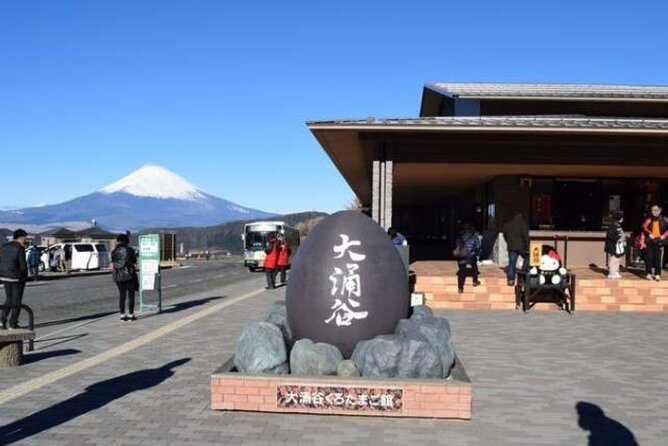
After Oshino Hakkai, you hit Oishi Park on the north shore of Lake Kawaguchiko. This is a straightforward, high-return viewpoint: you get Lake Kawaguchiko and Mount Fuji in the same framing.
The park also changes with seasons because of flowers along the lakeside promenade. If you’re traveling during a time when flowers are blooming, this stop becomes even more rewarding.
What to consider: it’s a viewpoint park, so plan on spending a little time standing, not just snapping and walking away. The best moments happen when you pause long enough for your eyes to adjust to the whole scene.
Stop 6: Kitaguchi Hongu Fuji Sengen Jinja for the Mount Fuji Spiritual Angle
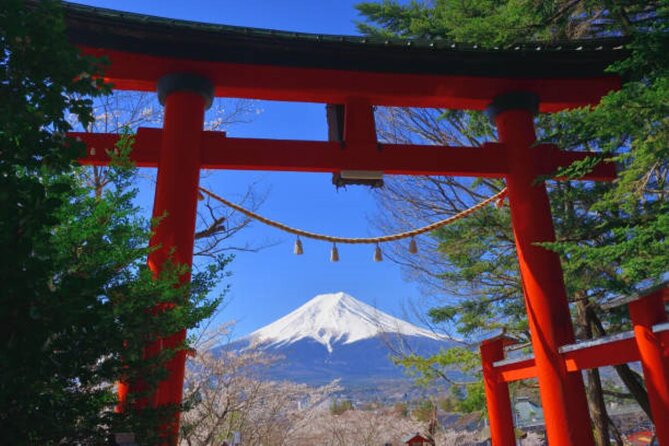
Next is Kitaguchi Hongu Fuji Sengen Jinja, an Asama shrine dedicated to volcanoes, including Mount Fuji. There are about 1,300 Asama shrines in Japan, and this one is part of the Mount Fuji UNESCO World Heritage area.
This stop adds depth without turning the day into a museum tour. It’s a chance to see how people connect to Mount Fuji beyond the photography.
A practical benefit: shrines are often calmer spaces. If the earlier viewpoint crowds feel intense, this gives you a breather where the pace naturally slows down.
Stop 7: Lawson Fujikawaguchiko Town Hall—The Instagram-Classic Fuji Contrast Shot
Then comes one of the most modern, silly-fun stops: the Lawson Fujikawaguchiko Town hall area. It’s famous for a Mount Fuji photo setup where the convenience store’s modern blue facade creates a strong contrast with the mountain.
This is not a “must-see for everyone” stop. But for many people, it’s a fun way to get something different from the classic pagoda and lake images.
If you’re photographing: treat it like a quick pit stop. Walk up, shoot your angles, and move on so you don’t lose time in lines or crowding.
Stop 8: Owakudani Valley for Volcanic Views in the Hakone Area
Finally, you reach Owaku-dani Valley (Owakudani), an active volcanic zone created by an eruption from about 3,000 years ago. The area is known for sulfurous fumes, so come prepared for a very “volcano” atmosphere.
This stop is where the day shifts from “Mount Fuji postcard” to “Hakone-style geothermal drama.” If you want the full range—mountain, lakes, and active volcano visuals—this is the piece that ties it together.
Admission for this stop is not included. Also, volcanic areas can be weather-sensitive, and conditions can change quickly.
One note from past experiences: people often pair this area with ropeway viewpoints. If time and conditions allow on your day, that extra viewpoint can make the final leg feel extra satisfying.
How the English Guide Changes Your Day (Not Just Translation)
The guide is the difference between checking boxes and understanding what you’re seeing.
On past departures, English guides have included people like Mukarram Muhammad and Talha Lakha—and both are mentioned for being active with explanations and photo support. The practical side is huge: you’re not left guessing which angles matter, what to look for at each viewpoint, or how to time your walking.
You also benefit from photo help. A lot of the best memories from this kind of trip come from being able to step into the shot yourself. Having a guide who can take pictures and patiently wait while you compose makes the day feel smoother.
And because it’s private, you can ask simple questions on the drive. Even a few minutes of context—why a place looks the way it does, what you’re looking at—makes photos feel less random.
Price and Value Check for a Private Group Up to 6
The price is $650 per group (up to 6). That’s worth doing the quick math on: if you fill all seats with 6 people, you’re looking at roughly $108 per person. If you’re only 2 or 3 people, the per-person cost rises fast.
So the value comes down to how well you split the group cost and whether you’d otherwise spend money on equivalent private transport. You are paying for:
- a private luxury vehicle instead of crowded public transit
- an English-speaking guide and driver handling navigation
- planned stops that reduce guesswork
- on-board Wi‑Fi and water
Also, remember the extras. Mount Fuji 5th Station admission (2100 yen per group) is not included, and lunch isn’t included either. Owakudani has its own admission situation as well (listed as not included). So your all-in cost is a bit higher than the headline price.
If you hate rushing, want comfort, and want to maximize photography time, this can still be one of the best ways to do Fuji from Tokyo in a single day.
Timing: What a Full Day Actually Feels Like
Your tour runs about 8 to 10 hours. In real life, that can expand when roads slow down. Past experiences note heavy traffic and longer totals when leaving during busier periods.
My advice: treat this as a morning-first day. If you’re offered or asked for a much earlier start due to traffic, take it seriously. The earlier you leave, the better your chances for clearer views.
Also, since lunch isn’t included, eat before you go. A long day with no set meal plan can sneak up on you.
Who This Private Tour Suits Best
This fits you if:
- you want Mount Fuji from Tokyo without planning transfers and timetables
- you care about photos and want consistent viewpoint time
- you’re traveling in a small group and can split the cost
- you want an English-speaking guide who can explain what you’re seeing
It may not be the best match if:
- you’re highly budget-driven and would rather use public transport
- you don’t like step-based stops like the Chureito Pagoda area
- you get stressed easily by traffic delays
Should You Book This Private Mount Fuji and Owakudani Tour?
Yes—if you want a smoother, more photo-friendly day and you’re splitting the group cost. The combo of private transport, Wi‑Fi, and a guide who actively supports your stop pacing is the main reason this works so well.
Before you book, do two reality checks:
1) Weather matters. The tour requires good conditions, and if it’s canceled due to poor weather you’ll be offered a different date or a refund.
2) Budget for extras like Mount Fuji 5th Station admission and bring food plans for lunch.
If those boxes fit your style, this is a smart way to see Mount Fuji and the Hakone volcanic side without spending the whole day in transit confusion.
FAQ
How long does the Mount Fuji private tour take?
The tour duration is listed as about 8 to 10 hours, and the total experience time includes up to around 10 hours.
Where is the meeting point in Tokyo?
The start point is near Shibuya Crossing, at 21 Udagawacho, Shibuya, Tokyo 150-0042. The tour ends back at the meeting point.
Is pickup included?
Pickup is offered, and you’ll still be anchored to the Shibuya meeting area.
What’s included, and what costs extra?
Included: private air-conditioned luxury transportation, an English-speaking professional guide & driver, a Wi‑Fi hotspot router, and water bottles. Not included: lunch, Mount Fuji 5th station admission (2100¥ per group), and Owaku-dani valley admission.
Does the vehicle have Wi‑Fi?
Yes. There’s a Wi‑Fi hotspot router in the vehicle.
What happens if the weather is bad?
The experience requires good weather. If it’s canceled due to poor weather, you’ll be offered a different date or a full refund.