REVIEW · SANTORINI
Premium Secluded Black Beach Horseback Riding Tour in Santorini
Book on Viator →Operated by Santorini Lover Horse Rider · Bookable on Viator
Black sand, calm horses, quiet trails. I loved the secluded Monolithos beach ride and the homemade wine afterward, but the access can be rough if you’re driving a rental car.
This is one of those Santorini tours that feels like you slip off the main roads for a while. You start at the stables, follow a hidden path down toward the sea, and spend about two hours moving through volcanic terrain, sea views, and small photo moments—no cruise-ship chaos.
You’re capped at a maximum of 6 riders, so the pace feels more personal. Just go in with realistic expectations: you’re riding in real outdoor conditions (dust, sand, uneven ground), and you’ll want to be comfortable with that.
In This Review
- Key things to know before you go
- Entering the Stables: where the ride really starts
- The quiet path to Monolithos black sand
- Vineyards and a slower, pastoral approach
- Thira’s fishermen port: a different kind of Santorini photo
- Riding back through volcanic ravines and caves
- The tiny church stop: quick, simple, and very photogenic
- Vangelis and the personal touch (what seems to work best)
- Homemade wine among citrus trees: the nice ending
- Price and value: what $108.37 buys you
- Practical logistics: meeting point, car access, and what to pack
- Who this tour suits best (and who might rethink it)
- Should you book this Santorini black beach horseback tour?
- FAQ
- What time does the horseback riding tour start in Santorini?
- How long is the horseback riding experience?
- Where is the meeting point?
- Is the tour offered in English?
- How many riders are on the tour?
- Is there a weight limit?
- What should I wear or expect on the ride?
- Is the tour dependent on weather?
- What is included at the end of the tour?
Key things to know before you go
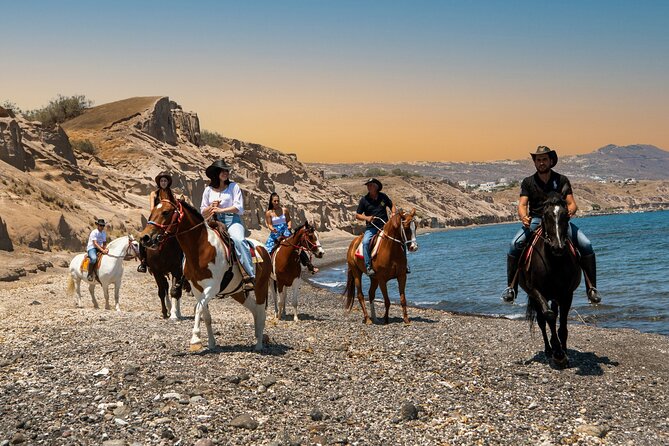
- Small group size (max 6): less waiting, more attention, and a more relaxed ride.
- Black sand at Monolithos: the dramatic part is right there, not staged from a lookout.
- Volcanic ravines and natural caves: expect some rugged-feeling terrain along the route.
- Vineyards with basket-like training: you’ll pass evergreen vine setups while you approach the quieter plain.
- Wine plus citrus finish: you end with a glass of homemade wine around aromatic citrus trees.
- Know the weight limit: the tour is not recommended for riders over 230 lb.
Entering the Stables: where the ride really starts
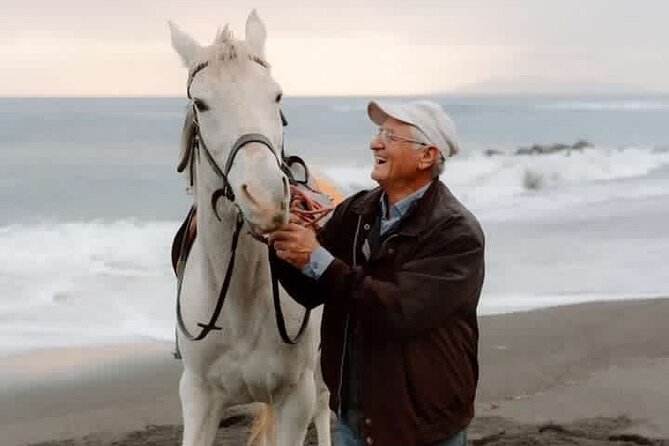
The tour meets at Santorini Lover Horse Rider, in Exo Gialos, Karteradou (847 00). Your start time is 3:30 pm, and the experience runs about 2 hours total. Since it’s a late-day slot, the timing often gives you softer light for sea views and easier sunset-style photos—without turning the whole island into a traffic jam.
What I like here is that you’re not just being handed a horse and pointed toward a beach. You begin from the stables, then head out along a path that feels off the main track. That matters on Santorini, where so many activities end up feeling like a parade.
Also, the tour language is English, and you’ll receive a mobile ticket. That keeps things simple when you’re juggling reservations, transfers, and your real life.
You can also read our reviews of more tours and experiences in Santorini.


The quiet path to Monolithos black sand
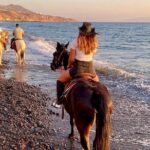
From the stables, the route leads you down a hidden, out-of-the-way path before reaching the black sand beach of Monolithos. Once you’re there, you ride along the shoreline with unobstructed sea views, deep blue water, and those stark white cliff shapes that make Santorini look like it was drawn with a ruler and a charcoal pencil.
This is the part that makes the tour worth it for me. Black-sand beaches are cool to visit, but horseback riding turns it into a moving viewpoint—you get the coastline rhythm without stopping every five minutes to fight crowds.
The shoreline also means you should expect sand and dust. One rider noted the route was dusty and it bothered their horse, which is a good reminder that you’re on nature’s schedule. If you’re sensitive to dust, bring sunglasses and plan for a bit of grit in your gear.
Vineyards and a slower, pastoral approach
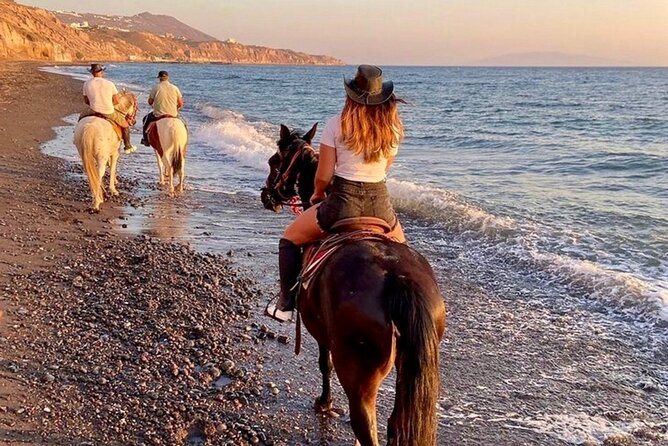
As you continue, you move through areas with evergreen vineyards that are trained in a basket-like form. This detail is easy to miss if you’re only viewing the island from a bus window. On horseback, it’s right there at human level—close enough to notice how the vines are arranged and how the terrain shapes the growing patterns.
I like that this section breaks up the ride. You’re not only “going to the beach” and then “going back.” You’re experiencing more of Santorini’s inland textures before you settle back into sea-level views.
And because the group is small, you don’t feel like you’re squeezed into a moving line. That can make a real difference when you’re trying to stay balanced, especially if you’re not an expert rider.
Thira’s fishermen port: a different kind of Santorini photo
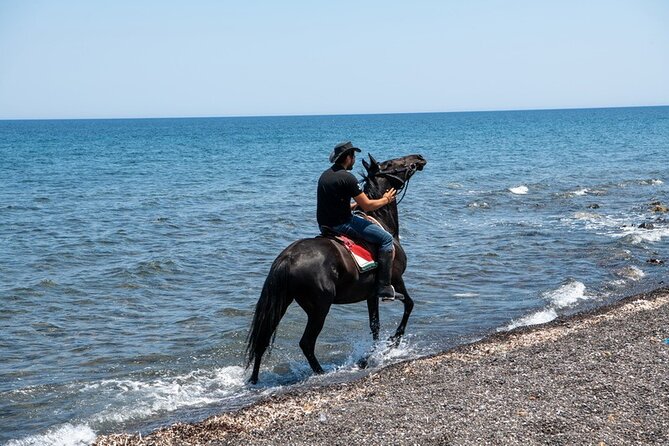
At the end of the route, you reach the fishermen’s port of Thira, located at the base of a mountain that has been carved by strong northerly winds. It’s a quieter, more grounded side of Thira than the classic viewpoint photos.
What’s useful about this stop is contrast. You get black-sand coastline scenery earlier, then you transition to a port setting that feels more utilitarian than postcard. If you’re trying to understand Santorini beyond sunset dinners and cliff walks, this kind of stop helps.
One practical note: ports and rocky coastal edges can feel uneven underfoot. If you’re prone to slipping on stairs, take your time when you’re stepping around the horse during short stops.
Riding back through volcanic ravines and caves
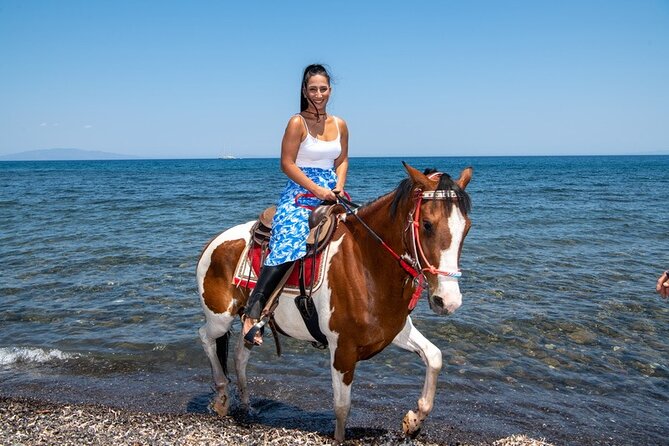
The return ride goes back through volcanic ravines and includes natural caves. This is where the trip turns from scenic to genuinely adventurous. You’re still on a calm horse-led route, but the environment feels more elemental—stone, shadow, and wind.
If you’re the type who likes seeing how landscapes form, you’ll probably appreciate how the route uses natural features rather than forcing you into a “look here” viewpoint. Even if you’re not into geology, caves and ravines add texture to the ride that you don’t get from a simple beach path.
Just be aware that caves and rocky passages can mean uneven footing. Your horse should do the navigating, but you’ll still want to grip gently, keep your balance, and follow your guide’s instructions.


The tiny church stop: quick, simple, and very photogenic
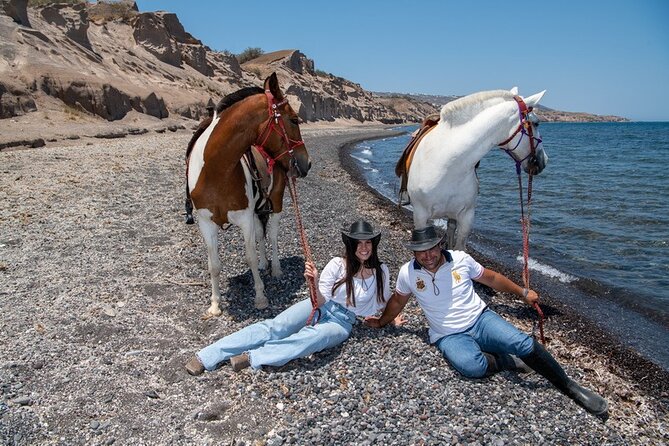
There’s a short picture-taking stop at a small traditional church. It’s the kind of place that reads instantly as Greek—white walls, compact setting, and great contrast against the sky.
This is also a good moment to regroup. You’ve been riding, steering your attention across sea views and stone terrain. A brief break helps you shake out your legs and refocus for the ride back.
If you’re taking photos, keep your phone secure and don’t rush. In one of the experiences in the provided feedback, a rider reported a missing watch during the ride. I can’t verify what happened in that specific case, but it’s enough of a flag that I’d treat valuables like they’re traveling with you through sand and caves—meaning: minimal jewelry, and ask about storage options for bags.
Vangelis and the personal touch (what seems to work best)
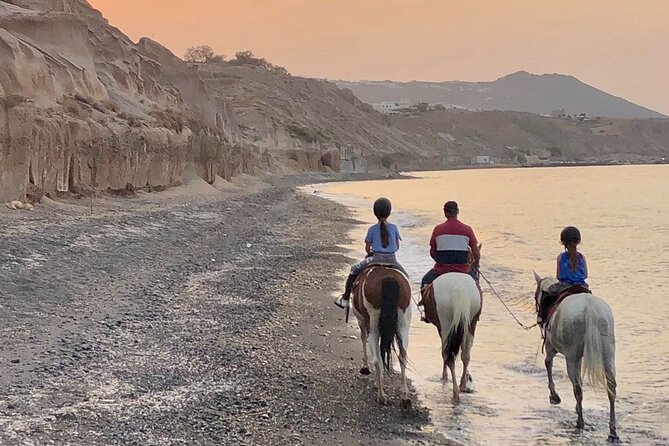
Several positive experiences mention an owner/guide named Vangelis (also spelled Vaggehis/Vangelis in different write-ups) as kind, patient, and focused on safe riding. Riders also described him as taking time to help less-experienced guests and even arranging phones on horseback so you can record your own ride.
That “attention to the rider” is a big part of why this tour gets strong praise. In a small group, a guide can actually adjust: how you mount, how you sit, and when you slow down.
I’ll also be honest: there are a couple of negative accounts in the feedback that raise concerns about communication and how horses were treated. I’m not going to make claims you can’t prove, but I am saying this: if animal welfare and clear communication matter most to you, ask direct questions before booking—especially about how horses are managed and what the plan is for handling rider needs.
Homemade wine among citrus trees: the nice ending
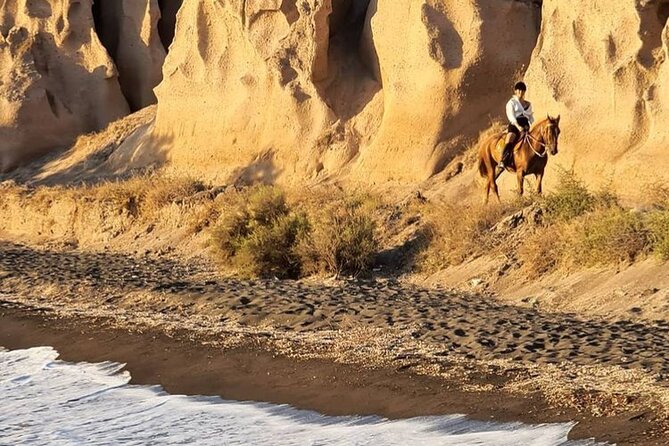
After the ride, you return to the stables for a glass of homemade wine, served around aromatic citrus trees. This is more than a random “included drink.” It turns the experience into a full evening, with a slower, friendly close.
Some riders described the wine as excellent and made from the farm’s barrels. Even if you’re not a big wine person, it’s a satisfying finish because it gives you something to do besides just ride, dismount, and leave.
If you’re driving or you’re taking a taxi afterward, plan accordingly. One glass of wine won’t ruin your evening, but it does change your decision-making.
Price and value: what $108.37 buys you
At $108.37 per person for about 2 hours, this isn’t a bargain tour. For Santorini, it’s in the range where you’re paying for the experience design: a small group, a real black-sand ride, and a return that feels like an adventure rather than a shoreline stroll.
Here’s where I think it offers value:
- Monolithos black beach riding (not just viewing)
- Small max group (6) which helps safety and attention
- Included wine at the end
- A route with multiple environments: vineyards, port area, volcanic ravines, caves, and a church stop
The watch-outs that affect value:
- One negative note said the ride felt shorter than advertised, and another criticized photo quality. So if you care about “time on horse” and photos, confirm what’s included and what the photo expectations are before you go.
My advice: treat this as a quality-focused, guided nature ride. If you want a guaranteed, fixed-length itinerary no matter what the conditions are, you may be happier with a more controlled activity.
Practical logistics: meeting point, car access, and what to pack
The meeting point is in Karteradou (Exo Gialos), and access can be tough. One rider reported that reaching the location with a rental car was difficult, with deep sand/hills and limited places to park or turn around. That’s not unusual for parts of Santorini outside the main corridors.
If you’re driving, come in with patience. If you’re taking a taxi, build in buffer time.
What to bring:
- Comfortable clothes you don’t mind getting dusty
- Closed-toe shoes for grip
- Sunglasses (sand + sun)
- A small crossbody or zipped pouch for essentials
And if you’re carrying anything valuable, take the cautious route. Ask whether there’s a lock-up for bags. One positive account said bags were secured while riders were out; another negative account mentioned a missing item. That contrast is exactly why I’d keep valuables light and secured.
Who this tour suits best (and who might rethink it)
This tour makes sense if you want:
- A more authentic, off-the-beaten-path Santorini experience
- Black sand coastline time without crowding
- A small-group ride where the guide can actually help
It may not suit you if:
- You’re over 230 lb (it’s not recommended)
- You dislike uneven ground, dust, or rocky passages
- You need a highly structured experience with zero surprises (conditions like weather can affect operations)
If you’re new to riding, the positive feedback suggests Vangelis helps riders feel comfortable. You’ll still need to listen, keep steady posture, and trust the horse’s calm training.
Should you book this Santorini black beach horseback tour?
I’d book it if your priority is a real Monolithos black beach ride with a small group and a relaxing, local-feeling finish at the stables. The combination of sea views, volcanic terrain, and that homemade wine ending is a strong package for the price.
I’d be more careful if you’re extremely sensitive to animal welfare issues or you need flawless communication. The feedback includes both very positive and very negative claims, so do your due diligence: ask how the horses are handled, what safety looks like, and what the plan is for securing personal belongings.
If you go in informed—expect dust, plan your car access, and keep valuables minimal—you’ll likely come away with the kind of Santorini memory that doesn’t feel like the usual checklist.
FAQ
What time does the horseback riding tour start in Santorini?
The tour start time is 3:30 pm.
How long is the horseback riding experience?
The duration is about 2 hours.
Where is the meeting point?
The meeting point is Santorini Lover Horse Rider, Exo Gialos Karteradou 847 00, Greece.
Is the tour offered in English?
Yes, it’s offered in English.
How many riders are on the tour?
The group size has a maximum of 6 travelers.
Is there a weight limit?
Yes. It is not recommended for travelers over 230 lb.
What should I wear or expect on the ride?
You should expect sand and dust, plus outdoor terrain. Wear clothing and shoes that handle dusty conditions and uneven ground.
Is the tour dependent on weather?
Yes. The experience requires good weather. If it’s canceled due to poor weather, you’ll be offered a different date or a full refund.
What is included at the end of the tour?
After the ride, you return to the stables for a glass of homemade wine served around citrus trees.