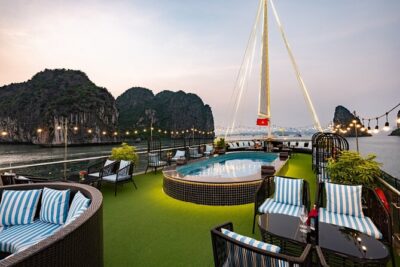
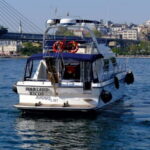
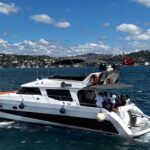
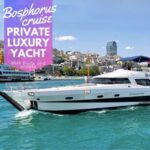
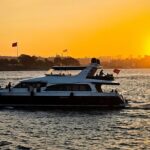
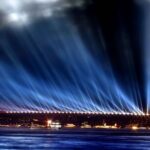
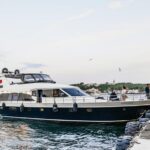
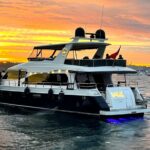
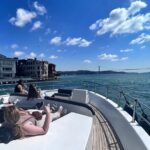
Bosphorus views, without the museum slog. This luxury yacht cruise is a smooth, 2-hour way to watch Istanbul’s shores unfold from the water, with an English-speaking, licensed guide and plenty of Ottoman-era landmarks sliding by. I especially like the onboard snack setup, including baklava and Turkish tea, because it turns a sightseeing ride into something you actually want to linger over.
I also love the overall pacing: you’re not stuck in a long line or chasing buses. With a maximum group size of 30 and a mobile ticket, it feels organized but not rushed. The meeting point is in Beyoğlu and you come back to the same spot, so your day stays simple.
One consideration: this is not a great fit if you get seasick or have vertigo. The cruise depends on good weather too, so plan on a reschedule if conditions are rough.
In This Review
- Key highlights worth your time
- Price and what feels like a good deal
- Meet in Beyoğlu, then let the city come to you
- The Bosphorus Strait: the route that splits continents
- Dolmabahçe Palace: the grand waterfront entrance
- Çırağan Palace: marble, prisons, and a comeback as a hotel
- Ortaköy and the Bosphorus Bridge: street energy meets icon architecture
- Bebek: a calmer stretch with university and waterfront mansions
- Rumeli Hisarı: the fortress built in a hurry in 1453
- Fatih Sultan Mehmet Bridge: a second crossing that changes the skyline
- Anadolu Hisarı and the museum ruins you can’t fully wander
- Küçüksu Pavilion: a summer palace and hunting-lodge vibe
- Beylerbeyi Palace: where the garden details matter
- Galata Tower and Galata Bridge: the Golden Horn gives you a second mood
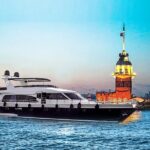
- Maiden’s Tower: legends, skyline, and a photo you’ll actually want
- Snack breaks that make the trip feel like leisure
- The guide experience: English, licensed, and flexible when needed
- Who this cruise is best for
- Quick decision: should you book?
- FAQ
- How long is the Bosphorus guided afternoon cruise?
- What language is the tour offered in?
- Is alcohol included?
- Where does the tour start and end?
- What’s included in the price?
- Is it suitable for people with motion issues?
Key highlights worth your time
- Luxury yacht comfort with a short, manageable 2-hour outing
- Snack-and-tea service onboard, including baklava and fruit plates
- Small group size (up to 30) for easier listening and better atmosphere
- Icon skyline views from the Bosphorus bridges and Ottoman palaces
- English licensed guide plus some flexibility if a museum stop is closed
Price and what feels like a good deal
At $35.39 per person for about 2 hours, the value here comes from the mix: you’re paying for (1) a boat experience, (2) an English-speaking licensed guide, and (3) snacks and drinks that aren’t an afterthought. In Istanbul, “just getting a view” is easy to do on your own—but you’d still be spending money on transport and you’d miss the guided waypoints that turn landmarks into a story.
This one is also booked fairly in advance (around 25 days on average). That tells me it’s popular for a reason: it’s a low-effort way to hit major sights along the Bosphorus without committing to a full-day plan. If your schedule is tight, it’s a smart use of an afternoon slot.
You can also read our reviews of more tours and experiences in Istanbul.


Meet in Beyoğlu, then let the city come to you
You start at Türkiye Petrolleri Ömer Avni, Meclis-i Mebusan Cd. No:34, 34427 Beyoğlu, Istanbul. It’s near public transportation, and the tour ends back at the meeting point. That matters more than it sounds—being able to walk back (or quickly catch transit) keeps you from losing half your day to logistics.
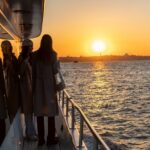
Start time is 1:00 pm. For me, an early afternoon launch is ideal on the Bosphorus because you’re not fighting the nighttime crowds and you’re often catching decent light for photos of the bridges and shoreline palaces.
The Bosphorus Strait: the route that splits continents
Before you even reach the big photo stops, the Bosphorus itself is the star. This strait separates Europe and Asia, connecting the Sea of Marmara with the Black Sea. It runs roughly northeast–southwest for about 30 kilometers, with strong currents and shifting water layers. The surface current typically flows from the Black Sea toward the Marmara, while underwater currents tend to go the opposite way.
Why do you care? Because once you understand that the Bosphorus is both a boundary and a traffic corridor, the places you see along it start making more sense. Ottoman palaces weren’t built randomly. Fortresses weren’t placed blindly. Everything here is about controlling movement, watching ships, and marking power.
As you cruise, you’ll also notice how variable the strait feels—its width changes depending on where you are, and the water can get very deep (around 60 meters on average, up to about 120 meters at the deepest point).
Dolmabahçe Palace: the grand waterfront entrance
Dolmabahçe Palace sits between Kabataş and Beşiktaş, along the left bank at the entrance to the Bosphorus coming from the Sea of Marmara. The site used to be a cove where ships anchored in ancient times, and it later became a favorite residence of Ottoman rulers.
From the water, Dolmabahçe works in a different way than it does as a land visit. You get the palace framed by the coastline and the strait’s open space, which helps you grasp why this waterfront was so desirable. You’re basically looking at the meeting point of imperial life and maritime geography.
The only drawback to keep in mind: with a short cruise, you’re more likely to enjoy the palace as an exterior view and a landmark in motion rather than a full interior museum experience.
Çırağan Palace: marble, prisons, and a comeback as a hotel
Near Beşiktaş, you’ll pass the impressive Çırağan Palace, commissioned by Sultan Abdulaziz and designed by Sarkis Balyan. The palace covers about 80,000 square meters and was completed in 1871, built in marble on the site of an older wooden summer palace.
What makes Çırağan more than a pretty building is the string of major life events attached to it:
- After Abdulaziz was deposed, he was imprisoned there with his family for years.
- Later, another deposed sultan, Murat V, was also imprisoned there with his family for decades.
- In 1908, after the Second Constitutional Monarchy, it was used as the House of Parliament, then damaged by fire in 1910.
- The grounds later served other uses, and by the early 1990s it was restored and reopened as a luxury hotel.
On a boat cruise, you don’t need to memorize dates to feel the weight of the story. You just have to look long enough for the palace to register as both spectacle and survival.

Ortaköy and the Bosphorus Bridge: street energy meets icon architecture
Ortaköy is one of those places where the Bosphorus view is matched by real neighborhood life. The area includes Ortaköy and Mecidiye, and the bazaar scene is active throughout the day—souvenir shops, cafes, and restaurants. It’s especially lively later in the day, so if you’re the type who loves urban details, you’ll likely enjoy how the cruise offers you a moving glimpse of it.
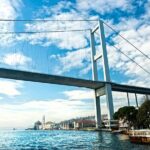
A big visual anchor here is the Bosphorus Bridge. The bridge’s feet are located in Ortaköy on the European side and Beylerbeyi on the Asian side. It opened on October 29, 1973, and it’s the first Bosphorus bridge built in modern times. It’s also a symbol of Istanbul, and it even ties into major events like the Istanbul Eurasa Marathon.
From the water, suspension bridges photograph well because the cables and towers sit against the water and sky instead of blending into traffic clutter. This is one of the easiest places on the route to take a few “I’m really in Istanbul” shots.
Bebek: a calmer stretch with university and waterfront mansions
As the cruise continues along the European side, you’ll come to Bebek. The name literally ties to baby, which hints at how the neighborhood has long been seen as a pleasant, desirable spot on the Bosphorus.
Bebek today is known for historical buildings (including Bogaziçi University) and waterside mansions. In a short cruise, you’re not going to roam those streets—but you’ll still feel the character shift from more central areas to a more residential, laid-back shoreline.
Rumeli Hisarı: the fortress built in a hurry in 1453
Rumeli Fortress (Rumeli Hisarı) is where the Bosphorus turns tactical. Construction began in 1453 on the order of Sultan Mehmet the Conqueror, placed across from Anadolu Hisarı at the narrowest point of the strait. The construction is famous for being completed in a span of about three months.
Before the conquest of Istanbul, the fortress was used to protect against naval attacks. After the conquest, it shifted to an inspection point for maritime traffic. Over time, the interior area filled with small wooden houses, but those were removed during restoration work in 1953.
Today, Rumeli Hisarı is known for concerts and summer events, operating as an open-air theater and museum. Even if you’re only viewing it from the boat, it’s the kind of stop where your brain automatically starts doing history math—because the Bosphorus here looks like the kind of chokepoint worth fighting for.
Fatih Sultan Mehmet Bridge: a second crossing that changes the skyline
You’ll also see the Fatih Sultan Mehmet Bridge, the second bridge spanning the Bosphorus. Construction started in 1986 and the bridge opened on July 3, 1988. It carries a major slice of Istanbul’s trans-Bosphorus traffic, and it’s become part of the skyline people recognize instantly.
This bridge is a good moment to slow down and look at the big picture. In one afternoon you get the feeling of a city that keeps adding layers—old fortifications on one side, industrial-scale infrastructure on the other. The Bosphorus isn’t just a historical “set.” It’s still actively shaping Istanbul’s everyday movement.
Anadolu Hisarı and the museum ruins you can’t fully wander
On the Asian side, Anadolu Hisarı sits in Beykoz near the narrowest point of the Bosphorus. It was built in 1395 by Beyazıt I and consists of a citadel and exterior walls.
After the conquest, it lost much of its strategic importance and was converted into a military hospital. Over time, the area around the castle became settled. Restoration ran from 1991 to 1993, and the site became a museum, though it’s not open to the public in the usual way today.
What you can practically take away from this stop during a cruise: you’ll see how the fortress ruins sit within the modern waterfront. And since only the outer walls can be visited and the road passes through the site, the place feels like part history stop, part living neighborhood boundary.
Küçüksu Pavilion: a summer palace and hunting-lodge vibe
The Küçüksu Pavilion museum is tied to Ottoman summers. Ottoman emperors used it as a summer palace and a hunting lodge. It’s the kind of place where a cruise view helps because you can sense how rulers picked their “out of the city” retreats—still close enough to stay connected, but positioned to enjoy the Bosphorus air and views.
Because this experience is only around 2 hours, don’t expect a full museum deep read. Instead, think of it as a guided pointer to what you’d want to do later if you want to go inside.
Beylerbeyi Palace: where the garden details matter
Beylerbeyi Palace, built in the 1860s on the Bosphorus shores, sits right under the Bosphorus Bridge. It was designed by Sarkis Balyan and mixes styles from both East and West, including renaissance and baroque elements.
The main building is two stories (stone on a high basement) on about 2,500 square meters of land. The south side served as the Imperial Mabeyn, and the north side housed the Valide Sultan’s apartments. The complex includes 6 halls, 24 rooms, a hamam, and a bathroom across the two floors.
On the ground, the lily pond and large garden are important. From the boat, you at least get the setting and the palace massing against the water, which helps you imagine the kind of leisure architecture this was designed to support.
Galata Tower and Galata Bridge: the Golden Horn gives you a second mood
Somewhere near the return swing toward city views, the cruise route connects you with the Golden Horn area in your sightlines.
Galata Tower is a highlight on any Istanbul skyline. Built by Genoese in 1348, it reaches about 66.90 meters and used to be the tallest building in the city. In Ottoman times, it served as a fire observatory and also as a jail. The most famous legend attached to it is Hezarfen Ahmet Celebi’s 1632 flight across the Bosphorus to Üsküdar using self-made wings.
You also get the practical part: the tower is open to the public now, and there’s a restaurant and café on the upper floor. From the cruise viewpoint, you can spot it as a landmark even if you’re not climbing during this afternoon.
Then there’s Galata Bridge over the Golden Horn (Galata Köprüsü). Its history begins in 1845. The bridge has changed over the years, including a major replacement after a fire in 1992, when a new bridge was built and the old one was moved to Halic. It’s still a daily-life magnet: tram and pedestrian traffic above, and restaurants, cafes, and hookah lounges below.
This is a nice contrast section. The Bosphorus is the imperial-water story. The Golden Horn is the city-life story.
Maiden’s Tower: legends, skyline, and a photo you’ll actually want
Maiden’s Tower (Kız Kulesi) sits on a tiny island about 200 meters from the shore of Üsküdar. It’s famous for legends, especially the story of a sultan and his daughter. An oracle warned that the daughter would die of snake bite on her 18th birthday. To protect her, the tower was built and she lived in secrecy there. On her birthday, she received a basket of fruits with a hidden snake inside, was bitten, and died as foretold.
Even if you don’t care about legends, the tower is a standout skyline object. It’s also one of those places where the best photos often depend on when the light hits the water. If you take only one “quiet, iconic” shot from the whole afternoon, this is usually it.
Snack breaks that make the trip feel like leisure
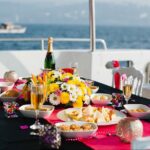
This cruise includes snacks and drinks: cookies, baklava, Turkish tea, lemonade, fruit plates, and water. That’s a big deal for an afternoon trip because it keeps you comfortable while the guide points things out and you take photos.
It also fits the tone of the best-reviewed experiences: the feeling isn’t only sightseeing. It’s relaxing, friendly service, and the sense that the staff are there to help you enjoy the ride.
Alcoholic beverages aren’t included, and the minimum drinking age is 18.
The guide experience: English, licensed, and flexible when needed
A professional licensed tour guide runs the show in English. The biggest practical takeaway from the quality you’ll feel is the way the story stays connected to what you’re seeing. Places like palaces and fortresses are easier to understand when the guide links architecture to purpose: maritime defense, imperial power, and the constant push-pull of Europe and Asia.
One nice detail: on days when museums are closed (like Mondays), the program may swap in an alternative stop. That kind of flexibility is exactly what you want on a short, timed cruise.
And yes, service matters here. One reviewer specifically thanked Shah and the team, which lines up with the overall vibe people talk about: friendly, helpful, and ready to make the ride feel easy.
Who this cruise is best for
I’d point you to this experience if:
- You want a short afternoon plan that hits a lot of waterfront landmarks
- You’d rather enjoy sights from a boat than stand in long lines
- You like your sightseeing with context—palace stories, fortress purpose, and bridge facts
- You’re traveling in a small-group setting (up to 30) and want the guide to be heard
I’d think twice if:
- You get seasick or you have vertigo
- You’re the type who needs full museum time on-site (this is built to be a moving overview)
Quick decision: should you book?
Book it if you want Istanbul’s biggest Bosphorus icons in one easy, guided ride—plus snacks and a calm pace. The price-to-inclusions ratio is strong for a guided yacht experience, and the small group size makes it feel personal.
Skip it (or at least consider a different format) if boats on open water are a problem for you. And if you’re set on lots of indoor museum time, this won’t replace a dedicated palace visit.
If you’re planning just one Bosphorus-focused activity this trip, this is the kind that helps you build a mental map fast.
FAQ
How long is the Bosphorus guided afternoon cruise?
It lasts about 2 hours.
What language is the tour offered in?
The tour is offered in English.
Is alcohol included?
No. Alcoholic beverages are not included, and the minimum drinking age is 18 years old.
Where does the tour start and end?
It starts at Türkiye Petrolleri Ömer Avni, Meclis-i Mebusan Cd. No:34, 34427 Beyoğlu, Istanbul, Turkey, and ends back at the meeting point.
What’s included in the price?
You get a professional licensed tour guide plus snacks and drinks: cookies, baklava, Turkish tea, lemonade, fruit plates, and water.
Is it suitable for people with motion issues?
It is not recommended for people with vertigo or people prone to seasickness.