REVIEW · KATHMANDU
Nepal in Luxury: Kathmandu, Chitwan & Pokhara Escape – 8 Days
Book on Viator →Operated by Luxury Holidays Nepal Pvt. Ltd. · Bookable on Viator
Kathmandu, Chitwan, and Pokhara, all in luxury. I like this trip for the way it pairs 5-star hotels with a private, guided pace—so you can focus on sights instead of logistics. The biggest plus is the built-in rhythm: sacred temples and stupa time in Kathmandu, then two proper safari days in Chitwan, then a slower reset in Pokhara.
One drawback to plan around: the experience is set up as a tightly managed program with set inclusions, so don’t assume last-minute changes will be easy once you’re on the ground—confirm anything you care about before you travel.
In This Review
- Key Things I’d Focus on Before You Go
- Entering Nepal With a Private Meet-and-Greet
- Kathmandu’s Sacred Squares: Swayambhu, Pashupatinath, and Boudhanath
- Swayambhu Mahachaitya (Monkey Temple) first thing
- Pashupatinath Temple by the Bagmati River
- Boudhanath Stupa and the rhythm of prayer wheels
- Patan Durbar Square: Newari Art at a Slower Tempo
- Chitwan National Park: Two All-Inclusive Nights of Real Safari Time
- Chitwan Safari Day: Rhinos, Canoes, and Jungle Walks
- Safari style: jeep or elephant-back
- Rapti River canoeing and guided time
- Elephant breeding center visit
- Pokhara Lakeside: Your Post-Safari Reset
- Pokhara Sights: Temples, Devi’s Fall, Gupteswar Cave, and Seti Gorge
- Bindhyabasini Temple: old bazaar spirituality
- Devi’s Fall: water doing its dramatic thing
- Gupteswar Gupha Cave: Shiva symbolism and crawling passages
- Phewa Tal and reflections of Machhapuchhare and Annapurna
- Seti River Gorge: a view of fast water and deep cuts
- Getting Around in Comfortable Private Transport on Nepali Roads
- Food and Tickets: What You’ll Actually Need to Budget
- Included: Chitwan full board and farewell dinner
- Not included: lunches and dinners in Kathmandu and Pokhara
- Entrance fees and the “free admission” wrinkle
- International airfare and travel insurance
- Price and Value: Is $999 a Smart Deal?
- Is Nepal in Luxury Right for You?
- FAQ
- What is the tour price for Nepal in Luxury: Kathmandu, Chitwan & Pokhara Escape – 8 Days?
- How long is the tour?
- Does the trip include airport pickup and private transportation?
- Are hotels included, and what star rating are they?
- What’s included in Chitwan National Park?
- Do I need to pay for entrance fees at monuments?
- Do I need travel insurance or any flights?
- Should you book this tour based on what it includes and what it doesn’t?
Key Things I’d Focus on Before You Go
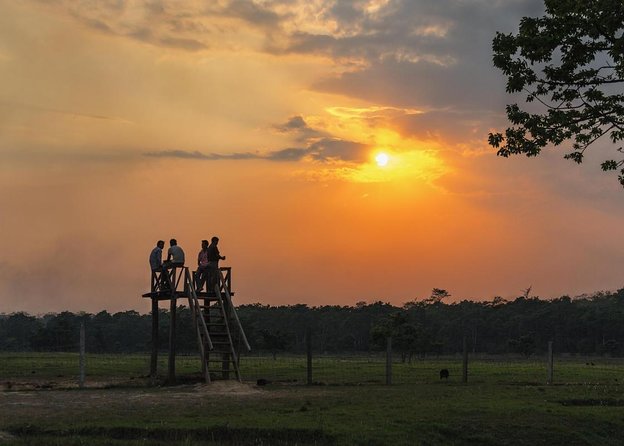
- Two all-inclusive Chitwan nights with safari activities included, so you’re not constantly thinking about meals and timing.
- Private transportation throughout, which matters a lot on Nepali roads when you want comfort after long days.
- English-speaking guided sightseeing in Kathmandu and Pokhara, helpful for understanding what you’re seeing fast.
- A real mix of wildlife and nature in Chitwan: jeep or elephant-back safari options plus canoeing and guided jungle time.
- Pokhara’s watery highlights—Phewa Lake reflections, Devi’s Fall, and Gupteswar Cave—keep the pace lighter after safari.
Entering Nepal With a Private Meet-and-Greet
This starts the moment you land at Tribhuvan International Airport. After immigration and your visa on arrival (15 days USD 30, 30 days USD 50, 90 days USD 125), you’ll be met outside the terminal by a representative holding a sign with a Luxury Holidays Nepal banner. From there, it’s straight to your hotel in a private vehicle.
You also get a pre-trip meeting at the hotel. That’s not just formality; it’s the practical moment to confirm timing for the next day and how the day will flow. It’s especially useful here because the trip moves across three very different regions.
You can also read our reviews of more tours and experiences in Kathmandu.
Kathmandu’s Sacred Squares: Swayambhu, Pashupatinath, and Boudhanath
Kathmandu can feel like a lot—traffic, crowds, languages, and a dizzy mix of temples. This tour helps you tame it with guided stops and free time to absorb the vibe at your own pace.
Swayambhu Mahachaitya (Monkey Temple) first thing
You’ll head to Swoyambhu Mahachaitya (often called Swayambhunath), known for its hilltop views over the valley and, yes, the monkeys that live around the grounds. Plan to take your time at the viewpoint. Even if you only have an hour, the height makes it easier to understand how Kathmandu sits in a bowl of hills.
Pashupatinath Temple by the Bagmati River
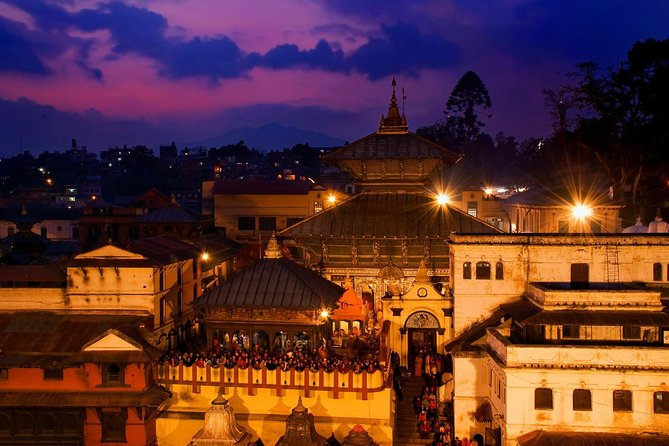
Next is Pashupatinath, one of the most important Hindu temples dedicated to Shiva. It sits on the Bagmati River on the eastern outskirts of the city. If you want a temple stop that feels like it’s still in daily use, this is the one—temple life here isn’t just for visitors.
Dress and behavior matter at both Hindu and Buddhist sites, and your guide will help you get it right. If you’re unsure, ask for the local expectations before you enter.
Boudhanath Stupa and the rhythm of prayer wheels
Then you’ll visit Boudhanath Stupa, a Buddhist site that dates back about 2,500 years and is associated with the classic image of Buddha’s eyes looking in four directions. What you’ll notice isn’t only the architecture—it’s the movement. Pilgrims circle the stupa and spin prayer wheels, and that steady loop changes your sense of time.
If you want a photo spot, stand back and watch first. You’ll get better framing and avoid getting in the way of pilgrims doing their circuit.
Patan Durbar Square: Newari Art at a Slower Tempo
After the big spiritual hits, you move into culture and craftsmanship at Patan Durbar Square in Lalitpur. This is where you’ll see Newari architecture at a high point, linked to the Malla kings who were major builders and art patrons.
The best part here is the slower feel. You’re given about an hour in the stop, then free time for exploration and shopping nearby. If you like browsing without a strict schedule, this is a good slot for it.
One thing to keep in mind: this tour doesn’t include monument entrance fees (even though the schedule lists free admission for each stop). Bring a little cash or be ready to pay small fees on the ground in case something does require it.
Chitwan National Park: Two All-Inclusive Nights of Real Safari Time
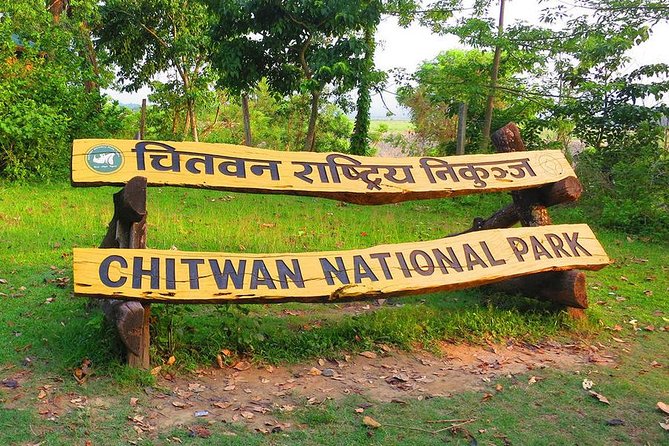
Chitwan is where the trip becomes more than sightseeing. It’s wildlife country, and the schedule gives you two full days that are built around being out in nature—not just driving through it.
On the way from Kathmandu, you’ll travel by comfortable private transport through winding rivers, terraced hillsides, and traditional villages. By the time you arrive, you check in to your hotel or resort and get a briefing about the jungle activities.
Dinner and lodging are handled at your resort, and you’ll have lunch and dinner provided during the Chitwan days. That’s a big comfort factor. When you’re leaving for safari early or spending the day out, it’s nice not to hunt for food.
Chitwan Safari Day: Rhinos, Canoes, and Jungle Walks
Your full-day experience in Chitwan is all about having multiple chances to see wildlife and to understand the habitat.
Safari style: jeep or elephant-back
After breakfast, you’ll head out on a jungle safari either by jeep or elephant-back. Chitwan is known for one-horned rhinos, and there’s also a chance to see deer, monkeys, wild boars, and if luck is on your side, Bengal tigers.
Wildlife spotting is never guaranteed. The practical win here is that you’re not doing a quick half-day. You get a full day’s worth of searching, with different activity types layered in.
Rapti River canoeing and guided time
You can also go canoeing on the Rapti River. It’s a different angle from the safari tracks, and it tends to feel calmer even when you’re still hoping for animals to appear.
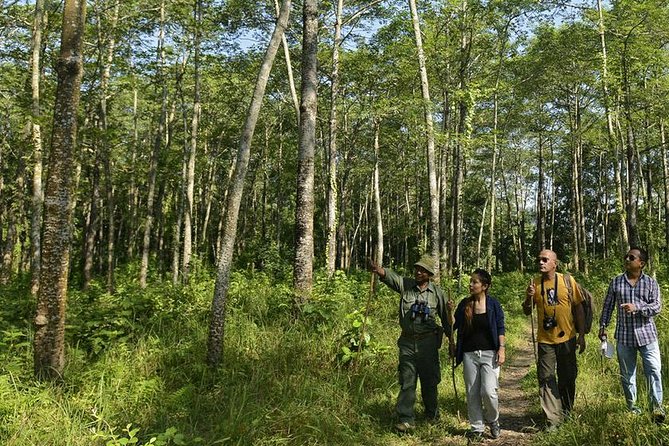
Then there’s a jungle walk with a nature guide. This is where you learn what you’re actually looking at—plants, signs of animals, and how the ecosystem works. Even when you don’t spot a large animal, you usually come back with a better sense of the place.
Elephant breeding center visit
You’ll also visit an elephant breeding center. Even if you’ve seen elephants before, this adds context and makes the visit feel more purposeful than a simple ride-and-leave stop.
Pokhara Lakeside: Your Post-Safari Reset
After the jungle focus, the drive to Pokhara feels like a soft landing. You’ll travel from Chitwan to Pokhara with big valley views along the highway. Once you arrive, check into your hotel and enjoy a relaxed afternoon.
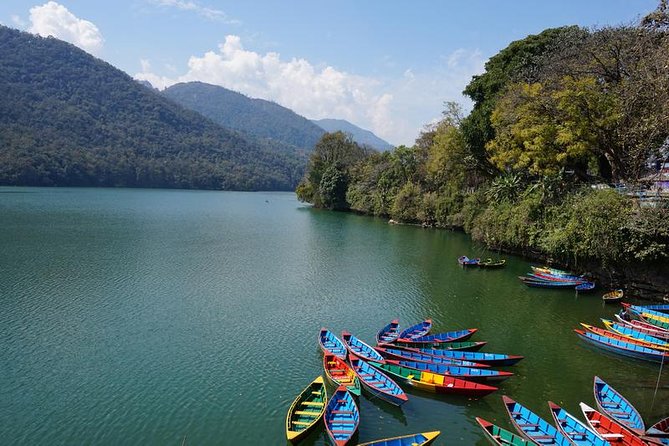
This is where Pokhara earns its reputation. You can walk near the lakeside, grab a coffee, and take a slower stroll along Phewa Lake’s edge. The trip gives you time to unwind rather than stuffing in more temples right away.
For many people, this transition day is the sanity saver. You’ve just done wildlife watching; now you get space to breathe.
Pokhara Sights: Temples, Devi’s Fall, Gupteswar Cave, and Seti Gorge
Pokhara’s day is packed, but it’s the kind of packed that stays interesting because the sights change type—religion, water features, cave passages, and river gorge views.
Bindhyabasini Temple: old bazaar spirituality
You’ll stop at Shree Bindhyabasini Temple, set in the center of the religious old bazaar. It’s dedicated to Goddess Bhagwati, a form connected to Shakti. Even if you don’t read every symbol, this stop helps you understand the city’s daily faith life.
Devi’s Fall: water doing its dramatic thing
Next is Devi’s Fall (locally Patale Chhango). A stream flowing from Fewa Lake collapses down into a deep gorge, surging through potholes. It’s popular with both tourists and locals, and it’s one of those stops where watching the water gives you instant context for how powerful the area’s geology can be.
Gupteswar Gupha Cave: Shiva symbolism and crawling passages
Then you’ll visit Gupteswar Gupha, a cave near Pokhara airport. The cave is almost 3 kilometers long and includes large hall-sized rooms plus passages where you crawl on all four. This is an important practical point: if you’re not comfortable with tight or low areas, consider that before you commit.
The tour notes the cave’s value to Hindus, including a phallic symbol of Lord Shiva preserved in the condition it was discovered. If your interest includes religion and rock-cut places, this stop gives you both.
Phewa Tal and reflections of Machhapuchhare and Annapurna
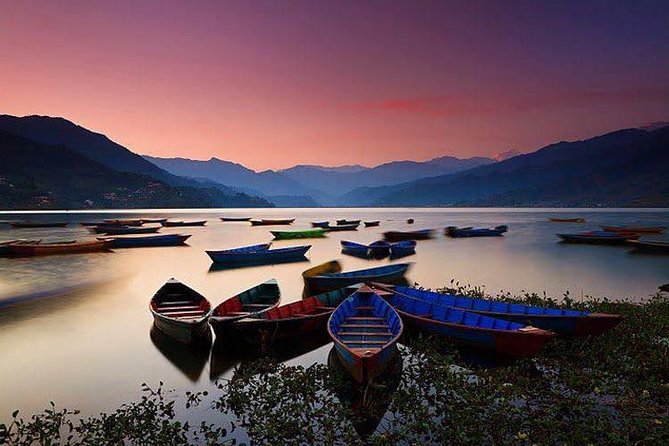
At Phewa Tal, you’ll see the second-largest lake in the kingdom, at 800 meters above sea level. The Barahi Island Temple sits in the middle of the lake and is considered important religious monument. You’re also told you can see reflections of Mt. Machhapuchhare and Annapurna in the water—this is one of Pokhara’s most “Nepal” moments.
Seti River Gorge: a view of fast water and deep cuts
Finally there’s Seti River Gorge, carved by Seti-Gandaki. You’ll get viewpoints from spots like K.I. Singh bridge and other bridge areas mentioned in the plan. The goal isn’t just a pretty picture; it’s seeing how the river has cut deep into the rock over time.
If you’ve got limited mobility, you’ll want to pace yourself here. Gorge viewpoints often involve uneven ground and short walks.
Getting Around in Comfortable Private Transport on Nepali Roads
This trip’s transport is one of its real value points. You’ll use private vehicle transfers and private transportation throughout. That means fewer shared rides, less waiting, and more predictable timing between Kathmandu, Chitwan, and Pokhara.
Nepal’s roads can be challenging, so comfort matters. If you hate being bounced around, this is the kind of tour that respects that. If you love scenic road travel, you still get it, but with a smoother ride.
Food and Tickets: What You’ll Actually Need to Budget
The meal setup is mixed in a way you should notice before you go.
Included: Chitwan full board and farewell dinner
During the Chitwan days, lunch and dinner are provided at the resort, and the tour description also lists full board in Chitwan. You’ll also have a farewell dinner in Kathmandu at a traditional Nepali restaurant with cultural dance performance.
Not included: lunches and dinners in Kathmandu and Pokhara
The tour does not include lunch and dinner in Kathmandu and Pokhara. Breakfast is provided daily. So you’ll want to plan for your midday and evening meals outside the included settings.
Entrance fees and the “free admission” wrinkle
The schedule marks admission tickets as free for each stop, but the tour description says monument entrance fees are not included. In real life, this can mean some places may not charge what you expect, or fees may be handled differently. My advice: keep a little buffer in your budget and ask your guide day-of what you might need to pay.
International airfare and travel insurance
International airfare is not included. Travel insurance is also not included. That means you should handle those yourself before you depart, especially if you’re counting on coverage for delays or medical needs.
Price and Value: Is $999 a Smart Deal?
At USD 999 per person for about 8 days (7 nights), this tour isn’t aimed at bargain hunters. It’s aimed at people who want fewer headaches and more comfort across multiple regions.
Here’s what you’re paying for, in plain terms:
- Private transportation across three destinations
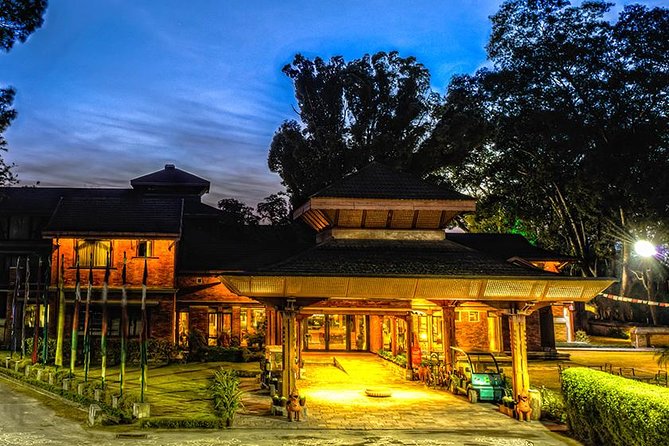
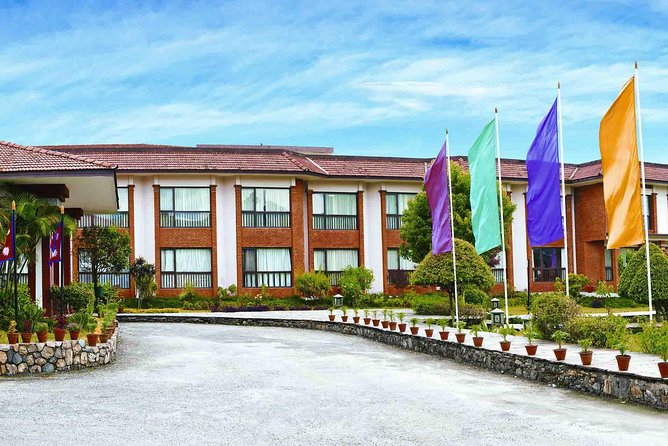
- 5-star hotel accommodations in Kathmandu, Pokhara, and Chitwan
- Guided sightseeing in Kathmandu and Pokhara with an English-speaking guide
- Two all-inclusive nights in Chitwan tied to safari activities
- Government taxes and official expenses covered
The main way this price can feel less “cheap” is simple: meals in Kathmandu and Pokhara aren’t included, and monument entrance fees may pop up depending on the day and site. Add in visa costs if you’re doing visa on arrival, and your final spend will be a bit higher than the tour sticker price.
Still, for a trip that covers wildlife time plus two major cultural cities, $999 can make sense if you value convenience and want to avoid organizing guides, drivers, and inter-city logistics yourself.
Is Nepal in Luxury Right for You?
I’d book this if you want:
- Comfort first, with private transfers and 5-star hotels
- A guided approach that helps you interpret big sights in Kathmandu and Pokhara
- Two full safari days in Chitwan with multiple activity types, plus meals handled
- A smooth flow between jungle and lake city without extra planning
I would think twice if you’re the kind of traveler who:
- Wants major last-minute itinerary changes after you arrive
- Hates paying extra for meals and site fees not covered by the package
This is a good match for couples, friends, and anyone who’d rather spend energy on temples, stupa loops, and safari hoping than on spreadsheets.
FAQ
What is the tour price for Nepal in Luxury: Kathmandu, Chitwan & Pokhara Escape – 8 Days?
The price is USD 999.00 per person.
How long is the tour?
It runs for 8 days (about 7 nights).
Does the trip include airport pickup and private transportation?
Yes. Pickup is offered, and the tour includes private transportation throughout the trip.
Are hotels included, and what star rating are they?
Yes. You stay in 4-star or 5-star hotel accommodations in Kathmandu, Pokhara, and Chitwan (with breakfast daily).
What’s included in Chitwan National Park?
You get jungle activities in Chitwan National Park, with two all-inclusive nights and safari-related activities. Lunch and dinner are provided during the Chitwan days.
Do I need to pay for entrance fees at monuments?
Monuments entrance fees are listed as not included. The schedule also marks admission ticket free for specific stops, so it’s smart to expect some fees may still be required at certain sites.
Do I need travel insurance or any flights?
International airfare is not included. Travel insurance, Everest flight, and domestic flights are also not included.
Should you book this tour based on what it includes and what it doesn’t?
If you want a guided, comfort-focused route across Kathmandu, Chitwan, and Pokhara with two safari nights included, this is a solid fit. If you prefer full meal coverage and fee-free sightseeing, you’ll likely need to budget extra since lunch and dinner in Kathmandu and Pokhara and some entrance fees are not included.