REVIEW · KATHMANDU
Luxury Kailash Mansarovar Yatra – 15 days
Book on Viator →Operated by Himalayan Glacier · Bookable on Viator
Kailash feels close on this route. This 15-day journey pairs serious spiritual purpose with real-world logistics: passport handling for Tibet, altitude ramp-up in Kerung and Saga, then the Kailash kora with the key pass over Dolma-La (5,636m).
I like how the trip gives you comfort at the start and end (Kathmandu hotel, a welcome dinner, plus gear like a down jacket and duffle bag), while still being honest about what changes once you’re on the plateau. I also really value the team support that shows up in the details, from border help at Rasuwa Gadhi to consistent food service even in remote areas, as reflected in multiple reviews praising cooks and guides like Sagar Pandey (Sagarbhai), Shankar Bhatt, and guides including Bir Bahadur, Sanket, and Dawa Sherpa.
One drawback to flag: this is not a “sit back and enjoy” vacation. You need moderate fitness, and the high passes mean weather and altitude can force a change of plan, which is why the tour holds a contingency day in Kathmandu.
In This Review
- Key things to know before you go
- Kathmandu warm-up: Aloft stay, passport handling, and trek gear
- Getting oriented fast in Kathmandu: Patan, Pashupatinath, and Boudhanath
- Rasuwa Gadhi to Kerung: border work plus a smart altitude ramp-up
- Saga and the plateau rhythm: acclimatization without pretending it’s easy
- Lake Manasarovar: Mayum La Pass, the first Kailash sight, and a Havan Puja
- Darchen to Derapuk: starting the kora at Yam Dwar and meeting Kailash up close
- Charan Sparsh optional day: a meaningful extra for those feeling strong
- Dolma-La Pass day: the steep climb, Shiva-sthal offerings, and Zutulphuk
- Finishing the kora: from Zutulphuk to Saga, then the long return drive
- Kathmandu contingency day and the last evening back home
- What makes this feel like luxury (and what it doesn’t)
- Price and value: is $3,999 per person fair?
- Who should book this, and who should pause
- Should you book this Luxury Kailash Mansarovar Yatra?
- FAQ
- How long is the Luxury Kailash Mansarovar Yatra?
- Where does the tour start, and where do you end?
- What meals are included during the trip?
- Is Tibet visa and border procedure support included?
- How high does the trek go?
- Is there an optional hike besides the main kora?
- Is there a contingency day if weather or borders cause delays?
- Can I return by helicopter?
Key things to know before you go
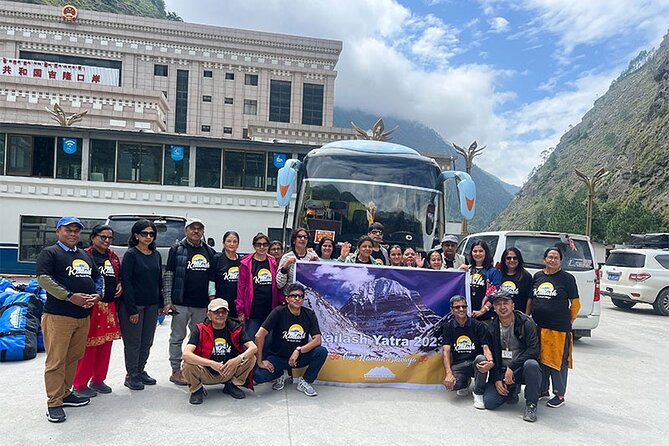
- Down jacket + duffle bag are provided to help you deal with cold nights and high-altitude swings.
- Small-group approach (max 25), with direct team help at border procedures and during the yatra.
- Manasarovar ritual time includes a Havan Puja by the sacred lake, plus a drive into Darchen before the kora.
- The kora’s hardest moment is named and scheduled: Dolma-La Pass at 5,636m.
- A free Kathmandu day-backup (Day 14) helps if roads or border timing slip due to weather or other disruptions.
- Optional helicopter return is available at extra cost to shorten the last leg from Nepal/Tibet area.
Kathmandu warm-up: Aloft stay, passport handling, and trek gear
Your trip starts the day you land in Kathmandu at Tribhuvan International Airport. You’ll be met and escorted to the Aloft by Marriott, and that matters more than it sounds: after a long flight, you’re already a half step behind schedule in a journey like this. The tour also collects your passport on arrival to streamline the Tibet visa process, then you get a group meeting where you’ll get practical guidance for what’s coming.
One smart, concrete touch here is the gear. You receive a down jacket and a duffle bag for your trek preparation. I like that they don’t force you to guess what kind of cold-proofing you’ll need; in this region, temperatures and wind can swing fast as you gain altitude. You’ll also end the day with a welcome dinner at an authentic Nepalese restaurant, which is a nice way to settle your stomach before the long drives and thin-air days.
If you’re the kind of person who worries about paperwork, this part is the calm phase. Multiple reviews also mention how well agents prepared them ahead of time, including planning support from people like Rayuna and Reezu—useful when you’re heading into a process-heavy border journey.
You can also read our reviews of more tours and experiences in Kathmandu.
Getting oriented fast in Kathmandu: Patan, Pashupatinath, and Boudhanath
Day 2 keeps you grounded in the culture of the Kathmandu Valley before you head toward Tibet. You visit Patan Durbar Square, a UNESCO World Heritage Site known for Newari architecture and temples. Then you move to Pashupatinath Temple on the Bagmati River, one of Hinduism’s major Shiva shrines. It’s a spiritually heavy place, and it’s also visually and emotionally intense—something to experience before Kailash.
Finally, you end at Boudhanath Stupa, one of the largest in the world and central to Tibetan Buddhism. Walking around prayer wheels here is not just a photo stop. It helps you shift your mindset from Kathmandu’s pace into the slower, ritual-based tempo that the kora will demand later.
A practical note: this day is busy. You’ll pack in three major sites, so don’t treat it like a leisure museum crawl. The payoff is that you’ll understand the spiritual context you’re stepping into, without losing your entire morning to waiting.
Rasuwa Gadhi to Kerung: border work plus a smart altitude ramp-up
On Day 3 you drive toward Rasuwa Gadhi, the Nepal–Tibet border area. The drive is about 6–7 hours and around 140 km, and the tour notes the shift in scenery as you approach the border—Langtang region views, waterfalls, terraced fields, then more rugged terrain. You pass through villages like Trishuli Bazaar and Syabrubesi, which is where you get a sense of how local life continues even as the mountains start taking over the horizon.
Day 4 is the real logistics day. You’ll do a short walk to the Nepalese immigration checkpoint to complete the check-out process, then you enter Chinese immigration. The tour is clear that Chinese side immigration can be meticulous, and the team assists you through it. That help is valuable because when you’re dealing with documents at altitude, the last thing you want is confusion.
Once you clear the border, you’re welcomed by a Tibetan guide and driver, then driven to Kerung (Gyirong) at about 2,700m. You also get a short stroll in Kerung to acclimatize. I like this approach: rather than tossing you straight into a hard schedule, you get a small buffer so your body can adjust.
Saga and the plateau rhythm: acclimatization without pretending it’s easy
Day 5 takes you from Kerung to Saga, a major transit point for the yatra. The drive is around 6 hours, and you climb to roughly 4,500m. Expect high passes and big open sky. This is where the trip starts feeling more like the real Himalayan highland experience, not just a “spiritual tour.”
The key value of this day is the reset. You settle into your accommodation and rest, because altitude is not something you beat with willpower alone. Multiple reviews praise the staff’s ability to keep things moving and keep people comfortable—especially the food side. If you’ve ever had altitude mess with appetite, you’ll appreciate that the operation is built around keeping meals hot and dependable.
One thing to watch: your body might feel fine one day and cranky the next. At these heights, pace and hydration matter. This tour doesn’t pretend otherwise; it builds in rest and driving stages that match the altitude changes.
Lake Manasarovar: Mayum La Pass, the first Kailash sight, and a Havan Puja
Day 6 is a highlight day. You drive from Saga to Lake Manasarovar. The route crosses Mayum La Pass (5,200m), and that’s the kind of altitude marker that can make the drive feel like a test. The tour notes that en route you get panoramic views, and you should catch your first glimpse of Mount Kailash as you approach the lake.
Then comes the real spiritual centerpiece: time at Manasarovar itself at about 4,590m. Even if you’ve read everything about it, the lake’s setting lands differently in person—quiet, cold, and extremely focused. The tour keeps the day structured so you have time at the lake instead of turning it into a quick roadside stop.
Day 7 starts with a Havan Puja by the sacred lake. This is a ritual day, not a sightseeing day, and it’s built into the schedule for a reason: prayers and blessings here connect directly to why people do the yatra in the first place. After the puja, you drive to Darchen (4,575m), the gateway to the kora, with a brief stop at Raksas Tal (Lake Rakshastal). The tour frames it as a mythic contrast to Manasarovar, which gives you a meaningful visual shift before you enter Kailash’s “circle.”
Darchen itself works like a hub: people from different backgrounds gathering with the same goal, the same altitude worries, and the same need for solid guidance. The tour keeps you overnight there so you can prepare calmly for the trek.
Darchen to Derapuk: starting the kora at Yam Dwar and meeting Kailash up close
Day 8 begins the Mount Kailash Parikrama (Kora). After breakfast, you drive to Yam Dwar, described as the gateway of the god of death and an important prayer spot before starting the circumambulation. I like that the tour doesn’t rush this. You get a ritual moment that sets the tone for the walking day.
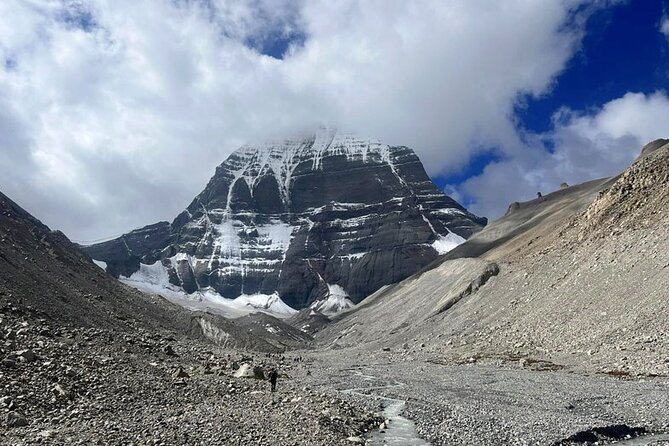
Then the first walking leg is to Derapuk, described as a relatively moderate trek with rugged terrain and valley views. The payoff is the trail’s spiritual pull and the views of the north face of Kailash. When you reach Derapuk, the tour notes you get a close-up view of Kailash, and that’s where the yatra stops being “a plan” and becomes “the place.”
You’ll sleep at a basic teahouse or camp in Derapuk. This is where people sometimes misjudge what “luxury” means in a high-altitude pilgrimage. Early and late in the trip you get comfortable hotels; on the kora you’re trading comfort for access and altitude practicality.
Charan Sparsh optional day: a meaningful extra for those feeling strong
Day 9 offers an optional hike to Charan Sparsh, meaning Touch of the Feet, at the base of the north face of Kailash. The tour calls it deeply spiritual, and it’s a moderately challenging trail from Derapuk that stays close to views of Kailash throughout.
This option is best for people who are well acclimatized and comfortable with altitude. If you’re not feeling strong, the alternative is still meaningful: rest at Derapuk and spend time meditating in the presence of Kailash. I appreciate that the trip doesn’t treat the optional hike as mandatory. Altitude can be unpredictable; the schedule gives you room to respect your body.
Dolma-La Pass day: the steep climb, Shiva-sthal offerings, and Zutulphuk
Day 10 is the most challenging and spiritually significant day. You start early from Derapuk, climb steeply to Dolma-La Pass (5,636m)—the highest point in the pilgrimage. At this altitude, your lungs and legs do not care about intention. You go step by step, and that’s exactly how this day is set up.
At the top, the tour mentions Shiva-sthal, where pilgrims leave personal items as offerings and pray for forgiveness and liberation. Shortly after, you’ll reach Gauri Kund, tied to Goddess Parvati and often used for prayers and reflection.
Then you descend into the Zutulphuk Valley. Even after the hard climb, this portion matters: the valley descent is when you start to recover mentally. It’s still rugged, but your body gets a break from the steepest angle.
Finishing the kora: from Zutulphuk to Saga, then the long return drive
Day 11 wraps the circumambulation. You begin with about a 3-hour walk from Zutulphuk Monastery to the designated pickup point, where the driving crew is waiting. Finishing the kora is a milestone, and the tour then shifts back into recovery mode with a drive to Saga, where you check into your hotel and rest.
Day 12 is a similar pattern: Saga back to Kerung by scenic drive, with time to reflect and take in the plateau’s wide openness from the vehicle. Day 13 continues the return toward Kathmandu, crossing back at Rasuwagadhi and then driving through Langtang National Park.
There’s also an optional helicopter return mentioned at additional cost. It reduces travel time to about 45 minutes, which can be a lifesaver if you’re worn out by altitude, cold, or simply need a faster end.
Kathmandu contingency day and the last evening back home
Day 14 is a buffer day for delays from weather, road conditions, or border issues. If things run perfectly, you use the day for Kathmandu flexibility: visit Bhaktapur Durbar Square or Swayambhunath (Monkey Temple), shop in Thamel, or book relaxation like spa or Ayurvedic therapy.
Day 15 ends simply and kindly: transfer to Tribhuvan International Airport for your flight home, with space to reflect on Kailash and Manasarovar. It’s the kind of closing that doesn’t rush you into another plan before you’ve processed the last one.
What makes this feel like luxury (and what it doesn’t)
This tour’s “luxury” isn’t about plush carpets at 5,600m. It’s more about the humans and the support systems around a brutal environment.
You get comfortable hotels at the start and end in Kathmandu and likely better room comfort during the non-kora driving segments. You also get a staffed operation designed to keep your needs met: multiple reviews highlight cooks able to provide hot meals even in remote areas, and a team structure that can include doctors/nurses in a support role.
The other “luxury” is predictability. Clear stages for acclimatization (Kerung then Saga), named ritual moments (Havan Puja at Manasarovar), and a contingency day all reduce stress. In a trip where weather and borders can mess with timing, that predictability is real value.
Price and value: is $3,999 per person fair?
At $3,999 per person for about 15 days, you’re paying for a lot more than the trekking itself. Based on what’s included, the value is strongest in these areas:
- Meals are largely covered: breakfast (14), lunch (11), and dinner (12). In high-altitude travel, the cost and challenge of finding food disappears.
- Key pre-kora gear is provided: the down jacket and duffle bag reduce your own packing burden.
- Support during immigration: passport handling on arrival and team help at Chinese immigration at Rasuwa Gadhi.
- Group size control: maximum 25 people, which helps keep the operation manageable.
- A contingency day: Day 14 reduces the chance that you’ll lose vacation days entirely if weather or border timing changes.
What’s not included is also clear: internal flights, personal expenses, and tips. If you need an optional helicopter return, that’s extra too.
So is it “cheap”? No. But for a 15-day route that crosses borders, ramps altitude over multiple days, and includes most meals plus guided support, it’s priced more like an all-in operation than a basic trek package.
Who should book this, and who should pause
This is a good fit if:
- You have moderate physical fitness and understand the kora requires stamina.
- You want a structured spiritual pilgrimage with real support on the ground.
- You care about organization at borders and food reliability, not just the view of Kailash.
I’d pause if:
- You have health limits that make high altitude risky. The schedule includes very high points like Dolma-La (5,636m) and Mayum La (5,200m).
- You expect fully cushy lodging during the kora. Days 8–10 involve basic teahouse or camp sleeping.
One practical detail: the tour states a maximum group size of 25. Reviews mention group dynamics that can vary by departure, so if you dislike bigger crowds, ask the operator about the exact group size for your dates.
Should you book this Luxury Kailash Mansarovar Yatra?
If your main goal is the Kailash kora and Manasarovar with a plan that reduces friction—passport handling help, border assistance, acclimatization pacing, dependable meals, and a contingency day—this is a solid choice. The biggest reason to book is simple: it’s built to keep you moving safely through a high-altitude, paperwork-heavy journey without leaving you to figure it out alone.
If you’re still on the fence, do this quick self-check: Are you comfortable walking the kora with a steep pass day? Do you have the stamina for early starts and altitude? If yes, you’ll likely find this format deeply satisfying—spiritually focused, practically supported, and paced so you can actually enjoy reaching Kailash.
FAQ
How long is the Luxury Kailash Mansarovar Yatra?
It runs for 15 days approximately, starting and ending in Kathmandu.
Where does the tour start, and where do you end?
The tour starts at Himalayan Glacier Adventure and Travel Company in Amrit Marg, Kathmandu, and ends back at the same meeting point.
What meals are included during the trip?
The package includes breakfast (14), lunch (11), and dinner (12).
Is Tibet visa and border procedure support included?
Yes. Your passport is collected on arrival in Kathmandu to help streamline the Tibet visa process, and the team assists with immigration procedures at the Chinese side during the border crossing at Rasuwa Gadhi.
How high does the trek go?
The most demanding pass is Dolma-La (5,636m) during the kora. The drive route also includes Mayum La Pass (5,200m) on the way to Lake Manasarovar.
Is there an optional hike besides the main kora?
Yes. An optional day hike to Charan Sparsh is available on Day 9, best for those who are well acclimatized and comfortable with the high-altitude environment.
Is there a contingency day if weather or borders cause delays?
Yes. Day 14 is reserved as a contingency day for unexpected delays or disruptions, and it can be used for Kathmandu activities if everything stays on track.
Can I return by helicopter?
An optional helicopter return is available at additional cost. It reduces travel time to approximately 45 minutes.