REVIEW · ASWAN
Luxury 4-Day 3-Night Nile Cruise from Aswan to Luxor
Book on Viator →Operated by Egypt Unlimited Tours · Bookable on Viator
A first Nile cruise should feel like a front-row history lesson. This one strings together Aswan and Luxor’s biggest hits with Egyptologist-led tours and real downtime on the water. I especially liked how smoothly the logistics are handled, from pickup through Luxor Temple and onward to your flight out. You’re not stuck figuring things out while in a new country, which matters.
I really enjoyed two things: the guided temple stops with an Egyptologist, and the onboard full-board setup with breakfast, lunch, and dinner included. The guide experience really comes through in the way you understand what you’re looking at, not just where it is.
One possible drawback: you will have a packed schedule. With temples on both banks and early starts, you’ll want to travel with realistic energy, plus patience for heat and walking.
In This Review
- Key takeaways before you book
- Why this Aswan to Luxor Nile cruise is a smart first pick
- Day 1 in Aswan: High Dam, Philae Temple, Unfinished Obelisk, and a sunset felucca
- A practical tip for Day 1
- Day 2: Kom Ombo’s Horus and Sobek temple plus Edfu’s well-preserved Horus complex
- Day 3 on the West Bank: Valley of the Kings, Hatshepsut at Deir el Bahari, and Colossi of Memnon
- Optional hot air balloon over Luxor (extra cost)
- Day 4: Luxor Temple and Karnak, then transfer to fly back
- How to make Day 4 feel less like a marathon
- What the Egyptologist guide changes (and why it matters)
- Meals, rooms, and onboard comfort during your full-board cruise
- Transportation and timing: why private transfers make this easier
- Price and value: is $800 fair for Aswan to Luxor?
- Who should book this cruise and who should skip it
- Should you book Luxury 4-Day 3-Night Nile Cruise from Aswan to Luxor?
- FAQ
- What is included in the $800 per person price?
- Is this a private tour or a shared group?
- Are temple entrance fees covered?
- Do I pay extra for hot air balloon in Luxor?
- Do you provide airport transfers?
- Is there an extra charge during Christmas and New Year?
Key takeaways before you book
- Private Egyptologist guidance that helps you read the sites instead of just photographing them
- Entrance fees included so you can focus on the day, not the ticket desk
- Felucca ride around Elephantine Island and Kitchener Botanical Island for a classic Nile beat
- Major temples in one trip: Philae, Kom Ombo, Edfu, Hatshepsut, Luxor Temple, and Karnak
- Full-board comfort with breakfast, lunch, dinner, and mineral water daily
- Optional add-on: hot air balloon over Luxor costs extra
Why this Aswan to Luxor Nile cruise is a smart first pick
A Nile cruise from Aswan to Luxor is one of the easiest ways to see a lot of Egypt without turning your vacation into a moving bus tour. You get that classic river rhythm: you move, you eat, you tour, and then you float again. It’s also a practical way to hit both the East Bank and West Bank temple zones, where most first-time visitors want to go.
The value here is not just that it is a “luxury cruise.” It’s that you’re getting a bundle: private air-conditioned vehicle transfers, an Egyptologist guide, entrance fees, and meals across the 3 nights. For many travelers, that combination turns a confusing itinerary into a clear plan you can trust.
The route itself is designed to keep you moving through meaning. Aswan sets the stage with granite and river engineering. Kom Ombo and Edfu show you temple styles preserved by time and sand. Luxor then lands you in the most iconic concentration of monuments—especially once you pair the East Bank temples with the West Bank tomb landscape.
You can also read our reviews of more tours and experiences in Aswan.

Day 1 in Aswan: High Dam, Philae Temple, Unfinished Obelisk, and a sunset felucca
Day 1 is a strong “start with power and belief” combination. After arrival in Aswan, your guide picks you up and gets you into the Aswan High Dam visit. This isn’t an ancient ruin, but it matters because it explains modern Nile life—and why Egypt’s water story is always bigger than just boats and sunsets. The stop is about 30 minutes with admission included.
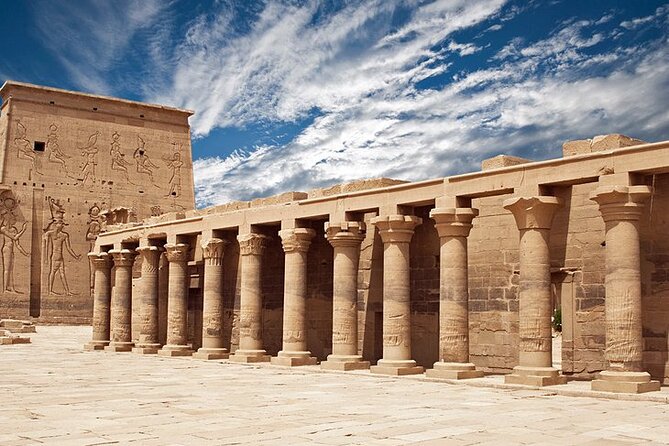
Next comes Philae Temple, reached by motor. This is a major stop for anyone interested in how Egyptian religion evolved over centuries. The Temples of Philae were tied to the cult of Isis, and the site was revered across the Pharaonic, Greek, Roman, and Byzantine periods, with different rulers adding their own details. Your time there is about 2 hours, and the admission is included.
Then you see the Unfinished Obelisk, a short but fascinating look at craftsmanship. Aswan supplied the granite used for statues and major projects—so seeing the stone cut marks and unfinished work gives you a feel for the real process behind the monuments. It’s listed at about 40 minutes.
The afternoon and evening is where the cruise becomes a cruise. You start with a felucca ride around Elephantine Island and Kitchener Botanical Island, plus a stop area connected with the Agha Khan Mausoleum. After that, you check in and enjoy lunch and dinner onboard your sailing boat. The tour keeps you on schedule without making the river part feel rushed.
A practical tip for Day 1
Bring a light layer for the boat time. Even if it feels warm in the city, river evenings can cool off faster than you expect.
Day 2: Kom Ombo’s Horus and Sobek temple plus Edfu’s well-preserved Horus complex
Day 2 shifts you from Aswan’s sacred sites to temples that highlight Egyptian gods tied to the river and protection. After breakfast onboard, the cruise sails to Kom Ombo and you visit the temple there.
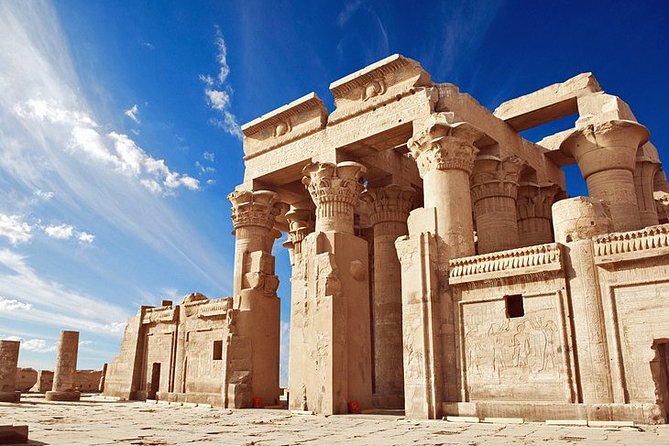
Kom Ombo Temple is special because it’s dedicated to Horus the Elder (Haroeris) and Sobek, the crocodile-associated god. You also get the Crocodile Museum as part of the stop area (not as a long museum day, but as part of the temple visit setup). The tour lists about 1 hour here with admission included.
What I like about Kom Ombo as a temple stop is that it feels different from the big, showy names. It’s a smaller place en route that still has a distinctive story: the Nile’s fertile setting, local farming communities, and the modern history tied to Nubians displaced by the creation of Lake Nasser. You don’t have to be an expert to appreciate that the temple sits in an active living landscape.
From there, you continue sailing to Edfu. After lunch, you visit Edfu Temple, a Ptolemaic temple built between 237 and 57 BC. It’s one of the best-preserved ancient monuments in Egypt, and a big reason is the desert sand that filled the area after earlier cult traditions were banned. The site’s roof intact and the overall structure makes it feel atmospheric—almost like the monument has its own quiet theater.
You’ll spend about 2 hours at Edfu with admission included. After dinner, there’s an optional night activity: a galabya party. It’s listed as about 2 hours, and admission is included—just note it is part of the onboard program rather than a separate paid excursion.
Day 3 on the West Bank: Valley of the Kings, Hatshepsut at Deir el Bahari, and Colossi of Memnon
Day 3 is your Luxor West Bank day, and it’s where most people feel the scale of the New Kingdom hit them. Breakfast is onboard, and then you start the day touring the west side across from Luxor’s modern city.
First is the Valley of the Kings, described as the Valley of the Gates of the Kings. This is the classic rock-cut tomb valley where pharaohs and powerful nobles were buried, spanning nearly 500 years from the 16th to 11th century BC. The tour is about 2 hours with admission included.
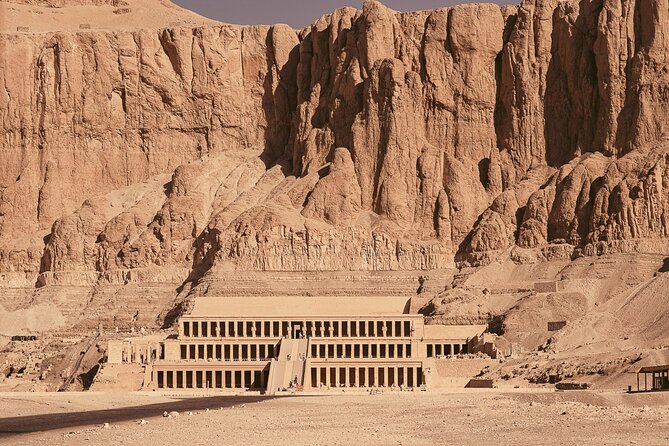
Then you head to Deir el Bahari, the mortuary temple of Hatshepsut. This stop is about 1 hour 30 minutes. What makes it memorable is the design: massive cliffs, terraced architecture, and a colonnaded terrace that reaches about 97 feet high in parts. It’s also dedicated to Amon-Ra, the sun god. Even if you don’t know every term, the temple layout helps you picture how royal worship and political legitimacy were performed in stone.
After that comes the quick photo-and-stops segment: the Colossi of Memnon. This one is shorter at about 20 minutes, but it’s a useful palate cleanser between deeper tomb and temple stops. It’s also a good moment for a panoramic shot, especially if light is cooperating.
Optional hot air balloon over Luxor (extra cost)
There’s an optional hot air balloon add-on listed for Day 3 with extra cost. It’s about 2 hours, and admission for the balloon itself is not included. If you’re curious, this is your one realistic chance on the schedule without changing the cruise structure. If you’re not into early morning wake-ups or prefer to keep everything low-key, you can skip it and use the time for rest and onboard relaxation.
Day 4: Luxor Temple and Karnak, then transfer to fly back
Day 4 is built around the East Bank, where Luxor Temple and Karnak do most of the heavy lifting for first-timers.
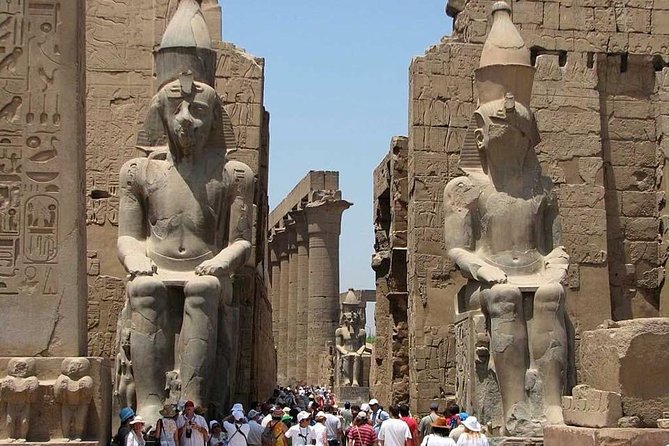
After breakfast onboard, you visit Luxor Temple, dedicated to the god Amu Re. You’ll spend about 1 hour 30 minutes here with admission included.
Then comes Karnak, listed as the largest temple in the world. Your day includes the temple visit and ends service after the experience, with a transfer to Luxor Airport for your flight back to Cairo. Your airport transfer time is about 2 hours with admission included.
How to make Day 4 feel less like a marathon
Karnak can overwhelm you if you try to do everything at full speed. I’d suggest you pick a couple of areas you want to understand deeply, then let the rest be context. The fact that this is a guided day helps—you won’t be wandering clueless for hours.
What the Egyptologist guide changes (and why it matters)
An Egyptologist guide is not just a translator of trivia. It’s what turns temple walls into a readable story. You get guided tours through ancient temple complexes, including the kinds of connections that are easy to miss if you’re only looking for big statues.
This matters especially on a route like this, where each day introduces a new layer:
- Philae shows shifting cult importance centered on Isis
- Kom Ombo brings in Horus and Sobek
- Edfu emphasizes a well-preserved temple form tied to Horus
- Deir el Bahari makes royal architecture feel political and spiritual
- Luxor Temple and Karnak connect you to large-scale worship at Thebes
Also, the human side counts. In one review, Ahmed Mahmoud was singled out for being kind and careful not just during the tour but in how he supported afterward—helping with taxi plans, guiding how to spend time before a flight, and staying helpful until the next step of the trip. That’s the kind of thing you notice when your schedule includes transfers and airport timing.
Meals, rooms, and onboard comfort during your full-board cruise
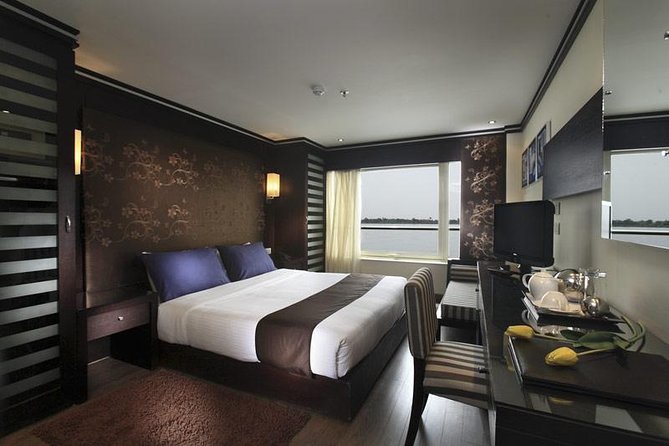
The itinerary is clear that you’re on full board for the 3 nights: breakfast (3), lunch (3), and dinner (3), plus two bottled mineral waters every day. Drinks are not included, and alcohol is available to purchase, so you’ll want to budget if you plan to have wine or other drinks.
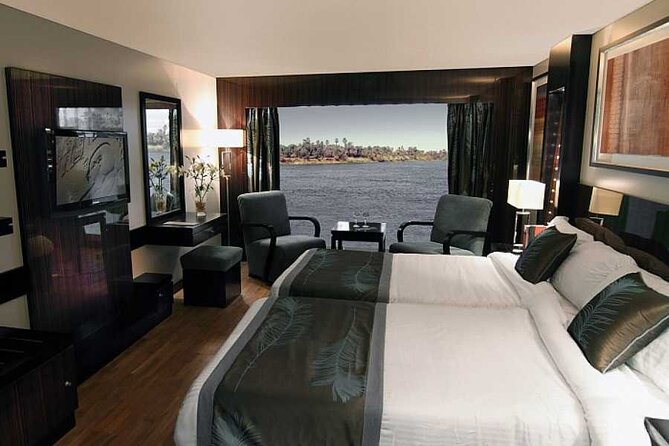
From review notes, I’d expect a generally comfortable onboard experience: pleasant staff, good food, and rooms described as nice and spacious. That’s not a trivial detail. After hot temple walking, you’ll appreciate having meals taken care of and a place that feels like a real rest stop.
One thing I do like about the way the schedule is set up: you aren’t trying to eat in between temples on your own. You start tours after breakfast or before dinner, and you finish days with food onboard. It keeps the day from feeling fragmented.
Transportation and timing: why private transfers make this easier
This cruise includes door-to-door transfers in a private deluxe air-conditioned vehicle. On the first day, that means pickup from Aswan airport to start the day. On the last day, you transfer to Luxor Airport to fly back to Cairo.
Private transport is worth something here because the sites are not all clustered in one walkable zone. You’re crossing between stops where the timing matters. A private vehicle also reduces stress when you’re tired after touring—especially when you don’t want to negotiate rides while balancing luggage and departure times.
You also get private touring, meaning it’s described as a private tour/activity with only your group participating. That usually translates into a calmer pace and fewer interruptions during your guide explanations.
Price and value: is $800 fair for Aswan to Luxor?
At $800 per person, this is positioned as a premium cruise, but the key question is what that price buys you beyond the room.
Here’s the value math you can actually use:
- 3 nights accommodation on a full-board basis
- Egyptologist-led private tours
- All entrance fees for the included sights
- Private air-conditioned vehicle transfers
- Felucca ride and boat-side experiences included
- Meals: breakfast, lunch, dinner (plus bottled water daily)
- Taxes and service charges included
So you’re paying for a lot of the “usual add-ons” that can inflate other trips: guide time, entry tickets, and transportation. The big exclusions are also clear: drinks (including alcoholic drinks if you want them) and the optional hot air balloon.
One timing note to keep in mind: during Christmas and New Year peak period, there’s an additional fee of USD 200 per person from Dec 20 to Jan 2. If your travel dates fall in that window, the real price will be higher, so plan accordingly.
For many people, especially if you’re not traveling with a friend who can handle logistics, this structure can feel like good value. You’re buying time and clarity, not just a bed and a boat ride.
Who should book this cruise and who should skip it
You’ll love this if:
- You want an organized Aswan to Luxor Nile cruise with minimal planning
- You care about understanding what you see at major temples
- You prefer private touring and guided time inside sites
- You want meals and entry fees handled so you don’t nickel-and-dime your day
You might want to think twice if:
- You hate structured days and want total flexibility minute-to-minute
- You’re sensitive to heat and long walking days (there’s plenty of it, even if the transport reduces friction)
- You’re hoping for very slow travel. This one is efficient and full.
Should you book Luxury 4-Day 3-Night Nile Cruise from Aswan to Luxor?
I’d book it if your goal is to get the classic Egypt highlights between Aswan and Luxor with a guide and included entrance fees. It’s built for first-timers who want the big monuments without the stress. The best part is that the day-by-day structure matches what many visitors actually struggle with: not the “seeing” part, but the “making sense of it” part and keeping timing smooth.
If you want a “floating hotel” vibe with almost zero schedules, this may feel too packed. But if you’re happy to work your way through temples with a competent guide and then enjoy onboard downtime and good meals, this cruise does what it promises.
FAQ
What is included in the $800 per person price?
The price includes 3 nights accommodation on a full-board basis, an Egyptologist guide, private tours, private air-conditioned vehicle transport, bottled mineral water twice daily, all entrance fees for the listed sights, service charge and taxes, and breakfast, lunch, and dinner each day (3 of each).
Is this a private tour or a shared group?
It’s a private tour/activity, so only your group participates.
Are temple entrance fees covered?
Yes. Entrance fees for the sights mentioned in the itinerary are included.
Do I pay extra for hot air balloon in Luxor?
Yes. Hot air balloon is listed as an optional tour with extra cost, and it is not included in the price.
Do you provide airport transfers?
Yes. You’re picked up from Aswan airport to begin the day, and at the end there’s a transfer to Luxor Airport for your flight back to Cairo.
Is there an extra charge during Christmas and New Year?
Yes. There is an additional fee of USD 200 per person from Dec 20 to Jan 2 during peak period.