REVIEW · VILAMOURA
Lagos and Sagres Premium – Shared small group > VTours Algarve
Book on Viator →Operated by VTours Algarve · Bookable on Viator
Algarve cliffs feel personal on this day trip. I like the easy hotel pickup between Faro and Lagos and the fact that admission tickets are included, so you’re not stuck finding cash or tickets at each stop. With a max group size of around 8, it also feels more like a shared day out than a long bus chore, and the guide energy from Pedro is a big part of why the history lands.
One thing to plan for: this is an outdoor, walking-heavy coastline day. You’ll want comfy shoes and sun protection, and lunch in Sagres isn’t included—so bring a little budget and be ready to eat when the group stops.
In This Review
- Key highlights you’ll feel the moment you book
- Easy pickup between Faro and Lagos, then coast views all day
- Ponta da Piedade lighthouse: sandstone cliffs, arches, and grottos
- Cabo de São Vicente: the fortress, St Vincent’s lighthouse, and Atlantic scale
- Sagres: why Henry the Navigator’s ideas grew here
- Lagos marina walk and old-town time for photos
- Infante Dom Henrique statue and Santa Maria de Lagos church
- How the 8-hour rhythm feels in real life
- What you’re really paying for: guide skill and ticket-smooth logistics
- Who should book this Lagos and Sagres Premium day trip
- Should you book? My decision guide
- FAQ
- What is the duration of the Lagos and Sagres Premium tour?
- What time does the tour start?
- Is pickup included?
- How many people are in the group?
- Are admission tickets included?
- Is lunch included?
- What language is the tour conducted in?
- What should I bring for the day?
- What if the weather is poor?
- Can I cancel for free?
Key highlights you’ll feel the moment you book
- Pickup between Faro and Lagos means you start relaxed, not hunting parking spots
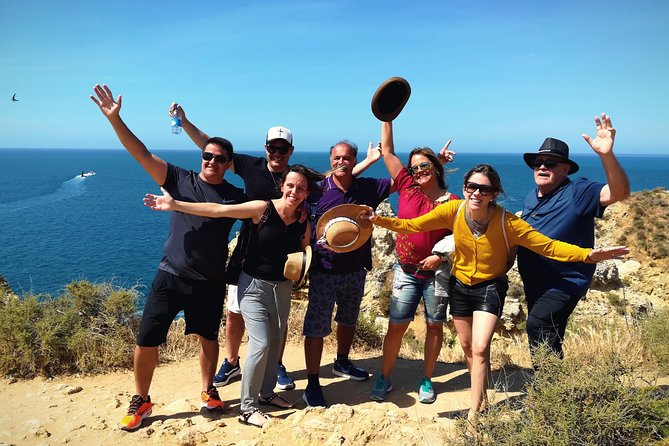
- Small group (max 8) keeps photo stops and questions from getting rushed
- Included entry tickets for the church/monument stops saves hassle
- Ponta da Piedade’s cliff views are the kind you remember later
- Cape St Vincent at São Vicente blends fortress history with big Atlantic drama
Easy pickup between Faro and Lagos, then coast views all day

This tour is built for people who want the Algarve highlights without wrestling transportation. You meet at 9:30 am, and the pickup zone covers hotels between Faro and Lagos, which is a huge relief if you’re staying anywhere in that band. From there, you settle into an air-conditioned vehicle and let the route do the work.
Value-wise, the price makes more sense when you factor in what you’re not paying for on the road. You get bottled cold water, parking fees are covered, and entry tickets for the key stops are included—so your day stays predictable. At $216.04 per person, it’s not a budget half-day either, but it’s the kind of cost that often feels fair when you compare it to renting a car, paying for parking, and then buying multiple individual admissions.
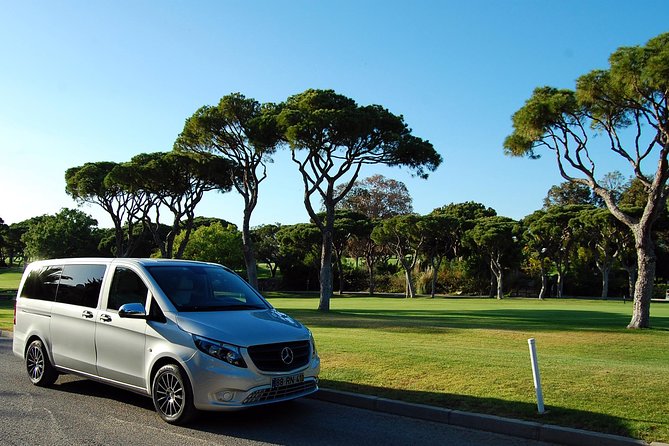
Also, the group size matters. With a small group, it’s easier for the guide to slow down when you want photos, and it’s easier to hear explanations when you’re standing still by a viewpoint. In one case from the guide Pedro experience, the day felt smooth partly because the vehicle was comfortable and kept in great condition.
You can also read our reviews of more tours and experiences in Vilamoura.

Ponta da Piedade lighthouse: sandstone cliffs, arches, and grottos
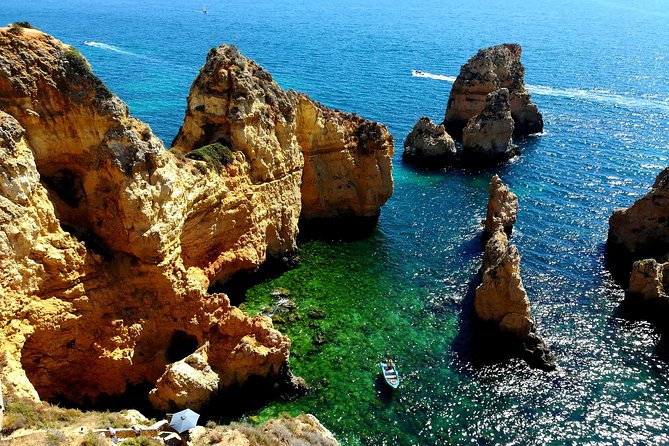
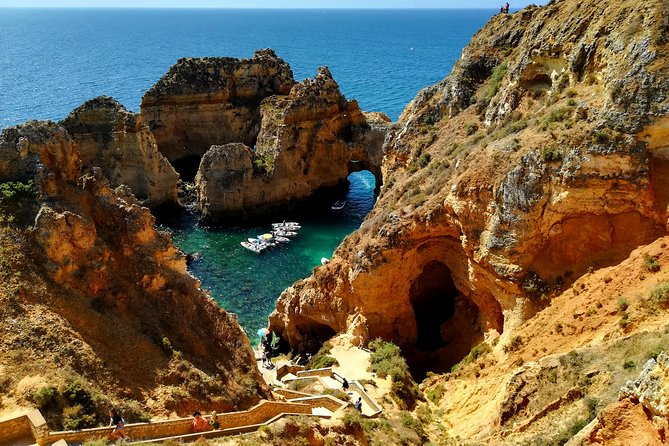
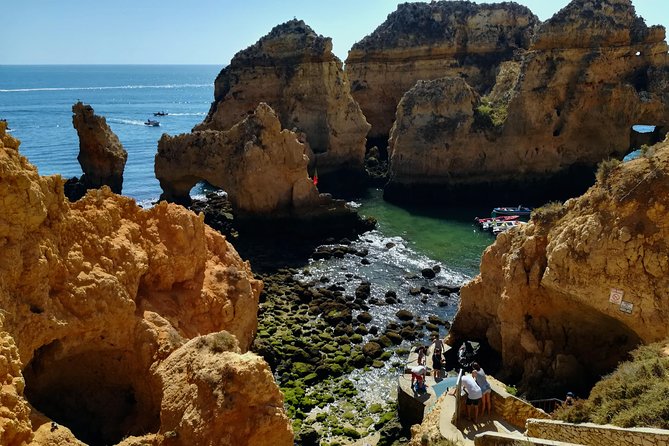
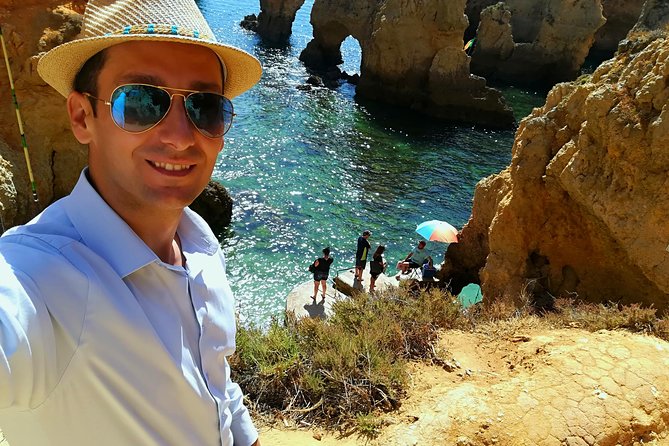
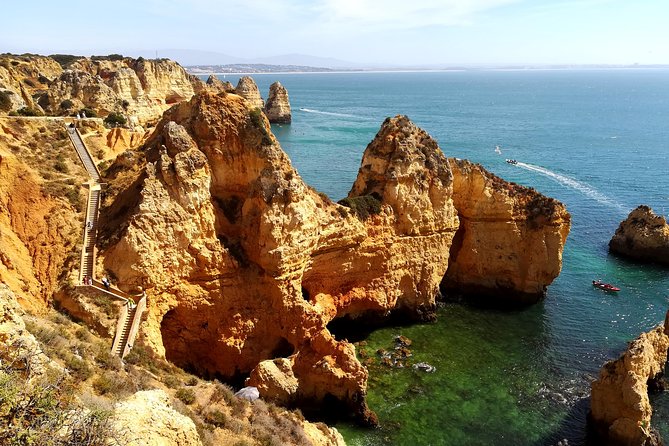
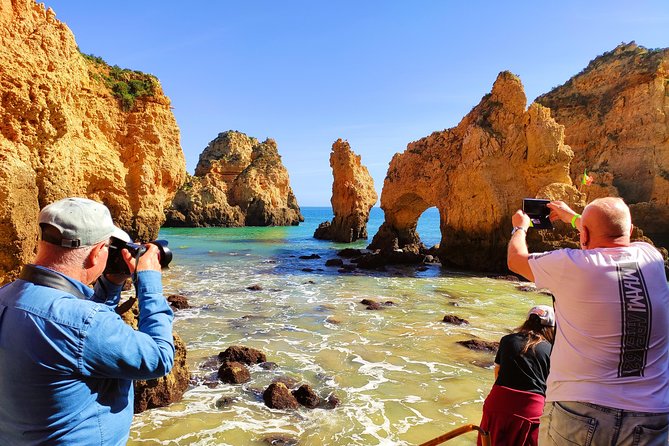
Your first major natural stop is Ponta da Piedade, anchored by its lighthouse viewpoint and those famous Algarve sandstone cliffs. Expect jagged rock forms carved by rough winter storms over time—sea pillars, fragile-looking arches, and hidden pockets in the rock. Even if you’ve seen cliff coastlines elsewhere, this one has a “sculpted” feel that’s hard to fake.
What you’ll likely love here is how the coastline changes as you walk. The views shift with each step, and the formations look different depending on the angle of the light. The stop is about 1 hour, which is a sweet spot: enough time to see multiple angles without turning the day into a long hike.
The main drawback is also simple: it’s a cliff area. Bring comfy shoes and keep an eye on your footing. If you’re heat-sensitive, plan to wear sun protection early and stay hydrated—especially because the day continues with more Atlantic exposure.
Cabo de São Vicente: the fortress, St Vincent’s lighthouse, and Atlantic scale
Next up is Cabo de São Vicente, home to the fortress tied to coast defense. The site’s military purpose goes way back—built in the 16th century to protect against frequent attacks by Moorish pirates. That alone gives the place weight, but it’s the setting that makes it hit hard: the fortress sits above cliffs with a strong Atlantic presence.
Inside, you can see the lighthouse of São Vicente, which dates to 1904 and is still in operation. The fortress details matter too, like the polygonal floor plan and the gateway crowned by a royal shield—small bits of design that help you feel how strategic this place was. You also get views out over the cliffs and ocean, which is the kind of scenery that instantly resets your sense of distance.
This stop runs about 45 minutes, so it’s not a museum marathon. You’ll move through the main areas, take in the viewpoints, and get the story behind the stones. If you’re the type who likes history but also needs scenery breaks, this stop nails that balance.
One practical tip: windy days can feel much colder up at the cape than you expect. Even in warm weather, bring something that cuts wind if you run chilly.
Sagres: why Henry the Navigator’s ideas grew here
Sagres is often talked about for its dramatic headlands, and this tour treats it as more than a pretty place. The key idea is the sheer force of nature at the south-westerly tip of Europe—winds, exposure, and that sense of the edge of the map. It’s easy to understand why ancient settlers considered it sacred, and why Portuguese explorers were drawn into the unknown.
The bigger story centers on Henry the Navigator. This area is linked to his maritime influence: cartographers, astronomers, and mariners gathering around navigation knowledge and shipbuilding. It’s a helpful stop if you want context for Portugal’s Age of Discoveries that goes beyond dates and names. You come away with a clearer picture of how navigation tools like the sea compass, astrolabe, and quadrant helped determine latitude and made voyages more than luck.
You spend about 1 hour here. If you’re hungry, this is where lunch usually happens (about 1 hour), but the tour doesn’t include the meal cost. For me, this is the moment to plan smart: pick something simple that won’t drag your energy down for the afternoon viewpoints. And if you’re not sure what to order, ask the guide before you sit down—your day will feel easier.
Sagres is also the stop where the day’s pacing becomes obvious. If you like slower travel, you might wish you had more than an hour. But the tradeoff is that you still get the rest of the route without feeling trapped in one town.
Lagos marina walk and old-town time for photos
After Sagres, the day shifts back toward Lagos. At the Marina de Lagos stop, you get a short break to walk and reset. The route is described as an easy stroll along the marina with a river drawbridge crossing and a cool breeze coming off the Atlantic. It’s only about 15 minutes, so treat it like a quick breather and a chance to grab photos without overthinking it.
Then the tour presses into Lagos itself, and this is where the day’s historical layers stack. Lagos is proud of its past and keeps a surprising amount of it visible. The area’s story starts with early settlement—Lacobriga is tied to Celtic origins around 2000 years BC—then later Phoenicians, Greeks, and Carthaginians, and Roman growth. In the 10th century, the Moors built walls around Lagos, shaping the old-town feel.
The 15th century is the town’s golden age in this telling, especially because Lagos became a major departure and arrival point across the Atlantic toward Africa. If you like seeing how a town’s geography drives its destiny, Lagos is a strong match: it’s not just scenic, it’s strategic.
You get about 1 hour 30 minutes in Lagos, which is enough time to walk some streets, soak in the old walls and buildings, and still enjoy the viewpoint vibe. It’s also the part of the day where you can best tailor your pace—wander if you want, or focus on key sights if you prefer structure.
Infante Dom Henrique statue and Santa Maria de Lagos church
Two smaller stops round out the Lagos experience, and they’re quick on purpose. The Statue of Infante Dom Henrique gets about 5 minutes, with an explanation that ties Henry’s influence back to education for navigators and the practical use of navigation instruments. It’s a short moment, but it helps connect the Sagres story to what you see in the city.
Then comes the Church of Santa Maria de Lagos, also about 5 minutes. This is a 15th-century church with a simple rectangular layout and a single nave, plus an elevated main chapel and baptistery and a high choir. The detail worth pausing for is the high altar’s painting—luminous colors with biblical scenes. Even in a brief stop, it adds a cultural layer beyond coast cliffs.
The main consideration here is time. These are short entrances, not long museum-style visits, so if you’re hoping for a long, quiet sit-down, you may want to return on your own later.
How the 8-hour rhythm feels in real life
This is listed as about 8 hours, starting at 9:30 am. In practice, the day’s rhythm is built around a sequence: viewpoint, fortress, headlands, quick marina break, then bigger Lagos time. That structure matters because it prevents the common mistake of doing too many stops that all blur together.
The best way to enjoy the timing is to travel light. You’ll likely spend a lot of time outdoors and standing. Wear layers you can adjust for wind at Cape St Vincent and stronger sunlight farther inland. And pack water awareness: bottled cold water is included, but you’ll still want to pace yourself.
Also, lunch sits in the middle of the day, usually in Sagres, but it’s not included. That means you’ll control your budget and what you order, but you should also accept that you can’t plan a gourmet schedule around it. Keep it simple and focus on energy for the afternoon.
What you’re really paying for: guide skill and ticket-smooth logistics
The biggest reason people love days like this isn’t just the scenery—it’s how the guide connects dots while you’re moving. In the Pedro-led experiences, his style is described as passionate, patient, and flexible. That flexibility shows up in small ways: pacing based on the group, checking in, and making sure you’re comfortable while still hitting the sights.
You also benefit from not having to coordinate admissions yourself. Entry tickets for museum/church/monument type stops are included. That’s small on paper, but it reduces the friction that can ruin a day—especially when you’re bouncing between coastal viewpoints and town centers.
Finally, the small-group format is the quiet value. If there are only up to 8 people, your questions don’t get lost and your stops don’t feel like a factory line.
Who should book this Lagos and Sagres Premium day trip
I’d say this tour fits best if you:
- Want Lagos plus Sagres plus Cape St Vincent in one day without juggling a rental car
- Like your history explained in plain terms while you’re still seeing the physical places
- Prefer a small group and a guide who can adjust pace
- Are happy to do short walking segments and viewpoint stops rather than long hikes
It might be less ideal if you:
- Want a long, sit-down beach day instead of multiple stops
- Don’t like wind-exposed viewpoints (Cape St Vincent can be dramatic and breezy)
- Need lunch to be fully included in the tour price
Should you book? My decision guide
If your priority is one high-impact day that mixes dramatic coastline, fortress history, and Henry the Navigator context, I think this is a strong pick. You get real logistics help with pickup between Faro and Lagos, included admissions, and a day plan that doesn’t waste time.
If you’re the type who gets restless in packed schedules, lean toward this only if you’re okay with a brisk pace and quick stops. The good news: the small group and guide style should make it feel less rushed than a large group tour.
For most first-timers in the Algarve, this is the kind of day that gives you a mental map of the region fast. You’ll leave with a clearer sense of why Portugal sailed when it did—and why these coastal points still feel so powerful.
FAQ
What is the duration of the Lagos and Sagres Premium tour?
It runs for about 8 hours.
What time does the tour start?
The start time is 9:30 am.
Is pickup included?
Pickup is offered from hotels between Faro and Lagos (within the assigned pickup area).
How many people are in the group?
This experience has a maximum of 8 travelers.
Are admission tickets included?
Yes. Entry fees for the museum, church, or monument stops are included.
Is lunch included?
Lunch is not included. The lunch break in Sagres is usually about 1 hour.
What language is the tour conducted in?
The tour is offered in English.
What should I bring for the day?
Wear comfortable shoes and plan for sun protection. Bring hat, sunglasses, and sunscreen, plus appropriate clothing.
What if the weather is poor?
The experience requires good weather. If it’s canceled due to poor weather, you’ll be offered a different date or a full refund.
Can I cancel for free?
Yes, free cancellation is available. You can cancel up to 24 hours in advance for a full refund.