REVIEW · MARRAKECH
Blue City Tour from Marrakech: Private 4-Day Luxury Tour to Chefchaouen
Book on Viator →Operated by Comfort Travel Morocco Private Tours · Bookable on Viator
Four days, one blue obsession in Morocco. I like the private luxury vehicle and the room to set the pace, and I especially like the guided time in Chefchaouen that makes the medina easy to enjoy instead of rushed. The main drawback is that you also spend meaningful time in larger cities, so if you want a heavier focus on Fez-style medinas, this route may feel a bit city-forward.
This trip strings together Morocco’s coast-and-capital side with mountain blue streets. You get hotel pickup, an expert English-speaking driver, mini bottled water in the van, and the practical stuff covered like fuel and highway fees. It’s a good fit if you want comfort and structure, without giving up the chance to wander.
In This Review
- Key highlights at a glance
- Private luxury pacing: how this Marrakech-to-Chefchaouen trip really feels
- Rabat on the Bou-Regreg: Oudaias, Hassan Tower, and Chellah in one day
- Kasbah des Oudaias: 12th-century layers in a fortified setting
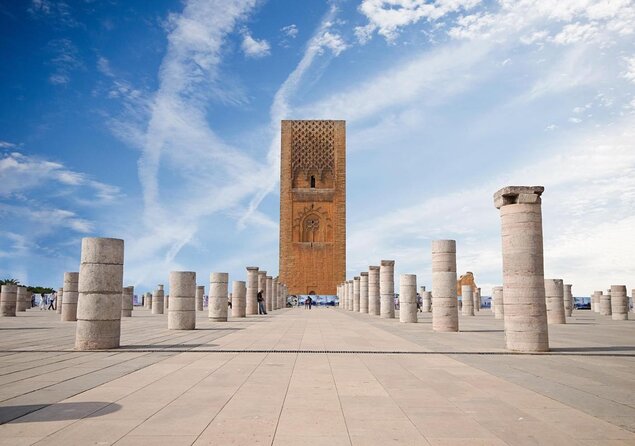
- Hassan Tower: the unfinished project that still feels complete
- Chellah: Roman-era remains and a stork-nest minaret
- Day 2 north of Chefchaouen: Ouazzane’s religious roots
- Chefchaouen: guided medina walking, plus time to breathe
- A drawback to expect
- Casablanca day 3: Art Deco architecture and an easier arrival rhythm
- Hassan II Mosque and Morocco Mall on day 4, then Palmeraie camel ride
- Hassan II Mosque: a major architectural statement with non-Muslim visiting rules
- Morocco Mall: aquarium spectacle and a reconstructed souk idea
- Palmeraie: 30 minutes on a camel, then back to Marrakech
- Getting the most from the schedule (without turning it into a checklist)
- Who should book this Chefchaouen luxury tour from Marrakech?
- Should you book it?
- FAQ
- How long is the private tour from Marrakech?
- What cities are included in this 4-day itinerary?
- Is pickup and drop-off included?
- Is this experience private or shared?
- What is the price per person?
- Are meals included?
- Are entrance fees included for all stops?
- What does the tour include for transportation and comfort?
- Is there shopping or leisure time on the itinerary?
- What is the cancellation policy?
Key highlights at a glance
- A truly private itinerary reserved for just your group, with hotel pickup and drop-off
- Rabat essentials in one day: Kasbah des Oudaias, Hassan Tower, and Chellah ruins
- Chefchaouen guided medina time plus free-flow wandering and café breaks
- Casablanca Art Deco walk after a direct drive, with time to rest overnight
- Hassan II Mosque access for non-Muslim visitors outside prayer times (with modest dress)
- Palmeraie camel ride before returning to Marrakech
Private luxury pacing: how this Marrakech-to-Chefchaouen trip really feels
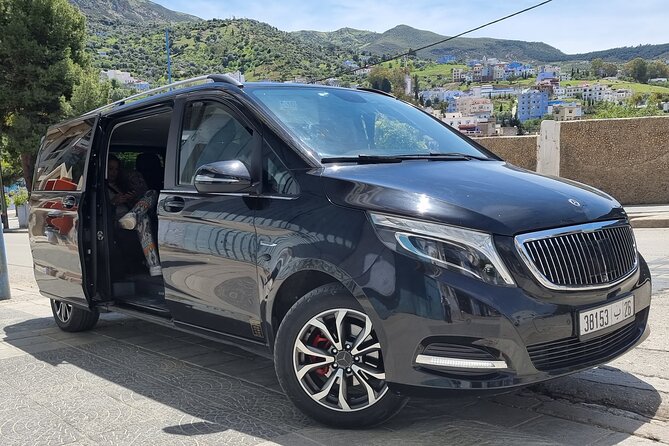
This is priced at $510.08 per person for a ~4-day private luxury route, and the value comes from what you do not have to manage. You’re not coordinating separate taxis, drivers, or timing between cities. Instead, you’re handed a vehicle, an English-speaking driver, and a schedule that moves you between Rabat, Chefchaouen, Casablanca, and back to Marrakech.
The private part matters. You’re not squeezed into a shared group plan, and you can pause for a photo or slow down through the medina lanes when you feel like it. If you travel as a family or with friends, that flexibility often turns a pricey tour into a smart one, because the cost is buying time and stress reduction.
One logistics detail I’d plan around: your end drop-off is very near Jemaa el-Fnaa, because vehicles can’t access the same spot midday. So your last transfer is short on the feet—still convenient, just not “drop you at the exact same door” style.
You can also read our reviews of more tours and experiences in Marrakech.

Rabat on the Bou-Regreg: Oudaias, Hassan Tower, and Chellah in one day
Rabat is the kind of city that rewards calm attention. This itinerary starts you right at the Atlantic edge, where the Bou-Regreg river meets the sea, and your guide begins at the Kasbah des Oudaias.
Kasbah des Oudaias: 12th-century layers in a fortified setting
The Kasbah des Oudaias (Oudayas Kasbah) is built around a simple idea: a fortified place where different cultures left their mark. It dates to the 12th century and was renovated over and over. You’ll hear how it housed Arab tribes, Andalusian immigrants, and sultans. That blend matters because it helps you read Rabat’s architecture without needing to become a historian on day one.
This stop shows admission ticket included for Kasbah des Oudaias, so you can spend less mental energy on paperwork and more on walking.
Hassan Tower: the unfinished project that still feels complete
Right across the river views are famous for a reason: Hassan Tower and the Mausoleum of Mohammed V form a dramatic pairing along the Bou-Regreg. Hassan Tower is known as the Unfinished Past—an enormous project that never reached completion. Then you pivot into the ornamental grandness of the mausoleum, where Moroccan modern architecture becomes a kind of living monument.
This stop also shows admission ticket included, which is a small but real value add. When entries are included, it’s easier to stay on schedule.
Chellah: Roman-era remains and a stork-nest minaret
Chellah is where Rabat gets more atmospheric. The site sits on a sloping area above the Bou-Regreg. The story moves from Phoenician settlement to Roman control around 40 CE, then later to Merinid sultans who built a necropolis on top of older remains. There’s an elegant minaret, and it’s topped with what the description calls a stork’s nest—one of those visual details that makes ruins feel alive.
One note for budgeting: the itinerary describes Chellah with admission included in the schedule, but the trip notes list Chellah entrance fee as not included. Practically, that means you should expect a ticket cost at Chellah unless your provider clarifies otherwise when you book.
After Rabat, there’s optional lunch time before you head north toward the Rif Mountains and Chefchaouen. That lunch break is useful because the next day’s mountain roads and walking need a full tank.


Day 2 north of Chefchaouen: Ouazzane’s religious roots
Before you hit the blue city, you make a stop near the province of Ouezzane (Wazzān). This is a different tempo than the coastal capital.
The stop is listed as about 3 hours with admission free. You’ll learn that Ouezzane was founded in 1727 as a religious community by Sharif Mawlāy ʿAbd Allāh. The description emphasizes that after his death his tomb became a pilgrimage site, teaching center for Sufi doctrines, and a sanctuary. It also notes the Sharifs of Ouazzane were among powerful religious figures in pre-Protectorate Morocco.
Why this works: it gives you a pause from the main tourist classics. Even if you’re focused on photos in Chefchaouen, this kind of stop adds context for how varied Morocco is—mountains aren’t the only story.
Chefchaouen: guided medina walking, plus time to breathe
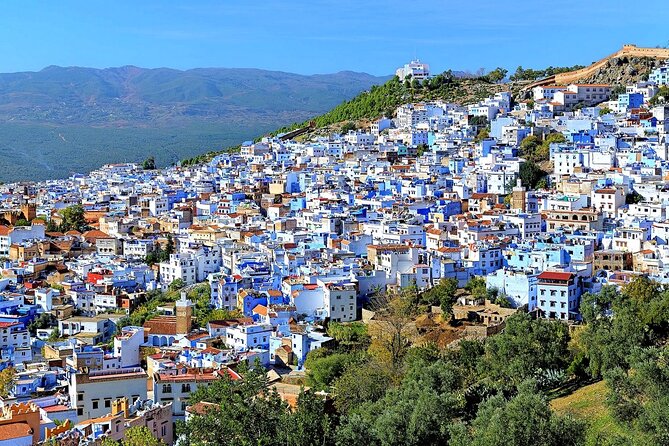
Chefchaouen is the reason most people book this tour, and the plan here is built around a guided walk that doesn’t trap you in a rigid script.
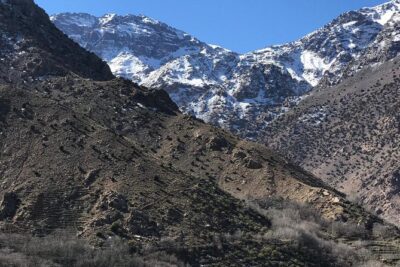
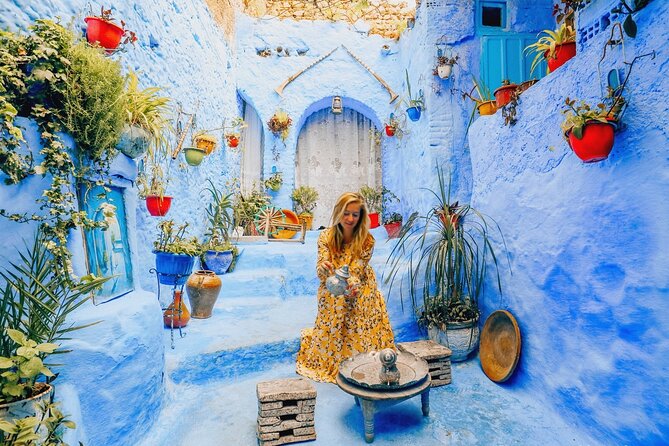
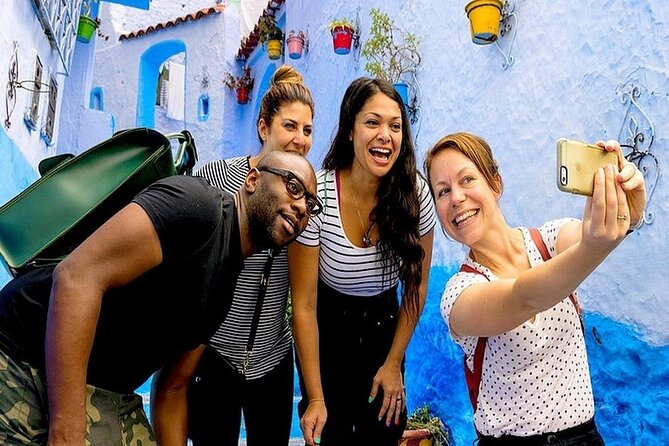
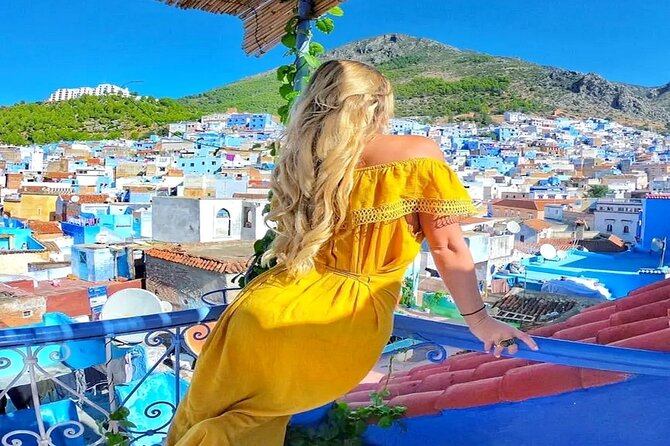
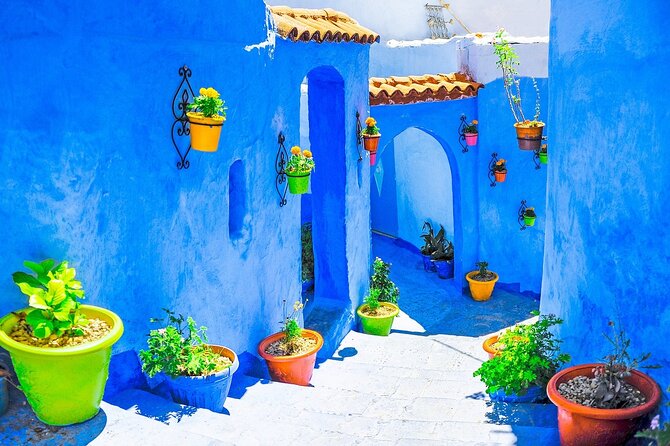
Chefchaouen sits under striking Rif peaks, and the medina is known for whitewashed homes with red tile roofs and walls painted in brilliant shades of blue. Your private Chefchaouen time is designed for you to explore narrow, winding alleys with a friendly local guide. The schedule calls for about 5 hours, which is the sweet spot: enough time to see a few different medina sections, but not so long you feel like you’re shopping for stairs.
One practical win: the itinerary points to Plaza Utta el-Hammam as a stop for a drink at a shady sidewalk café. That’s more than a random coffee break—it’s where you get your bearings fast, watch people move through the lanes, and avoid the classic mistake of pushing through every stop without a reset.
You’ll also get time for real-life browsing. The notes mention the lanes are quaint and not overly crowded in the medina areas, which makes it easier to practice bargaining without feeling like you’re interrupting a constant crowd flow.
A drawback to expect
Chefchaouen is popular, and blue streets photograph well, so you’ll still want to manage your expectations for crowd levels and timing. If you’re the type who hates any human density near your camera, you might feel like you’re constantly sharing the view.
Casablanca day 3: Art Deco architecture and an easier arrival rhythm
From Chefchaouen, you drive straight to Casablanca with a listed travel time of about 5 hours. This portion is about reducing friction. You arrive with a driver already in place, and that matters because Casablanca is big enough that navigating without help can cost time.
Once you’re there, you wander through the center and focus on Art Deco buildings. The description highlights Moorish buildings blending French-colonial design with traditional Moroccan style. You’ll also spend time in Quartier Habous and the beachside suburb of Ain Diab.
Then you get driven to your chosen accommodation hotel for overnight. That’s a smart inclusion for a multi-city tour: the final day is usually the one with the most walking (and tickets), so you want sleep and recovery built into the plan.
One thing to consider: this day is “city time,” not small-town wandering. If your ideal Morocco is medina alleys, craft-focused neighborhoods, and slower streets, Casablanca can feel like a big contrast. The good news is that the schedule keeps it focused: you’re not trying to conquer the whole city.
Hassan II Mosque and Morocco Mall on day 4, then Palmeraie camel ride
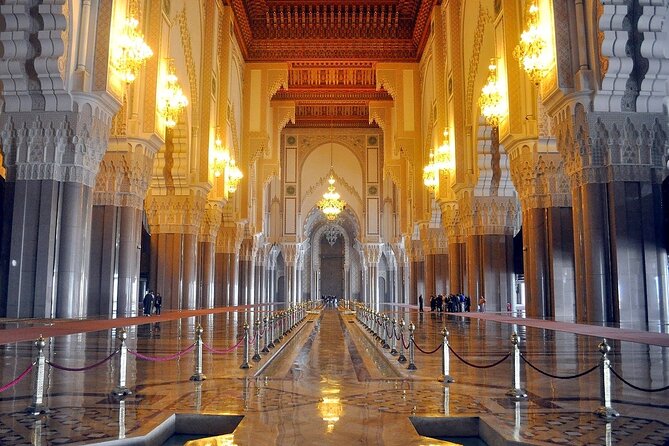
Your last day is a mix of awe and entertainment, and it’s well-timed for a road-trip finish.
Hassan II Mosque: a major architectural statement with non-Muslim visiting rules
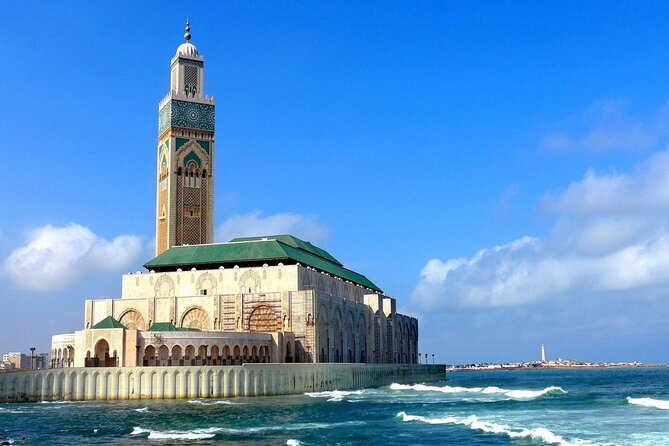
The Hassan II Mosque visit is about 1 hour 30 minutes. The description says that once you get your ticket, it basically includes the guide for the visit. It’s set on an outcrop over the ocean and features a 210m-tall minaret, which is a city landmark.
For visitors, the key practical point is access: it’s described as one of two Moroccan mosques open to non-Muslims, with guided tours conducted outside prayer times for modestly clad visitors. There’s also a small museum showing the craftwork involved.
Budget note: the trip notes list the entrance fee for Hassan II Mosque as not included. So plan for a ticket cost on this day.
Tip: dress with the mosque visit in mind. The modesty guideline is mentioned in the description, so pack accordingly. You’ll feel less rushed when you’re not scrambling at the last minute.
Morocco Mall: aquarium spectacle and a reconstructed souk idea
After the mosque, you shift to Morocco Mall for about 3 hours. This is listed as admission included, and the headline feature is the aquarium: a 1,000,000 liter tank with over 40 species of fish. It’s called Aquadream, and there’s a cylinder-shaped ride with a 360-degree sea life view.
You also get the “Moroccan Souk” concept inside the mall—a reconstruction of traditional souks in a more controlled setting. It includes food options and leisure facilities like SPA, patinoire, Fun Park, and a food court.
Is it “cultural Morocco” in the way a medina is? Not really. But it can be a nice reset after the mosque and before the final return to Marrakech—especially if you want a break from walking.
Palmeraie: 30 minutes on a camel, then back to Marrakech
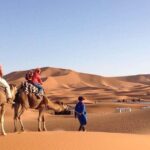
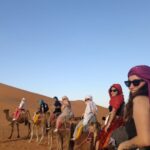
The Palmeraie (Palm Oasis) stop ends the tour feel-good. You’ll get a 30-minute camel ride before the drive back to Marrakech, finishing with hotel or riad drop-off.
Because this is listed as a camel ride with a fixed time, it’s not the place to expect long desert-style adventures. It’s a short, iconic taste that works as a memorable finale.
Getting the most from the schedule (without turning it into a checklist)
This itinerary has several move-day segments, so the best way to enjoy it is to travel light and plan for short bursts of walking.
A few practical moves that fit this exact trip:
- Use the guides for context, not just directions. In Rabat, Chellah is more than ruins once you understand the Phoenician-to-Roman-to-Merinid timeline.
- Take breaks when the plan gives them to you. Plaza Utta el-Hammam is there for a reason: you’ll get better photos and more patience in the lanes afterward.
- Dress for mosque rules. Hassan II Mosque visits are outside prayer times and require modest clothing, so you’ll enjoy it more if you’re prepared.
- Don’t over-plan your phone storage. You’ll want photos in Chefchaouen and at the mosque, but battery and storage limits can spoil the mood fast.
- Be flexible with weather. The tour notes say it requires good weather; if it’s canceled due to poor weather, you’re offered a different date or a full refund.
Who should book this Chefchaouen luxury tour from Marrakech?
Book this if you want:
- Private, luxury transport that saves you time moving between cities
- A structured first-time Morocco route: Rabat icons, Chefchaouen medina, Casablanca highlights
- Guided time where it counts, especially in Chefchaouen
- A “big city, then mountains, then coast” balance that still ends with comfort back in Marrakech
You might think twice if:
- You want an itinerary that’s heavily focused on one classic medina experience for days on end. Rabat and Casablanca are part of this route, and the pace includes big-city stops.
- You already know Morocco’s blue-and-old-streets vibe and want something more like Fez’s depth instead of a Rabat/Casablanca contrast.
Should you book it?
If you’re looking for a smooth, private 4-day route where Chefchaouen is the star and the rest of Morocco supports it, I think this is a solid booking. The value isn’t just the price—it’s what gets taken off your plate: a dedicated driver, hotel pickup/drop-off, fuel and highway fees handled, and guided time built into the key cities.
I’d book it if comfort and clear planning matter to you. If you’re the kind of traveler who wants to trade Casablanca and Rabat time for an extra day in a single older medina, you may want to compare alternative routes first.
FAQ
How long is the private tour from Marrakech?
The tour duration is listed as 4 days (approximately).
What cities are included in this 4-day itinerary?
The route includes Rabat, Casablanca, and Chefchaouen, plus a stop in the province of Ouezzane.
Is pickup and drop-off included?
Yes. Hotel pickup and drop-off are included.
Is this experience private or shared?
It’s a private tour reserved only for your group.
What is the price per person?
The price is $510.08 per person.
Are meals included?
No. Meals are not included.
Are entrance fees included for all stops?
Not all of them. The entrance fees listed as not included are for Hassan II Mosque and Chellah. The schedule also notes admission tickets included for some Rabat and Chefchaouen stops, so you should confirm what you’re covering at each site.
What does the tour include for transportation and comfort?
You get a private luxury air-conditioned vehicle, an expert English-speaking driver, mini bottled water in the van, and fuel plus highway fees.
Is there shopping or leisure time on the itinerary?
Yes. Morocco Mall is included, featuring an aquarium ride and a Moroccan souk-style area, plus other leisure options.
What is the cancellation policy?
Free cancellation is offered up to 24 hours in advance for a full refund. The tour also notes it requires good weather; if canceled due to poor weather, you’ll be offered a different date or a full refund.