REVIEW · SPLIT
SPLIT-PREMIUM Emperor’s Walking Tour for History Lovers + Museum
Book on Viator →Operated by Walking Tour of SPLIT · Bookable on Viator
Split history clicks into place fast. This walking tour of Diocletian’s Palace and Old Split turns big Roman facts into real corners, doorways, and public squares you can actually stand in. It’s guided in English by a licensed resident, and the small group size keeps the experience personal.
Two things I really like: the tight focus on the palace complex and the way the guide connects each stop to what life in Split became over centuries. I also appreciate the practical pacing—short stops that don’t feel like you’re rushing past the important bits.
One thing to consider: the tour is very history-first, and there are a couple optional add-ons like the Museum of Diocletian’s Cellars (which has an extra fee). If you want lots of inside museum time, you’ll need to plan for that upfront.
In This Review
- Key highlights you’ll feel right away
- Why Diocletian’s Palace makes Split history feel real
- Price and value: what $30 buys in real sightseeing time
- The meeting point at Riva Promenade and how the walk is structured
- Stop-by-stop: from palace walls to public squares
- Palazzo di Diocleziano: the UNESCO palace that explains everything
- Old Split (Medieval Old Town): where the palace meets daily city life
- Cathedral of Saint Domnius: outside views with the right context
- The Peristyle (Emperor’s Square): the heart of Split
- The Golden Gate and Vestibulum: entrances that tell power stories
- Diocletian Palace Substructures: the best preserved part (and why you should care)
- Old Split landmarks that fill in the human story
- Grgur Ninski Statue: a figure tied to Croatia’s cultural thread
- Fruit’s Square (Trg Brace Radic): Marul, the father of Croatian literature
- Narodni Trg: People’s Square as Split’s everyday center
- Roman echo stops: Jupiter, city clock, and the small details that matter
- Temple of Jupiter: outside first, optional inside
- City Clock: a 500-year-old 24-hour clock
- Riva waterfront finish: your last views after the deep walking
- Museum add-on: Diocletian’s Cellars and when the extra €10 makes sense
- Who this tour is best for (and who should skip it)
- Practical tips so you enjoy the walk (not just survive it)
- Should you book the Emperor’s Walking Tour with Museum?
- FAQ
- How long is the Split Emperor’s walking tour?
- Is the tour offered in English?
- Where does the tour start and end?
- Is admission to Diocletian’s Cellars included?
- What’s included in the tour price?
- Is the Cathedral of Saint Domnius visited inside?
- Does the tour include the Temple of Jupiter inside?
- How large is the group?
- Is this tour suitable for children?
- What happens if the weather is bad?
- Can I cancel for a full refund?
- Does the tour include a costumed theatre show?
Key highlights you’ll feel right away
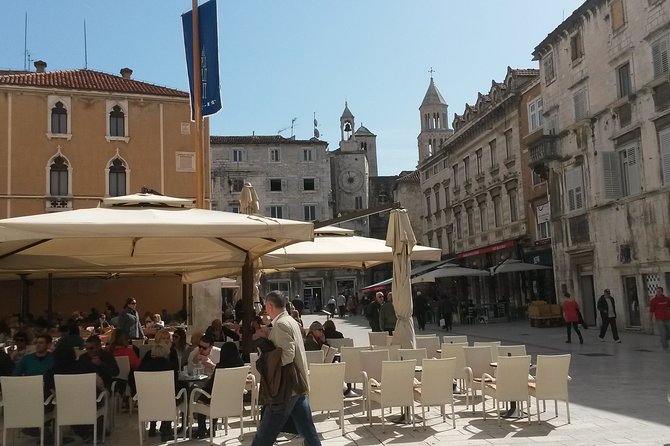
- Small-group pace (max 15): you get time for questions and photos without shoulder-to-shoulder crowds.
- UNESCO focus where it matters: Diocletian’s Palace stops are short, specific, and easy to follow.
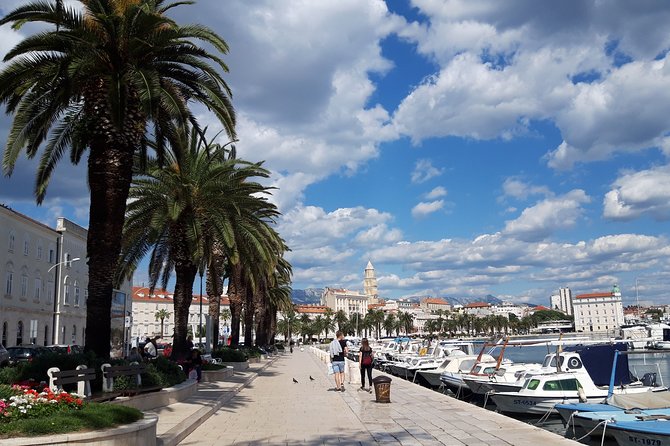
- Riva promenade starting point: a scenic waterfront kickoff and a natural place to orient yourself.
- Old Split squares plus Roman landmarks: you don’t just see stones; you see how public life shaped the city.
- Guides with personality: many groups rave about humor and stories that make the sites stick.
- Optional museum upgrade: if you want more depth, you can add Diocletian’s Cellars during the experience.
Why Diocletian’s Palace makes Split history feel real
When I look for a great history tour, I want less textbook talk and more “here’s what you’re seeing and why it mattered.” This tour nails that, because it keeps returning to one core idea: Diocletian’s Palace wasn’t an isolated monument. It became the framework for what grew into Split.
The palace is UNESCO World Heritage, built in 305 AD, and it’s still present in your walking path. That means you can connect major sites—gates, squares, passageways—without losing the thread. Even if you’re visiting for the first time, you’ll start to understand how Roman power and later medieval life overlapped in the same space.
And because this is led by a resident licensed guide, the story doesn’t feel like a generic overview. Guides often bring in small local details and humor, so the tour doesn’t drag. One common theme from groups: the guide’s delivery makes the two hours feel fast, while still covering a lot.
You can also read our reviews of more tours and experiences in Split.


Price and value: what $30 buys in real sightseeing time
The price is listed at $30 per person for about two hours. That’s a fair number for Split, especially because you’re paying for more than walking. You’re paying for an itinerary built around high-impact stops, guided by a licensed resident, and kept to a small group size (up to 15).
Also, the “value math” works because many stops don’t require extra tickets. Most of the major exterior sights and palace areas on the route are free to view, and the guide structures the walk around what’s worth seeing without turning it into a ticket-hopping scavenger hunt.
The main cost wrinkle is that the tour does not include the Museum of Diocletian’s Cellars, which is listed as an extra €10 per person. If you’re a museum person, I’d treat that as planned add-on money, not a surprise. And if you’re not, it’s also fine—you still get a strong history walk without needing to pay for the cellar visit.
The meeting point at Riva Promenade and how the walk is structured
You start at Obala Hrvatskog narodnog preporoda 22 in Split, and the tour itself begins and ends at the Main Stage on the Riva promenade. That’s actually smart: the Riva area is open, flat-ish (compared with tight old streets), and it helps you orient yourself before the tour slips into older, denser parts of town.
From there, the route follows a logical flow. You begin in the palace zone, move through Old Split’s streets and civic squares, then return toward waterfront landmarks. The stops are deliberately short—often around five to twenty minutes—so you’re always getting a point of interest rather than long gaps with no payoff.
In practice, the best part of this structure is how it keeps your brain organized. You’re not just wandering. You’re moving from “Roman monumental space” to “medieval urban life” to “public Roman/Greek-adjacent echoes,” then back to a view of the palace’s major entrances.
Stop-by-stop: from palace walls to public squares
This is a history tour with a clear mission: show you the city’s main layers—Roman first, then medieval—through specific stops. Here’s what each part is doing for your understanding.
Palazzo di Diocleziano: the UNESCO palace that explains everything
The tour starts with Palazzo di Diocleziano, including a look through Diocletian’s Palace (UNESCO, built in 305 AD). This is your anchor stop. It gives you the big framework: the palace layout, why it was built the way it was, and how it later became part of everyday life.
If you only do one thing in Split’s Old Town, make it this kind of guided “orientation inside the monument.” Alone, the palace can feel like a maze of walls and arches. With a guide, those passages start to mean something.
One small drawback: part of the palace experience is outside or semi-outside movement. If you hate walking on cobbles or you’re sensitive to heat, plan for it. In hot months, it can feel long even though the stop lengths are short.





Old Split (Medieval Old Town): where the palace meets daily city life
Next you head into Old Split, the medieval quarter. This stop matters because it shows you what happens when a massive Roman complex stops being purely imperial space and becomes integrated into city life.
Think of it as the tour’s “bridge” moment. The guide helps you see medieval streets and civic spaces as something that grew around the palace rather than replacing it.
If you like history that explains how cities evolve—not just who ruled—this is where the tour clicks for many people.
Cathedral of Saint Domnius: outside views with the right context
You’ll see the Cathedral of Saint Domnius from outside. You’re not going inside here, but the value is in how the guide uses the cathedral to connect later religious and cultural life to the palace and Roman core.
This is also a smart timing choice. It keeps the tour moving while still giving you a key landmark that helps you place Split in the broader European timeline.
The Peristyle (Emperor’s Square): the heart of Split
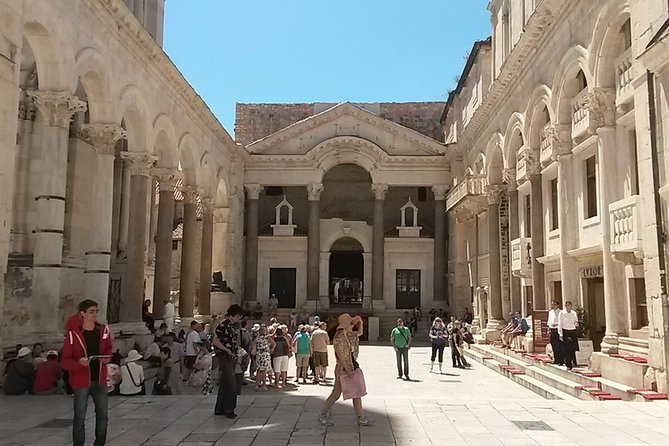
Then comes the Peristyle, often described as the heart and soul of Split town. In a palace, “heart” isn’t a metaphor. It’s the public-feeling space where you can understand the palace as more than private imperial walls.
This stop is brief, but it’s powerful. You see the scale, you feel the layout, and you start imagining how people moved through the palace—not as tourists, but as residents and visitors.
If you’re the kind of traveler who wants your photos to mean something, this is a strong target. It’s one of the spots where the palace instantly looks like a “living place.”
The Golden Gate and Vestibulum: entrances that tell power stories
The tour includes the Golden Gate, presented as the main and most beautiful entrance into Diocletian’s Palace. You also stop at the Vestibulum of Diocletian’s Palace, described as the main entrance to the private residence of the Emperor.
These two stops do different jobs. Golden Gate helps you understand public-facing grandeur, while the Vestibulum pushes you toward the idea of controlled access—who could enter, where, and why it mattered in Roman imperial life.
Even if you’ve seen photos of these spots, I’d still recommend doing them on a guided walk. With context, the architecture reads like information, not decoration.
Diocletian Palace Substructures: the best preserved part (and why you should care)
You’ll visit the Diocletian Palace Substructures, called the best preserved part of the palace, with about 20 minutes allocated here.
Substructures can sound boring, but this is exactly where you can understand what the palace was built on. It’s also a place where the guide can connect engineering and structure to daily life, which makes the whole site feel more believable.
If you’re short on time in Split, don’t skip this section. It’s the kind of stop that rewards attention without being exhausting.
Old Split landmarks that fill in the human story

Roman walls are only half the picture. This tour makes sure you also meet the people and civic symbols that shaped Split’s identity later.
Grgur Ninski Statue: a figure tied to Croatia’s cultural thread
At the Grgur Ninski Statue, the guide shares why this historical figure matters in Croatia. This isn’t just a “look at a statue” moment. It’s used to connect Split’s local pride to larger national cultural history.
If you enjoy learning who shaped identity—not just emperors—you’ll likely find this stop memorable.
Fruit’s Square (Trg Brace Radic): Marul, the father of Croatian literature
In Fruit’s Square (Trg Brace Radic), you see the former green market area and the famous statue of Marul, often described as the father of Croatian literature.
This stop works because it reminds you that squares are for more than markets and traffic. Over time, they become stages for culture and public memory.
Narodni Trg: People’s Square as Split’s everyday center
Next is Narodni Trg, the biggest and liveliest piazza in Old Town. Here the tour shifts slightly from ancient power to modern civic life.
You’ll walk through the space and get a feel for how a city’s center stays a center, even when empires and governments change.
Roman echo stops: Jupiter, city clock, and the small details that matter
The last stretch adds “Roman aftershocks”—landmarks that feel like clues left in plain sight.
Temple of Jupiter: outside first, optional inside
You’ll see the Temple of Jupiter from outside, with an optional inside visit. Even from the exterior, it helps you understand how Roman religious life was embedded in the city’s physical plan.
If the weather is good, I’d consider the optional inside visit if you still have energy. If you’re running low, don’t force it. The guide’s context should still make the exterior meaningful.
City Clock: a 500-year-old 24-hour clock
The City Clock is listed as about 500 years old, and it’s a 24-hour clock. This stop is small in time but big in effect. You’re seeing a practical public tool that has lasted—meaning the city’s rhythm used to be visible in the street.
When a tour points out functional landmarks like this, it helps history feel less like ruins and more like routine.
Riva waterfront finish: your last views after the deep walking
Finally, you return to the Main Stage on the Riva promenade. I like finishing with a view. After palace walls and old stone, waterfront light gives you a reset, and it’s easier to plan your next move for dinner.
Museum add-on: Diocletian’s Cellars and when the extra €10 makes sense
The tour includes access to major palace areas you can see on the route, but it does not include the Museum of Diocletian’s Cellars. The listed cost is €10 per person.
So how do you decide? If you’re the type who enjoys museums and underground history, the add-on can extend the story downward—literally. If you’d rather keep the day flexible, you can skip it and still walk away with a clear, site-based understanding of Split.
Either way, having the option is useful. It means you can match the day to your energy and interests without changing the whole tour plan.
Who this tour is best for (and who should skip it)
This one fits history lovers who like their facts organized and their walking routes purposeful. It’s also a good choice if you want to leave Split feeling like you understand the “why” behind the street layout.
It’s offered as an adults-only group tour (not recommended for guests under 18). If you’re traveling with kids or teens, the private tour is for all ages, so you have an alternative.
It also tends to work well for visitors who are short on time. Two hours is enough to build a mental map of Diocletian’s Palace and the key squares around it—without burning your whole day.
One more nuance from the experience style: it’s a real history walk. If you’re expecting a Game of Thrones-style explanation, don’t count on that. You might notice filming-related places on your own, but the guide focus stays on historical interpretation.
Practical tips so you enjoy the walk (not just survive it)
Because this is a walking tour, wear shoes that handle cobbles and uneven stone. You’ll be outside for much of the time, and summer heat can be intense in Split.
I’d also treat early planning as your friend. In hotter months, going earlier in the day can make the same route feel way more comfortable. The tour is only about two hours, but the sun adds up.
Finally, if you care about photos, plan to take them while you’re at the key stops—Peristyle, Golden Gate, and the palace entrances. You get the best opportunities when the guide helps you time where to stand.
Should you book the Emperor’s Walking Tour with Museum?
If you want a high-value history tour that teaches you how Split grew from Diocletian’s palace into a city layered with medieval life, I’d book it. The small group size, the licensed resident guide, and the concentration on palace and Old Town landmarks make it a smart first or second day plan.
I’d think twice only if you hate walking, you expect heavy indoor museum time (because Diocletian’s Cellars is optional), or you’re looking for pop-culture storytelling. In those cases, you might find a different style of tour better matches your goals.
Otherwise, this is the kind of tour that helps you see Split with new eyes fast—and keep seeing the palace and squares long after you’ve left.
FAQ
How long is the Split Emperor’s walking tour?
It lasts about 2 hours (approx.).
Is the tour offered in English?
Yes, it’s offered in English.
Where does the tour start and end?
It starts at Obala Hrvatskog narodnog preporoda 22, 21000 Split, and it ends back at the meeting point. The route itself starts and finishes at the Main Stage on the Riva promenade.
Is admission to Diocletian’s Cellars included?
No. Admission to the Museum of Diocletian’s Cellars is not included and costs €10.00 per person.
What’s included in the tour price?
You get a licensed resident guide, a custom-designed itinerary and tour organization, and a mobile ticket. The group tour is adults only.
Is the Cathedral of Saint Domnius visited inside?
You’ll see the Cathedral of Saint Domnius from outside.
Does the tour include the Temple of Jupiter inside?
The Temple of Jupiter is visited from outside, with an optional inside visit.
How large is the group?
This is a small-group tour with a maximum of 15 travelers. The minimum number of guests to run the tour is 4.
Is this tour suitable for children?
The group tour is adults only and is not recommended for guests under age 18. A private tour is available for all ages.
What happens if the weather is bad?
The experience requires good weather. If it’s canceled due to poor weather, you’ll be offered a different date or a full refund.
Can I cancel for a full refund?
Yes, with free cancellation. You can cancel up to 24 hours in advance for a full refund.
Does the tour include a costumed theatre show?
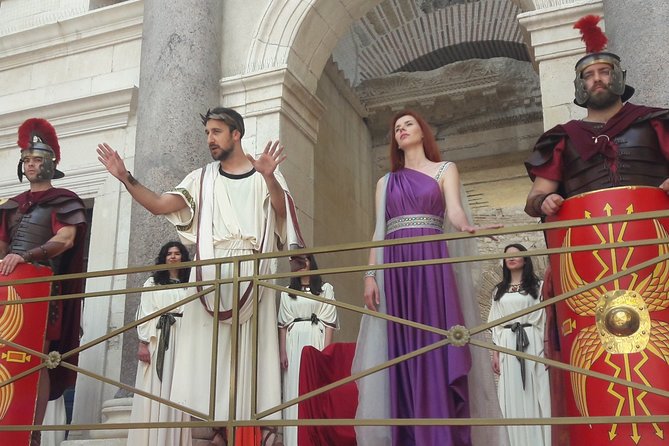
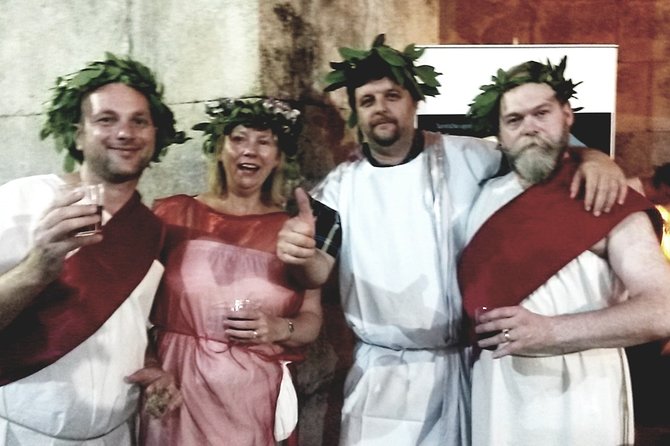
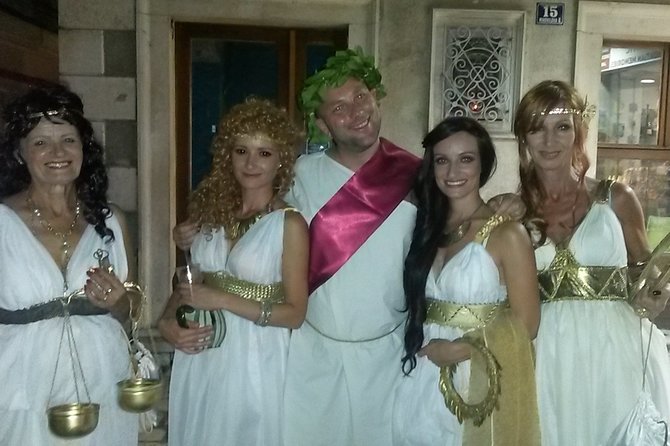
No, it does not include a costumed theatre show or similar appearance.