REVIEW · JEJU
Jeju Premium Small Group UNESCO Day Tour – South Course
Book on Viator →Operated by Core Travel · Bookable on Viator
Jeju in one long day feels doable. This South Course strings together major UNESCO stops—Hallasan, Jusangjeolli, and Cheonjiyeon—while a guide handles the driving and timing. You get the scenery without the rental-car stress, and you stay in a small group capped at 15.
I love the stress-free hotel pickup and drop-off (limited to Jeju city downtown) and the fact that entrance fees are handled for most stops. I also like how the day balances a real hike with calmer coastal and garden moments, so it feels varied instead of one-note.
One thing to watch: the pace is fast for an 8-hour day, and the Hallasan walk is about 60 minutes. If you’re not comfortable with uphill steps or changing weather, plan to move slowly and keep expectations flexible.
In This Review
- Key highlights you’ll feel right away
- Why the Jeju South UNESCO route works when you skip the rental car
- Price and logistics: what the $100 buys you (and why it can be a good deal)
- Pickup, van comfort, and why small-group days feel better in Korea
- Stop 1: Hallasan National Park and the Eoseungsaengak Trail hike
- Stop 2: Daepo Haean Jusangjeolli Cliff for basalt-column drama
- Stop 3: Yakcheonsa Temple for Joseon-style serenity and the bell moment
- Stop 4: Cheonjiyeon Waterfall and the “sky meets land” vibe
- Stop 5: Seogwi Dawon tea farm stop and the island taste of green
- Pace, weather changes, and how to prep like a pro
- Who should book this Jeju South course (and who should skip it)
- Should you book this Jeju South UNESCO day tour?
- FAQ
- What is the start time and duration of the tour?
- How many people are in the group?
- Is hotel pickup and drop-off included?
- What sights are included on the South Course?
- Are entrance tickets included?
- Is lunch included in the price?
- What if weather is poor?
Key highlights you’ll feel right away
- Small-group cap of 15 means you’re not lost in a crowd at each stop
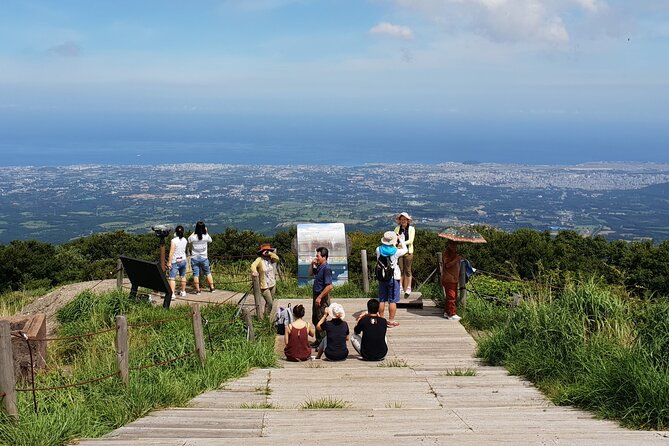
- Hallasan Eoseungsaengak Trail (about 60 minutes) gives you the mountain moment, not just a photo stop
- UNESCO South hits in sequence: cliffs, temple grounds, waterfall, then tea farm scenery
- Entrance tickets included for several key sites, with others free (saves hassle)
- Guide-led timing keeps transitions smooth, especially when weather shifts
- Hotel pickup in Jeju city downtown removes the hardest logistics of doing the South by yourself
Why the Jeju South UNESCO route works when you skip the rental car
The South of Jeju is gorgeous, but it’s also spread out. Without a car, you’d spend your day bouncing between places by taxi or bus, with long gaps for waiting. This tour fixes that by putting the sights into one timed loop.
You’ll also notice the subtle benefit of being in a small group. At busy photo spots, you’re close enough to ask questions and hear answers, but not stuck in a loud scrum. Past guides on this route—like Jin, Henry, Andrew, Angelo, and June—were praised for sharing local stories while keeping the day moving.
The other smart part: you’re not only hitting viewpoints. The day mixes UNESCO natural scenery with culturally meaningful stops like Yakcheonsa Temple, plus a tea-farm finish at Seogwi Dawon. That variety matters because Jeju can feel repetitive fast if you only chase coast photos.
You can also read our reviews of more tours and experiences in Jeju.
Price and logistics: what the $100 buys you (and why it can be a good deal)
At about $100 per person for roughly 8 hours, this is priced like a premium small-group outing—not a cheap bus excursion. The value comes from what’s bundled: round-trip transportation via minivan or minibus, a professional driver/guide, hotel pickup and drop-off within Jeju city downtown, and entrance tickets for key stops.
If you were doing this solo, the cost would quietly creep upward: multiple taxis, paid parking, and admission fees you’d still have to pay. The tour also reduces decision fatigue. Your guide handles where to go next and when to leave, which is huge on a day with a mountain walk.
One practical note: lunch and drinks are not included. Still, the schedule includes time for a meal break, and you’ll be able to stop for food during that window. If you like to choose your own restaurant, you can keep control—just plan to pay on-site.
Pickup, van comfort, and why small-group days feel better in Korea
Your tour starts around 9:00 am, and pickup is included for Jeju city downtown area only. That matters because Jeju pickup zones can be oddly specific. If your hotel is outside the downtown area, you may need to coordinate a different meeting point (the tour data only guarantees downtown pickup).
Most groups ride in a 7-seater minivan or 15-seater minibus, depending on group size. Reviewers consistently called the vehicles comfortable and clean, and they mentioned guides watching driving carefully—helpful on a road network full of speed bumps and twists.
Small group also changes the feel of the day. You get time to ask questions without waiting for a mic, and you’re more likely to get personal attention—especially if someone in your party has slower mobility. One solo traveler even said their guide checked in more and helped with photos throughout the day.
Stop 1: Hallasan National Park and the Eoseungsaengak Trail hike
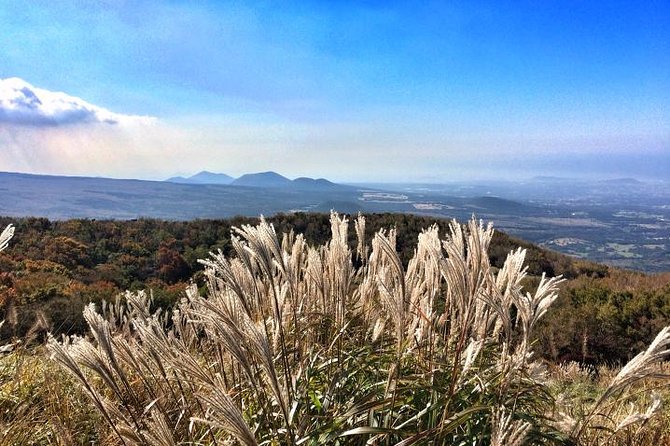
Hallasan is the core landmark of Jeju. This tour begins at Hallasan National Park, with a hike on the Eoseungsaengak Trail for about 60 minutes. Expect a real walking effort—steps and uphill sections—not just a gentle stroll.
A big reason people love this stop is that it feels like you’re actually on Jeju’s “main character” mountain. One review specifically warned that it’s beginner-friendly with steps and ropes, but you should be careful if you have heart issues or struggle with uphill climbs. Another traveler said it was hard at their age due to the walking up the mountain, but still worth it.
So here’s how to handle it well:
- Bring a water bottle and keep it accessible before you start.
- Wear shoes with grip; Jeju trails can feel slippery depending on conditions.
- Pace yourself. The goal is views, not a race.
Weather can also affect the plan. The tour requires good weather, and guides have swapped activities when conditions made the hike unsafe. That flexibility is one of the quiet advantages of hiring a guided group rather than going fully independent.
Stop 2: Daepo Haean Jusangjeolli Cliff for basalt-column drama

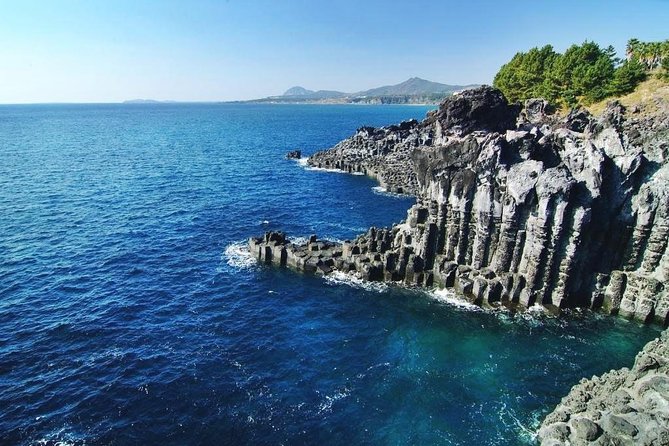
Next up is the dramatic Jusangjeolli Cliff at Daepo Haean. You’ll have about 20 minutes here, and the emphasis is on the famous rock formation: dark basalt pillars that look almost engineered.
You’ll walk from the access area through a pine forest stretch and then reach the cliff zone. At the base is the Jisatgae Coast, with imposing stone pillars that give you those postcard visuals without needing special photo angles.
The short time here is intentional. This stop is visually dense, so once you’ve seen the main viewing areas, you’ll feel like you’ve “got it.” If it’s crowded, it helps to move with the group first, then slow down for a second look at your favorite section.
Photo tip: the cliffs are best viewed from multiple spots. If your guide suggests a viewing point, take it—then spend your remaining minutes doing your own quiet circuit.
Stop 3: Yakcheonsa Temple for Joseon-style serenity and the bell moment
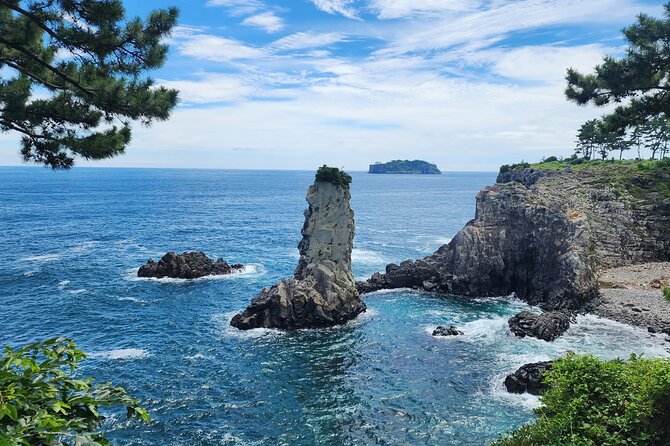
After the coast drama, you shift to calmer grounds at Yakcheonsa Temple. The stop is about 30 minutes, and there’s no admission ticket listed for this temple stop.
Yakcheonsa is described as having an architectural style reminiscent of Buddhist temples from the early Joseon Dynasty. That’s the kind of detail you can’t learn from a random Google pin; a good guide helps you notice what to look for.
One review added a memorable cultural moment: ringing the giant bell. If your schedule allows, it’s the sort of small, hands-on activity that makes a temple visit feel alive rather than just scenic.
This stop also works as a break for your legs after Hallasan. You’ll still be walking a bit, but it’s more of a gentle tempo than a hillside climb.
Stop 4: Cheonjiyeon Waterfall and the “sky meets land” vibe
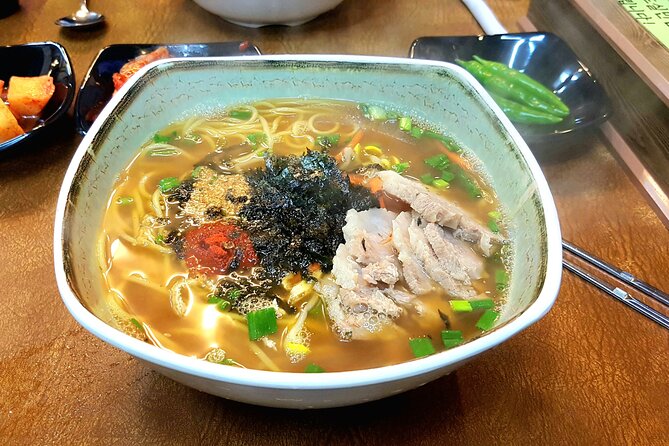
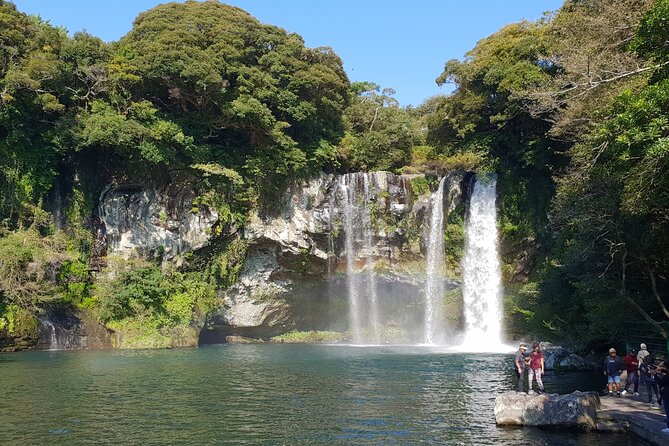
Then comes Cheonjiyeon Waterfall, with about 30 minutes on-site. The name means sky connected with land, and the idea fits the way water drops in a clear, memorable line.
Cheonjiyeon is also described as tied to natural features like Dampalsu trees (Natural Monument No. 163). In practice, that means you’ll likely notice the surrounding vegetation and not just the waterfall itself.
This is a great stop for anyone who wants a reset. If the mountain hike was your biggest physical effort, waterfall time feels restorative. It’s also easy to keep moving even if you’re traveling with mixed energy levels.
If weather is wet, you might get mist in the air. That can make photos look great, but it can also mean slippery footing. Take care, especially if you’re carrying trekking shoes that haven’t fully dried.
Stop 5: Seogwi Dawon tea farm stop and the island taste of green
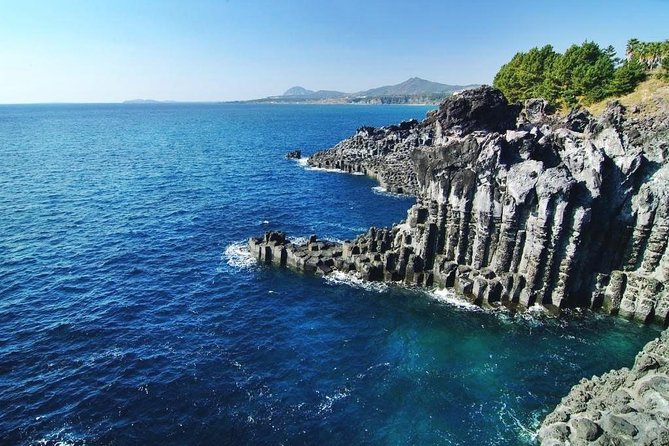
The day ends with Seogwi Dawon, a tea-growing area connected to Jeju’s climate and volcanic soil. You’ll have about 40 minutes here, and admission is included.
Jeju’s environment is a key reason tea thrives on the island: moderate temperatures across distinct seasons plus soil suited for cultivation. That’s not just trivia—when you walk through a tea farm area, it helps explain why this isn’t a one-season novelty.
This is a relaxed finale. You’re not hiking, and it’s not a fast photo sprint. It’s a good moment to look for tea textures and absorb the slower countryside pace.
If you’re curious, ask your guide what the farm emphasizes and what locals like about their tea. Several reviewers mentioned later tea experiences as a highlight because it felt grounded in how Jeju is lived, not just how it’s photographed.
Pace, weather changes, and how to prep like a pro
This tour is about making progress without getting exhausted. Still, it’s “8 hours” on a tight schedule, and your energy needs to match the day.
What I’d plan for:
- The hike is around 60 minutes, so bring a mindset of effort.
- Wear comfortable layers; Jeju weather can turn.
- Take a quick coffee/snack check before pickup. One reviewer advised getting coffee and water early because the first stop involves hiking.
Weather is the big wildcard on Jeju. The tour requires good weather, and if it gets canceled due to poor conditions, you’ll be offered a different date or a full refund. In some cases, guides have also adjusted the day—like swapping the hike for another attraction when Mt. Hallasan was too risky.
That’s where a strong guide matters. People specifically praised guides like Angelo and Henry for adapting for safety and for clear, helpful English. If you value explanations, go with a guide known for it—past names include Jin, June, Michelle, Paul, Helen, and Andrew.
Who should book this Jeju South course (and who should skip it)
Book this tour if:
- You want a high-efficiency Jeju day without driving.
- You like mixing UNESCO natural sights with cultural stops.
- You enjoy guided context, not just wandering around alone.
- You’re traveling with a group size that benefits from a max of 15.
It’s also a great fit for first-timers who need to see the South quickly. Several reviews called it an excellent intro tour for covering major highlights in one day, especially for English speakers.
Skip or reconsider if:
- You want a slow, flexible day with lots of downtime.
- You strongly dislike hikes or you have health concerns that make uphill walking risky.
- You’re someone who prefers self-paced shopping time. One review complained about being rushed and not getting enough time for coffee or souvenirs.
The smart move is to treat this as a “see the essentials with a guide” day. For deeper exploring, you can return to your favorite stop later when you have a car.
Should you book this Jeju South UNESCO day tour?
Yes—if your goal is to knock out the South Course in one smooth day with small-group attention. The combination of Hallasan hiking, Jusangjeolli cliff time, Yakcheonsa Temple, Cheonjiyeon Waterfall, and a tea farm stop makes the day feel complete instead of random.
I’d book it especially if you’re staying in Jeju city downtown and want that pickup-and-drop convenience. It’s also a solid choice if you don’t want to mess with entry tickets and routing between spread-out sites.
Just go in with the right expectations: it’s a full schedule, Hallasan requires effort, and lunch/drinks are on you. If you’re ready for that, this tour is a practical, high-value way to experience Jeju’s southern highlights.
FAQ
What is the start time and duration of the tour?
The tour starts at 9:00 am and runs for about 8 hours.
How many people are in the group?
The tour is small group and capped at a maximum of 15 travelers. It is not private, so you will share the day with other customers.
Is hotel pickup and drop-off included?
Yes, hotel pick up and drop off are included, but only for Jeju city downtown area.
What sights are included on the South Course?
The day includes Hallasan National Park (Eoseungsaengak Trail), Jusangjeolli Cliff, Yakcheonsa Temple, Cheonjiyeon Waterfall, and Seogwi Dawon.
Are entrance tickets included?
Yes. Entrance tickets are included for some stops, while others are free (Yakcheonsa Temple and Cheonjiyeon Waterfall are listed as free).
Is lunch included in the price?
No. Lunch is not included in the tour price, though the schedule includes time during the day for a meal break.
What if weather is poor?
This tour requires good weather. If it’s canceled due to poor weather, you’ll be offered a different date or a full refund.
If you want, tell me your hotel neighborhood in Jeju city (downtown area or outside) and your fitness level for uphill hiking, and I’ll help you decide if this South Course matches your day plan.