REVIEW · ISTANBUL
Dolmabahçe Palace and Sunset Tour on Luxury Yacht
Book on Viator →Operated by Tour Book Turkey · Bookable on Viator
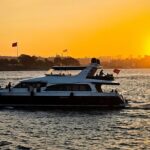
Palaces and sunset cruises on the same ticket. This tour strings together a guided look at Dolmabahçe Palace and then a luxury Bosphorus sunset yacht ride that glides past landmark after landmark. I like that you get both the inside stories (with a guide) and the outside views (from the water), with food and soft drinks waiting onboard.
Two things I especially like: first, the palace portion is guided, with clear context for Ottoman power and the personal side of the site, including where the beloved leader passed away. Second, the yacht doesn’t feel like dead time; as you travel, you hear the stories behind the Bosphorus heritage sites, and you snack on cookies, baklava, lemonade, fruit plates, and Turkish tea. The guide name Celil shows up in top-rated feedback for leading both parts with lots of energy and solid explanations.
One drawback to plan for: Dolmabahçe entry isn’t included in the price, so you’ll need to cover that admission separately.
In This Review
- Key Highlights You’ll Care About
- A Smart Pairing: Dolmabahçe Inside, Bosphorus Outside
- Dolmabahçe Palace: More Than Grand Rooms
- What to expect during the palace visit
- The main thing to know beforehand
- Boarding the Luxury Yacht: Snacks, Tea, and a Built-In Viewing Plan
- Practical advice for getting the most out of the boat time
- Cıragan, Ortaköy, and the Ortaköy-to-Bosphorus Bridge Storyline
- Bebek, Rumeli Hisarı, and the Fortresses That Guarded Istanbul
- Fatih Sultan Mehmet Bridge to Anadolu Hisari: Istanbul’s Modern Crossing Meets Medieval Defense
- Kucuksu Palace, Beylerbeyi Palace, and the Art of Ottoman Summer Living
- Maiden’s Tower at Sunset: Legend, Height, and a Small-Island View
- Getting Your Timing Right: 5 Hours Means Focus
- Who Should Book This Dolmabahçe and Sunset Yacht Tour?
- Should You Book This Tour?
- FAQ
- Is Dolmabahçe Palace admission included?
- How long is the Dolmabahçe Palace and sunset yacht tour?
- What food and drinks are included on the yacht?
- Are alcoholic drinks included?
- Is the tour guided, and is English offered?
- Where does the tour start and end?
- How many people are on the tour?
- Is it suitable for people prone to sea-sickness or vertigo?
Key Highlights You’ll Care About
- Dolmabahçe Palace guided tour focused on Ottoman administration and the site’s human story
- Luxury sunset yacht time with stops-by-view as you pass major Bosphorus sights
- A real food lineup on board: cookies, baklava, Turkish tea, lemonade, fruit plates, and water
- Non-alcoholic only since alcoholic drinks aren’t included
- Small group size (max 20) for a more manageable experience
- End at Kabataş pier, a convenient jump-off point for the rest of your day
A Smart Pairing: Dolmabahçe Inside, Bosphorus Outside
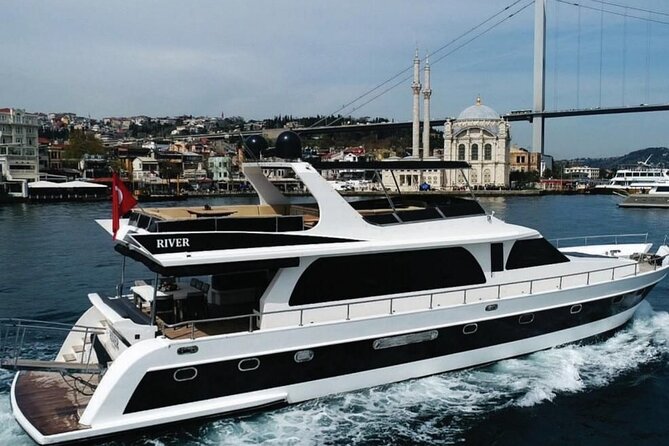
This is a great format if you’re the kind of traveler who wants context and then views. Dolmabahçe is a big, ornate Ottoman-era statement, and a guided visit helps you not get lost in rooms, dates, and details. Then the yacht section makes sense: instead of just staring at the skyline, you hear why specific shores, palaces, bridges, and fortresses matter.
At about 5 hours, it’s long enough to feel like you did something substantial, but short enough that you can still enjoy the rest of Istanbul afterward. Pricing at $78.10 per person is fairly reasonable for what you’re getting: a guided palace tour plus a luxury sunset cruise with a snack-and-drink spread. The value drops slightly for first-timers because Dolmabahçe admission is extra, but you still save yourself the hassle of figuring out how to stitch the palace and Bosphorus sights into one smooth outing.
The tour runs in English, uses a mobile ticket, and includes a restroom on board. It’s also capped at 20 travelers, which matters on a yacht. Fewer people means you’ll generally have an easier time seeing the waterfront and getting to a good viewing spot.
You can also read our reviews of more tours and experiences in Istanbul.


Dolmabahçe Palace: More Than Grand Rooms
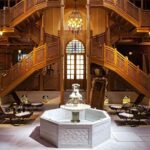
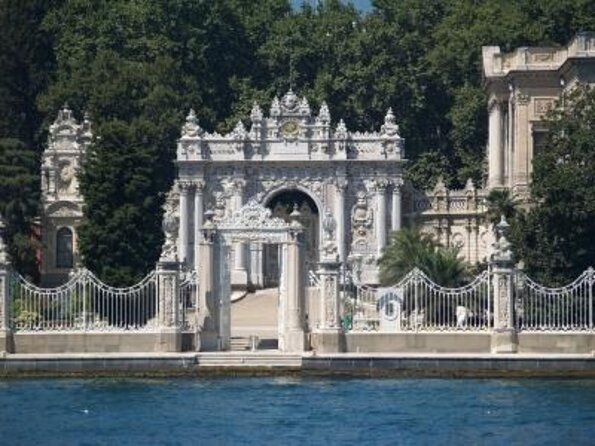
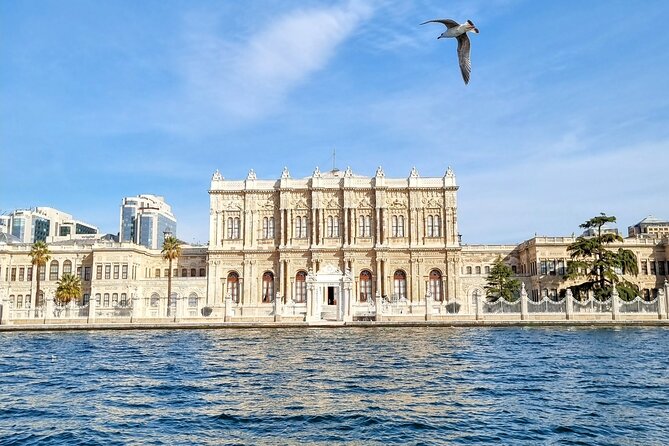
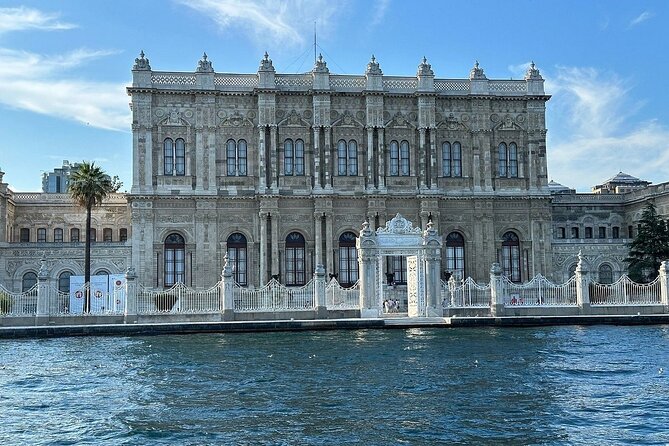
Dolmabahçe Palace was the administrative center of the Ottoman Empire and today it functions as a museum. On this tour, your guide takes you through the grand halls and opulent interiors, plus the palace’s lavish outdoor areas. That’s important because Dolmabahçe isn’t just one “pretty building.” It’s a whole power platform, and the guide’s job is to connect the architecture to the people who lived and governed there.
A big moment here is the mention of where the beloved leader passed away. That detail adds a human layer, not just a royal one. You’re looking at the same space through two lenses: Ottoman statecraft and the later modern significance attached to the palace.
What to expect during the palace visit
- You’ll tour grand rooms and furnishings rather than doing a quick glance-and-go.
- You’ll get a guided explanation of how it worked as an administrative center.
- You’ll have time to look at the palace interiors with context, not just decoration.
The main thing to know beforehand
Dolmabahçe entry is not included. That means you should plan to pay for admission separately, and arrive with time to handle that before your palace tour starts. If you’re tempted to skip the palace portion because of the added ticket cost, don’t. This is the part where the guide makes the building make sense.
Boarding the Luxury Yacht: Snacks, Tea, and a Built-In Viewing Plan
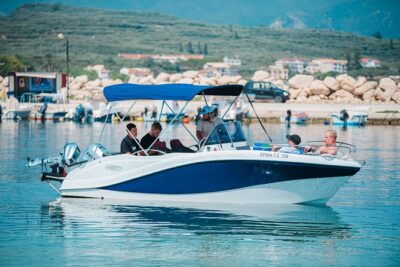
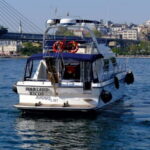
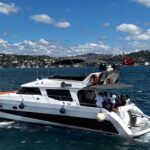
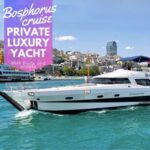
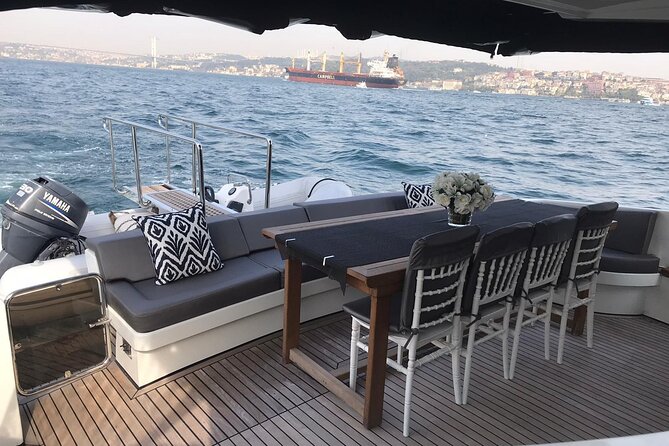
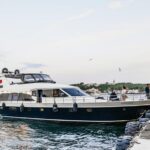
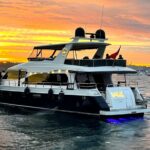
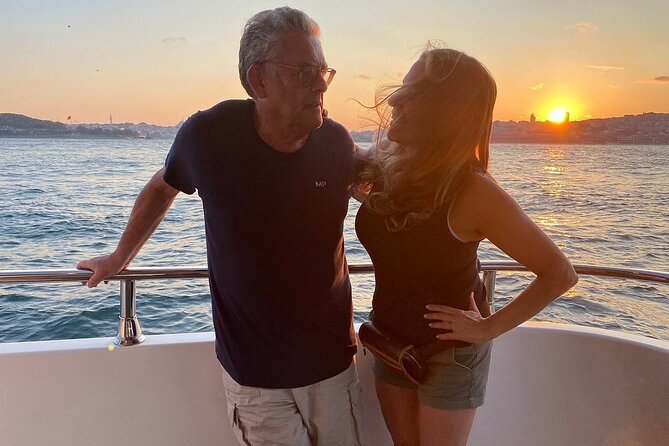
After the palace, the vibe changes—same day, different pace. On board, you get a restroom, and you’ll be fed. The included spread is exactly the kind of “soft landing” you want on Istanbul days: cookies, baklava, lemonade, Turkish tea, fruit plates, and water. No alcohol is included, so if you’re hoping for cocktails at sunset, budget for that separately or choose a different cruise.
This is where the tour earns its keep: the Bosphorus is best enjoyed with a sense of direction. When you’re passing shores and landmarks from the water, it’s easy to lose the thread. The guide’s narration helps you connect each coastline feature to its historical role, so you’re not just collecting pretty photos.


Practical advice for getting the most out of the boat time
- Dress for cool evening air. Even if the day feels warm, Bosphorus breeze can turn it.
- Keep your phone ready, but don’t forget to look up. The bridges and palaces are often more impressive than any single picture.
- If you’re prone to sea-sickness, take that seriously. This experience is specifically not recommended for people who get sick on boats.
Cıragan, Ortaköy, and the Ortaköy-to-Bosphorus Bridge Storyline

As the boat moves along the European side, you start with landmarks that feel elegant but also political. One of the most striking is Cıragan Palace. Commissioned by Sultan Abdulaziz and designed by architect Sarkis Balyan, it’s built of marble and spread across a huge area. The palace has a heavy backstory: after Abdulaziz was deposed, he was imprisoned there for years with his family. Murat V later went through a similar fate for decades. The building then even served as a House of Parliament after the Second Constitutional Monarchy, before a fire damaged it in 1910.
From the water, that kind of history hits harder. You can see the palace as it stands today, but you also start imagining it as a stage for power struggles. It’s not just architecture anymore—it’s a timeline.
Then you pass into Ortaköy, a neighborhood known for its bazaar life and cafés. Ortaköy Bazaar has souvenir shops and food stops, and it’s described as lively through the day. Even if you’re not shopping, the area is a good example of how Istanbul mixes everyday energy with waterfront beauty.
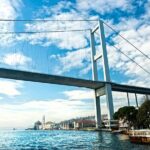
Nearby, you’ll also get the Bosphorus Bridge viewpoint from the water. This is the first bridge built on the Bosphorus (with later crossings and ferry lines handling the rest). Seeing it from below helps you understand how Istanbul grew into this waterway, not around it.
Bebek, Rumeli Hisarı, and the Fortresses That Guarded Istanbul
Next comes Bebek, a historic neighborhood on the European shores. Bebek is described as a longtime residential area since Ottoman times, with historical buildings and waterside mansions. In modern days, it’s a place where you’ll find universities and plenty of waterside dining. The tour doesn’t stop here for a long visit, but the passing view gives you a “feel” for how the Bosphorus shoreline changes as you move north.
Then the tone shifts to military history with Rumeli Hisarı (Rumeli Fortress). This fort sits directly across from Anadolu Hisari, built at the narrowest point of the Bosphorus. Construction began in 1453 under Sultan Mehmet the Conqueror and was completed in about three months. Before the conquest, it protected against naval attacks, and after the conquest it acted as an inspection point for maritime traffic.
On a sunset cruise, you might think fortresses are just “another sight.” But from the water, you understand the strategic choice: this spot controls movement. It’s one of the moments where the narration makes a geography lesson out of history.
Fatih Sultan Mehmet Bridge to Anadolu Hisari: Istanbul’s Modern Crossing Meets Medieval Defense
From Rumeli Hisarı, you’ll pass the Fatih Sultan Mehmet Bridge, Istanbul’s second major Bosphorus crossing. Built between Kavacık and Hisarüstü, construction started in 1986 and it opened on July 3, 1988. It’s also noted as the 14th largest steel suspension bridge in the world.
This isn’t just a feat of engineering for your camera roll. It’s a reminder that Istanbul’s relationship with the Bosphorus keeps evolving. The waterway that once demanded forts now demands steel spans and daily traffic flow.
After that, you head toward the Anadolu Hisarı (Anatolian Fortress) side. It was built in 1395 by Bayezid I and consists of a citadel and exterior walls. Over time, its strategic value dropped, and it was converted into a military hospital. Later, the area around it became settled, and restoration turned parts of it into an open-air museum. The important nuance: you can visit only the outer walls, and the road passes through the area—so it’s more of an atmospheric pass-by than a full interior tour.
Seeing Rumeli Hisarı on one side and Anadolu Hisarı across the water is a powerful pairing. You’re looking at a mirror system—two fortifications built to control the same narrow passage from opposite shores.
Kucuksu Palace, Beylerbeyi Palace, and the Art of Ottoman Summer Living
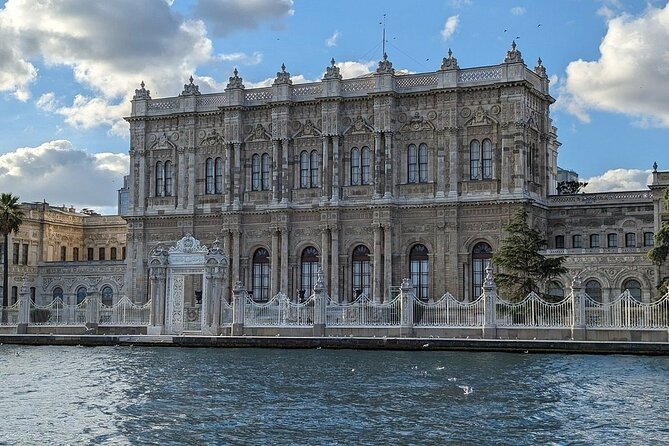
The boat ride doesn’t stay in “military mode.” You also pass Ottoman summer palaces, which add a different flavor to the Bosphorus story.
Küçüksu Palace is a small Ottoman summer palace ordered by Sultan Abdulmecit and designed by Nikogos Balyan. It’s known for its excellent Bosphorus views. The tour data also mentions that it opened as a museum during the Republican period, which tells you these sites weren’t only built for pleasure—they later became part of a heritage system.
Then there’s Beylerbeyi Palace, an Ottoman summer palace complex built in the 1860s and located right under the Bosphorus bridge. It’s designed by Sarkis Balyan again. The mix of Renaissance and Baroque elements with other Eastern and Western influences makes it a rare kind of “cultural crossfade” you can sense just by looking at the building’s look and scale.
Beylerbeyi is described with specific layout details: the main building is two-store stone on a high basement, with multiple halls and rooms, plus a hamam. Even though you’re passing rather than entering, these details matter because they explain why the palace feels like a mini city rather than a single residence.
Maiden’s Tower at Sunset: Legend, Height, and a Small-Island View
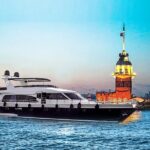
The tour’s Bosphorus finale centers on Kız Kulesi (Maiden’s Tower), a distinctive tower on a tiny island about 200 meters from Üsküdar. It’s surrounded by legends, but the most popular one involves a prophecy that a sultan’s daughter will die on her 18th birthday by snake bite. The tower is built to protect her, but the legend ends with the snake in a birthday basket.
What makes this stop more than a folklore story is the tower’s real-world presence. Built by the Genoese in 1348, it’s described as a nine-story tower and 66.90 meters tall. Over centuries, it’s been used for different purposes, including a fire observatory and even a jail. It also connects to a famed historical moment: in 1632, Hezarfen Ahmet Çelebi is tied to a glide across the Bosphorus in the legend’s telling.
In modern times, the tower is open to public, and the upper floor hosts a restaurant and café. From the cruise, you’re seeing it as part of Istanbul’s skyline, not as a background detail.
Getting Your Timing Right: 5 Hours Means Focus
This tour works best if you treat it like a single arc rather than a checklist. The schedule stacks a palace visit and then a long shoreline cruise, so you don’t want to arrive frazzled.
The experience ends at Kabataş pier, which is handy. Kabataş is where you can pivot to the rest of your Istanbul evening without feeling stranded far away from ferries and transit.
Also, keep your expectations realistic: this is not a “get out and roam” yacht day. Many of the highlights are best taken in from the water. If you want to spend hours inside multiple buildings, you’d need a different plan. Here, the payoff is the guide’s storytelling plus the uninterrupted views during golden hour.
Who Should Book This Dolmabahçe and Sunset Yacht Tour?
This is a strong match if you want:
- A guided Dolmabahçe Palace visit that helps you understand what you’re seeing
- A Bosphorus sunset experience with food included and a guide narrating the shoreline
- A small group setting (max 20) where the boat time doesn’t feel chaotic
You might want to skip it if:
- You’re very sensitive to boat motion. It’s explicitly not recommended for people prone to sea-sickness.
- You have significant vertigo concerns. This one isn’t recommended there either.
- You hate paying extra for major museum entry, since Dolmabahçe admission isn’t included.
Should You Book This Tour?
Yes, if you’re building an Istanbul “best-of Bosphorus” day and you like your history explained in plain language while you watch the shoreline drift by. The $78.10 price feels fair for the combo of a guided palace tour plus a luxury sunset yacht with baklava, Turkish tea, lemonade, and water included. It’s also reassuring that the tour has a small group cap and includes basics like a restroom onboard.
Just do two things before you go: plan for Dolmabahçe admission as an extra cost, and be honest about whether you handle boats comfortably. If you can answer those, you’ll likely leave with the kind of Istanbul memory that feels both scenic and meaningful.
FAQ
Is Dolmabahçe Palace admission included?
No. The Dolmabahçe portion includes a guided tour, but Dolmabahçe entry/admission is not included.
How long is the Dolmabahçe Palace and sunset yacht tour?
It’s about 5 hours in total.
What food and drinks are included on the yacht?
Included items are cookies, baklava, Turkish tea, lemonade, fruit plates, and water.
Are alcoholic drinks included?
No. Alcoholic beverages are not included.
Is the tour guided, and is English offered?
Yes, you’ll have an experienced guide, and the tour is offered in English.
Where does the tour start and end?
It starts at Saat Kule Kafeterya Vişnezade in Beşiktaş and ends at Kabataş pier.
How many people are on the tour?
The experience has a maximum group size of 20 travelers.
Is it suitable for people prone to sea-sickness or vertigo?
No. It is not recommended for people prone to sea-sickness or those with vertigo.