REVIEW · AMSTERDAM
Amsterdam: Luxury Canal Cruise with Historic VR Experience
Book on GetYourGuide →Operated by Commanditaire Vennootschap XR Visuals Factory · Bookable on GetYourGuide
Amsterdam is always changing. This tour adds a time machine. You ride a luxury enclosed boat through the canals in comfort, while an audio guide gives you the present-day picture and then the historic VR snaps your location into 17th-century Amsterdam. I like how the story links what you see outside the window with what the VR shows right where you are, and I like the smart pacing that keeps you cruising most of the time instead of sitting still. One thing to consider: sound and language quality matter here, and some guests found the English explanations a bit heavy.
At 75 minutes, you get a classic canal perspective without turning it into a half-day project. You’ll also get a Dutch-or-English audiotour when the VR headset is off, so you can follow along and still enjoy the city.
One practical note I’d keep in mind: this isn’t a long, free-roam visit. It’s a guided experience with set VR moments, and it’s not positioned as a kid-friendly outing.
In This Review
- Key things that make this tour worth your time
- A luxury enclosed canal cruise paired with VR time travel
- Getting on board: where to meet and how the timing feels
- What the audiotour does while you cruise (VR headset off)
- Seven VR moments that match 17th-century Amsterdam to where you are
- Elite living: seeing power, not just buildings
- Trading location and warehouses: how commerce shaped the canal edges
- The harbor: hundreds of ships, not a postcard skyline
- The shipyard: warships and shipbuilding
- Outskirts and the city wall: the edge of Amsterdam, not the center
- And much more: the tour’s storyline glue
- Sound quality, language balance, and the one drink you get
- Price and value: what $50 buys you in Amsterdam
- Who this tour suits best (and who should skip it)
- Practical tips to get the most from the headset
- Should you book the Amsterdam Luxury Canal Cruise with Historic VR?
- FAQ
- How long is the Amsterdam Luxury Canal Cruise with Historic VR Experience?
- What’s included in the ticket price?
- Where is the meeting point?
- How does the VR experience work during the cruise?
- Which languages are available?
- Do you get the audiotour while wearing the VR headset?
- Is the tour wheelchair accessible?
- What ages is the tour not suitable for?
- Is food included?
- What’s the cancellation policy?
Key things that make this tour worth your time
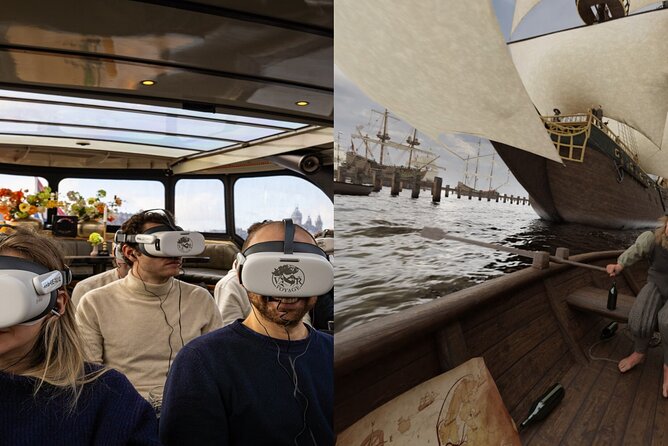
- Luxury enclosed boat comfort for the full canal ride, so you can focus on the views and the story
- A 15-minute VR segment broken into 7 animations at specific points around the canals
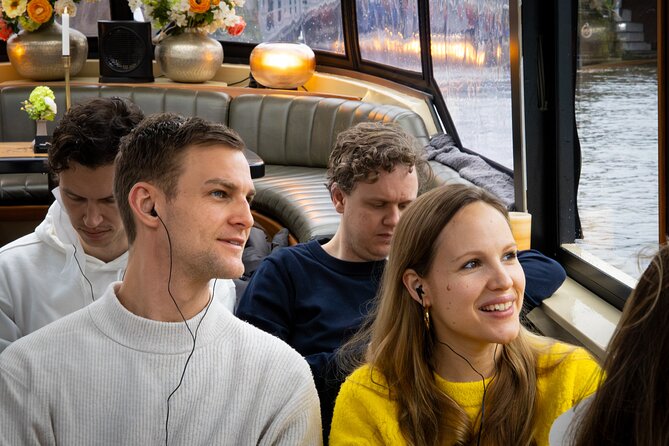
- Audiotour first, headset later: you listen in Dutch or English while you cruise, then switch to VR at the stops
- Historically themed VR stops that cover elite living, trade/warehouses, the harbor, a shipyard, and the outskirts including the city wall
- One drink included, which makes the whole 75-minute window feel more like a guided outing than a quick ticket
A luxury enclosed canal cruise paired with VR time travel
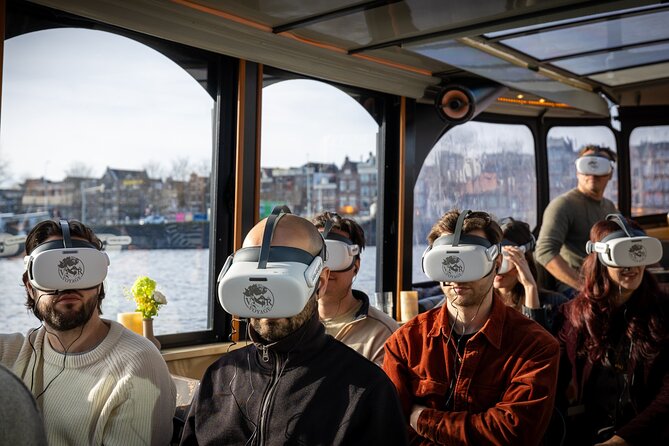
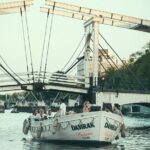
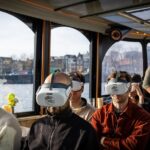
This is a canal tour that doesn’t treat VR like a gimmick you watch from afar. Instead, you get a present-day cruise and then—at several points—you put on a headset to see what your surroundings likely looked like 400 years ago.
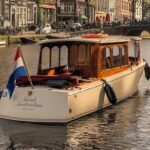
The “luxury enclosed” part is more than marketing. It matters in Amsterdam because the weather can shift fast, and you want your focus on the experience, not on huddling. The boat’s setup also helps you stay oriented while the story moves between the real canal views and the VR reconstructions.
What I like most is the structure: you’re not forced to choose between enjoying the city and doing the tech part. The audio guide keeps you moving through the “now,” then the VR takes over in short bursts.
You can also read our reviews of more tours and experiences in Amsterdam.



Getting on board: where to meet and how the timing feels
You meet at the jetty next to Lido Bar & Kitchen. You’ll walk to the dock, and a tour guide checks you in.
The total duration is 75 minutes, which is a sweet spot in Amsterdam. It’s long enough to enjoy the canal rhythm and actually process the VR moments, but it’s not so long that you’re stuck in one activity for hours.
In plain terms, you should show up a bit early. Even though the check-in is straightforward, you’ll want time to settle in, get used to the boat, and be ready for the audio when it starts.
What the audiotour does while you cruise (VR headset off)
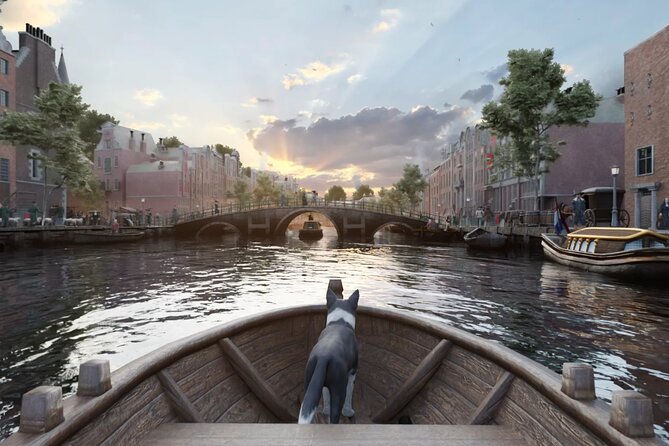
Most of your experience runs on an audiotour with the VR headset off. That’s a smart design choice because it lets you enjoy the real Amsterdam while you’re learning how to read what’s around you.
You can listen in English or Dutch. And for now, more languages are said to be coming soon, which suggests they’re working on making this accessible to a wider range of visitors.
From the guest feedback, the audio experience is one of the biggest make-or-break areas. A couple of reviews praised the concept and the way it was put together, but others pointed out that the host’s explanations leaned too much to English. If you’re Dutch-speaking, you’re likely to appreciate the moments where the narration matches your preference. If you’re English-speaking, expect the narration to be central—so focus on audio clarity from the start.
Seven VR moments that match 17th-century Amsterdam to where you are
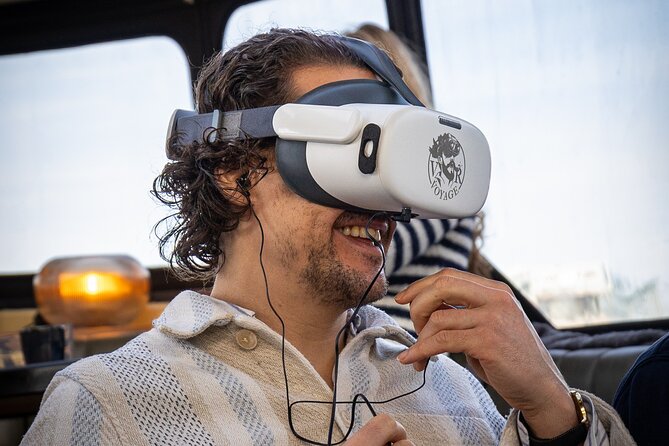
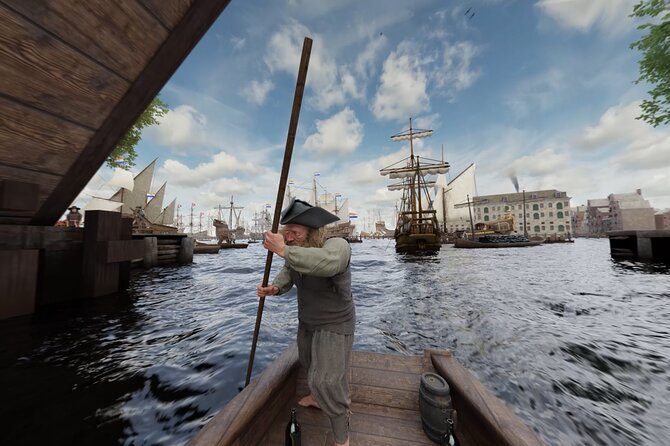
The VR section is 15 minutes total, delivered at seven locations during the canal ride. Each stop is designed to show what you’d be looking at if the city around you had been rebuilt in the 1600s.
It’s also powered by 7 animations, so you’re not just reading static reconstructions. The pacing is tight, which helps you keep your bearings. You’re also not stuck waiting through a long VR movie while everyone else is still on the boat.
Here’s what the VR content covers, and why each theme is useful:
Elite living: seeing power, not just buildings
One VR moment shows where the elite lived. This matters because it changes how you interpret the city. Instead of only admiring canals and facades, you start noticing signals of wealth—spacing, vantage, and the relationship between residences and the water.


Trading location and warehouses: how commerce shaped the canal edges
Another stop focuses on an important trading location and explains how warehouses were used. This is one of the most practical “aha” themes, because the canals weren’t only scenic—they were part of the logistics system.
Once you learn to think in terms of storage and delivery, you’ll likely look at the canal area with a different mindset. You’ll connect “pretty scenes” to the machinery of trade.
The harbor: hundreds of ships, not a postcard skyline
The harbor scene is described as involving hundreds of ships. Even if you’ve seen lots of Dutch maritime imagery, this kind of scale can make the city’s role feel more immediate.
It also helps you understand why Amsterdam’s urban form developed around water traffic. In other words, it’s not just history—it’s geography doing the heavy lifting.
The shipyard: warships and shipbuilding
You’ll also see an important shipyard where warships were built. This theme adds contrast. Amsterdam wasn’t only merchants; it was also production, defense, and capability.
That makes the tour more balanced than a simple “golden age” brochure story. It gives you a fuller sense of what the city could build and why that mattered.
Outskirts and the city wall: the edge of Amsterdam, not the center
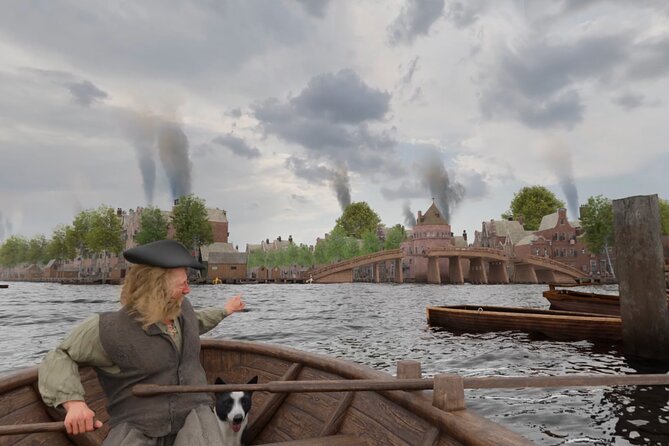
A particularly specific VR stop covers the outskirts of Amsterdam and a city wall about 5 meters high. This is valuable because most visitors focus on the center.
When you get a sense of where the city ended, you start understanding Amsterdam as a place with boundaries—built to protect, control, and manage growth.
And much more: the tour’s storyline glue
The content list also notes “and much more,” which is an important clue. The VR isn’t just five separate facts; it’s tied into a compelling storyline that connects your audio route with the VR scenes.
In practice, that means you’re more likely to remember the tour later, because the information hangs together instead of feeling like random stops.
Sound quality, language balance, and the one drink you get
Let’s talk about the details that shape your comfort.
First: audio clarity. Reviews mention requests for improved sound quality of the English and even for multiplying languages. That suggests the experience is sensitive to audio settings. If you know you’re sensitive to sound quality, sit in a spot where you hear clearly—don’t assume the entire boat will carry audio equally.
Second: language balance. One review flagged that the host explained too much in English and suggested better bilingual delivery. So if you’re choosing Dutch vs. English, go with what you’ll enjoy most. If you’re Dutch-speaking, you may have a better experience when the narration matches your language preference.
Third: the included one drink. You shouldn’t expect this to change the tour’s main value, but it does add a small feel-good touch. It also gives you something to do between audio segments without turning the experience into a meal.
Price and value: what $50 buys you in Amsterdam
At $50 per person for a 75-minute luxury enclosed canal cruise plus a 15-minute VR history component and an included drink, you’re paying for more than a boat ride.
Here’s why the value can work well for the right person:
- You’re getting guided context (not just a generic sightseeing loop).
- You’re getting VR at multiple locations, not a single fixed scene.
- You’re getting a shorter, structured format that’s easier to fit into a tight Amsterdam itinerary.
Is it the cheapest canal tour option? Almost certainly not. But the tour isn’t selling “water + views.” It’s selling interpretation plus tech-based storytelling.
If you love history but hate slow museum pacing, this can be a good compromise: you get visuals, audio guidance, and a memorable “I saw this place change” effect without planning a full day.
Who this tour suits best (and who should skip it)
This experience is listed as:
- Wheelchair accessible
- Not suitable for children under 8
- Not suitable for people over 80
So I’d treat it like an adult-focused (or at least older-kid) activity that uses VR hardware and structured narration. If your group includes someone in the not-suitable age range, it’s better to pick a different canal option.
Who should book?
- You want canal views but also want a story that explains what you’re seeing.
- You like the idea of VR being tied to real locations instead of a generic simulation.
- You’re the type who reads plaques in museums because you genuinely enjoy context.
Who might not love it?
- If you mainly want quiet scenery with minimal audio, the guided audiotour and storyline may feel like more “talk time” than you prefer.
- If you’re worried about audio quality, pick your language carefully and arrive ready to listen.
Practical tips to get the most from the headset
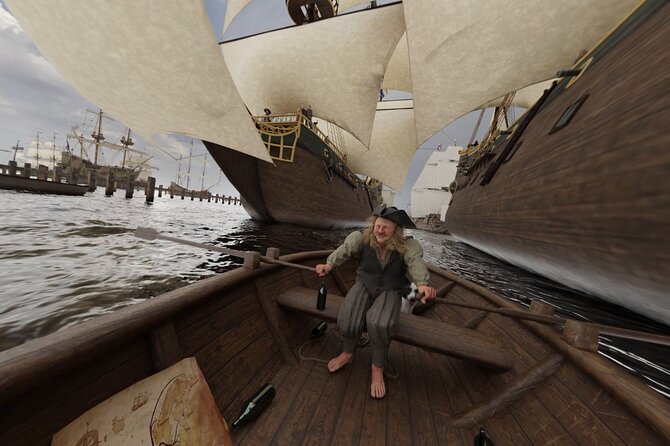
You’ll be switching between “boat views + audio” and “VR headset moments.” That means your best strategy is mental, not technical.
- Listen for the storyline cues. When the narration sets up what you’re about to see, the VR makes more sense.
- Keep your expectations realistic: VR is 15 minutes total. That’s long enough to change your perspective, but it’s not a full-length virtual museum.
- If you care about language, choose Dutch or English based on what you’ll understand best without fighting the audio.
- Plan to look around even when the VR ends. The point is to connect what you saw in the headset to the real canal view right after.
Also, the route is designed so “all neighborhoods are historically accurate,” which is a nice promise. The practical takeaway: don’t rush your head. If something looks different during VR, check what changes when the headset comes off.
Should you book the Amsterdam Luxury Canal Cruise with Historic VR?
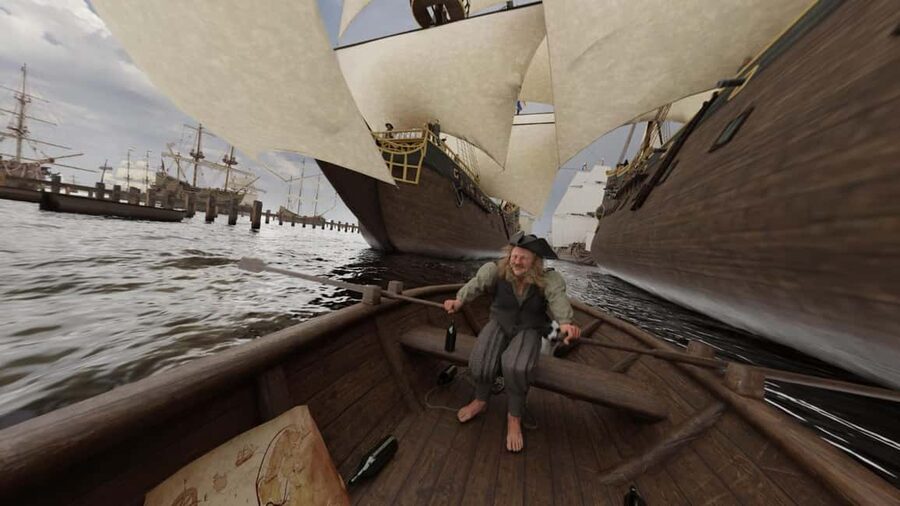
I’d book it if you want a canal tour with a clear point of view. This isn’t just about seeing Amsterdam. It’s about learning how the city functioned—trade, shipping, shipbuilding, and even the city wall—while still enjoying the modern canals.
I would think twice if audio quality and language balance are deal-breakers for you, since some feedback calls out sound and English-heavy hosting. If you’re comfortable with that risk, the payoff can be strong, especially because the VR scenes are tied to where you actually are on the water.
My bottom line: for many visitors, $50 buys a lot more than boat time—you get guided context plus a short, structured VR “switch” that makes the city feel older and clearer at the same time.
FAQ
How long is the Amsterdam Luxury Canal Cruise with Historic VR Experience?
The tour lasts 75 minutes total.
What’s included in the ticket price?
Included are a 75-minute canal cruise on a luxury enclosed boat, 15 minutes of historic VR, an audiotour in Dutch or English, highlights of Amsterdam, and one drink.
Where is the meeting point?
You should walk to the jetty next to Lido Bar & Kitchen. A tour guide will check you in.
How does the VR experience work during the cruise?
You’ll enjoy the audiotour while on the boat, then at seven locations you’ll put on the VR headset for a total of 15 minutes of historic VR with seven animations.
Which languages are available?
The audiotour is offered in Dutch or English, and the VR experience is also available in English or Dutch. More languages are planned.
Do you get the audiotour while wearing the VR headset?
No. The audiotour is provided with the VR headset off, and you switch to VR at the designated locations.
Is the tour wheelchair accessible?
Yes, the tour is listed as wheelchair accessible.
What ages is the tour not suitable for?
It is not suitable for children under 8 and people over 80.
Is food included?
No. Only one drink is included, and extra food or drinks are not included.
What’s the cancellation policy?
You can cancel up to 24 hours in advance for a full refund.