REVIEW · MARRAKECH
3 Day Luxury Tour: Sahara desert & luxury camp from Marrakech
Book on Viator →Operated by Marrakech Tours Excursions · Bookable on Viator
A desert night can change how you see Morocco. This 3-day group luxury trip pulls you from Marrakech across the Atlas to Merzouga and Erg Chebbi, with real time in the sand. You get a guided route, a camel ride, and meals handled for two breakfasts and two dinners.
Two things I like a lot: first, the day-by-day pace that actually leaves room for photos and moments that feel unhurried. Second, the desert camp experience in the middle of the dunes, with night-time star viewing plus music and folk entertainment.
One thing to think about: the driving days are long. The route is full of stops, but you’ll spend a lot of time on the road, and the return to Marrakech can feel like a slog—especially if you’re sensitive to bumpy rides.
In This Review
- Key highlights worth putting on your radar
- What you’re really buying: 3 days of transport, then a desert payoff
- Day 1 from Marrakech to UNESCO Ait Ben Haddou via the Atlas Tizi n Tichka
- Day 1 drawback to plan around
- Overnight in the Dades area at Kasbah de Tessidrine: good location, basic comfort
- Day 2: Tinghir valleys and Todra Gorges, then the long road into Merzouga
- Merzouga night: folk music, dunes, and star time
- The camel ride at sunset: short, slow, and worth dressing for
- Desert comfort reality check
- Day 3 back to Marrakech: the long finish, then you’re done
- Group size, pickups, and the people-management side
- Price and value: how $133.76 stacks up for what you get
- Common snags you can actually plan for
- Who this trip suits best (and who should choose differently)
- Should you book this Marrakech to Sahara luxury camp tour?
- FAQ
- What’s the duration of the tour?
- Is hotel pickup in Marrakech included?
- What’s included in the price?
- Is lunch included?
- How big is the group?
- What happens if weather isn’t good for the desert?
Key highlights worth putting on your radar
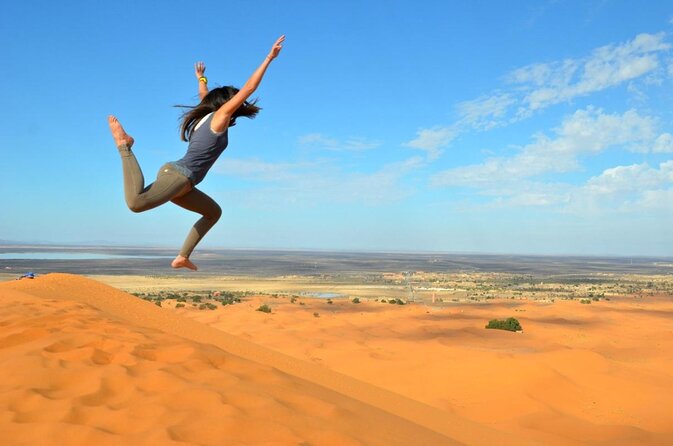
- Ait Ben Haddou and the Atlas pass: UNESCO kasbah time plus mountain-road scenery with altitude changes.
- Guided Tinghir valleys and Todra Gorges: a proper morning break before you hit the dunes.
- Merzouga luxury camp energy: tents in the desert area, folk music, and night sky time.
- Camel ride at sunset: a focused 1-hour ride timed for the light.
- Small group size (up to 20 people): easier conversations and fewer scheduling headaches than bigger tours.
What you’re really buying: 3 days of transport, then a desert payoff
This is a classic “Marrakech to the Sahara” package with an important trade-off. You’re paying for organized logistics—air-conditioned transport, lodging for two nights, and the camel ride—so you can focus on the places. In return, you accept long drives and a packed itinerary.
The value shows up in what’s included. You get accommodation tied to the route, two breakfasts and two dinners, and the key desert activity. Lunch and soft drinks are on you, so budget a little cash for midday and snacks.
Also: the tour runs as a group experience (maximum 20 people). That matters because it changes pacing. You’ll move as a group between Ait Ben Haddou, Ouarzazate, the Dades region, then Merzouga, instead of picking your own stops like a DIY trip.
You can also read our reviews of more tours and experiences in Marrakech.

Day 1 from Marrakech to UNESCO Ait Ben Haddou via the Atlas Tizi n Tichka
Day 1 starts with the Atlas drive and a big-picture goal: reach Ait Ben Haddou without turning it into a rushed drive-by.
You’ll stop in two Berber villages—Ait Berka at around 1460 m and Ait Ben Amer at around 1550 m—before crossing the High Atlas via the Tizi n Tichka pass (listed at 2260 m). This is one of the best parts for first-time Morocco visitors, because you feel the height shift and you get those classic mountain views that make the long route worth it.
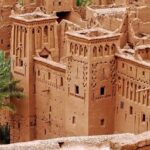
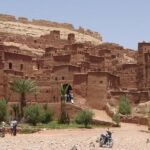
Then comes the big name: Ait Ben Haddou, the UNESCO-listed kasbah. You’ll have about three hours in the area, including roughly 1.5 hours for visiting the kasbah itself plus time for a midday meal. That “time on site” piece is important. Kasbahs can be overwhelming if you only get a quick stop; here you have a real chance to walk at your own rhythm, spot details, and take photos without sprinting.
Next you pivot toward the film-and-movie corner of Morocco: Ouarzazate. You’ll explore the old medina and visit the Taourirt kasbah and the international cinema museum. Even if you’re not a film buff, it’s a useful palate cleanser after kasbah architecture.
From there, you head toward the Dades region with stops in:
- El Kelaa M’Gouna (often called the flower capital), with photo breaks along the way
- Boumalne Dades, where you get stops for places like the Dades valley and Kasbah Ait Youl, plus the rock area associated with monkeys
Day 1 drawback to plan around
Day 1 is full of stops, and it’s easy to lose track of what matters most to you. If Ait Ben Haddou is your top priority, protect some energy for the kasbah visit and don’t spend too long hopping between minor viewpoints. You’ll also want to keep water handy—lunch isn’t included.
Overnight in the Dades area at Kasbah de Tessidrine: good location, basic comfort
Your first night is in a traditional-style kasbah hotel in the Dades region, listed as Kasbah de Tessidrine. The pitch here is authenticity: kasbah architecture and a regional base close to the gorge scenery.
Based on the way these kinds of routes work, the hotel is usually about sleep and showers, not a spa day. What you should expect is practical lodging at the right point on the route. If you’re hoping for a “luxury resort” vibe, this isn’t that kind of night.
Still, it’s a smart staging move. Dades sits in the middle of your travel day, so sleeping here prevents you from adding even more hours before the desert.
Day 2: Tinghir valleys and Todra Gorges, then the long road into Merzouga
Day 2 begins early and shifts the energy. You get out of the van and into the valleys.
You’ll head to Tinghir, with a guided tour of the Tinghir valleys for about 1.5 hours, then continue to the Todra gorges. Todra is the kind of place where the rocks do most of the talking. When you’re coming from a desert dream, it’s a good reset—cooler air, narrow gorge views, and a break from endless road time.
Lunch is included and taken in the same village area (as described), so you won’t be scrambling for food midday.
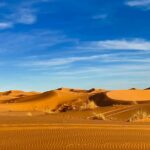
After that, the trip commits to the desert drive. You pass through towns listed as Tin-n-Jdad, Rissani, and Erfoud before reaching Merzouga. This is the part where the change is physical. The terrain shifts, the air feels different, and the driving becomes more about arrival than sightseeing.

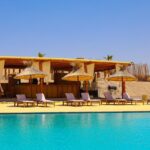
Merzouga night: folk music, dunes, and star time
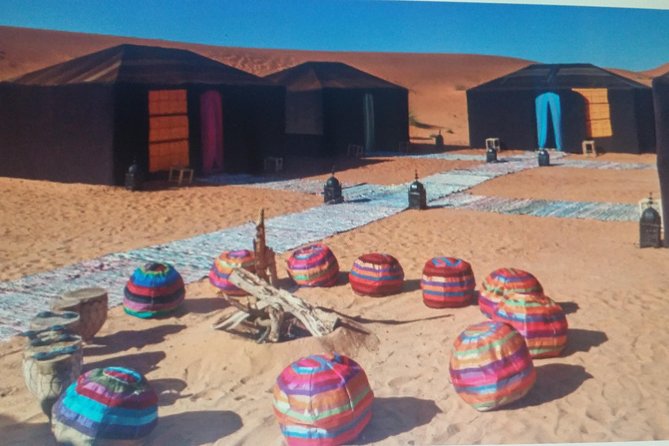
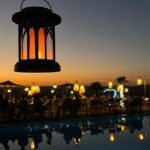
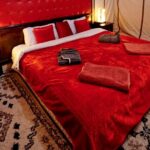
Your second night is where the itinerary earns its keep. You stay in nomadic tents in the middle of the desert in the Merzouga area (Erg Chebbi region is the classic reference point). The experience includes traditional music and folk dances, then you switch into your beds after the evening.
One practical tip: plan for cold at night. Desert nights can be chilly even in warmer seasons, and you don’t want your evening ruined by being underdressed. Bring layers you can actually wear while you’re sitting outside for stars.
The camel ride at sunset: short, slow, and worth dressing for
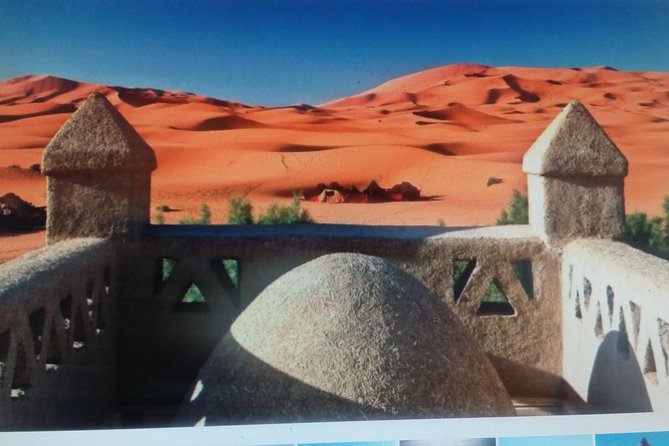
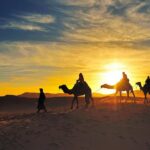
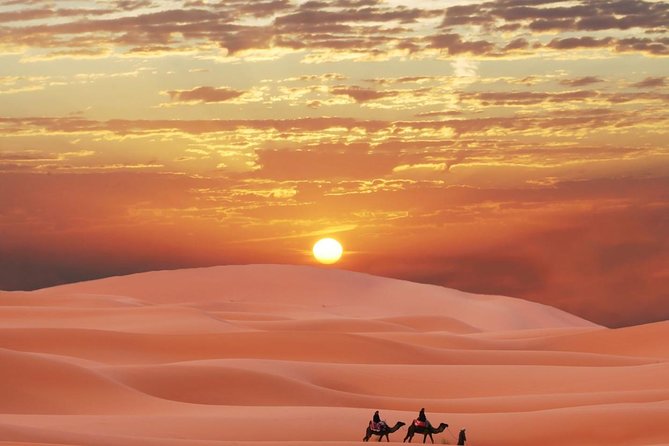
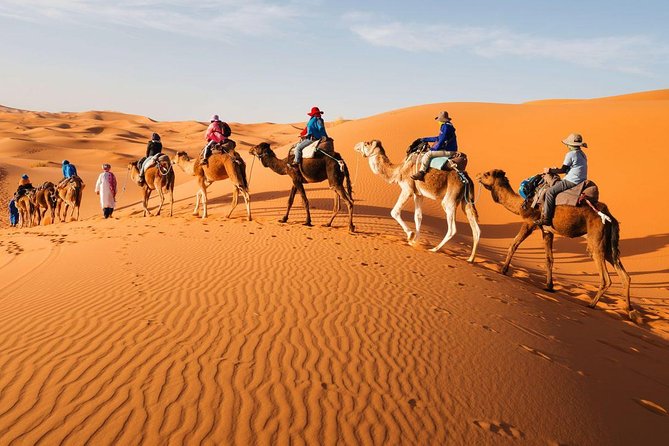
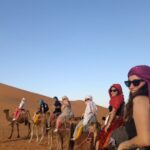
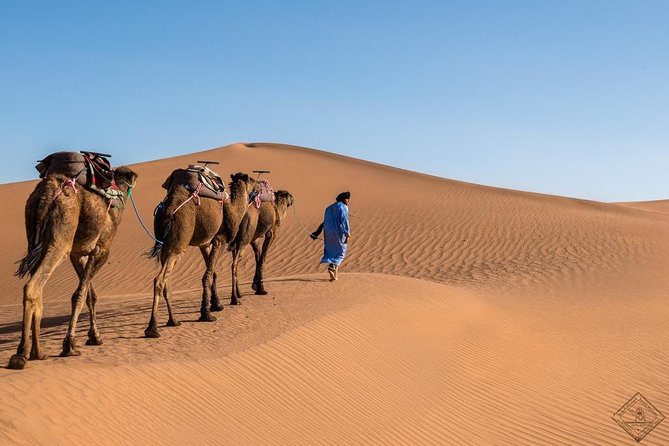
The desert activity on Day 2 is the camel ride—about 1 hour—timed for sunset. This is a focused ride, not a multi-hour trek. That’s good for comfort, especially on a tight 3-day schedule.
Camel rides can be bouncy. Wear closed-toe shoes and avoid anything you hate wearing for an hour on uneven ground. Also, take your camera settings into account. In desert light, everything gets dramatic fast, but it also gets bright.
Sunset is the payoff moment. You’re out on the dunes, the light changes minute by minute, and the whole scene goes cinematic without needing filters.
Desert comfort reality check
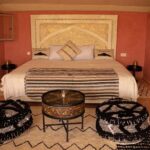
Some riders enjoy the camp as a full experience; others just want the sleep and the stars. Either way, think of the camp as “desert living,” not a hotel. If you’re booking a luxury camp option, double-check what level of comfort you actually get, because experiences can vary across groups.
Day 3 back to Marrakech: the long finish, then you’re done
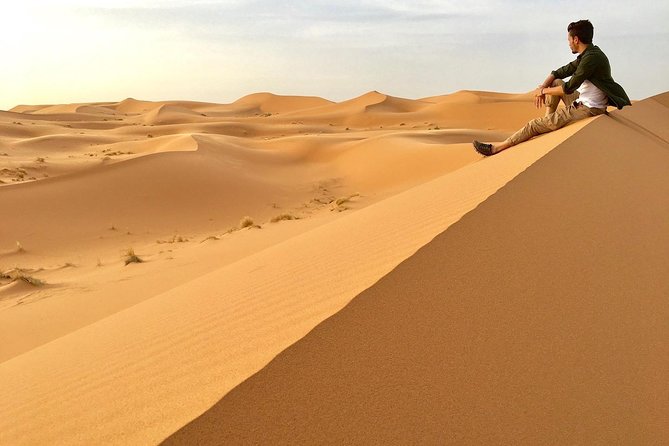
Morning in Merzouga is for breakfast and a return drive. You head back toward Marrakech and arrive around 7:30 pm.
The route description gives the Day 3 drive as about 9 hours, which explains why this tour can feel like a marathon. The good news: you’re past the hard part by then. The desert already happened. Now you’re just making the last stretch.
This is where I’d keep expectations simple. You’re not touring like a city walk. You’re riding. If you’re prone to car sickness, bring what works for you ahead of time. Bumpy roads and long seated hours are common issues on routes like this.
Group size, pickups, and the people-management side
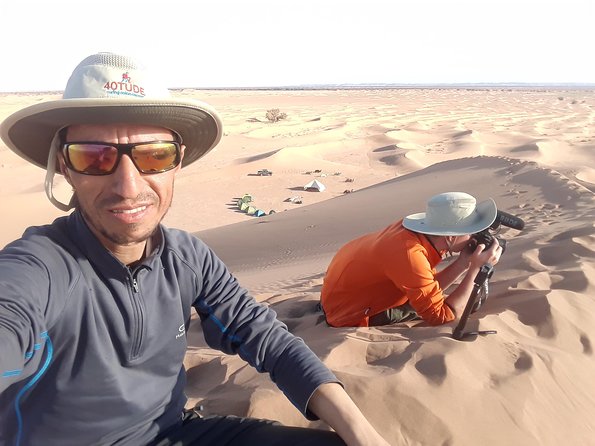
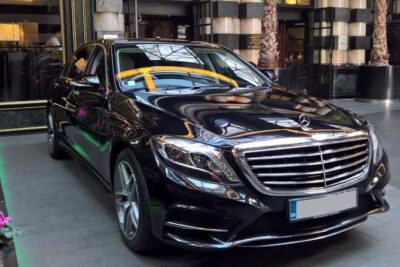
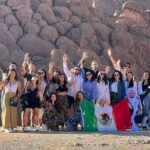
This tour runs with a maximum of 20 people and includes hotel pickup in Marrakech. That small-group size is a real quality-of-life feature. You get less waiting around than on big bus tours, and your guide can respond faster when the group needs something.
Also, the itinerary is built around guided stops, not open wandering. That can be a plus if you want structure. It can be a downside if you like total flexibility.
There’s another practical point from real-world experience on these routes: sometimes you may be placed with different group members depending on the camp level or the van they use. One traveler described being the only one booked into a luxury camp tier while others in the same vehicle were on a different camp level. So if “luxury” is a must for you, confirm what your booking includes and how the camp groups are handled.
Price and value: how $133.76 stacks up for what you get
At $133.76 per person for the 3-day package, you’re paying for three things:
- transport across Morocco’s interior
- lodging for two nights
- key inclusions like camel ride and meals
If you tried to assemble this yourself—driver, desert camp booking, camel ride, and transport timing—you’d likely spend more or end up with a less reliable schedule. That’s where the value comes from.
The catch is that not everything you might expect is included. Lunch is not included, and soft drinks are also not included. Also, some departures don’t always match meal counts perfectly, so I’d treat meal timing as “handled, but stay flexible.” Bring a snack just in case.
When you also factor in the sightseeing stops—Ait Ben Haddou, Ouarzazate, Dades, Tinghir, Todra gorges—the trip reads as an “Atlas-to-desert circuit,” not only a desert night.
Common snags you can actually plan for
I like this tour for its overall shape. I also think it’s smart to be ready for the small friction points that show up on group tours.
Here are the most realistic ones to watch:
- Long driving, especially the return: one person specifically warned that the drive back from the desert is a little long. If you hate road time, this will test you.
- Meal timing mix-ups: a couple of comments mentioned breakfast not being served as expected. You can’t fix that from home, but you can reduce stress by carrying light snacks.
- Language mismatch: at least one comment said the tour was sold in Spanish but guides/driver only spoke English for parts of the day. If language matters for you, be ready to rely on English or gestures.
- Camp level differences: one comment described switching groups for the desert night depending on camp tier, which suggests camp assignments can be uneven. If luxury comfort is your deal-breaker, verify what’s included before departure.
- Bumpy-ride comfort issues: someone mentioned the bus air-conditioning was not working. That’s not a deal-breaker for everyone, but in hot months it changes the ride.
On the plus side, there are also good signs of competence and care. One traveler credited guide Abdesalam and the driver (also Abdesalam) for being kind and knowledgeable, and another shared that a chauffeur named Hamid handled a lost phone situation quickly by getting it back a day later. That’s the kind of service you want when the schedule is tight.
Who this trip suits best (and who should choose differently)
This tour fits you if:
- you want a guided, structured Sahara experience without planning headaches
- you want real desert time plus a route packed with major sights
- you like groups up to about 20 people and don’t mind sharing the schedule
It may not fit you as well if:
- you hate long road trips or get carsick easily
- you expect a resort-style hotel in the desert camp area
- you need strict guarantees on meal timing or language coverage
If you’re going solo, you can still have a good time. One solo traveler described being placed into a group of about 17 people and appreciated how people helped when English wasn’t easy to understand.
Should you book this Marrakech to Sahara luxury camp tour?
I’d book it if your goal is clear: see Ait Ben Haddou, hit the Atlas, and get a proper night in the dunes with a camel sunset ride and meals sorted. The route covers a lot for the money, and the desert camp evening is the part you’ll remember when the driving fades.
If your priorities are comfort above all, treat “luxury camp” as something to confirm in writing. Also, pack for temperature swings: desert nights can cool down, and sunset riding takes layers seriously.
One last decision tip: pick this tour if you can handle a full day’s worth of motion without expecting a relaxed vacation tempo. If that sounds like you, you’ll likely feel like the hours on the road buy you something real.
FAQ
What’s the duration of the tour?
It’s a 3-day trip, with Day 3 bringing you back to Marrakech around 7:30 pm. Day 3 is listed as about 9 hours of driving.
Is hotel pickup in Marrakech included?
Yes. Pickup is offered, and the tour starts with collection from your hotel in Marrakech.
What’s included in the price?
The package includes air-conditioned vehicle transport, accommodation for 2 nights, and the camel ride. It also includes 2 breakfasts and 2 dinners.
Is lunch included?
No. Lunch is not included, and you’ll need to plan for it yourself.
How big is the group?
The tour has a maximum of 20 people.
What happens if weather isn’t good for the desert?
The experience requires good weather. If it’s canceled due to poor weather, you’ll be offered a different date or a full refund.