REVIEW · CASABLANCA
12 Days Private Luxury Sightseeing Tour in Morocco
Book on Viator →Operated by Siroco Tours · Bookable on Viator
Twelve days, one smooth Morocco circuit. What makes this one feel special is the private luxury setup: air-conditioned driving, a dedicated guide, and a stress-free itinerary that links Casablanca to Fes, the Atlas Mountains, Merzouga desert, Marrakech, and the coast. I especially like the comfort factor, including a luxury Berber tent night that turns the desert from a chore into an event.
The main trade-off is money at the door. Many site entrances are not included, and mosque access can depend on where you’re going and what’s allowed for non-Muslims, so it helps to budget extra for tickets you actually want to use.
In This Review
- Key things that make this tour worth your time
- Private Luxury Transport: Why the AC and a permanent guide matter
- Casablanca: Hassan II Mosque and Rick’s Café for movie-night atmosphere
- Meknes wine stop, imperial gates, and the palace-museum mix
- Arriving in Fes: panoramic viewpoints before the real medina day
- Fes medina with a dedicated guide: tannery, madrassas, and what you can enter
- Middle Atlas calm in Ifrane and Azrou: cedars, village stops, and a cheese break
- Merzouga Desert: camel ride, UNESCO dunes timing, and the starry night
- Todra Gorge to Skoura palms: towering rock walls and rose-valley air
- Ouarzazate and Ait Benhaddou: kasbah walls and movie-set familiarity
- Marrakech: Bahia Palace, Ben Youssef, Majorelle, and a real change of pace
- Essaouira and El Jadida: Atlantic air, argan flavors, and Portuguese cistern history
- Price and Logistics: Is $4,548 per person good value?
- Who should book this private luxury circuit
- Should you book this 12-Day Private Luxury Sightseeing Tour?
- FAQ
- What’s included in the tour price?
- Are entrance fees included?
- Can non-Muslims visit the mosques on the itinerary?
- Is this a private tour?
- What about flights?
- What’s the cancellation policy?
Key things that make this tour worth your time
- Private group pace with a permanent guide: you’re not zigzagging around other tours.
- Air-conditioned transport all the way: long drives feel manageable.
- Luxury lodging, including a desert camp tent: comfort is built in, not improvised.
- Pick what you pay to enter: entrance fees are mostly optional.
- Route includes contrast days: medinas, kasbah fortresses, desert gorges, and Atlantic coast.
- Camel ride plus sunset timing: the desert isn’t only scenic, it’s built into the experience.
Private Luxury Transport: Why the AC and a permanent guide matter
If you’ve traveled in North Africa before, you already know that the biggest “hidden cost” is fatigue. This tour’s answer is simple: you ride in a private vehicle with air conditioning and you’re with the same guide throughout the moving days. That means you don’t waste your limited vacation time negotiating, re-explaining, or hunting for directions.
It also changes how you enjoy Morocco’s rhythm. You can start early when you want, slow down when you want, and still hit the major sights because the logistics are handled. For me, that’s the real value of private luxury: it keeps the day from turning into a series of frustrating resets.
You can also read our reviews of more tours and experiences in Casablanca.
Casablanca: Hassan II Mosque and Rick’s Café for movie-night atmosphere
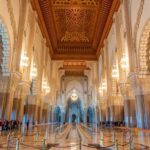
Casablanca kicks things off with two big “first impressions.” You begin with Hassan II Mosque, one of Morocco’s landmark religious buildings, and it’s also one of the rare mosques that welcomes non-Muslim visitors. Your guide explains the traditions and rituals behind what you’re seeing, which helps the visit feel more meaningful than just photo stops.
Then, there’s an optional dinner moment: Rick’s Café. This is for classic film fans, because it’s designed around the Casablanca movie vibe—old courtyard style, period details, and that bar-and-piano-bar mood. If you want this, plan ahead since it needs prior booking, and it’s best treated as a fun theme-night add-on rather than a “must do” if you’re not into the movie.
Meknes wine stop, imperial gates, and the palace-museum mix
Day two starts with a calmer contrast to Casablanca’s grand sites: a wine-tasting experience near Meknes. This isn’t just a quick sip-and-go either. You’re in the region where Moroccan wine is a real thing—Meknes has a Mediterranean climate profile, and the tour frames it with local context about the terroir.
After that, you’ll have time in Meknes for the city itself. One highlight is Dar Jamai Museum, housed in an old palace complex with gardens and also a mosque and hammam setting. It’s a good stop when you want something less “checkpoint tourism” and more Morocco’s art-and-home atmosphere, plus you get the feel of how palaces worked as multi-use spaces.
Then comes the medieval/imposed grandeur: Bab Mansour Gate, one of the big gates facing El Hedim’s main square, followed by the Mausoleum of Mouley Ismail. Just note the practical part: the hall for the sultan’s remains is not open for non-Muslims, so you’ll still see the architecture and courtyard details, but you shouldn’t expect full access.
Arriving in Fes: panoramic viewpoints before the real medina day
Fes is one of those places where the medina can feel like you’ve stepped into a maze built by time itself. On arrival day, you get a panoramic tour and then a view over the city from cafés on higher ground. I like this pacing because it gives you bearings fast—before you start weaving through alleys later.
Fes medina with a dedicated guide: tannery, madrassas, and what you can enter
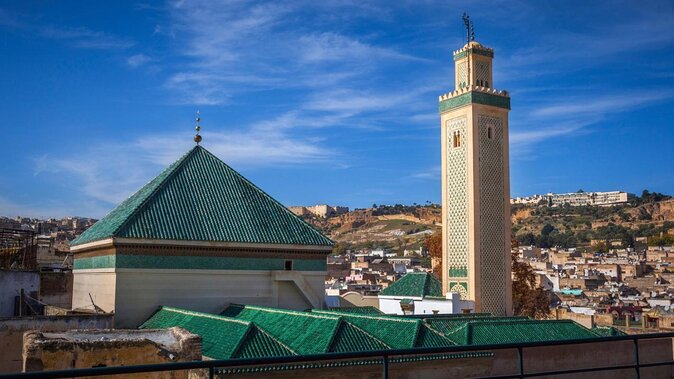
The most important part of Fes is not the monuments. It’s the way the city works—small streets, layered neighborhoods, and old institutions that still shape daily life. That’s why I like the private medina tour with a guide dedicated to Fes, including a long morning and part of the afternoon.
You’ll visit key sections such as palaces and the Jewish quarters, pass by major religious schools, and learn how the city became a center for knowledge. The medina experience is also where this tour gives you control: you can ask questions, pause for photos, and move at a pace that fits your group.
In the medina, you’ll also hit the Chouara Tannery, with its famous dye pools and centuries-old process. It’s a hands-on sensory lesson, and the practical advice here is to view from the best viewpoints you’re guided to, because some angles are more about the craft than about the tourist market.
Then you move into architecture and education:
- Al-Attarine Madrasa: praised for Moorish detailing and its preserved look.
- Bou Inania Medersa: an ancient school linked to the Merinid dynasty, with its Friday prayer context.
- Karaouine Mosque area: you can see from the inside with access where allowed, but the tour notes that non-Muslims cannot enter the mosque itself.
That mix is the real value. You get the city’s “why,” not only the “where.”

Middle Atlas calm in Ifrane and Azrou: cedars, village stops, and a cheese break
Day four is a nature pause that helps you reset after city intensity. You leave for Ifrane and the Azrou cedar forests, with a focus on the middle Atlas environment: cool air, cedar scents, and quiet forest views.
You can also expect a farm stop that produces home-made cheeses and organic honey, with tasting offered as a snack. This is the kind of small local moment that turns a long travel day into something personal. Even if you’re not a “nature person,” the change of temperature and scenery helps your brain catch up.
And yes, it’s also a practical stop. You get out of the vehicle, stretch, and let the trip breathe before the desert push.
Merzouga Desert: camel ride, UNESCO dunes timing, and the starry night
Now we get to the day you picture when you think of Morocco: Merzouga Desert. You arrive after crossing valleys and oasis areas (including the Ziz region on the way), and the schedule builds in a welcoming start with traditional Moroccan tea.
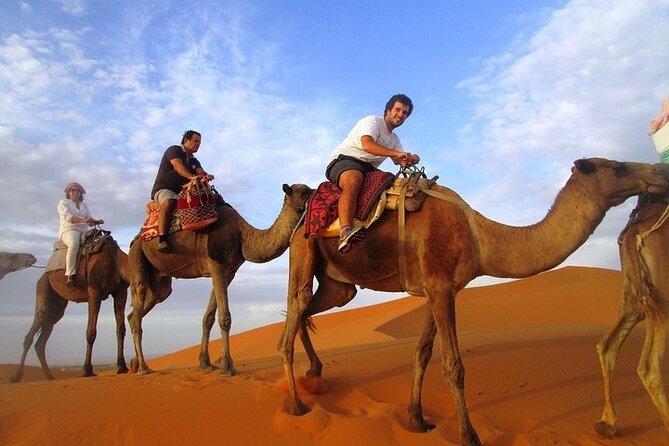
Then comes activity time. The tour mentions options like 4×4 quad challenges in the dunes, plus a camel ride for about an hour through the desert. You’ll also visit desert oases and the Merzouga dunes, noted as a UNESCO world heritage site. Sunset is specifically timed, which matters because dunes look different hour to hour.
The big emotional win is the sleeping arrangement. Instead of roughing it, you spend the night in a luxury nomad tent in the desert camp, which turns “desert night” from survival into comfort. It’s also the one night where Morocco feels slower and more elemental, especially when you hear about the stars from the camp.
Todra Gorge to Skoura palms: towering rock walls and rose-valley air
Day six is about contrast again. After your desert night, you move into the dramatic Todra Gorge, where cliffs rise roughly hundreds of meters and the canyon narrows dramatically. The schedule gives you time to climb and watch the desert light change at the start of the day. That’s an important detail—Todra feels different depending on when you arrive.
Then you shift toward the greener side of the country: Dadès Valley and the Skoura oasis. This is where palm forests and valley life break the “only stone and sand” feeling. Skoura is also tied to rose culture in the broader route, so even when roses aren’t in season, the valley’s identity is part of the experience.
The lodging here is your next overnight. The itinerary frames it as “lovely lodging,” which usually means you’re not sacrificing comfort after the desert tent.
Ouarzazate and Ait Benhaddou: kasbah walls and movie-set familiarity
Ouarzazate is the gateway to Morocco’s kasbah storytelling, and the tour includes the classic route: the One Thousand Kasbahs corridor. You pass through villages in Skoura and around El Kelaa des M’Gouna, then head to Ouarzazate.
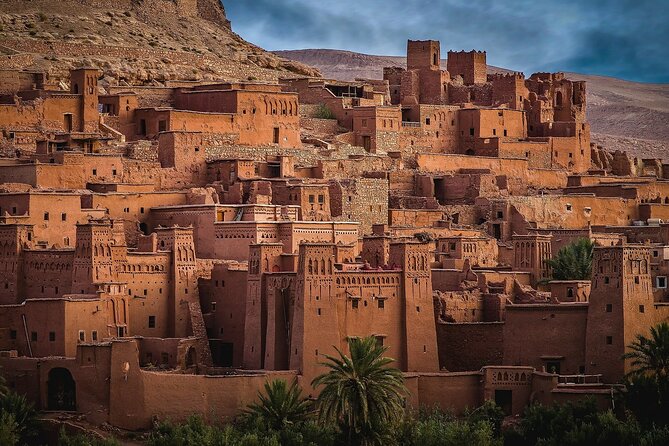
In Ouarzazate, you’ll have the chance to see Kasba Taouirt area fortification imagery, plus other historical stops in the region. Then comes the star: Ait Ben Haddou, UNESCO-listed and famous as the “Route of the One Thousand Kasbahs” defense point between desert trade and Marrakech.
This place also shows up in movie filming. That can help you visualize what you’re seeing, especially if you already know the big-screen look of kasbahs. The practical takeaway is to bring your “slow walking shoes,” because you’ll want time to look at walls and gates from multiple angles, not just pass through.
Marrakech: Bahia Palace, Ben Youssef, Majorelle, and a real change of pace
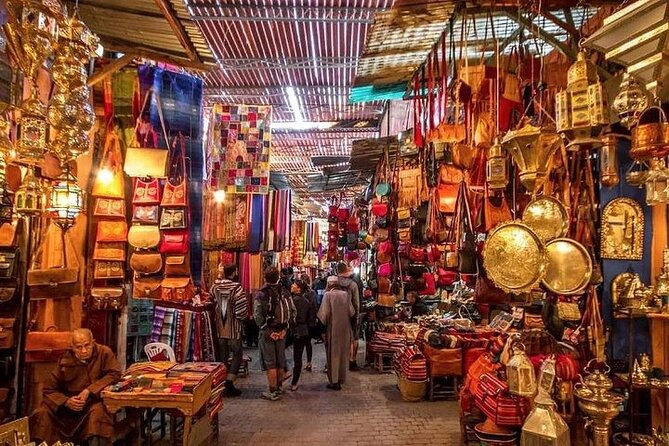
Marrakech is where the itinerary gives you both structure and freedom. Day seven ends at Jemaa el-Fna square for dinner, with street food energy mixing smells, music, and constant movement. This is one of those “you just need to be there” nights, and the schedule keeps it easy by building it directly into the day.
Day eight is the guided city portion with a Marrakech-dedicated guide/historian. You’ll visit:
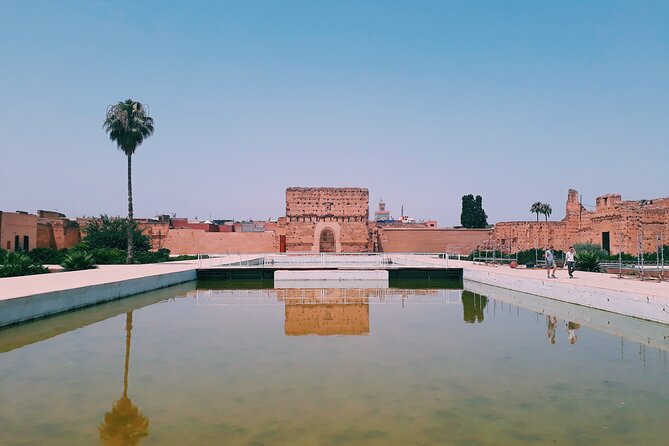
- Bahia Palace (19th-century palace complex with gardens, courtyards, and decorated rooms)
- Ben Youssef Medersa (the older Islamic faculty building now functioning as a museum)
- Koutoubia Mosque (noted as Marrakech’s most photographed landmark)
- Jardin Majorelle (botanical garden associated with Yves Saint Laurent and Pierre Bergé)
- Musée Yves Saint Laurent (museum stop with exhibitions)
Notice the access and ticket pattern: some of these are not included in the entrance-fee list. So you’ll choose where to spend your money rather than being forced to pay for everything.
Then day nine gives you a real breather: a free day to explore Marrakech. The tour even mentions a hot air balloon option (with prior booking) if you want to see the city and the Atlas from above. Whether you do that or keep it grounded, the point is you’re not on rails the entire time.
Essaouira and El Jadida: Atlantic air, argan flavors, and Portuguese cistern history
By day ten, you’re heading to the coast for Essaouira, a city described as an artistic, multicultural place with a strong maritime feel. The itinerary sets aside a full day and frames it around food: fresh fish and argan oil, which is used widely and tastes different from olive oil depending on how it’s prepared.
Essaouira’s medina atmosphere is a good match for people who want craft shops, coastline wandering, and a slower evening pace than you get inland.
Then day eleven adds El Jadida, a small port city with Portuguese connections and UNESCO status. The big named site is the Manueline cistern, built in 1514 for water storage. You’ll also see the chapel of S. Sebastião and the façade of the Our Lady of the Assumption Church in Manueline style.
This is a day that works well if you like “architecture you can walk through” rather than only seeing views.
Price and Logistics: Is $4,548 per person good value?
At about $4,548 per person for 12 days, you’re paying for three things: private transport, comfortable lodging, and a guide who helps you actually enjoy Morocco instead of managing it.
Do the math loosely and you’re looking at roughly $380 a day, and that’s before you add airfare (which is not included) and before entrance fees (also not included). What is included is the big cost driver: 5-star accommodation with breakfast, plus the desert camp luxury tent night, plus pickup and drop-off at Casablanca airport, plus the private air-conditioned vehicle and permanent guide.
Where the price can feel sharp is the extras category. Hassan II Mosque entrance, multiple medersa entries, and major palace/garden sites each have their own ticket costs. But the tour design helps here: you can choose what to enter, rather than being locked into paying for everything.
If you want a “set it and forget it” trip with minimal stress, the value is easier to justify. If you’re the type who already plans every day and wants to shop entry tickets and transport separately, you might feel like you’re paying for convenience.
Who should book this private luxury circuit
This tour fits best if you:
- want a private group with air-conditioned comfort and a dedicated guide
- like mixing big-name sights with guided context (mosque architecture, madrasas, kasbah defense history)
- care about sleeping well, especially for the desert night
- prefer set logistics over constant decision-making
It may not be ideal if you’re on a tight budget for entrances and add-ons, or if you only want the “free city wandering” style of travel with no structured stops.
Should you book this 12-Day Private Luxury Sightseeing Tour?
I’d book it if you want Morocco to feel organized, comfortable, and still distinctly Moroccan. The itinerary gives you the classic highlights—Casablanca, Fes medina, Atlas nature, Merzouga dunes, Todra, kasbahs near Ouarzazate, Marrakech palaces and gardens, plus two coast days. And because it’s private, you’re not forced into a factory schedule.
I’d hesitate only if you’re the type who hates extra entrance fees or expects every mosque to be open to visitors. If that’s you, plan your ticket priorities ahead of time and keep your expectations aligned with what non-Muslim access allows.
Bottom line: for many people, this is one of those “pay for the ease, spend your brain on the trip” Morocco options.
FAQ
What’s included in the tour price?
The tour includes 5-star accommodations with breakfast, a luxury nomad tent in the desert camp, pickup and drop-off at Casablanca airport, transport by private vehicle with air conditioning and a permanent guide, camel ride in the desert, and 3 included dinners plus 11 included breakfasts.
Are entrance fees included?
No. Entrance fees for several major stops are listed as not included, including Hassan II Mosque, multiple madrasas, Bahia Palace, Jardin Majorelle, Saadian Tombs, Almoravid Koubba, and Dar El Bacha, among others. You choose what you want to pay to enter.
Can non-Muslims visit the mosques on the itinerary?
Hassan II Mosque is described as visitable by non-Muslims. Karaouine Mosque is noted as not allowing non-Muslims to enter the mosque itself, even if you can look out from inside.
Is this a private tour?
Yes. It’s a private tour/activity, and only your group participates.
What about flights?
Flights are not included. The tour includes airport pickup and drop-off in Casablanca.
What’s the cancellation policy?
You can cancel for a full refund up to 24 hours before the experience’s start time. If you cancel less than 24 hours before, the amount paid is not refunded.