REVIEW · SWAKOPMUND
Walvis Bay: Marine Big 5 Luxury Catamaran Tour
Book on GetYourGuide →Operated by Catamaran Charters · Bookable on GetYourGuide
That hunt for whales and dolphins starts right at the jetty. This Walvis Bay Marine Big 5 luxury catamaran tour turns a simple morning at sea into a real wildlife outing, with Cape Fur Seals at Pelican Point and a guided search for whales, dolphins, mola mola, leatherback turtles, and seals. You get panoramic views of the Pelican Point peninsula, plus onboard hospitality that keeps the mood easy and upbeat.
I especially love the mix of big-mammal odds and close-up animal moments, like watching dolphins work the bow and seeing pelicans and seals linger around the catamaran. I also like the practical side: you’re not just chasing sightings—you’re fed well, with an oyster lunch and drinks that feel like part of the day, not an afterthought. One thing to factor in is that the full Big 5 isn’t guaranteed every trip, and animal sightings can swing with season and weather.
In This Review
- Key Things That Make This Tour Worth Your Time
- Walvis Bay’s Marine Big 5 Hunt: What You’re Really Buying
- Getting to the Catamaran Charters Check-In (and avoiding morning stress)
- Cruise Rhythm: Oyster Farms, Pelican Point, then Open Sea
- Past oyster farms and toward Pelican Point
- Rounding Pelican Point with the lighthouse and seal colony
- Continuing past the larger bay toward open water
- Marine Big 5: What each target means for your chances
- Whales: the payoff when conditions line up
- Dolphins: the most likely wow factor
- Mola mola (sunfish): the oddball you’ll remember
- Leatherback turtles: rare, but the search is real
- Seals: your close-to-the-boat entertainment
- Birds, ships, and the everyday theater of Walvis Bay
- Lunch at sea: the part that makes the price feel worth it
- Wildlife watching that actually helps: how to get more from the hunt
- Bring your eyes, not just your camera
- Don’t miss the seal-and-pelican moments around Pelican Point
- Listen when the guide points out patterns
- Weather is part of the deal
- Who this tour is perfect for (and who should adjust expectations)
- Final verdict: should you book the Walvis Bay Big 5 catamaran tour?
- FAQ
- Where do I check in for the tour?
- What time does the tour depart and when does it return?
- Is hotel pickup included?
- What marine animals are you looking for during the cruise?
- Is the lunch included, and what does it include?
- What should I bring, and what should I avoid wearing?
- Is the boat wheelchair accessible?
Key Things That Make This Tour Worth Your Time
- Pelican Point seal crowd: you sail past a lighthouse while the Cape Fur Seals (about 60,000) do their thing
- Real Big 5 target list: whales, dolphins, mola mola, leatherback turtles, and seals are part of the search plan
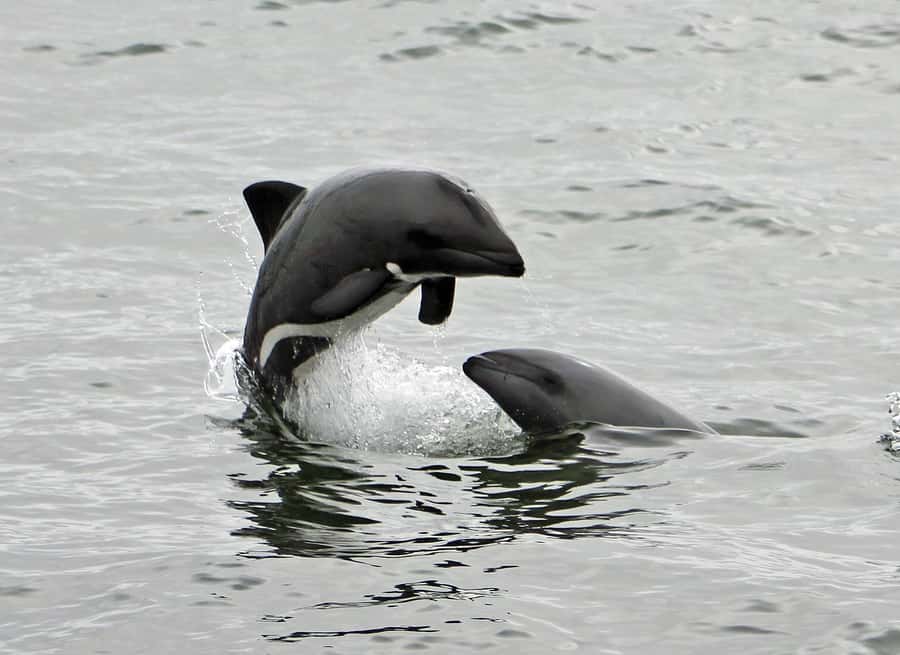
- Three dolphin species: common bottlenose, fast and social Heaviside’s, and aerial dusky dolphins
- Oddball highlight, mola mola: the sunfish’s look and massive size make it a fan favorite
- Lunch with Namibian oysters: fresh oysters paired with sparkling wine, plus snacks and dessert
- Hands-on wildlife pace: guides look for animals calmly, with time for photos and real watching
Walvis Bay’s Marine Big 5 Hunt: What You’re Really Buying
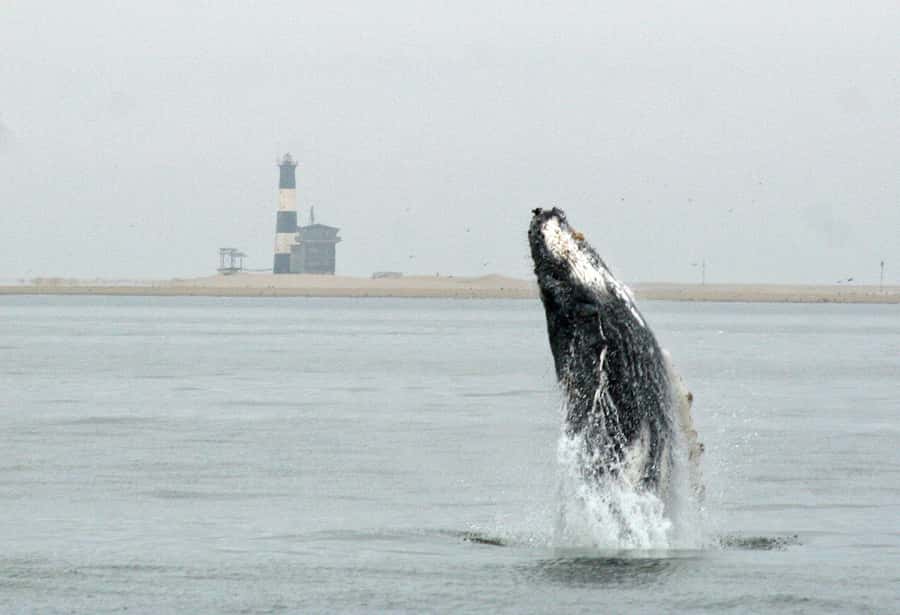
This isn’t the kind of tour where someone points vaguely at the horizon and hopes for the best. The value here is the system behind the day: you leave the Walvis Bay waterfront, pass key local landmarks, then push into open water with a guide who knows how to scan for different species and how to time the boat’s movement so you don’t waste the best viewing minutes.
You’re paying for three things at once:
- Guided wildlife searching around Walvis Bay and Pelican Point
- Comfort at sea on a catamaran that keeps the day relaxed
- A proper food-and-drinks stop during the wildlife run, including fresh oysters and sparkling wine
At $76 per person for about 210 minutes, it’s not a budget gamble. But it can feel fair value because you’re getting a full morning outing with actual catering and multiple chances to see animals in different places (coastline, seal zone, and open water).
Getting to the Catamaran Charters Check-In (and avoiding morning stress)
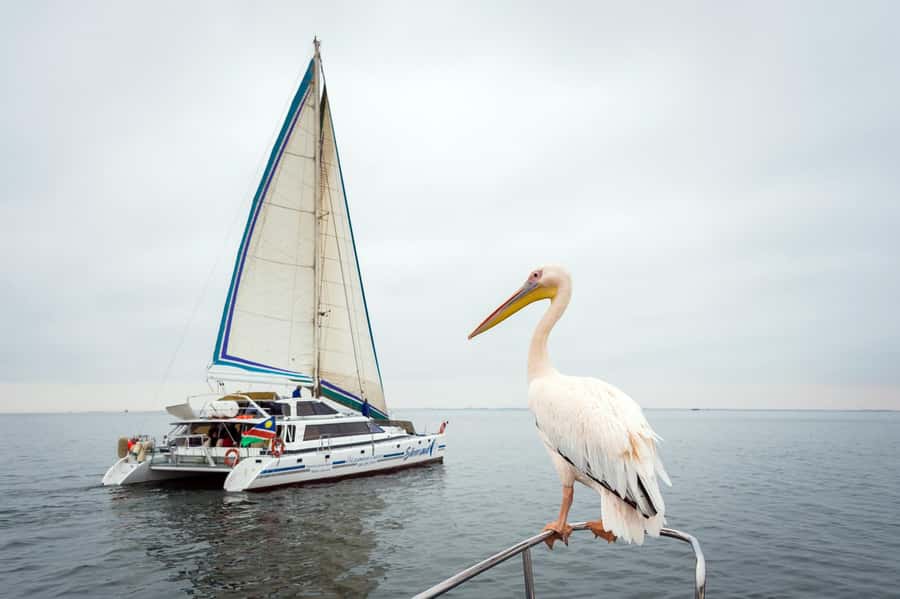
Start with logistics, because a calm start makes wildlife watching better. Check-in is at the Walvis Bay Waterfront at 8:30 am. You depart from the jetty between 8:45 and 9:00 am, so you’ll want to arrive early enough to get oriented.
Look for the small dark blue building near the jetty at the northern end of the waterfront for Catamaran Charters check-in. If you’re coming in by passenger ship, there’s a new access gate south of the passenger liner terminal that gives direct access to the waterfront. Plan roughly a 10-minute walk.
You’ll also be glad you dressed for a sea morning. Bring comfortable shoes and warm clothing. Even when the sun is out, the ocean breeze can cut. Sunglasses and sunscreen help too, because you’ll be out in open view for long stretches.
Practical note: high-heeled shoes aren’t allowed. If you’re thinking of wearing dressy shoes for photos, switch to something grippy. It’s a small rule, but it prevents hassle once you’re on board.
Cruise Rhythm: Oyster Farms, Pelican Point, then Open Sea
The day runs in clear phases, and each one has a purpose beyond scenery.
Past oyster farms and toward Pelican Point
Right after departure, the catamaran heads past local oyster farms while hot coffee and tea are served. This is a good warm-up moment. You’re getting your bearings, and you’re also getting your first taste of the local coastline before the wildlife search goes full focus.
The route matters because Pelican Point isn’t random coastline. It’s a hotspot where you can stack multiple viewing opportunities in a short time.
Rounding Pelican Point with the lighthouse and seal colony
Next, you approach Pelican Point with its landmark lighthouse and a huge resident colony of Cape Fur Seals (around 60,000). This part of the trip is often where the energy lifts. Seals are curious, and you may see them closer than you’d expect, especially around the boat as you round the point.
This is also where the guide’s role becomes obvious. You’re not just looking; you’re learning what to look for and where to look—whether it’s activity in the water, seal movement, or how birds use the area.
Continuing past the larger bay toward open water
After rounding Pelican Point, you head into open sea. The tour becomes more about scanning and patience now. The route is designed for the chance of multiple species rather than only one “big moment.”
If you’re traveling in season, there’s extra reason to be optimistic. In the July to November window, bigger mammals such as Southern Right Whales and Humpback Whales are often spotted. Outside that season, you still might see whales, but the mix can shift.
Marine Big 5: What each target means for your chances
The tour markets the Marine Big 5, but the best way to judge value is to understand what each target usually feels like on the water.
Whales: the payoff when conditions line up
Whale sightings can be the highlight because you’re looking for animals at the scale that changes the whole mood on a boat. The tour specifically notes whale species that have been seen in the area, including gray whales and pygmy right whales, plus the more common seasonally spotted Southern Right and Humpback whales.
What this means for you: whale sightings are possible but not guaranteed. So when the guide starts watching carefully and repositions the boat, don’t treat it like waiting. Treat it like part of the hunt.
Dolphins: the most likely wow factor
Dolphins often deliver early and often. Walvis Bay waters are home to three dolphin types, and the guide’s job is to tell you what you’re seeing and how to spot each one’s behavior.
- Common bottlenose dolphins: the most common around the bay
- Heaviside’s dolphins: smaller, very social, often in groups of 10 or more, and fast swimmers
- Dusky dolphins: known for aerial skills, with guests frequently entertained by their performances
If you want the highest odds of a constant stream of action, dolphins are usually your friend here. Even when whales are quiet, dolphins can keep the trip lively.
Mola mola (sunfish): the oddball you’ll remember
If you’ve never seen a mola mola, this is the kind of sighting that resets your brain. It’s an odd-looking fish—bony, and it can resemble a fish head with a tail. It can grow very large and weigh up to around 1,000 kilograms.
For you, mola mola matters because it’s unusual compared to typical wildlife outings. You’re not just looking for something big—you’re looking for something weird in the best way.
Leatherback turtles: rare, but the search is real
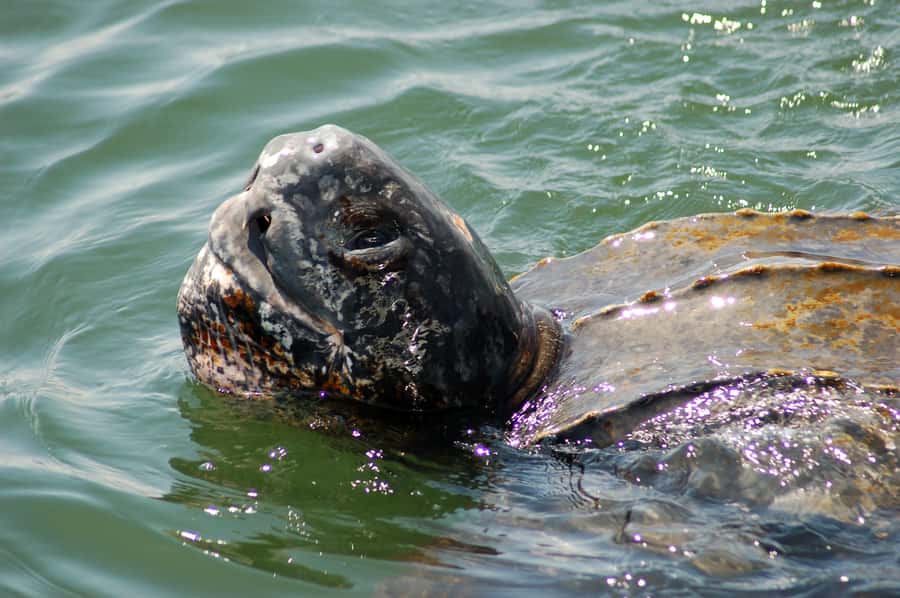
Leatherback sea turtles are the largest living turtles and have no body shell like you might picture. Their carapace is covered by skin and flesh.
The tour notes that leatherbacks travel long distances to reach breeding grounds, with trips of 1,000 kilometers or more not uncommon. The practical takeaway: don’t expect them every time, but the guide is actively searching when conditions fit.
Seals: your close-to-the-boat entertainment
Seals are one of the easiest “yes” species to appreciate on this route, especially around Pelican Point. They’re interactive in the sense that you may see them lingering near the catamaran, and they can become a surprisingly social part of the experience.
Even if whales or turtles don’t show, seals can still give you that close wildlife connection.
Birds, ships, and the everyday theater of Walvis Bay
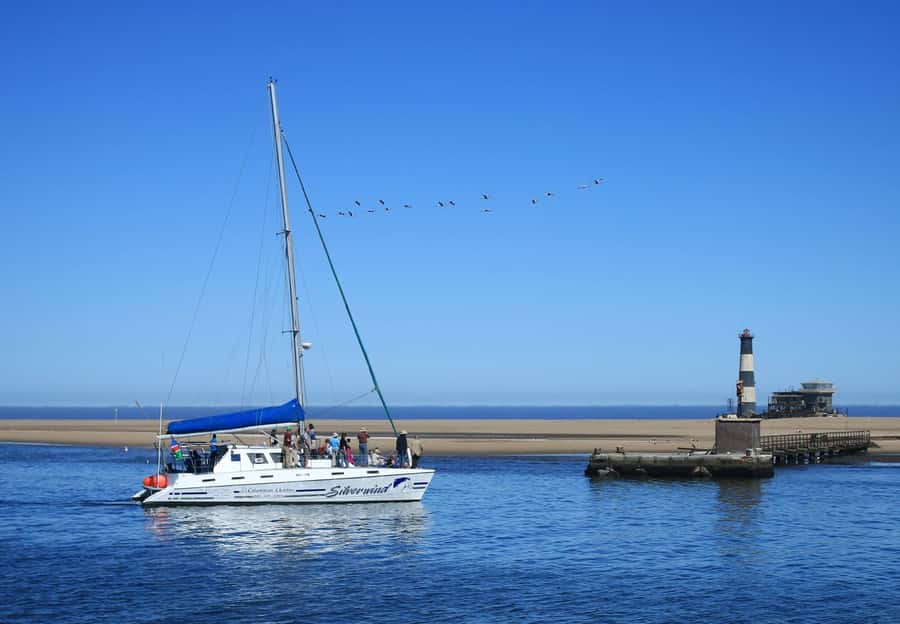
One underrated part of the trip is the mix of marine life and coastline activity around you.
As you travel, you may also spot seabirds that hang around the area, including Kelp Gull and Hartlaub’s Gull, along with pelicans and Cape Cormorant. Birds sometimes use the catamaran to hitch a ride or to do their own sightseeing—so yes, you might have a feathered audience as you scan the water.
And beyond wildlife, you also pass interesting ships and oil rigs that visit the bay. It gives you a sense of how Walvis Bay works, not just how it looks. You’re watching nature, but you’re also seeing the working marine environment that supports the local economy.
Lunch at sea: the part that makes the price feel worth it
This tour earns repeat-booking love for one reason: it feeds you like you’re on a proper outing.
Lunch happens on the return journey through the larger bay area. The tour serves local, world-class fresh Namibian oysters, paired with crisp sparkling wine. You’ll also get savory snacks and dessert pastries. On top of that, there’s ice-cold Namibian beer and soft drinks.
This is the kind of included meal that changes how you experience the day. If you’ve ever been on wildlife tours where the snacks are basically a formality, you’ll appreciate this setup. Here, food is part of the comfort package that keeps everyone smiling while the guide works to find animals.
A couple extra details matter:
- Coffee and tea are served early, right as the cruise begins
- Drinks keep moving during the experience, which helps if the weather turns cool or you get a little salt-spray tired
Wildlife watching that actually helps: how to get more from the hunt
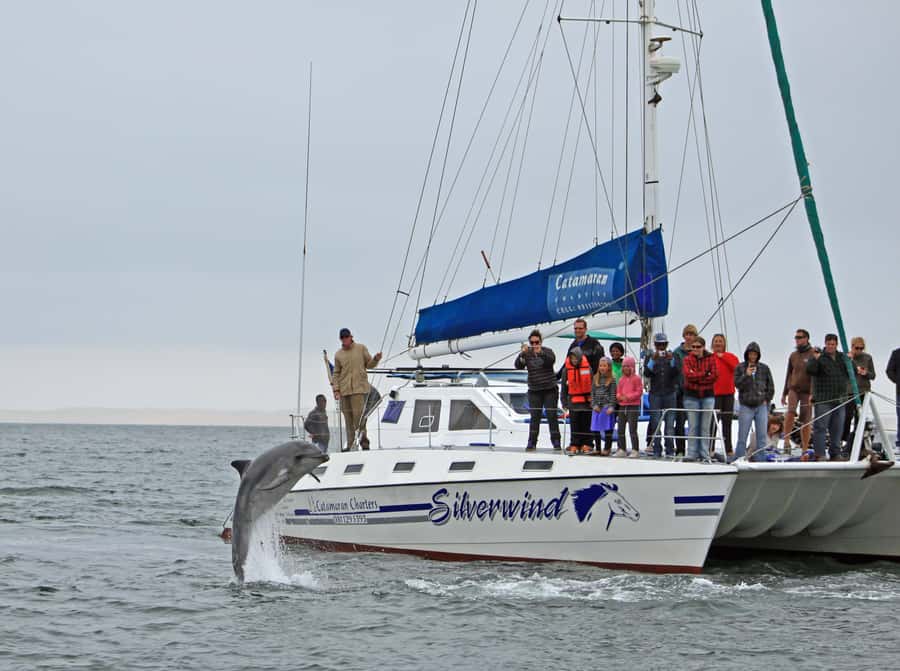
Here’s how to make this tour work in your favor without turning it into a frantic game.
Bring your eyes, not just your camera
The guide’s scanning matters, but your job is to stay ready. Wear sunscreen, keep sunglasses on so you can see clearly, and keep warm layers handy so you’re not distracted by cold.
When you spot a change—birds gathering, dolphins surging, a seal surfacing—stay on it. Often the best moment is short.
Don’t miss the seal-and-pelican moments around Pelican Point
Pelican Point is the early anchor. If you only focus on big-mammal targets, you can miss some of the most interactive parts of the day. Seals and pelicans can get close enough to make you feel like you’re watching wildlife in a living classroom, not a distant postcard.
Listen when the guide points out patterns
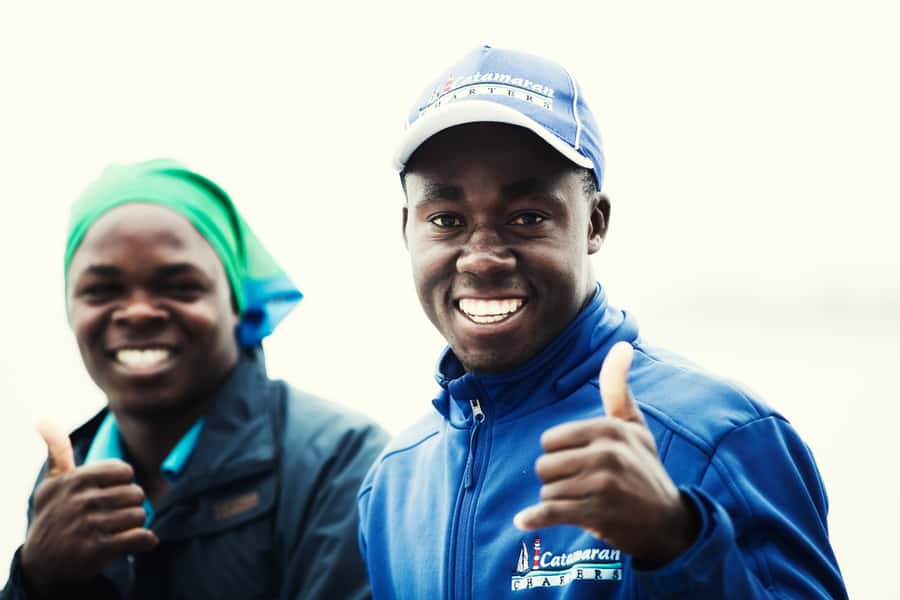
From the names I’ve seen associated with this operation—guides like Raymond, Bertie, Tu-Tu, Monique, Mirko, Steve, and others—the consistent theme is that they bring both local context and real explanation. You’ll get better sightings when you understand what you’re looking at and why the boat is repositioning.
Weather is part of the deal
Even with great planning, you can’t control the sea. One of the clearest considerations from real experiences is that some trips end up with fewer whale or turtle sightings. That doesn’t make the tour bad; it just means the day’s best moments might lean heavier on dolphins, seals, and birds depending on conditions and season.
Who this tour is perfect for (and who should adjust expectations)
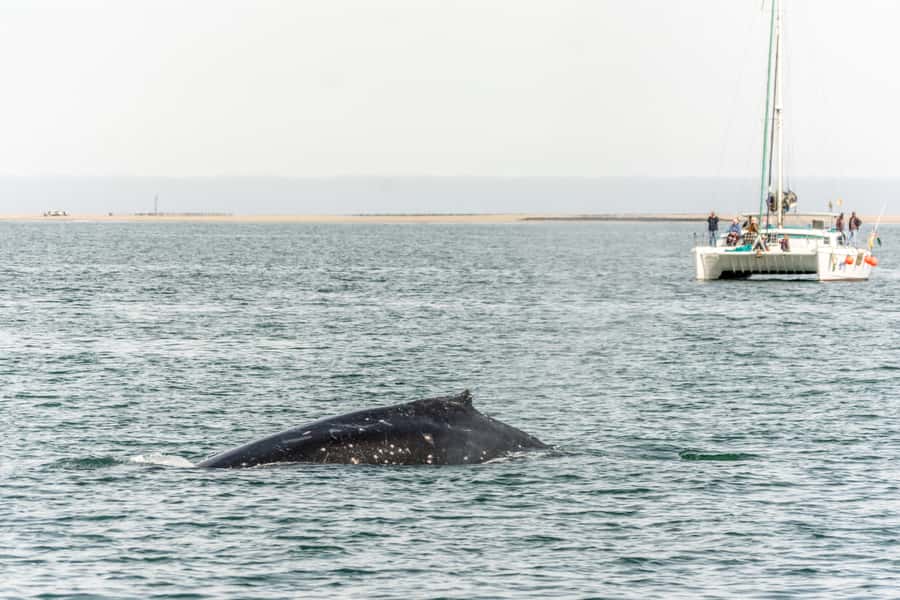
This is a strong fit if you want:
- A half-day-style sea outing that still feels like a full experience
- A chance at the Marine Big 5 with a guided search and a boat that stays comfortable
- Great included food, especially if you like seafood and oysters
- A morning activity that mixes wildlife with actual hospitality
It also works well for families and mixed groups, since the catamaran format keeps the day social and the guide’s humor and pacing helps keep it light.
I’d adjust expectations if you’re only chasing one specific species, like whales at close range. In practice, the best strategy is to treat this as a multi-species day. When you do that, even a seal-and-dolphin focused trip still feels like a win.
Final verdict: should you book the Walvis Bay Big 5 catamaran tour?
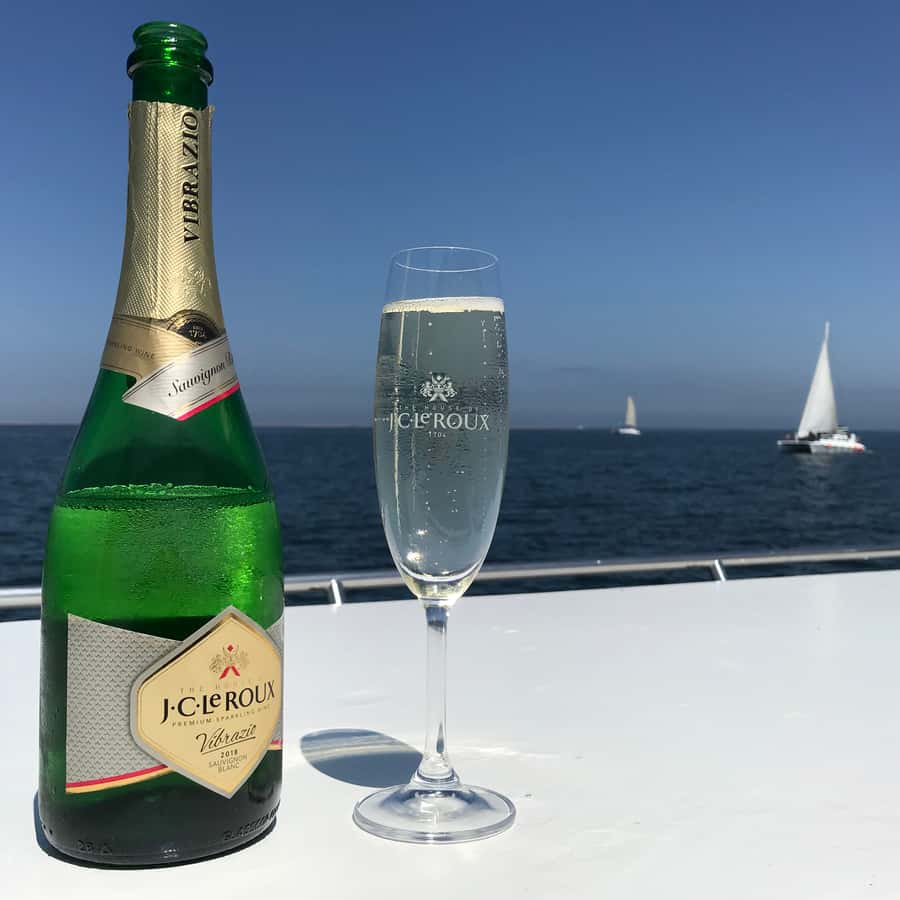
If you’re going to Walvis Bay and you want a morning that’s equal parts wildlife, comfort, and serious included catering, I think it’s an easy yes.
Book it if you:
- Want the best odds at multiple species rather than a single gamble
- Appreciate a guide-led hunt with time to watch, not just rush
- Plan to show up warm, bring sunscreen, and stay patient when the sea is quiet
Skip it (or pick a different style of outing) if your entire goal is a guaranteed whale or turtle sighting every time. This tour is designed for chances, not promises.
If you’re flexible and you enjoy the process as much as the payoff, this one is a standout way to spend your morning on the Namibian coast.
FAQ
Where do I check in for the tour?
Check in at the Walvis Bay Waterfront at the small dark blue building near the jetty at the northern end, for Catamaran Charters.
What time does the tour depart and when does it return?
You check in at 8:30 am, and the catamaran departs from the jetty between 8:45 and 9:00 am. You return to the Waterfront at around 12:30.
Is hotel pickup included?
No. Hotel pickup and drop-off are not included.
What marine animals are you looking for during the cruise?
The tour targets whales, dolphins, mola mola (sunfish), leatherback turtles, and seals. It also notes three dolphin species in the area.
Is the lunch included, and what does it include?
Yes. Lunch includes fresh Namibian oysters paired with sparkling wine, plus savory snacks, dessert pastries, cool drinks, water, and Namibian beer.
What should I bring, and what should I avoid wearing?
Bring comfortable shoes, warm clothing, sunglasses, and sunscreen. High-heeled shoes are not allowed.
Is the boat wheelchair accessible?
Yes, the tour is wheelchair accessible.