REVIEW · ISTANBUL
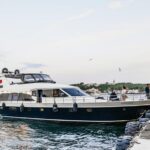
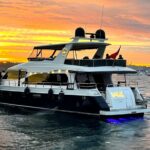
Private Bosphorus Sightseeing Cruise on Luxury Yacht
Book on Viator →Operated by Sunset Bosphorus Yacht Cruises · Bookable on Viator
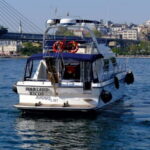
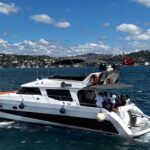
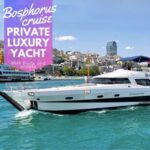
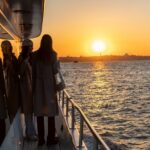
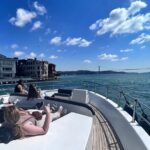
The Bosphorus looks different from a yacht. This private Istanbul cruise gives you front-row views of landmarks like Dolmabahçe and Ortaköy, while you glide on the water for about 2 hours.
I especially like the combo of private comfort (your group up to 15) and the way the route lines up with the Bosphorus’ most photo-friendly scenery. You also get welcome onboard breaks—coffee, tea, homemade lemonade, and traditional Turkish sweets—so the time flies without feeling like you’re just sitting.
One consideration: there’s no tour guide included, and alcoholic beverages aren’t listed as part of the package. That means you’ll want to confirm anything you order that isn’t clearly covered, and be ready to look up a few facts on your own if you want deeper stories.
In This Review
- Key things that make this Bosphorus cruise worth it
- Private luxury yacht time: what you’re really paying for
- Getting started at Kabataş (and why the meeting point matters)
- Dolmabahçe Palace and Ortaköy Mosque: Europe’s shoreline in front-row frames
- Dolmabahçe Palace exterior from the water
- Ortaköy Mosque (Büyük Mecidiye Camii)
- Bridges, Bebek, and Rumelihisarı Fortress: where the Bosphorus gets dramatic
- The Bosphorus Bridge (inaugurated Oct 29, 1973)
- Bebek neighborhood
- Rumelihisarı Fortress (Rumelihisarı Castle)
- The Second Bosphorus Bridge and the shift to the Asian shore
- Fatih Sultan Mehmet Bridge (Second Bosphorus Bridge)
- Kanlıca: yogurt with a very local identity
- Beylerbeyi Palace and Kucuksu: Asian-side splendor from the waterline
- Beylerbeyi Palace
- Kucuksu Palace (also called Göksu)
- Kız Kulesi (Maiden’s Tower) to Galata Tower: finishing the loop around water
- Kız Kulesi (Maiden’s Tower / Leander’s Tower)
- Galata Bridge and the Golden Horn
- Galata Tower (Christea Turris)
- Food, drinks, and the no-guide reality check
- How the 2-hour format affects what you’ll notice
- Who this private Bosphorus cruise is best for
- Should you book this private Bosphorus yacht cruise?
- FAQ
- How long is the cruise?
- What does this cost and who is it for?
- Is there a tour guide during the cruise?
- What food and drinks are included?
- Are alcoholic beverages included?
- Where do we meet for the tour?
- Do I need to bring a printed ticket?
- Are hotel transfers included?
- What happens if the weather is bad?
- Is the booking refundable if I change my mind?
- Should you book this private Bosphorus yacht cruise?
Key things that make this Bosphorus cruise worth it
- Private yacht time for up to 15 people, so you’re not squeezed with strangers
- Landmark views from the water, including Dolmabahçe Palace and Ortaköy Mosque
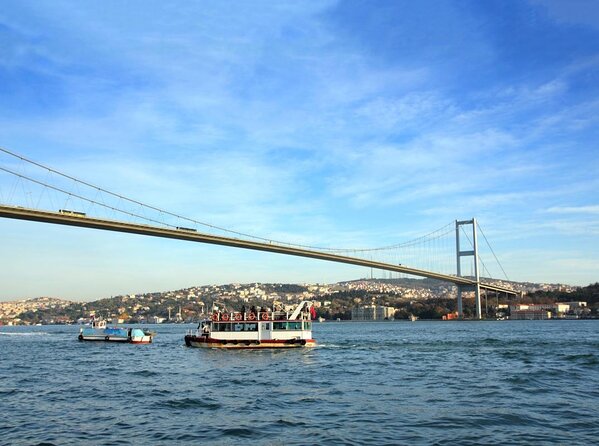
- Classic Bosphorus bridge angles, including the 1973 span and the Second Bosphorus Bridge
- Asian-side highlights like Beylerbeyi Palace, Kucuksu Palace, and Kız Kulesi (Maiden’s Tower)
- Included refreshments such as coffee/tea, snacks, bottled water, homemade lemonade, and Turkish sweets
Private luxury yacht time: what you’re really paying for
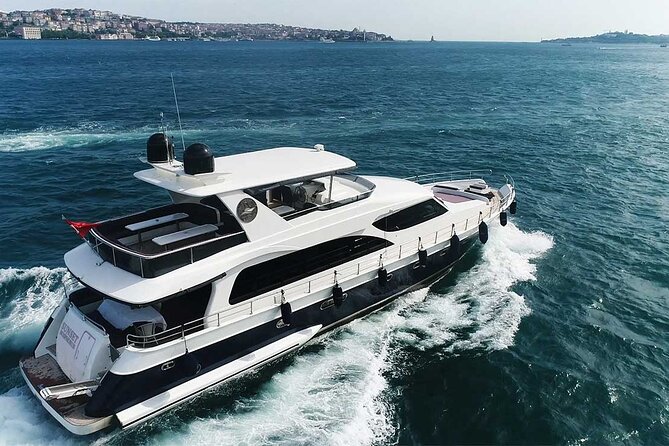
At $844.78 per group (up to 15), you’re not just buying a boat ride. You’re buying space, timing, and access—to Istanbul’s postcard sights from a moving vantage point that’s hard to replicate from land.
The big value is the view quality. From the water, places like Dolmabahçe’s marble pier and Ortaköy Mosque look composed like they’re meant for postcards. Even when you’re not stopping or getting off, you get a steady stream of perspectives: straight-on facades, waterfront gardens, and skyline layers that shift as you move.
Also, this is built for a group feel. A private cruise means you can spread out a bit, take photos when the light hits, and enjoy the onboard breaks without the usual shuffle of a larger tour. Add in coffee/tea and snacks (plus lemonade and sweets from the cruise highlights), and the whole 2-hour format stays comfortable.
You can also read our reviews of more tours and experiences in Istanbul.


Getting started at Kabataş (and why the meeting point matters)
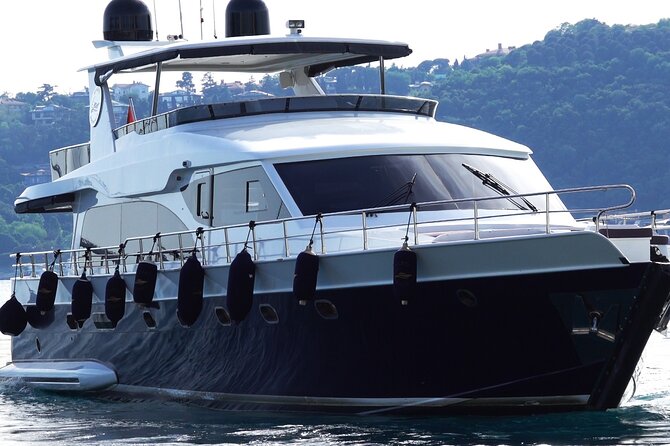
Your meeting point is at Kabataş Tramvay station, Ömer Avni, Beyoğlu. The cruise ends back at the same meeting point.
Why I care about this detail: Bosphorus cruises live or die by timing, and Kabataş is a practical starting area for accessing the shoreline. Since the experience is described as near public transportation and uses a mobile ticket, you can show up without complicated paperwork. Still, give yourself a little buffer—private means the group leaves together.
Expect a short, focused experience. The duration is listed at about 2 hours, so think of it as a fast, scenic circuit rather than a slow sightseeing day.
Dolmabahçe Palace and Ortaköy Mosque: Europe’s shoreline in front-row frames
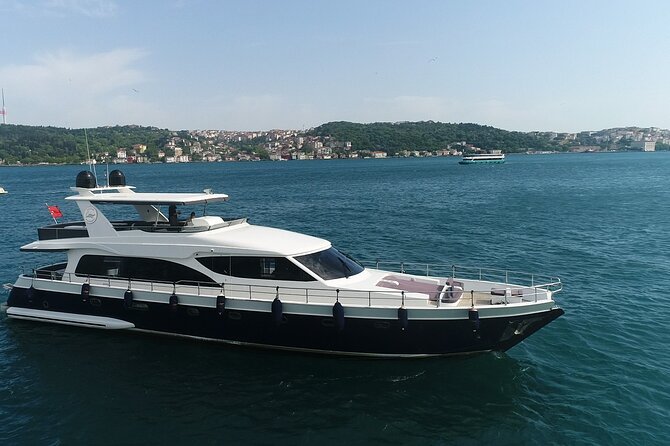
This cruise starts by showing you the Bosphorus like it’s the main character—and Europe’s waterfront has a lot of main-character energy.
Dolmabahçe Palace exterior from the water
Dolmabahçe Palace sits on the European shore and was built by Sultan Abdülmecit (1839–1861). From the Bosphorus, you don’t need to be inside to understand why it’s famous. You can see the ornate architectural blend, the landscaped grounds, and—importantly—the long 600-meter marble pier that runs along the water.
The palace’s exterior is described as having multiple architectural styles, with a strong emphasis on decoration. From a yacht, the value is angle: you can pick out details without crowds, and the palace sits in a wider setting of hills and shoreline—so it looks like part of the landscape, not a standalone building.
A small drawback: because the cruise time is limited, your “look” time is mostly visual from the water, not a formal stop where you can linger.
Ortaköy Mosque (Büyük Mecidiye Camii)
Ortaköy Mosque—officially Büyük Mecidiye Camii—is located waterside at the Ortaköy pier square in Beşiktaş. This is one of those landmarks that reads immediately even if you’re not a mosque-specialist. The waterfront positioning makes it feel like it’s framed by the strait itself.
From a cruise deck, you get a clean relationship between the mosque, the shoreline, and the boats moving through the Bosphorus. If you like “city as a series of viewpoints,” Ortaköy is a strong early stop.
Bridges, Bebek, and Rumelihisarı Fortress: where the Bosphorus gets dramatic
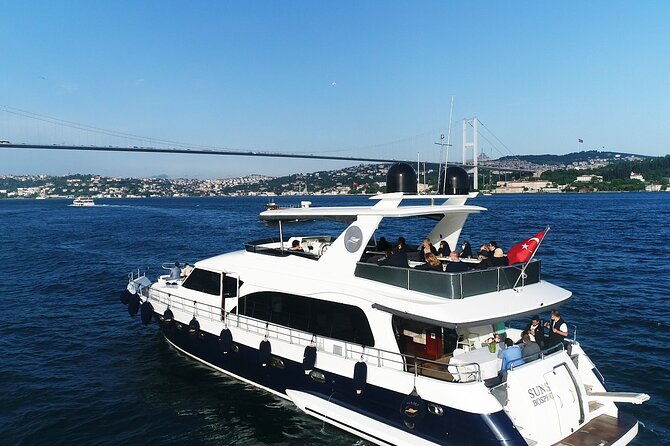
As the cruise moves along, the scenery starts to include the Bosphorus’ biggest engineering moments. And Istanbul has a talent for mixing old stone fortresses with modern infrastructure.
The Bosphorus Bridge (inaugurated Oct 29, 1973)
You’ll pass the suspension bridge inaugurated on October 29, 1973, tied to the fiftieth anniversary of the Turkish Republic. The numbers matter here because they explain why this bridge shows up so clearly from the water: it has the longest span in Europe and the fourth in the world (at the time of those claims), with a total length of 1,560 meters and a width of 33.4 meters.
From the yacht, you’re likely to notice the box-girder suspension design and the way the bridge’s clearance rises above the strait. The Bosphorus Bridge is a classic “speed round” sight: you see it, you absorb it, and then you’re already moving toward the next view.
Bebek neighborhood
Bebek is described as one of the nicest Bosphorus areas on the European side, with expensive waterside apartments, a small bay with anchored yachts, and fancy restaurants plus quieter cafés.
What makes Bebek feel different from other shoreline zones is the tone. It’s less “monument” and more “lifestyle waterfront.” From a yacht, you get that quiet-yet-luxurious rhythm without needing to book a table.
Rumelihisarı Fortress (Rumelihisarı Castle)
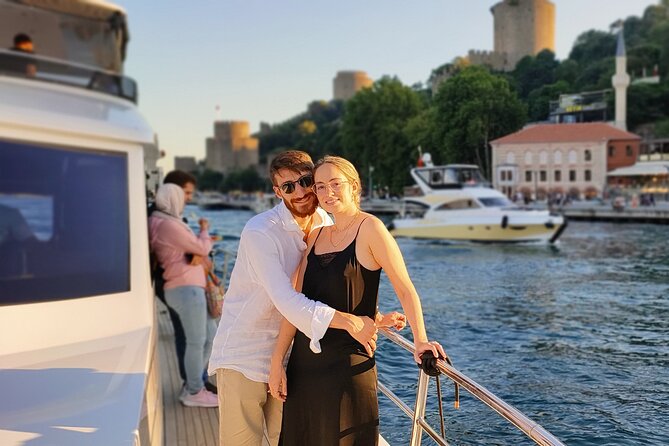
At the narrowest point of the Bosphorus stands Rumelihisarı Fortress, built by Sultan Mehmet (Mehmet the Conqueror). The foundation stone was laid on March 26, 1452, and it was completed in just five months by August 28, 1452.
This fortress is especially interesting because the point of it wasn’t just defense for the sake of drama. It was built to control ships passing through the Bosphorus and served as a base for the attack on the city. Cannon placements were meant to command the narrow strait opposite the older fortress of Anadoluhisarr.
From the water, you’ll likely feel the narrowness more than you would from a distant viewpoint, since your boat is literally inside the corridor that these defenses were designed for.
The Second Bosphorus Bridge and the shift to the Asian shore
This is where the cruise changes mood. You start seeing different shorelines, different palace shapes, and the geography starts to feel like a new Istanbul.
Fatih Sultan Mehmet Bridge (Second Bosphorus Bridge)
The Fatih Sultan Mehmet Bridge—also called the Second Bosphorus Bridge—was completed in 1988. At completion it was the 5th-longest suspension bridge span in the world (and later dropped to 24th by today’s rankings).
On the water, the value is perspective. Bridges look different when you’re not viewing them from a single fixed height. You can judge the arc and scale in relation to the shoreline, which makes it feel more like a “system” than a single span.
Kanlıca: yogurt with a very local identity
Kanlıca is on the Asian side of the Bosphorus and is known for its specialty: yogurt topped with caster sugar. It’s not just a food note in the information you’re given—it’s a reminder that this part of the city is strongly tied to everyday traditions.
Because the cruise is only about 2 hours, you won’t be turning it into a full food crawl. But it helps you look at the waterfront with a different mindset: not only monuments, but habits.
Beylerbeyi Palace and Kucuksu: Asian-side splendor from the waterline
Asian-side palaces on the Bosphorus have a different feel than the European waterfront. They read more like they’re “floating” along the shoreline—especially when you’re moving past them.
Beylerbeyi Palace
You’ll see Beylerbeyi Palace from the Bosphorus. It was built by Sultan Abdülaziz in 1865 and is described as the most extravagant royal house of the 19th century on which millions were spent. The key detail I’d hold onto: it’s built completely of marble and is said to surpass palaces of European kings.
There are also very specific historical associations mentioned, including stays or visits such as Empress Eugénie (1869) and Czar Nicholas II. Later, Edward VIII is mentioned as a guest in 1936.
From a yacht, these details become less about checking boxes and more about seeing scale. Marble + waterfront + hills = strong visual impact, even from outside.
A practical note: because the cruise isn’t a museum visit, you’ll focus on the exterior impression—what the palace looks like as it meets water and sky.
Kucuksu Palace (also called Göksu)
Next is Kucuksu Palace, sometimes called the Palace of Göksu, between Anadoluhisarı and Kandilli. It has a layered building story: first built by Mahmut I in 1749, restored under the reigns of Selim III and Ahmet II, renovated by Sultan Abdülmecit in 1857, and later refurbished again by Sultan Abdülaziz.
What stands out in the description is its scale and texture: a small but elegant building stretching along the lip of the Bosphorus, surrounded by intricately cast-iron railings. The marble terraces can even get waves washing around the structure, which hints at why it looks so cinematic from the water.
Kız Kulesi (Maiden’s Tower) to Galata Tower: finishing the loop around water
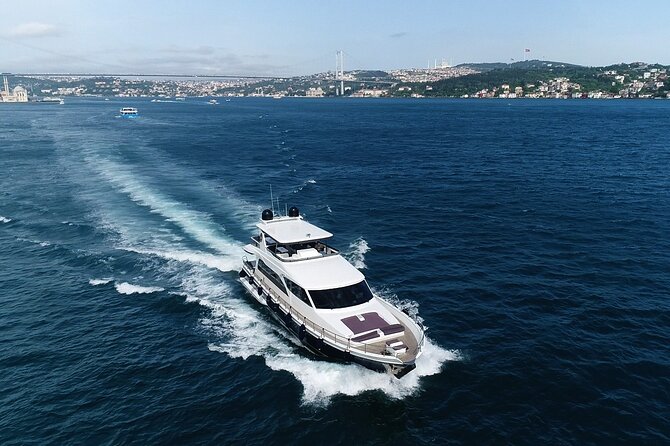
The end of the cruise keeps Istanbul’s water theme going—moving from strait views to the Golden Horn world.
Kız Kulesi (Maiden’s Tower / Leander’s Tower)
About 180 meters from the shores of Üsküdar, you’ll see Kız Kulesi, also known as Maiden’s Tower. Europeans historically called it Leander’s Tower due to a legend tied to Leander and Aphrodite.
The factual thread you’re given is helpful: the Turkish name is Kız Kulesi, and the tower’s function was practical. In the past, it served as a fort to tax ships, taking up to one-tenth of cargo.
Today it’s described as a modern lighthouse. So from the yacht, you get a tower that reads as both myth and utility—which is very Istanbul.
Galata Bridge and the Golden Horn
You’ll also pass Galata Bridge, which spans the Golden Horn. The Golden Horn is described as a major urban waterway and the primary inlet of the Bosphorus.
Even if you’ve seen the Golden Horn on a map, from the water your mental model changes. The shoreline structures start to feel like they’re built around the channel, not next to it.
Galata Tower (Christea Turris)
Finally, the cruise highlights the Galata Tower, a medieval stone tower in the Galata/Karaköy quarter north of where the Golden Horn meets the Bosphorus. It’s also called Christea Turris by the Genoese in the info provided.
From a moving boat, the tower can look like it’s “pinning” the scene—an end point for your sightline as you move through the Istanbul water network.
Food, drinks, and the no-guide reality check
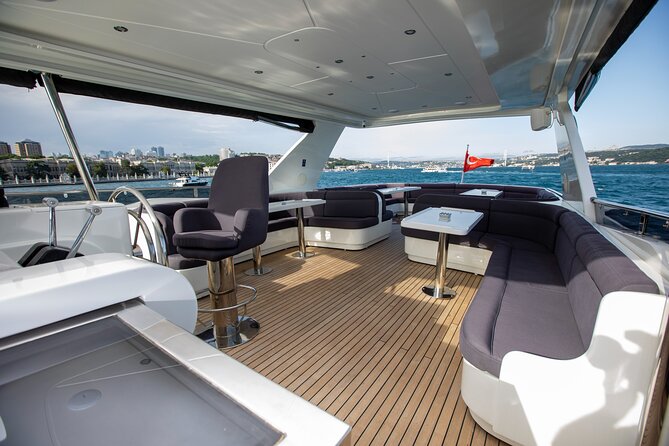
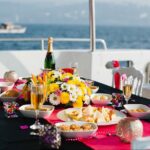
Included refreshments are a real part of the comfort story here. You should expect coffee and/or tea, snacks, and bottled water. The cruise highlights also mention homemade lemonade and traditional Turkish sweets.
But here’s the balance: alcohol isn’t listed as included, and a tour guide isn’t included. That matters because a guide is often what turns landmark spotting into understanding. Without one, you’re relying on your own reading—at least for the deeper context.
There’s one more practical angle. One low-score experience in the data points to problems when beer was treated like it was included, but it wasn’t. I’d treat that as a warning sign: if you order anything alcoholic, confirm how it’s billed before you say yes. Don’t assume.
How the 2-hour format affects what you’ll notice
Two hours is perfect for the right kind of sightseeing: the kind where you want a strong visual sweep without committing to a full day.
Still, it changes what you should expect:
- You’ll see a lot of landmarks, but you probably won’t have time for long, detailed stops.
- You’ll get best results if your goal is to recognize and enjoy architecture, waterfront neighborhoods, and bridge lines.
- You’ll enjoy it more if you come with a basic game plan: pick a few “must-see” names (Dolmabahçe, Ortaköy Mosque, Rumelihisarı, Beylerbeyi Palace, Kız Kulesi, Galata Tower) and let the rest fill in the gaps.
Who this private Bosphorus cruise is best for
This one fits best when you want a water-first Istanbul experience.
You’ll probably love it if:
- You’re traveling with friends or family and want privacy instead of a big group bus rhythm
- You care about architecture and waterfront scenery more than guided museum time
- You want a clean way to cover both sides of the Bosphorus (Europe + Asia) in one sitting
You might want to skip or adjust expectations if:
- You’re hoping for a full explanation of every stop from a guide (none is included)
- You drink alcohol and want it bundled in (alcoholic beverages are not included)
- Weather is a big issue for your trip—this experience requires good weather
Should you book this private Bosphorus yacht cruise?
Yes, if your goal is a comfortable, private 2-hour Bosphorus highlight reel with included refreshments and very strong landmark views. The overall rating is high (4.9) and the recommendation rate is extremely strong, which usually points to solid day-of execution.
Book with one smart mindset: treat this as a sight-from-the-water experience, not a guided lecture. If you want deeper stories, bring a few notes or plan to look up key sites beforehand. And if alcohol is part of your plan, confirm pricing first.
If that matches how you like to travel, this cruise is a good-value way to see Istanbul’s most dramatic water corridor—without the usual crowds.
FAQ
How long is the cruise?
The duration is listed as approximately 2 hours.
What does this cost and who is it for?
The price is $844.78 per group, up to 15 people. It’s private, meaning only your group participates.
Is there a tour guide during the cruise?
No. A tour guide is not included.
What food and drinks are included?
You’ll have coffee and/or tea, snacks, and bottled water. The highlights also mention homemade lemonade and traditional Turkish sweets.
Are alcoholic beverages included?
No. Alcoholic beverages are listed as not included.
Where do we meet for the tour?
The meeting point is Kabataş Tramvay station, Ömer Avni, 34427 Beyoğlu/İstanbul, Türkiye.
Do I need to bring a printed ticket?
You’ll receive a mobile ticket.
Are hotel transfers included?
Hotel transfers are listed as not included, even though the overview highlights door-to-door transfers. If you need transport, confirm what’s available for your exact pickup.
What happens if the weather is bad?
This experience requires good weather. If it’s canceled due to poor weather, you’ll be offered a different date or a full refund.
Is the booking refundable if I change my mind?
It’s described as non-refundable and cannot be changed for any reason.
Should you book this private Bosphorus yacht cruise?
I’d book it if you want a private, low-stress way to get landmark views from the water on both the European and Asian sides—especially with the included coffee/tea, snacks, lemonade, and sweets. I’d slow down and double-check anything about alcohol, and be comfortable with the fact that there’s no guide onboard to explain each stop.